
Ceylon Tea: Halpewatte Tea Factory Tour and History

João Petersen · Last updated September 2, 2026
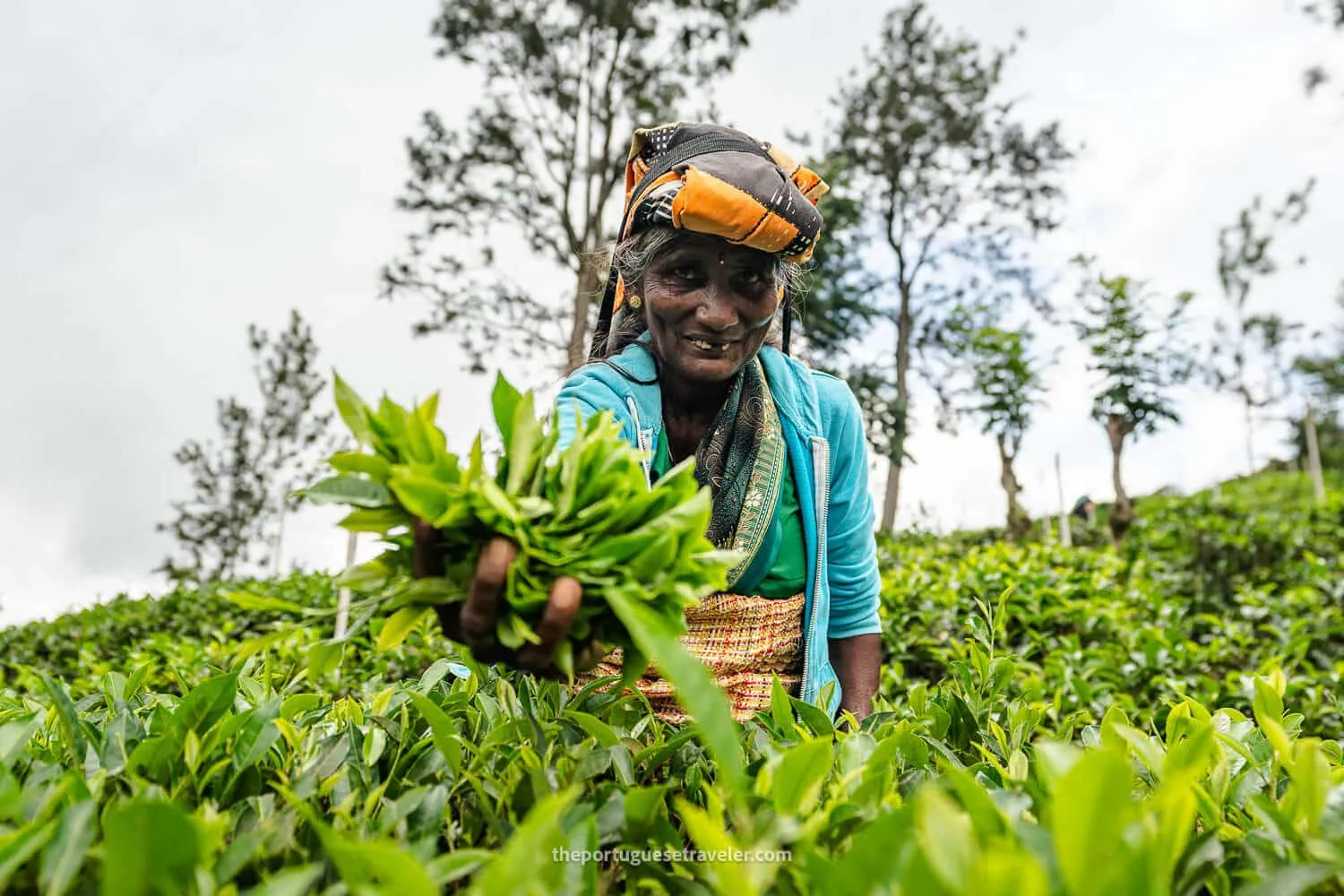
I visited the Halpewatte Tea Factory near Ella during a press trip with the Sri Lanka Tourism Board in October 2024. On the Halpewatte Tea Factory Tour we walked through the plantation, plucked tea with a worker, went through the factory and ended with a tasting. This guide covers the history of Ceylon tea, how the leaf is processed, the prices on the factory's board and how to get there.
The factory shop sells freshly packed tea at the end of the tour, and I bought three varieties (OPA, Pekoe and BOP). The full account of my visit is in the My Experience section at the end of the page.
If you are planning a Sri Lanka itinerary, the factory is an easy stop in the hill country, about 6 km from Ella.
Halpewatte Tea Factory Tour: Essential Information
The key details, with the prices from the board at the factory.
- Location: 1,230 meters above sea level, 6 km from Ella, Uva region.
- History: Built in 1940, and named the largest tea producer in the Uva region in 2008.
- Activities: Factory tours, plantation walks, tea plucking and a handmade tea tour.
- Tour Times: Daily from 8:00 a.m. to 4:30 p.m.
- Prices (from the board at the factory): Plantation Tour with tea tasting – $10 USD; Factory Tour with tea tasting – $10 USD; Handmade Tea Tour – $30 USD; Traditional Attire Rental (saree or sarong and plucking basket) – $6 USD.
- Booking: Call +94 572228530 or WhatsApp +94 776328161, or visit their website.
- Specialty: Fresh, unblended tea directly from their plantations.
For more information please get in touch with the official tourism board at:
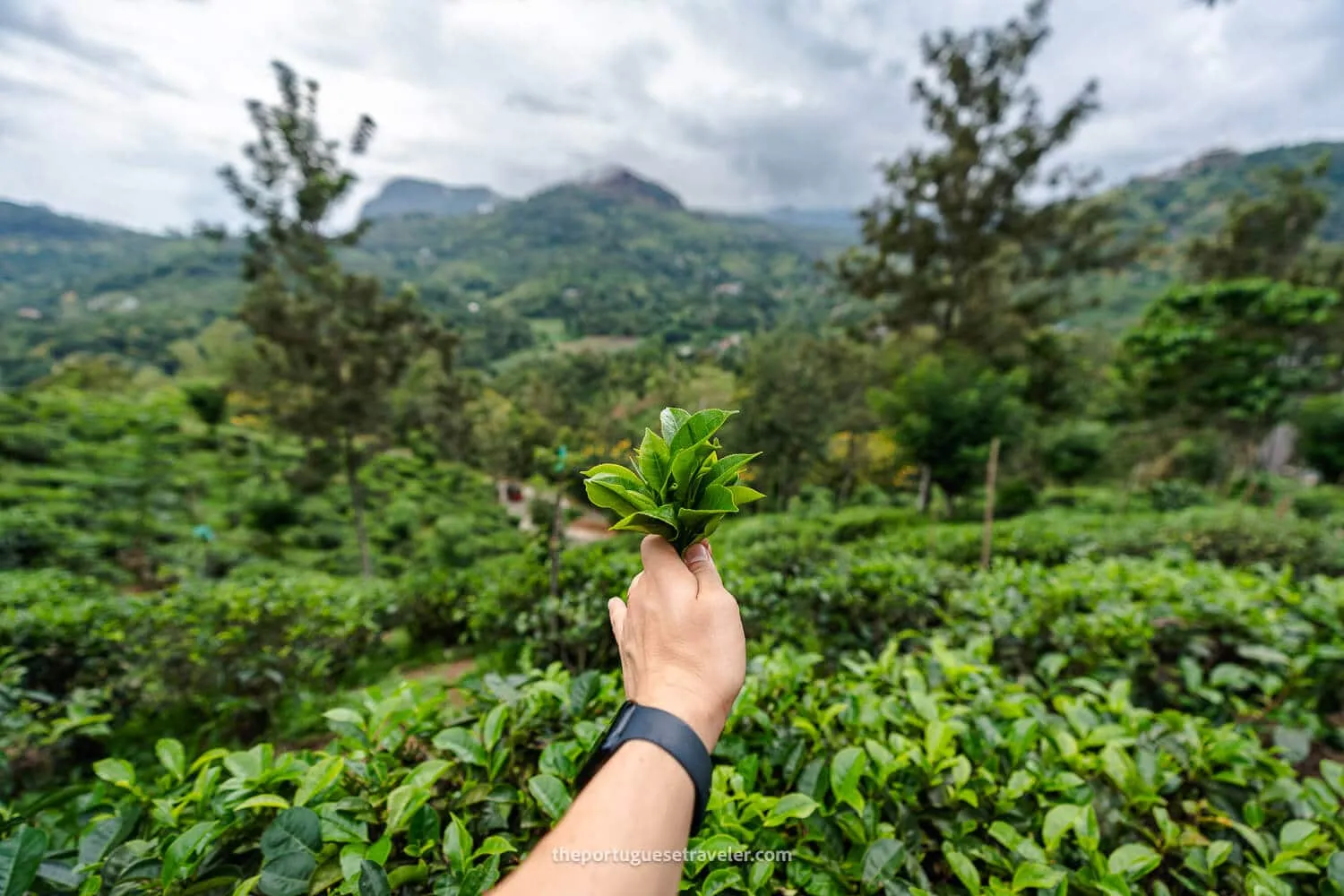
The Halpe Tea Plantation
The History of Ceylon Tea: From Colonial Roots to Global Fame
Tea began as a medicinal drink in China before it became an everyday beverage. Ceylon tea is a much more recent story.
Tea was introduced to Sri Lanka in the 19th century. Before the 1860s, coffee was the dominant crop, but in 1869, a fungus wiped out the plantations, leading estate owners to diversify. In 1867, James Taylor planted tea at the Loolecondera estate in Kandy, marking the beginning of commercial tea cultivation in Sri Lanka.
During British rule, the focus shifted from coffee to tea. In 1872, Taylor established the first tea factory, and by 1873, Sri Lanka made its first international tea sale to London. By 1899, the area cultivated with tea reached 400,000 acres.
Sir Thomas Lipton, a Scottish businessman, bought tea estates in Sri Lanka and sold directly to customers, cutting out the middlemen, which made tea cheaper worldwide. His slogan was “Direct from the tea garden to the teapot.”
The first public tea auction took place in Colombo in 1883, and Ceylon tea was promoted at the 1893 Chicago World’s Fair, where about one million packets were reportedly sold.
In the 1960s, Sri Lanka became the world’s largest tea exporter. Innovations like instant tea (1963) and the International Tea Convention (1966) further propelled the industry.
Today, Sri Lanka is one of the largest tea exporters. In 2024 it exported about 246 million kilograms of tea, roughly 13% of global tea exports.
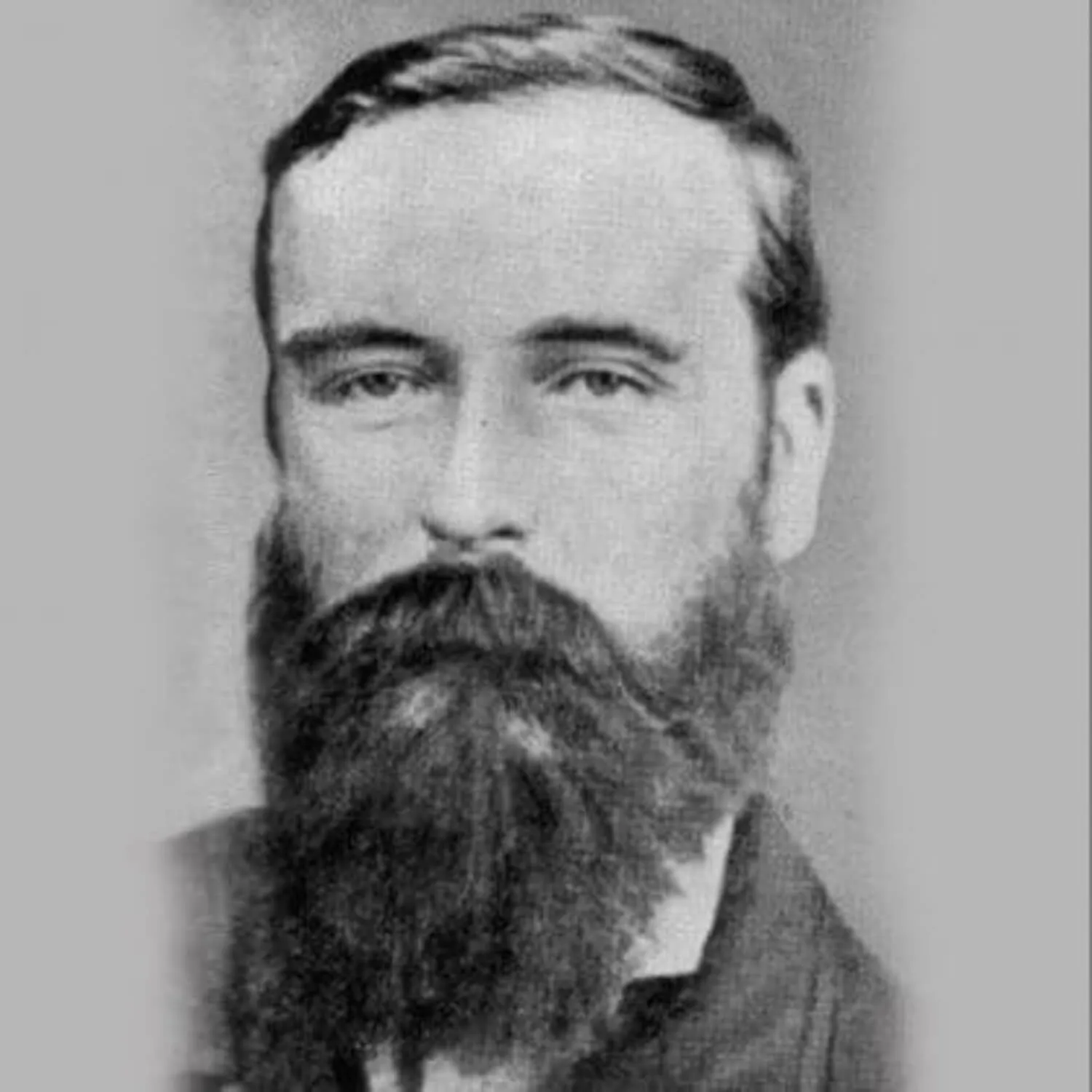
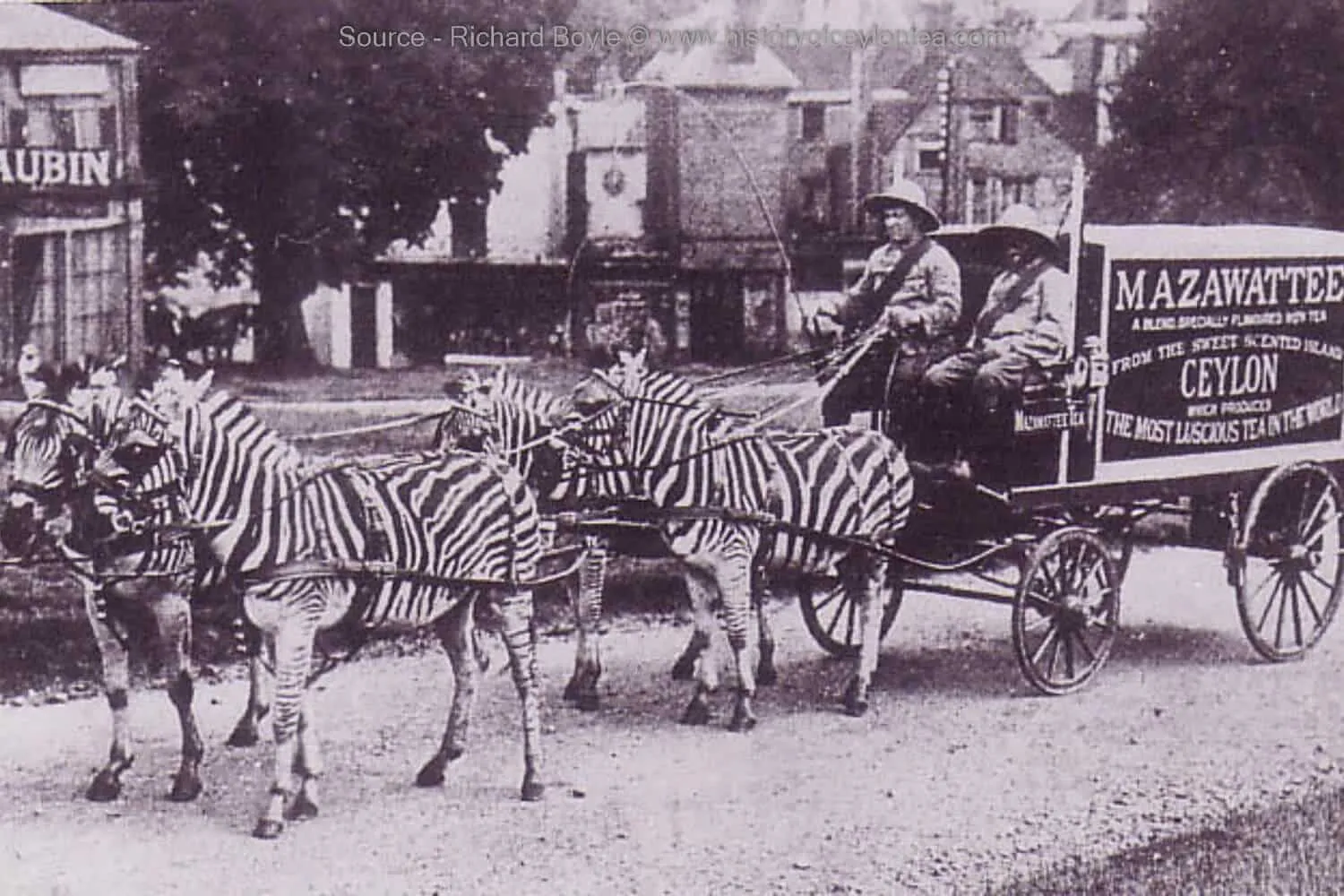
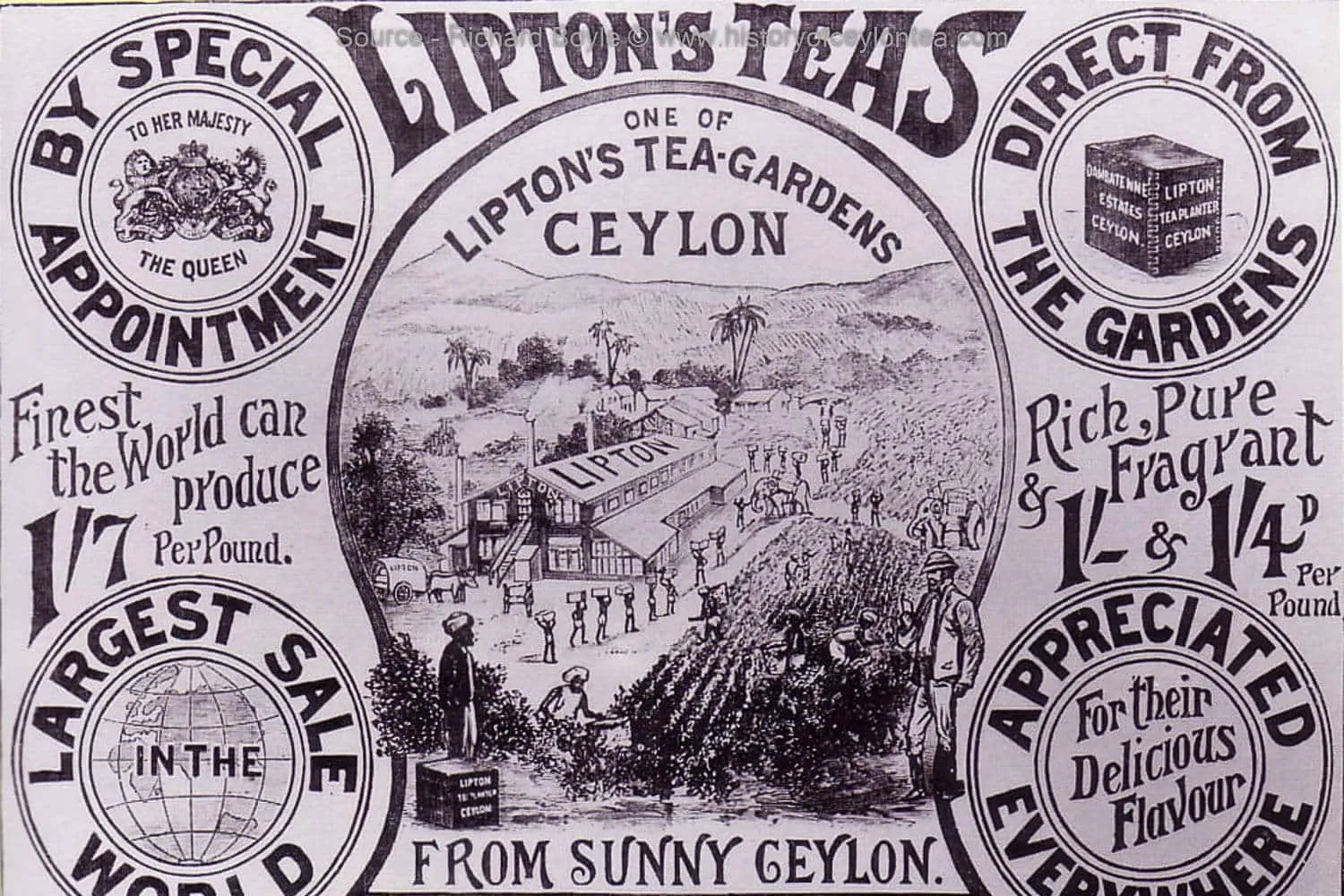
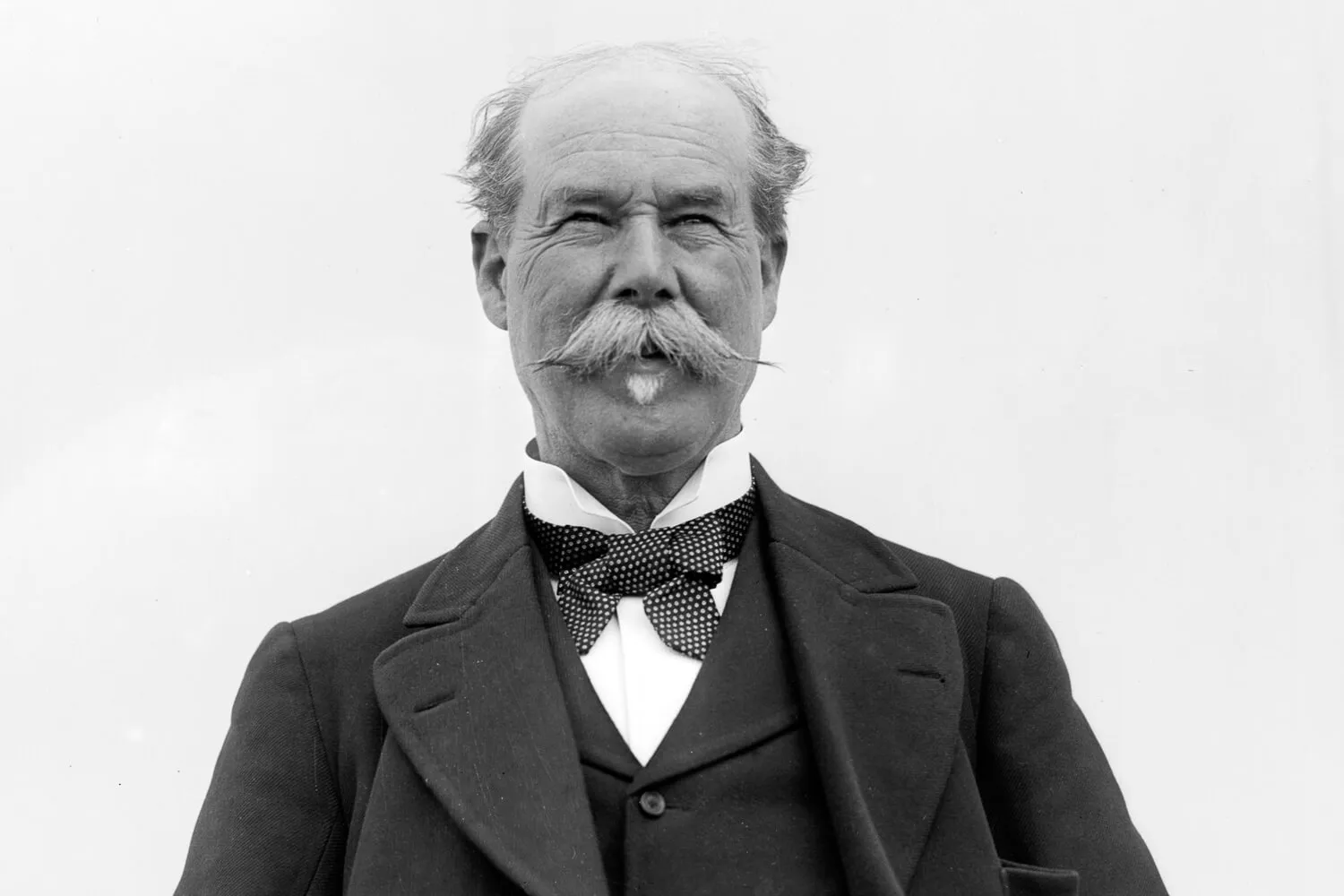
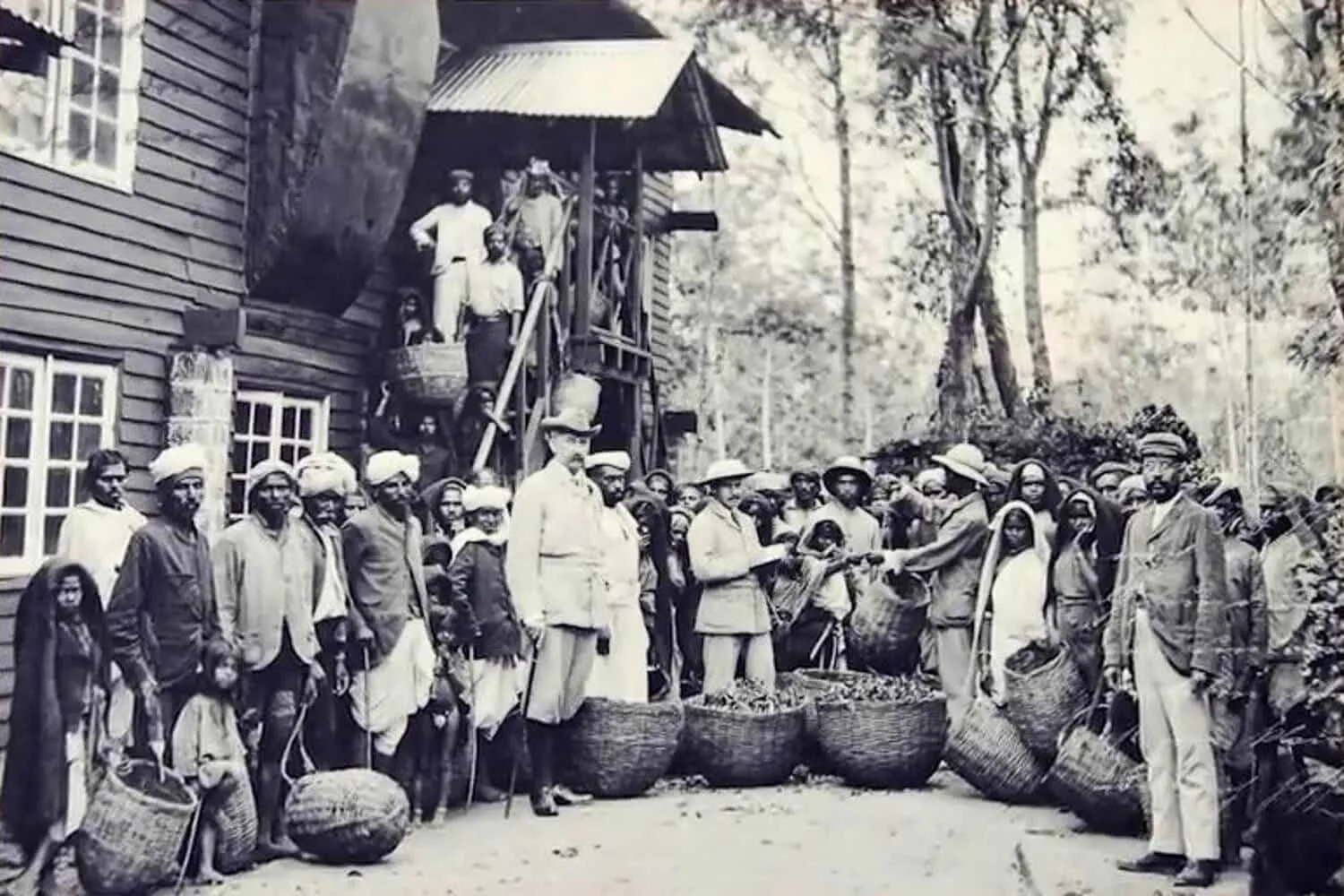
Historical Images Source:
[1] Thomas Lipton - https://en.wikipedia.org/wiki/Thomas_Lipton
[2] Ceylon Tea Factory Photo - https://www.pureceylontea.com/story/
[3] Ceylon Tea Transport w/ Zebras - https://www.historyofceylontea.com/media-archive/a-collection-of-historic-photos-sketches—309
[4] Lipton Tea’s Advertising Pamphlet - https://www.historyofceylontea.com/media-archive/a-collection-of-historic-photos-sketches—309
[5] James Taylor’s Portrait - https://en.wikipedia.org/wiki/James_Taylor_(tea_planter)
[6] Lion Logo of pure Ceylon tea - https://en.wikipedia.org/wiki/Ceylon_tea
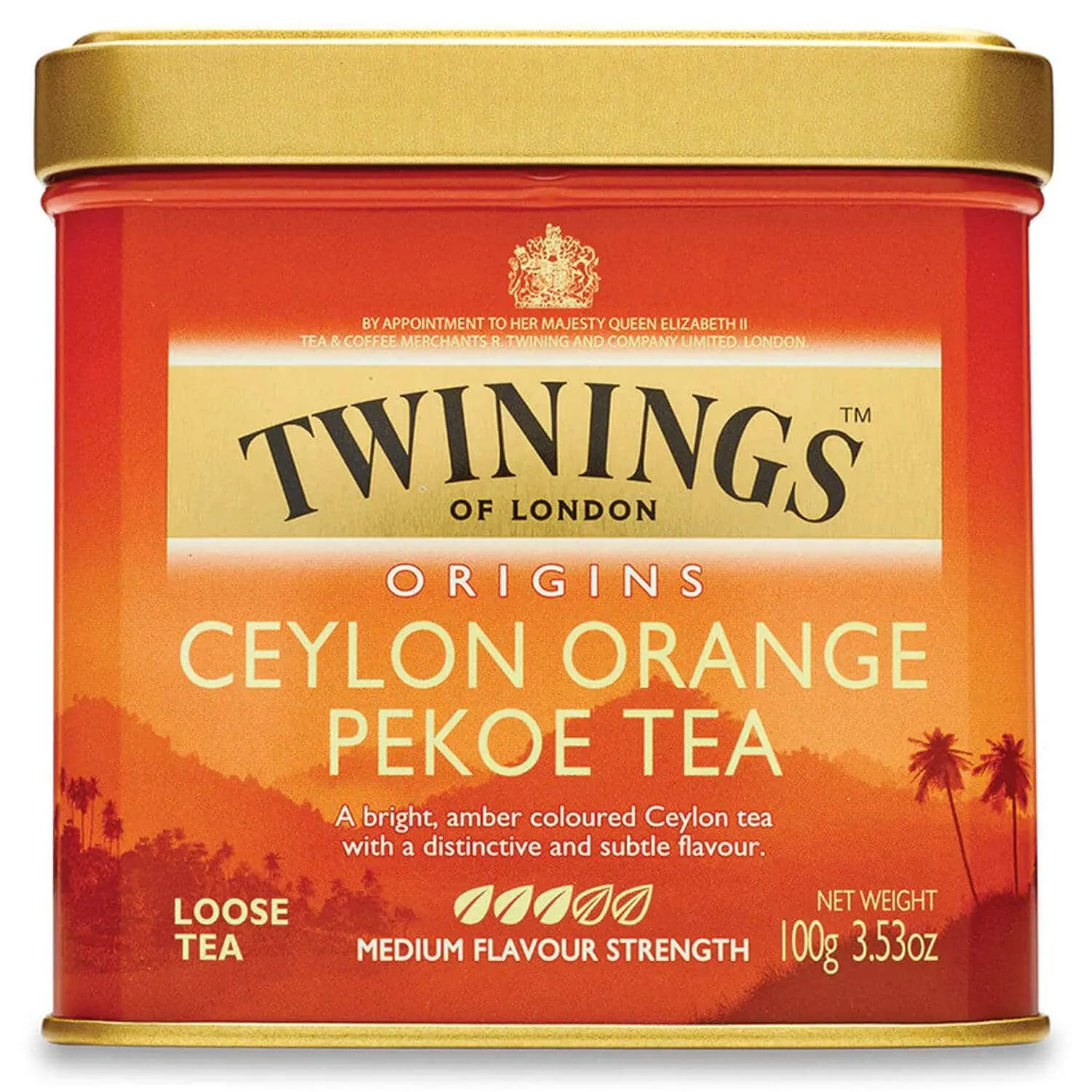
[7] Ceylon Orange Pekoe Tea from Twinings - https://twinings.co.uk/products/ceylon-orange-pekoe-loose-tea-caddy-international-blend-100g
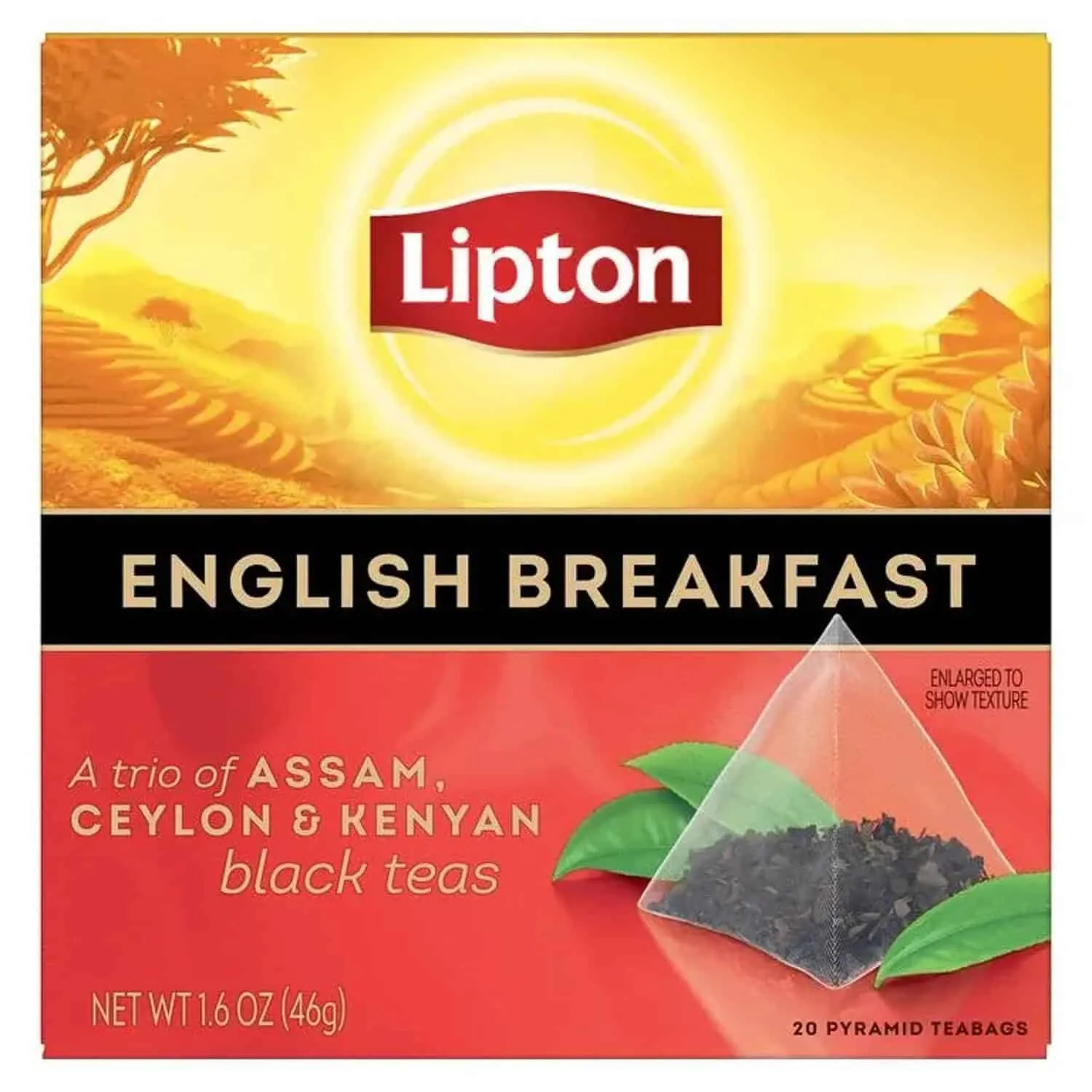
[8] English Breakfast Ceylon Tea from Lipton - https://www.lipton.com/us/en/our-teas/english-breakfast-black-tea-20-pyramid-tea-bags/
What Makes Ceylon Tea Special? Flavor, Climate, and Craftsmanship
Ceylon tea owes its range of flavors to Sri Lanka’s varied terrain. Estates run from high, cool country to warm lowlands, and the elevation shapes the cup.
High-grown teas, such as those from Nuwara Eliya, are light and delicate with a golden color. Mid-grown teas from regions like Kandy are more robust, with a bright, coppery infusion. Low-grown teas from areas like Galle and Matara are stronger, with a richer flavor and a burgundy-brown liquor. Uva, where the Halpewatte factory sits, is known for aromatic, full-bodied teas, and its dry winds and cooler temperatures give the tea a floral sweetness, often with a tangy finish.
Tea is still plucked by hand. Pluckers, mostly women, take two leaves and a bud, which keeps the leaf in better condition than mechanical harvesting. At the factory the leaves are withered, rolled, oxidized and dried, and growers in Uva adjust the processing to bring out the region’s flavors.
Ceylon tea is mostly black tea, bold and aromatic, drunk on its own or used in blends such as Earl Grey. Ceylon green tea has a nutty, malty flavor, and the rare white tea, or ‘silver tips’, is delicate and gently sweet.
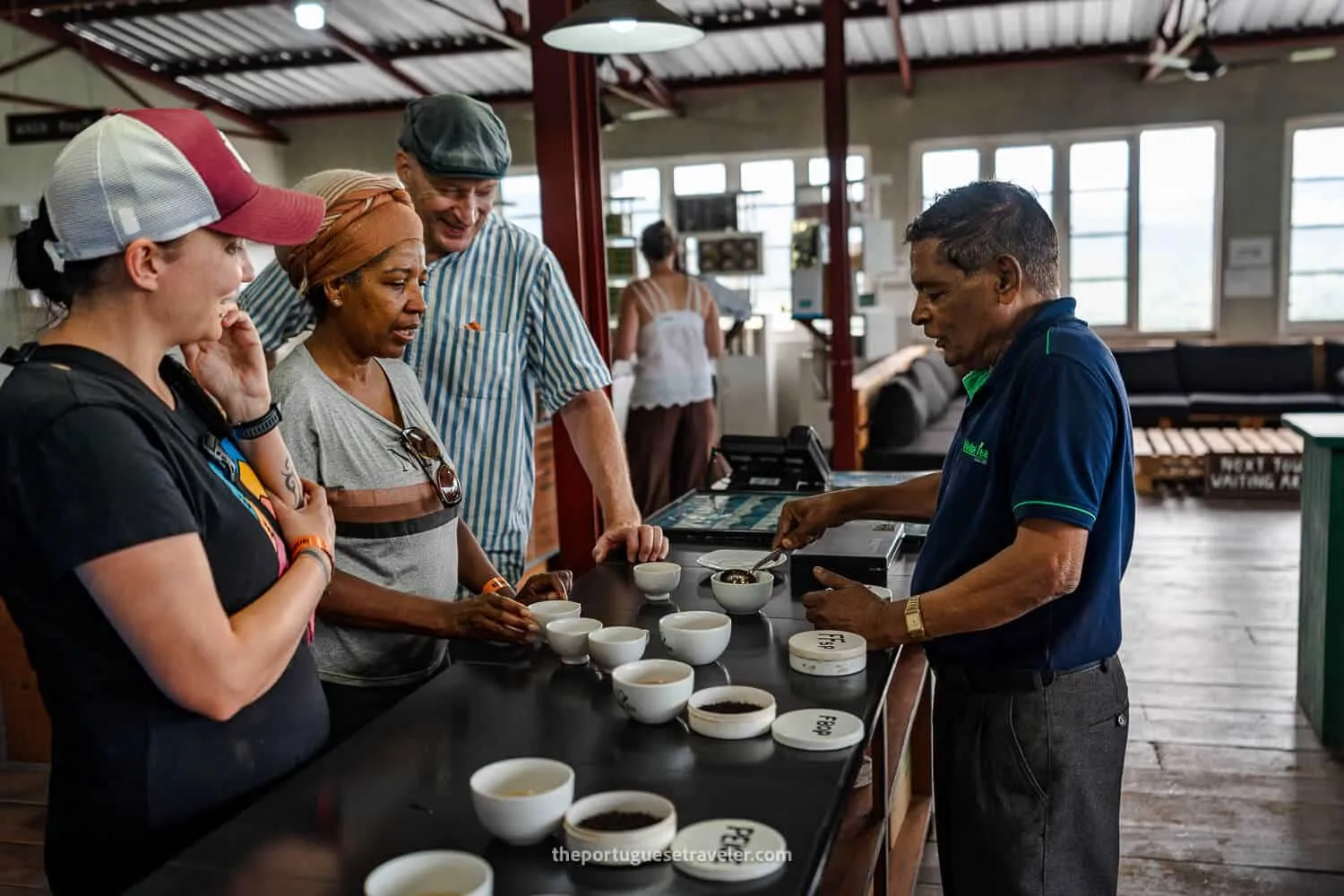
The Ceylon Tea Tasting Experience at the Halpewatte Tea Factory
The Numbers Behind Ceylon Tea: Exports, Varieties, and Global Impact
Sri Lanka exported about 246 million kilograms of tea in 2024, roughly 13% of global tea exports. Ceylon tea is sold in over 150 countries.
Regions such as Nuwara Eliya, Dimbula, Kandy and Uva each have their own flavors, from delicate and fruity to robust and malty.
The tea industry is a major part of Sri Lanka’s economy, employing over a million people and bringing in foreign exchange.
The Lion logo marks tea that is pure Ceylon tea packed in Sri Lanka.
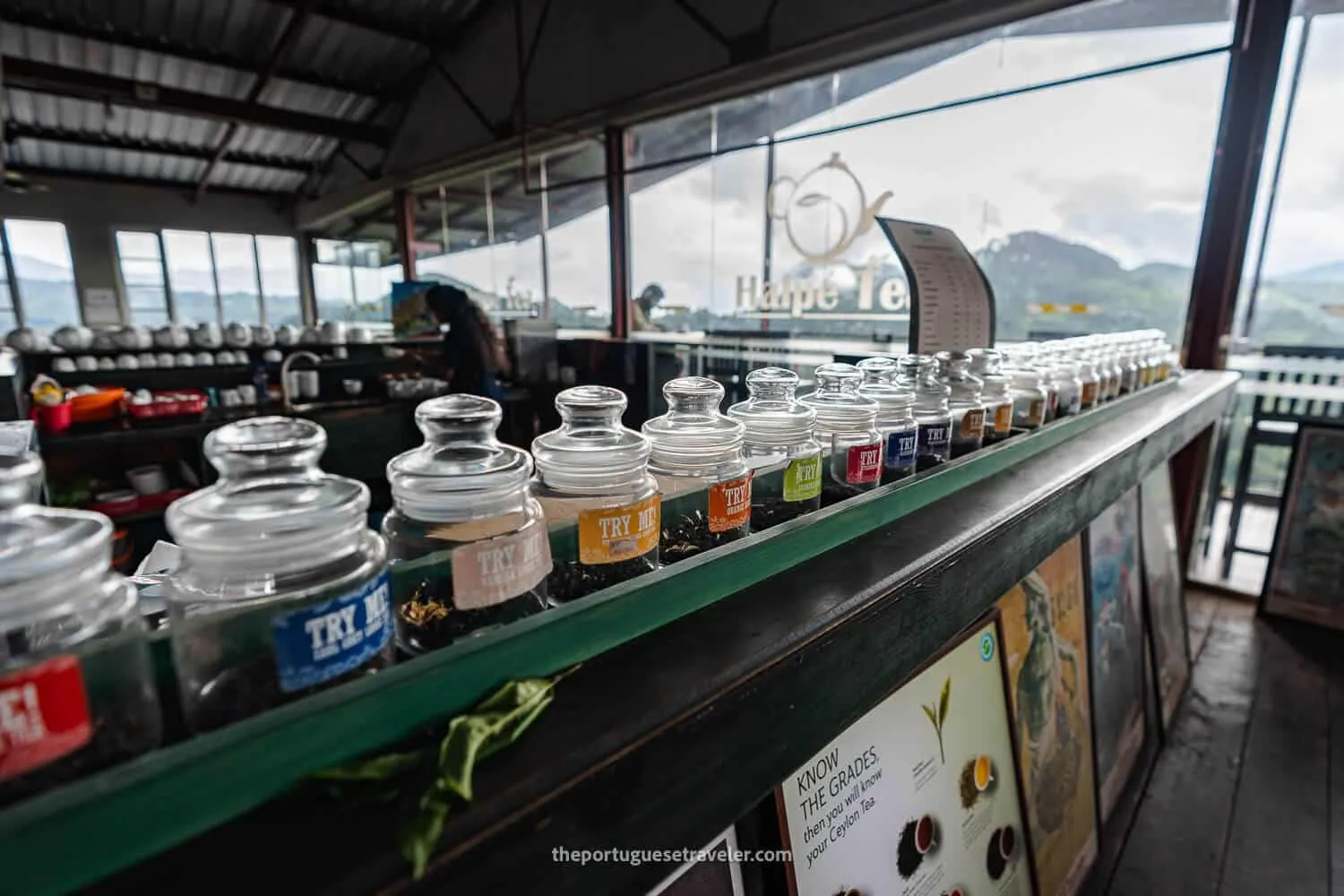
Ceylon Tea Varieties at the Halpewatte Factory
What Types of Ceylon Tea Are There? Black, Green, White, and Beyond
Ceylon tea comes as black, green and white tea. The differences come from how the leaves are plucked and how much they are processed.
- Ceylon Black Tea is the most common type. It is fully oxidized, which gives a bold flavor and a rich aroma. The plucking standard for black tea is usually a bud and two or three leaves. High-grown black teas have a light, honey-like profile, while low-grown ones are deeper in color and stronger.
- Ceylon Green Tea is minimally processed, so it keeps more of its natural antioxidants. It has a nutty, malty flavor and a fresh finish. It is usually made from one bud and two leaves and grown mostly on mid- and high-elevation estates.
- Ceylon White Tea, also called “Silver Tips,” is the least processed and the rarest type. It is made from the youngest part of the plant, a single unopened bud or a bud with one leaf, and has a delicate, sweet flavor with honey and pine notes.
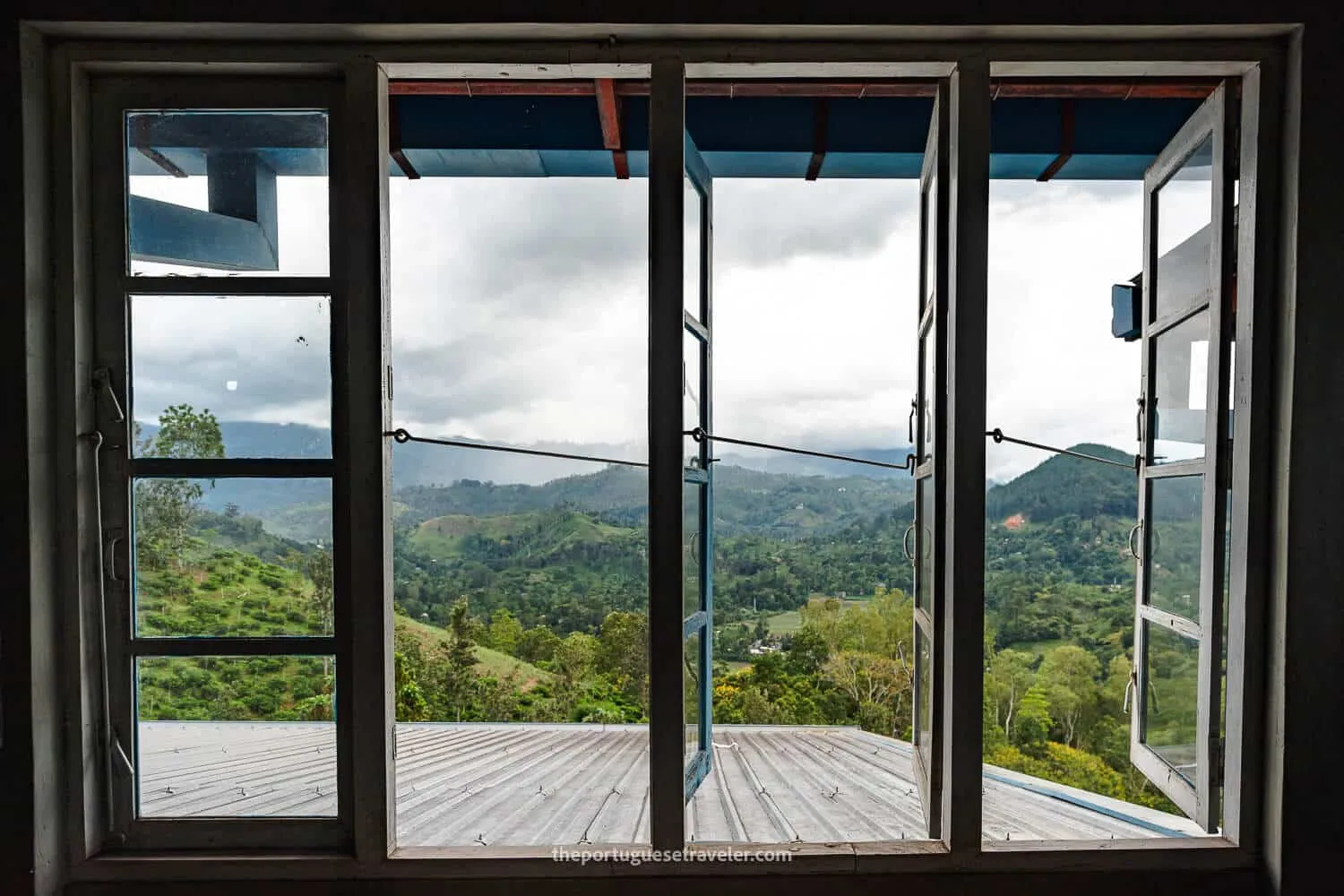
The view from the factory to the Ceylon Tea plantations
Understanding the Tea Grading System: What Do the Letters Mean?
The grading system for Ceylon tea is based on the size and appearance of the processed tea leaves, not on quality or flavor. It categorizes teas into whole leaf, broken leaf, and dust grades, each suitable for different types of tea and brewing preferences. For example, whole leaf grades like Orange Pekoe (OP) are often used in delicate teas, while broken leaf grades like BOPF are favored for strong black teas, such as English Breakfast. Dust grades, on the other hand, are used for bold, full-bodied teas, ideal for tea bags or commercial brewing.
White tea, like Silver Tips, uses tender buds that are minimally processed to preserve their light, delicate flavors. Green tea is typically crafted from mid-grown or high-grown leaves, retaining a fuller, nutty profile. Black tea can range across the grading spectrum, with BOP and BOPF being the most common for strong blends like English Breakfast and OP grades preferred for aromatic options like Earl Grey.
Strongest Teas (Full Body and Bold Flavor)
- Dust 1 – Fine, granular particles with maximum strength and body. Ideal for commercial brewing and strong blends.
- PF1 (Pekoe Fanning 1) – Small CTC (Crush, Tear, Curl) leaves with a robust flavor, often used in tea bags.
- BOPF (Broken Orange Pekoe Fanning) – Small leaves offering a rich, full-bodied taste with bright liquor, used for bold teas.
- BOP (Broken Orange Pekoe) – Medium-sized, neat leaves with a strong, full-bodied flavor and bright color.
English Breakfast is traditionally made with BOPF or BOP, offering its characteristic strength and boldness. Earl Grey often uses BOP or higher grades like OP as a base, infused with bergamot for its signature aroma.
Medium Strength Teas (Balanced Flavor and Aroma)
- FBOPF1 (Flowery Broken Orange Pekoe Fanning 1) – Larger leaves with fewer tips, resulting in a mild, sweet flavor.
- FBOPF (Flowery Broken Orange Pekoe Fanning) – Smaller leaves with tips, offering a bright liquor and a soft, balanced flavor.
- FBOP (Flowery Broken Orange Pekoe) – Coarse, broken leaves with a fair amount of tips, producing a bright infusion and gentle flavor.
- BOP1 (Broken Orange Pekoe 1) – Medium-length, wiry leaves with a mild, malty flavor.
Ceylon Green Tea, rich in antioxidants, often uses leaves from mid-grown or high-grown estates and has a fuller, nutty flavor compared to other green teas worldwide.
Lightest Teas (Delicate Flavor and Aroma)
- OP (Orange Pekoe) – Long, wiry leaves that brew a light, pale liquor with a delicate fragrance.
- OP1 (Orange Pekoe 1) – Delicate, long leaves with a refined taste and subtle flavor.
- Pekoe – Shorter, slightly twisted leaves with a balanced sweetness and bitterness.
- OPA (Orange Pekoe A) – Bold, long leaves with a mild flavor and light liquor.
- Silver Tips (Ceylon White Tea) – The lightest and least processed tea, made from velvety buds that brew a golden, honey-like cup with a delicate, sweet flavor.
Ceylon White Tea is the lightest and mildest option.
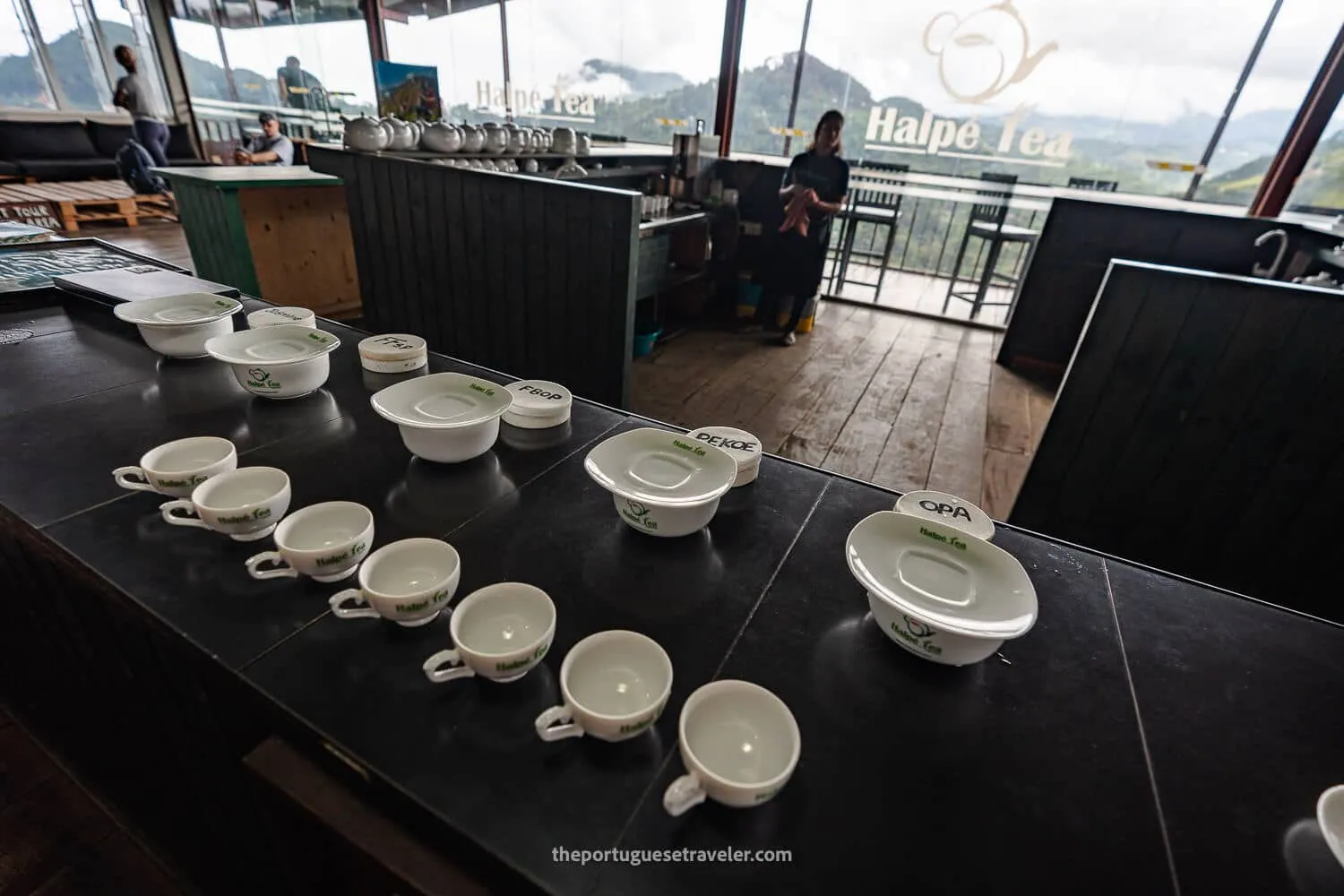
The Black Tea Tasting - Tea Grading Experience
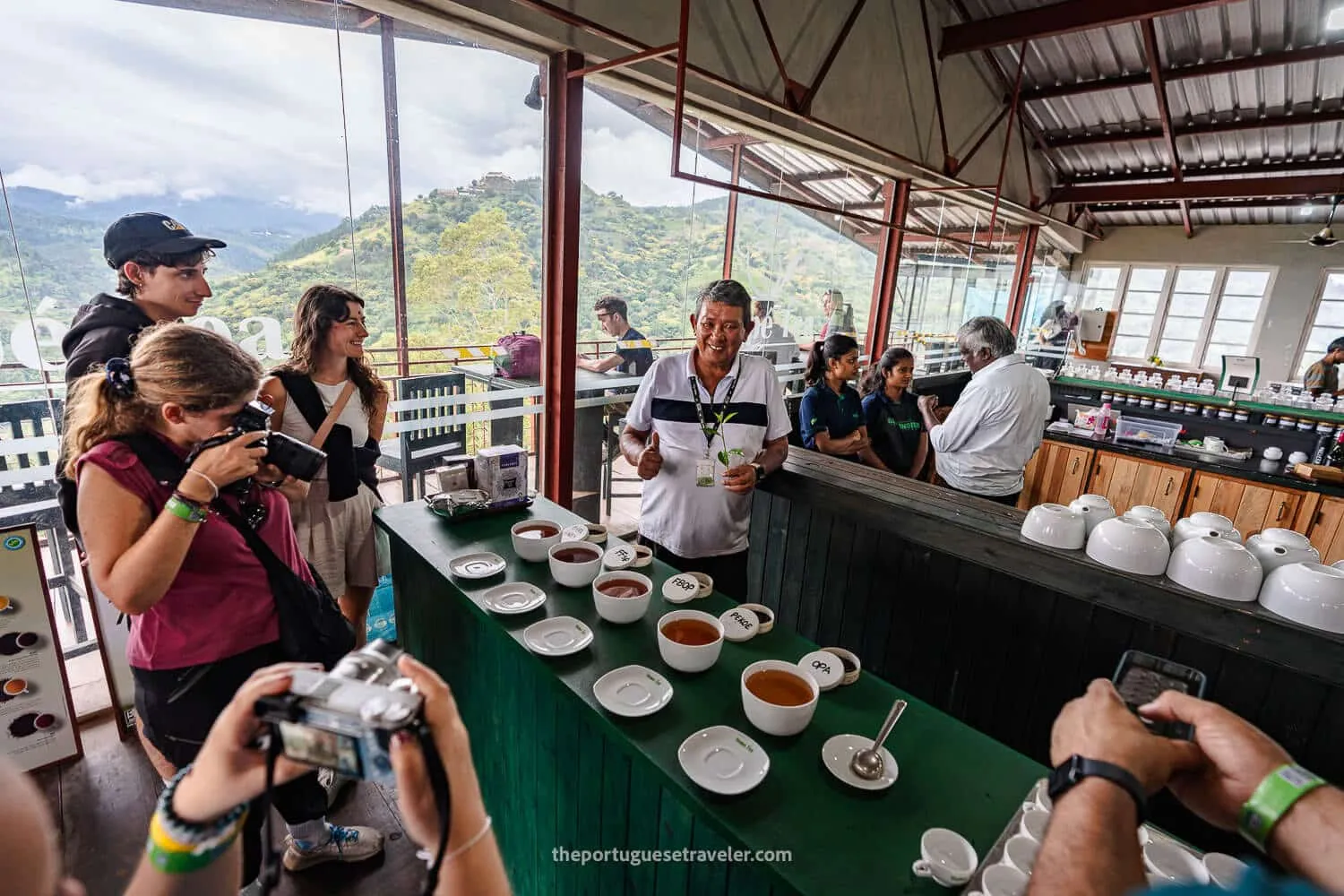
The Ceylon Tea Grading System
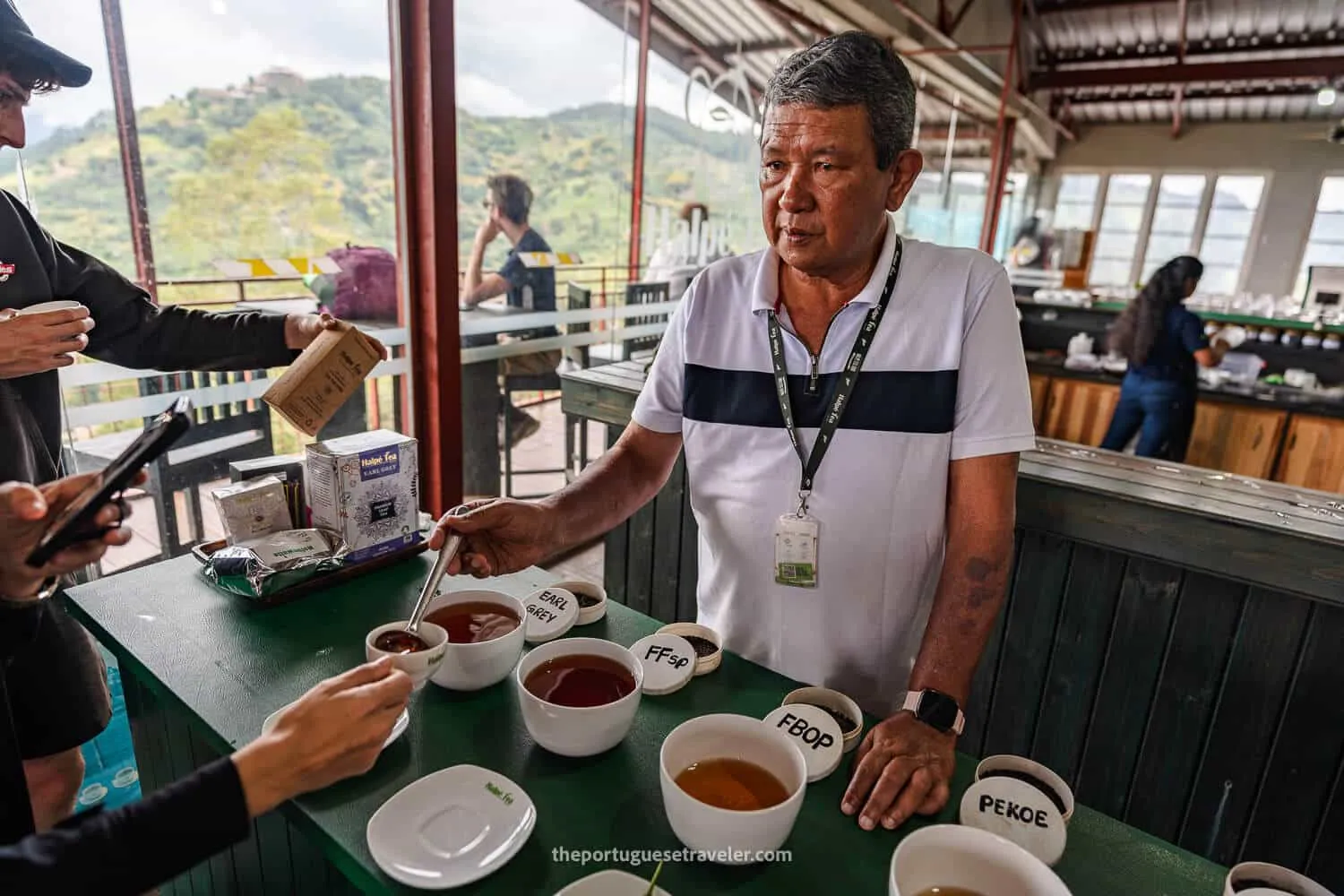
Tea tasting of the tea
What Are the Health Benefits of Ceylon Tea?
Tea contains antioxidants and less caffeine than coffee, and Ceylon tea comes as black, green and white. Research on tea and health is ongoing and the benefits are often overstated, so treat the notes below as general background, not medical advice.
Health Benefits of Ceylon Black Tea
Ceylon black tea has a bold flavor with citrus notes. It contains less caffeine than coffee and antioxidants such as theaflavins and thearubigins, which form when the leaves oxidize.
Common claims for black tea involve heart health, immunity and stress reduction. The evidence for them is limited or mixed, so do not rely on tea for any of these.
Health Benefits of Ceylon Green Tea
Ceylon green tea has a strong, leafy flavor and a darker color than many other green teas. It contains catechins, a group of antioxidants.
Common claims for green tea include weight management, bone and oral health, and protection against heart disease and cancer. The evidence is limited or mixed, so treat them as unproven.
Health Benefits of Ceylon White Tea
Ceylon white tea, also known as “Silver Tips,” is the least processed and most delicate tea, with a naturally sweet flavor. Because it is made from buds, it is often described as having the most antioxidants and the least caffeine, but levels vary from tea to tea.
Claims about white tea include stress reduction, fat burning, bone health, blood sugar control and immune support. They are not well established.
Why Choose Ceylon Tea?
Choose a Ceylon tea for its taste: black is bold, green is nutty and fresh, and white is delicate and sweet. Health claims for tea vary a lot in strength, so enjoy it as a drink and not as a treatment.
For the factory’s own notes on the health benefits of Ceylon tea, see Halpewatte Tea Factory website.
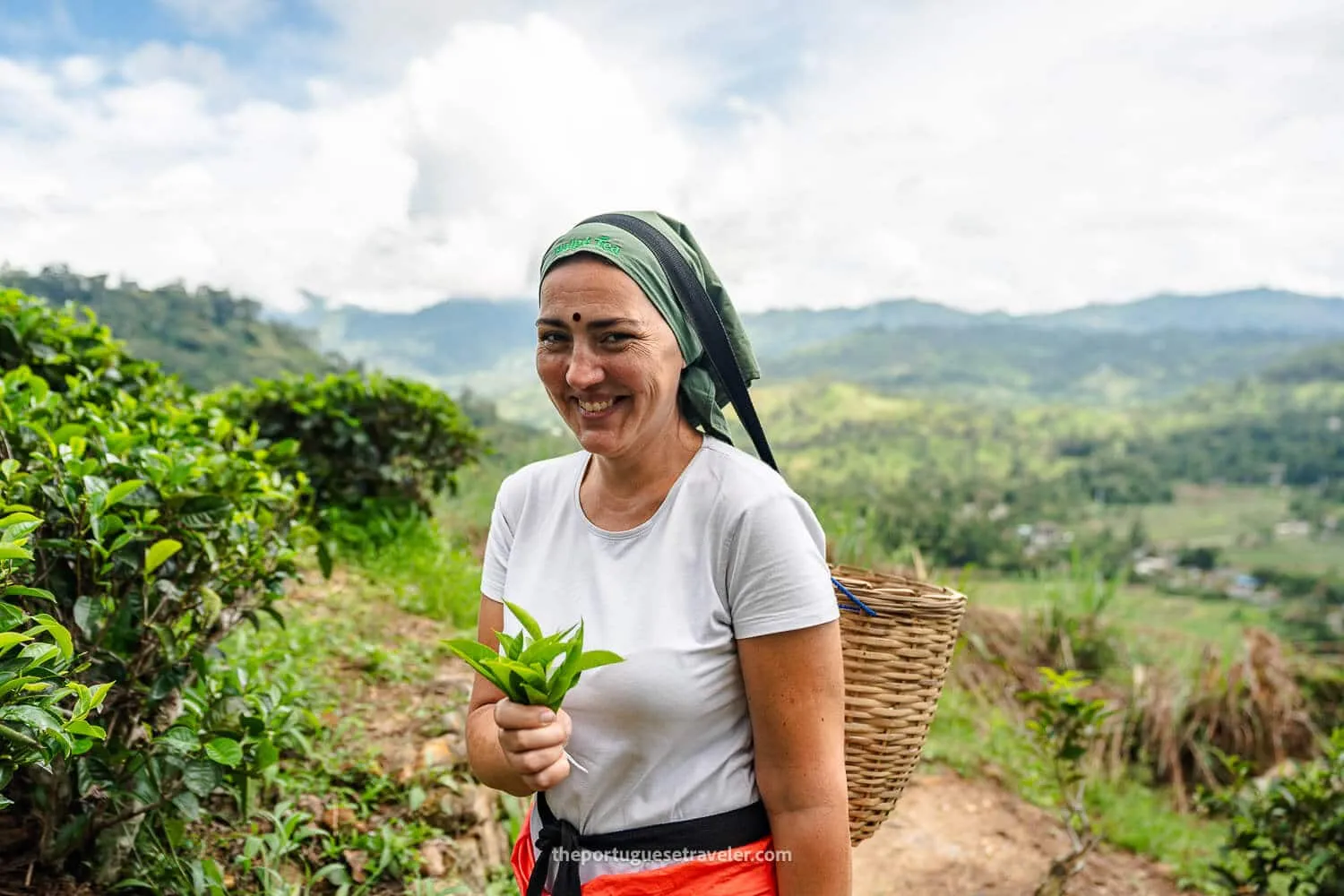
Sónia at the Ceylon Tea Plantation Tour
Where is Tea Grown in Sri Lanka?
Ceylon tea’s flavors depend on the region where it is grown, and each region’s climate, elevation and soil shape the tea.
Central Province:
- Nuwara Eliya: Known as the “Champagne of Ceylon Tea,” this region produces tea at an elevation of 6,200 feet. The cool temperatures and high altitude result in slow-growing bushes with small leaves that develop refined qualities. The leaves take on an orange hue after withering and produce a greenish-yellow infusion with a pale, delicate liquor and subtle floral notes.
- Kandy: Producing mid-grown teas, Kandy offers a range of flavors and strengths depending on the elevation. Lower elevations yield larger leaves with strong flavors, while higher elevations produce milder, more delicate teas. The bright infusions with coppery tones are best harvested in the cool, dry first quarter of the year.
Uva Province: Teas from the Uva region, grown at elevations of 3,000 to 5,000 feet, are known for their distinctive flavors and are often used in blends. Estates in Bandarawela, Badulla, and Haputale produce teas with a blackened appearance after withering, thanks to the unique weather conditions. Uva teas offer a wide variety of flavors and aromas, making them popular worldwide. The region also produces significant amounts of green tea.
Southern Province: The Southern region is famous for its low-grown teas, cultivated at elevations below 2,000 feet. The warm, dry climate and fertile soil contribute to rapid bush growth, producing long, black leaves ideal for rolling. The resulting teas have a strong malty flavor, distinctive aromas, and a deep burgundy hue, making them a favorite for black tea.
Sabaragamuwa Province: This region’s teas show slight variations from those of the Southern Province, thanks to its broader range of altitudes and climatic conditions. The bushes grow quickly, with long, black leaves well-suited for rolling. The tea produces a dark yellow-brown liquor with a hint of red, lighter during the dry season. The aroma has notes of sweet caramel, and the flavor is moderately strong.
Together these regions give flavor profiles from delicate and floral to robust and malty.
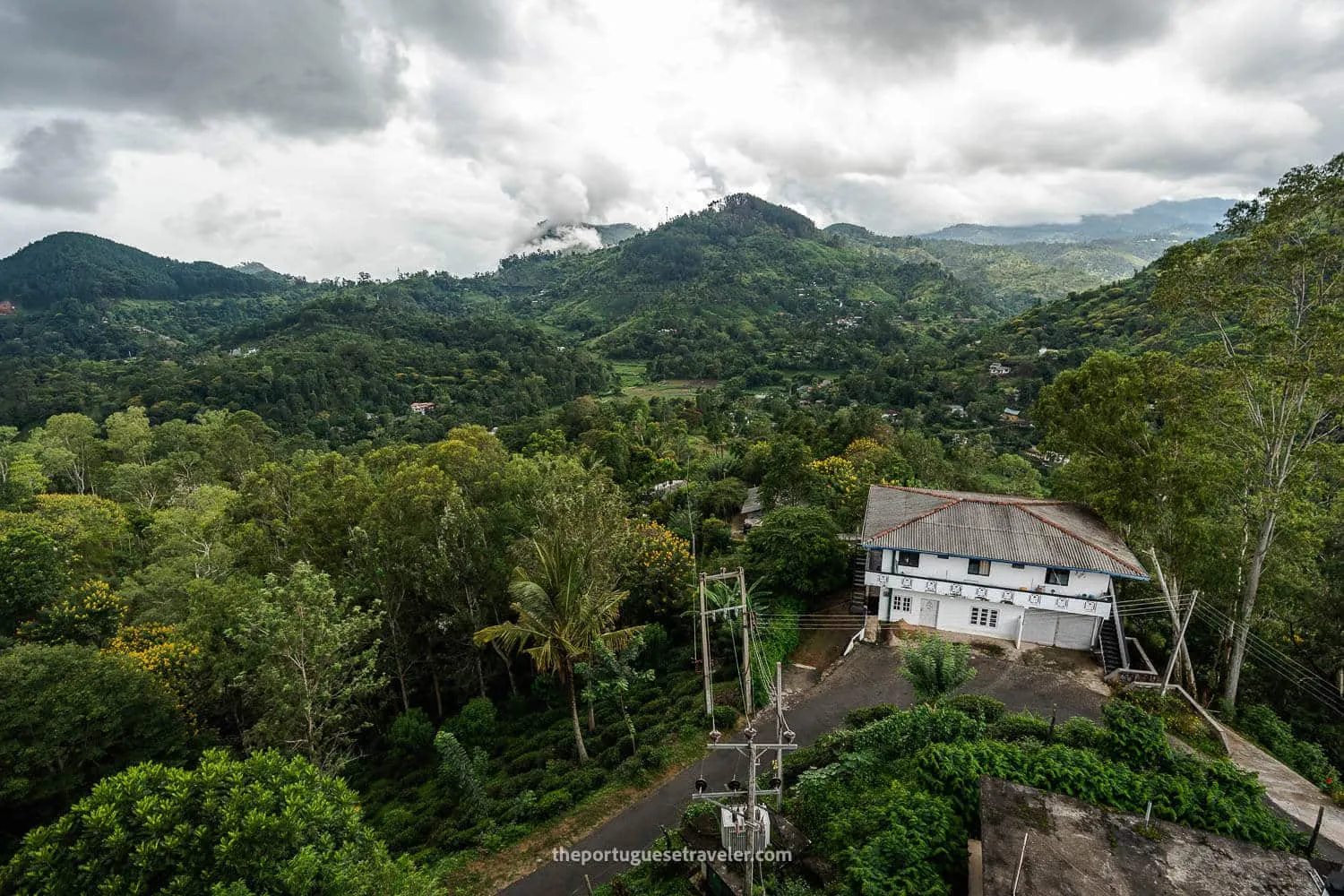
The landscape around the Ceylon Tea factory
Why Visit a Tea Plantation in Sri Lanka?
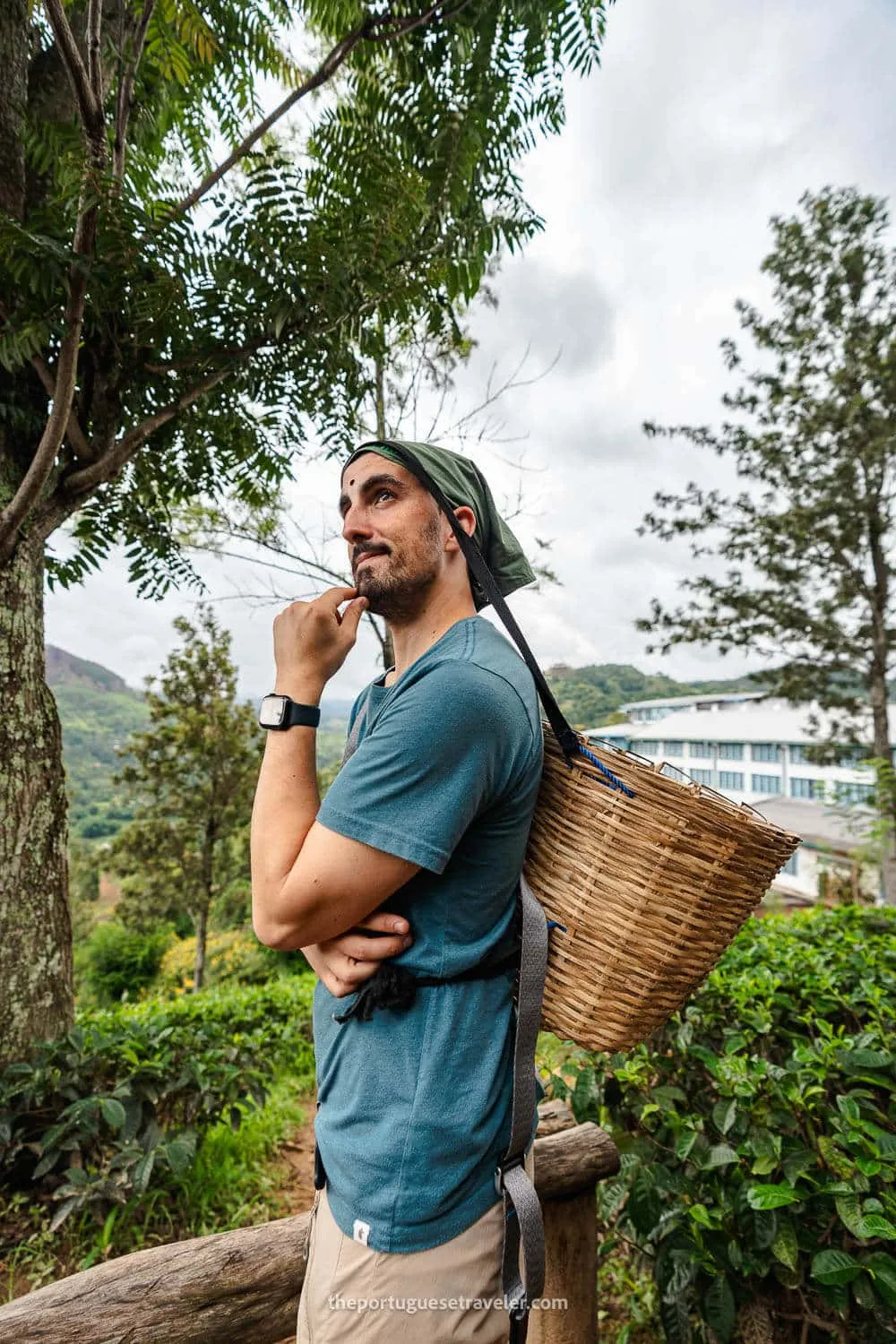
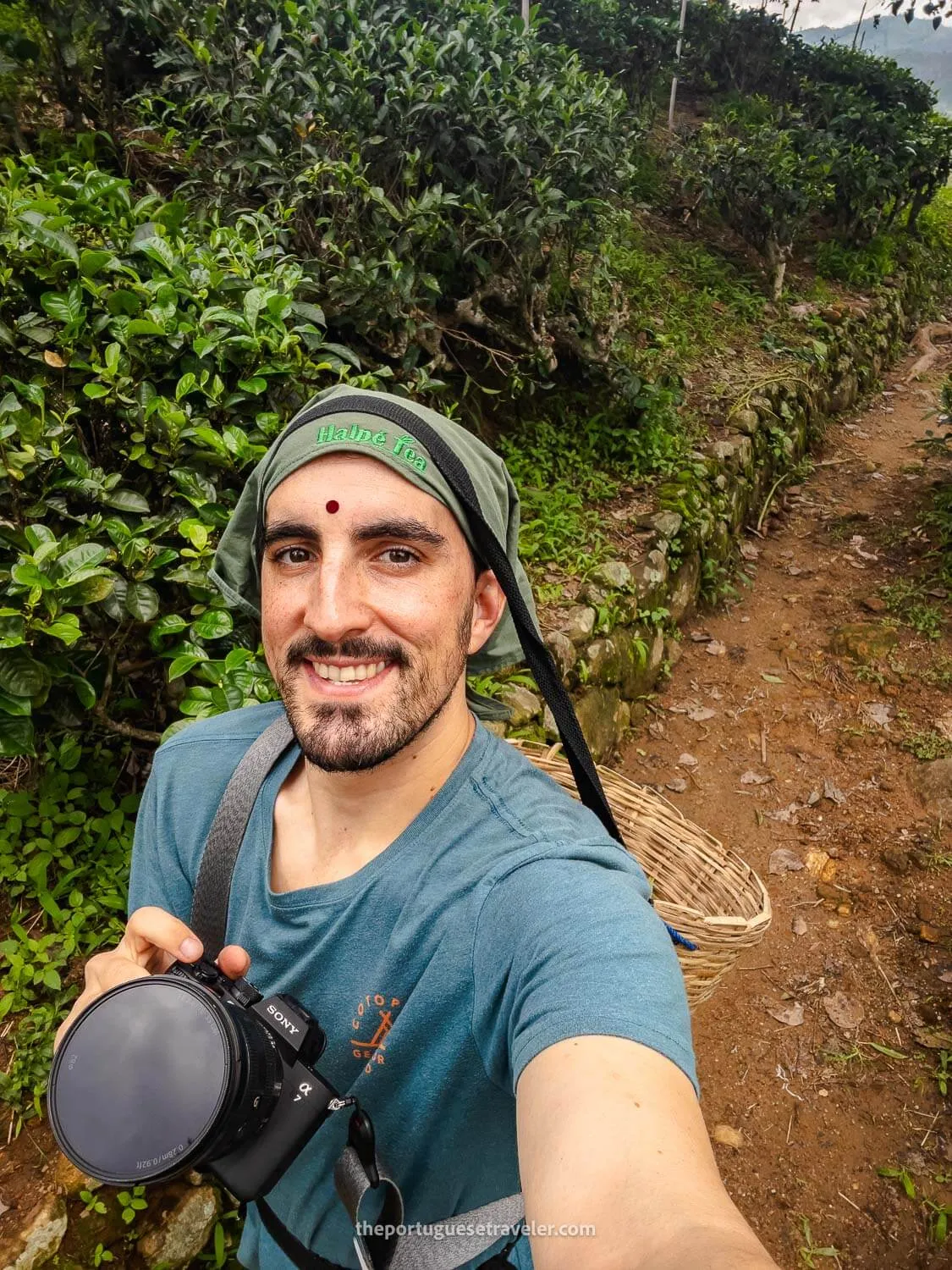
A visit combines a walk in the plantation, a look inside the factory and a tasting. At Halpewatte a worker showed our group how to pluck tea, with a scarf tied around the head and a basket on the back, and it was harder than it looked. You can try it yourself.
Inside the factory you can follow the leaf through the stages described below. The withering troughs were empty when I went, because it was a quiet day.
The tasting is the last part of the visit. At Halpewatte our guide Sallay explained how the tea is graded and we sampled the varieties. The factory shop sells the same teas freshly packed.
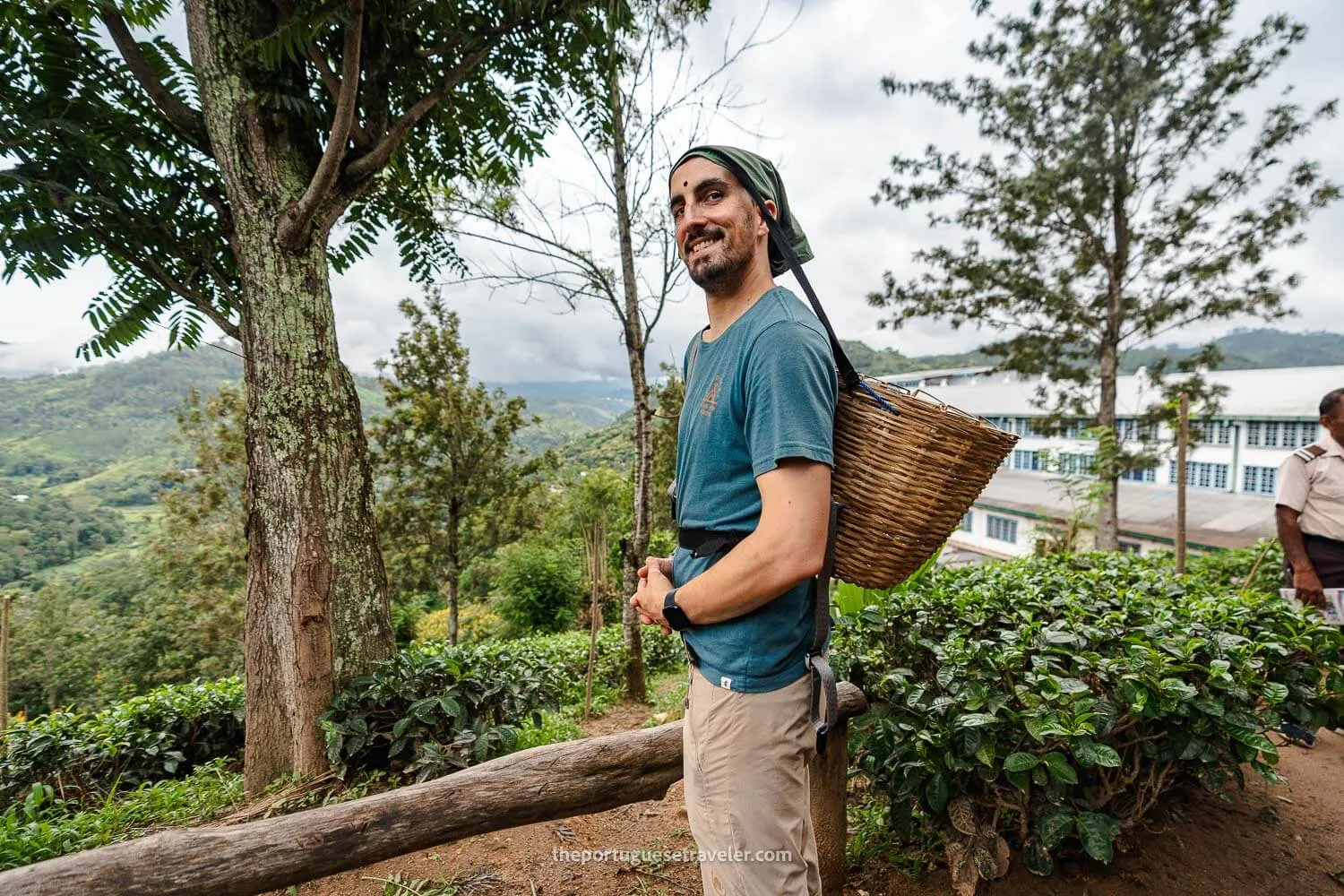
Me at the Halpewatte Tea Factory Tour
When is the Best Time to Visit Tea Plantations in Sri Lanka?
Each tea region has its own quality season, the months when the leaf is at its best.
- In the Western Highlands, which includes areas like Nuwara Eliya, the prime season for tea production runs from January to March. During this time, the tea is of the highest quality.
- For the Eastern Highlands, which include Uva and the Halpewatte factory, the quality season runs from the end of July to early September.
- In the low country, the conditions are consistent year-round, meaning there is no distinct harvest season. Tea production remains steady, and visitors can enjoy tea at any time.
I visited in October, outside the Uva quality season, and on a quiet day the withering troughs were empty.
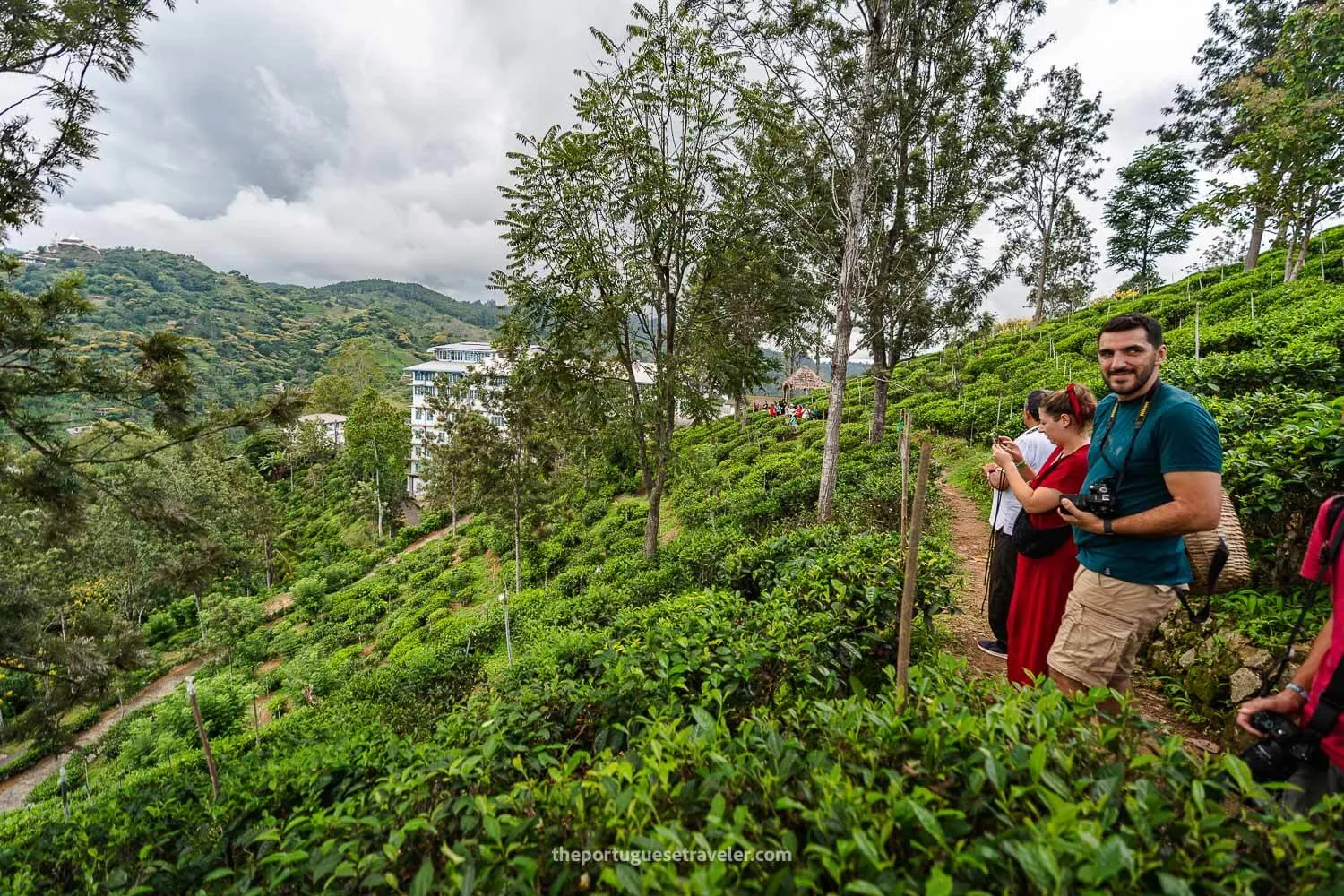
The group enjoying the Plantation Tour
How is Tea Processed in the Factory?
The Halpewatte factory describes seven main stages that turn the leaves into black tea:
- Plucking: The process begins with the careful plucking of tea leaves. Skilled workers, primarily women, pluck two leaves and a bud, which is the industry standard for high-quality tea. The leaves are harvested at regular intervals of 5 to 8 days and are collected in baskets. To maintain freshness, the leaves are transported to the factory multiple times a day.
- Withering: Upon arrival at the factory, the leaves are weighed and spread on troughs. During withering, conditioned air circulates between the leaves, reducing surface moisture and breaking down the tea juices chemically. This process takes between 10 to 14 hours, softening the leaves and making them more pliable for the next stages of processing.
- Rolling: In this phase, the leaves are twisted to rupture their cell walls, releasing essential juices that contribute to the tea’s flavor. This is done using rolling machines designed to apply pressure while twisting the leaves. The process takes 20 to 30 minutes. Afterward, the leaves are separated into rolled and unrolled sections, with the unrolled ones being returned to the rollers for further twisting, and the rolled leaves moving on to the fermentation stage.
- Fermentation: Fermentation is crucial for developing the tea’s color, strength, and flavor. The rolled leaves undergo oxidation in climate-controlled rooms, where the temperature and humidity are carefully monitored. The enzymes in the leaves interact with oxygen, causing the color of the leaves to change from green to a coppery brown. The degree of fermentation is monitored through the color and aroma of the leaves, ensuring they are properly oxidized.
- Drying: Once fermentation is complete, the leaves are dried to stop the fermentation process and remove excess moisture. The tea is passed through dryers, where the temperature gradually increases, starting at around 50°C (120°F) and finishing at 93-105°C (200-220°F). The moisture content is reduced to about 2% to 3%, and the tea takes on a rich, coppery brown color, ready for the final stages of processing.
- Grading (Sifting): After drying, the tea undergoes grading, where it is sifted based on size and shape. Specialized grading and cleaning machines, equipped with trays of different mesh sizes, separate the various grades of tea. Stalks and fibers are removed during this process, ensuring that only the finest tea remains. The tea is then stored in airtight bins or boxes to preserve its quality.
- Packing and Dispatching: Finally, the tea is packed for sale. Tea’s hygroscopic nature makes it prone to absorbing moisture, so it is carefully packed to maintain quality. Once sufficient quantities are collected, the tea is packed into plywood tea chests or multi-walled aluminum craft paper-lined sacks. It is then dispatched to tea auctions or for direct export to tea lovers around the world, ensuring the perfect cup of Ceylon tea reaches every destination.
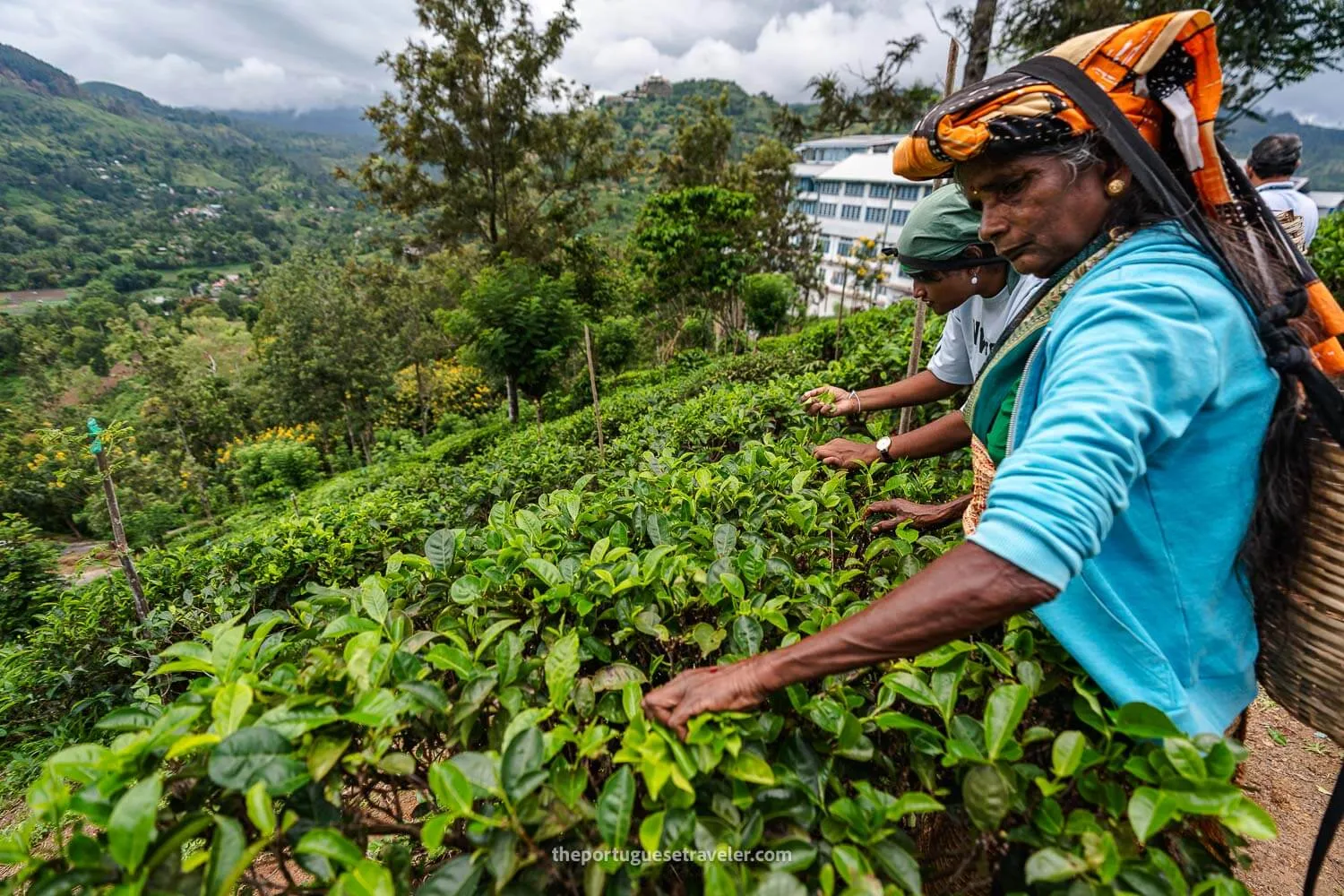
The tea-plucking technique by our local guide at the Tea Factory
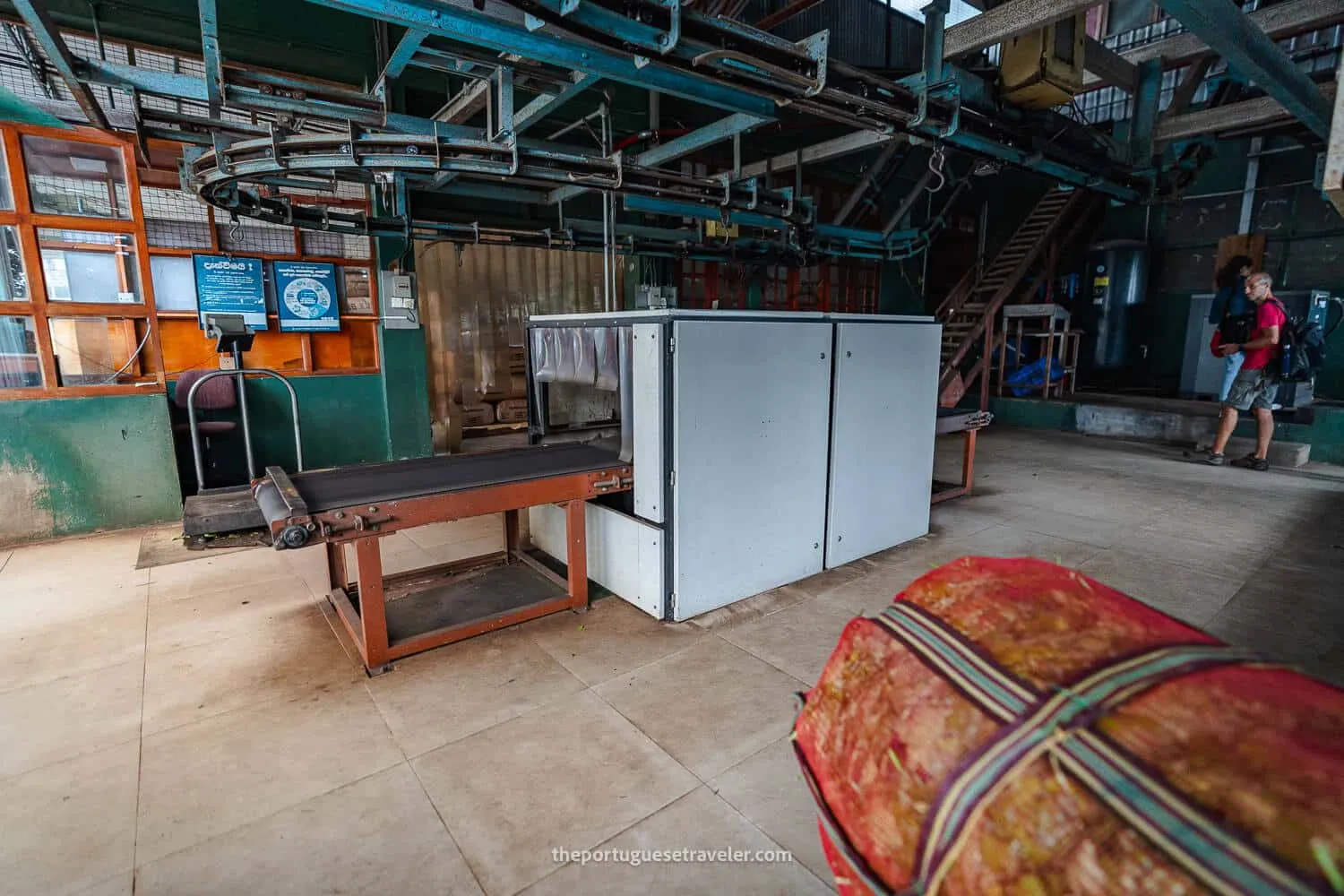
The entrance room where the tea leaves are weighed and processed
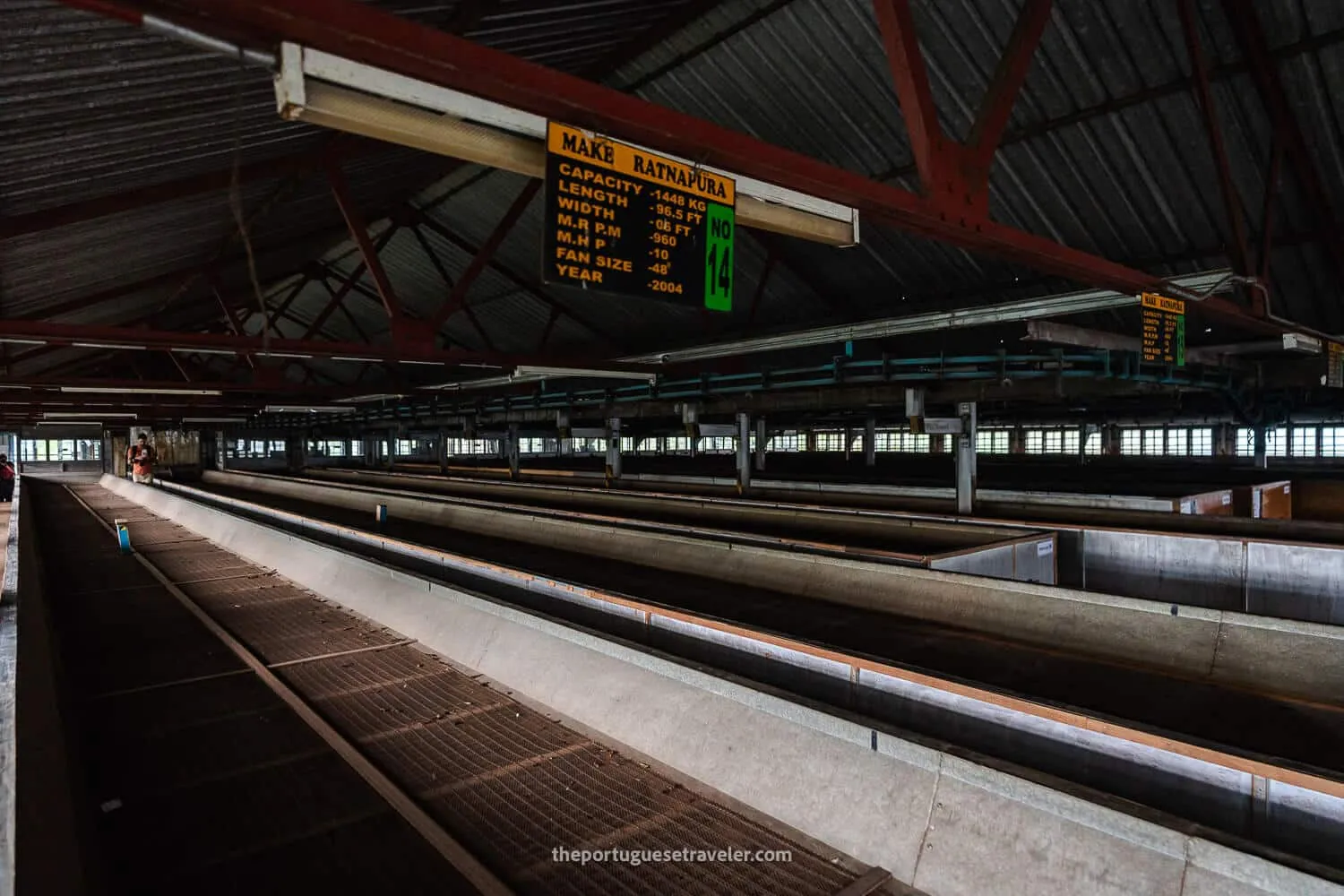
The withering troughs
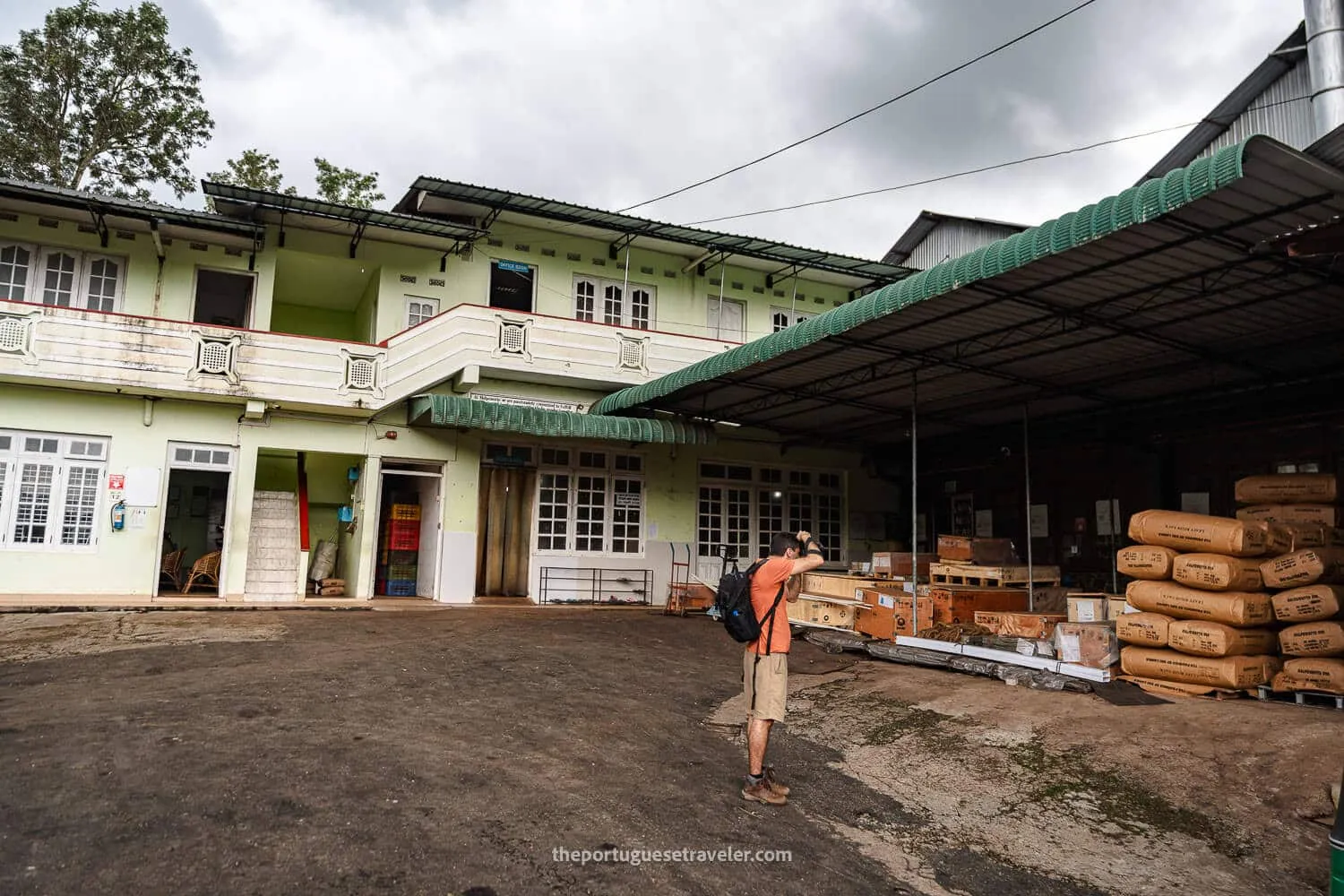
The entrance of the factory with the tea ready to be dispatched
What Happens on a Ceylon Tea Factory Tour?
The Halpewatte factory, at 1,230 meters above sea level in the Uva region, offers these experiences:
- Factory Tour: A guide takes you through the tea manufacturing process, from the weighing room and the withering troughs to packing. Ours started upstairs at the withering troughs.
- Plantation Tour: A walk through the tea fields with a guide, where you can try plucking leaves.
- Tea Tasting: A tasting of the factory’s teas. Ours was on the top floor.
- Tea Shop: After the tour you can buy the teas you tasted.
Additional Experiences
- Handmade Tea Tour: The factory lists a handmade tea tour, in which you pluck leaves, blend your own tea and take it home.
Tour Prices and Timings
- Factory Tour with tea tasting: 10$ USD
- Plantation Tour with tea tasting: 10$ USD
- Handmade Tea Tour: 30$ USD
- Tour Time Slots: From 8:00 a.m. to 4:30 p.m., the hours on the price board. The Handmade Tea Tour may have its own time slots, so ask when you book.
Our group was given scarves and baskets for the plucking. The price board lists the traditional attire rental, a saree or sarong with a plucking basket, at $6.
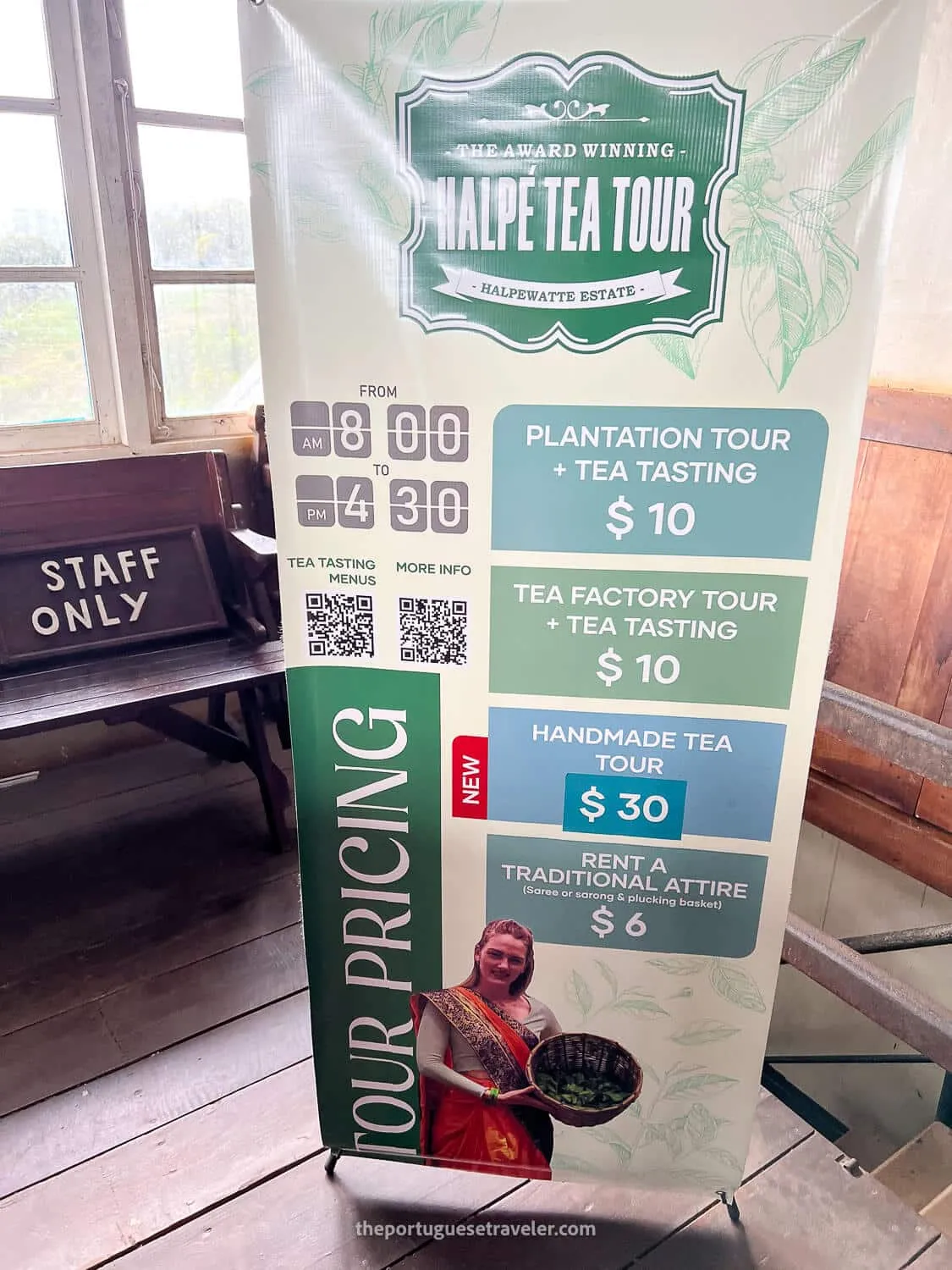
The Tour Prices at the Ceylon Tea Halpewatte Factory
Is Halpewatte Ceylon Tea Factory Suitable for Families?
The tea tour is easy for families, with a short walk, plucking and a tasting. I visited with the press group, not with children, so this is based on what the tour includes, not on family experience.
Children can try plucking with the traditional basket, and the factory tour explains the process step by step.
The tasting and the factory shop are part of the visit, and the plantation has open spots for photos.
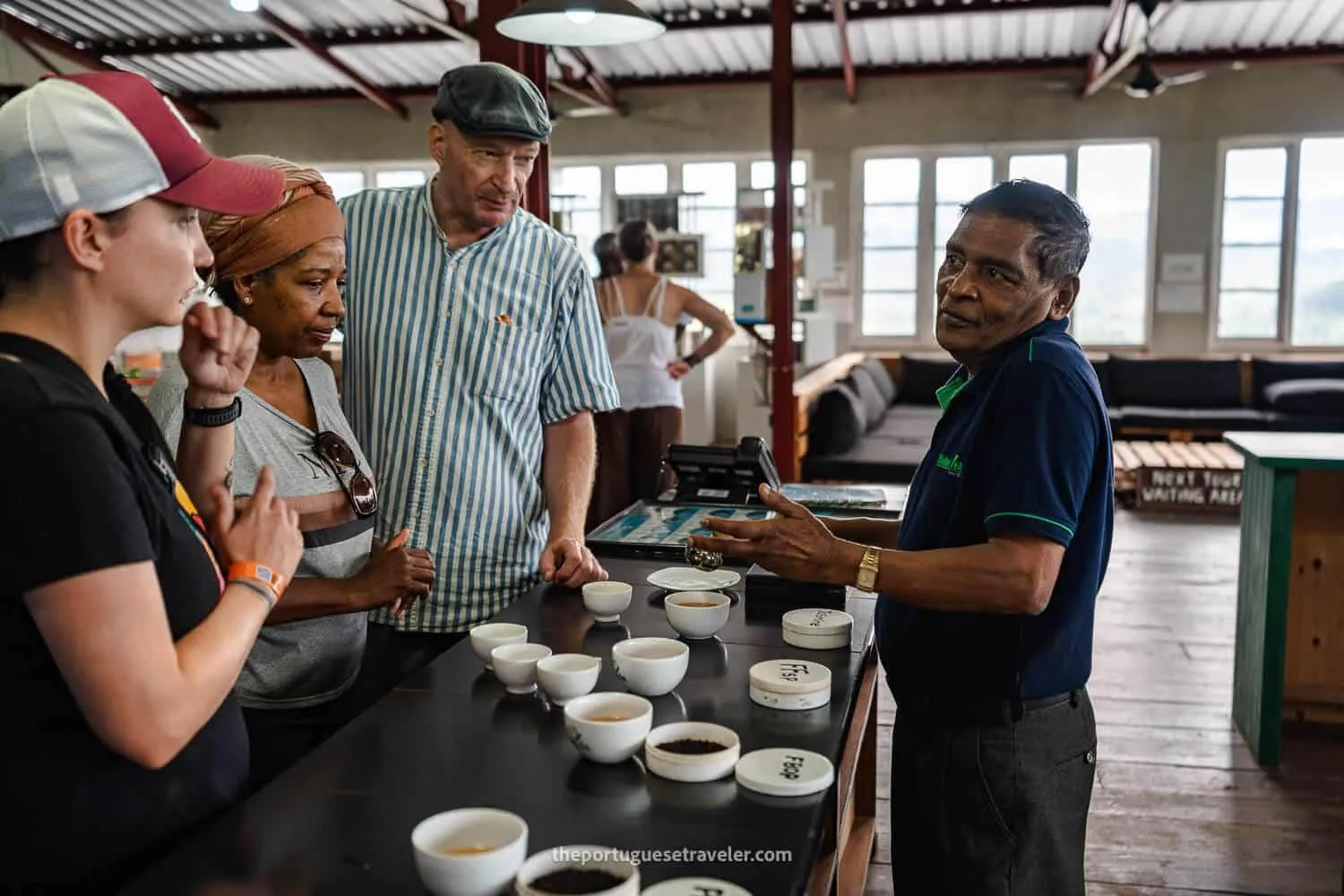
A family at the Tea-Tasting experience
What Clothing Should I Bring for a Plantation and Factory Tour?
Dress for hill-country weather and a walk in the plantation. This is a general gear list with partner links. These are suggestions, not products I have tested. Essentials:
- Breathable T-shirt (Tech or Merino)
- Waterproof Jacket (lightweight, for possible rain)
- Puffer Jacket (for the cooler early mornings)
- Shorts or Pants (depending on weather)
- Hiking Shoes (comfortable, sturdy footwear)
- Backpack (small daypack, around 20-30 liters)
- Sunglasses (UV protection)
- Cap (or a beanie if it’s cold)
- Hiking Socks (preferably merino wool for comfort)
- Sunscreen (minimum SPF 50)
- Water and Snacks (to stay hydrated and energized)
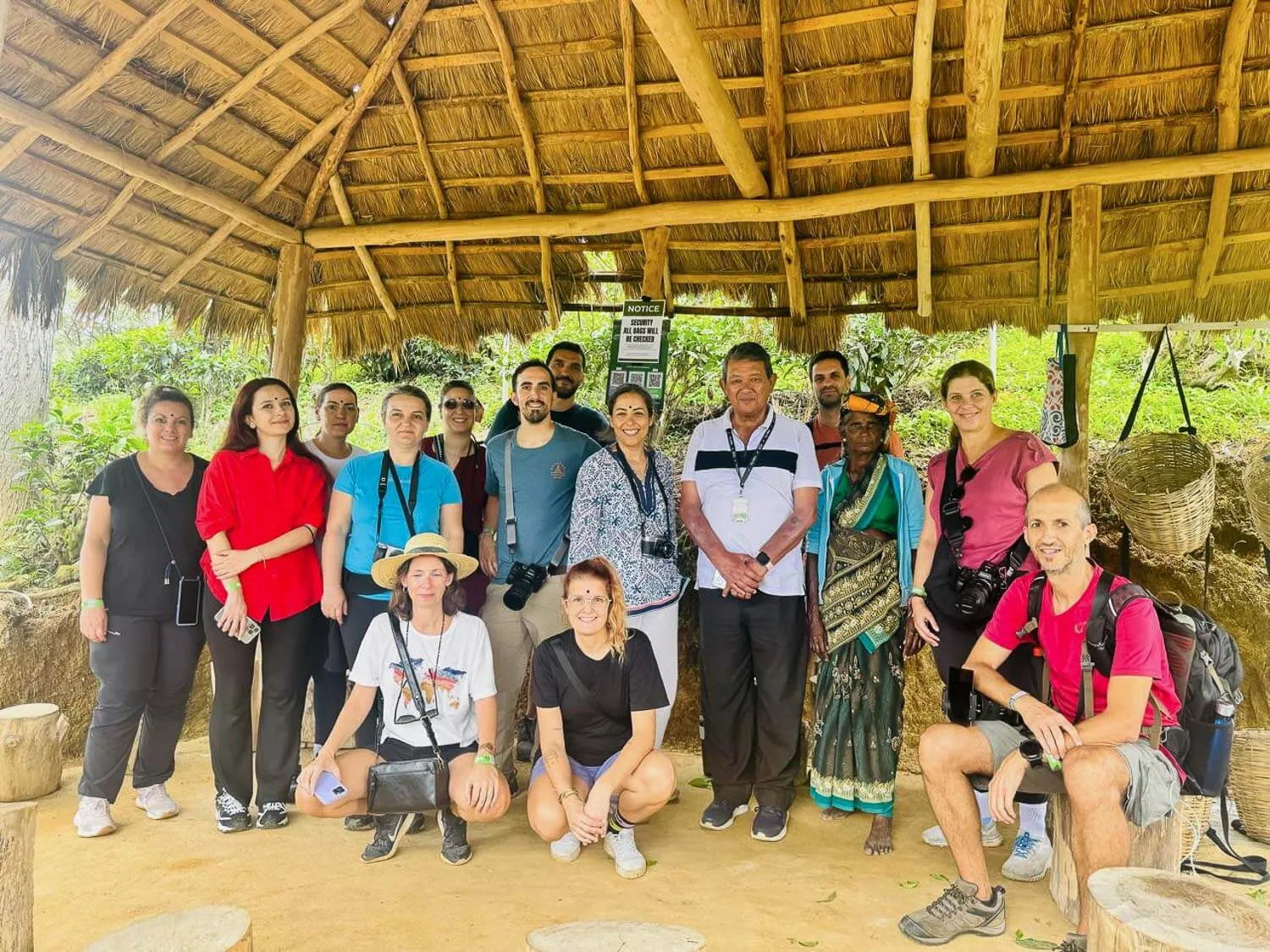
The group at the Halpewatte Ceylon Tea Factory
Can You Fly Drones in the Ceylon Tea Factory?
In Sri Lanka, drones are regulated by the Civil Aviation Authority of Sri Lanka (CAASL), and it is important to follow its rules near the factory. Ricardo flew a drone during our visit and got aerial shots of the plantations.
Here are some key regulations to keep in mind:
- The maximum height is 150 feet (about 46 meters) above ground level.
- Operators must maintain a visual line of sight with their drone.
- Drones are prohibited near airports, military zones, and no-fly zones.
- Flying drones at night requires prior authorization.
- Insurance is required for camera drones over 200 grams.
I took ground-level photos of the factory and the fields with my camera. Drones must be registered with the CAASL, and foreign visitors can get a temporary registration. Check the latest rules at caa.lk before you fly.
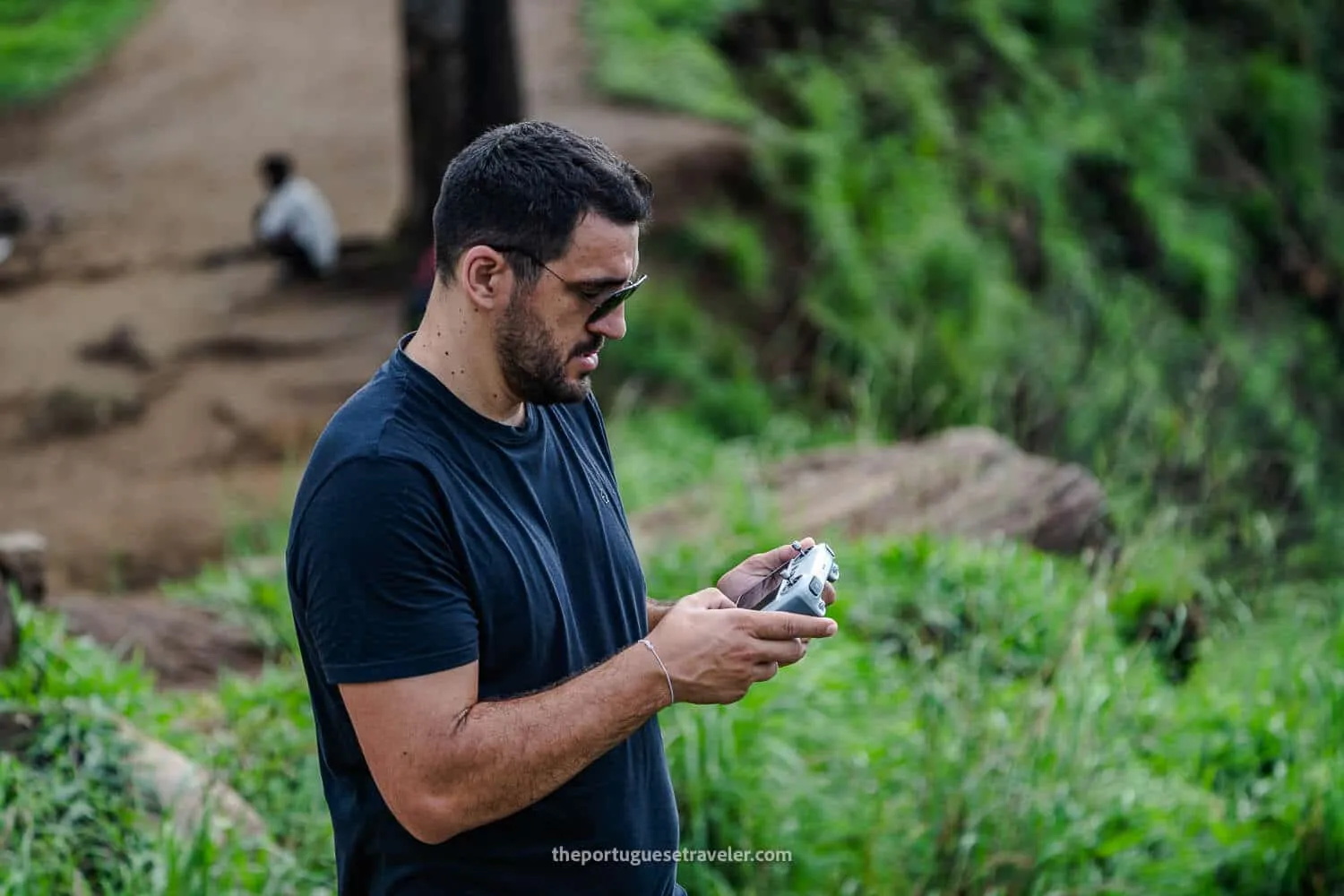
Ricardo flying his Mavic Mini 4 Pro
How to Get to the Halpewatte Ceylon Tea Factory?
To reach the factory from Ella you have a few options, with approximate times from listings. I went by private shuttle with the press group. Private Car/Taxi:
- Time: 20 to 30 minutes
- Details: The most flexible option, especially for a group or with luggage. A private car or taxi takes you directly to the factory.
Tuk Tuk:
- Time: 30 minutes
- Details: A tuk-tuk costs less than a taxi, and tuk-tuks were lined up outside the factory when we arrived.
Public Bus:
- Time: 40 minutes to 1 hour
- Details: A local bus runs from Ella toward Uva Halpewatte, with possible transfers. It is the cheapest option and the least convenient.
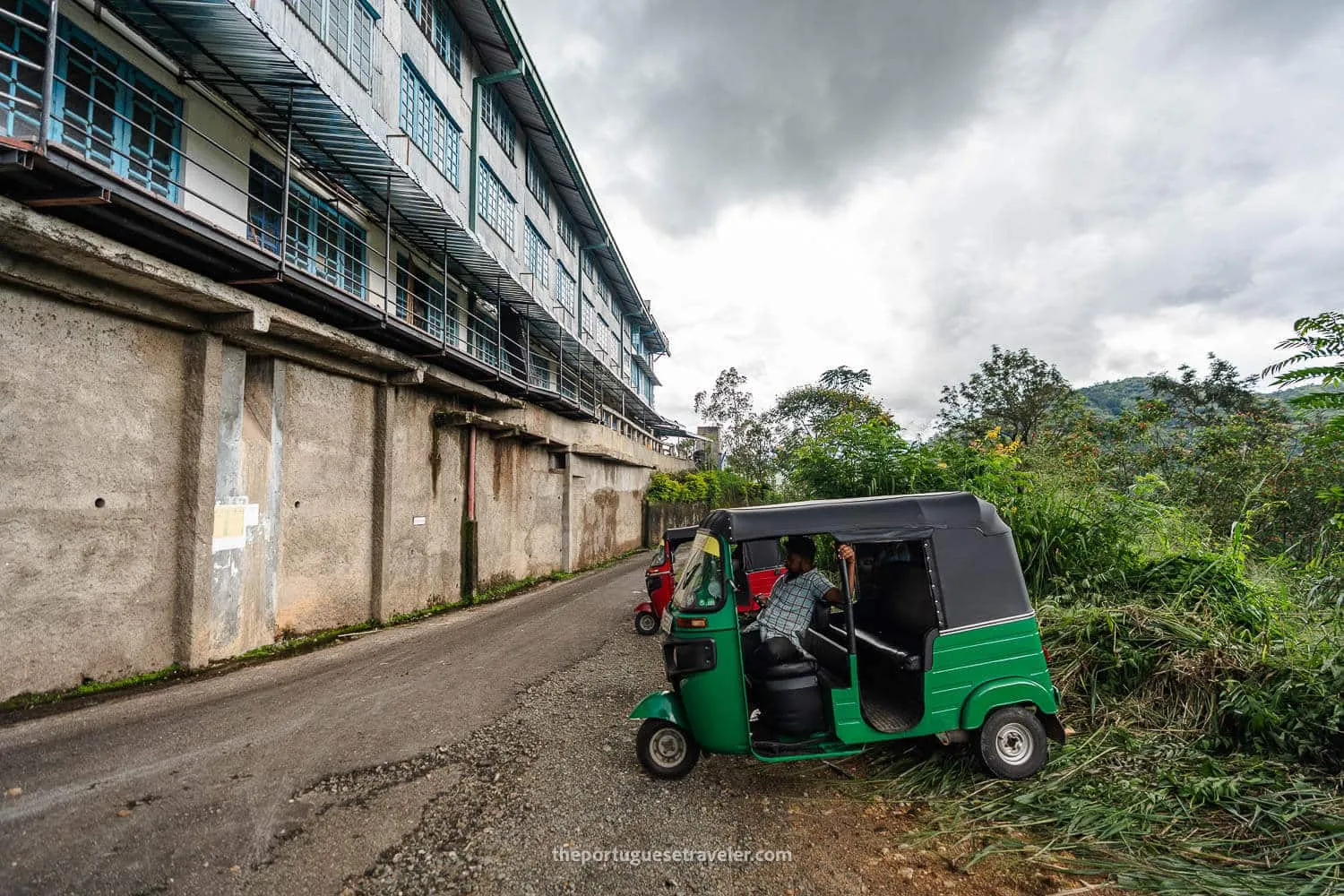
A tuktuk at the Halpewatte Tea Factory
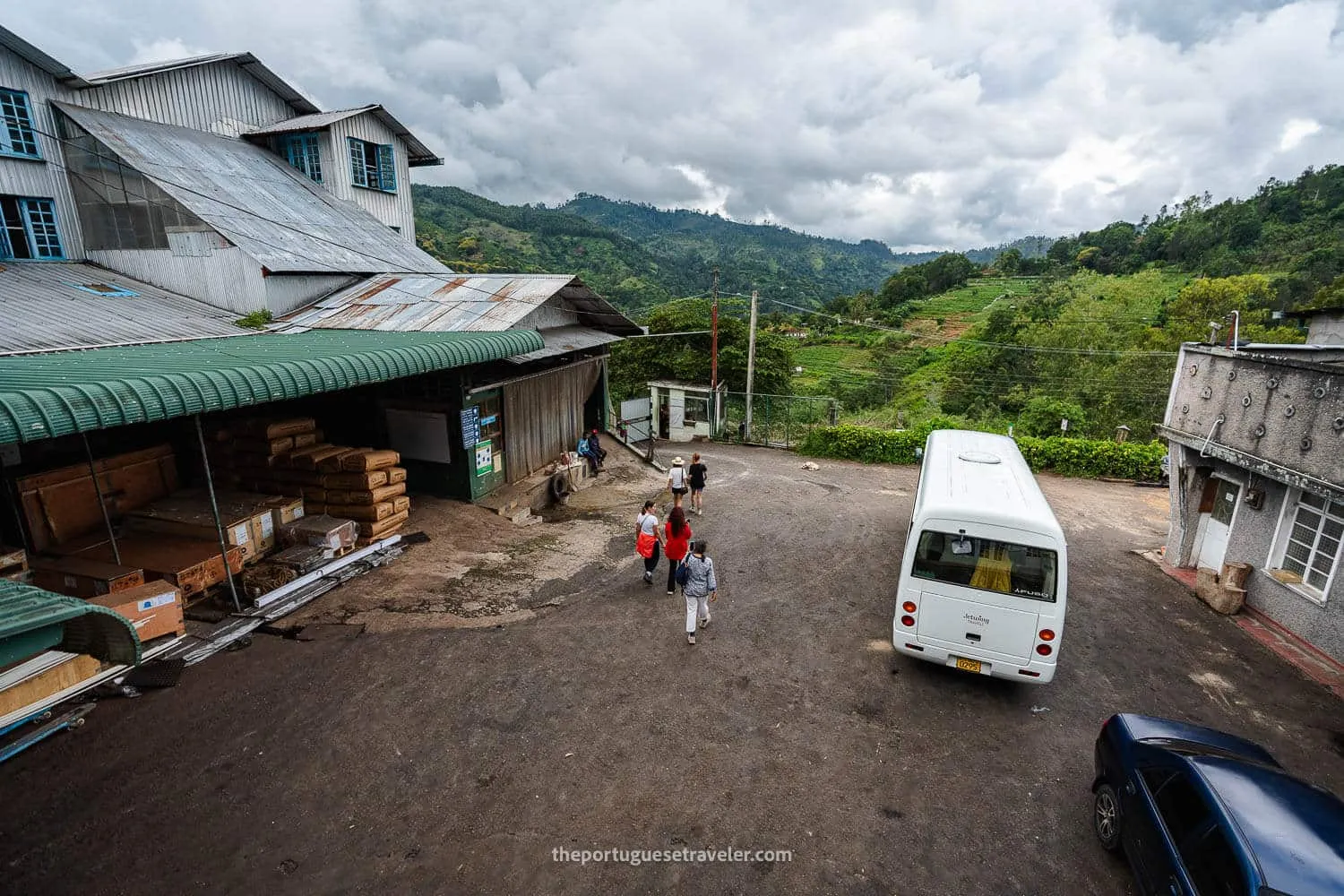
Our private shuttle at the entrance of the Ceylon Tea Halpewatte Factory
How to Travel from Colombo to Ella?
From Colombo, the usual options to reach Ella are below, with approximate times from listings. I traveled by private shuttle with the press group, so none of these times are my own. 12Go is a partner of this site and I have not used it. Private Car/Taxi:
- Time: 5 to 6 hours
- Details: The most flexible option, especially for a group or with luggage. A tuk-tuk is possible, but it takes longer and is less comfortable.
- Time: 6 to 7 hours
- Details: Buses leave from the Pettah Bus Terminal in Colombo. They are the cheapest option, but expect crowds and delays.
- Time: about 8 to 10 hours
- Details: Some trains run through from Colombo Fort to Badulla on the Badulla line, and the Kandy to Ella stretch is the scenic part. Ella has its own station on that line, so you do not need to change at Nanu Oya, which serves Nuwara Eliya. Check schedules at the station or when you book.
- Time: 5 to 6 hours
- Details: If you are on a guided tour, the transfer is often included.
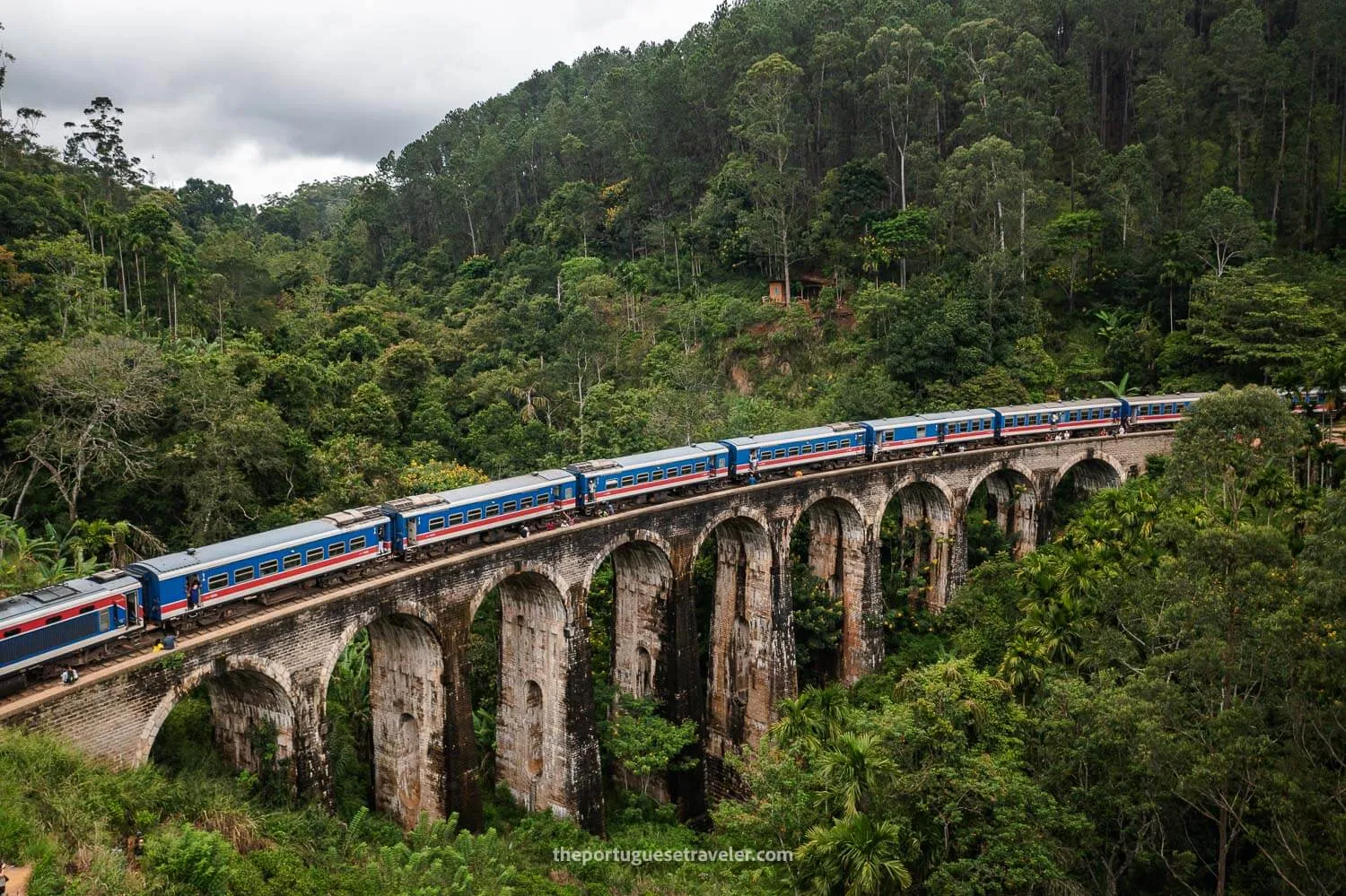
The perfect perspective of the train at the Nine Arches Bridge
Where to Stay Near the Halpewatte Ceylon Tea Factory?
These picks come from research and listings, not from my own stays. I stayed at Ella Mount Heaven during the press trip with the Sri Lanka Tourism Board and found it a bit rundown. Luxury:
- 98 Acres Resort & Spa – On a tea estate, close to Nine Arch Bridge and Little Adam’s Peak, with an outdoor pool.
- EKHO Ella - Near the Nine Arches Bridge and Little Adam’s Peak, with views of the Ella Gap. The boutique hotel has 14 rooms, including Junior Suites with private Jacuzzis.
Boutique:
- Arawe Retreat – A renovated 150-year-old cottage with views of rice paddies.
- Tea Cabins – Rooms, a garden and a pool, a short walk from the Nine Arch Bridge and Ella Spice Garden.
Mid-range:
- Green Nature Paradise Ella – Near Nine Arch Bridge, with views and breakfast on offer.
- The Black Stone – A guesthouse with a roof terrace and easy access to Nine Arch Bridge and Little Adam’s Peak.
Budget:
- Eagle View Villa – A budget option with views and breakfast, about 25 minutes from Ella Town Center.
- Ella Mount View Guest Inn – Close to Nine Arch Bridge, with free WiFi, on-site dining, a garden and bike rental.
Hostels:
- Wild Bee Hostel – A hostel near Ella’s high street with vegetarian breakfast and mountain views.
- Down Town Hostel Ella – A budget option with organized activities, close to the railway tracks and Ella Rock.
For more accommodation options across Sri Lanka, check out my articles on The 20 Best Hotels in Sri Lanka, The 10 Best Luxury Hotels in Sri Lanka, and The 10 Best Hostels in Sri Lanka.
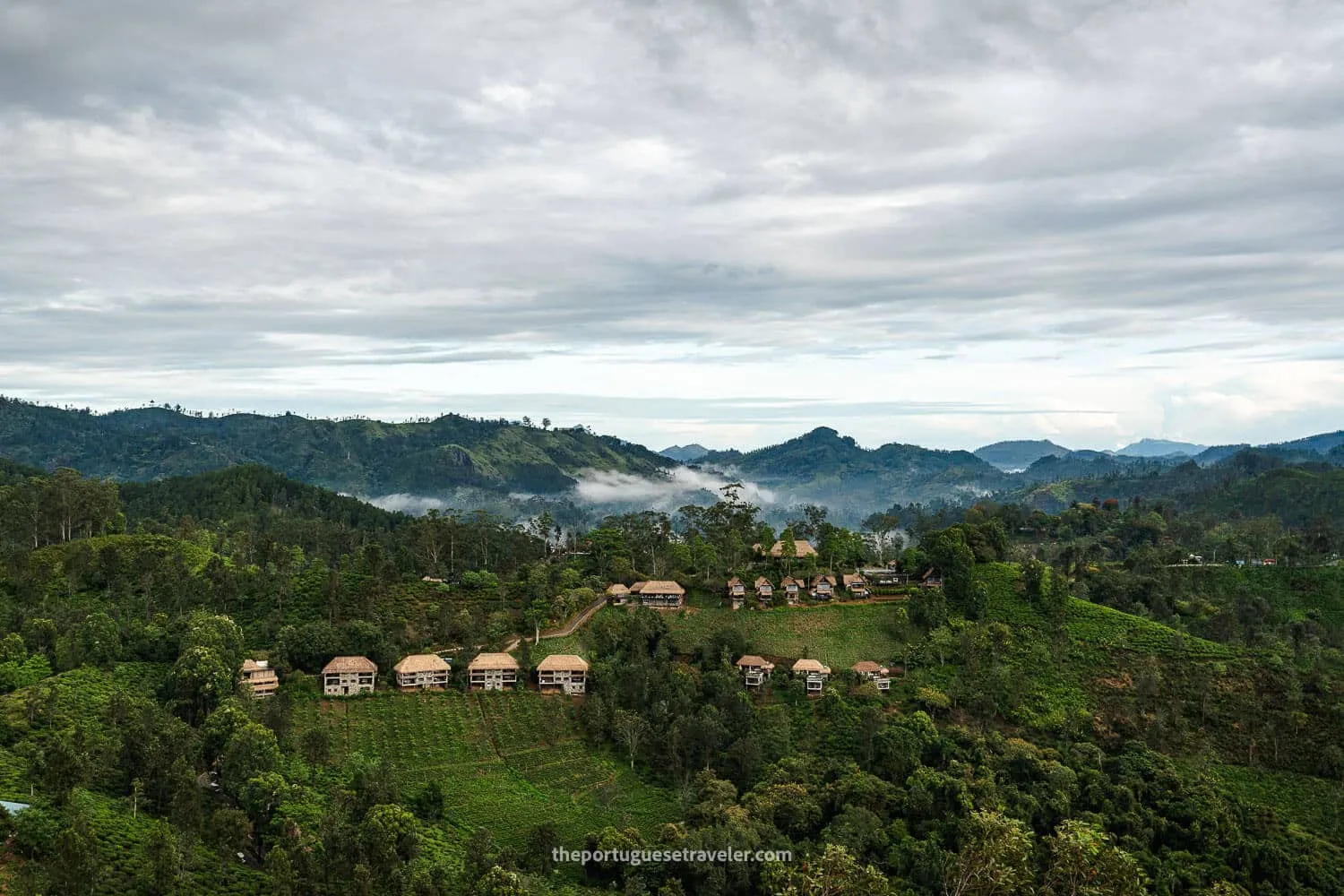
The 98 Acres Resort & Spa in Ella, Sri Lanka
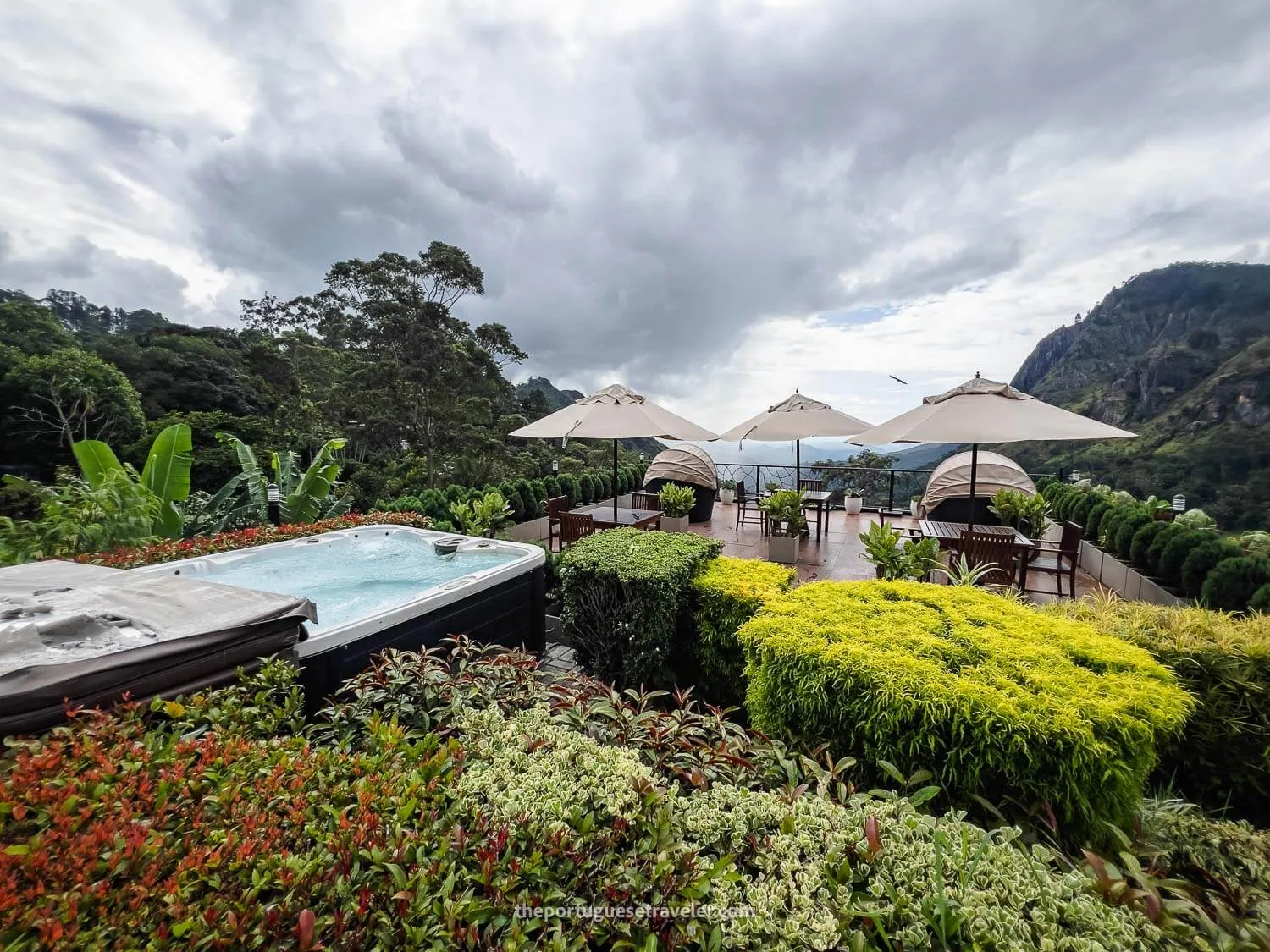
The EKHO Ella Hotel
Where to Eat and Drink Near the Halpewatte Ceylon Tea Factory?
The cafes and restaurants are in Ella town. The only Ella restaurant I ate at was the buffet at the Oak Ray Ella Gap Hotel, after Little Adam’s Peak. Listings mention Cafe Chill for local and international dishes, Matey Hut for roti and kottu, Rainbow Inn for smoothie bowls and vegan salads, and MozzarElla by Nero Kitchen for pizza, but I have not tried them.
Local vendors near the sights sell drinks, snacks and fruit. I saw a snack and fruit vendor near Ravana Falls.
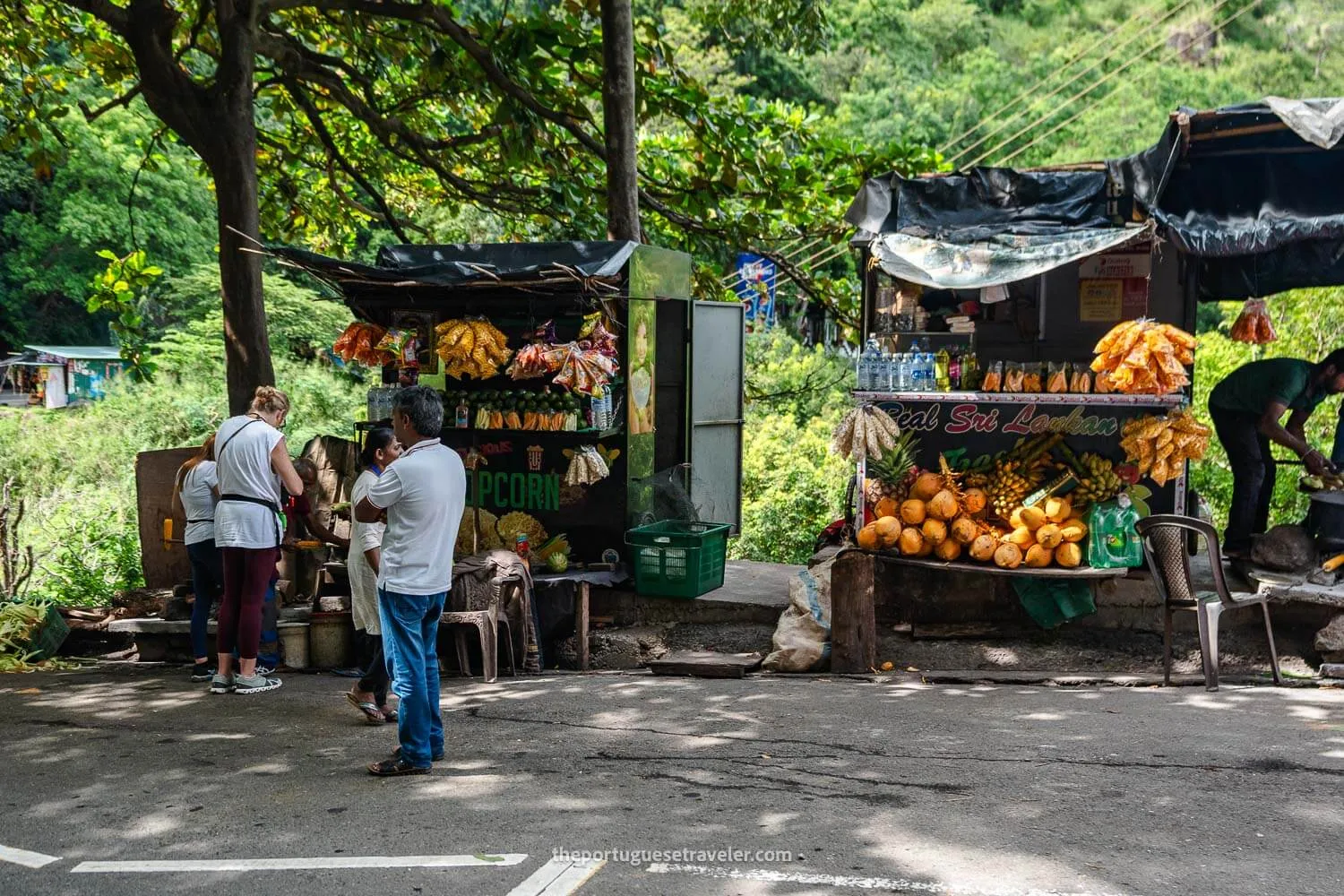
A snacks, and a fruits vendor near the Ravana Waterfall
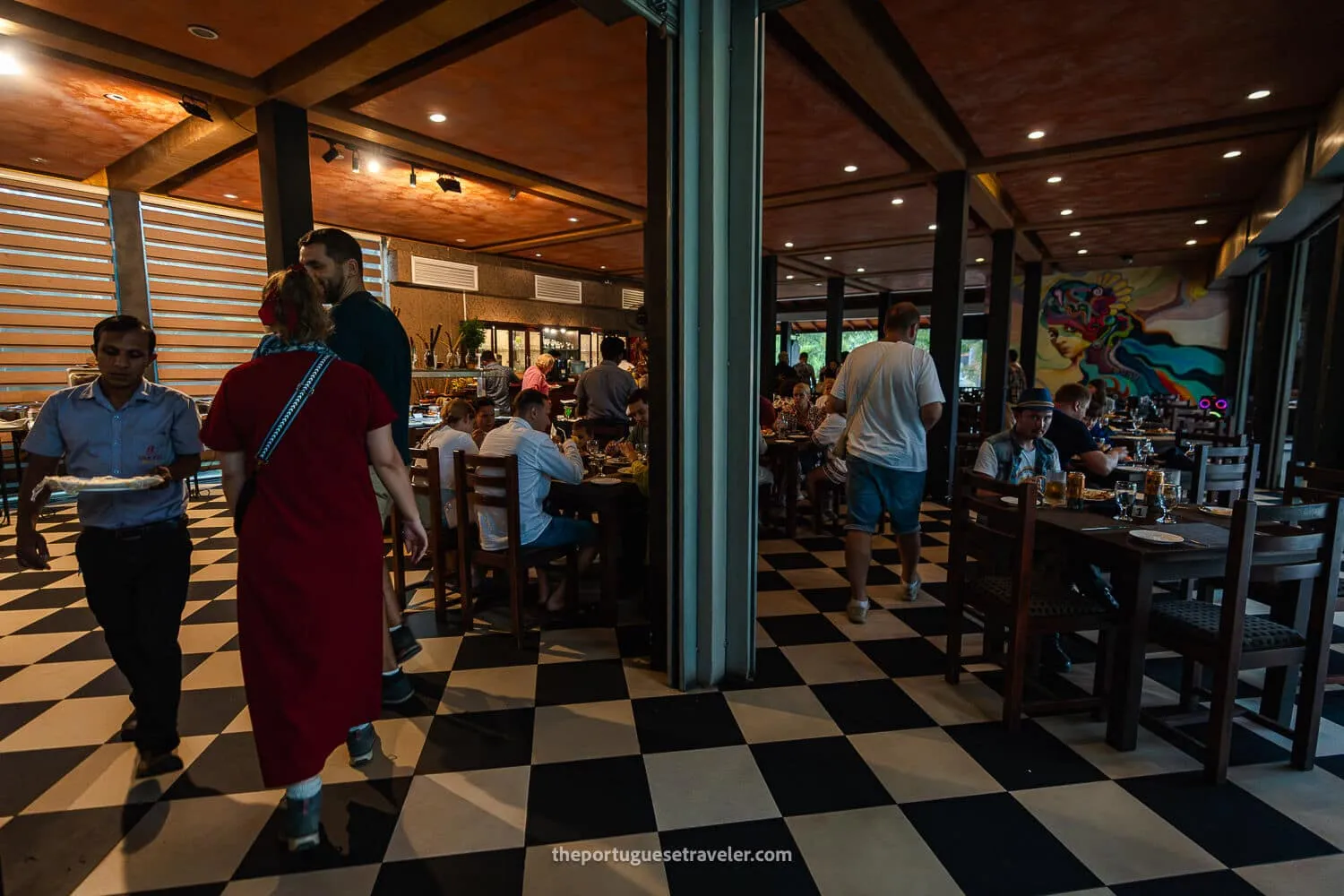
The Oak Ray Ella Gap Hotel’s Restaurant
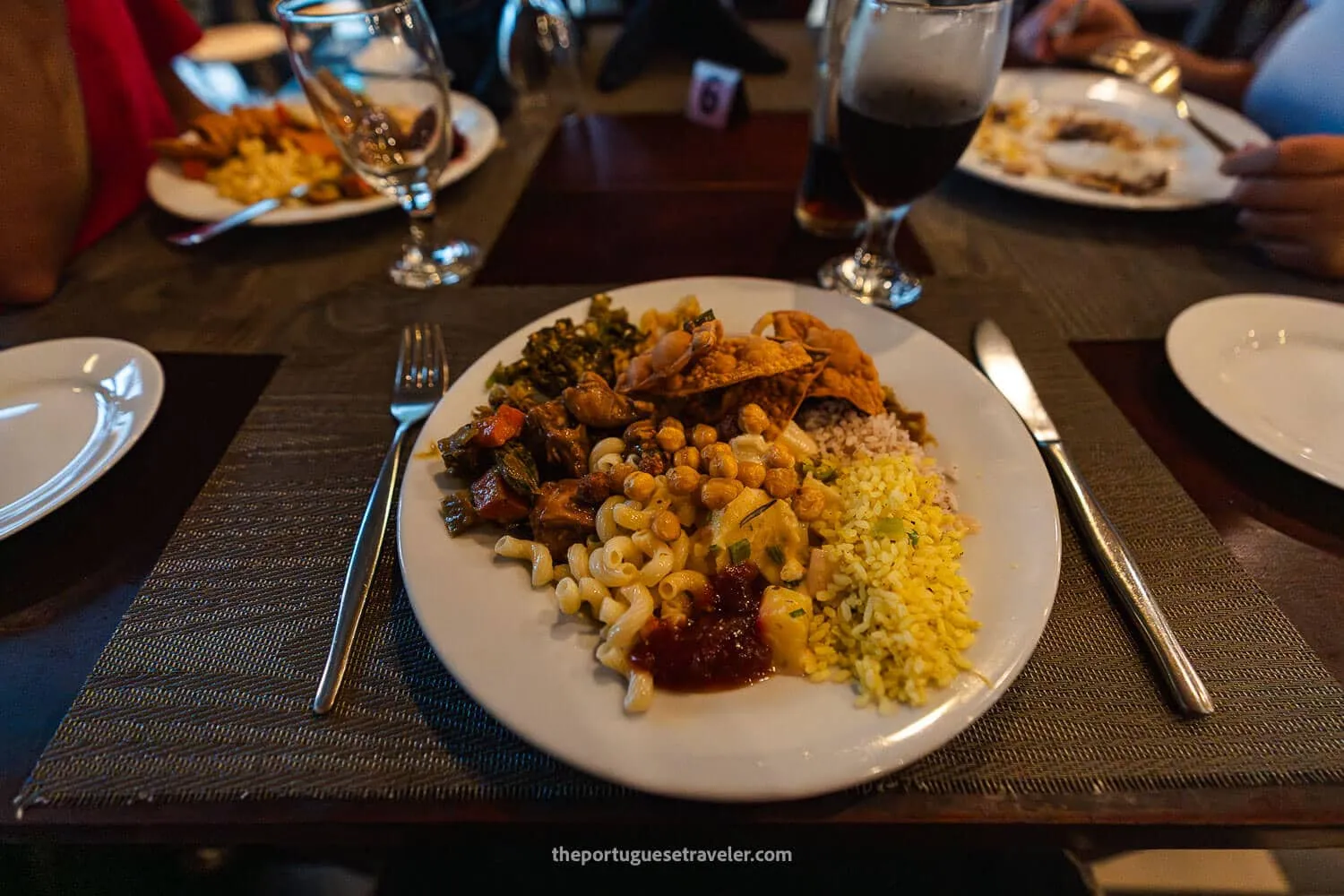
A sample of the local food buffet they had at the restaurant
Best Things To Do near the Halpewatte Ceylon Tea Factory
The tea factory is about 6 km from Ella, so the sights nearby are easy to combine. On my day I went to Ravana Falls and the Ravana Cave before the factory. The falls are one of Sri Lanka’s best-known waterfalls, and the cave is up about 600 steps.
Little Adam’s Peak is a relatively easy hike, and I did it that morning. Ella Rock is a longer hike that I did not do on the press trip.
The Mahamevnawa Buddhist Monastery was my last stop of the day. The Flying Ravana Zipline is the adventure option here; I passed it but did not ride it.
The Nine Arches Bridge is a colonial-era railway viaduct and a classic photo stop.
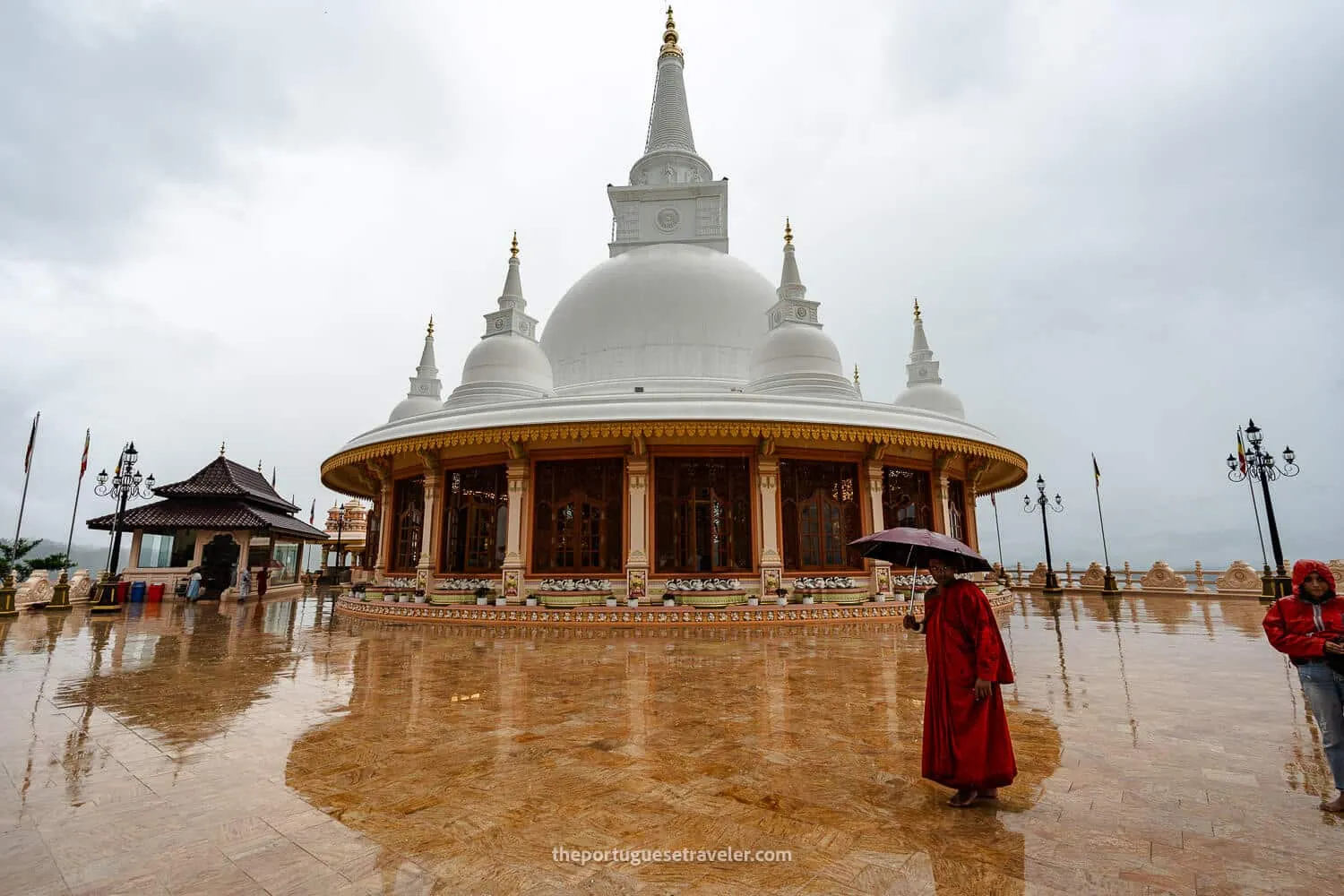
The Mahamevnawa Buddhist Monastery in Bandarawela, Ella
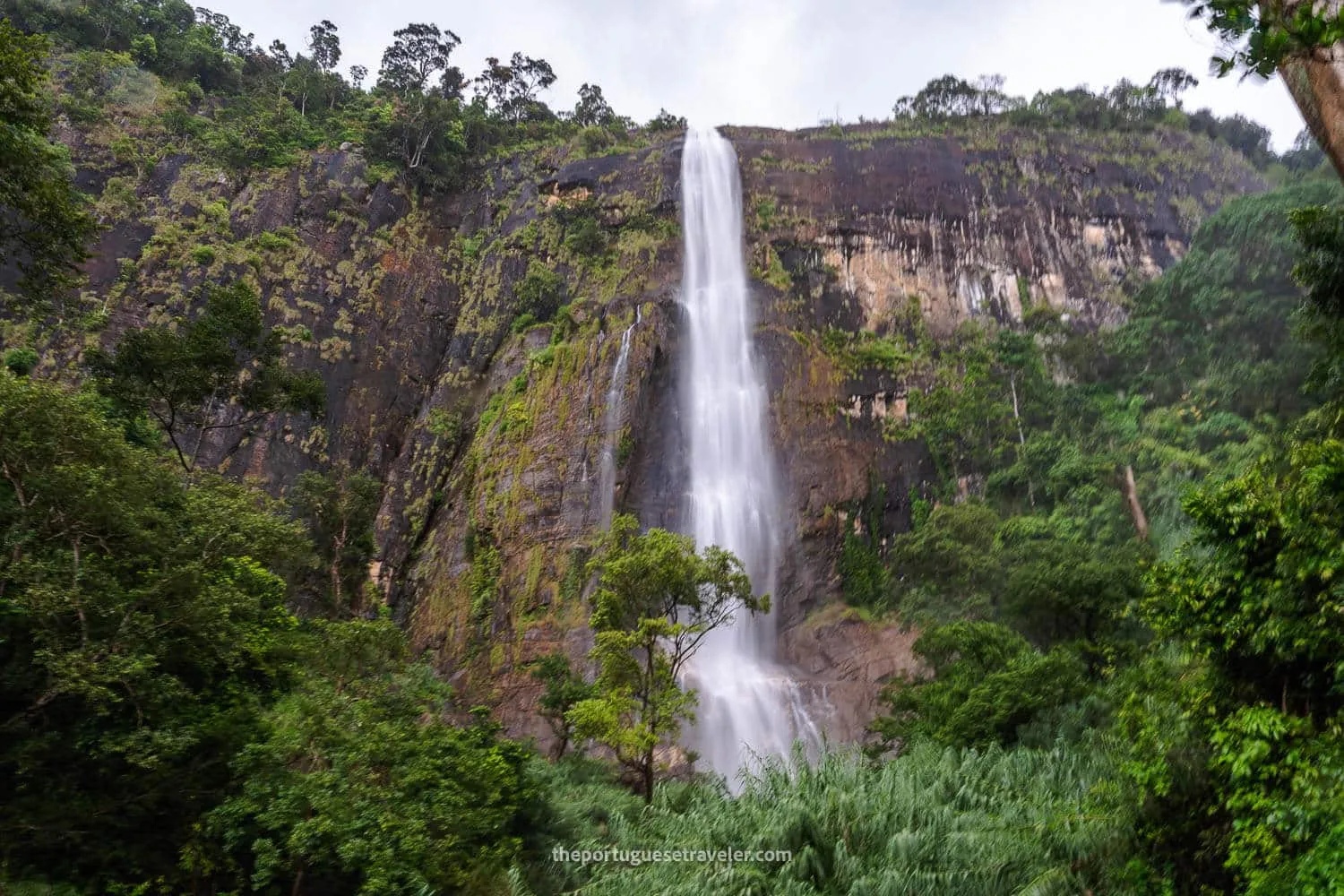
The Diyaluma Falls Waterfall next to Ella, Sri Lanka
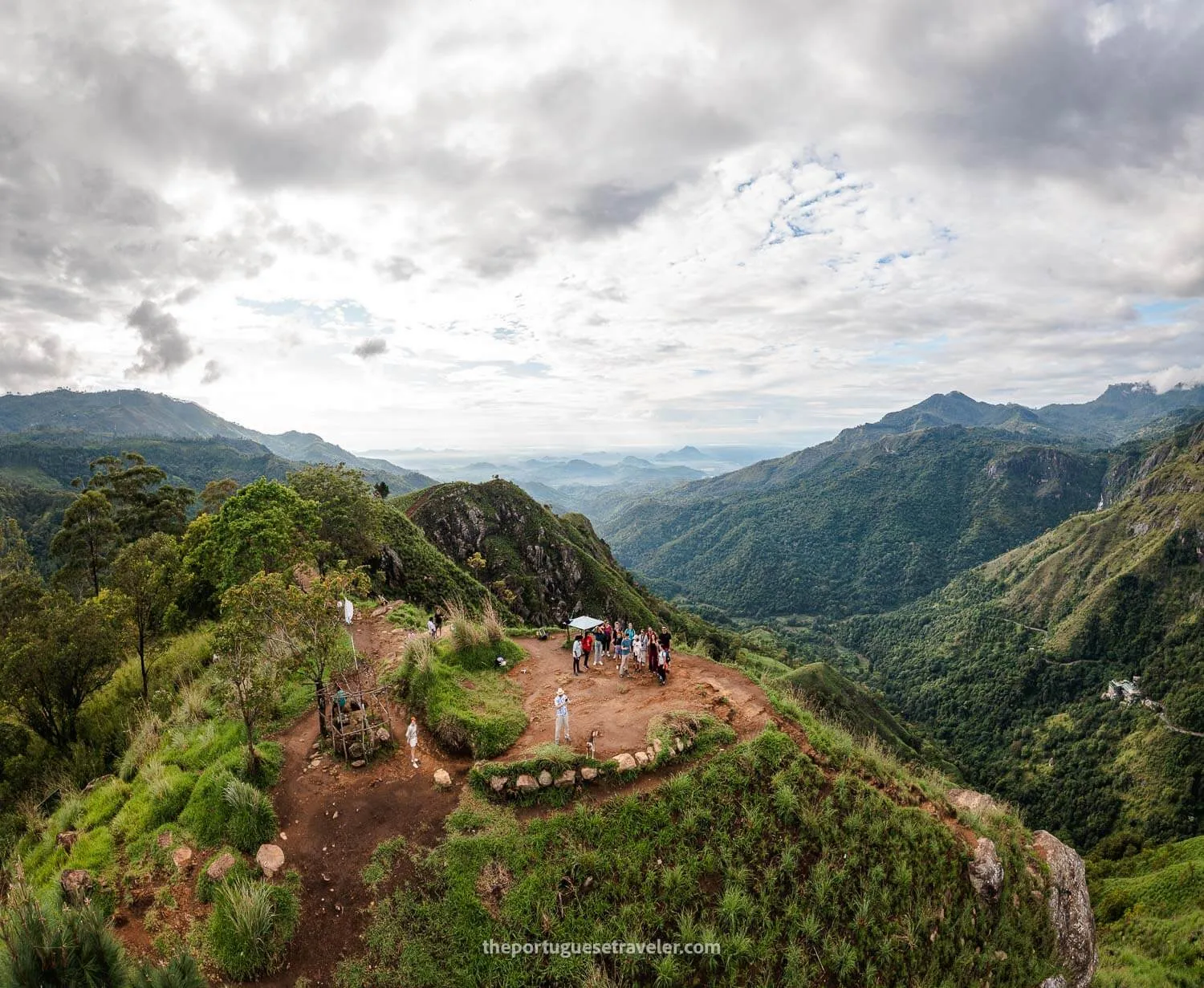
The main viewpoint of the Little Adam’s Peak hike
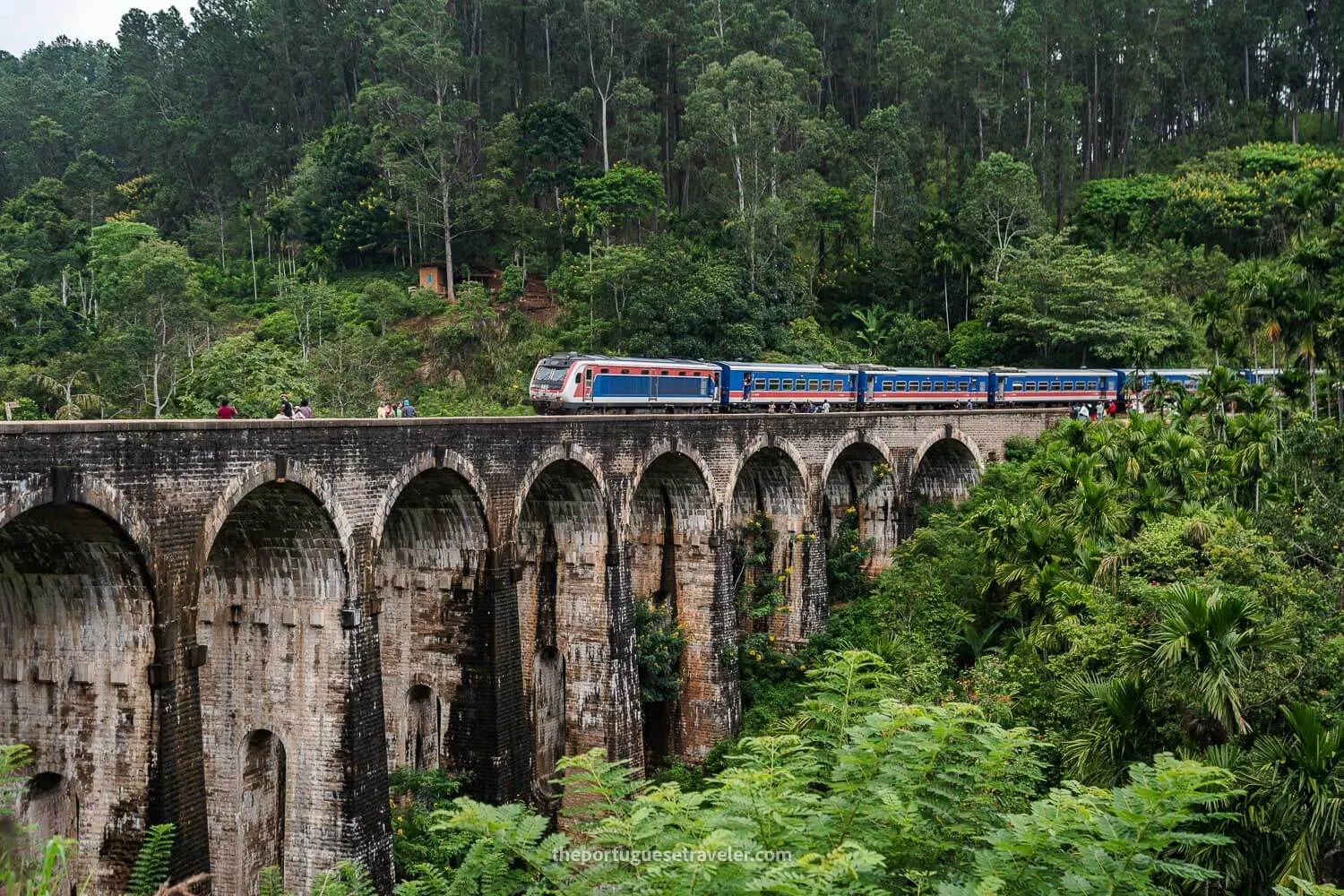
The arrival of the train
Best Tours in Ella, Sri Lanka
These are listings from a booking partner of this site, not tours I took:
- Ravana Falls, Diyaluma Falls, Little Adam’s Peak and Nine Arches Bridge Tour Covers the four sights in one tour.
- Join a Traditional Sri Lankan Cooking Class A hands-on cooking class.
- Take the Scenic Train Ride from Kandy to Ella The train ride from Kandy to Ella through the hill country.
- Safari Adventure in Yala National Park A safari in Yala National Park.
- All-Inclusive Day Trip A day trip covering several sights in and around Ella.
My Experience at the Halpewatte Halpe Ceylon Tea Factory
We started our visit to the Halpewatte Tea Factory around noon, after a sunrise hike to Little Adam’s Peak and a stop at the Ravana Cave and Temple. We arrived by shuttle and were guided inside the main warehouse. There were quite a few tourists there, and tuk-tuks lined up outside, so it’s definitely a popular activity in the Ella area.
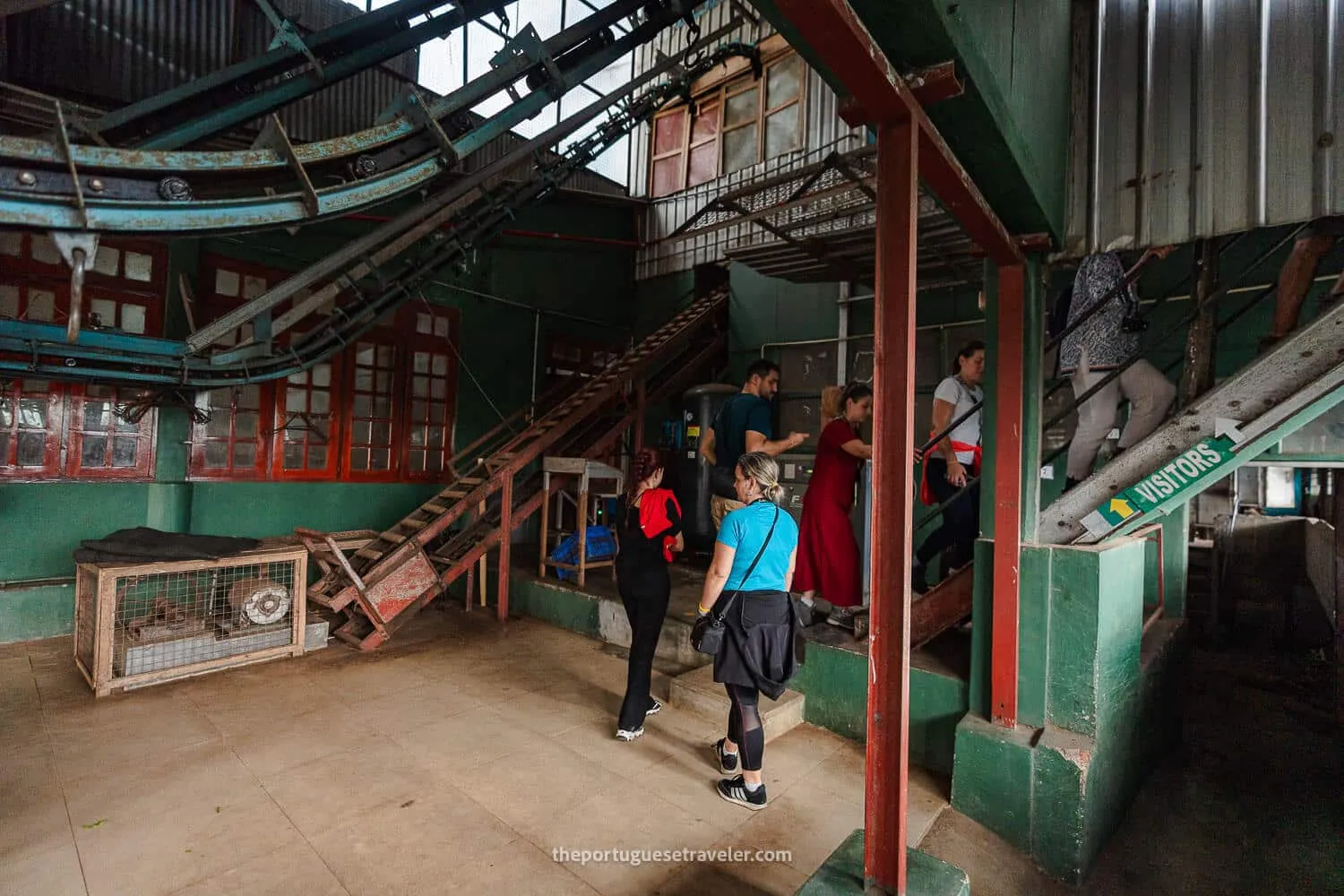
The bloggers at the entrance of the Tea Factory
Exploring Tea Processing and Plucking
We walked into the factory, where workers were busy weighing their tea leaves, and made our way upstairs to the withering troughs, where the leaves are laid out to wilt. Unfortunately, it was a quiet day, so the troughs were empty. The space was huge, with rows and rows of troughs just waiting to be filled.
Next, we headed to the top of the building, where the tourism board ladies had set up a tour with the tea factory team. Afterward, we made our way back down to the plantation, where our guide Sallay explained to us the tea-plucking, and selection process. He was really passionate about his work, and his excellent English made everything much easier to understand.
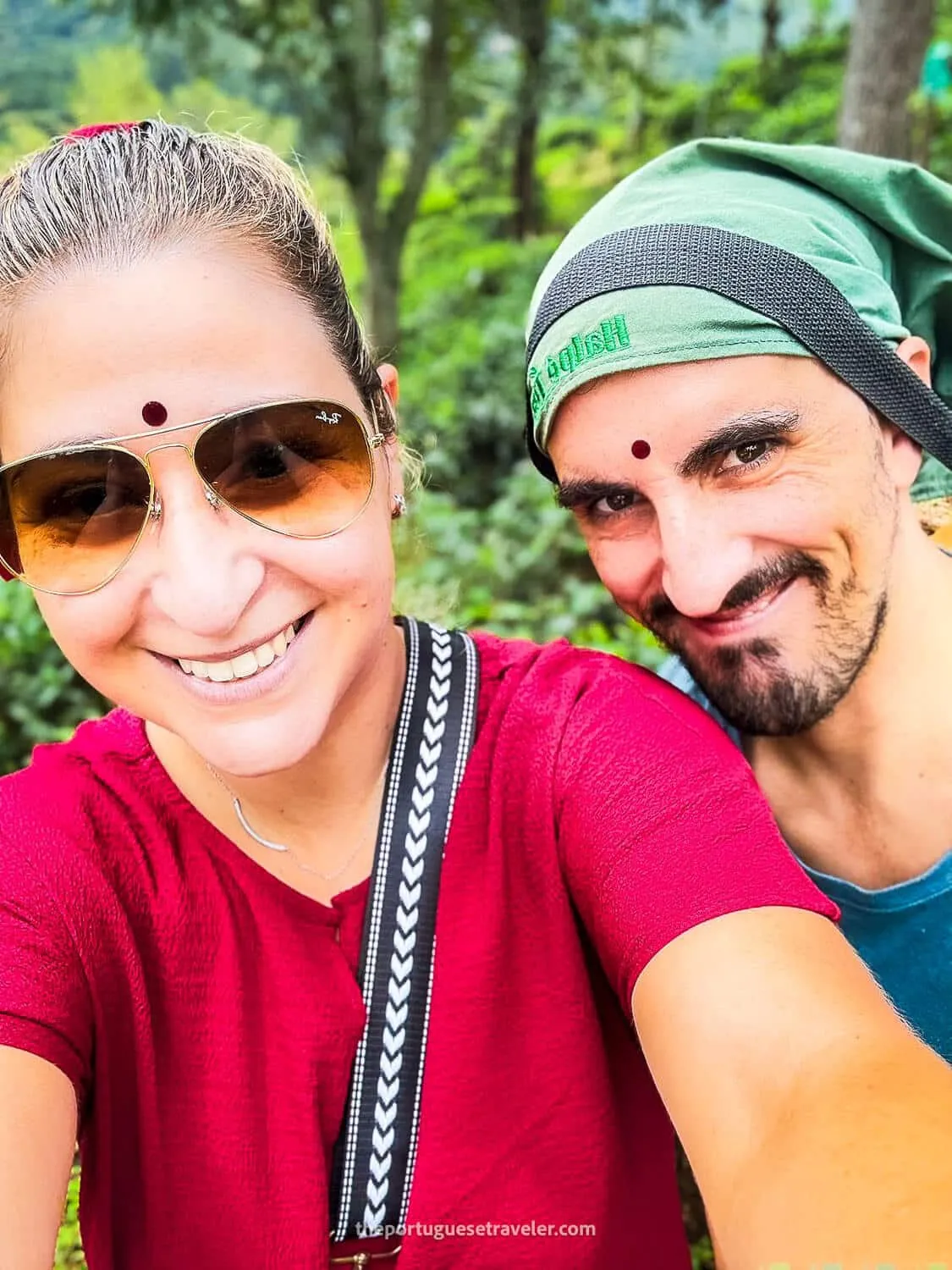
Then, a female worker from the plantation showed us how to pluck tea leaves. She gave us scarves to tie around our heads and baskets to wear on our backs. She even added a little red dot on our foreheads to help us blend in with the locals. As we tried plucking the leaves and tossing them into the baskets, we quickly realized how tricky the process was. It’s not as simple as it seems! The worker made it look easy, leaving us feeling a little less skilled in comparison!
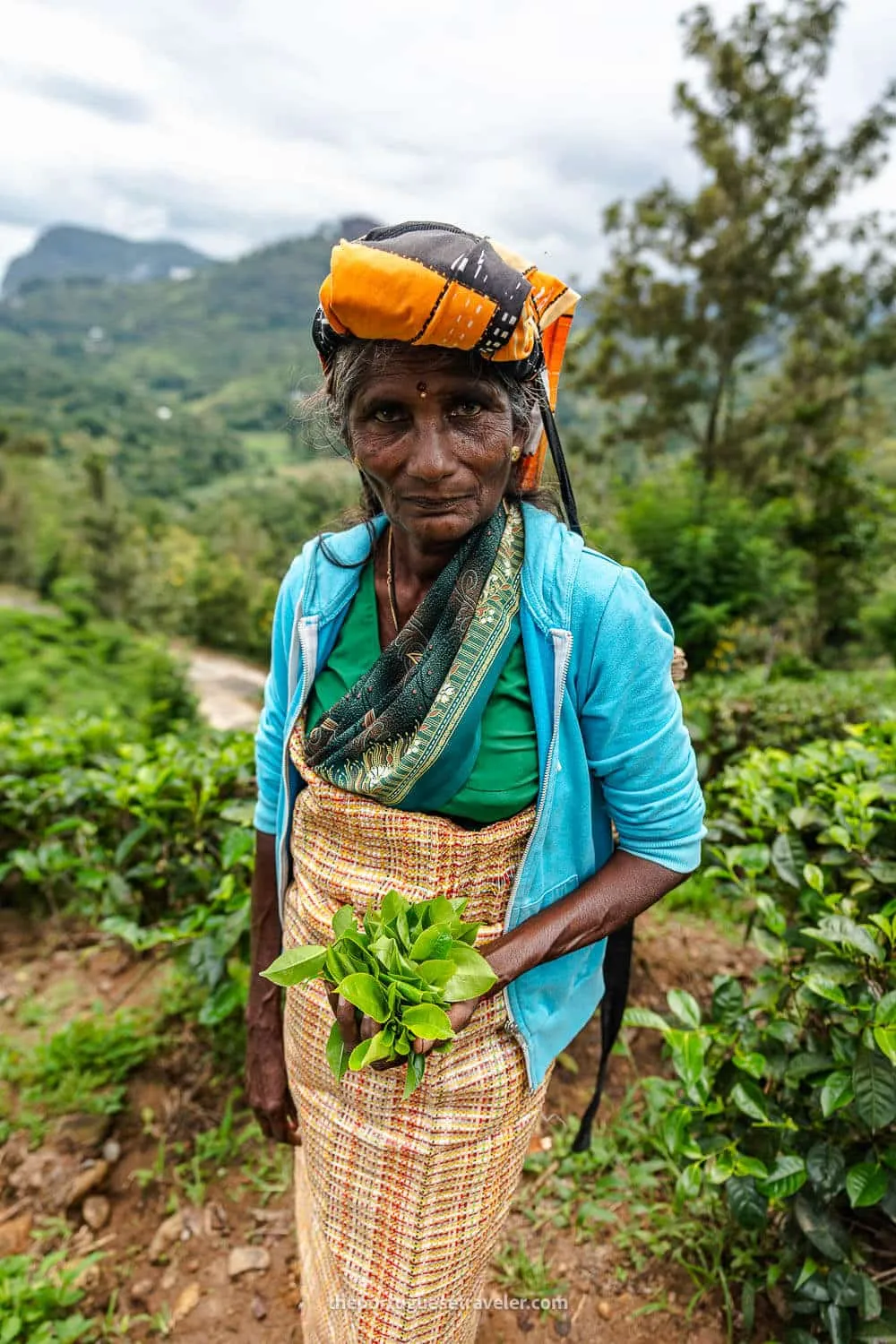
An Halpewatte Ceylon Tea Worker
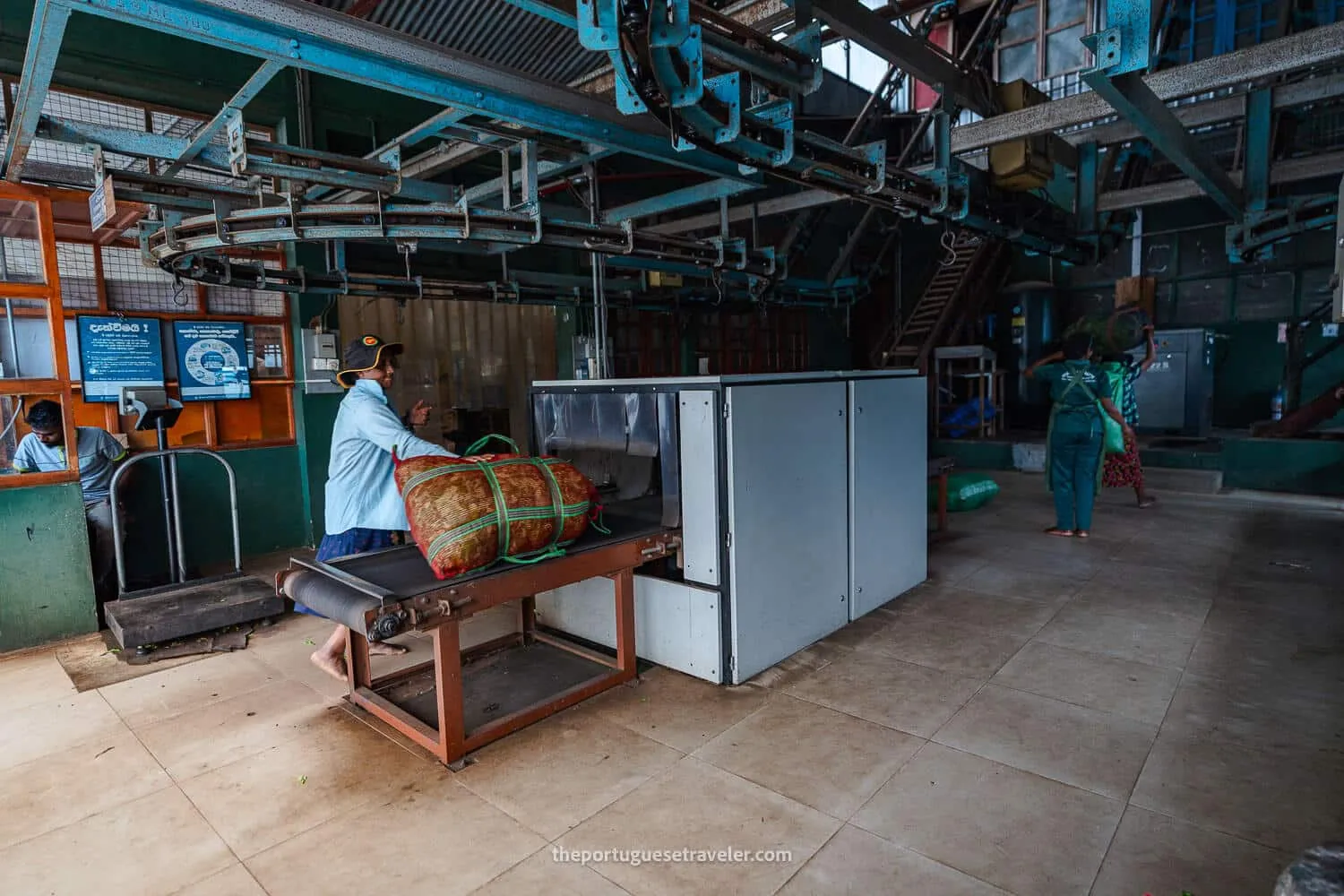
The workers of the factory weighing the tea leaves
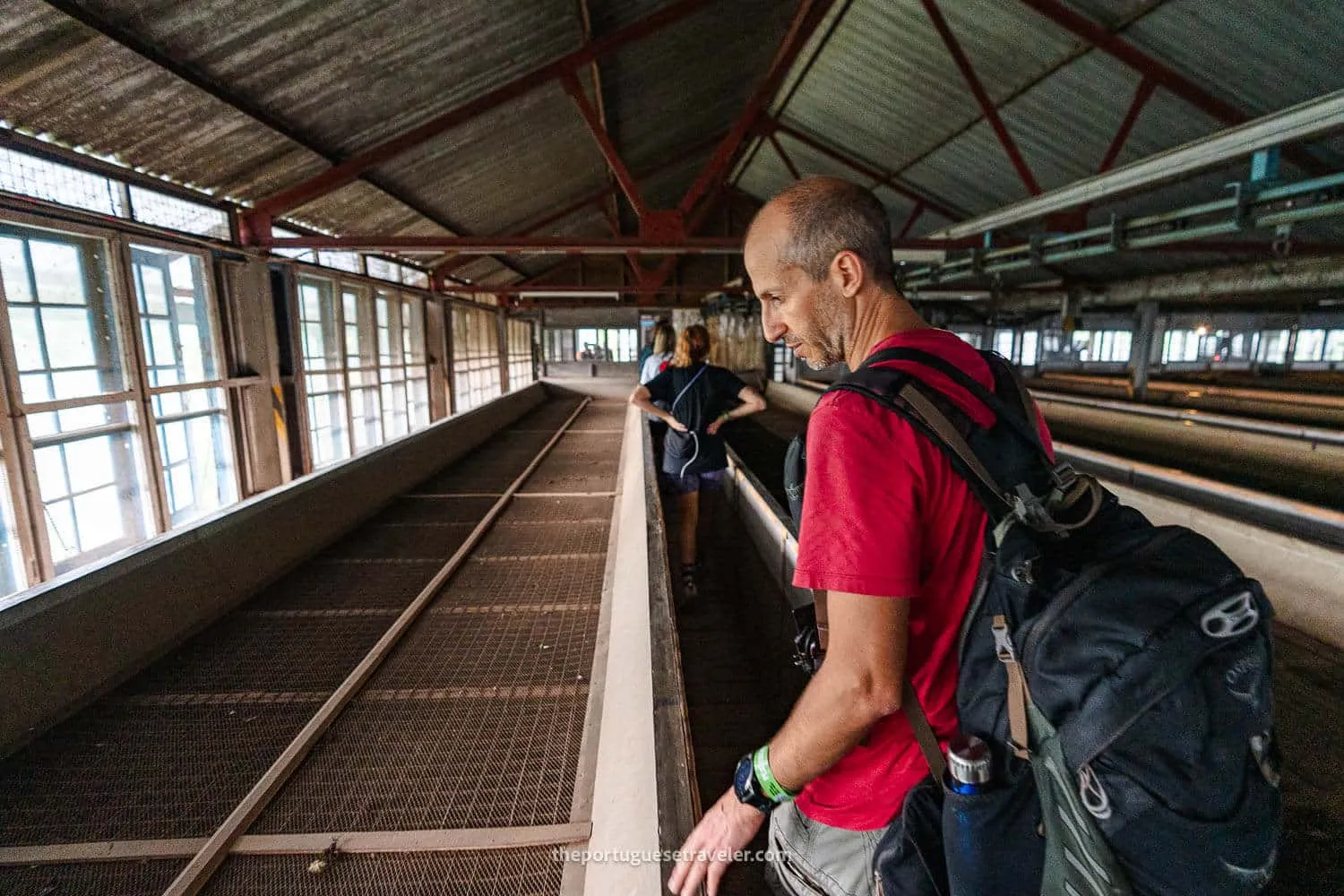
Jorge at the withering troughs
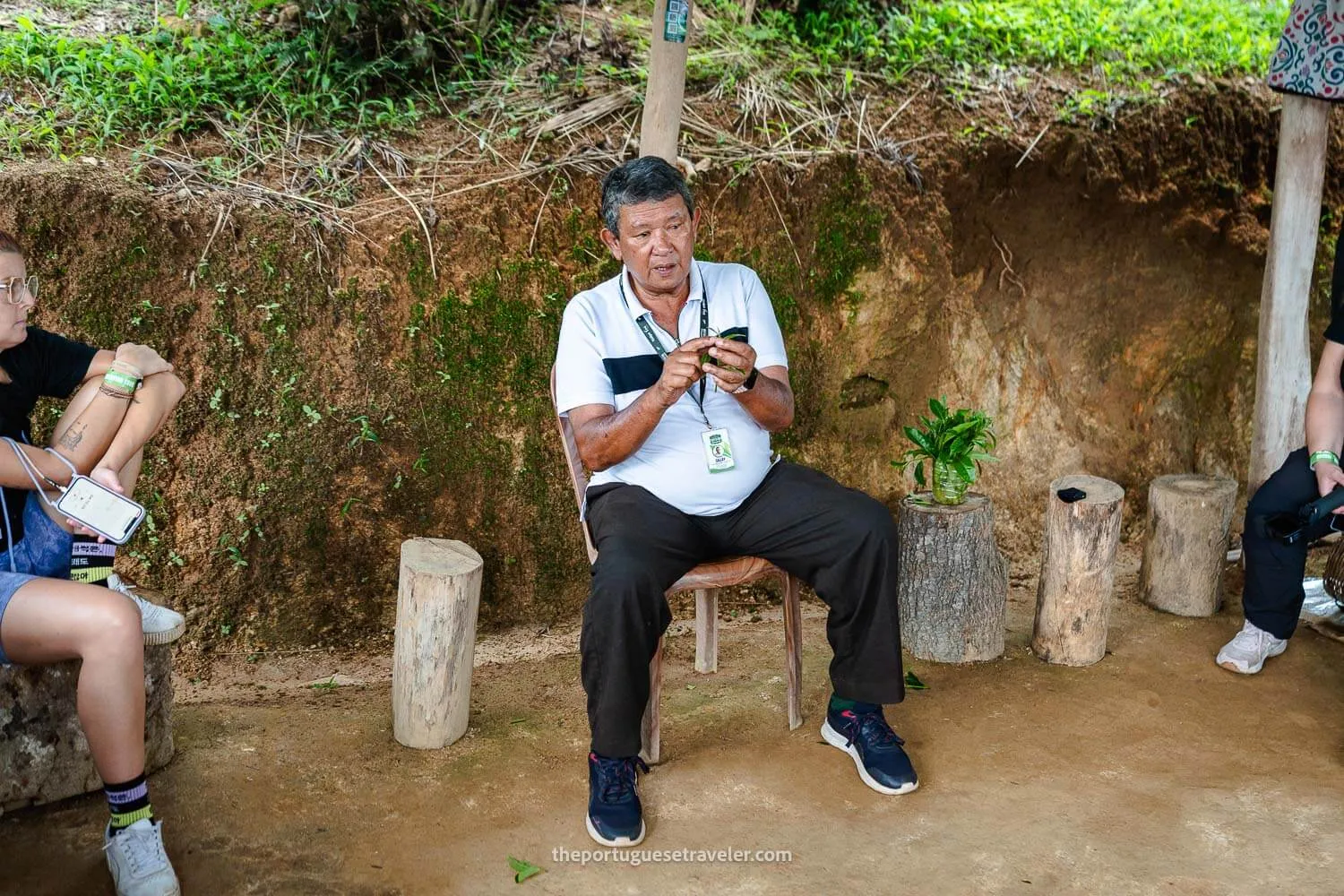
Our guide Sallay explaining us the tea leaves selection leaf by leaf
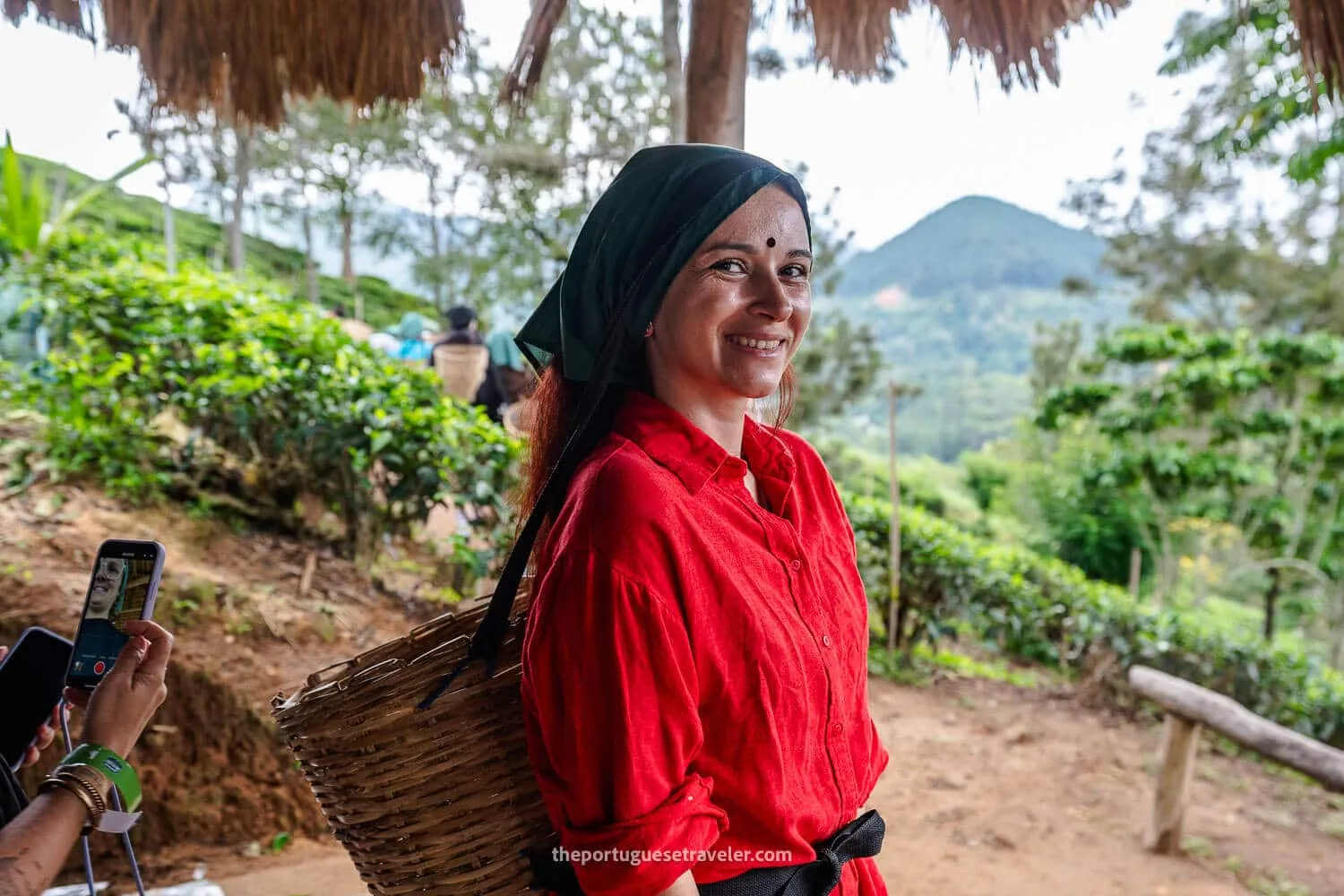
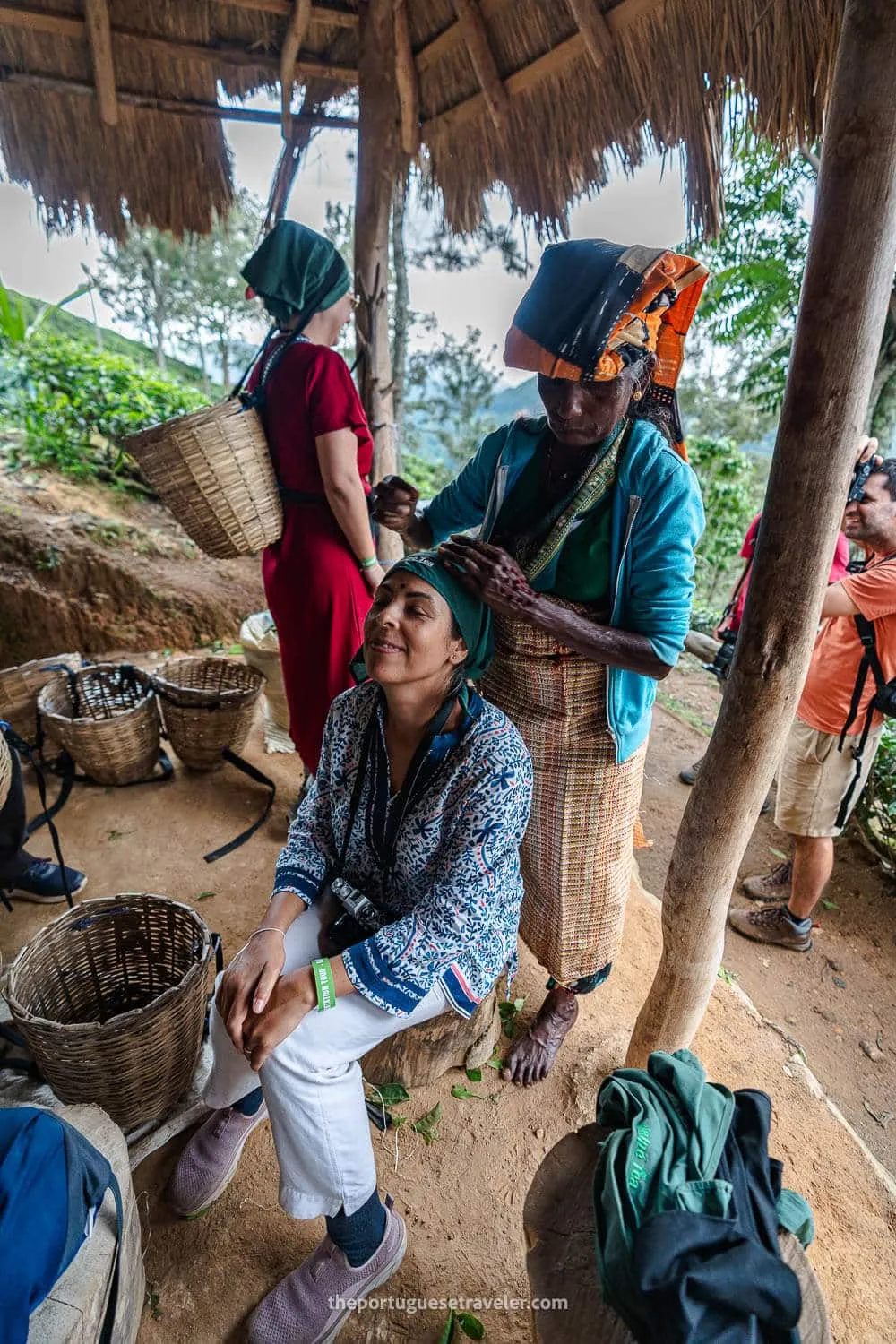
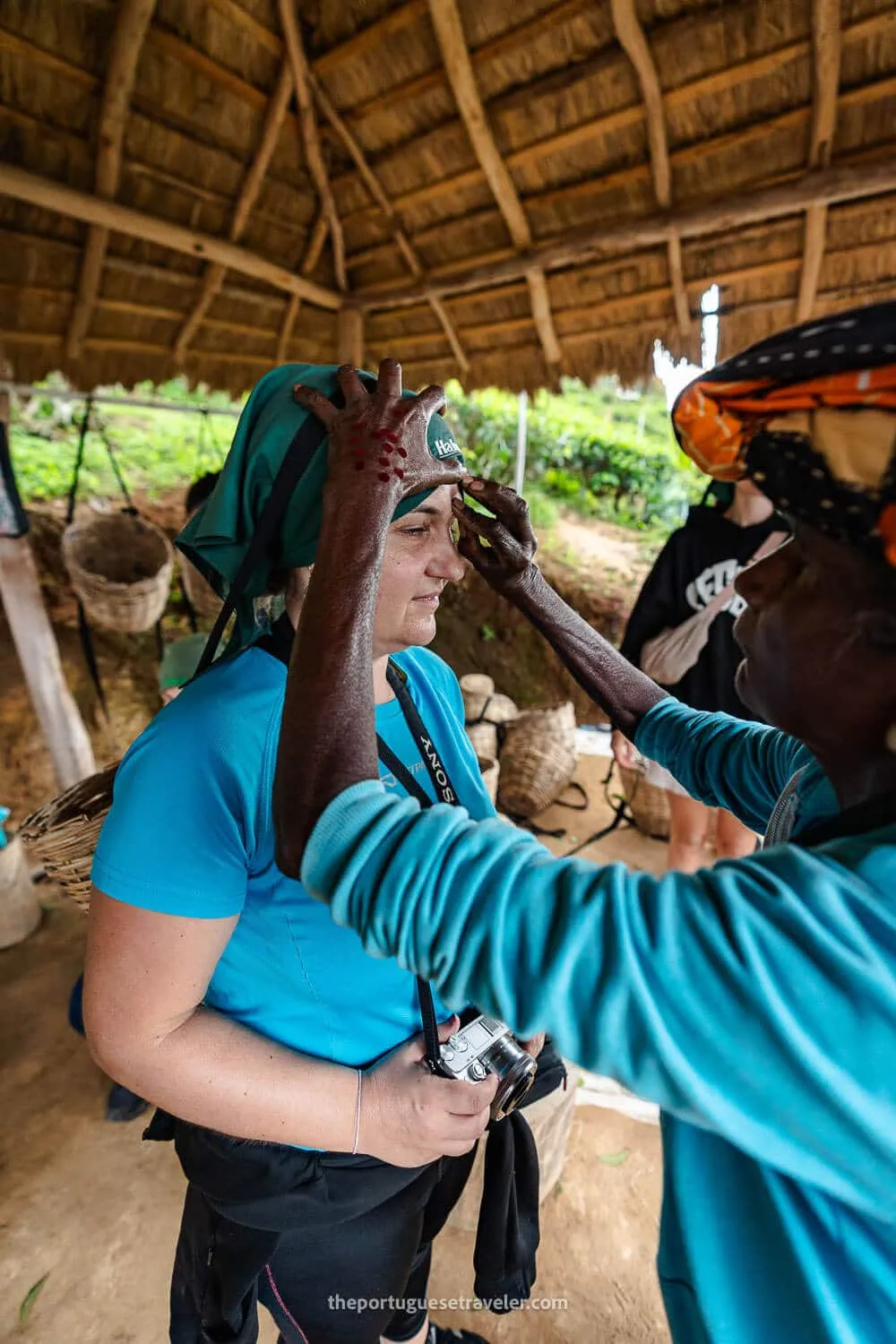
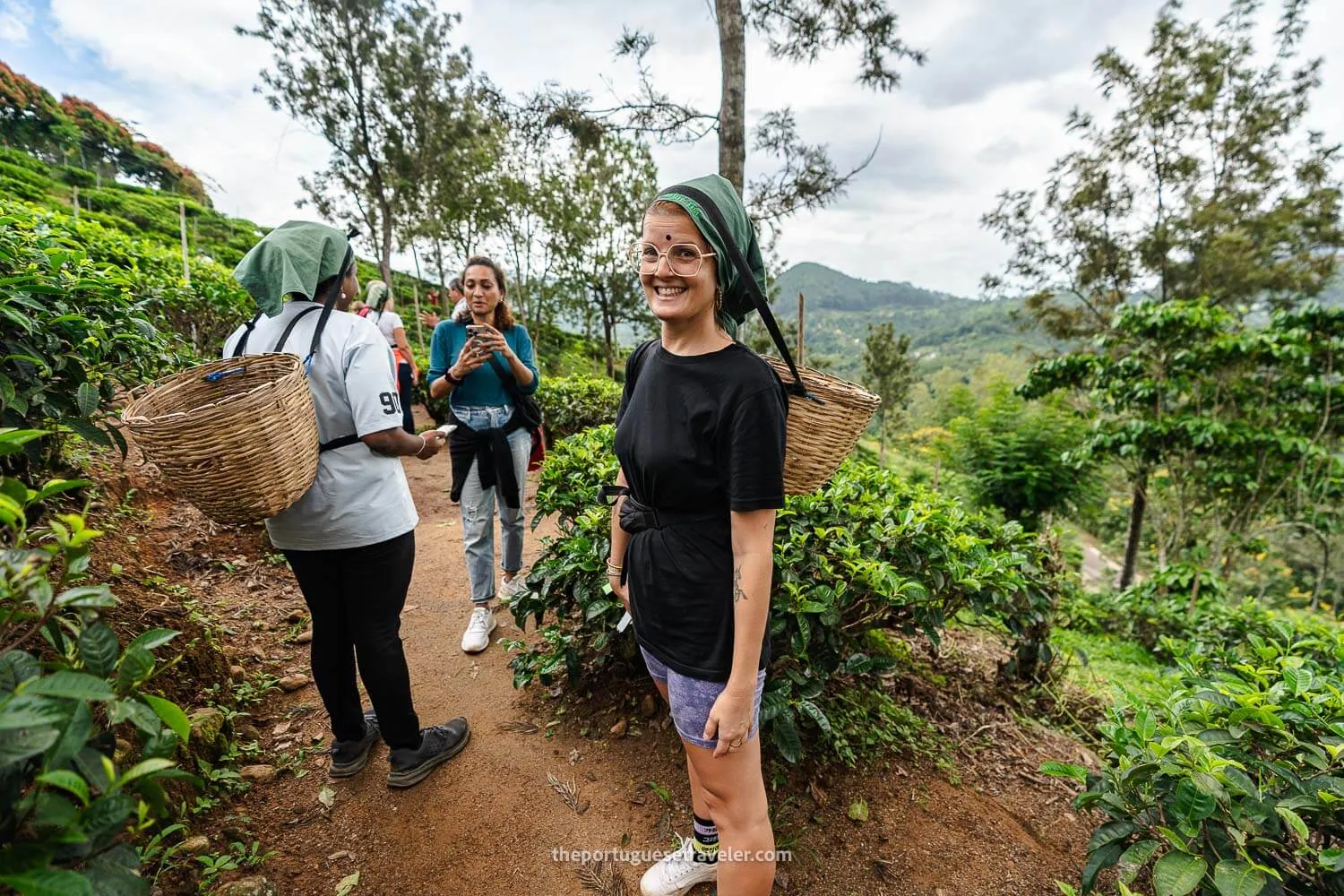
Ligia before picking up her leaves
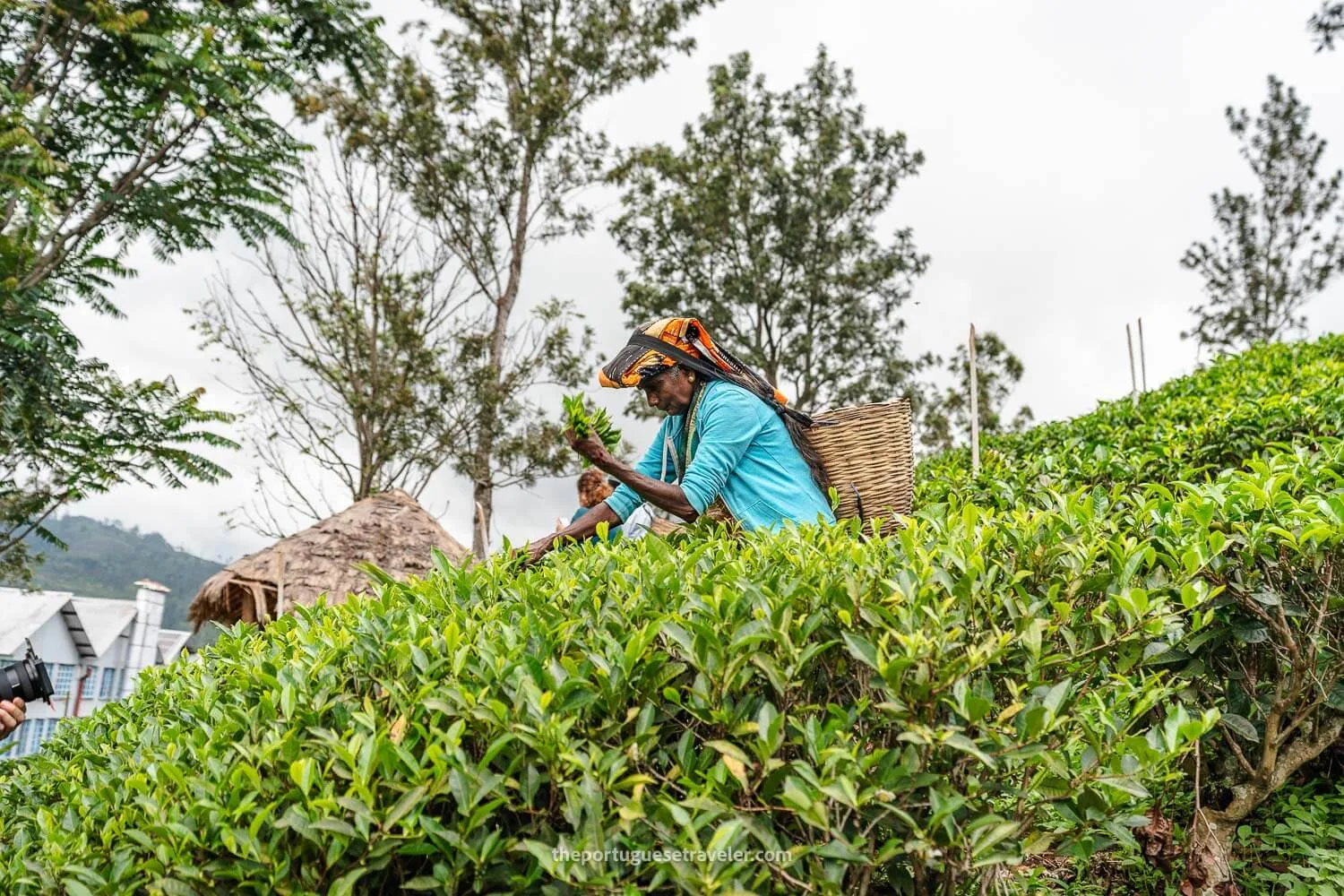
A worker plucking up tea leaves at the Ceylon Tea Halpewatte Factory
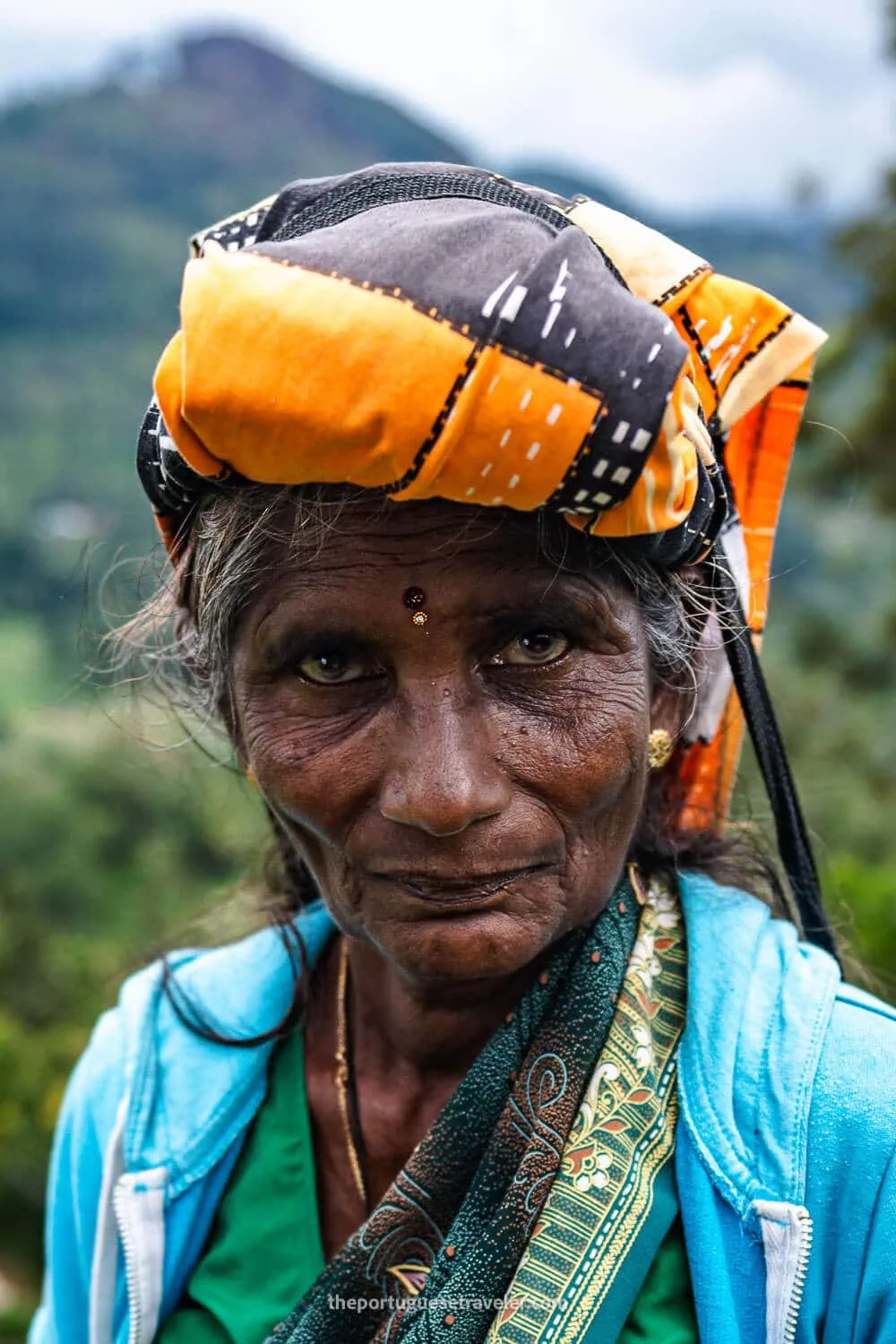
A Local Ceylon Tea Factory Worker
Tea Tasting and Souvenir Shopping
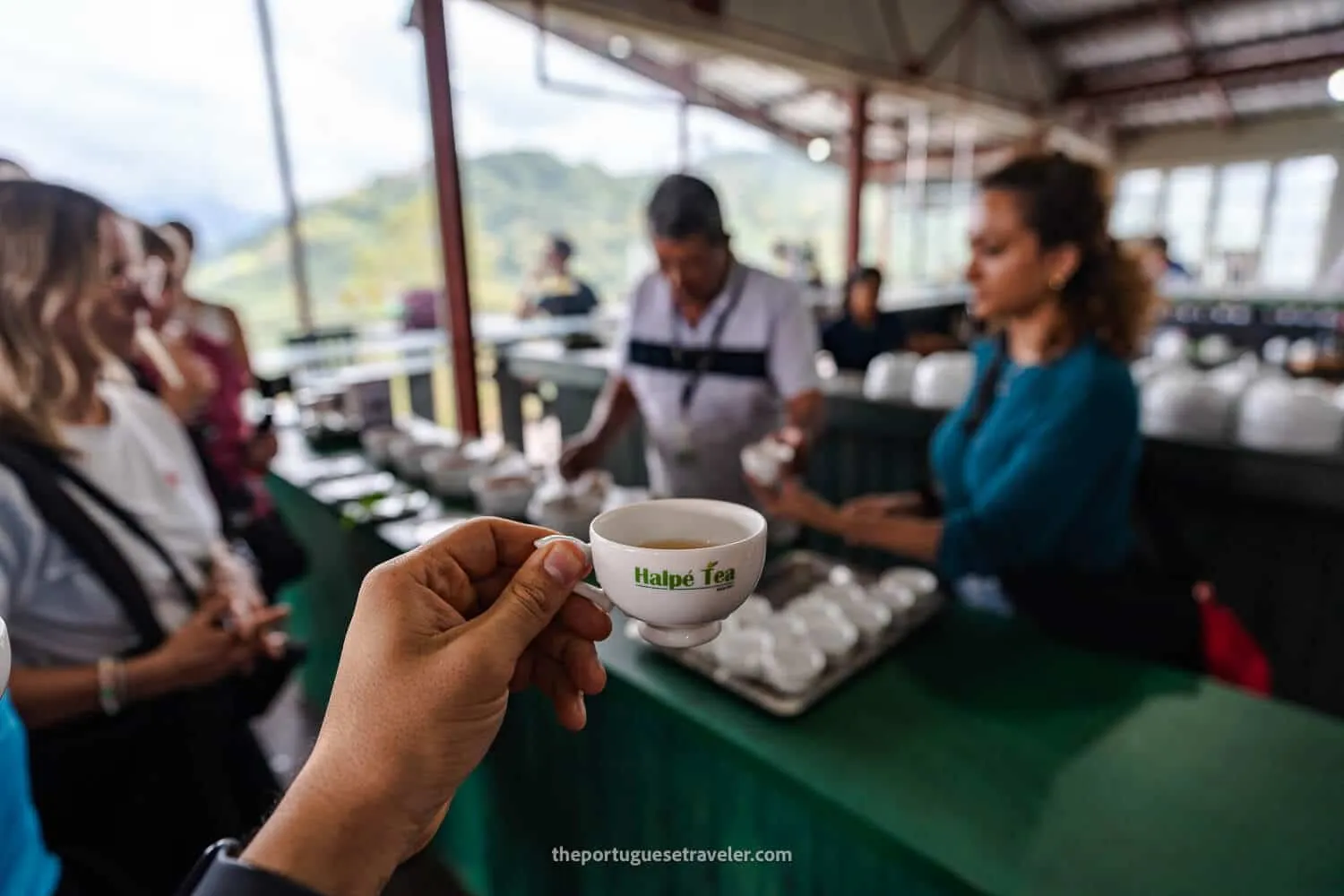
After a while, we handed back our half-full baskets and returned the scarves and dots to the workers. We then went inside the factory with our guide and made our way to the top floor for a tea-tasting session. Our guide Sallay explained how the tea is graded, and we had the chance to sample all the varieties and pick our favorites. I was torn between Pekoe and BOP, but I wasn’t too keen on the dark black tea—those medium-strength ones were just right, not too bitter. The OPA, the lightest tea, didn’t quite hit the mark for me, as it was a bit too subtle.
After the tasting, we bought some tea to take home as souvenirs. I picked up OPA, Pekoe, and BOP to gift to others. When I gave it to friends and family, everyone loved it! I tried the Pekoe and OPA myself, and both were delicious. The Pekoe even had a lovely hint of cinnamon, which made it extra special.
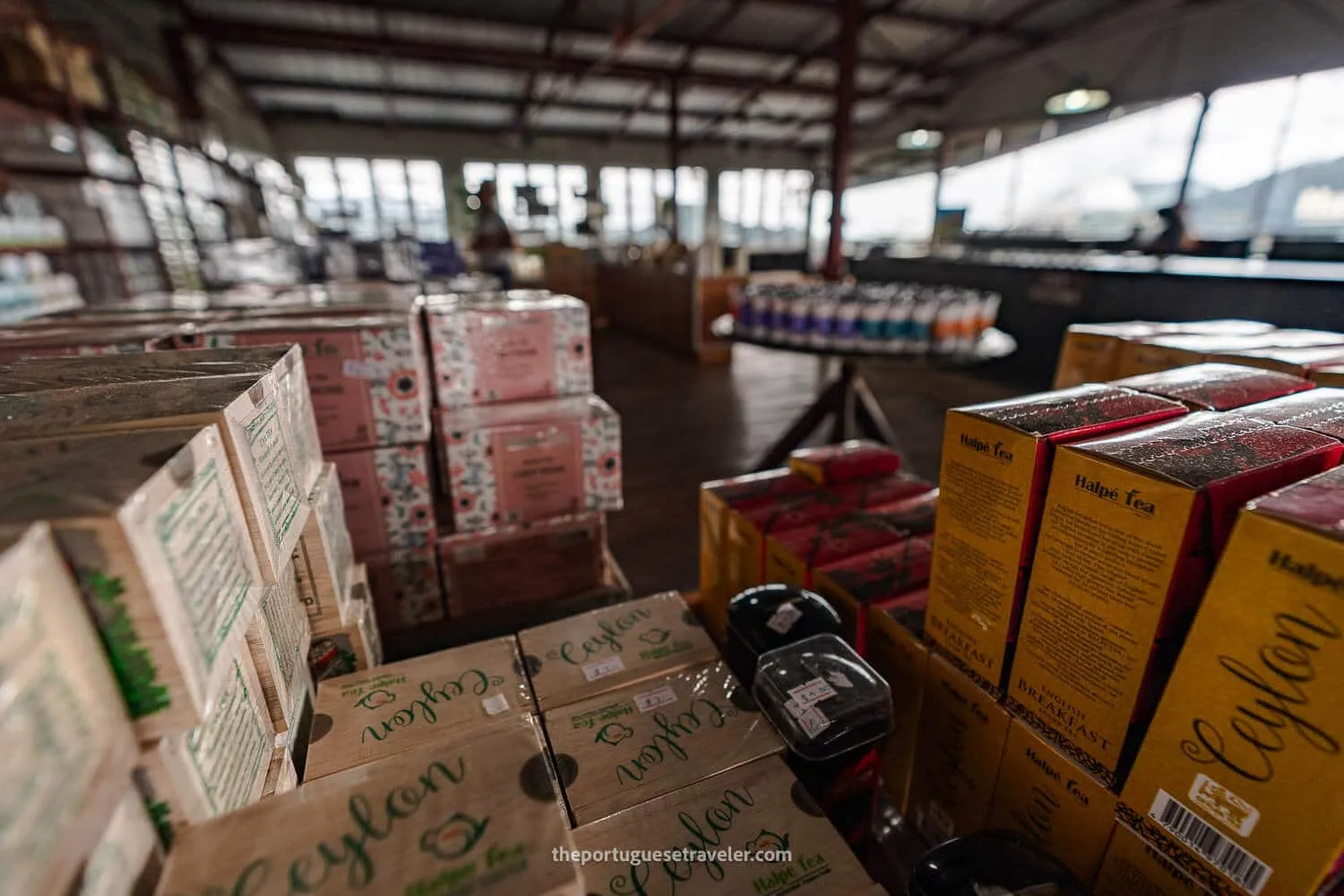
The Tea Shop at the end of the tour
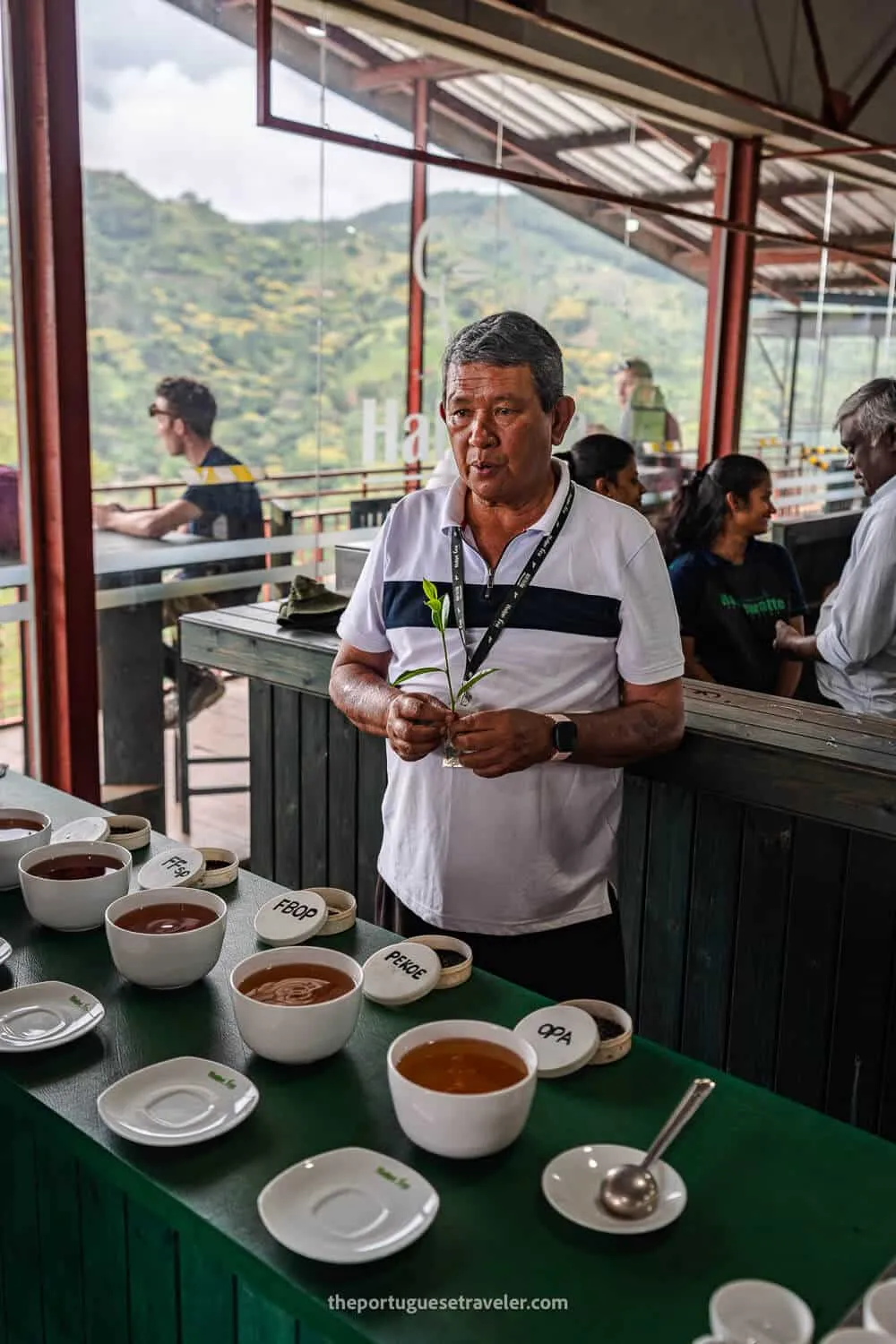
The tea-tasting experience
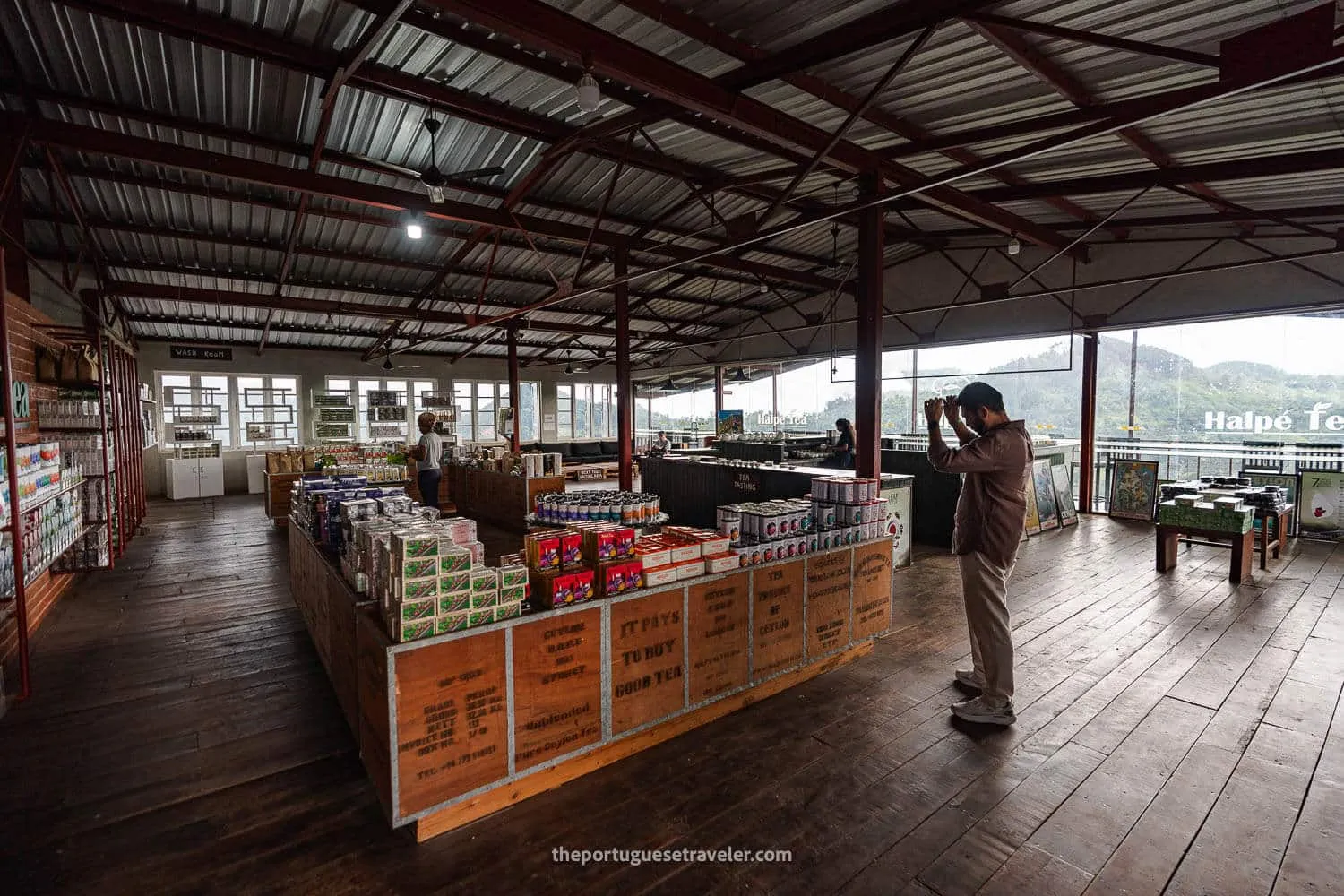
The Tea Shop at the Halpewatte Ceylon Tea Factory
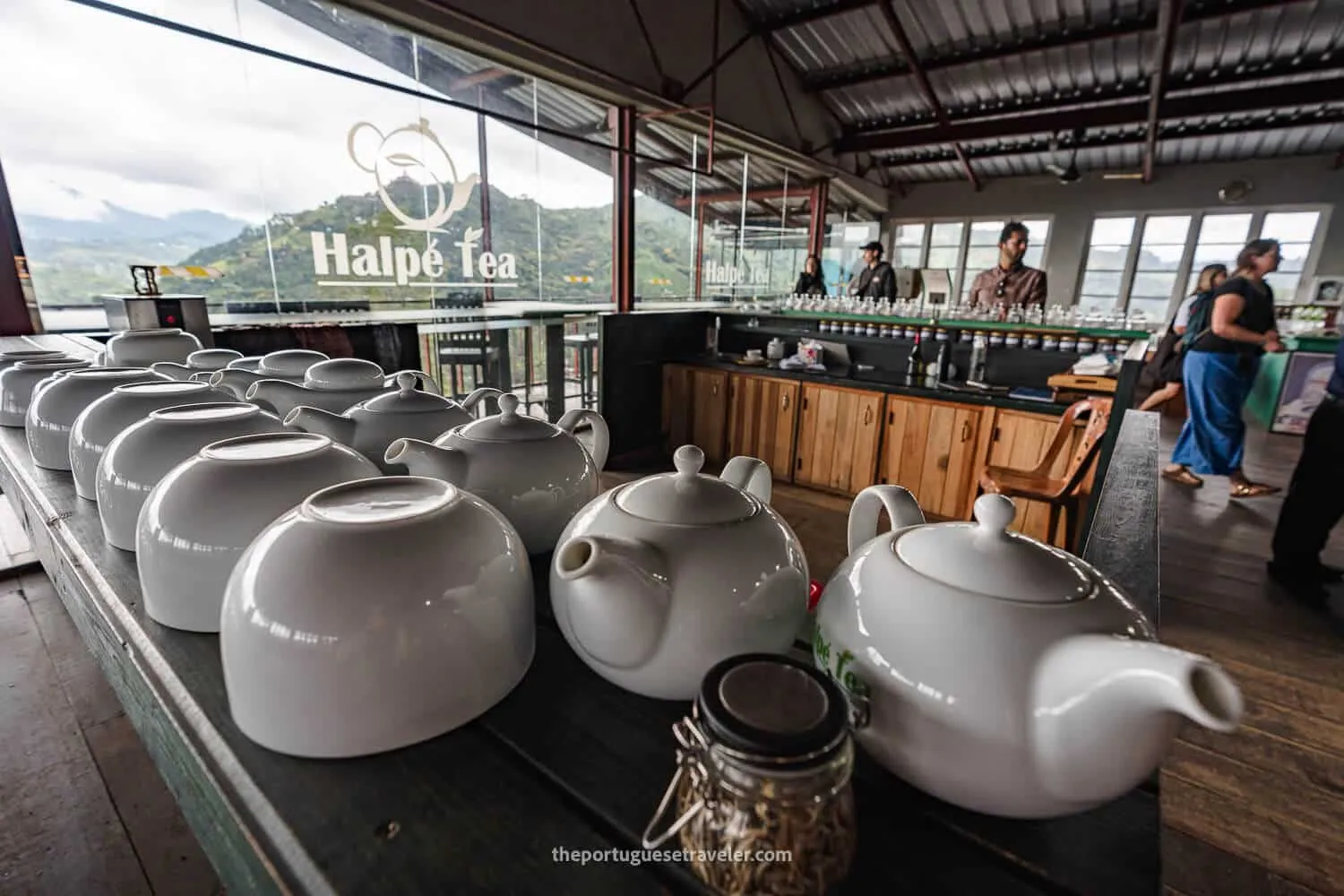
The tea pots before the tea-tasting experience
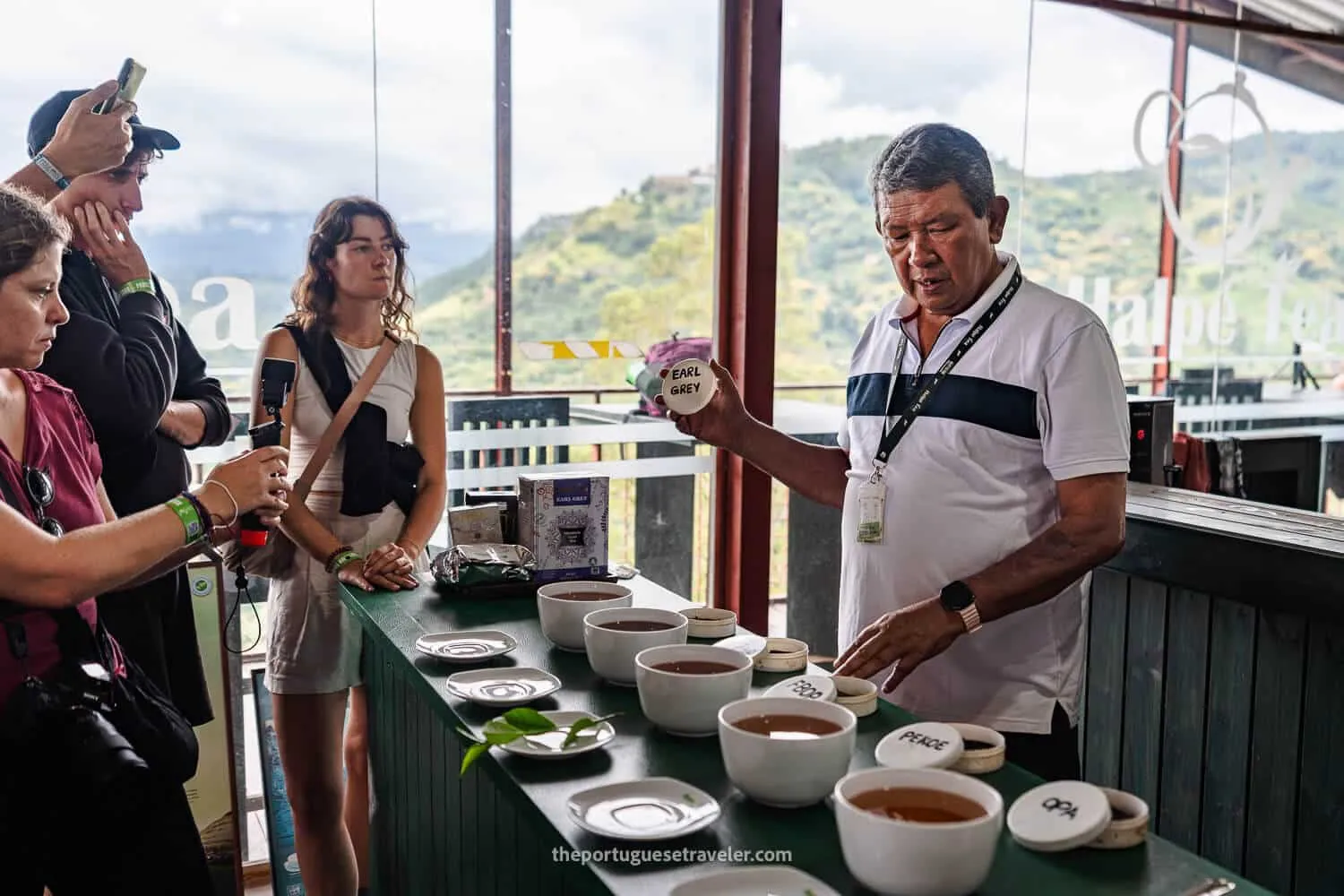
The Tea Tasting Experience with Sallay at the Halpewatte Factory
Afterward, we hopped back on the shuttle for lunch before heading to the Mahamevnawa Buddhist Monastery. What a full day! Ella really has so much to offer.
Plan your trip
The links in this box are affiliate links. You won't pay more, and they help keep the blog running. Each line says whether I have used the product.

Car Rental: Discovercars compares car rental offers from many companies.

Accommodation: Book your hotels with Booking.com or Expedia. I used Agoda in Southeast Asia.

Flights: Trip.com sells flights, hotels, train tickets, attractions and car rental. Airhelp handles compensation claims for delayed, canceled or overbooked flights and charges a 35% fee only if the claim succeeds.
Trains and Buses: I have booked with Omio several times, including from Lisbon to San Sebastian. 12Go sells tickets for trains, buses, ferries, transfers and flights across Asia and some other regions.

Tours and Tickets: I have used GetYourGuide on some trips. Viator sells tours, activities and tickets, and most have free cancellation up to 24 hours before.

Mobile eSIM: Holafly sells eSIM data plans for travel, delivered by email (5% discount). I have used Airalo, not in the Galapagos.

Travel Insurance: Heymondo sells travel insurance that covers medical issues, lost luggage, transport delays and trip cancellation, with an app that offers medical chat and 24/7 assistance. It is well reviewed, and this link gets you 5% off. Safetywing sells subscription health and travel insurance for people who travel or live abroad, covering medical treatment, emergency dental care and travel problems such as lost luggage and delays.
Loading comments…