
The Route of
Marco Polo

João Petersen · Last updated September 2, 2026
Who was the famous Marco Polo and how was his route?
Marco Polo (1254-1324) was an Italian merchant and explorer born in the wealthy Republic of Venice in the High Middle Ages. At this time, Venice was a major power in Europe, with treaties with the Holy Roman Empire dating back to the 9th century.
Venice played a major role in the Crusades and gained control of much of the eastern Mediterranean Sea with its large and powerful fleets.
Years before Polo’s birth, Venice and French Crusaders besieged and sacked Constantinople, capital of the Byzantine Empire, in 1204. This led to the partition of the Byzantine Empire and gave the Republic important strategic territories in the Aegean Sea.
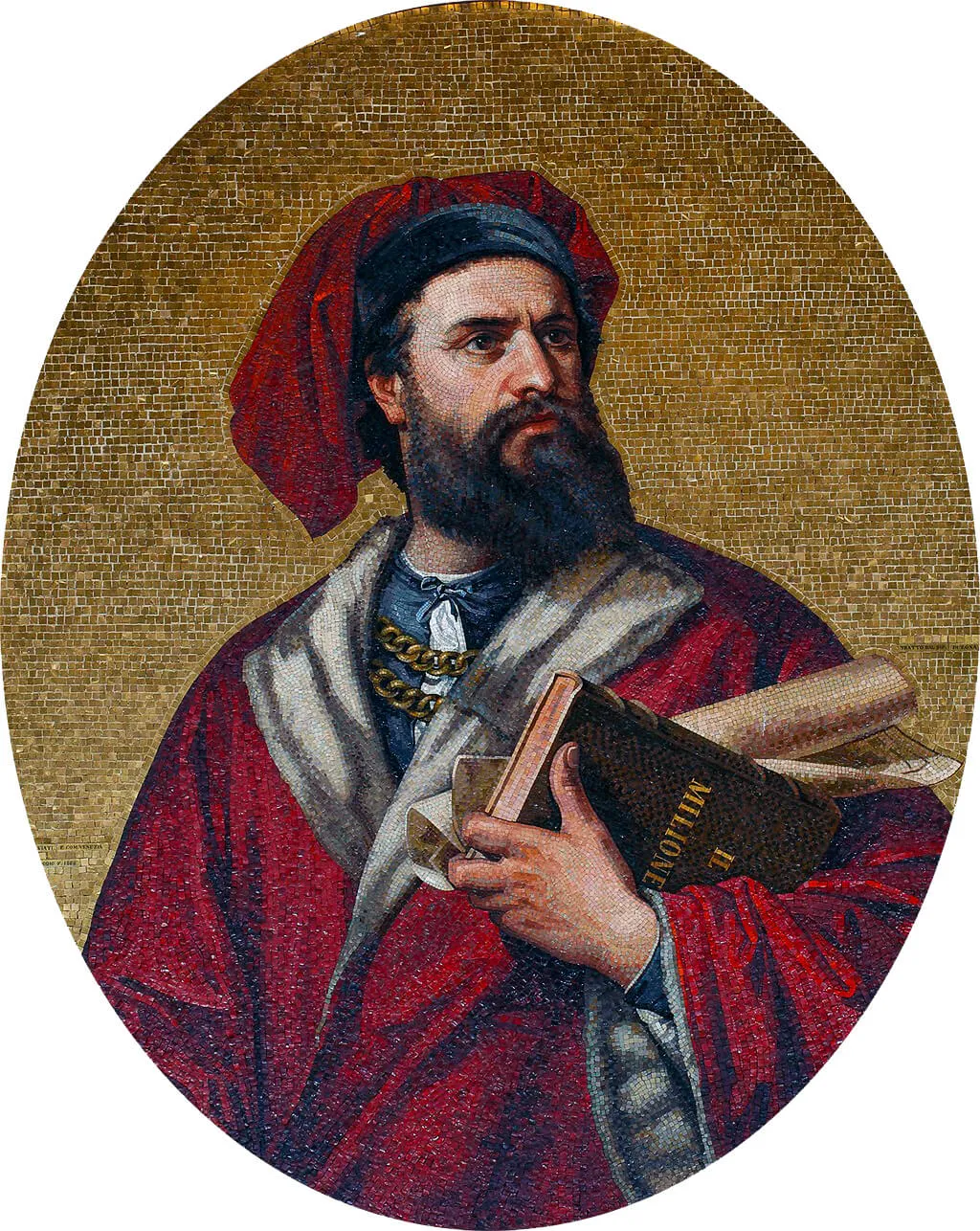
Mosaic of Marco Polo displayed in the Palazzo Doria-Tursi, in Genoa, Italy | Image source: https://en.wikipedia.org
In the 13th century, Venice built up trade links with the Mongol-ruled lands, the major Asian power of that time. This helped keep the Silk Road open and allowed goods to be exchanged between the two continents, enriching the already wealthy city of Venice.
Amidst this environment, in 1269, Marco’s father, Niccolò, himself also a merchant who had earlier lived in Constantinople, returned to Venice with his brother Maffeo and learned that Marco’s mother had died, leaving 15-year-old Marco (whom Niccolò had never met) with his aunt and uncle.
In 1271, they decided to take him on their journey through Asia to meet the emperor of the Mongol Empire, the great Kublai Khan. The three of them set off on a series of adventures that Marco later described in his book, after returning to Venice 24 years later.
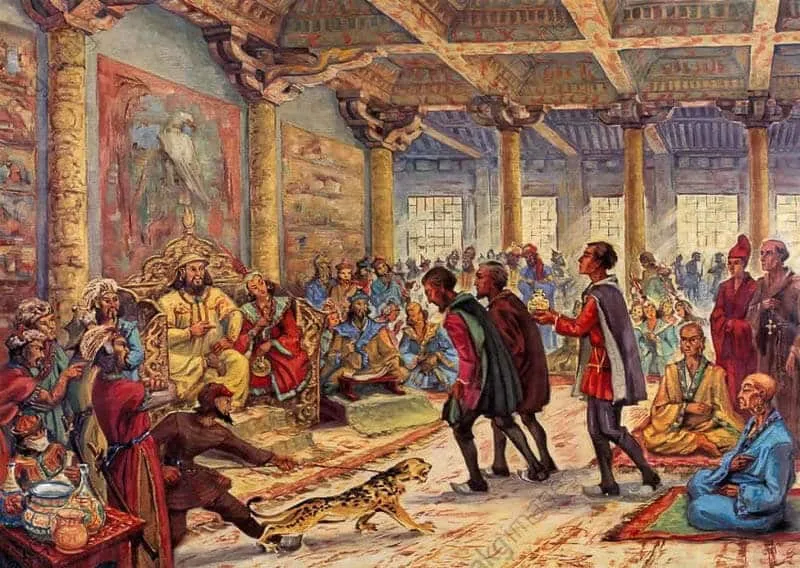
Marco Polo and family at the Court of Kublai Khan - Beijng 1274 Image source: https://www.akg-images.de
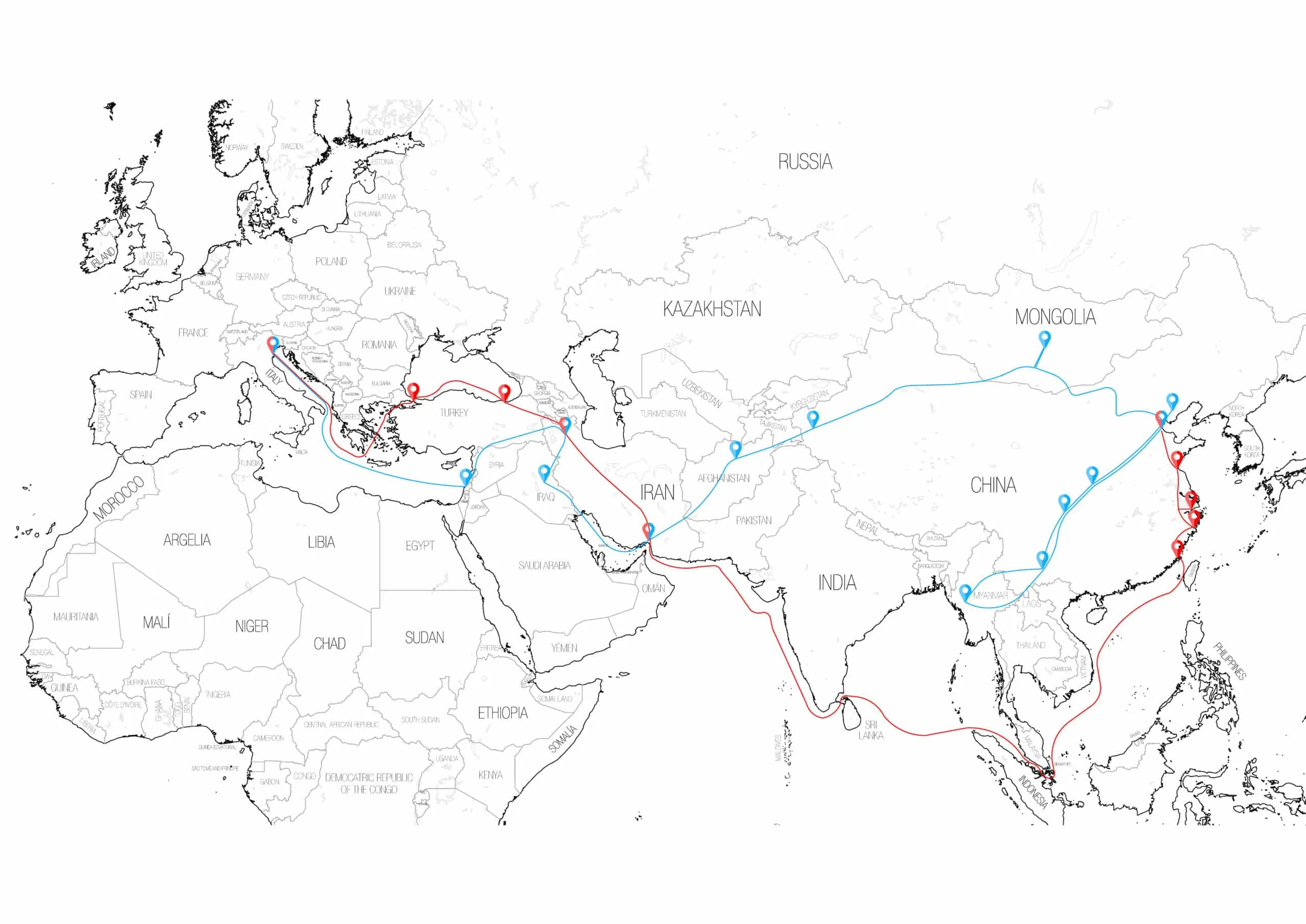
In blue is a representation of the route Polo’s family took from Venice to Asia, starting in 1271 and in red the route that Marco did in 1295 on his return home.
Nowadays, it might be difficult to strictly follow the route in this post. I therefore suggest that you plan your trip well and always put your safety first.
The information gathered in this post is a compilation of multiple online sources based on the reports of Marco Polo in his book “The Book of the Marvels of the World”. Historians do not agree on every stop, and for some places Marco describes them from reports rather than from his own visit, so treat the lists below as the traditional reconstruction of the route.
The trip, summarized by major cities and divided into three parts, is as follows:
Marco Polo’s family route to Khanbaliq, capital of the Mongol Empire in the Yuan dynasty:
- 1Venice, Italy
- 2Acre, Israel (by sea)
- 3Jerusalem, Israel/Palestine (by land)
- 4Acre, Israel
- 5Tabriz, Iran
- 6Arbil, Iraq
- 7Baghdad, Iraq
- 8Hormuz, Iran (by sea)
- 9Balkh, Afghanistan (by land)
- 10Kashgar, China
- 11Dunhuang, China
- 12Lanzhou, China
- 13Karakorum, Mongolia
- 14Lanzhou, China
- 15Shangdu, China
- 16Khanbaliq (Beijing), China
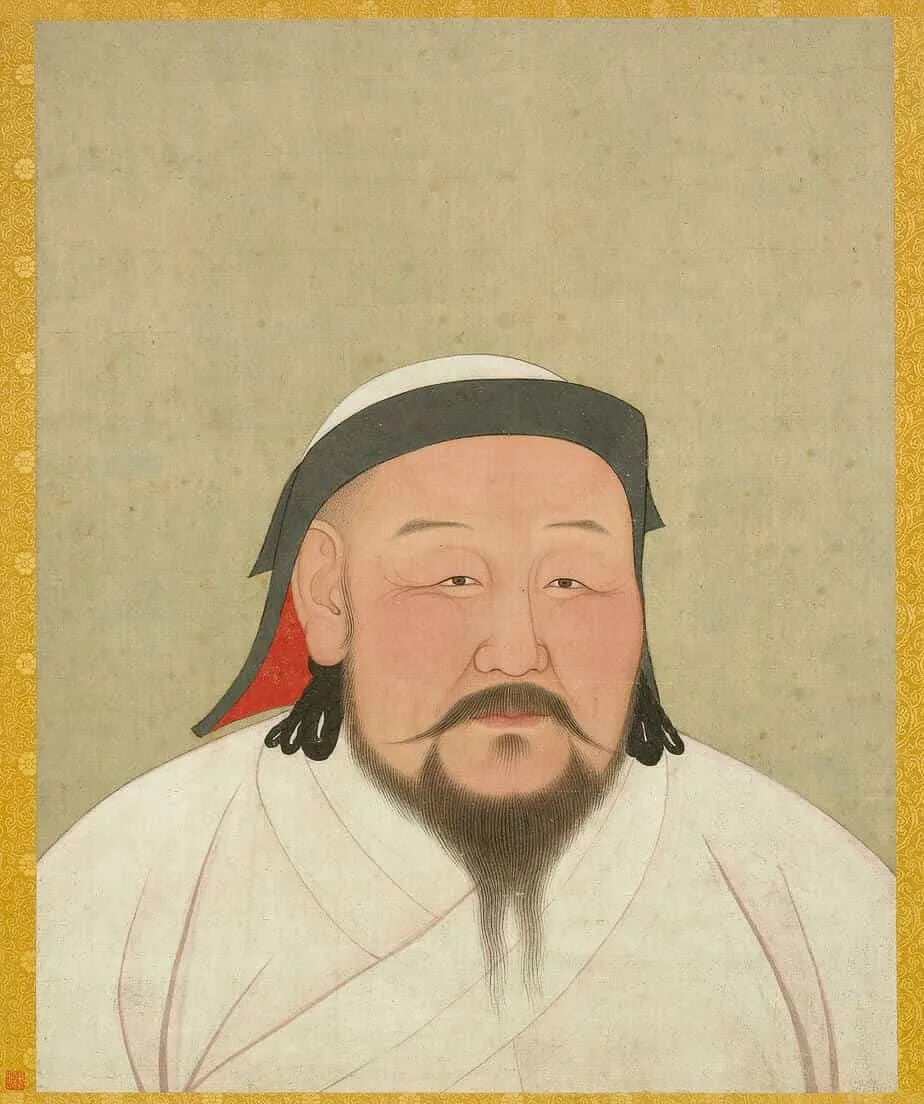
Kublai Khan | Image source: https://en.wikipedia.org/wiki/Kublai_Khan
One of the trips Marco Polo did together with the Mongols in Asia throughout his 17 years of servitude to the Khan:
- 1Khanbaliq (Beijing), China
- 2Xi’an, China
- 3Chengdu, China
- 4Kunming, China
- 5Bagan, Myanmar
- 6Chengdu, China
- 7Xi’an, China
- 8Khanbaliq (Beijing), China
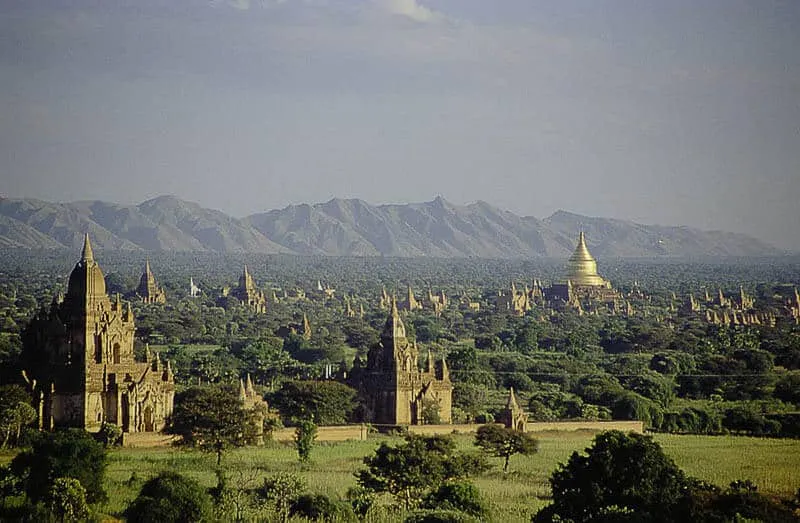
Bagan, Myanmar | Image source: https://en.wikipedia.org/wiki/Bagan
Marco Polo’s return trip to Venice in 1295:
- 1Khanbaliq (Beijing), China
- 2Zhangzhou, China
- 3Suzhou, China
- 4Hangzhou, China
- 5Fuzhou, China
- 6Singapore (by sea)
- 7Malacca Strait
- 8Bay of Bengal
- 9Calicut, India
- 10Indian Ocean
- 11The Arabian Sea
- 12Hormuz, Iran (by land)
- 13Arbil, Iraq
- 14Trabzon, Turkey
- 15Constantinople-Istanbul, Turkey
- 16Venice, Italy (by sea)
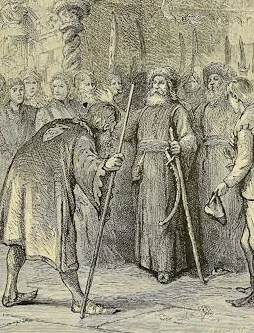
Marco Polo’s return to Venice in 1295 | Image source: http://www.factsanddetails.com
According to his book, while he was under the command of Kublai Khan, Marco made multiple trips throughout the empire, visiting South East Asia, Mongolia, and Persia.
His descriptions were among the first detailed reports on Asia to reach Europe, enabling a better understanding of that territory, its cultures, traditions, and leaders.
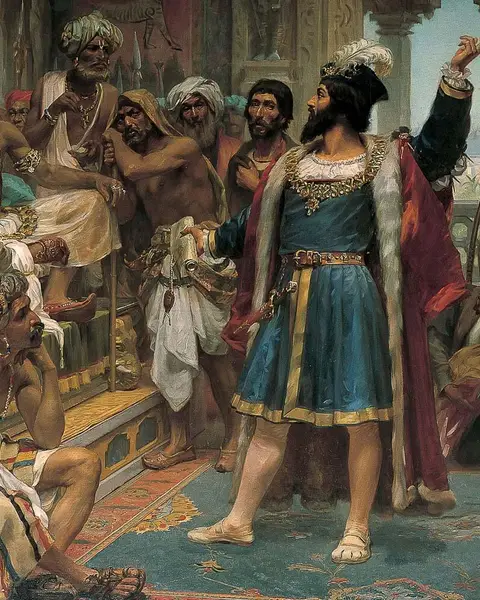
Marco’s travel book inspired Christopher Columbus and many other travelers, and it belongs to the same story of European interest in Asia that led to the voyage of Vasco da Gama to India. It still inspires thousands who have that little travel bug inside of them and wish to see the world with their own eyes.
Hope you enjoyed the reading and until the next post,
The Portuguese Traveler
Loading comments…