
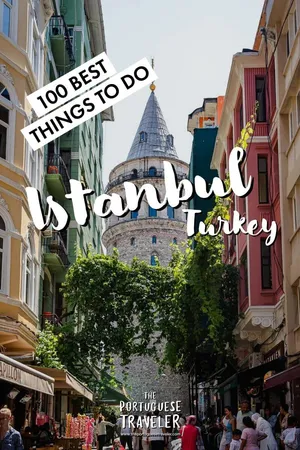
100 Best Things To Do in Istanbul, Turkey

João Petersen · Last updated September 2, 2026
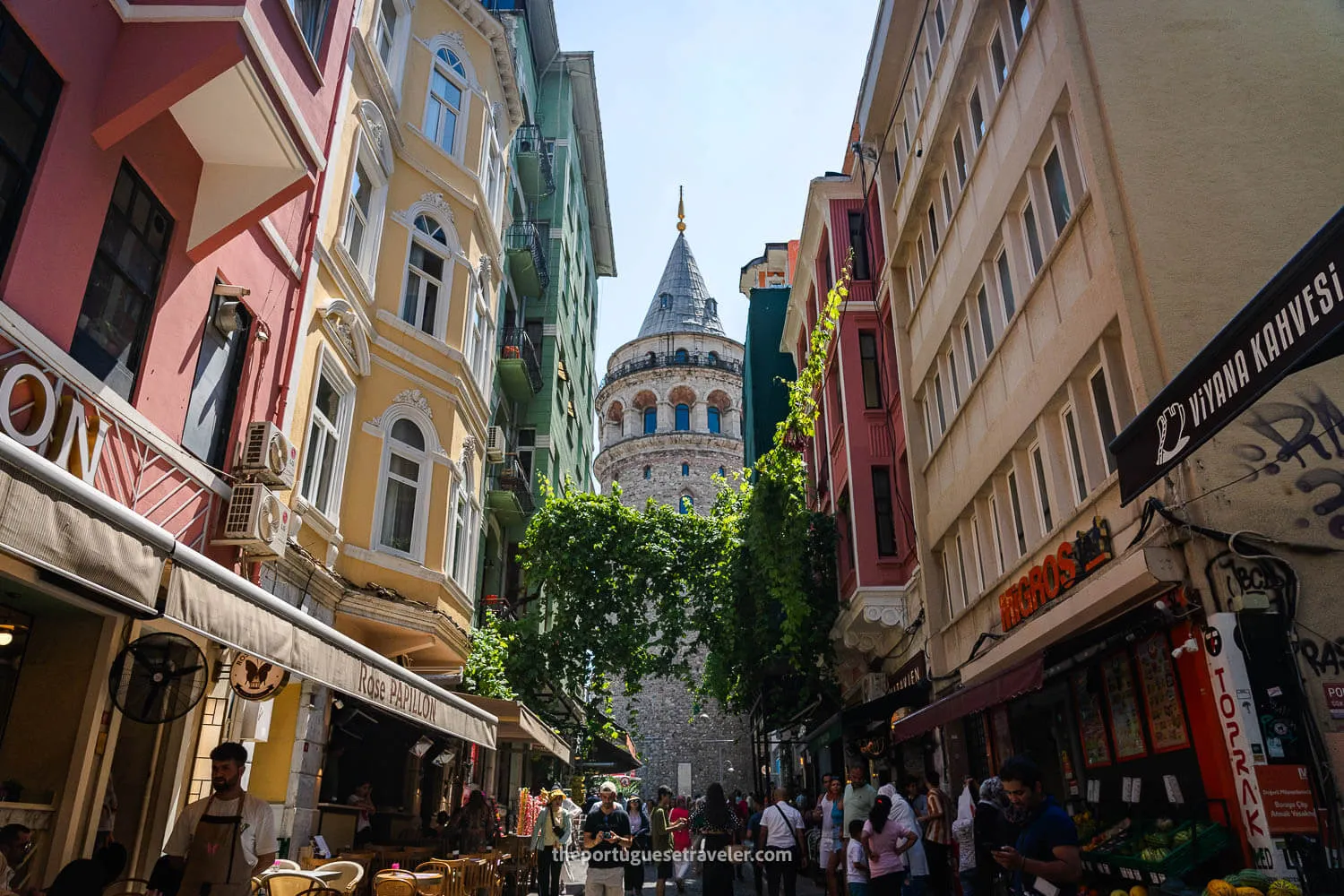
There are more things to do in Istanbul than most trips allow for, from Roman ruins and Byzantine mosaics to Ottoman mosques, bazaars and the Bosphorus. I first visited in 2014, lived there in 2015 for an internship and have been back several times, so this guide mixes my own favorites with research.
It covers 100 things to do, from landmarks and museums to viewpoints, food and cultural experiences. This list comes from research and listings.
Your Istanbul Essentials - Quick Guide
Short on time? This quick Istanbul guide will help you plan!
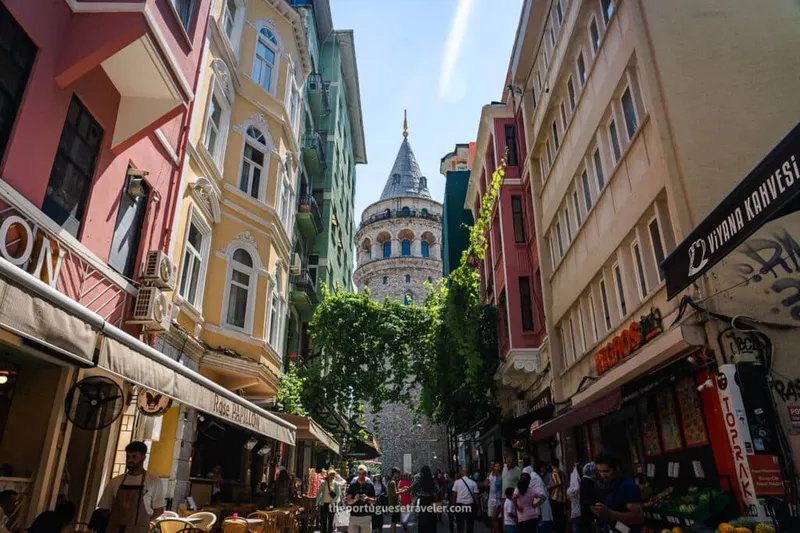
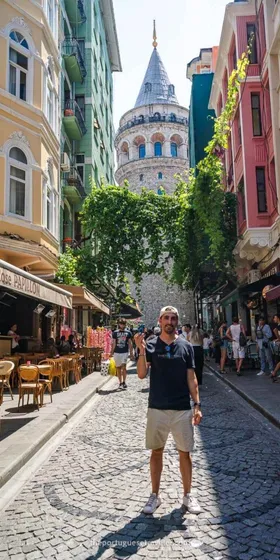
Where to Stay:
- – Four Seasons Hotel Istanbul (luxury stay steps from Hagia Sophia)
- – Pera Palace Hotel (historic boutique icon in Beyoğlu)
- – Cheers Hostel (budget-friendly & social in Sultanahmet)
When to Go:
- – Best in Spring (Apr–Jun) or Fall (Sep–Oct)
- – Summer (Jul–Aug) is hot & crowded
- – Winter (Dec–Feb) is quiet but chilly
Must-Do Experiences:
- – Hagia Sophia & Blue Mosque
- – Topkapı Palace & its Harem
- – Grand Bazaar & Spice Bazaar
- – Cruise along the Bosphorus
- – Turkish Hammam
Extras You'll Need:
- – Discovercars (Car rental comparison)
- – Heymondo (Travel insurance, 5% discount)
- – Holafly (Mobile eSIM, 5% discount)
- – Airalo (Mobile eSIM; I have used it, not in the Galapagos)
The links in this box are affiliate links.
Important: Hagia Sophia draws big crowds, reserve tickets and aim for off-peak hours.
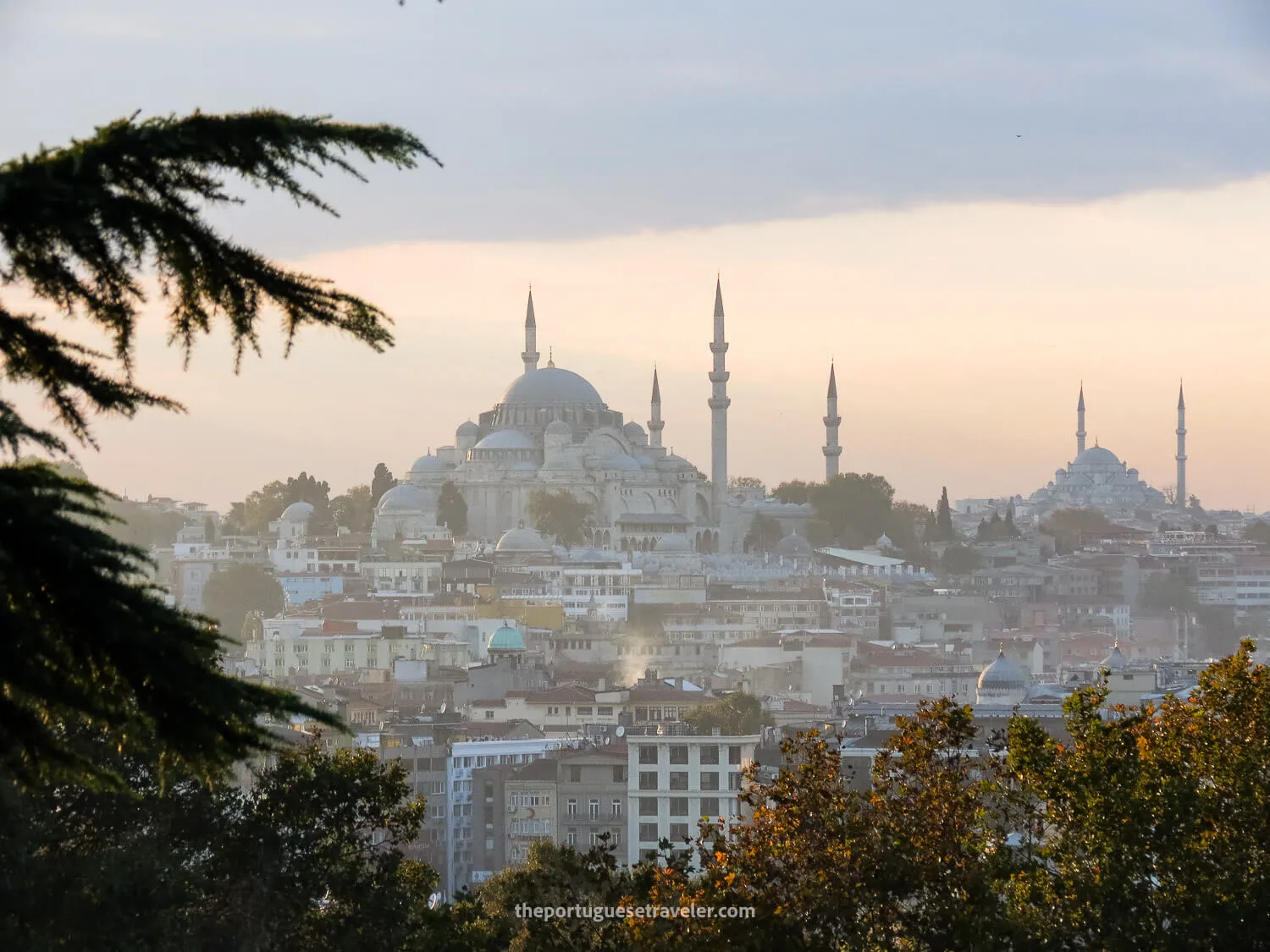
Where is Istanbul located?
Istanbul sits on two continents, Europe and Asia, divided by the Bosphorus Strait. It is Turkey’s largest city, though not its capital. The geography gives the city its mix of cultures, cuisines and architectural styles.
How to get to Istanbul
There are several ways to reach Istanbul.
By Air: Istanbul has two major airports: Istanbul Airport (IST) on the European side and Sabiha Gökçen (SAW) on the Asian side. Together they connect the city to hundreds of destinations. Many visitors arrive with Turkish Airlines, Pegasus or other international carriers.
By Land & Sea: The city is also linked by long-distance buses and trains from across Turkey and neighboring countries. Ferries cross the Marmara Sea and the Bosphorus.
 Tip: Trip.com, GetYourGuide and Welcome Pickups are partners of this site. If you are booking flights, platforms like Trip.com list flights, and you can arrange private transfers from the airport with GetYourGuide or Welcome Pickups.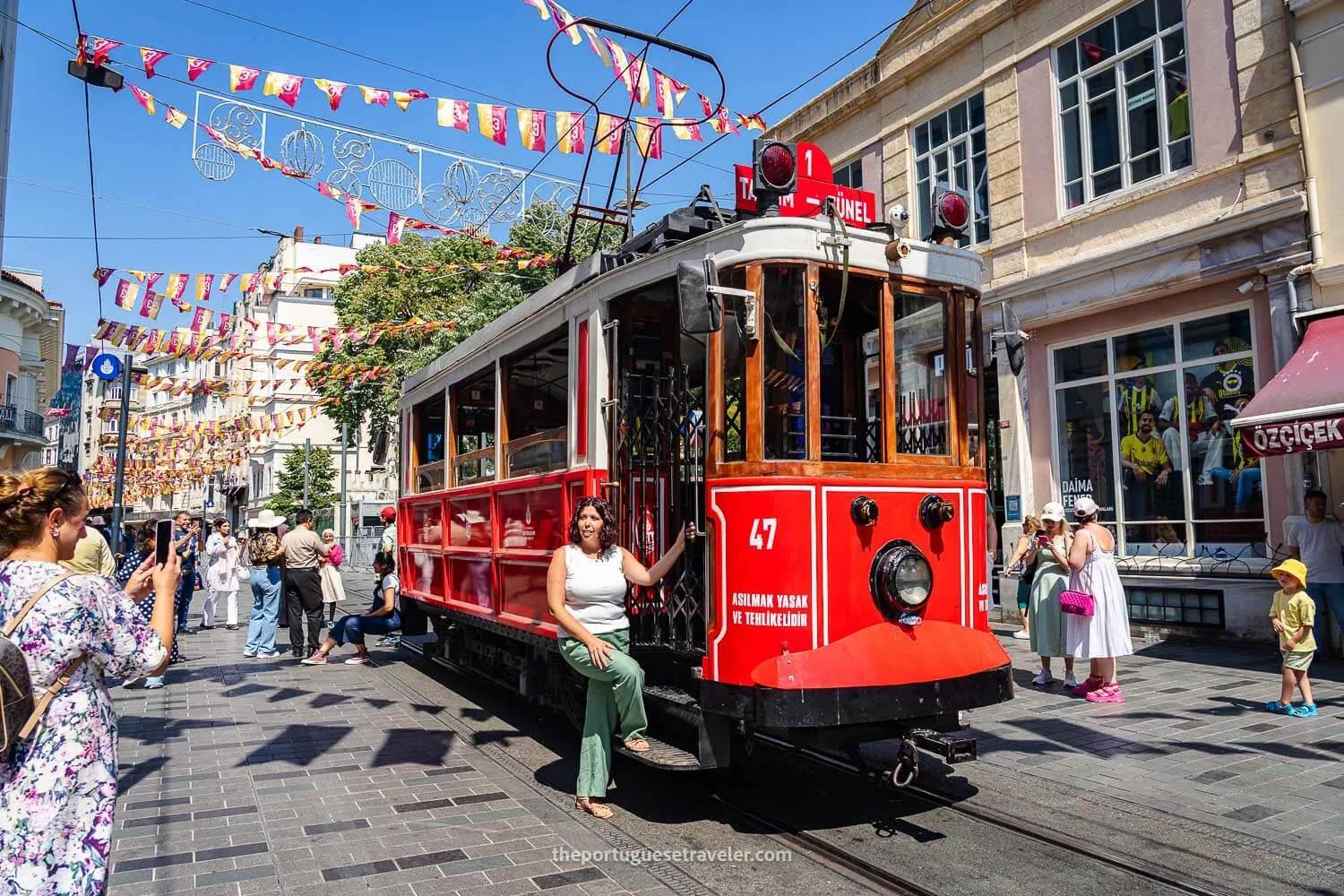
Best time to visit Istanbul
The best times to visit Istanbul are spring (April–June) and autumn (September–October), when the weather is mild and there are festivals and outdoor events. Summers can be hot and crowded, while winters are chilly and rainy, though December and January are quieter, with fewer tourists.
How many days to spend in Istanbul?
Plan for at least 3 to 4 full days. That gives enough time for the main highlights (Hagia Sophia, the Blue Mosque, Topkapı Palace, the Grand Bazaar and a Bosphorus cruise) with room to wander neighborhoods like Kadıköy or Balat. With 5–7 days you can add a day trip to the Princes’ Islands or Bursa.
 A multi-day tour in Istanbul (booking-partner listing): Full Day Istanbul 1, 2, or 3-Day Private City Guided Tour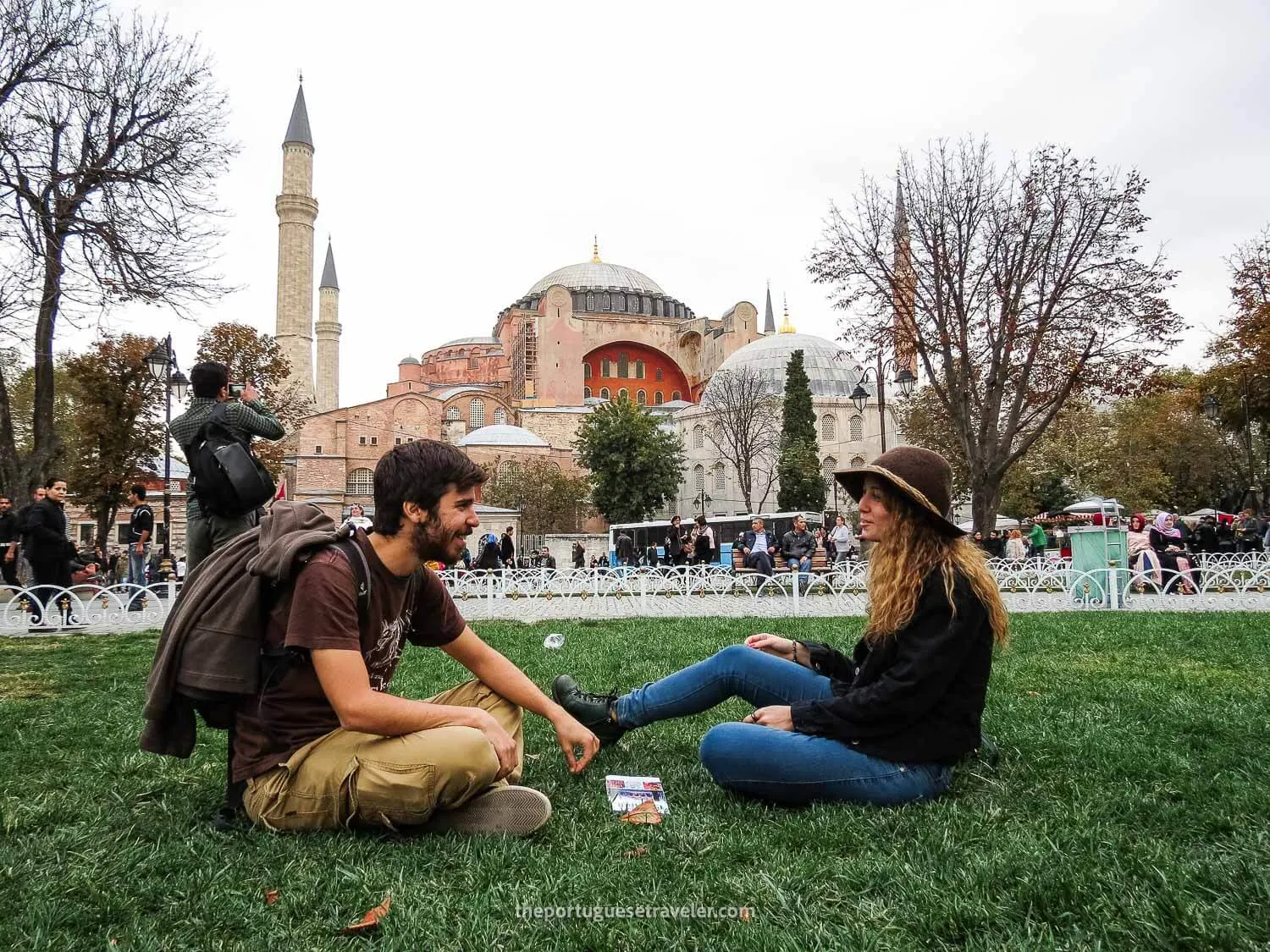
A Quick Look at Istanbul
Istanbul is a crossroads of civilizations. Where Europe meets Asia, it has been the capital of three empires and still carries their imprint in its mosques, palaces and bazaars. Today it is a metropolis of over 15 million people, where ancient history sits beside modern life.
Short history and cultural context of Istanbul
Istanbul has been central to world history for more than 2,500 years. Founded as Byzantium by the Greeks, it became Constantinople, capital of the Roman and Byzantine Empires, and then the capital of the Ottoman Empire. Each era left architecture behind, from Roman aqueducts and Byzantine churches to Ottoman mosques and palaces, and the layers are still visible in the neighborhoods and daily life along the Bosphorus.
Why is Istanbul famous?
Istanbul is famous for landmarks like Hagia Sophia, the Blue Mosque and Topkapı Palace, which tell the story of empires rising and falling. The Grand Bazaar and Spice Bazaar continue centuries-old trade, and the food brings together Anatolian, Balkan and Middle Eastern flavors. It is also a cultural center today, with art galleries, music, nightlife and a fashion scene. Its setting between two continents adds to its character.
Geography and setting of Istanbul
Istanbul is one of the few cities built on two continents, and by far the largest. The Bosphorus Strait, which connects the Black Sea to the Sea of Marmara, splits the city in two, and the Golden Horn inlet cuts into the European side and forms a natural harbor that has attracted traders for centuries. This geography made Istanbul a strategic prize for empires and shaped its culture.
My Top 5 Things To Do in Istanbul
There are many things to do in Istanbul, so choosing favorites is hard. These are my five favorites, from the grand imperial sights to a hidden corner.
1. Hagia Sophia - A Journey Through Empires
If I had to choose one symbol of Istanbul, it would be Hagia Sophia. Built in the 6th century under Emperor Justinian, it has been a Byzantine church, an Ottoman mosque, a museum and, today, a mosque again. Inside you see the mosaics and the dome and feel the weight of history. Few places bring together so many layers of history under one roof.
Book a guided tour: Hagia Sophia Guided Tour (w/ Blue Mosque & Sultanahmet)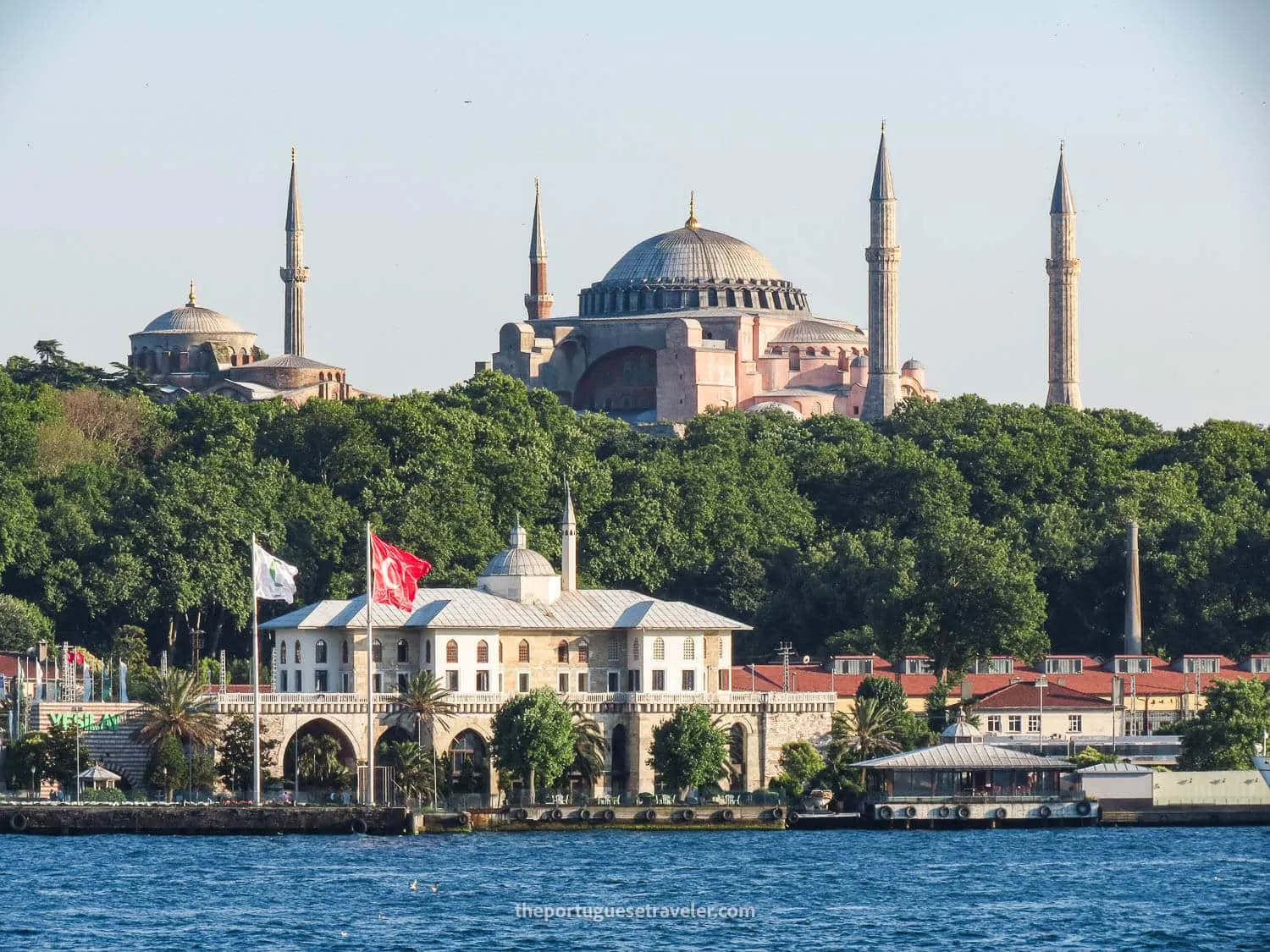
Hagia Sophia seen from the Bosphorus
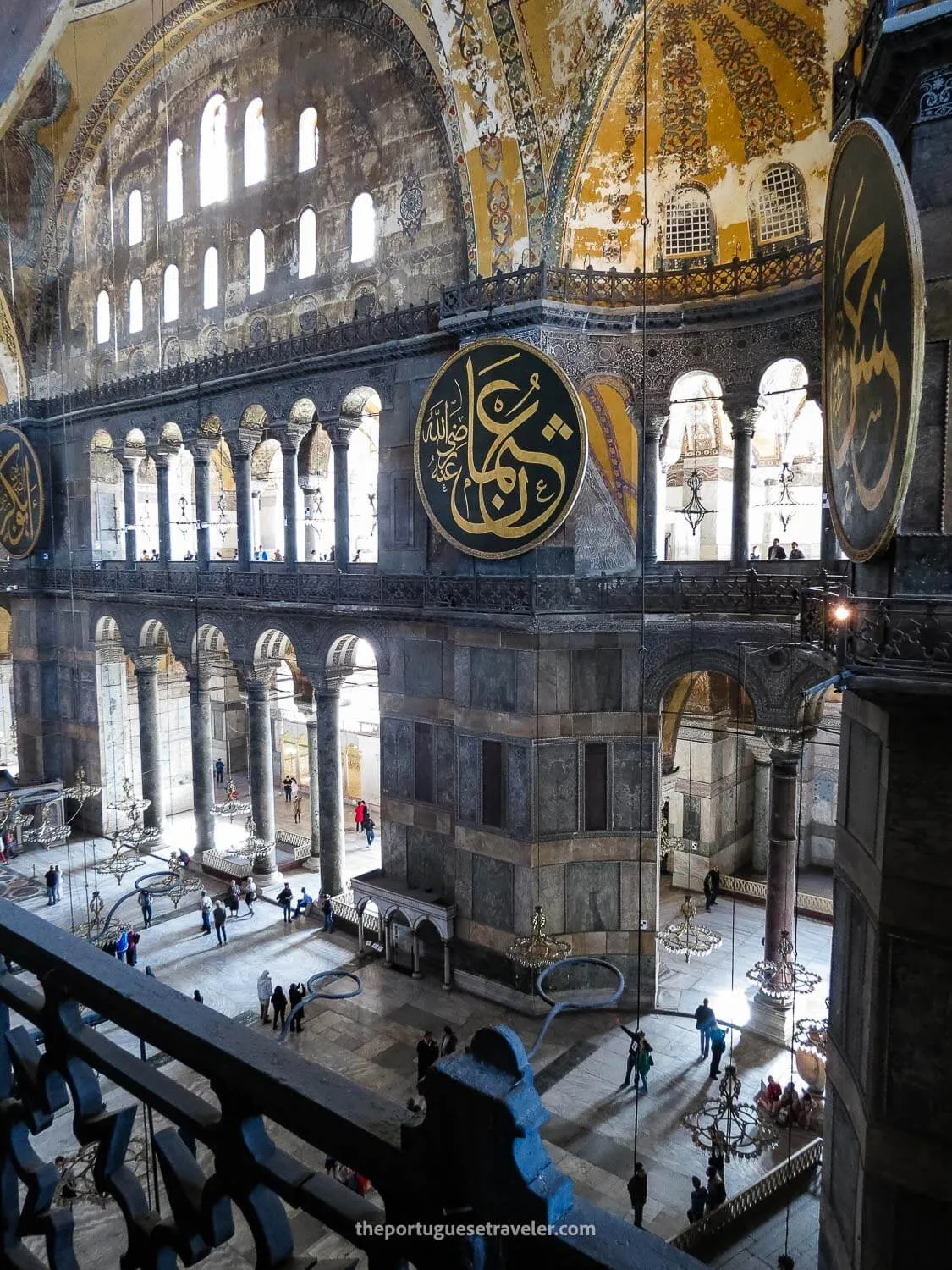
Hagia Sophia’s interior
2. Grand Bazaar - Organized Chaos and Timeless Energy
The Grand Bazaar is more than a market. With thousands of shops, winding alleys and constant bargaining, it feels both chaotic and strangely organized. I love it not only for the souvenirs but for the atmosphere: the scents of spices, the glitter of lamps, the chatter of shopkeepers. It is overwhelming, and it has been the commercial center of the city for centuries.
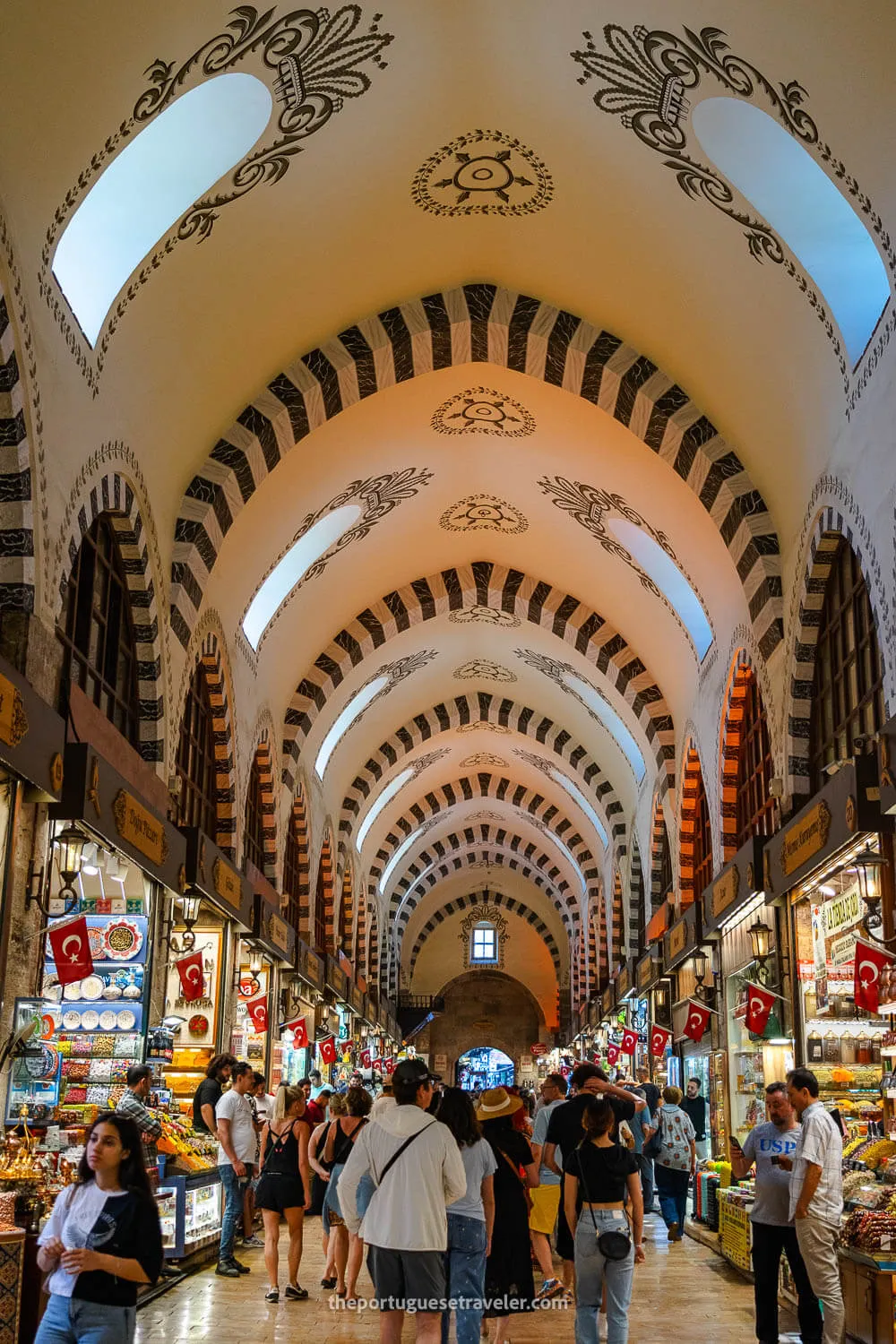
The Grand Bazaar in Istanbul
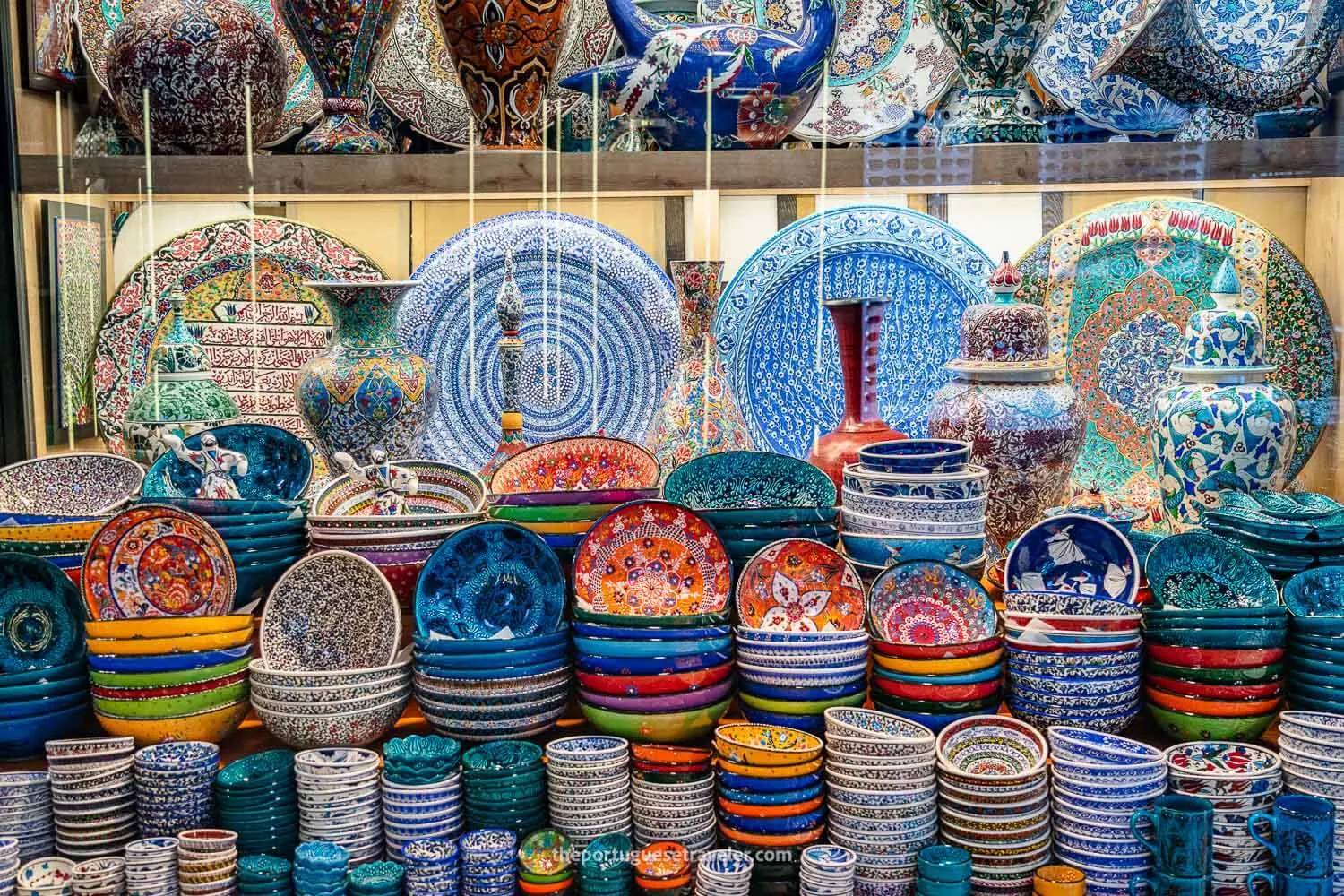
The Grand Bazaar of Istanbul
3. Büyük Valide Han - The Workshops Behind the Bazaar
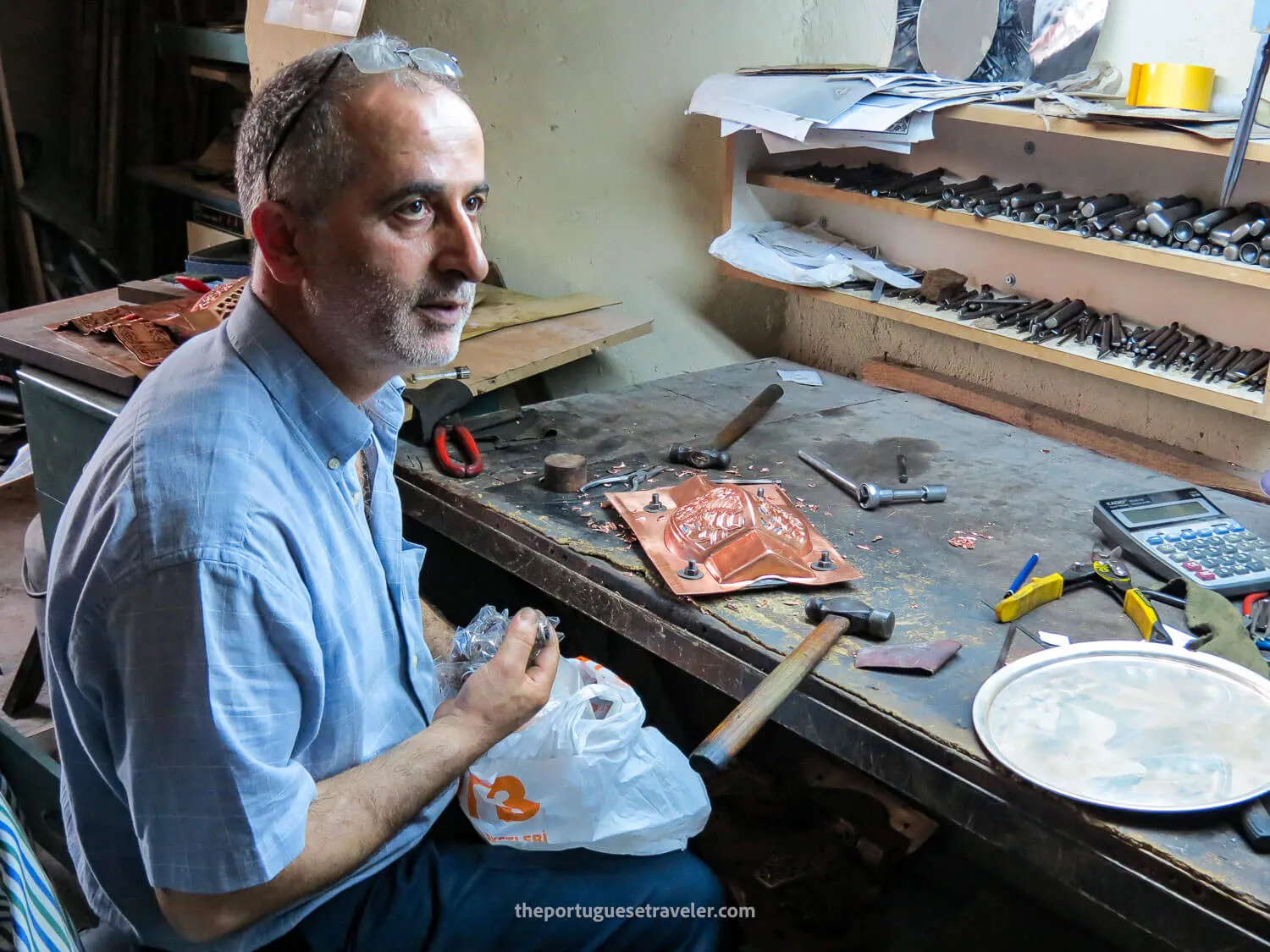
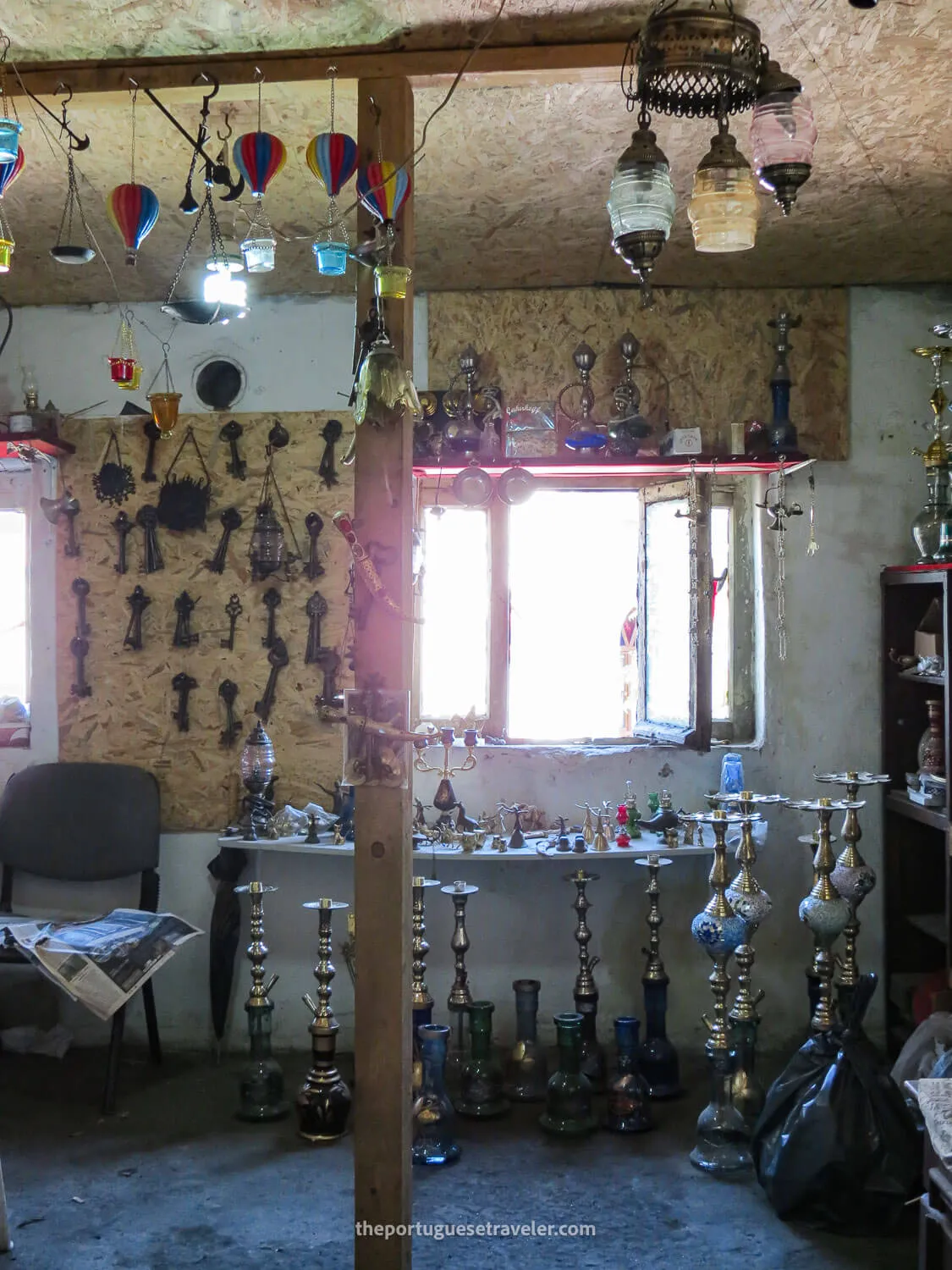
Most visitors come here for the rooftop view, but what interests me about Büyük Valide Han is what lies inside. Behind small doors there are still traditional workshops where artisans repair carpets, craft lamps or shape cheese-cutting tools, the same kinds of crafts that later reach the Grand Bazaar. It is a glimpse of Istanbul’s merchant past.
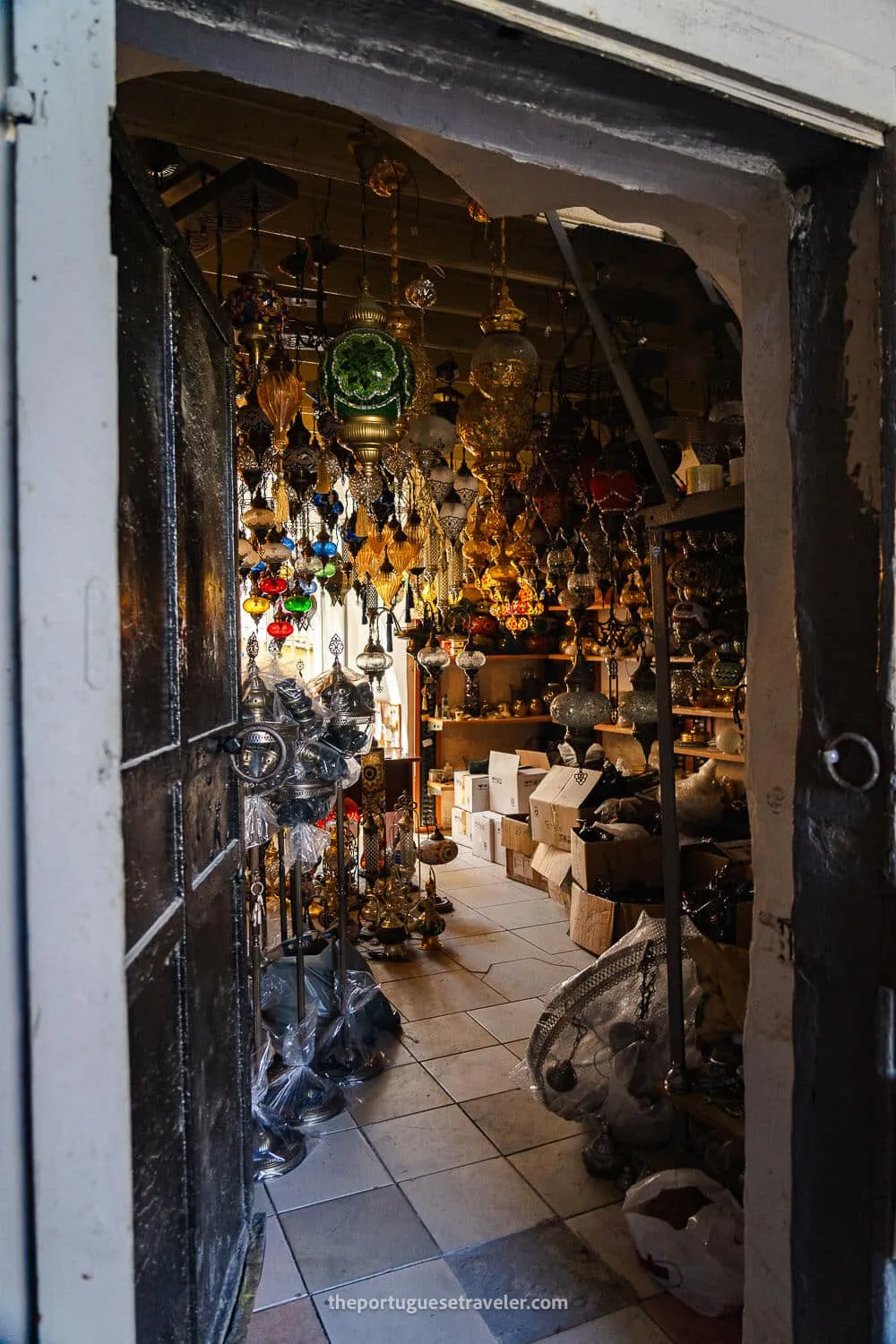
A lamp workshop inside the Büyuk Valide Han
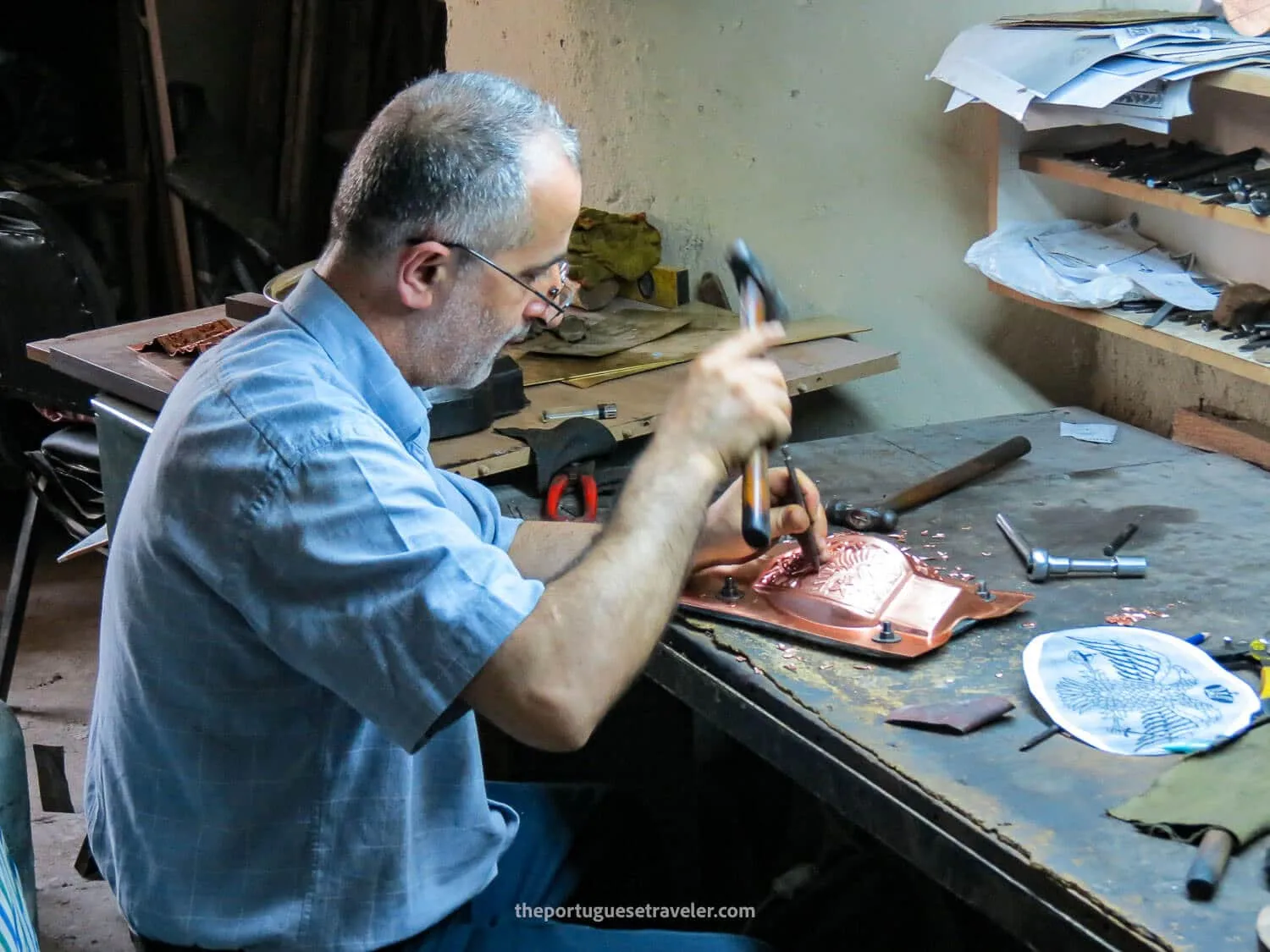
An artisan in Büyuk Valide Han
4. Galata Tower - Genoese Stone and Sunset Views
I’ll admit that part of my fascination with Galata Tower comes from video games: I first “flew” from it in Assassin’s Creed. In front of it you realize how remarkable it was that a Genoese trade colony thrived here in Constantinople and built this fortress-like tower in 1348. Climbing it today gives one of the best panoramic views of the city, especially at sunset, when the Bosphorus glows and the call to prayer carries across the skyline.
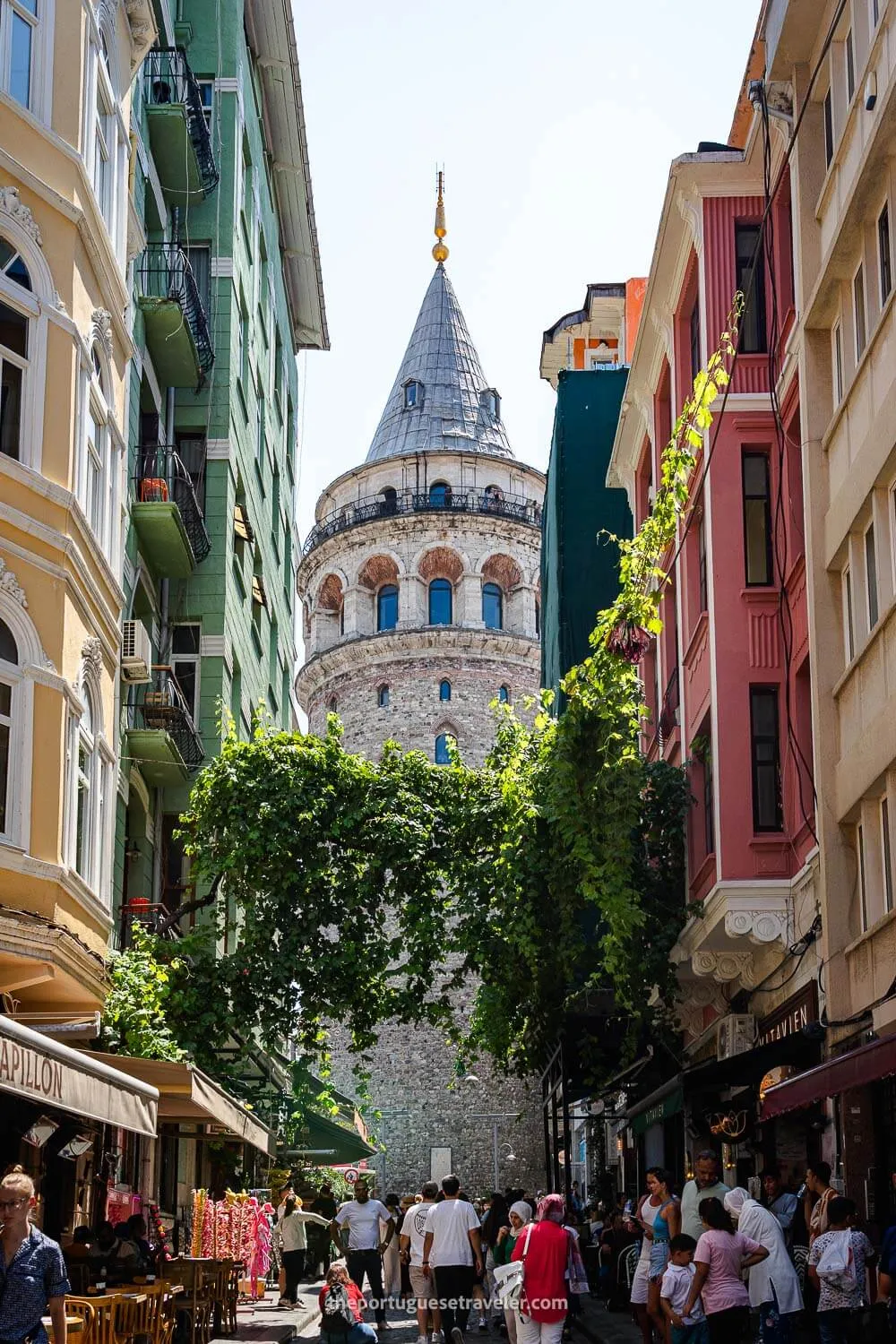
The Galata Tower of Istanbul
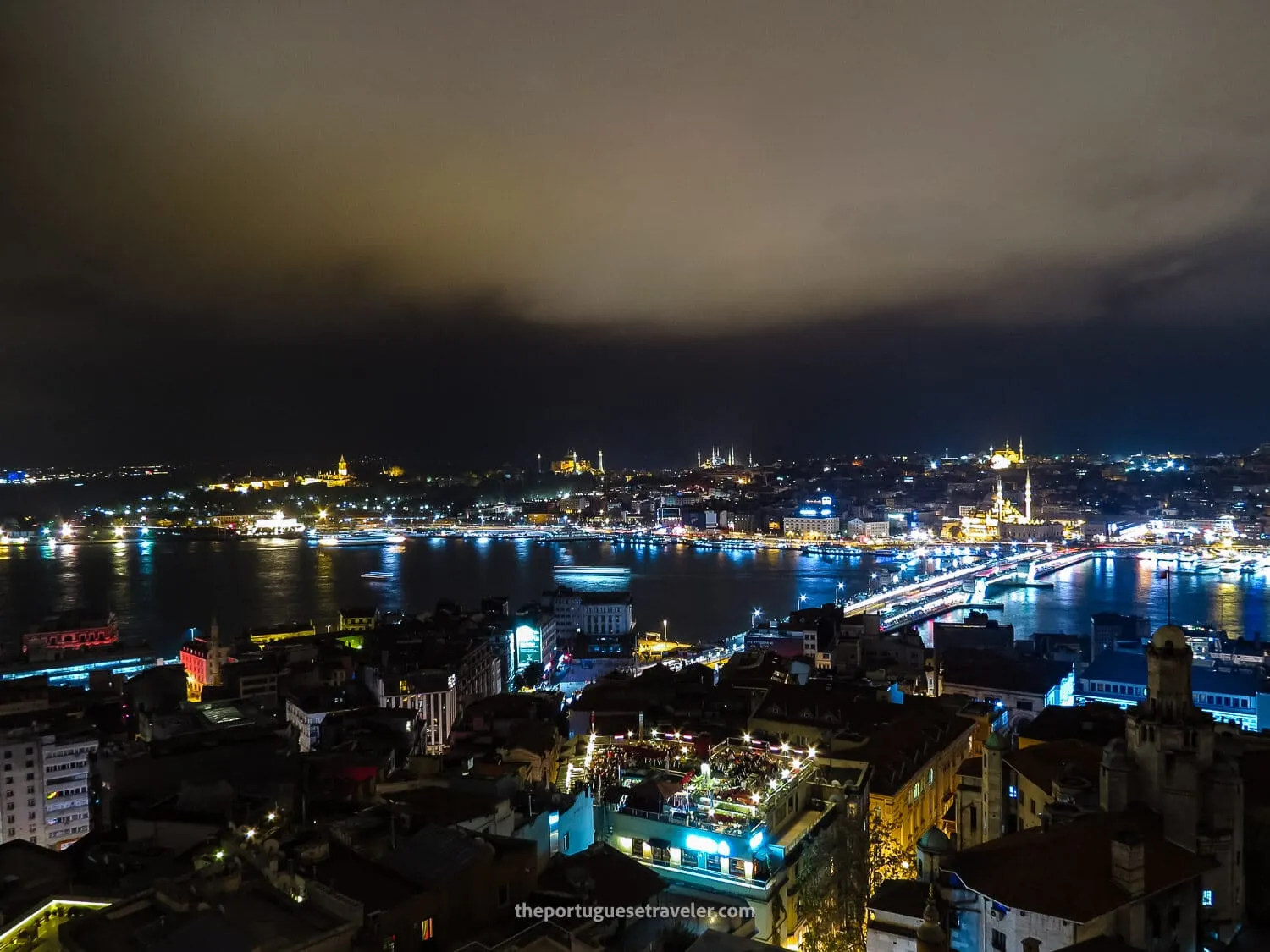
Galata Tower’s View at night
5. The Hidden Nakkaş Cistern: A Secret Beneath the Streets
Everyone knows the Basilica Cistern, but beneath a carpet shop near the Hippodrome is the lesser-known Nakkaş Cistern. Unlike its famous counterpart, it has rougher, mismatched columns, clearly built for function rather than beauty, which makes it feel improvised. When I visited, there was also an exhibition about the Hippodrome with 3D reconstructions of ancient Constantinople’s palaces and monuments.
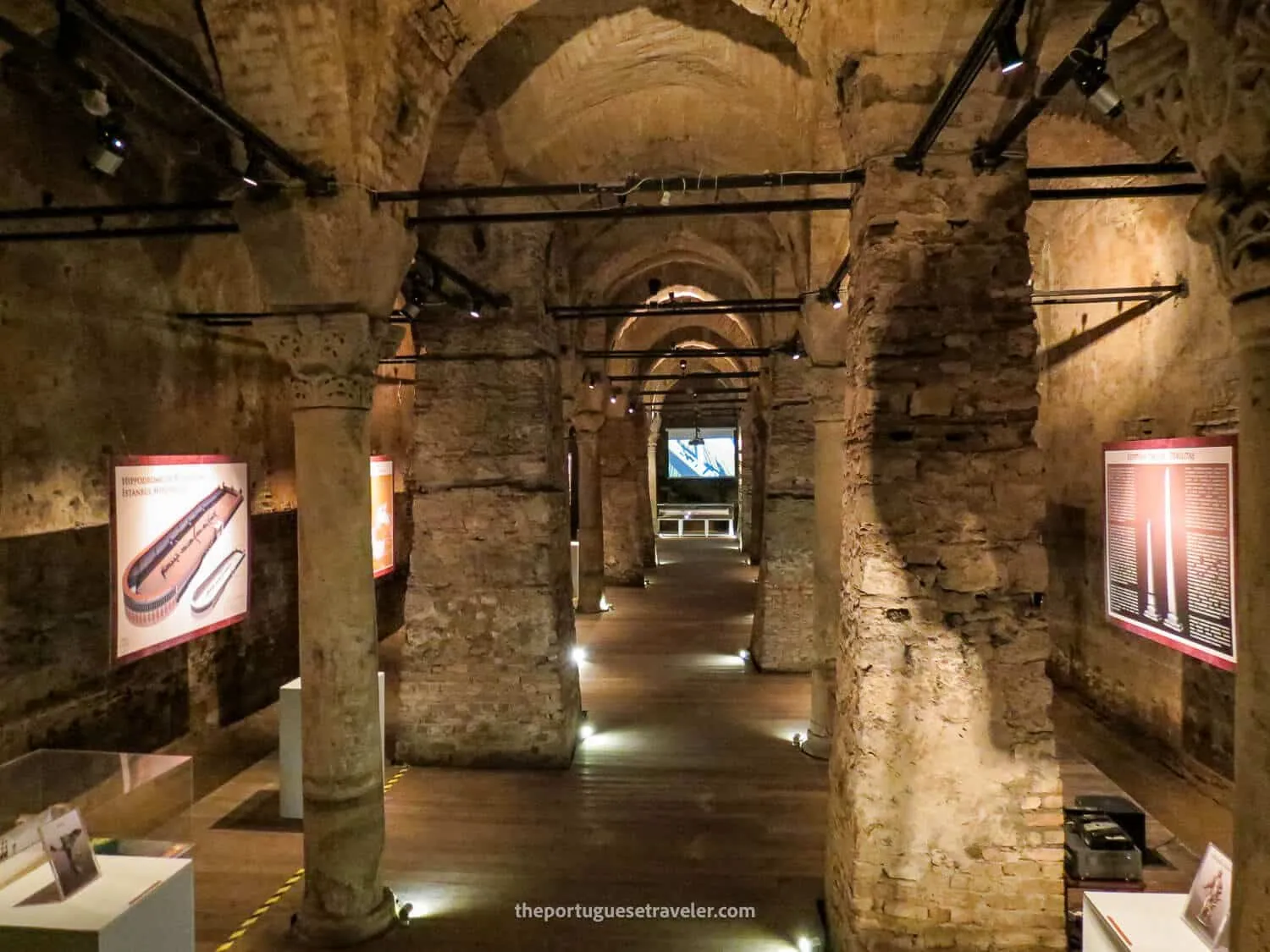
The Nakkas Cistern, a hidden gem in Istanbul
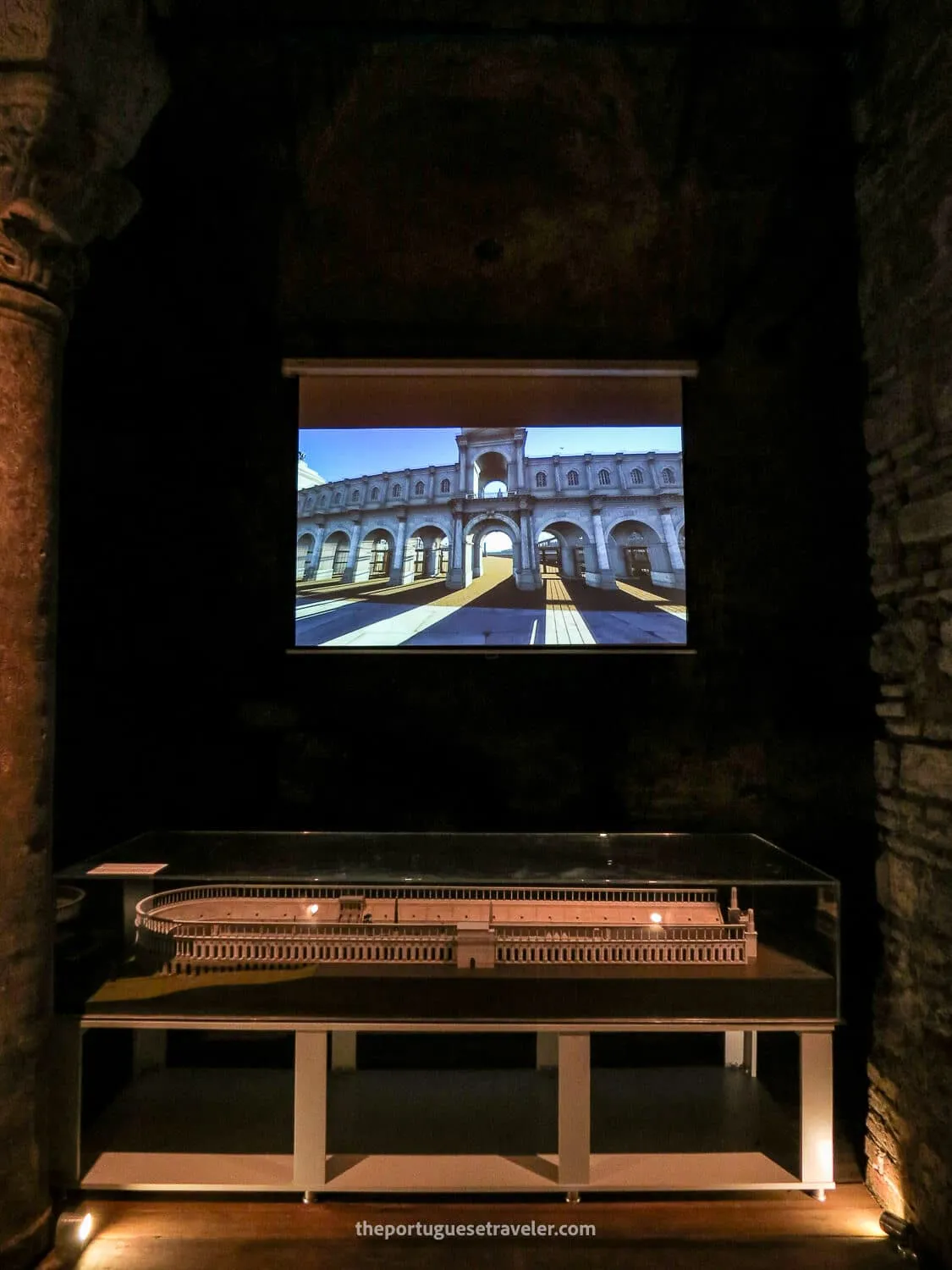
The Hippodrome Exhibition in the Nakilbent Cistern
Cultural & Historical Experiences
Istanbul is often called an open-air museum. The city holds the legacies of Greeks, Romans, Byzantines, Ottomans and Genoese merchants, each leaving monuments, neighborhoods and traditions behind.
Ancient & Early Periods (Greek, Roman & Pre-Byzantine)
Before Constantine made it his capital, the city was Byzantium, a Greek colony turned Roman stronghold. From aqueducts to ruined forums, the remains of this era show a city that was already a Roman stronghold. They set the stage for the Byzantine period and show Istanbul’s role as a crossroads long before it was the “New Rome.”
1. Hippodrome of Constantinople (with Serpent Column, Obelisk of Theodosius, Walled Obelisk)
The Hippodrome was the center of Byzantine public life, with chariot races, imperial ceremonies and political drama. The stadium is gone, but you can still see its monuments: the Serpent Column from Delphi, the Obelisk of Theodosius brought from Egypt and the Walled Obelisk. Walk through Sultanahmet Square and imagine the crowds cheering for their teams, the Blues and the Greens.
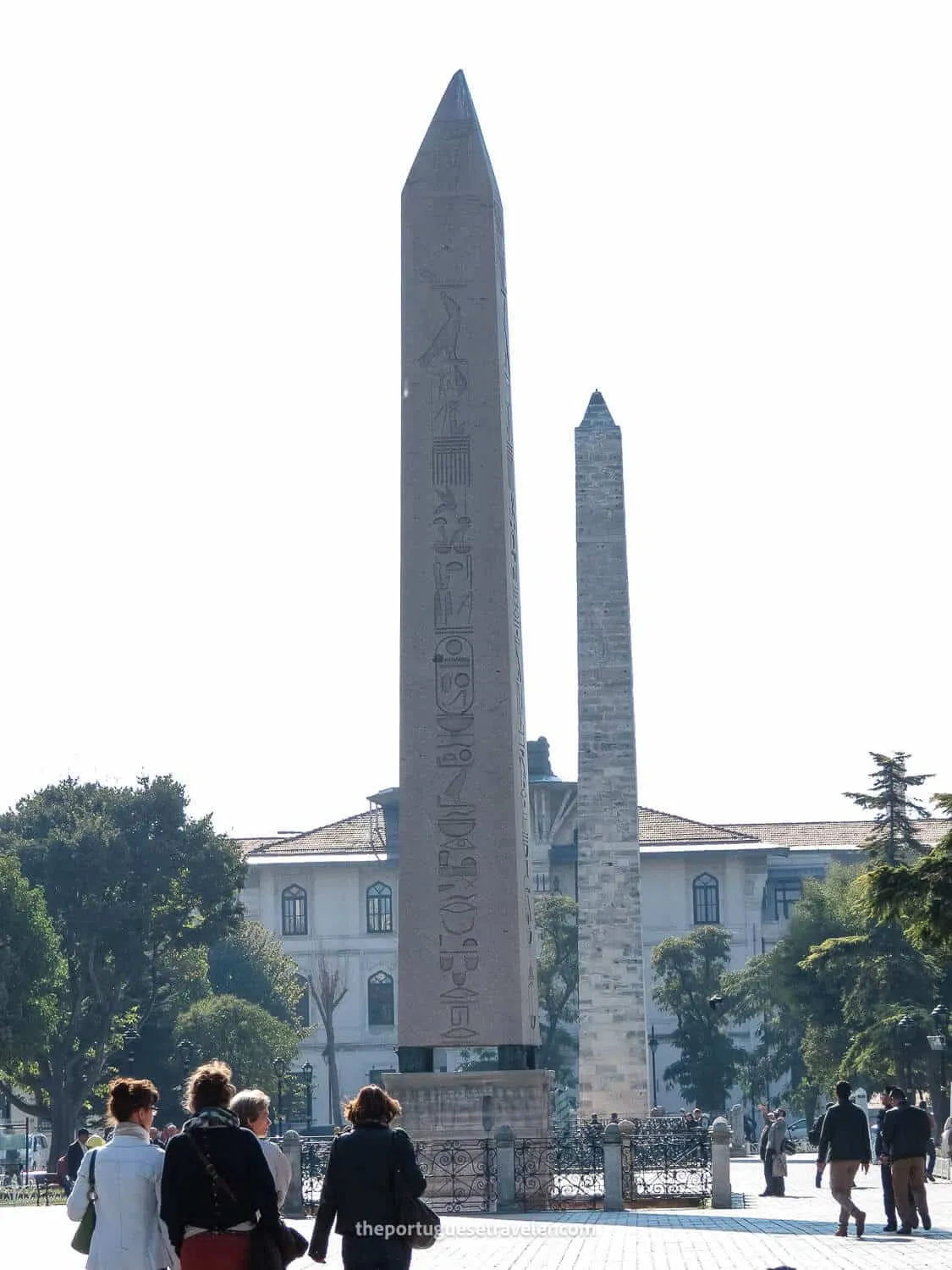
The Obelisk at the Hippodrome of Constantinople
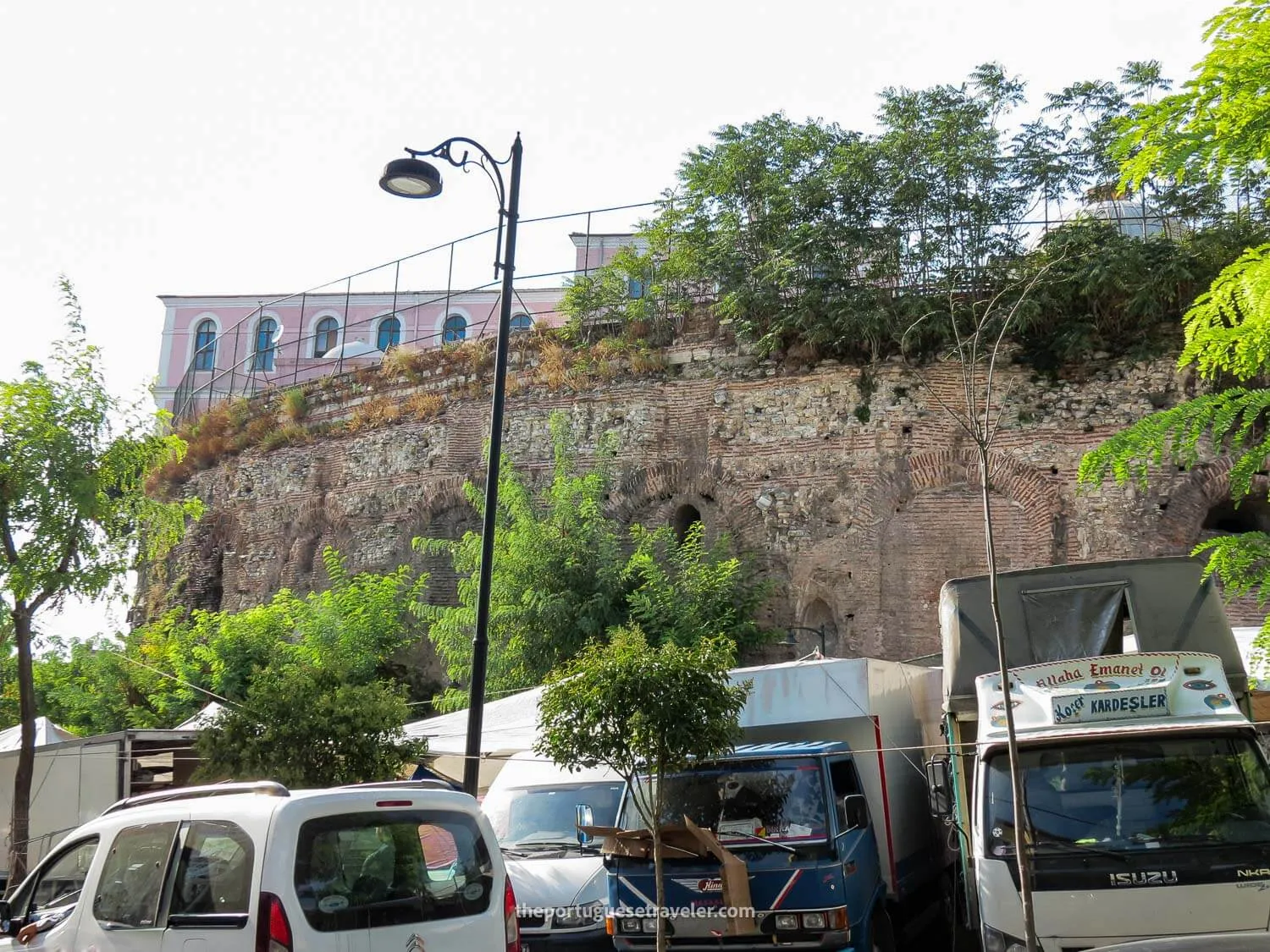
The base of the Hippodrome
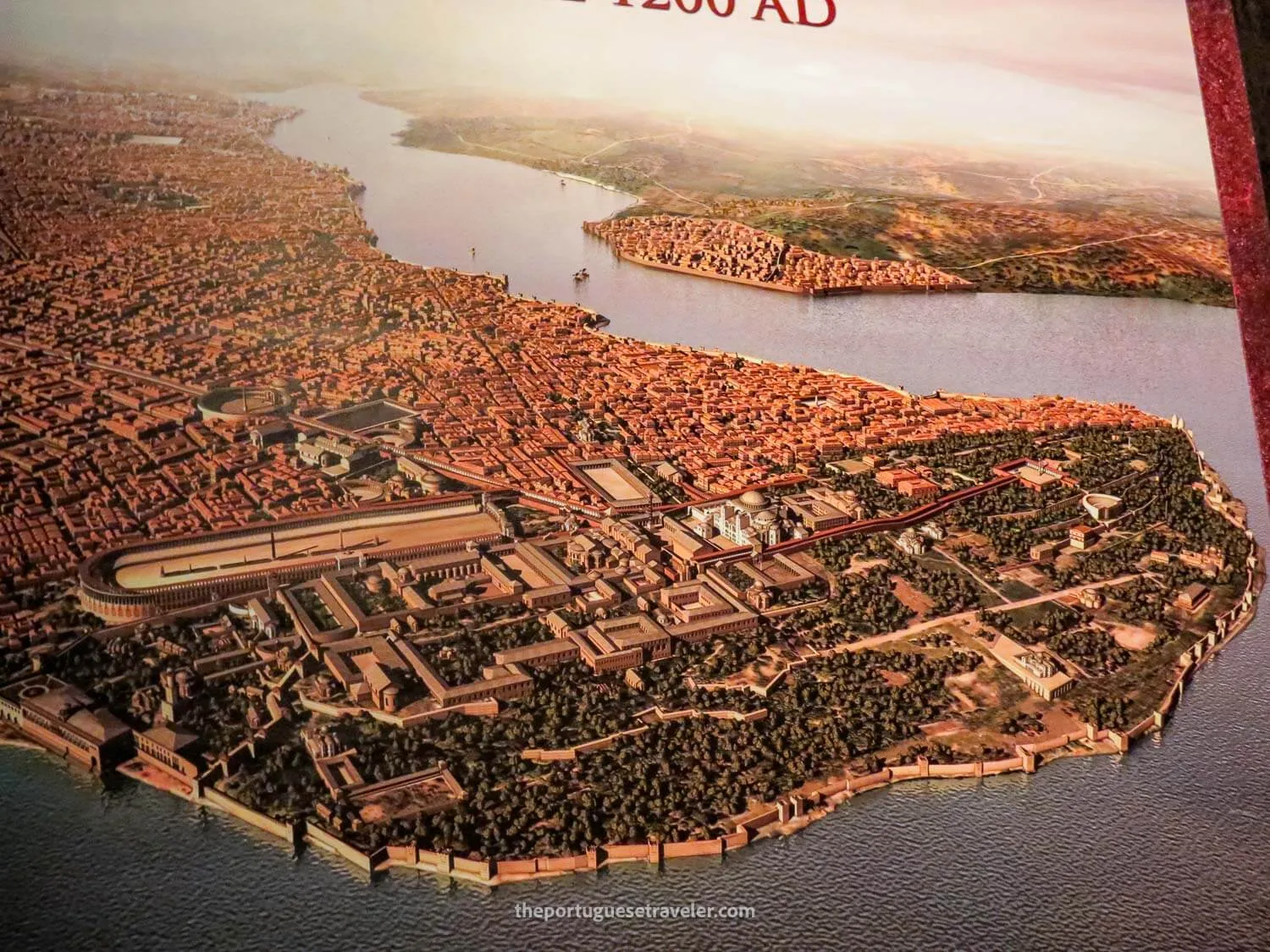
Constantinople’s 3D Model
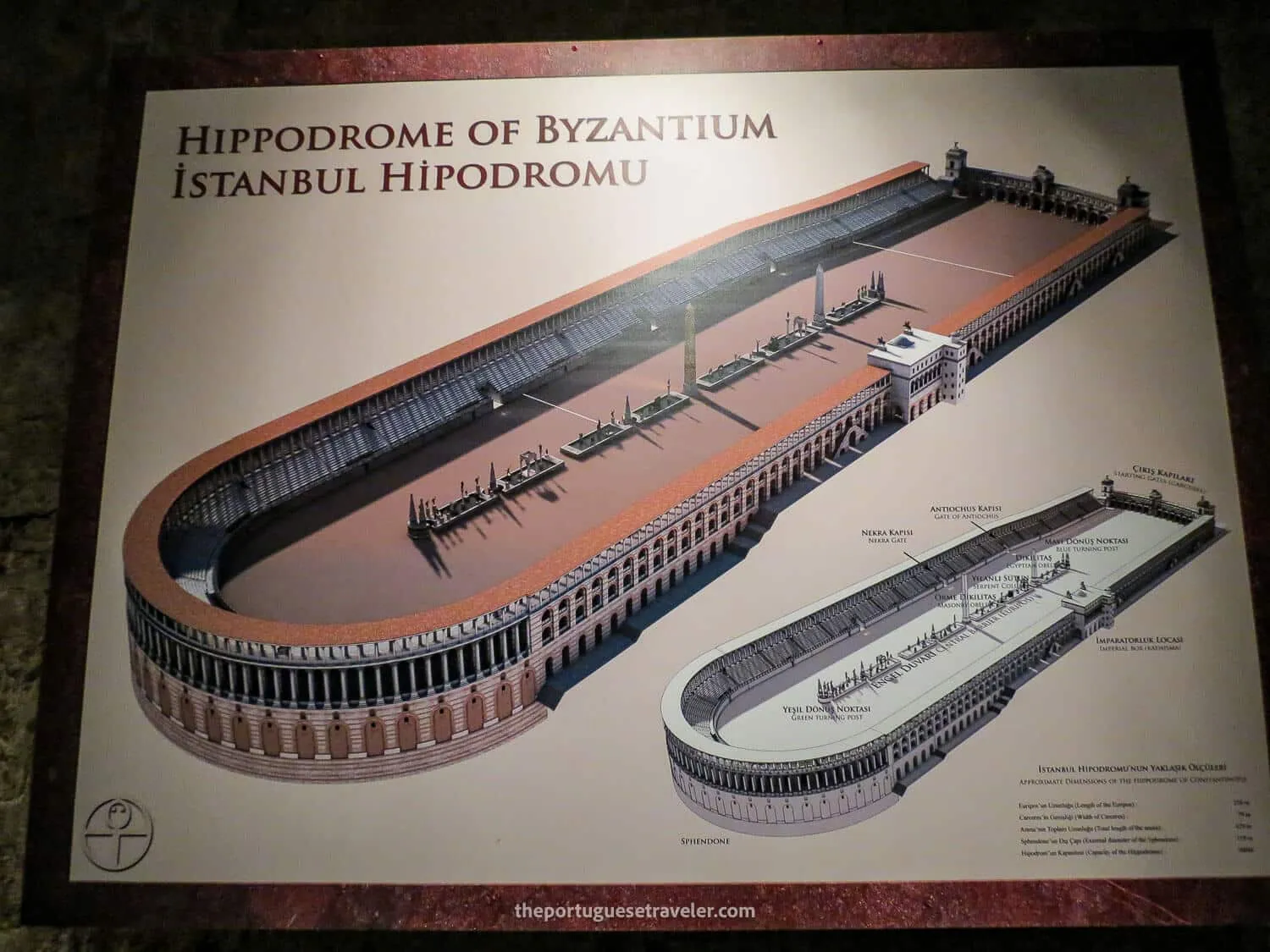
A 3D model of the Hippodrome
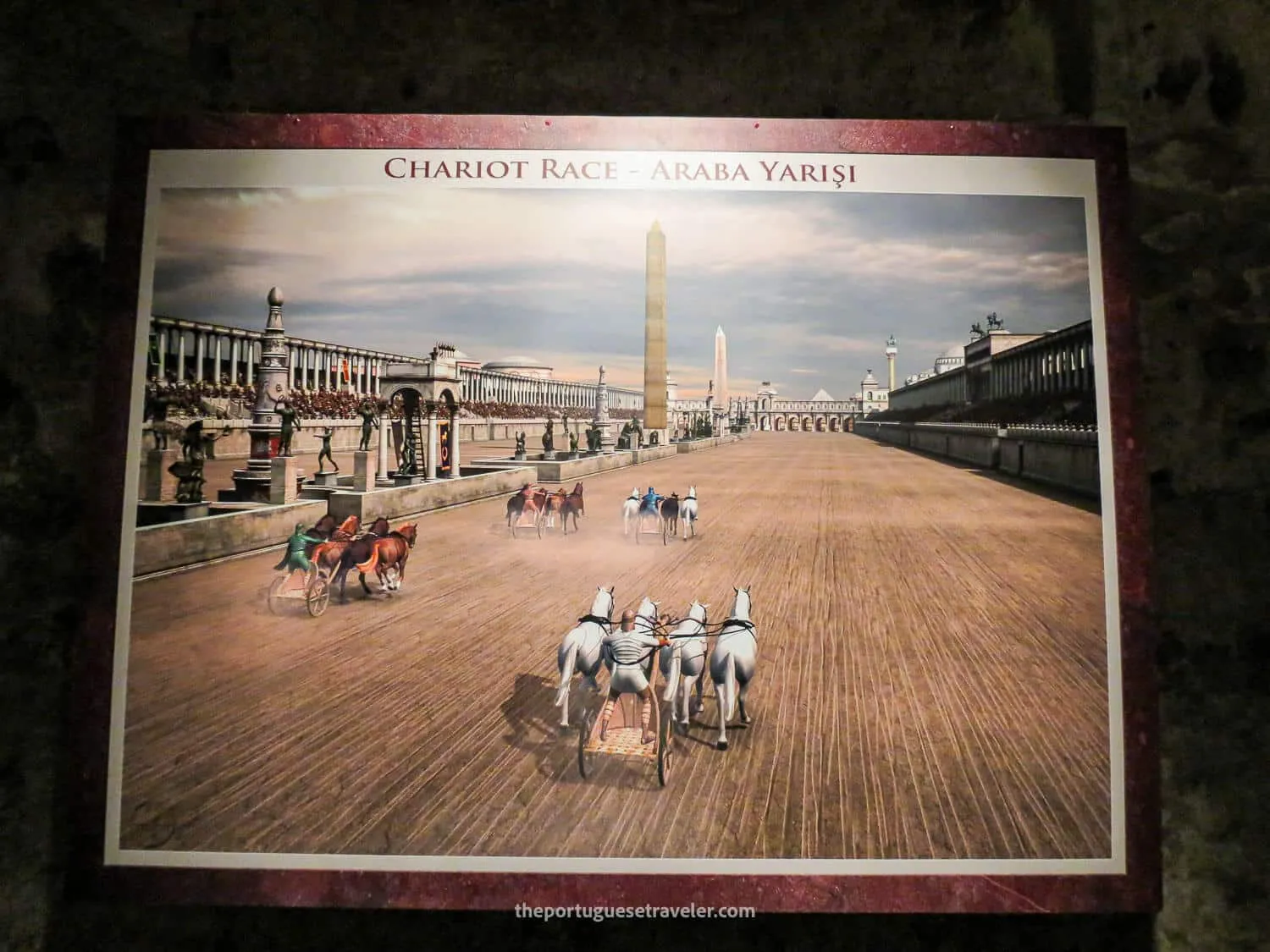
A spectacle inside the Hippodrome
2. Basilica Cistern (Yerebatan Sarnıcı)
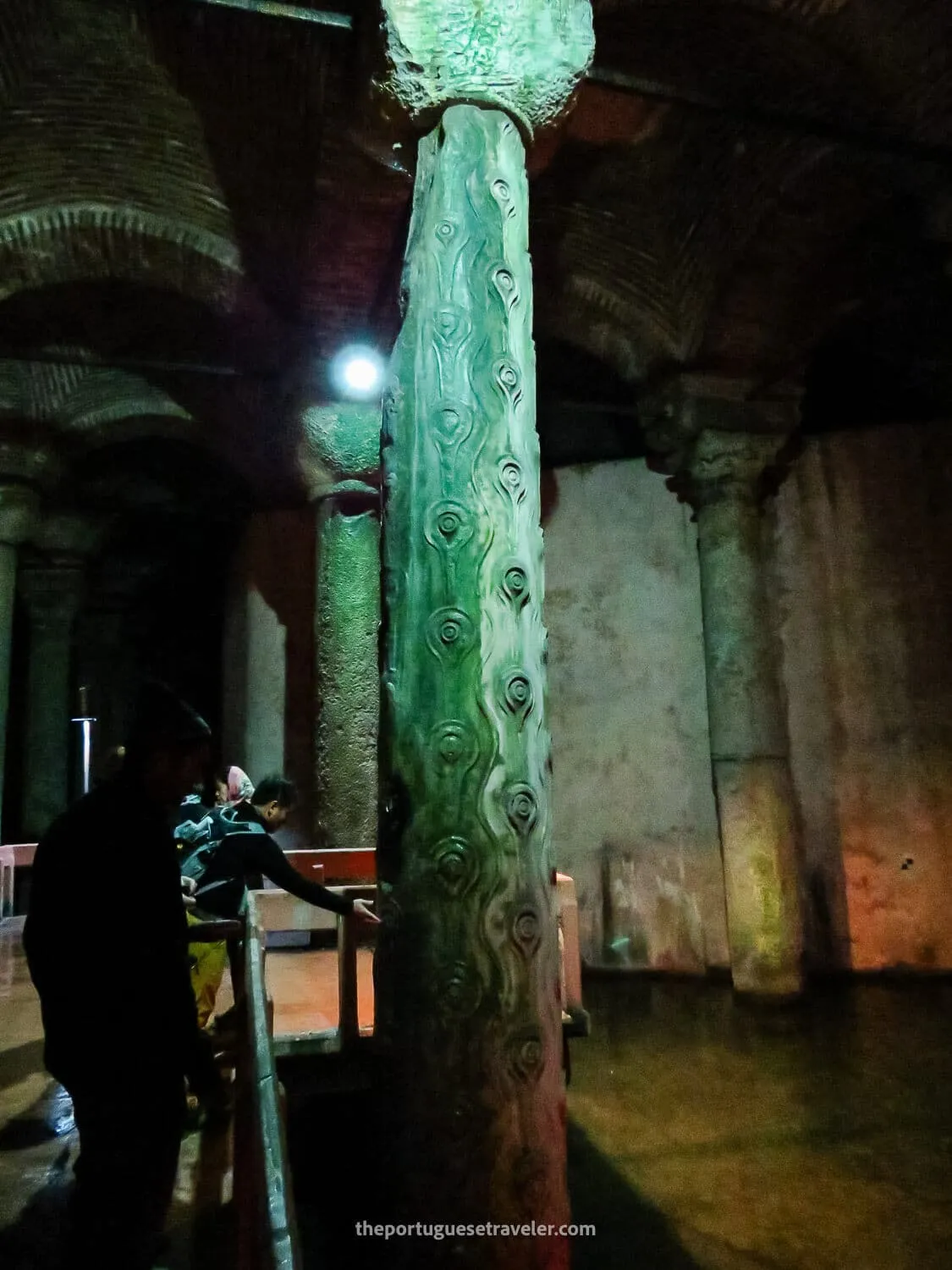
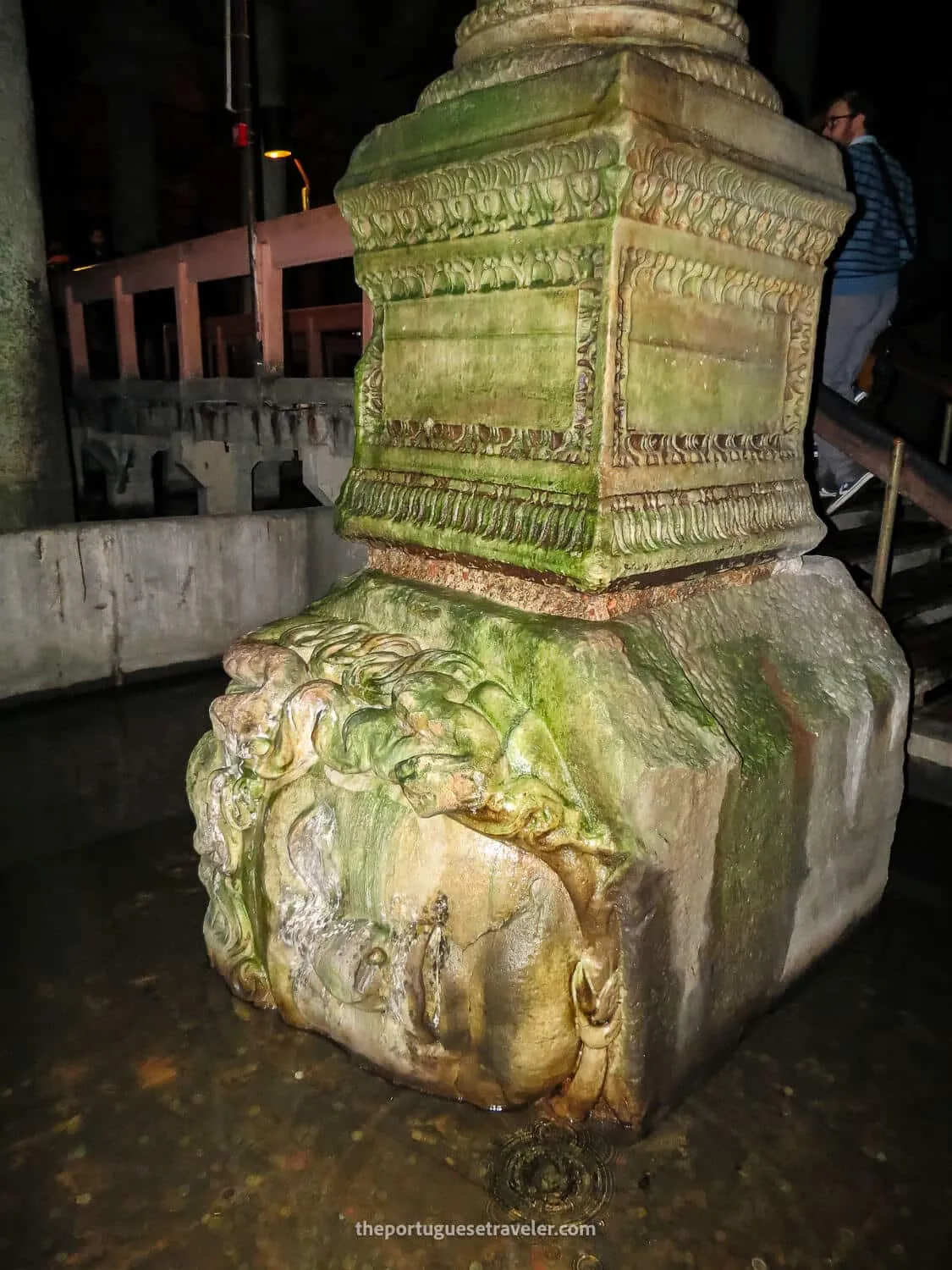
Emperor Justinian built the Basilica Cistern in the 6th century to store water for the Great Palace. 336 marble columns support the roof. Highlights include two Medusa heads, recycled from earlier buildings, and the lit walkways over the shallow water. It is a quiet escape from the street noise above.
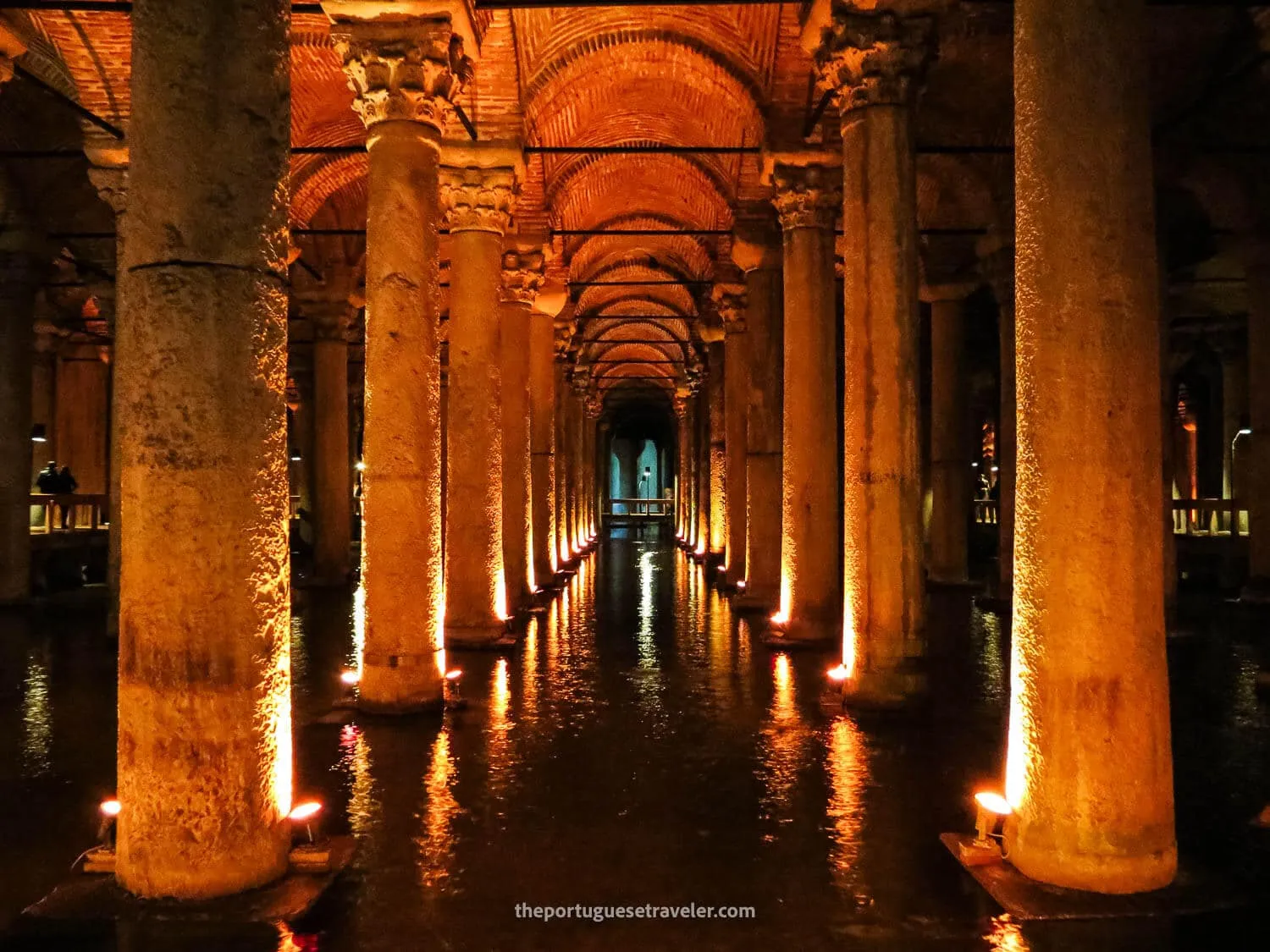
Yerebatan Sarayi or Basillica Cistern in Istanbul
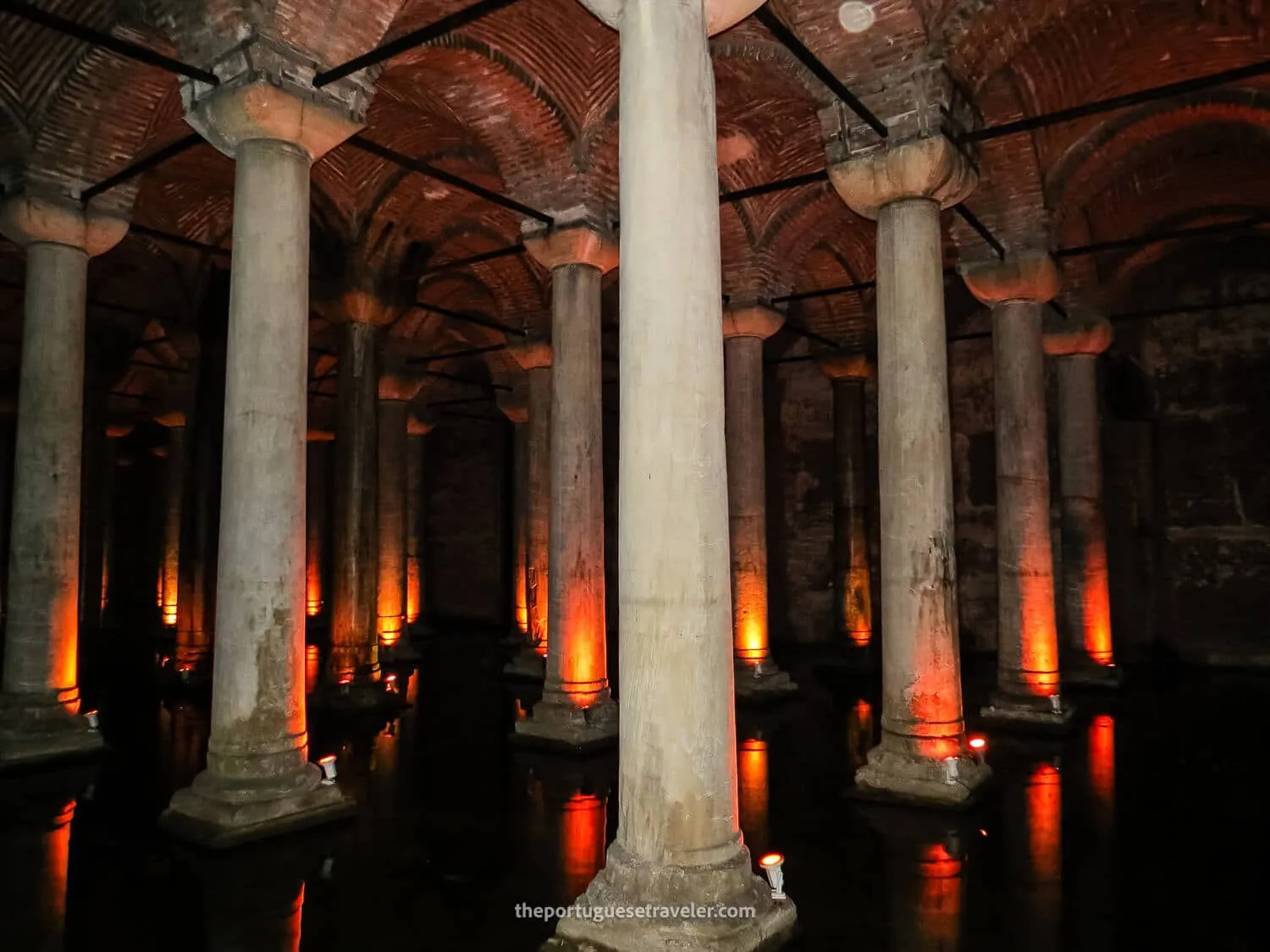
Yerebatan Sarayi or Basillica Cistern in Istanbul
3. Binbirdirek Cistern (Cistern of Philoxenos)
Often overshadowed by its famous neighbor, the Binbirdirek (“Cistern of a Thousand and One Columns”) is quieter. Built in the 4th century, it has 224 columns and was rediscovered in the Ottoman era. Today the space doubles as an event hall, but during the day you can explore its cool interior.
4. Column of Constantine (Çemberlitaş)
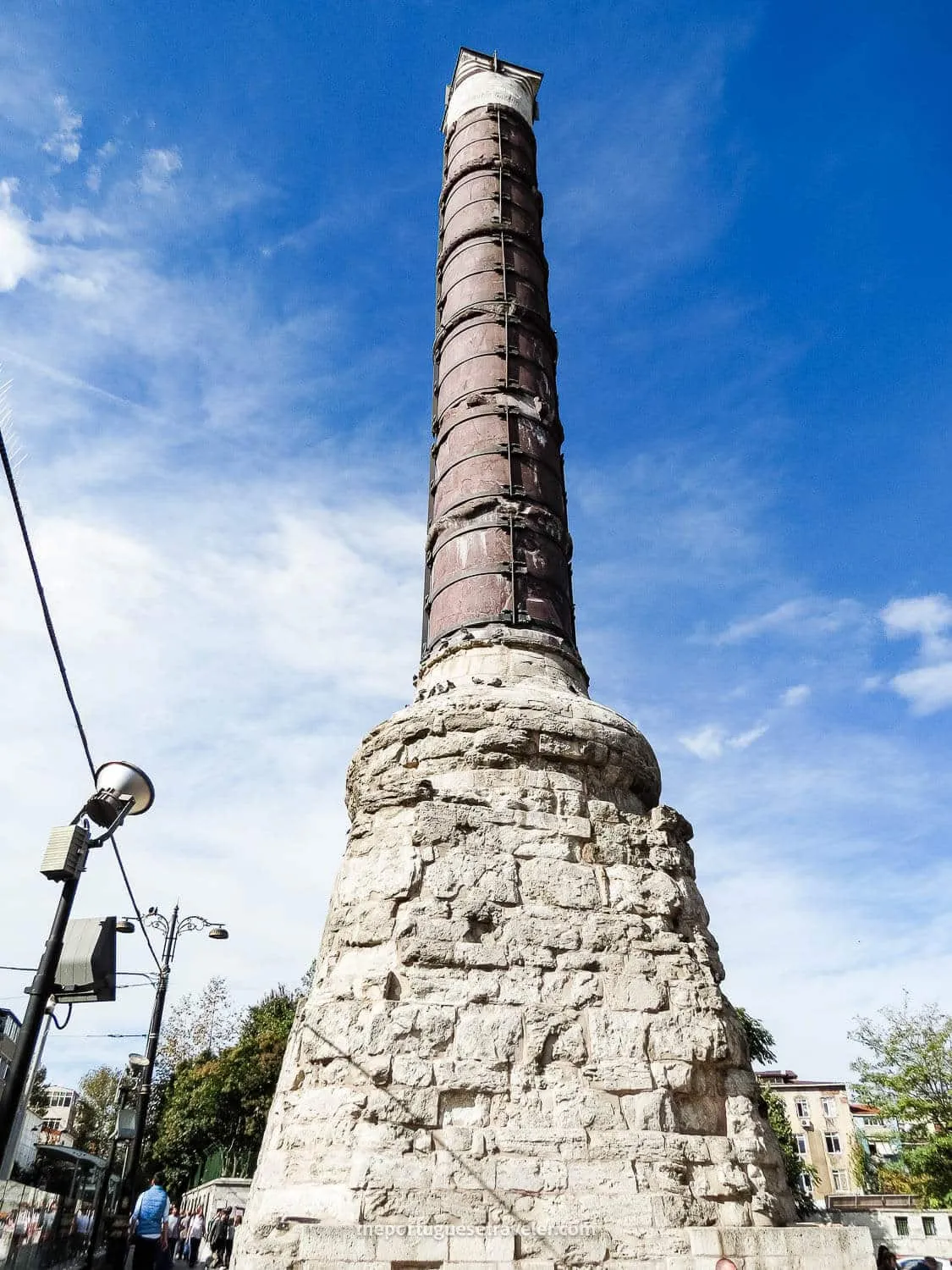
Standing on Divan Yolu Avenue, this column dates from 330 AD, when Emperor Constantine the Great dedicated Constantinople as the new capital of Rome. It was once topped by a statue of the emperor as Apollo, and it has survived fires, earthquakes and centuries of change. It is one of the oldest monuments still standing in Istanbul.
5. Valens Aqueduct (Bozdoğan Kemeri)
The Valens Aqueduct, completed in the 4th century, once carried water from the Belgrade Forest into Constantinople’s reservoirs and cisterns. Its arches now cross Atatürk Boulevard, and you can walk underneath them or see them from the nearby parks.
6. Theodosian Land Walls & Gates (including Yedikule Fortress & Golden Gate)
Constantinople was considered impregnable for centuries because of the Theodosian Walls. Built in the 5th century, the triple defensive lines protected the city from many sieges until the Ottomans breached them in 1453. You can visit Yedikule Fortress, built around the ceremonial Golden Gate, and walk stretches of the walls.
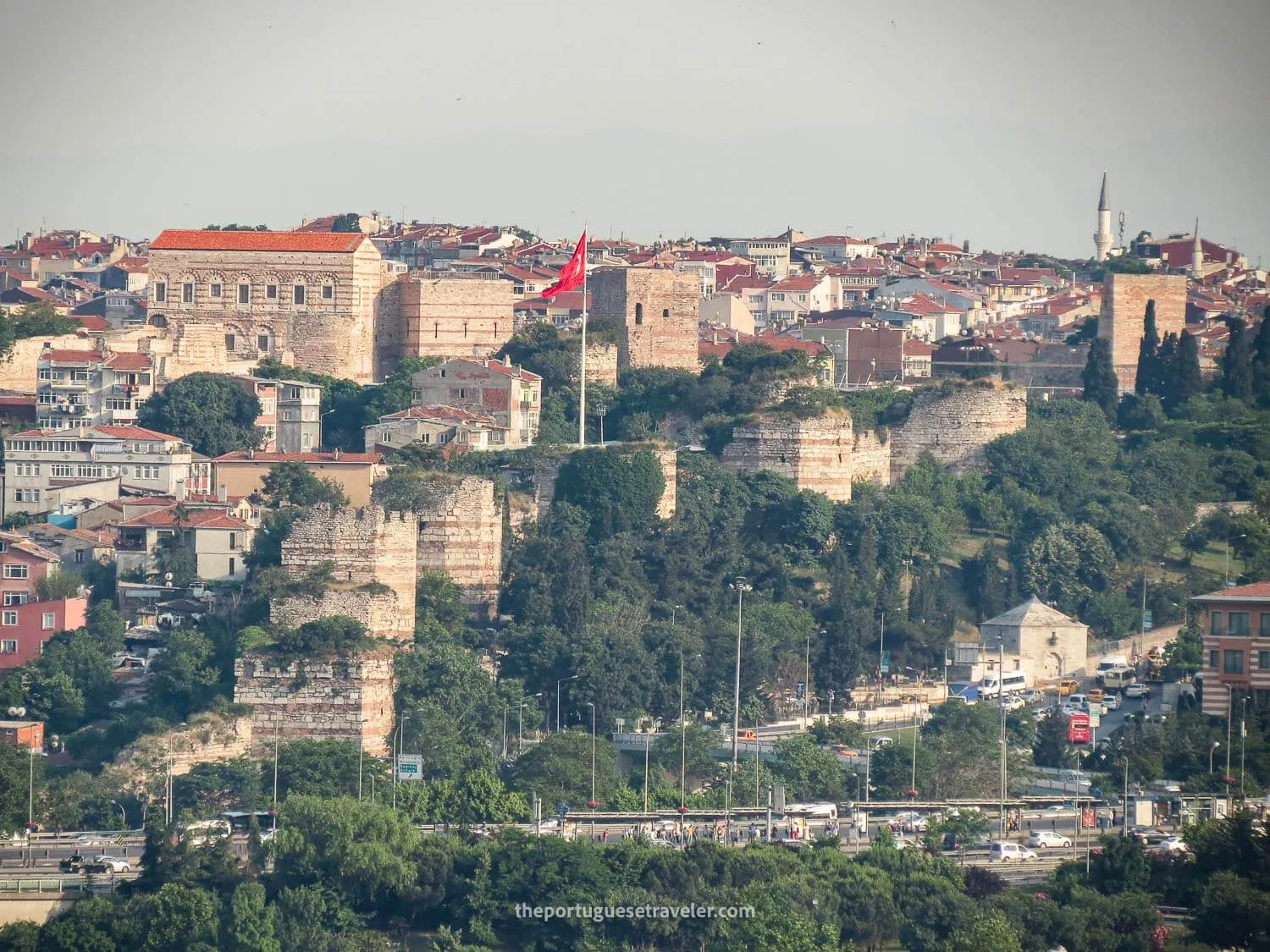
The Walls of Constantinople
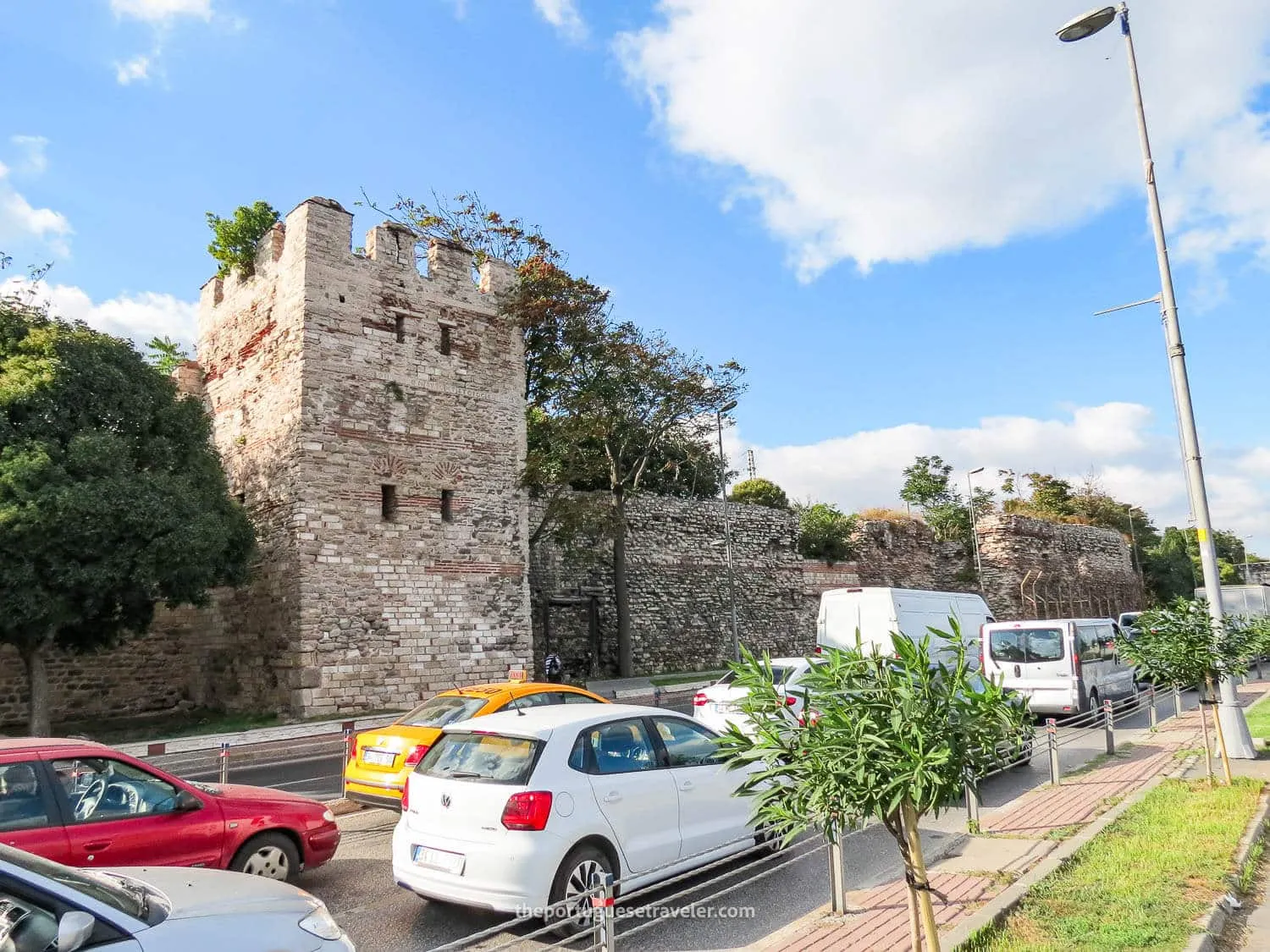
The Walls of Constantinople
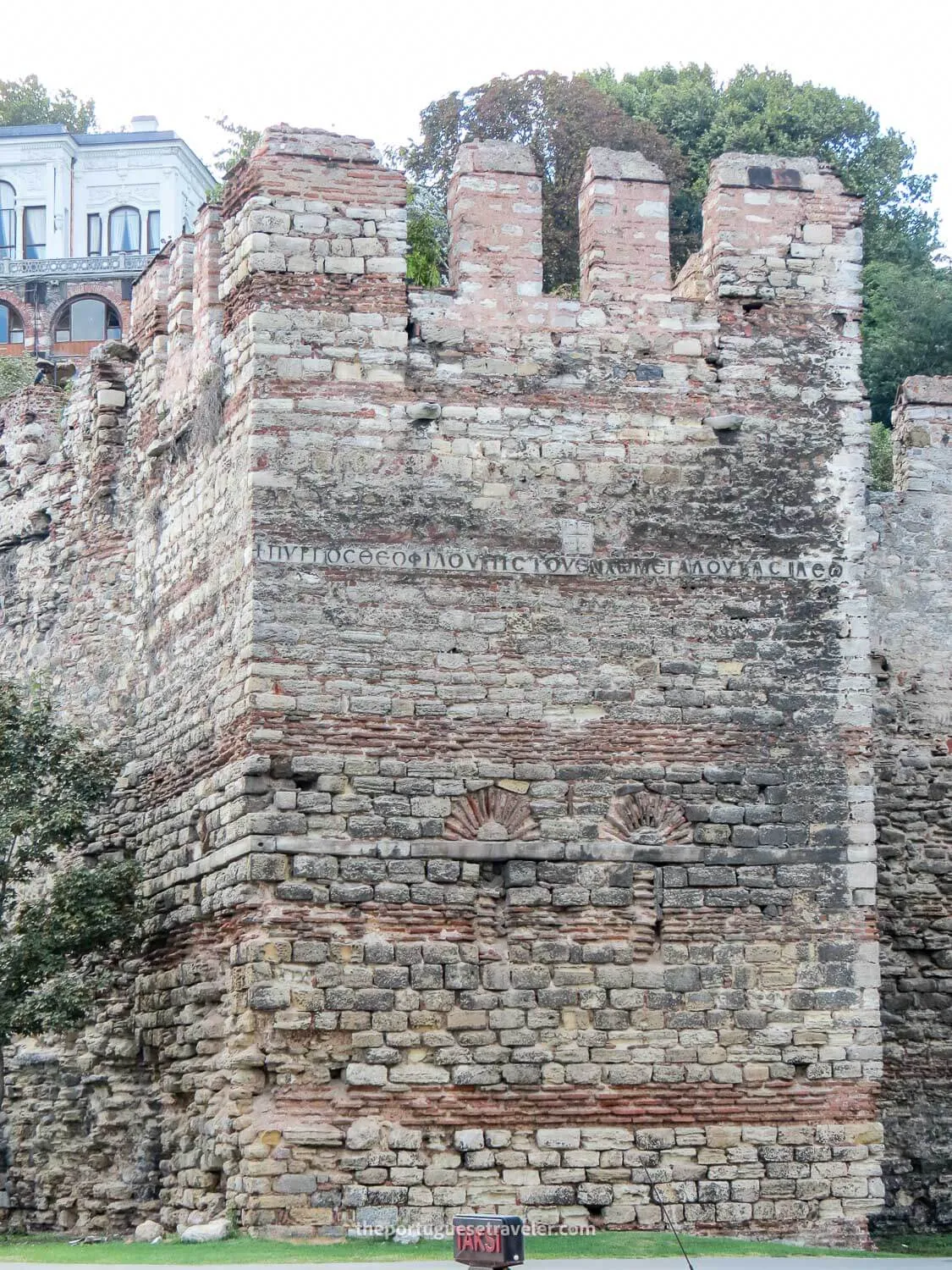
The Walls of Constantinople
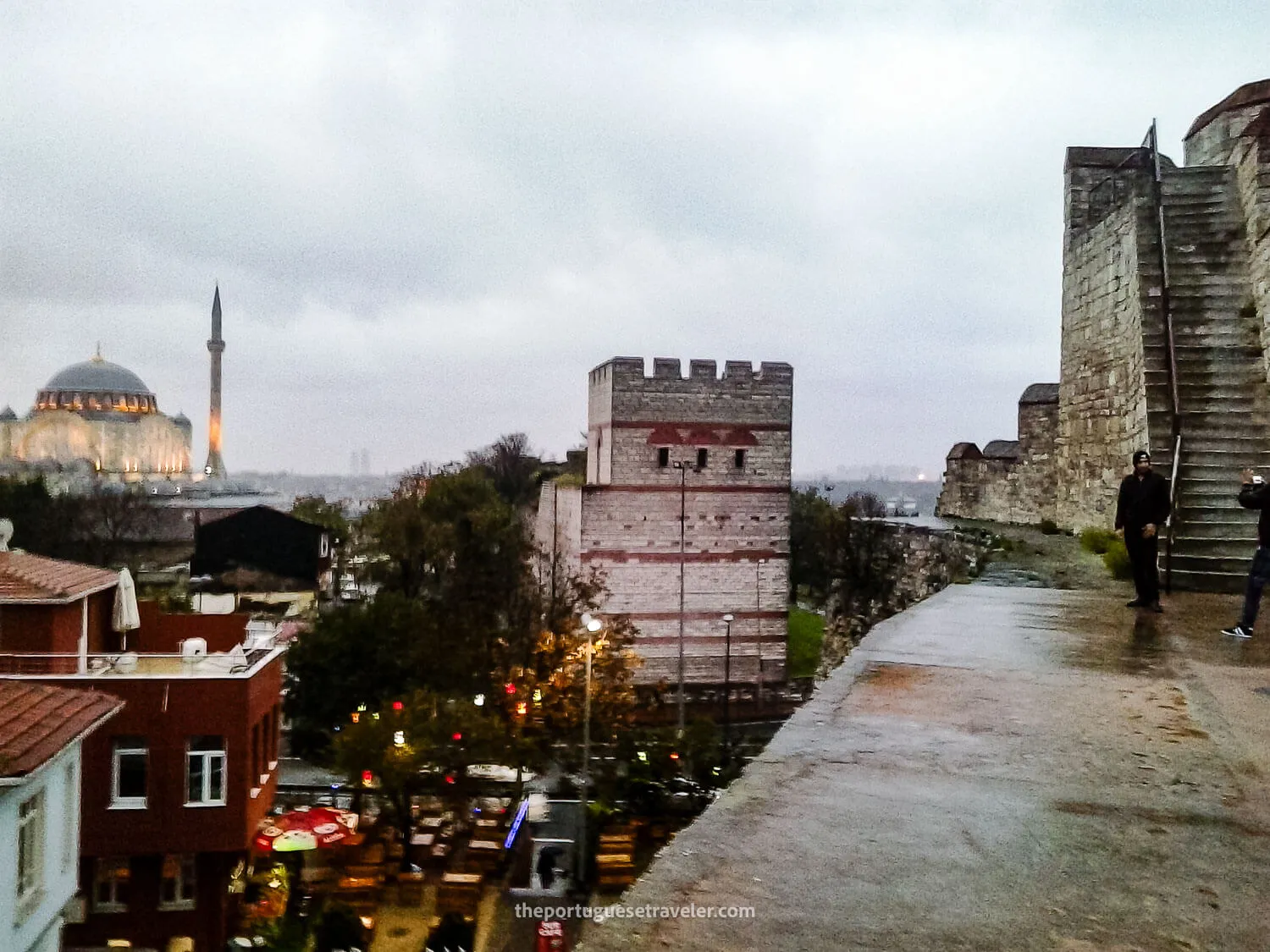
The Walls of Constantinople
7. Forum of Theodosius (Forum Tauri, Beyazıt Square ruins)
Beneath modern Beyazıt Square lie the remains of the Forum of Theodosius, once a public square with marble columns, arches and statues. Only fragments remain, including a few column bases and reliefs, but it was one of Constantinople’s busiest civic centers. It is easy to combine with a visit to Beyazıt and the Grand Bazaar.
Byzantine Heritage
The Byzantine Empire left Istanbul some of its greatest monuments: golden mosaics, underground cisterns, monasteries and palace fragments. Together they show how Constantinople became one of the great capitals of its time and shaped Christianity and the medieval world.
8. Hagia Sophia (Ayasofya)
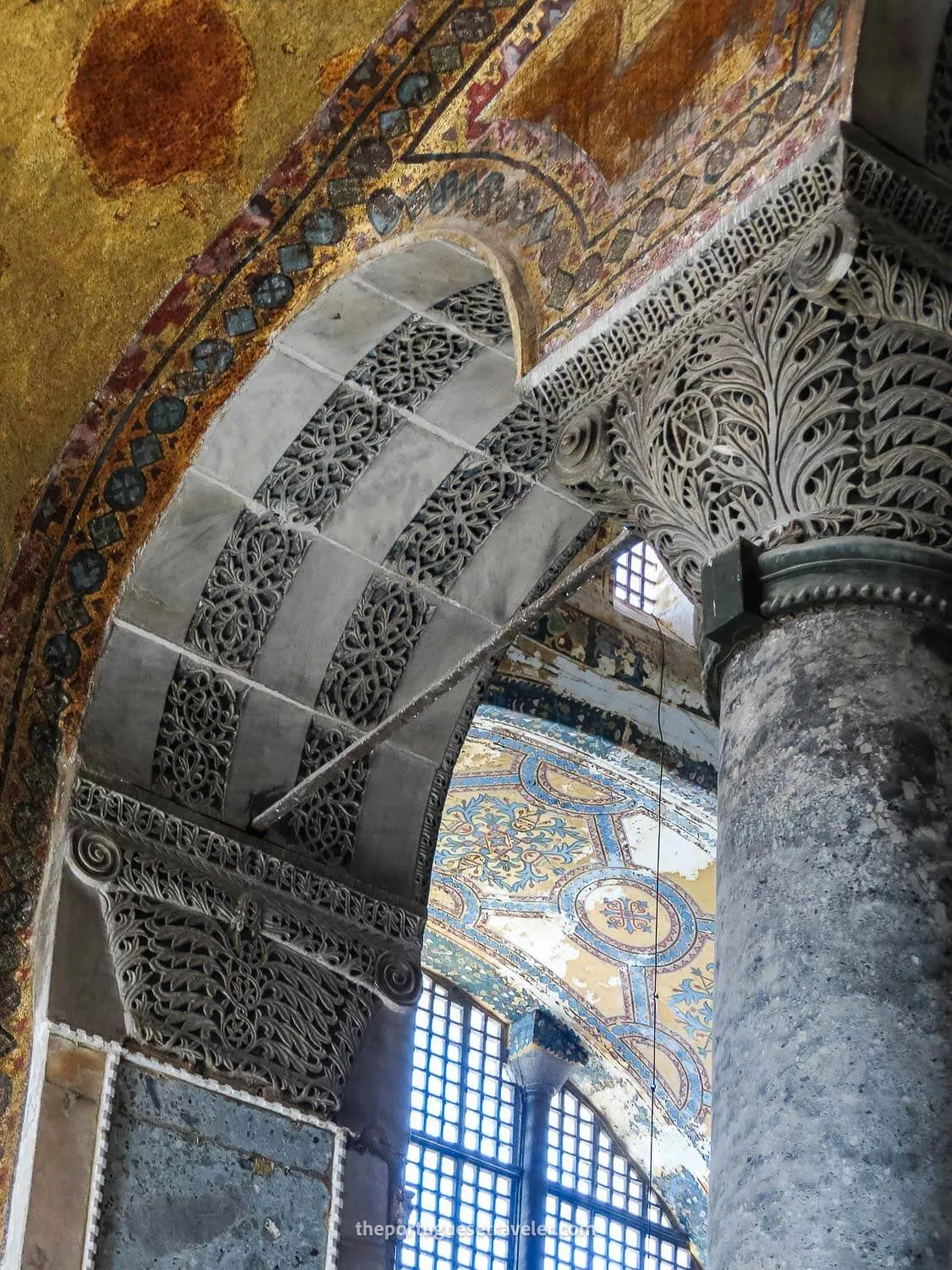
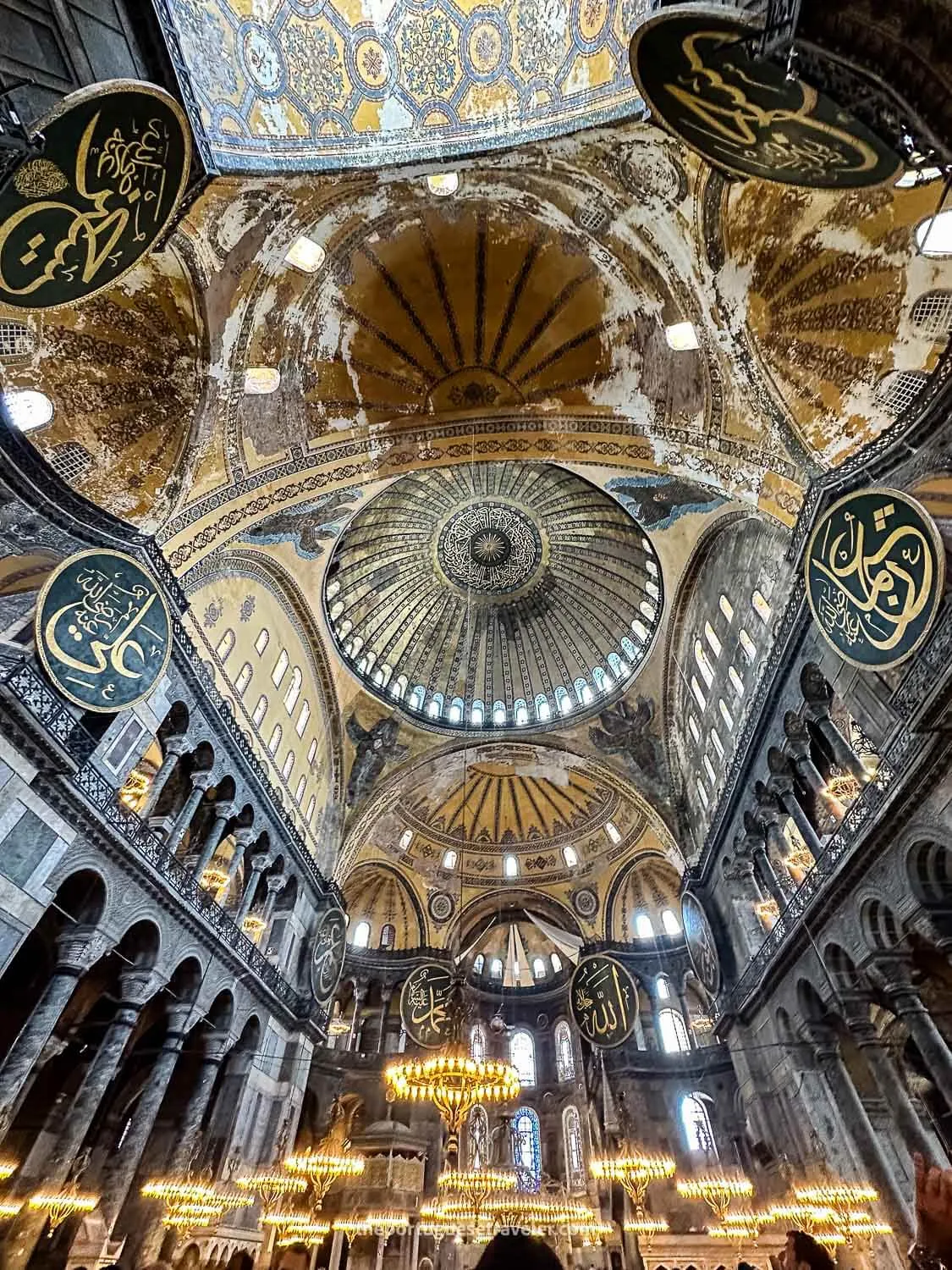
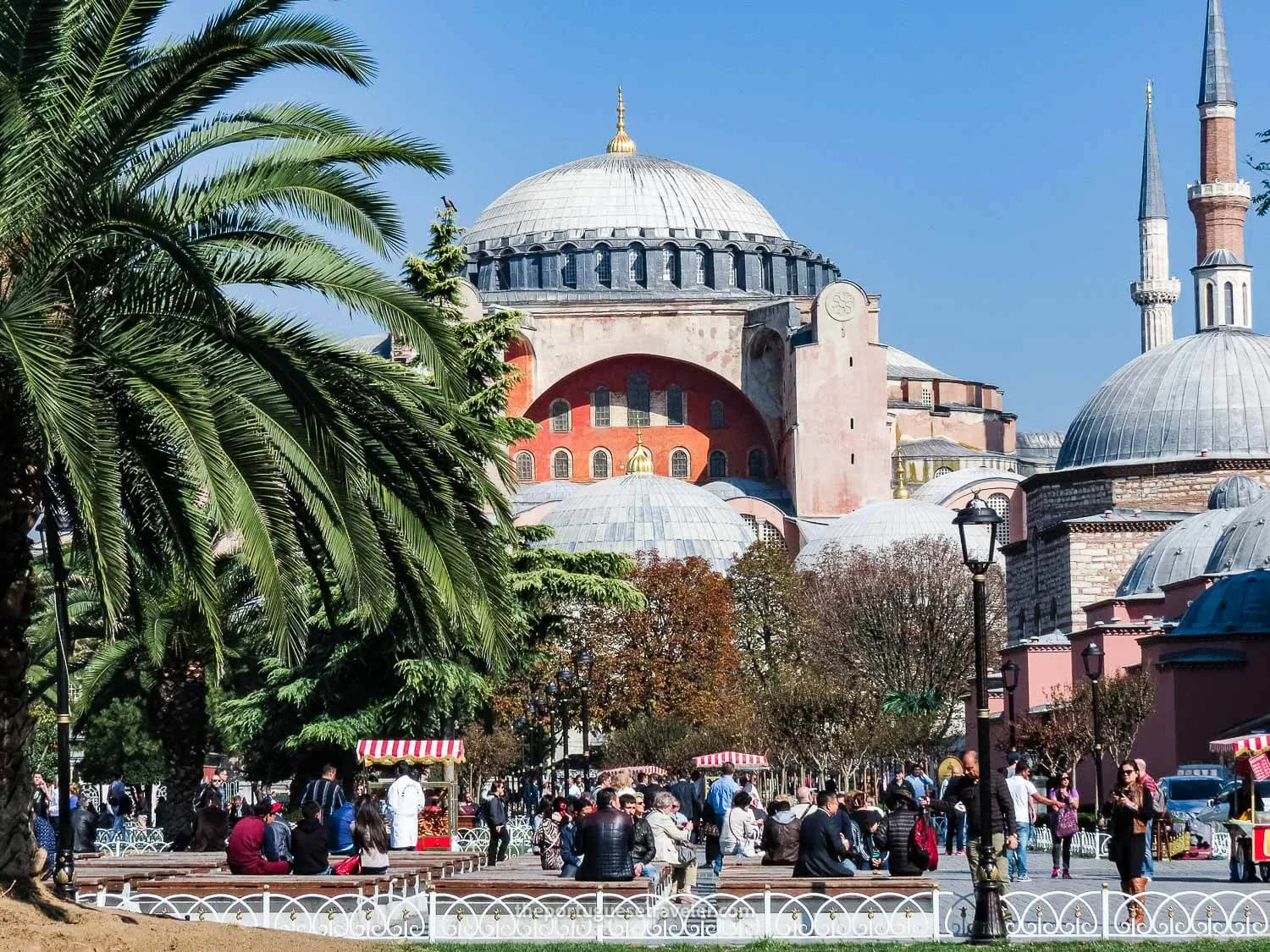
Hagia Sophia has stood for nearly 1,500 years. Emperor Justinian built it in 537, and for centuries it was the largest cathedral in the world, known for its dome and gold mosaics. The Ottomans turned it into an imperial mosque, and today it functions as a mosque again. Look up at the vast dome, and look for the Christian mosaics alongside the Islamic calligraphy panels, which show the city’s layers. Visit early in the morning or just before closing to avoid the heaviest crowds.
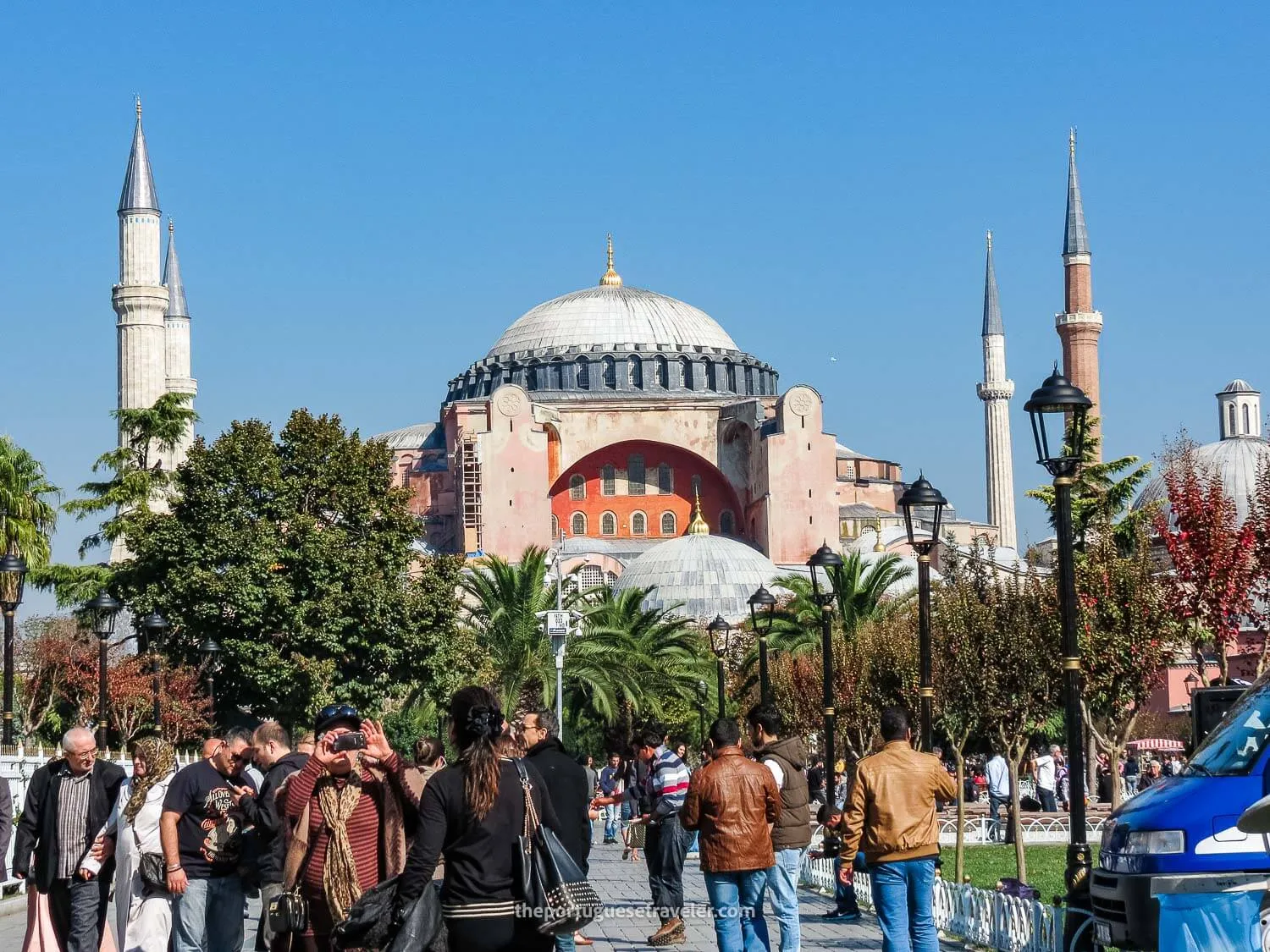
Hagia Sophia or Ayasofya Mosque in Istanbul
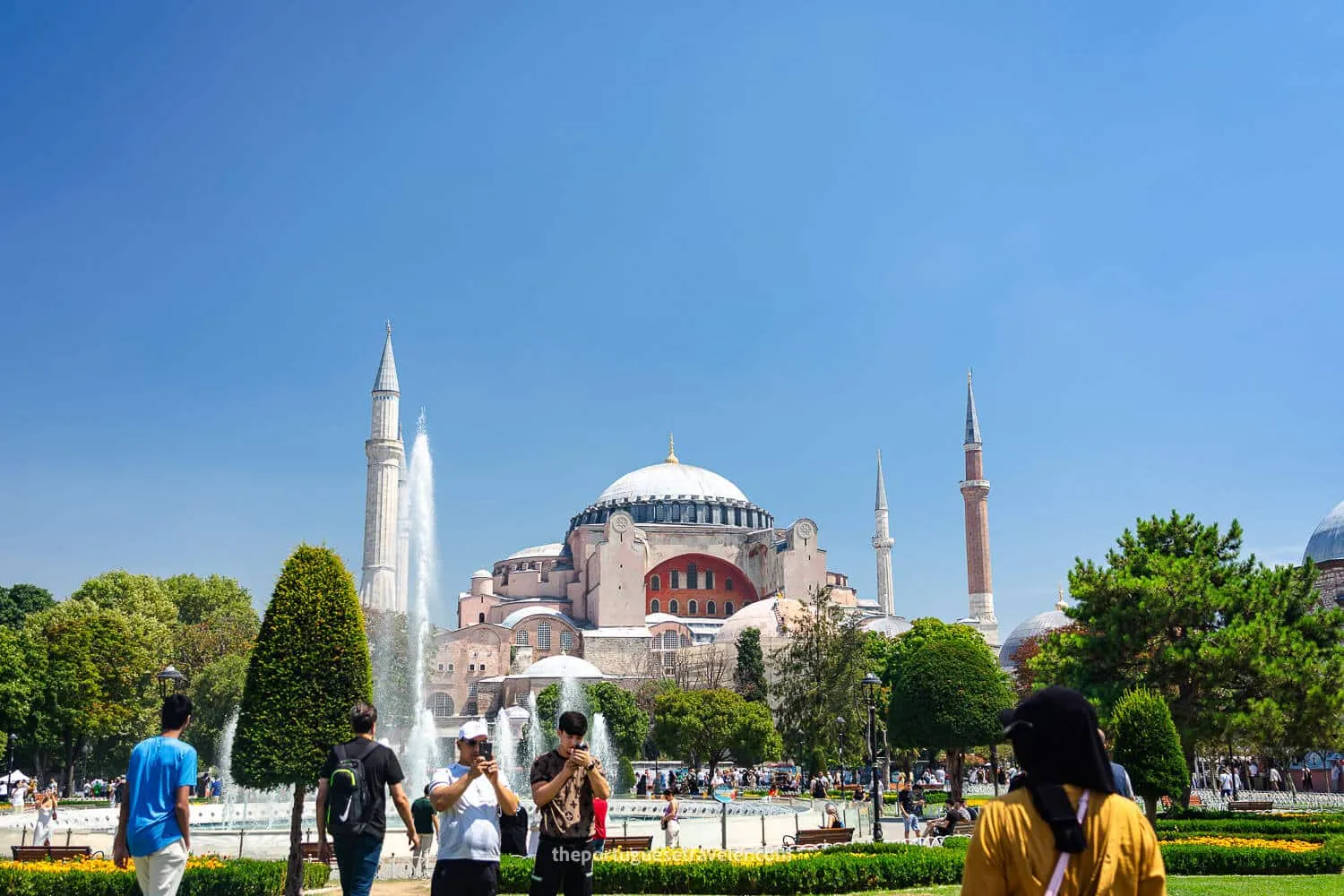
The Hagia Sophia
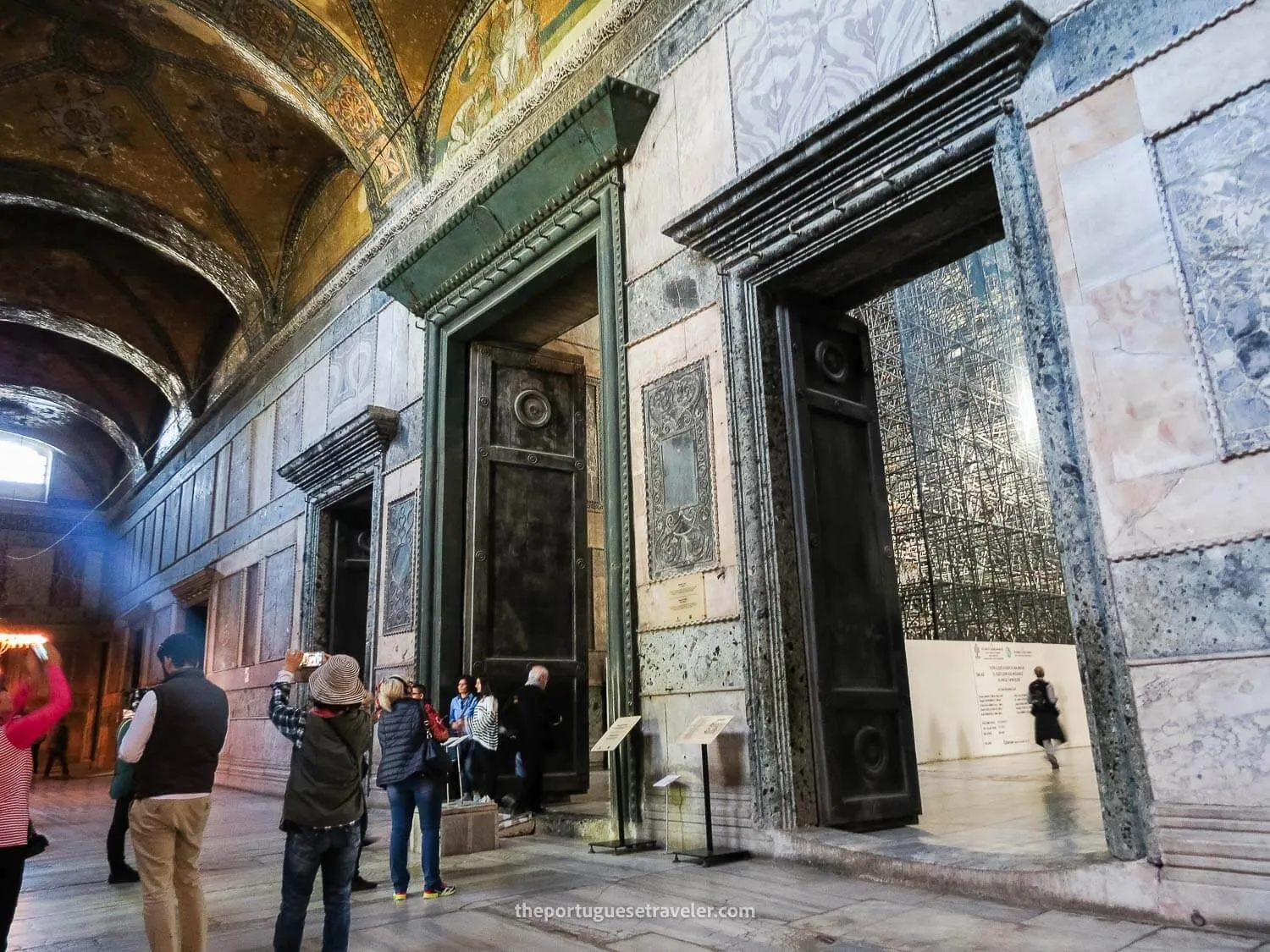
The foyer of Hagia Sophia
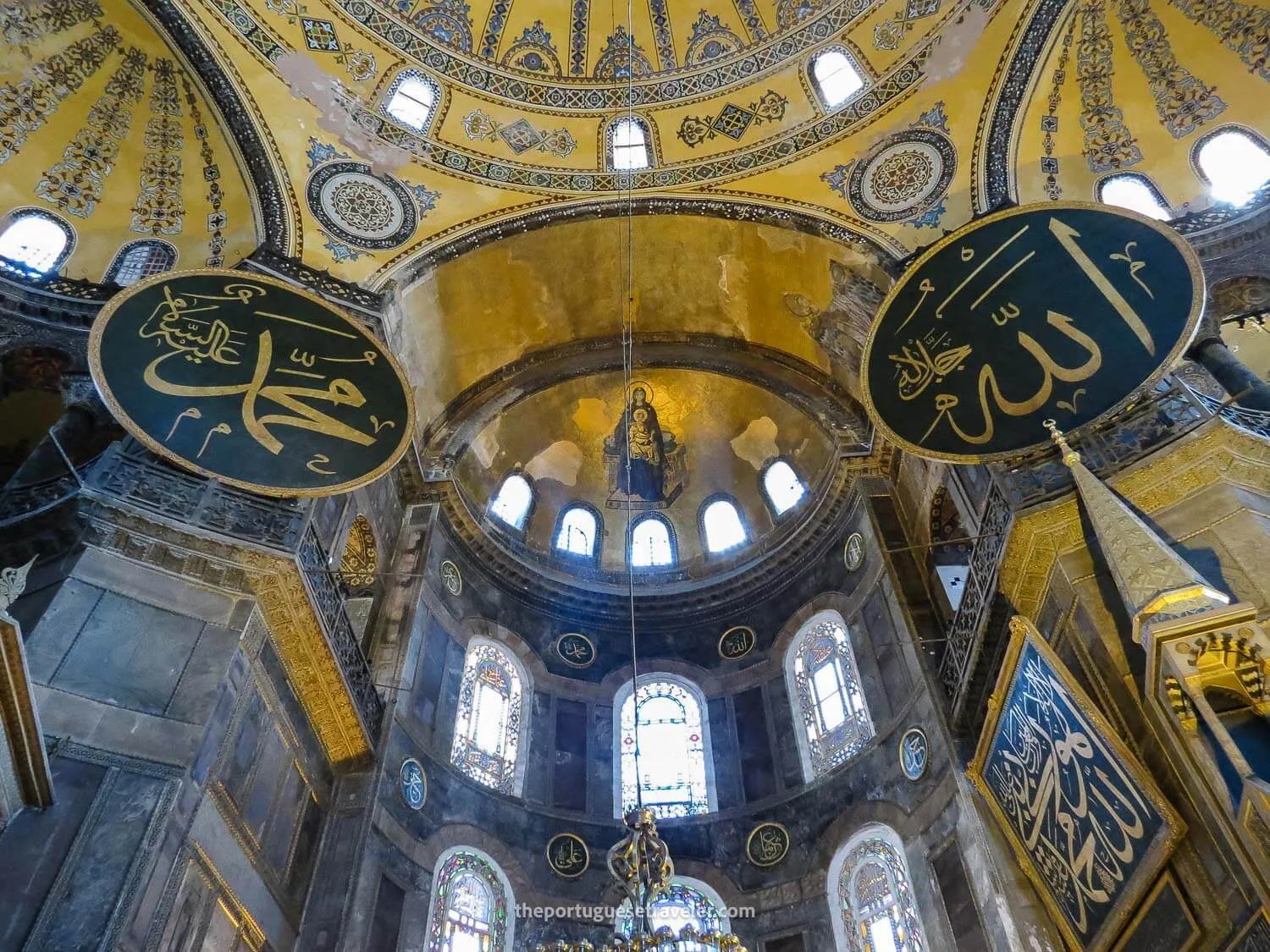
The interior of Hagia Sophia
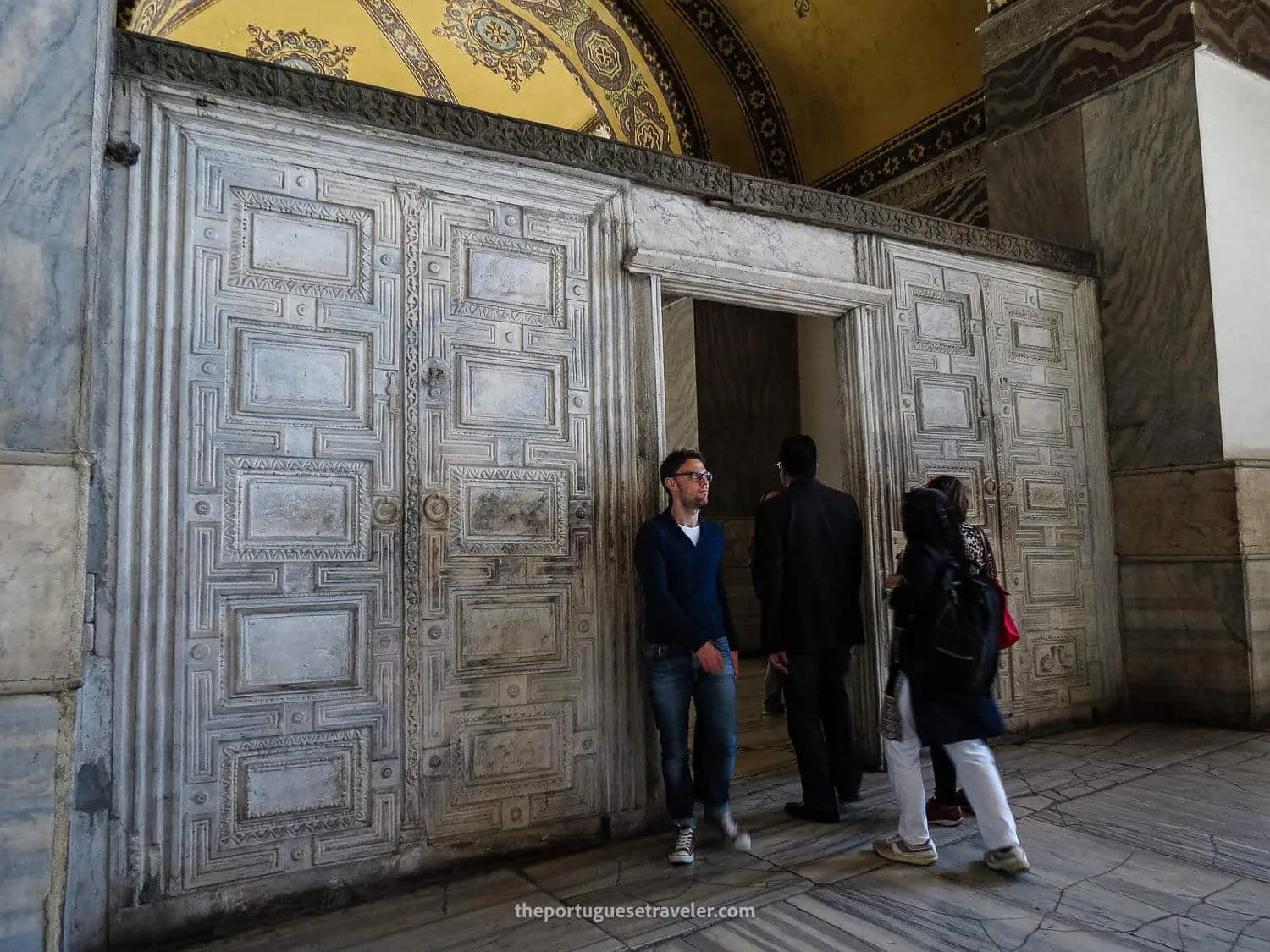
The marble gate in the Hagia Sophia
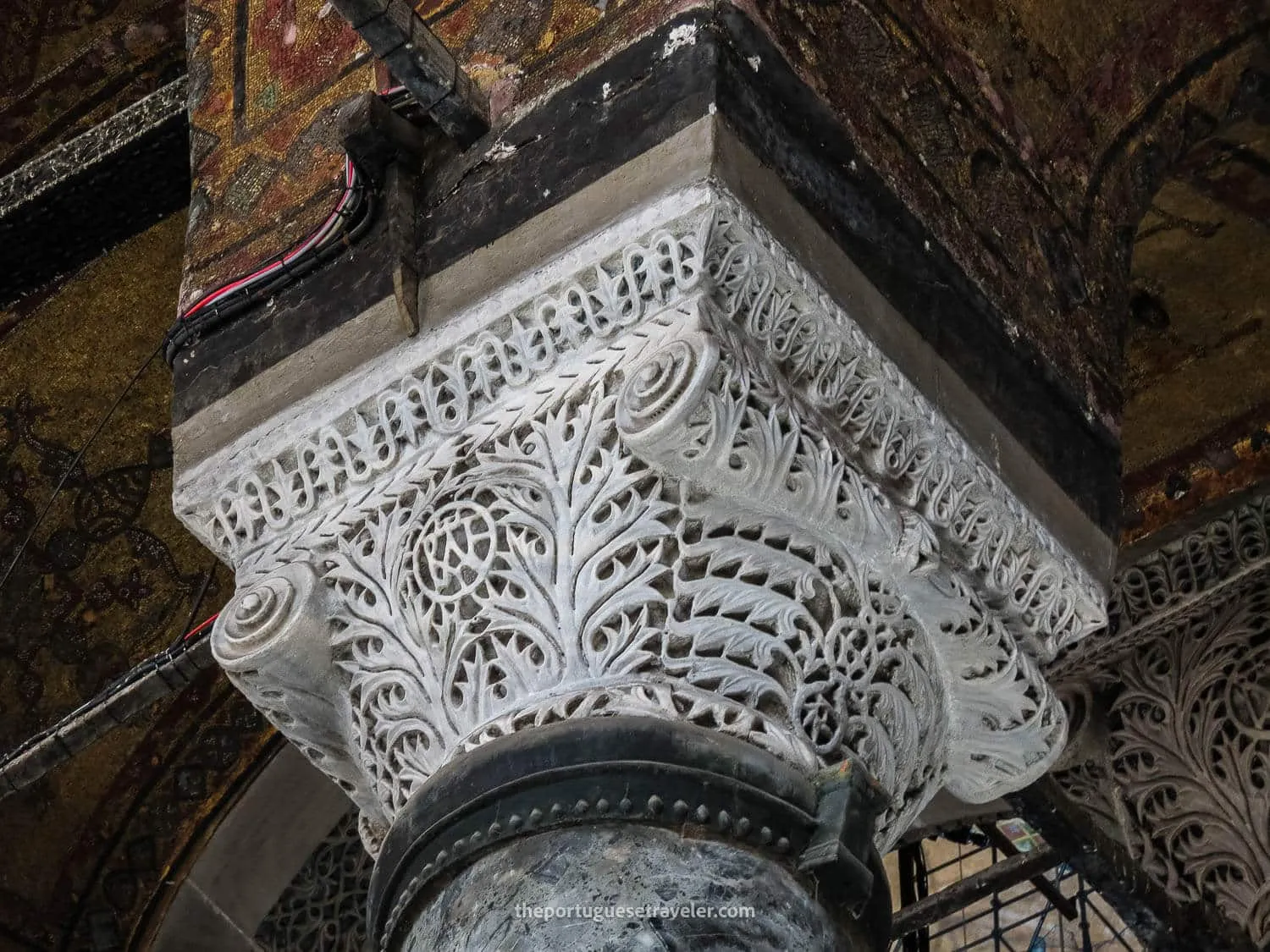
The byzantine details of a Hagia Sophia’s column
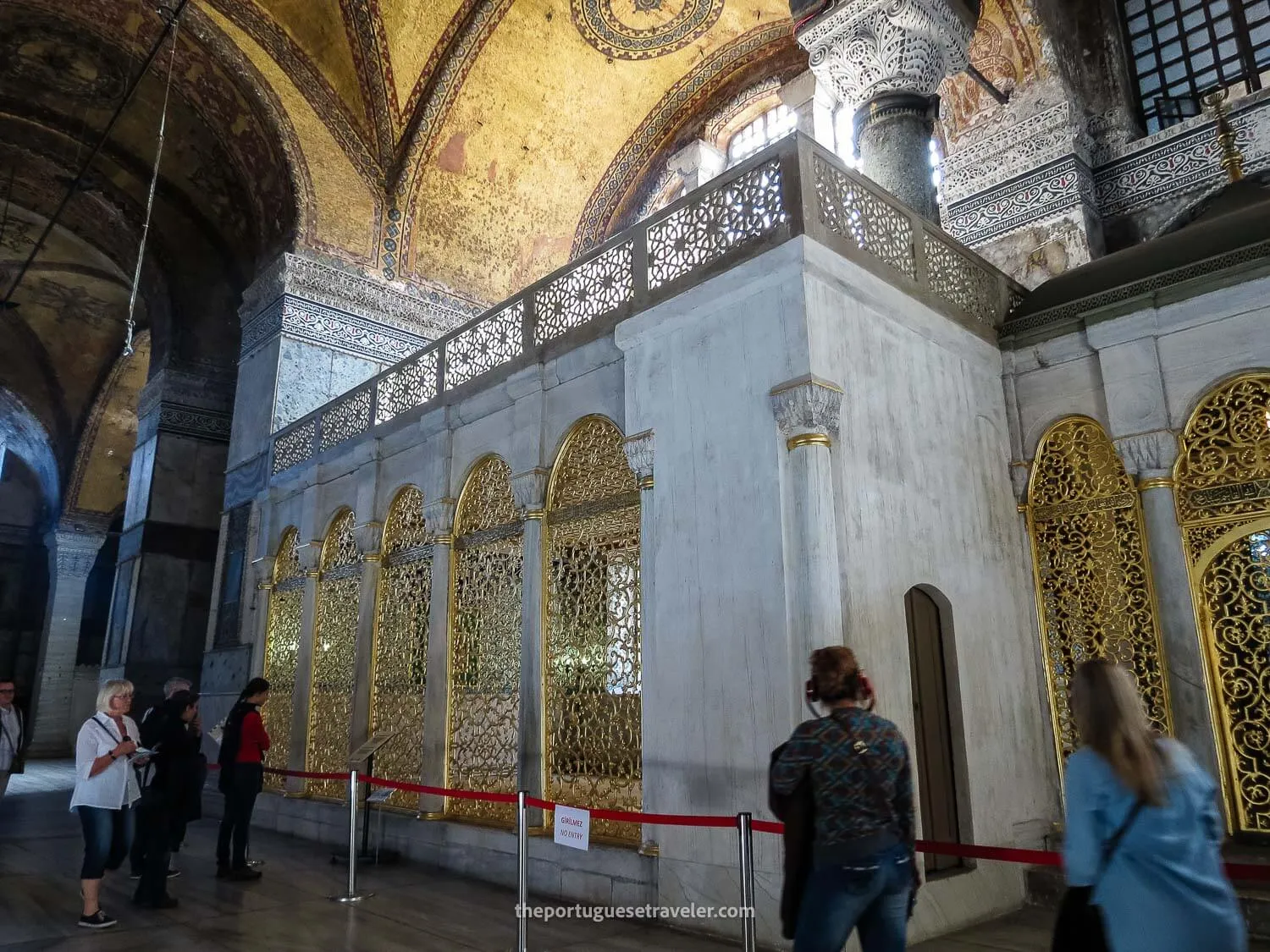
An Ottoman praying pavillion inside Hagia Sophia
9. Chora Church (Kariye Mosque, mosaics & frescoes)
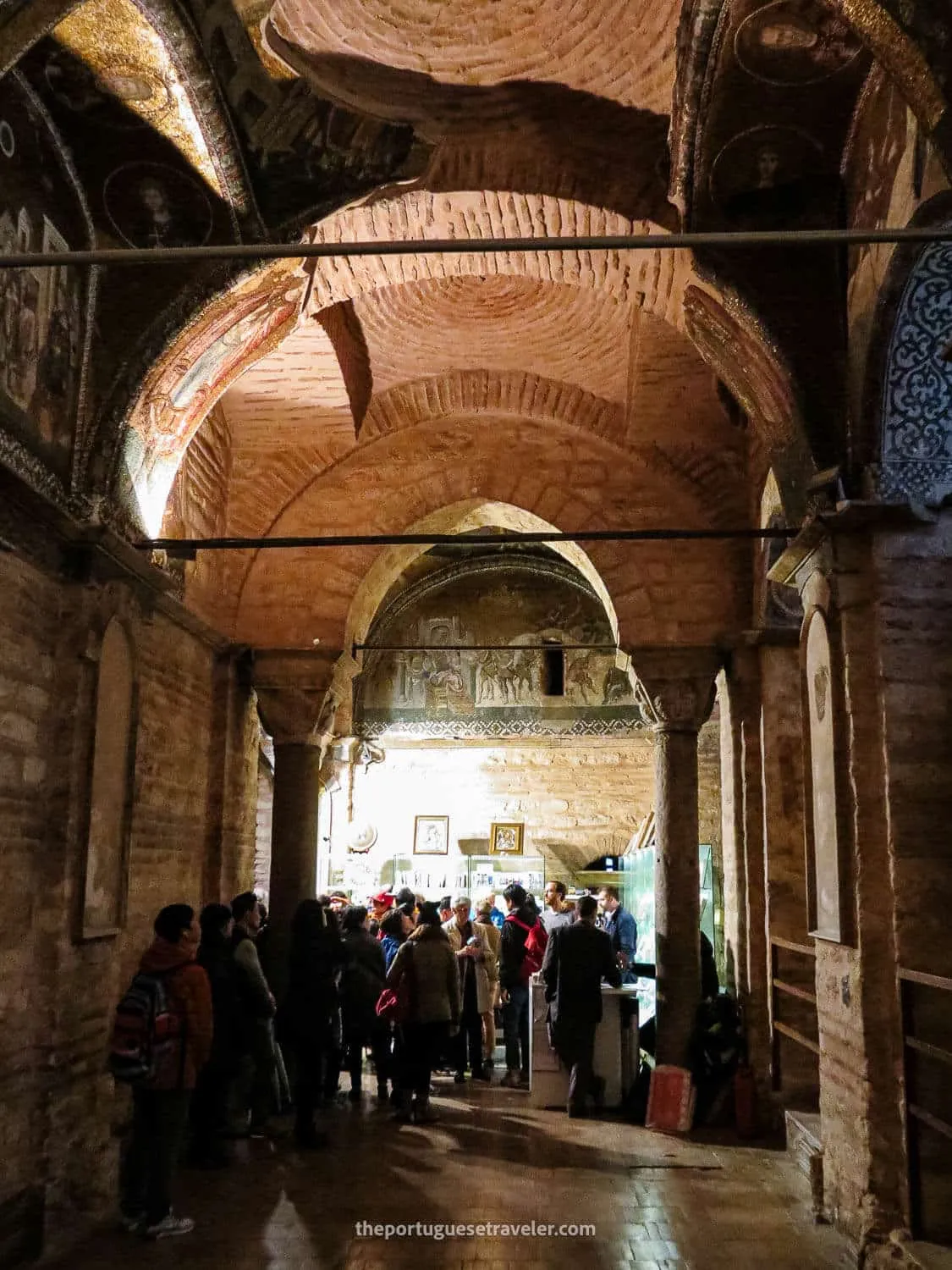
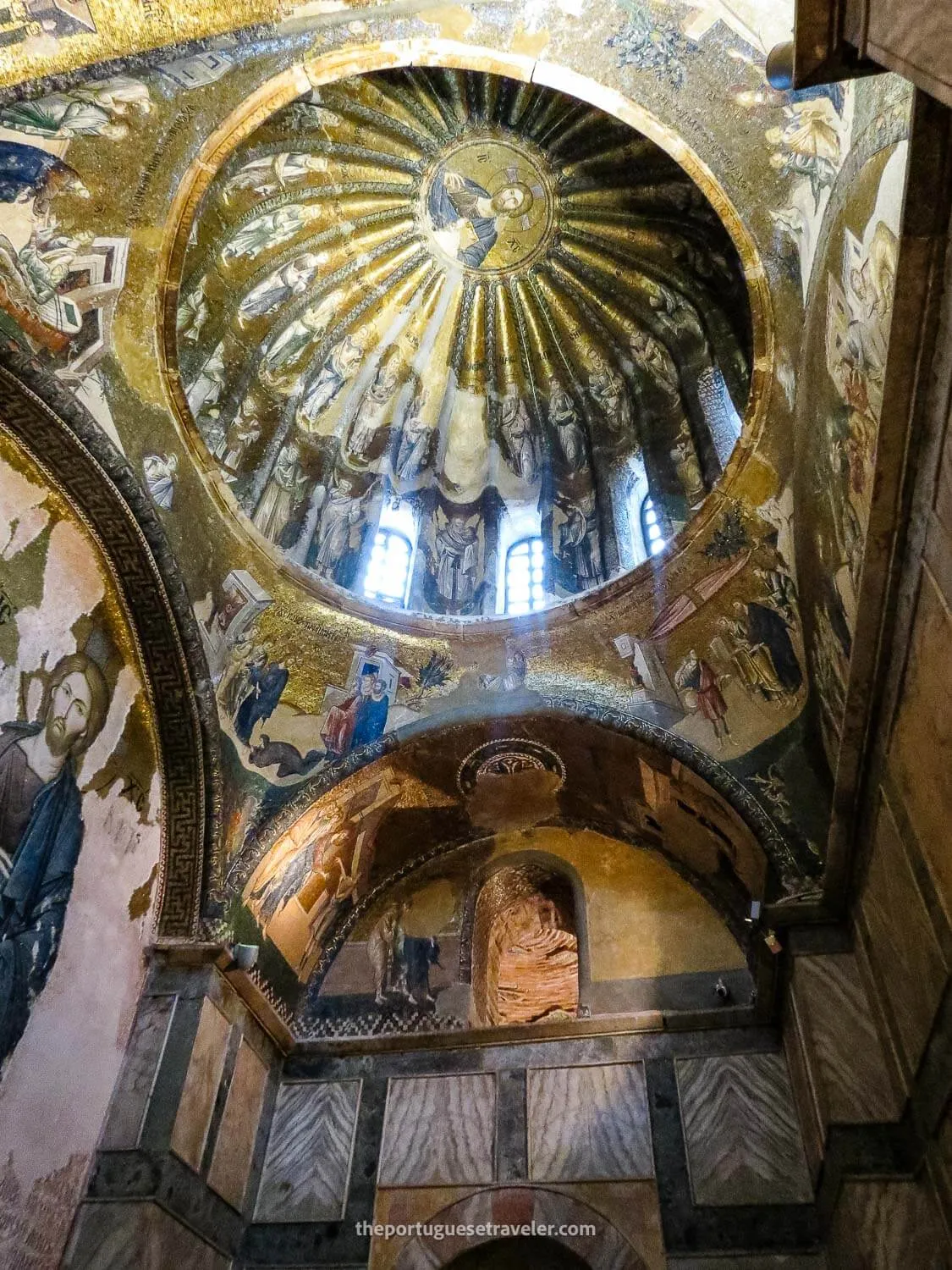
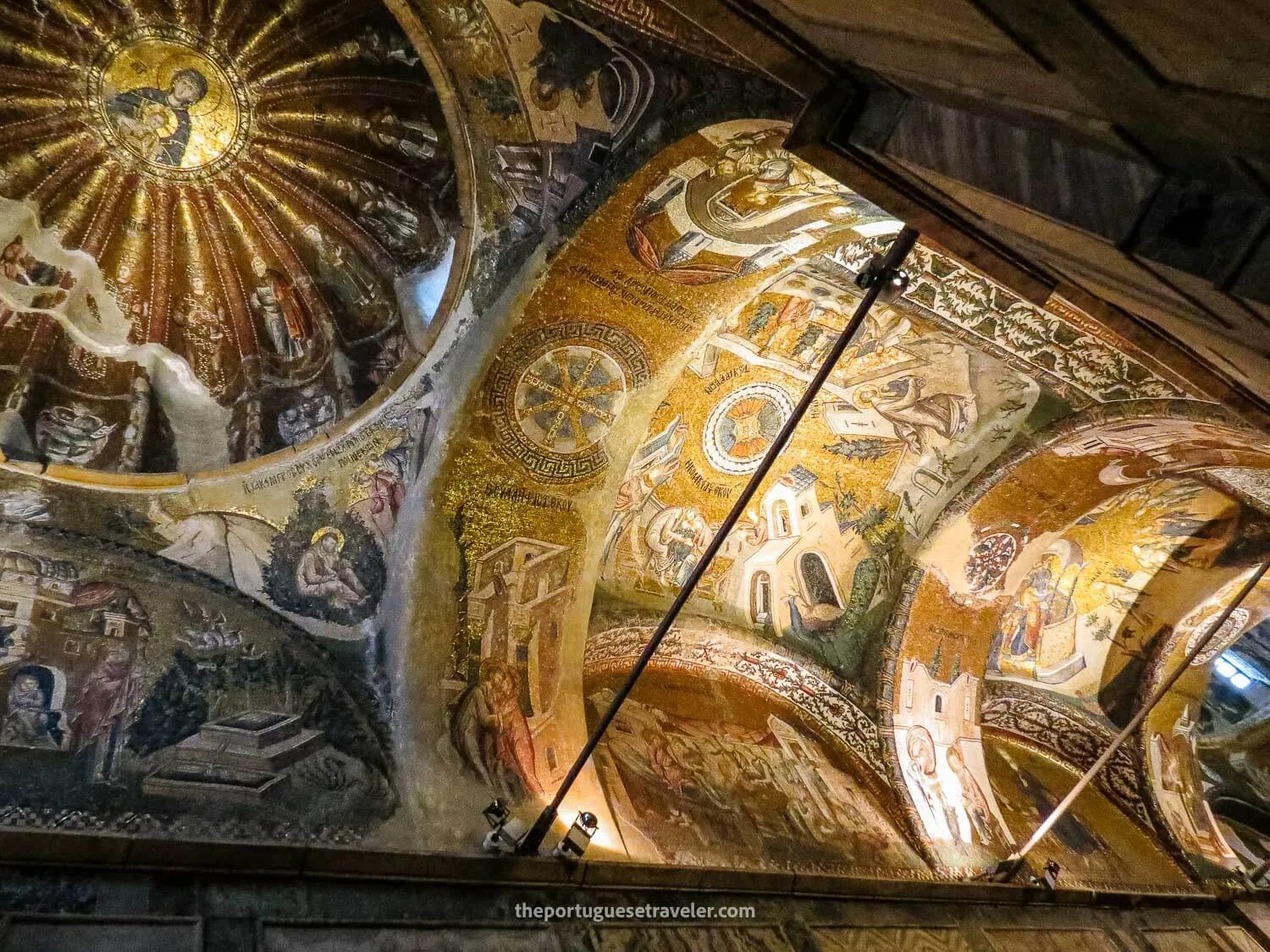
While Hagia Sophia is grand, the Chora Church (now Kariye Mosque) is intimate and detailed. In Edirnekapı, this Byzantine church from the 11th to 14th centuries holds some of the finest mosaics and frescoes in the city: gold-backed portraits of saints, Gospel scenes and delicately painted figures. After your visit, walk around the surrounding old streets.
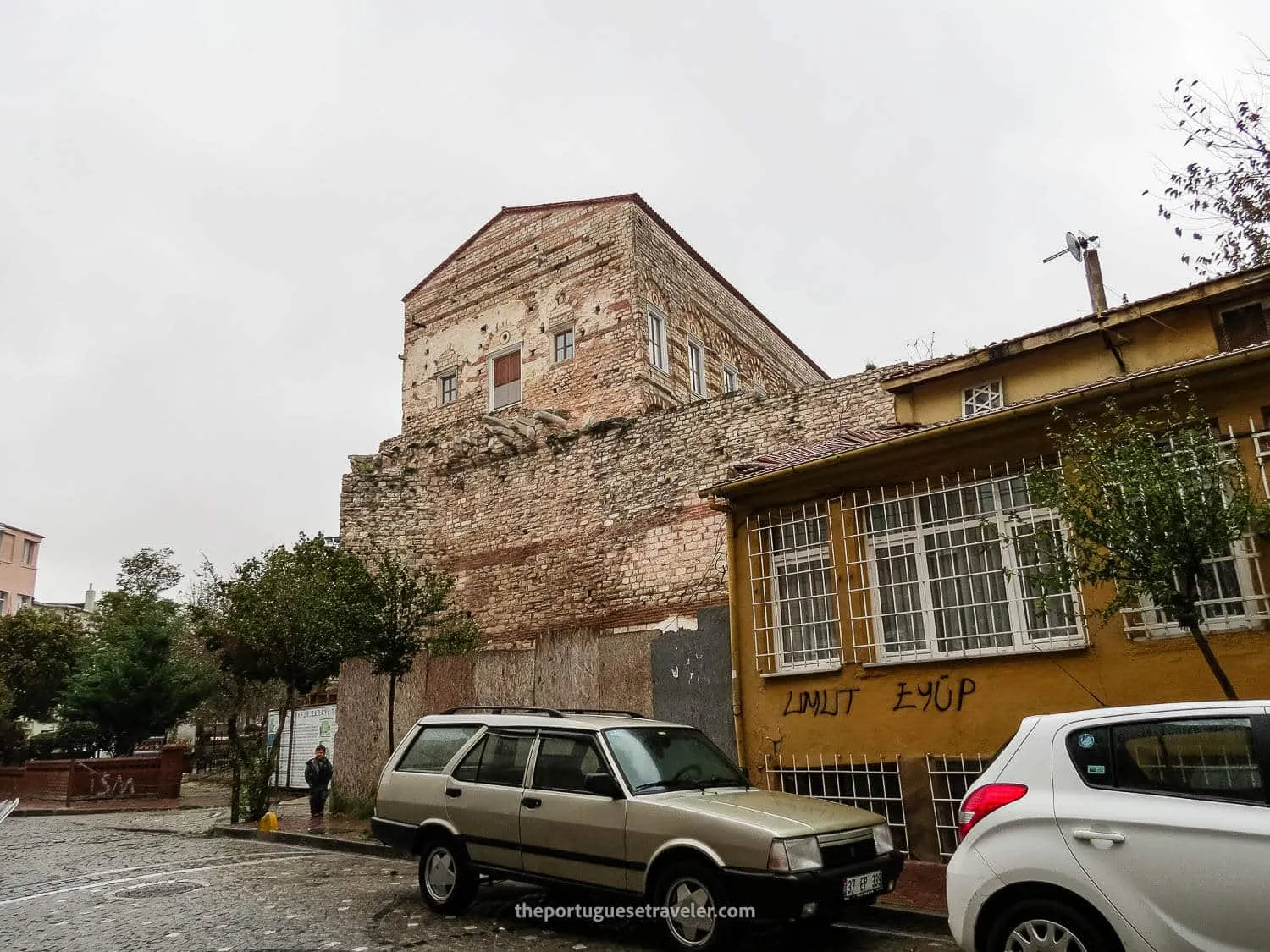
The Chora Church or Kariye Camii nowadays in Istanbul
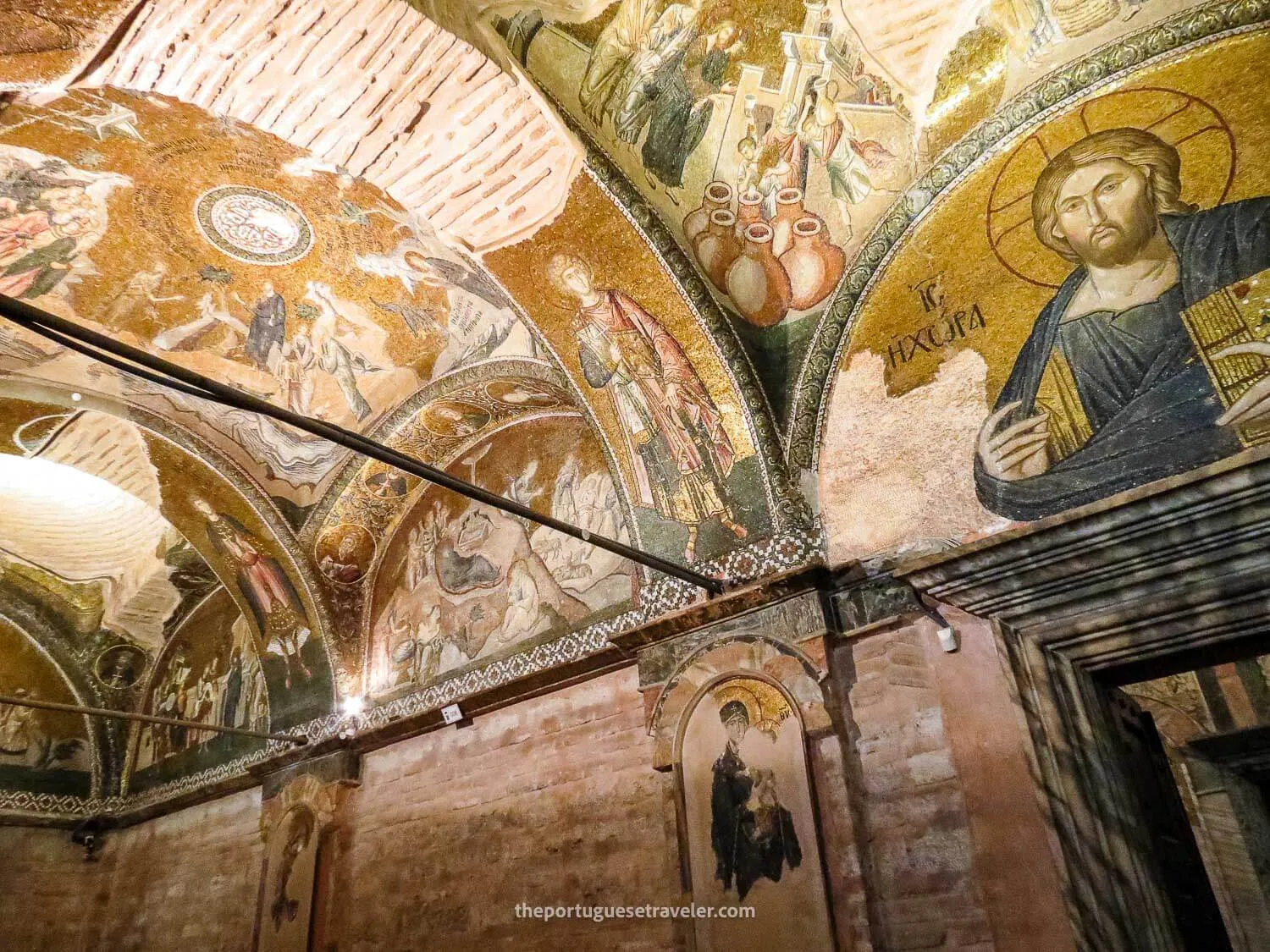
The Christian tiles of the Chora Church
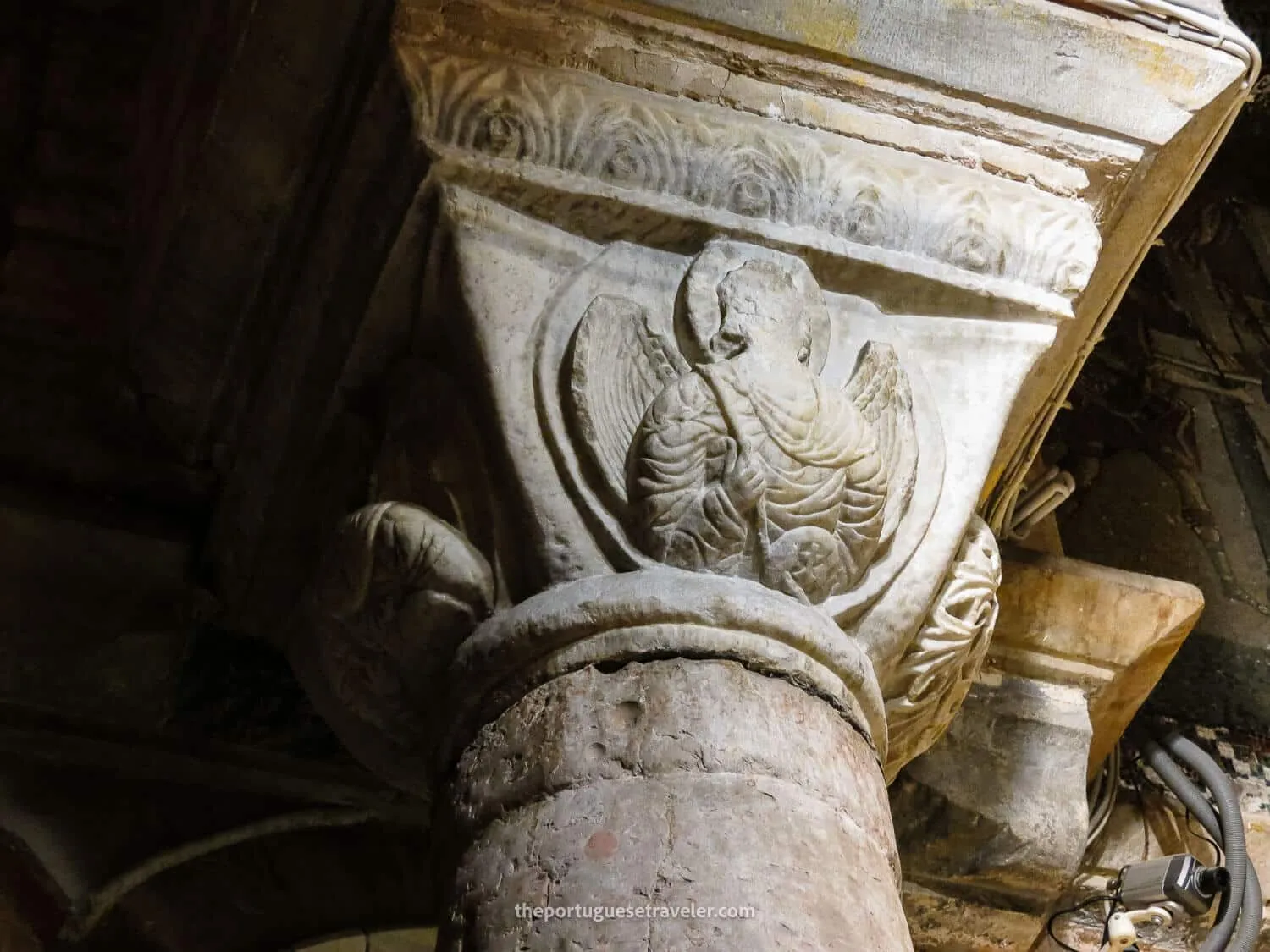
A Byzantine capital inside Chora Church
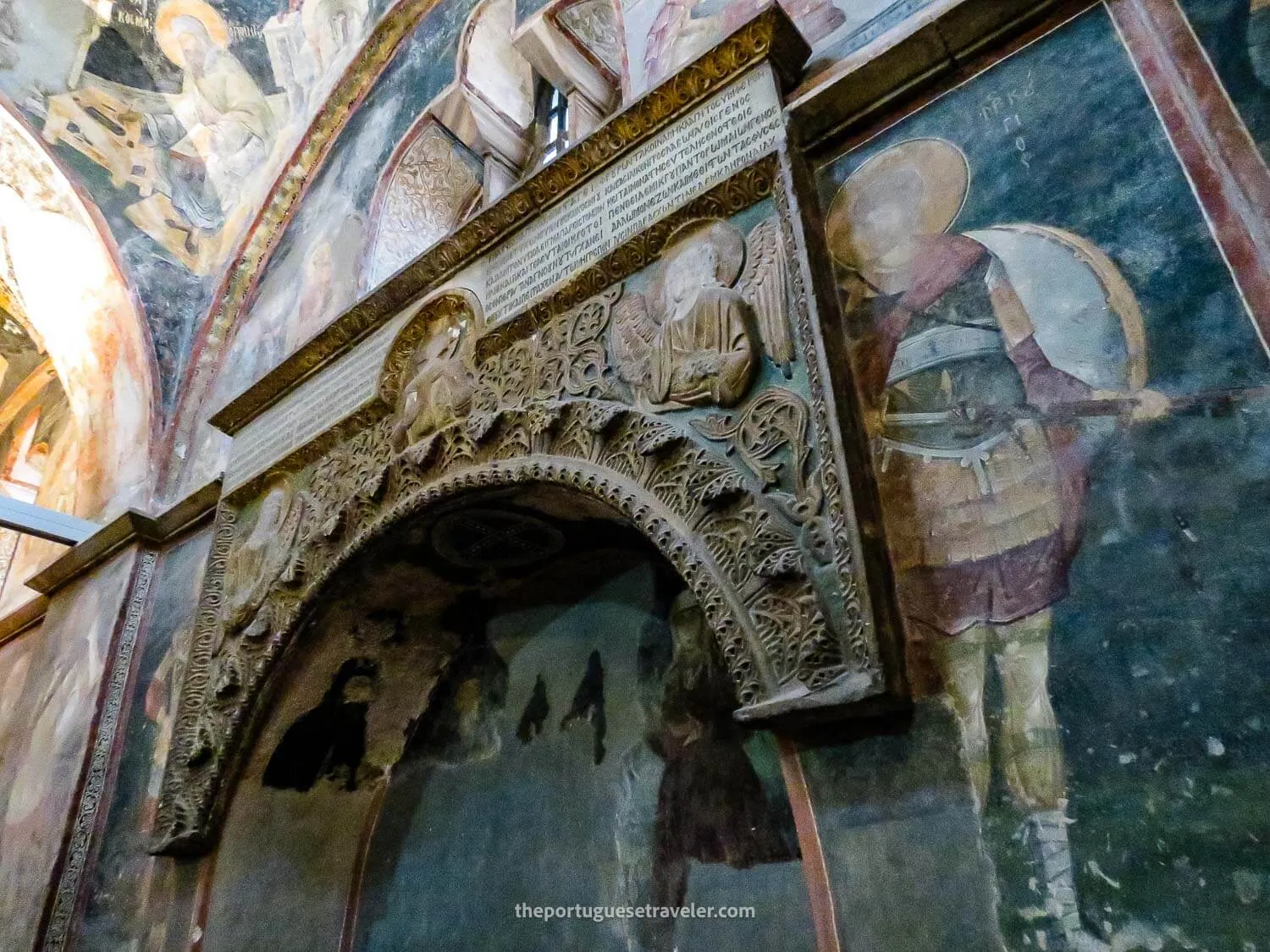
Details of Chora Church
10. Little Hagia Sophia (Küçük Ayasofya)
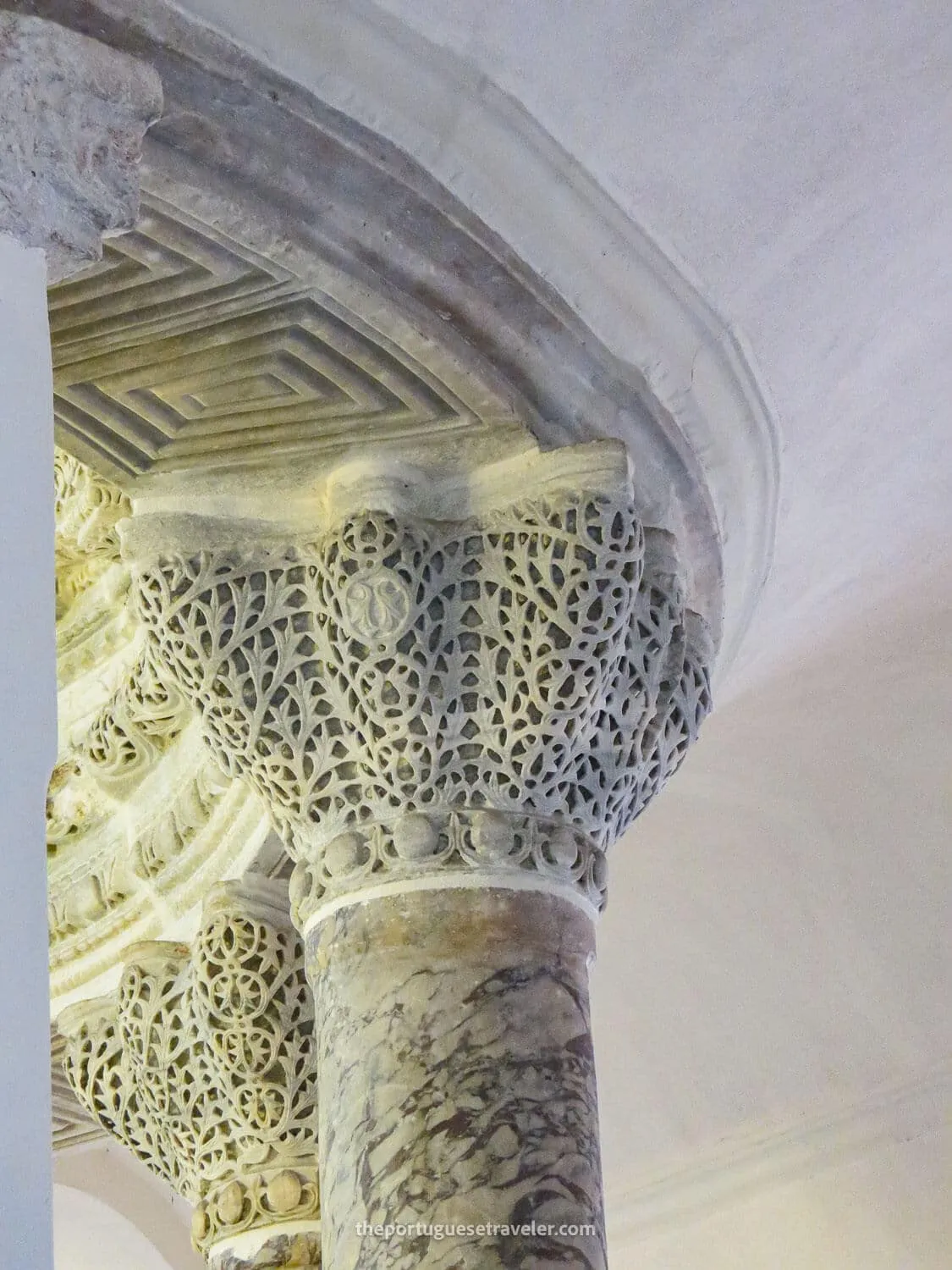
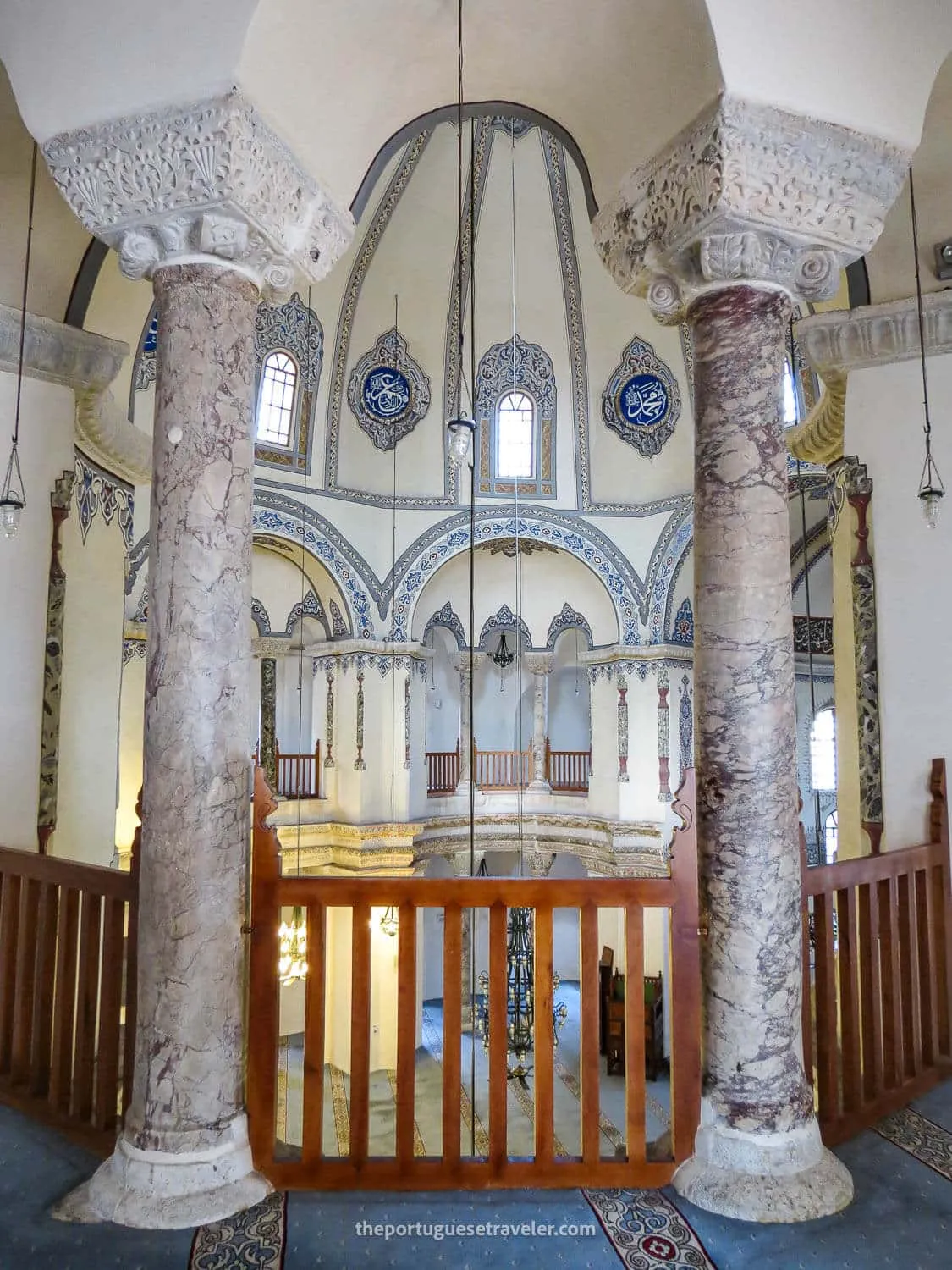
The Little Hagia Sophia, near the Marmara coast, is often overlooked by hurried visitors. Justinian built it before Hagia Sophia, and its central dome and columns make it feel like a prototype. It is now a mosque, and the courtyard has a caretaker-run garden where you can have tea. It is a place to see early Byzantine architecture away from the crowds.
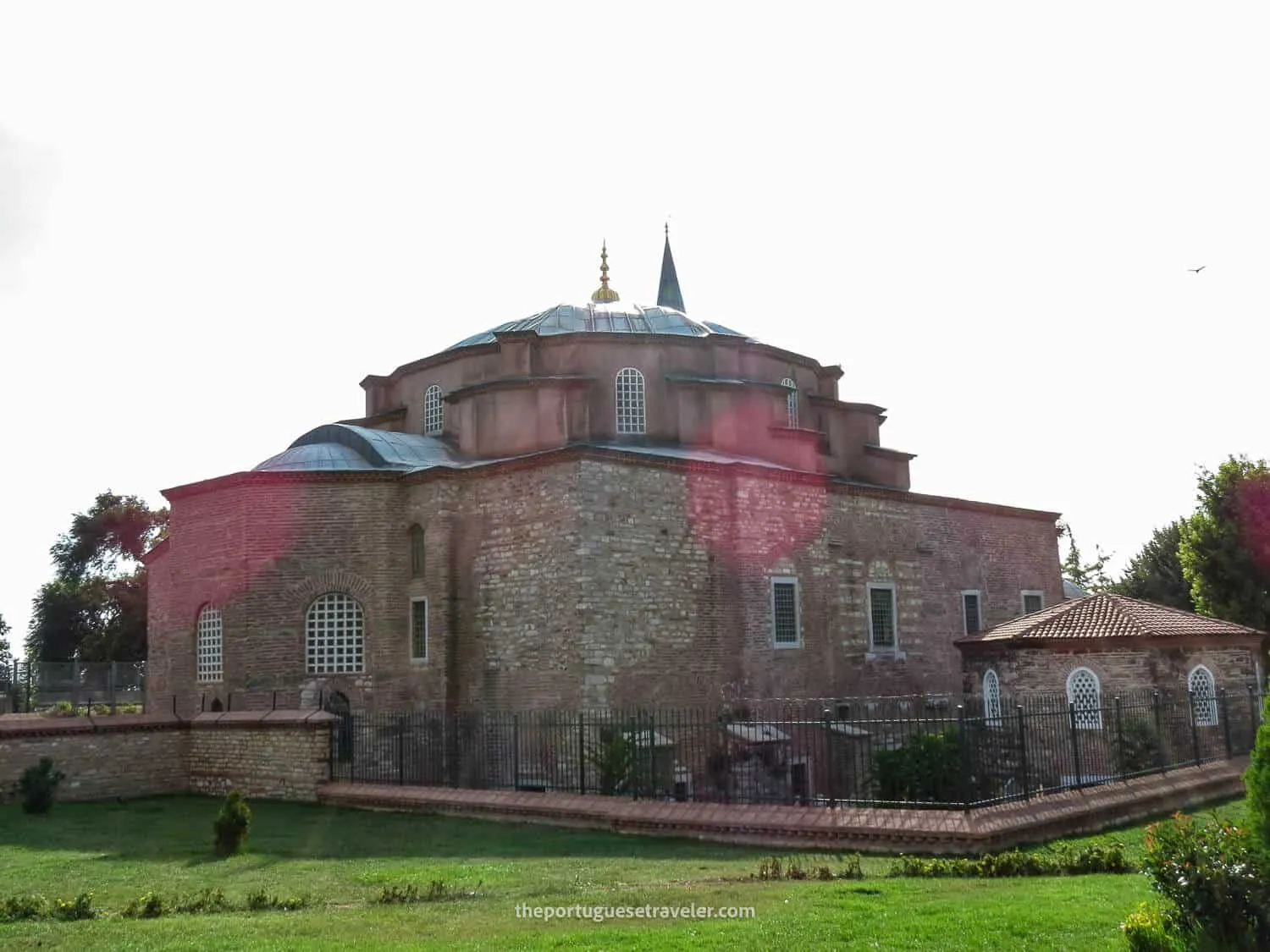
Kuçuk Hagia Sophia in Istanbul
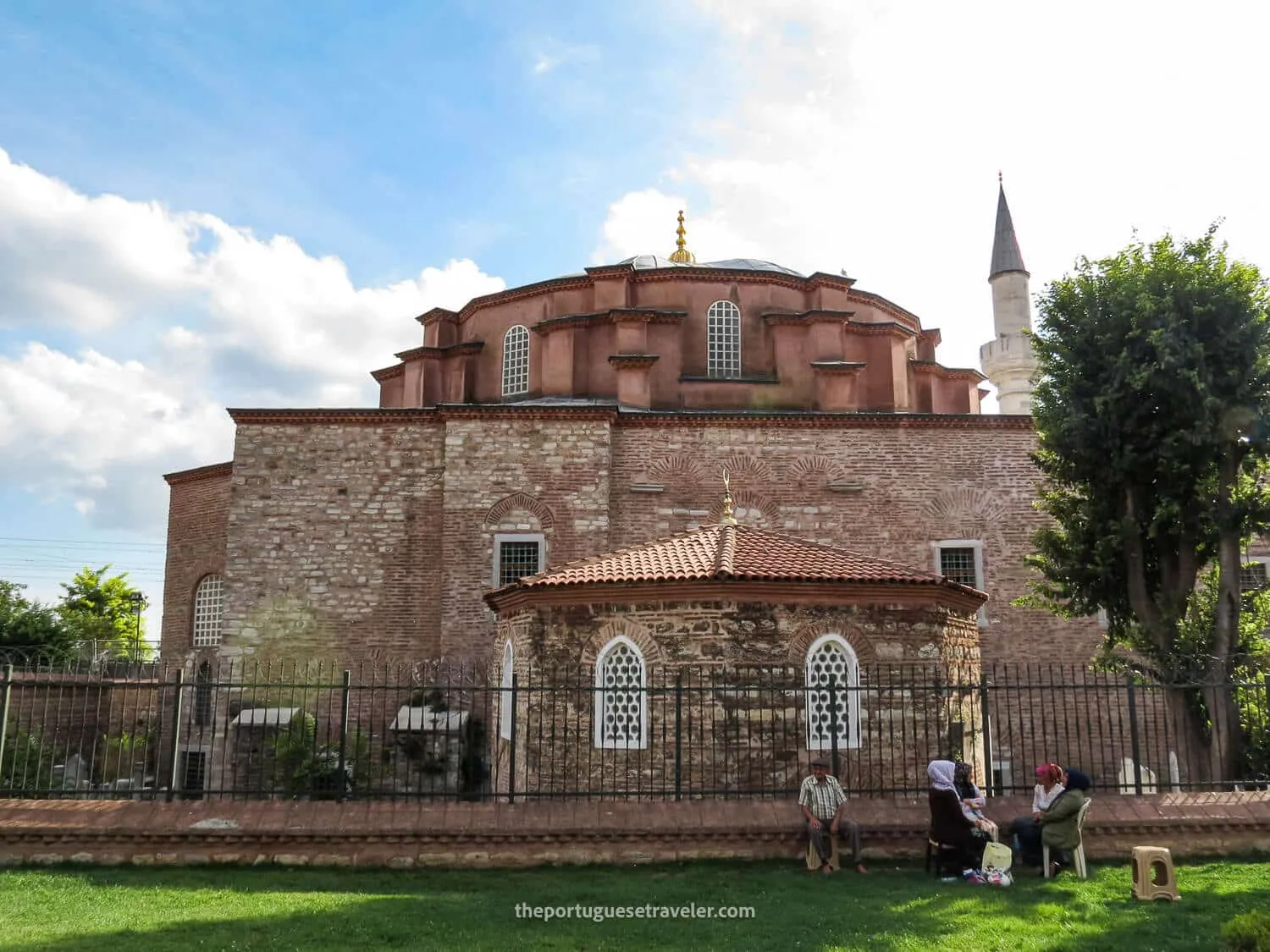
Kuçuk Hagia Sophia in Istanbul
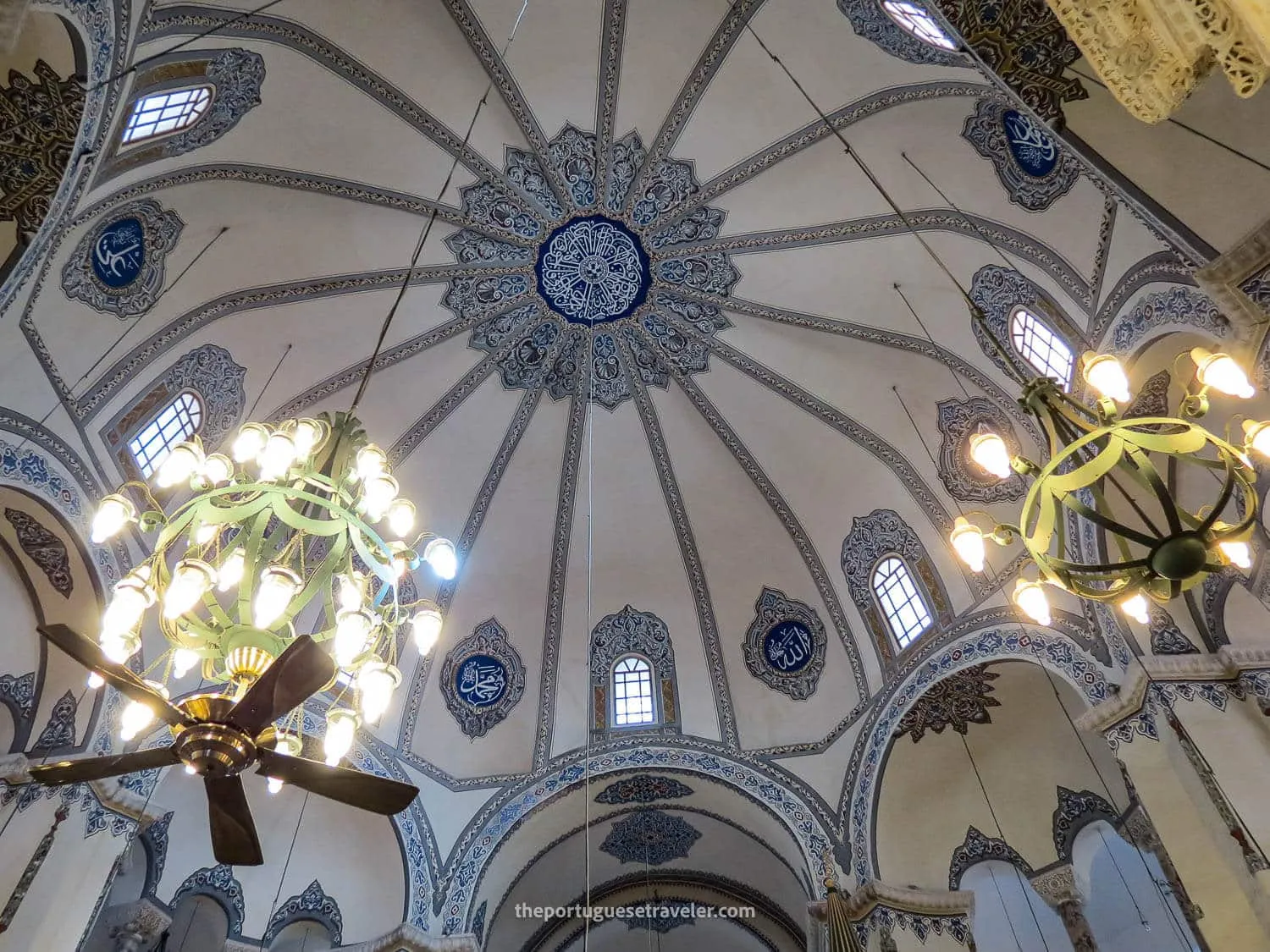
The interior of the Kuçuk Hagia Sophia Mosque in Istanbul
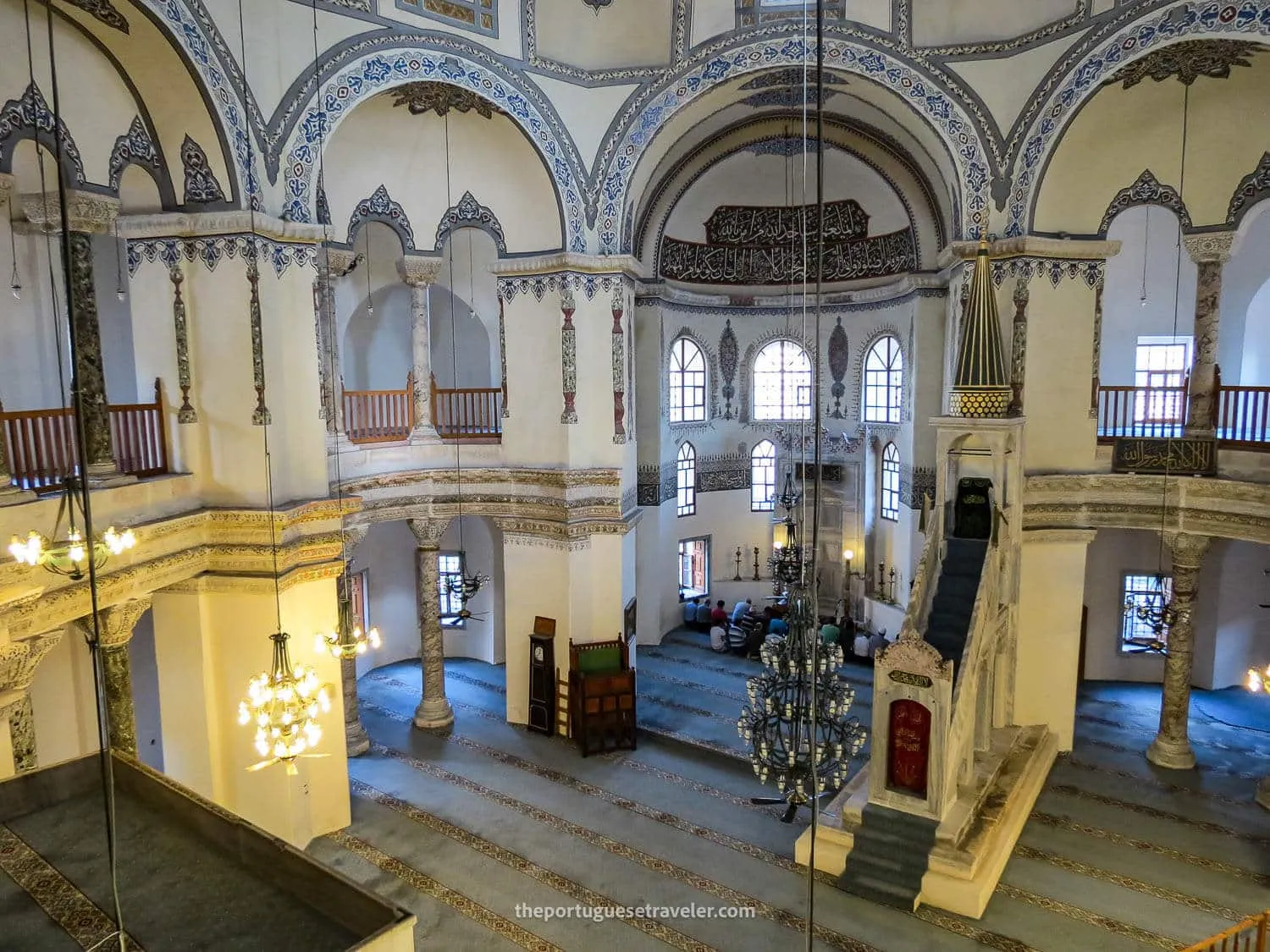
The interior of the Kuçuk Hagia Sophia Mosque in Istanbul
11. Hagia Irene (Aya Irini, inside Topkapı Palace)
Inside the first courtyard of Topkapı Palace is Hagia Irene, the city’s oldest church, first built by Constantine in the 4th century. Unlike Hagia Sophia, it was never converted into a mosque, and it keeps a plain brick interior and an apse cross mosaic. The interior is often used for classical music concerts, thanks to its acoustics.
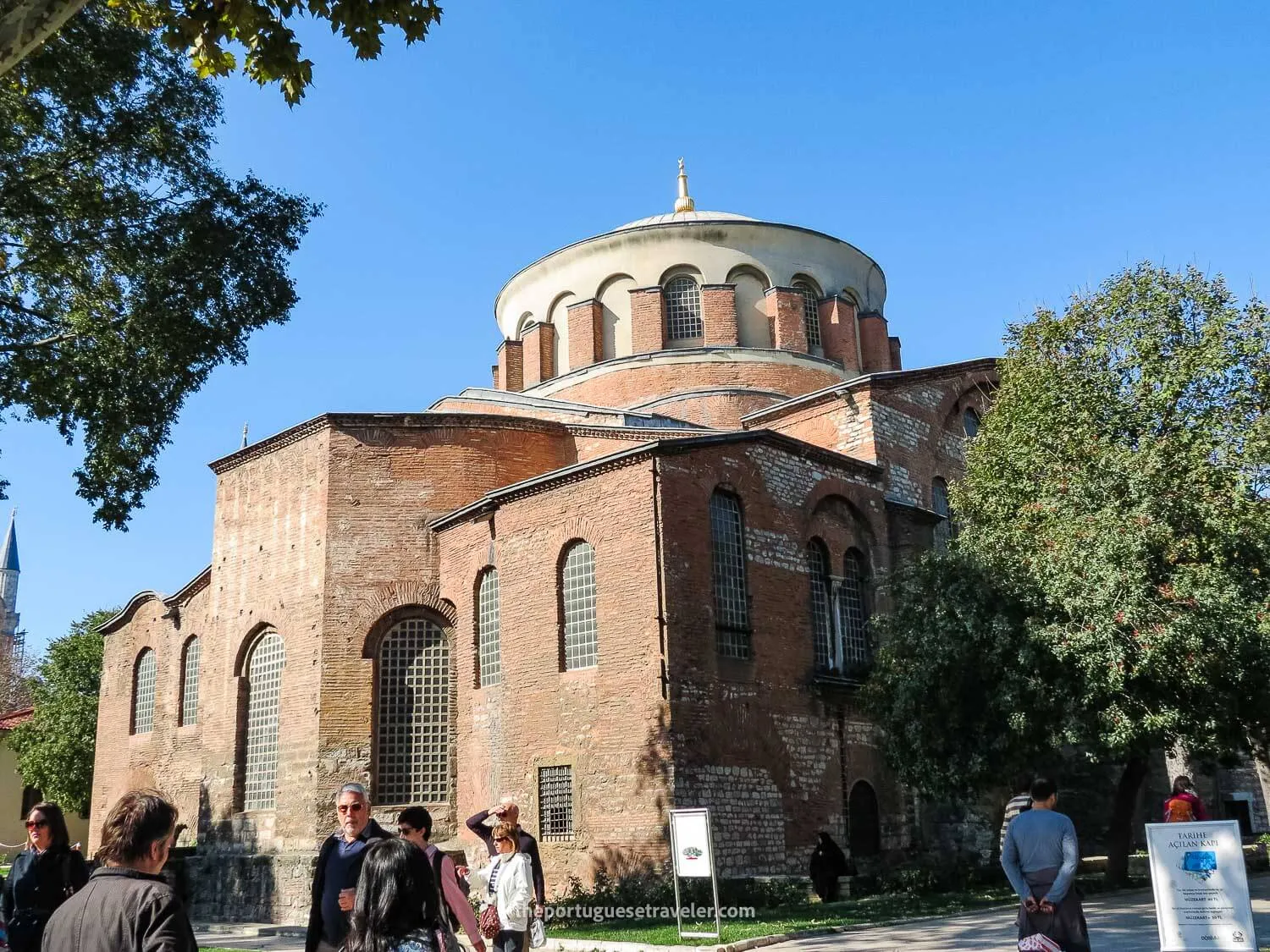
12. Palace of the Porphyrogenitus (Tekfur Palace): Byzantine palace ruins
Beside the Theodosian Walls, the Palace of the Porphyrogenitus is the last surviving Byzantine imperial residence. It later served as a menagerie, a pottery workshop and a shelter. It has been restored and now houses a museum of Byzantine-era ceramics, glasswork and mosaics, with views over the Golden Horn.
13. Monastery of Stoudios (İmrahor Mosque ruins): oldest Byzantine monastery
The ruins of the Monastery of Stoudios, founded in the 5th century, are the oldest surviving Byzantine church remains in Istanbul. It was once a major center of Byzantine monastic life, known for its strict discipline and learning. Much of it is damaged, but the brick arches remain.
14. Monastery of Christ Pantokrator (Zeyrek Mosque)
The Zeyrek Mosque, once the Monastery of Christ Pantokrator, is a large 12th-century complex built by Empress Irene of Hungary. For centuries it was second only to Hagia Sophia in importance. Fragments of Byzantine marble and mosaics survive inside, and outside there is a good vantage point over the Golden Horn. The surrounding district is one of the older neighborhoods left in Istanbul, and there are rooftop cafés nearby.
15. Buocoleon Palace ruins
By the Marmara seafront, partly hidden behind fences, are the ruins of the Bucoleon Palace. It was part of the Byzantine Great Palace, a seaside residence for the emperors. Arches and marble window frames survive. Restoration is ongoing, and it is worth passing by to see a rare fragment of the vanished palace world of Constantinople.
16. Pammakaristos Church (Fethiye Mosque)
In the Fatih district, the Pammakaristos Church (now Fethiye Mosque) was a Byzantine church and, after 1453, the seat of the Greek Orthodox Patriarchate. Part of it is still a mosque, and in the side chapel you can see mosaics of Christ Pantokrator and the Virgin Mary. It is less famous than Chora and usually quieter.
17. St. Mary of the Mongols (Panagia Mouchliotissa)
In the colorful Balat neighborhood is St. Mary of the Mongols, the only Byzantine church in Istanbul never converted into a mosque. Sultan Mehmet II granted it to the Orthodox community, and it has survived fires and wars. Access inside is limited, but it can be seen from outside as a link to Constantinople’s Christian heritage.
18. Great Palace Mosaic Museum: Byzantine mosaics
Just behind the Blue Mosque, this small museum preserves mosaics from the vanished Great Palace of Constantinople. They date to the 6th century and show scenes from hunters chasing tigers to children riding donkeys, a glimpse of everyday Byzantine life. The museum is small, so a visit is short.
19. Büyük Saray Kalıntıları (Great Palace Ruins)
Remnants of the Great Palace, once the vast residence of the Byzantine emperors, lie beneath Sultanahmet. Much remains buried, but you can see ruined arches, columns and underground chambers near the Mosaic Museum.
20. Eski Imaret Mosque (former Byzantine church)
The modest Eski Imaret Mosque was originally part of a Byzantine monastery. After the conquest it became a mosque and a soup kitchen for the needy (hence “imaret”). It is a quiet corner where everyday Istanbul life goes on around old history.
Genoese & Latin Presence
Not all of Istanbul’s history belongs to empires. In the medieval centuries Genoese traders and Latin crusaders built their own enclaves, with fortresses and towers. The Genoese colony in Galata left walls and watchtowers, a reminder that trade once rivaled imperial politics.
21. Galata Tower (1348, Genoese fortress tower)
The Galata Tower rises over Beyoğlu. The Genoese built it in 1348 as a watchtower guarding their colony across the Golden Horn. Today it is a popular viewpoint with a 360° panorama of the Bosphorus, the old city domes and, on a clear day, the Princes’ Islands. Inside, a small museum covers the tower’s history, including Hezarfen Ahmet Çelebi, who is said to have flown from the tower across the Bosphorus with artificial wings in the 17th century. Go around sunset for the light, but expect lines, or visit in the early morning.
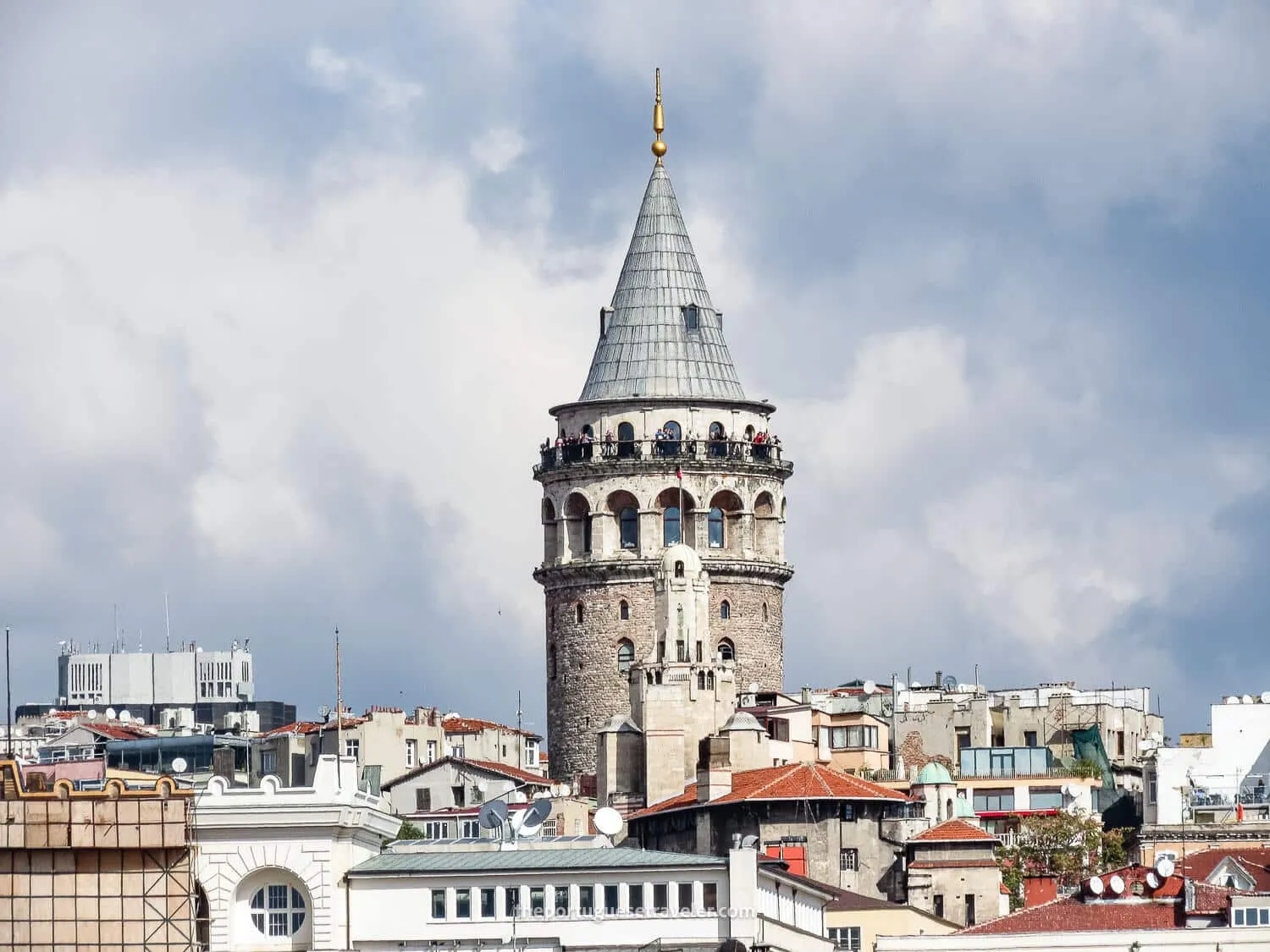
The Galata Tower
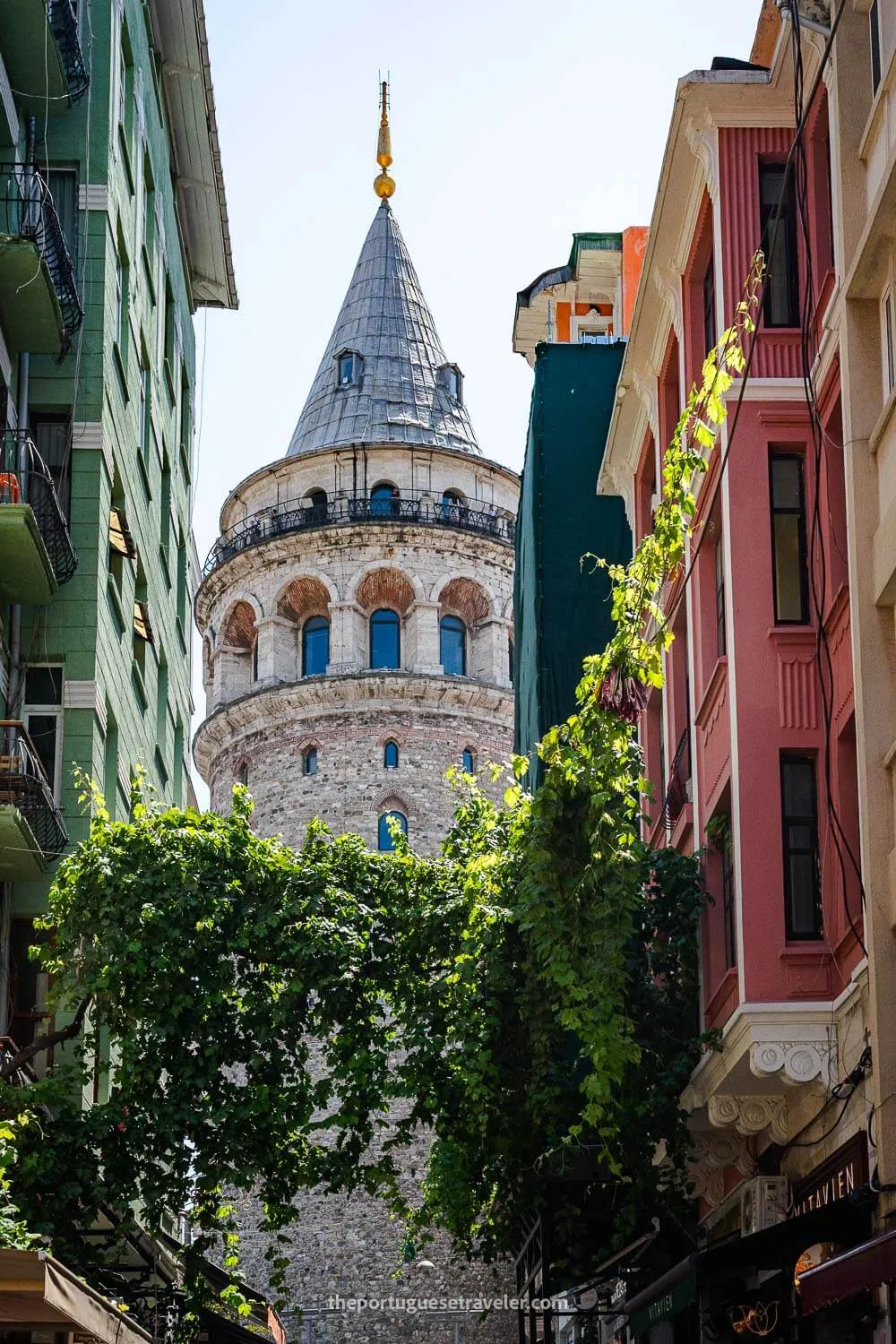
The Galata Tower
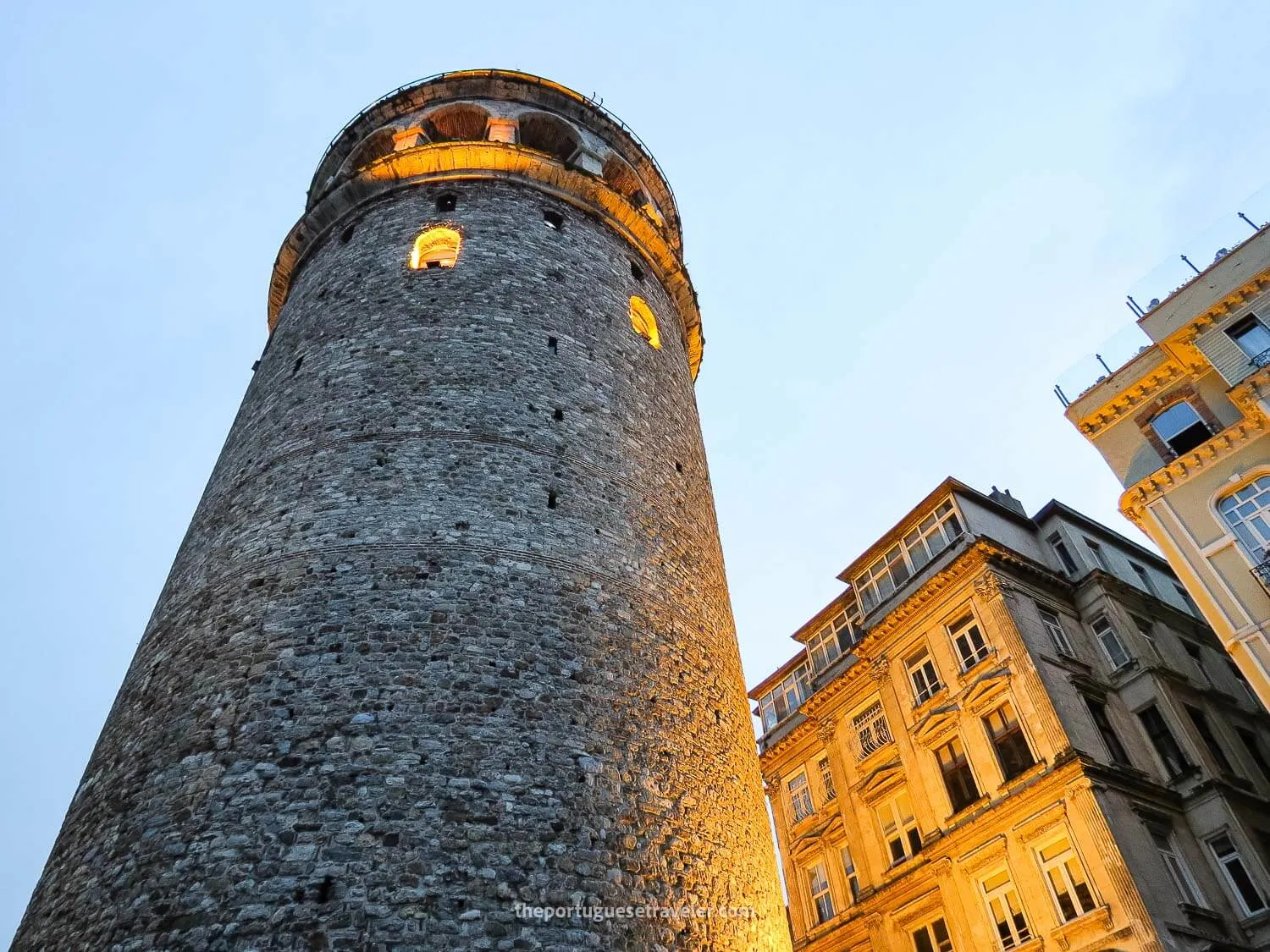
The Galata Tower
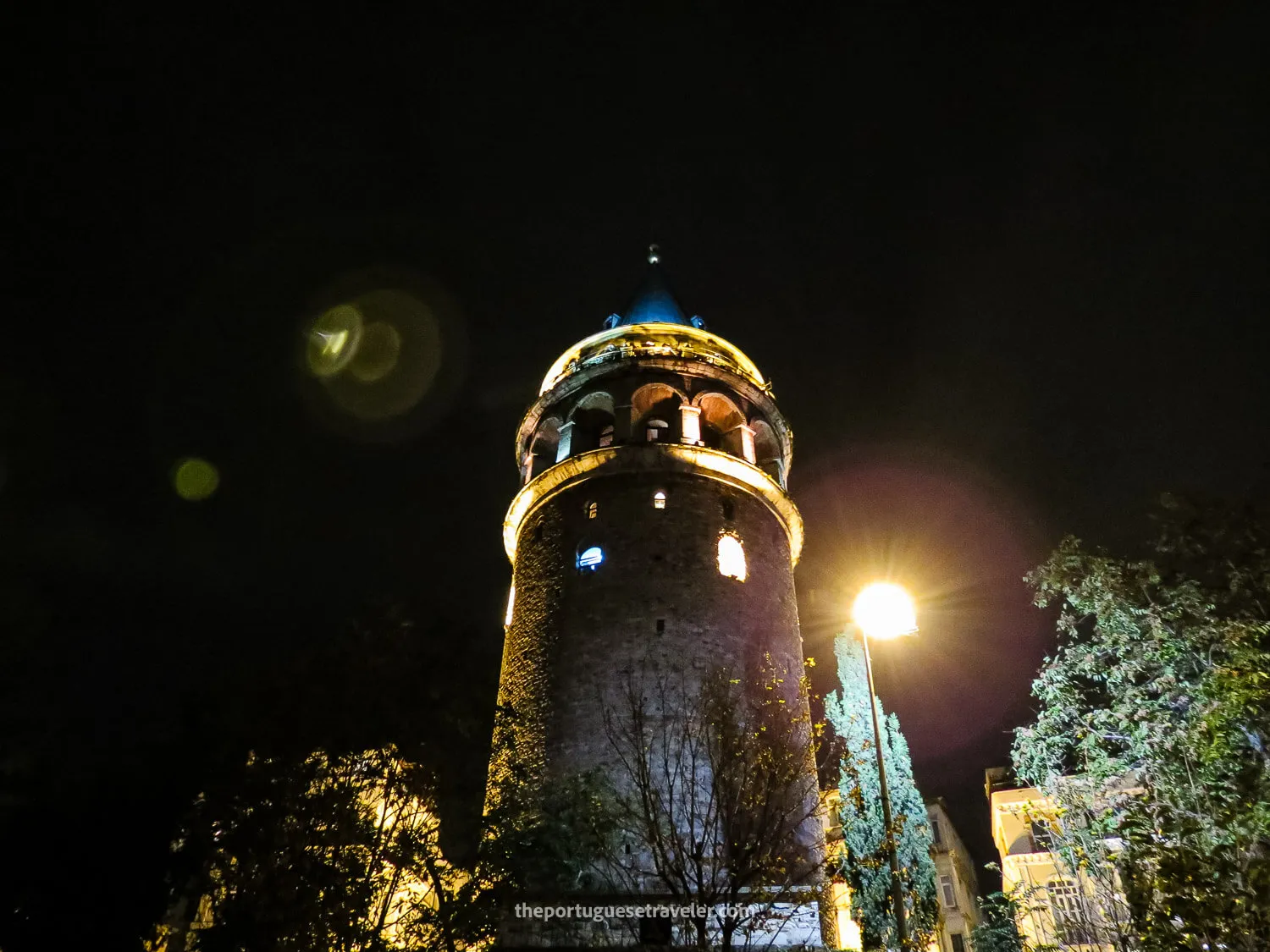
The Galata Tower at night
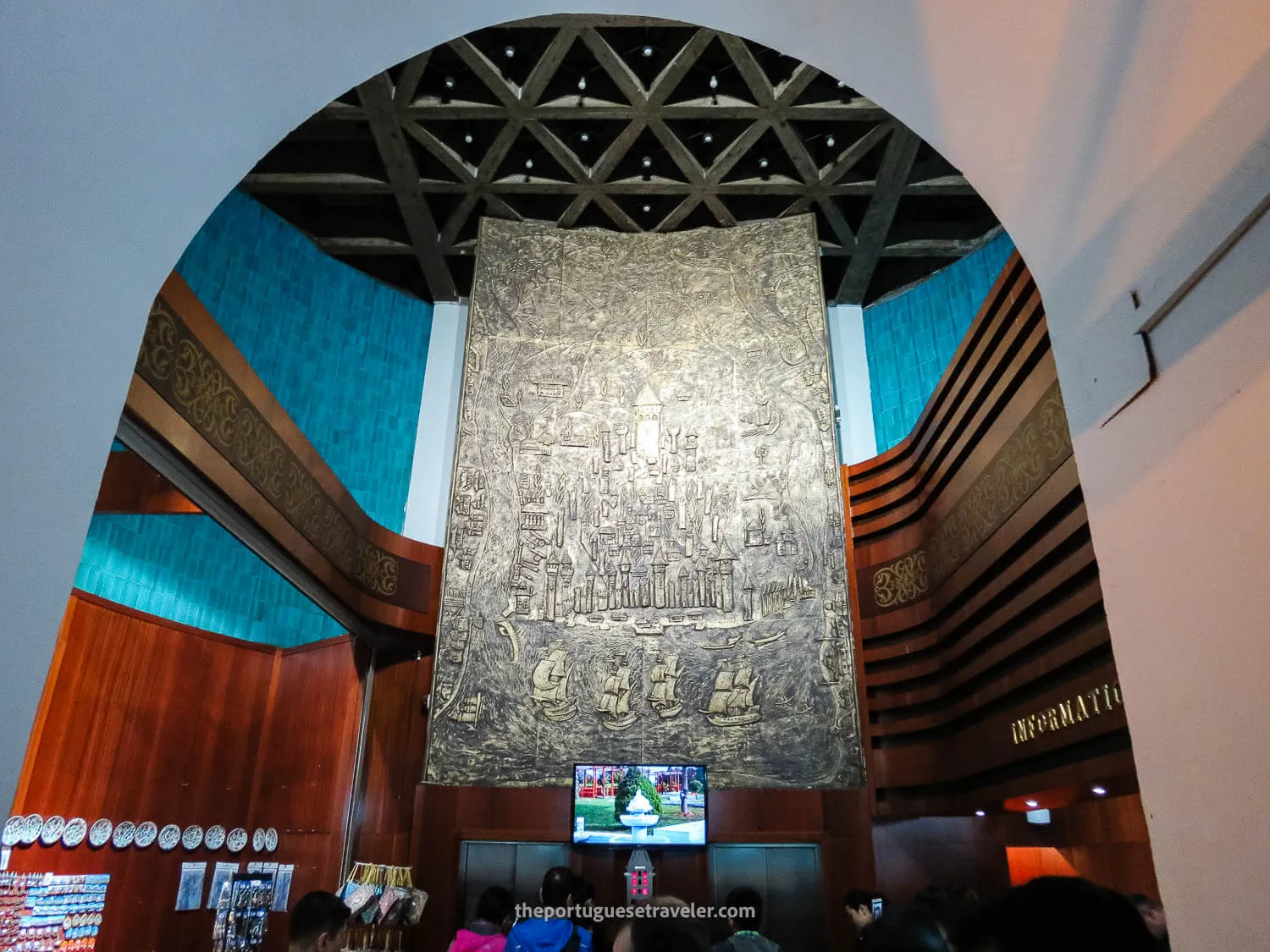
The elevator of Galata Tower
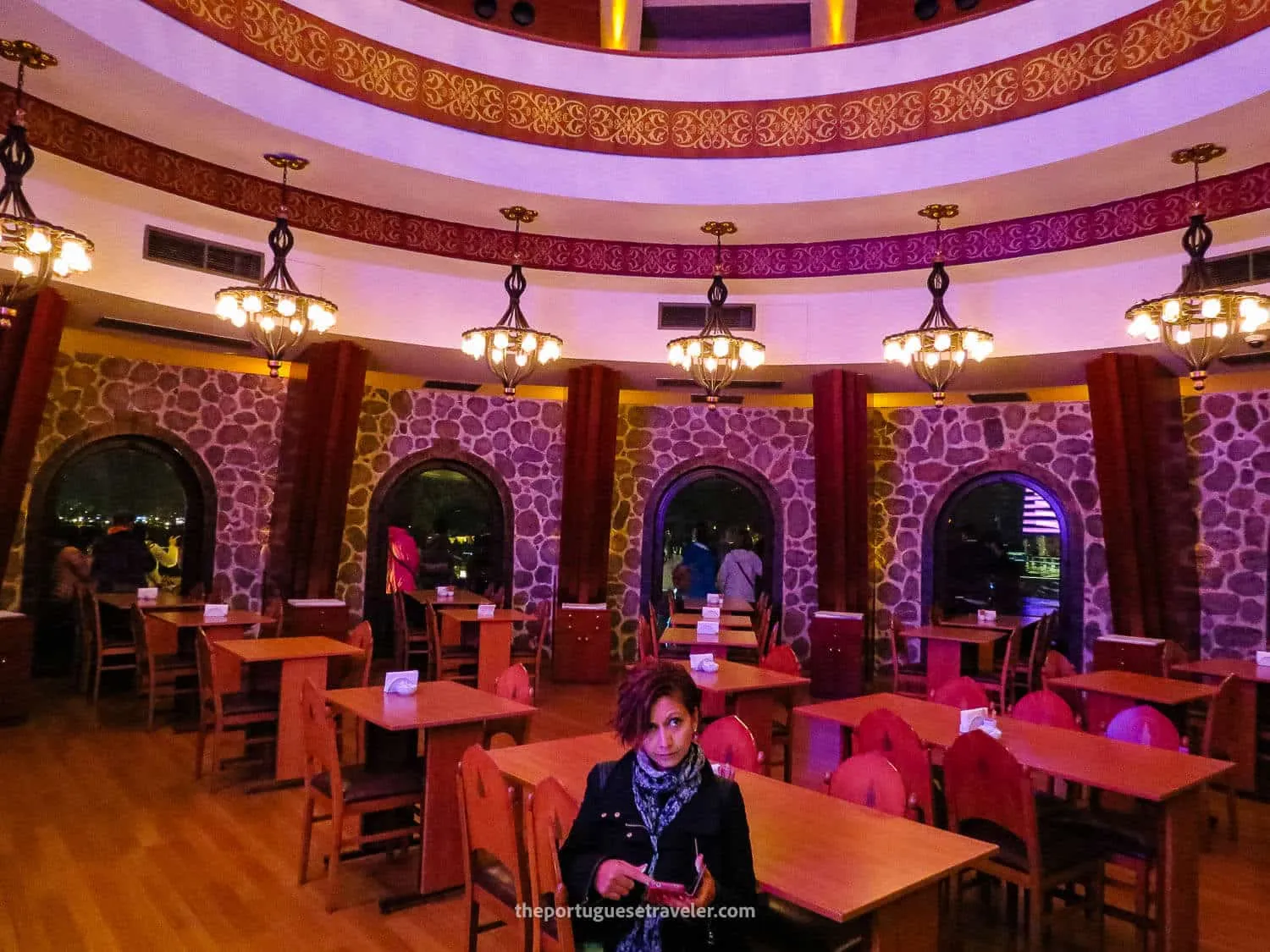
The restaurant on top of Galata Tower
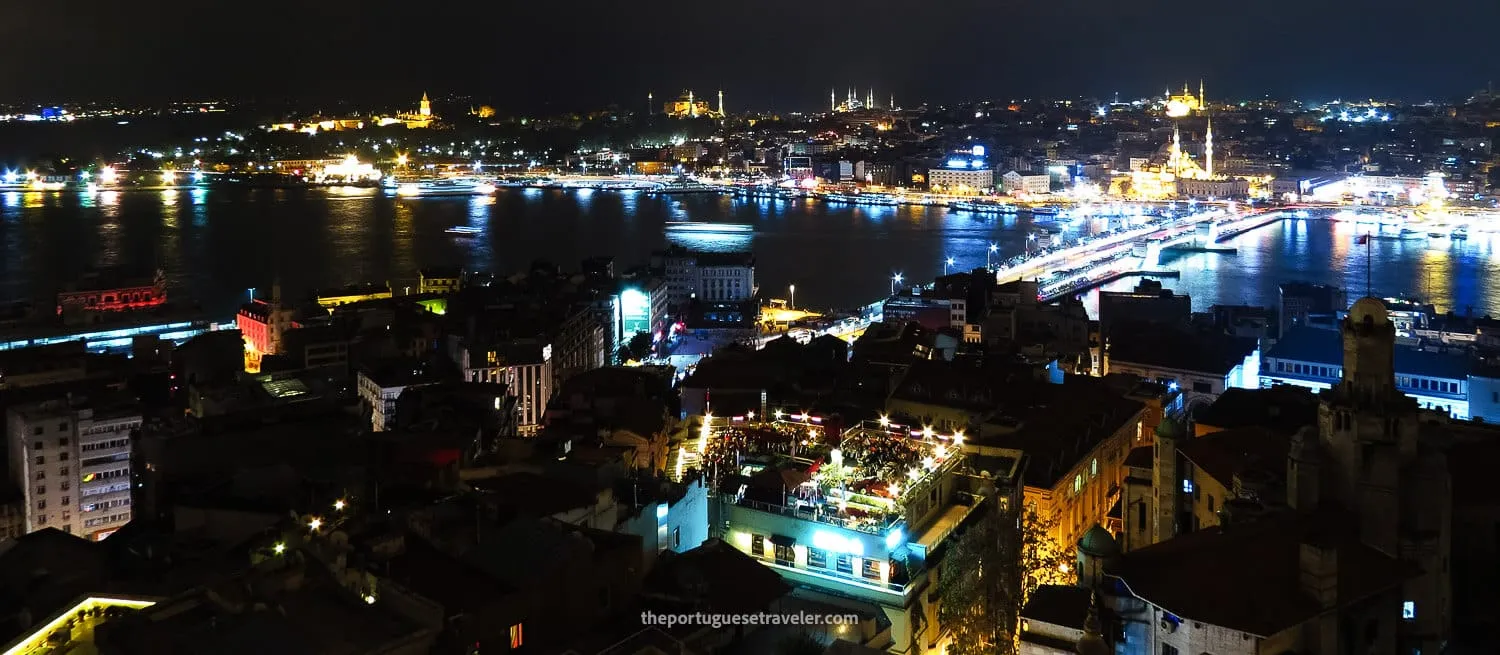
Galata Tower’s View at night
22. Genoese Walls (remnants around Galata)
Walking through Galata’s side streets, you will notice sections of Genoese walls between cafés, shops and apartment blocks. These medieval walls once enclosed the Genoese colony and its warehouses. Many sections have crumbled, but some towers and stretches still stand, especially near Şişhane and Karaköy. They are a reminder that Istanbul was not only Byzantine and Ottoman, but also home to a Latin merchant community. Karaköy has cafés for a stop afterward.
Ottoman Era
The Ottomans reshaped the skyline with minarets, tiled palaces and bazaars full of merchants from across the world. Their architecture and urban design turned Constantinople into Istanbul, the capital of an empire on three continents. Their legacy is still visible in the domes of the mosques and the alleys of the Grand Bazaar.
23. Topkapi Palace
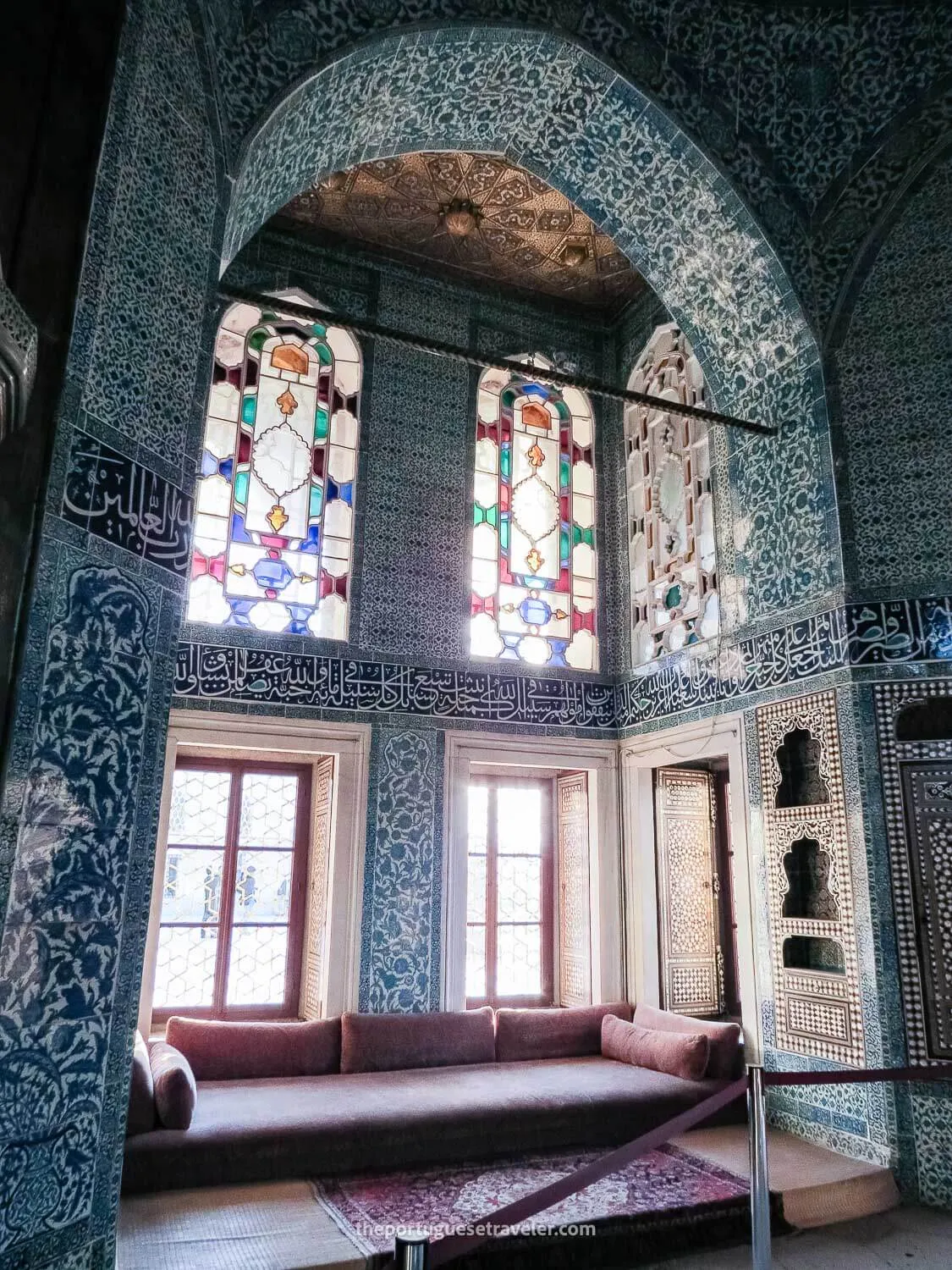
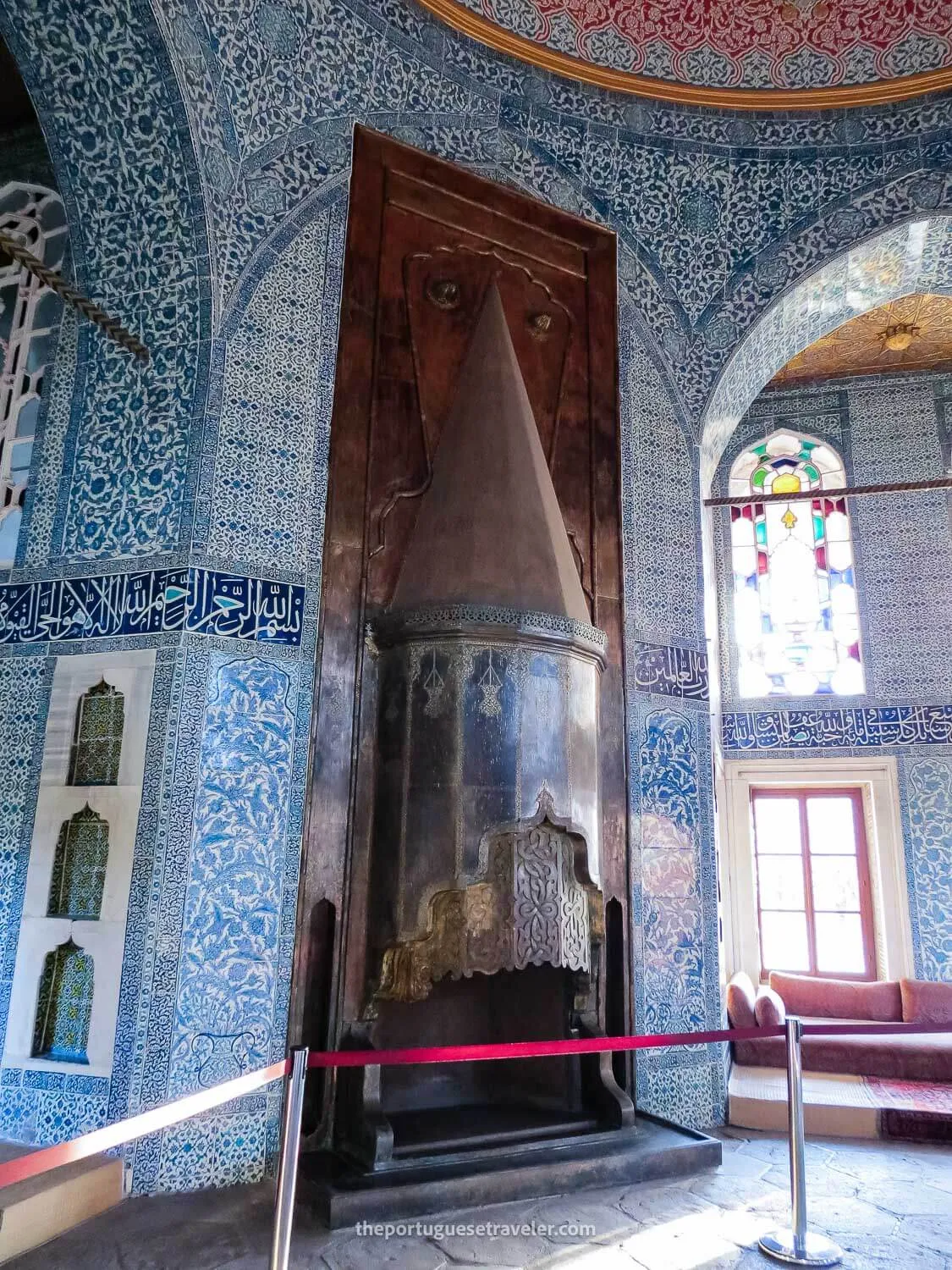
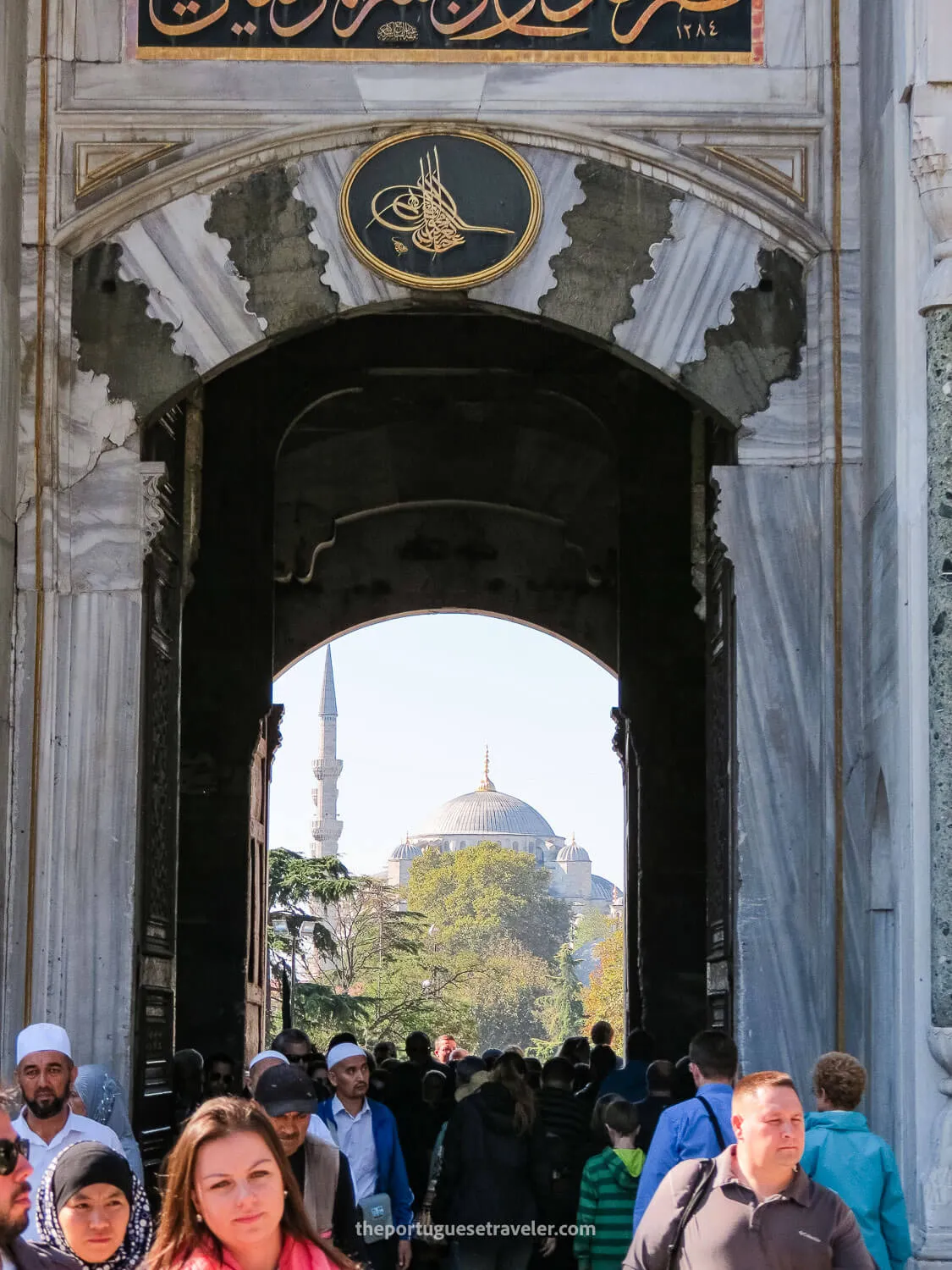
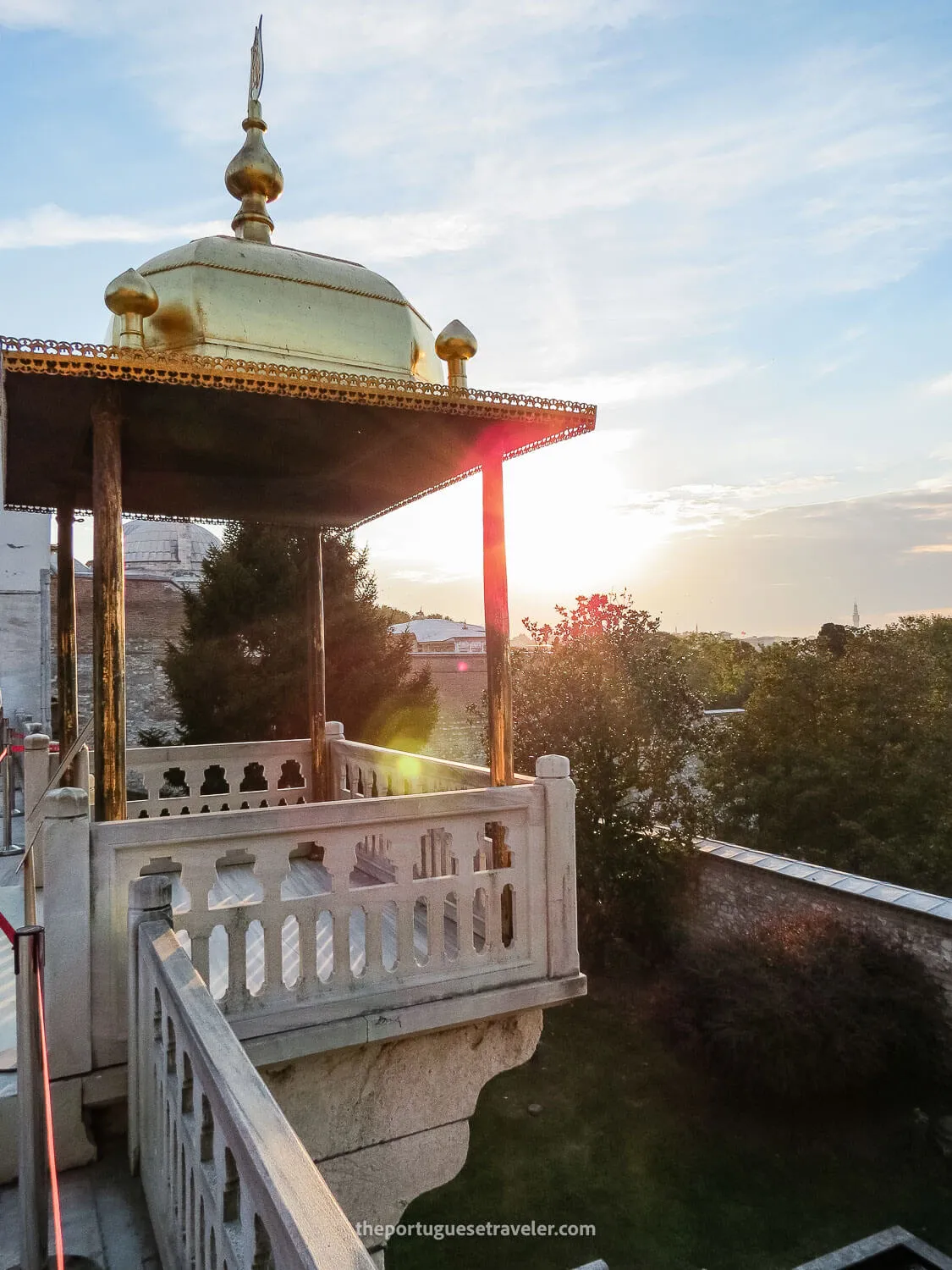
Topkapı Palace was the center of the Ottoman Empire for nearly 400 years. The complex is not one building but a series of courtyards, tiled pavilions and gardens with views over the Bosphorus. Highlights include the Imperial Harem, where generations of the sultans’ families lived, and the Treasury, which holds items such as the Topkapı Dagger and the Spoonmaker’s Diamond. Plan at least half a day here.
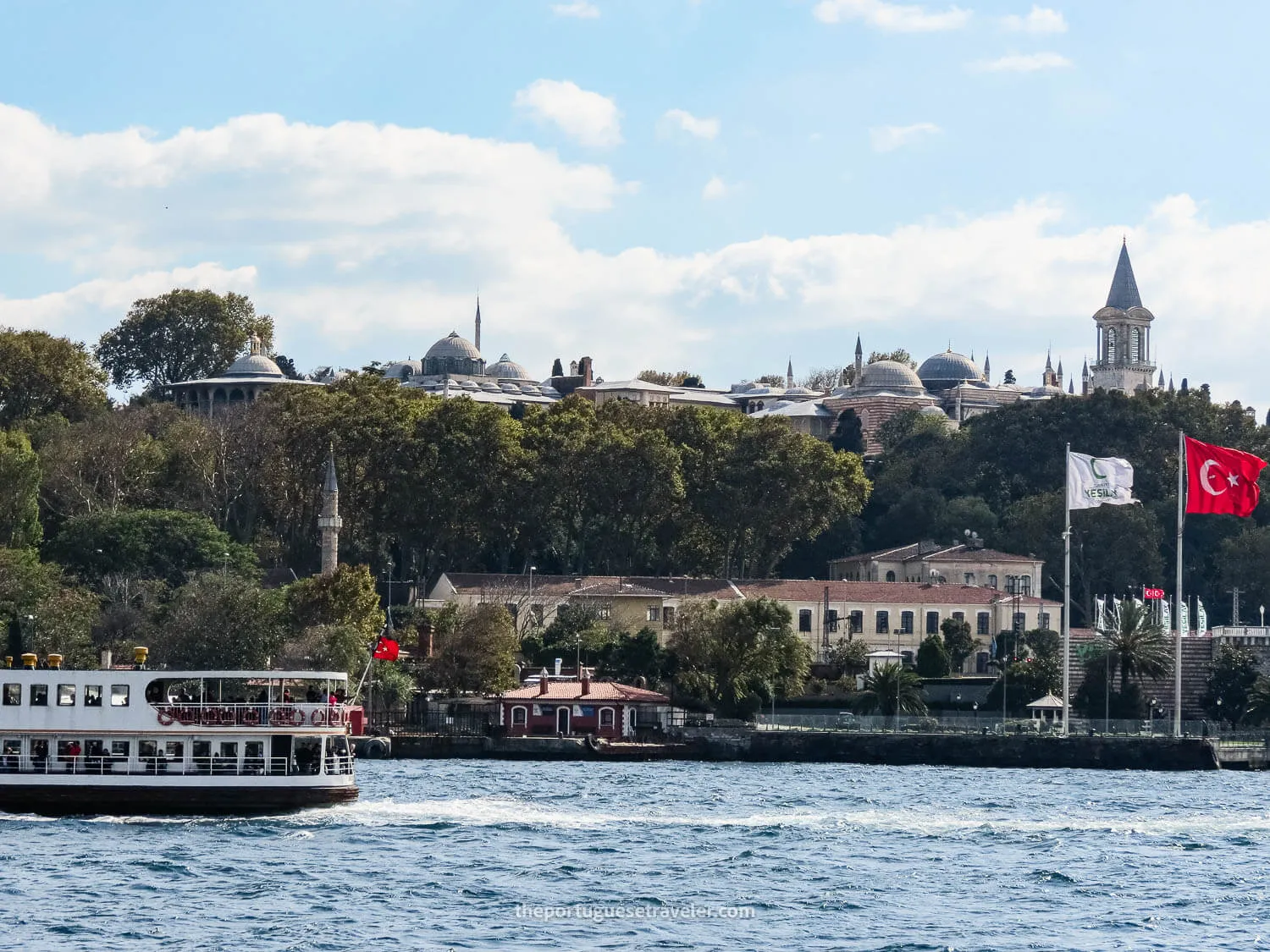
Topkapi Palace seen from the river
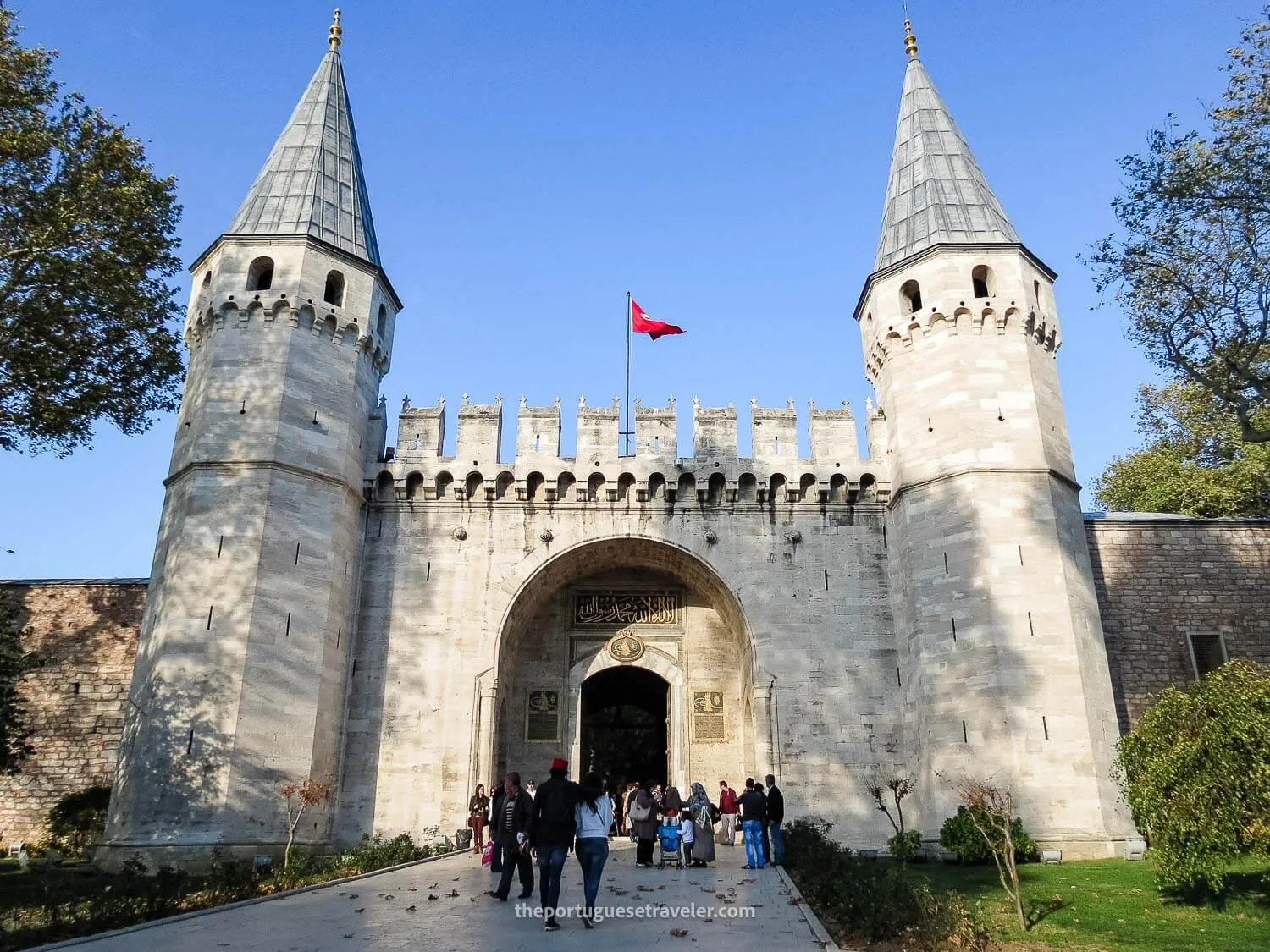
Topkapi Palace in Istanbul
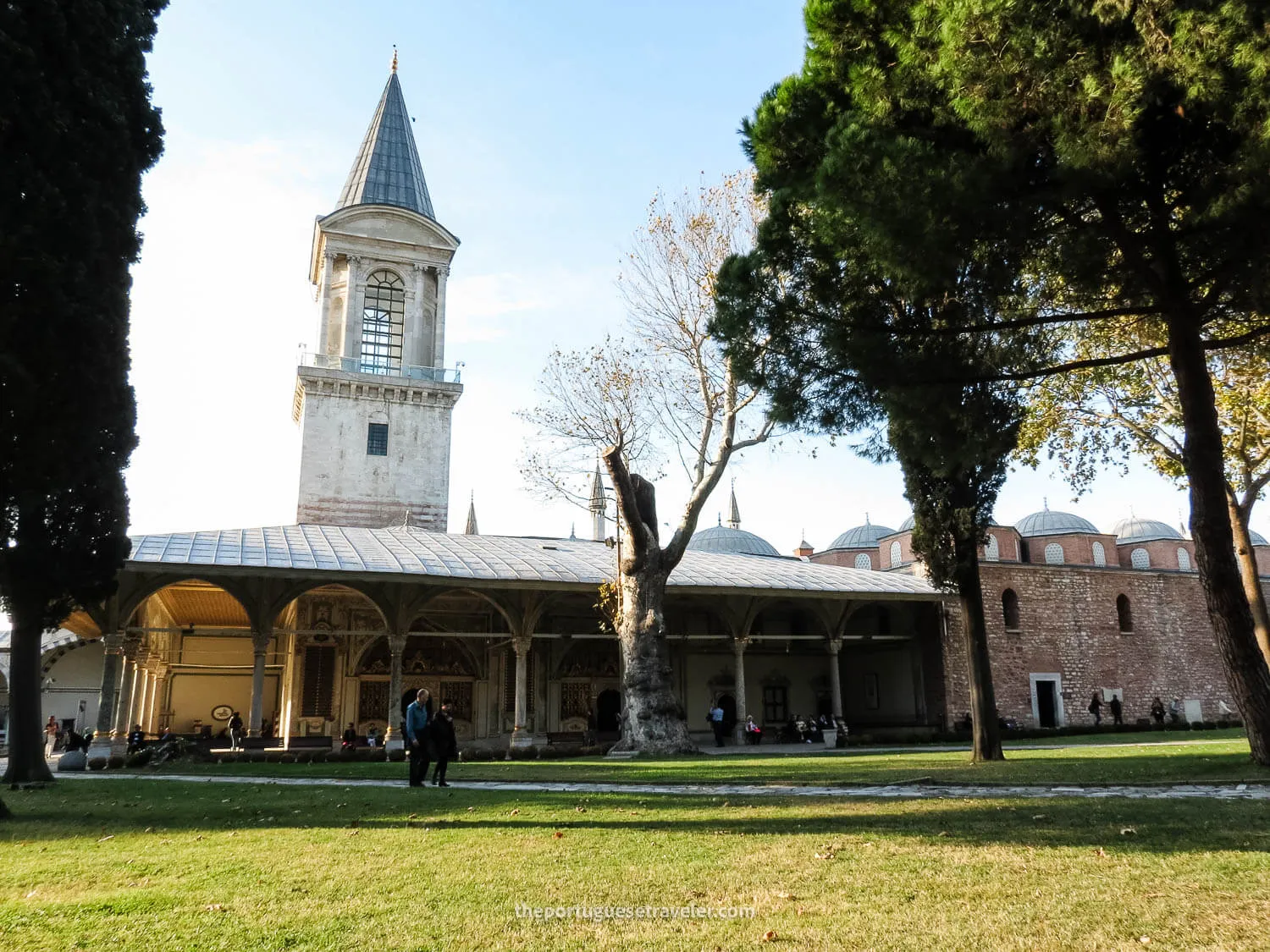
The courtyard of Topkapi Palace
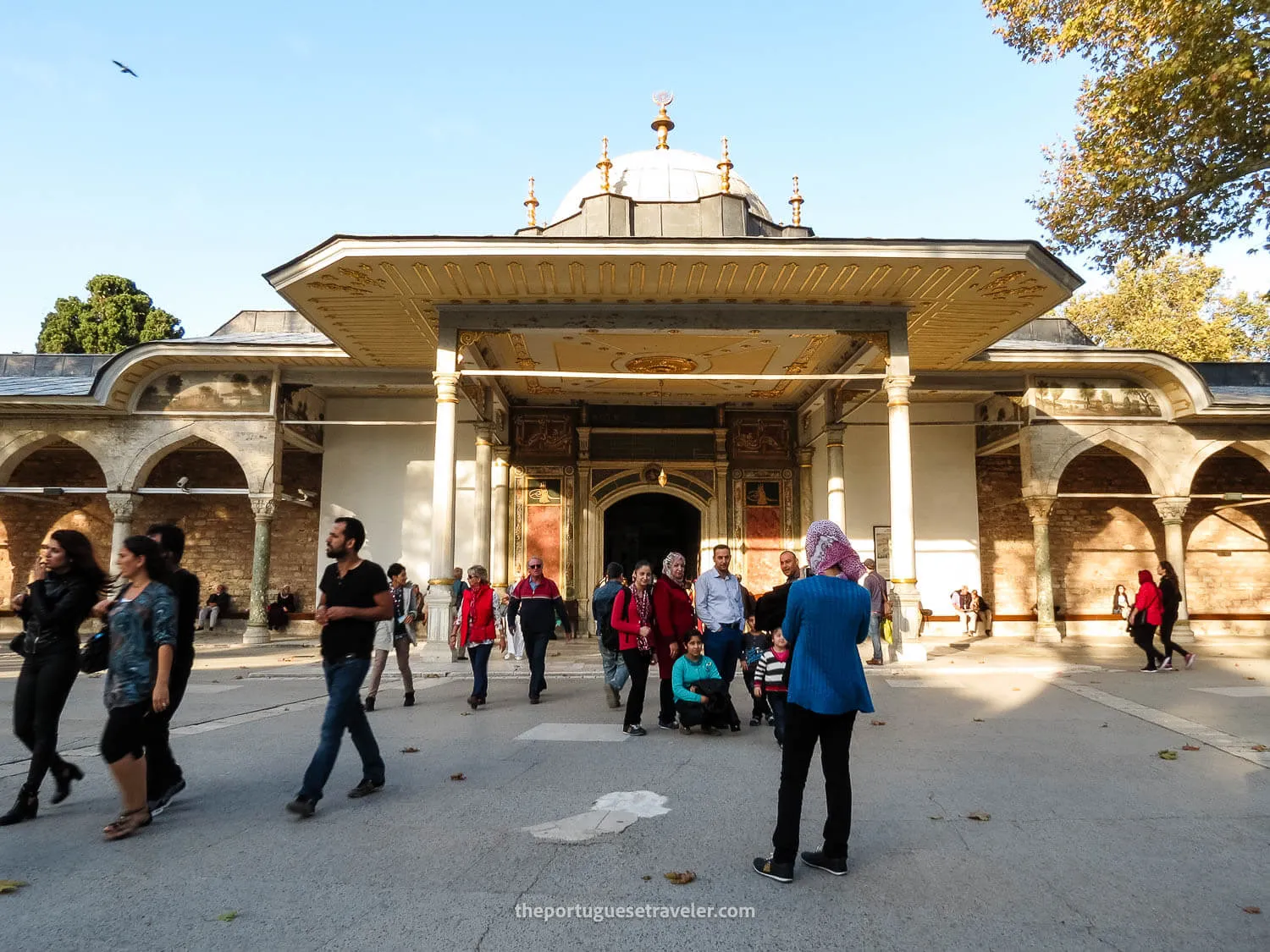
The Topkapi Pavilion
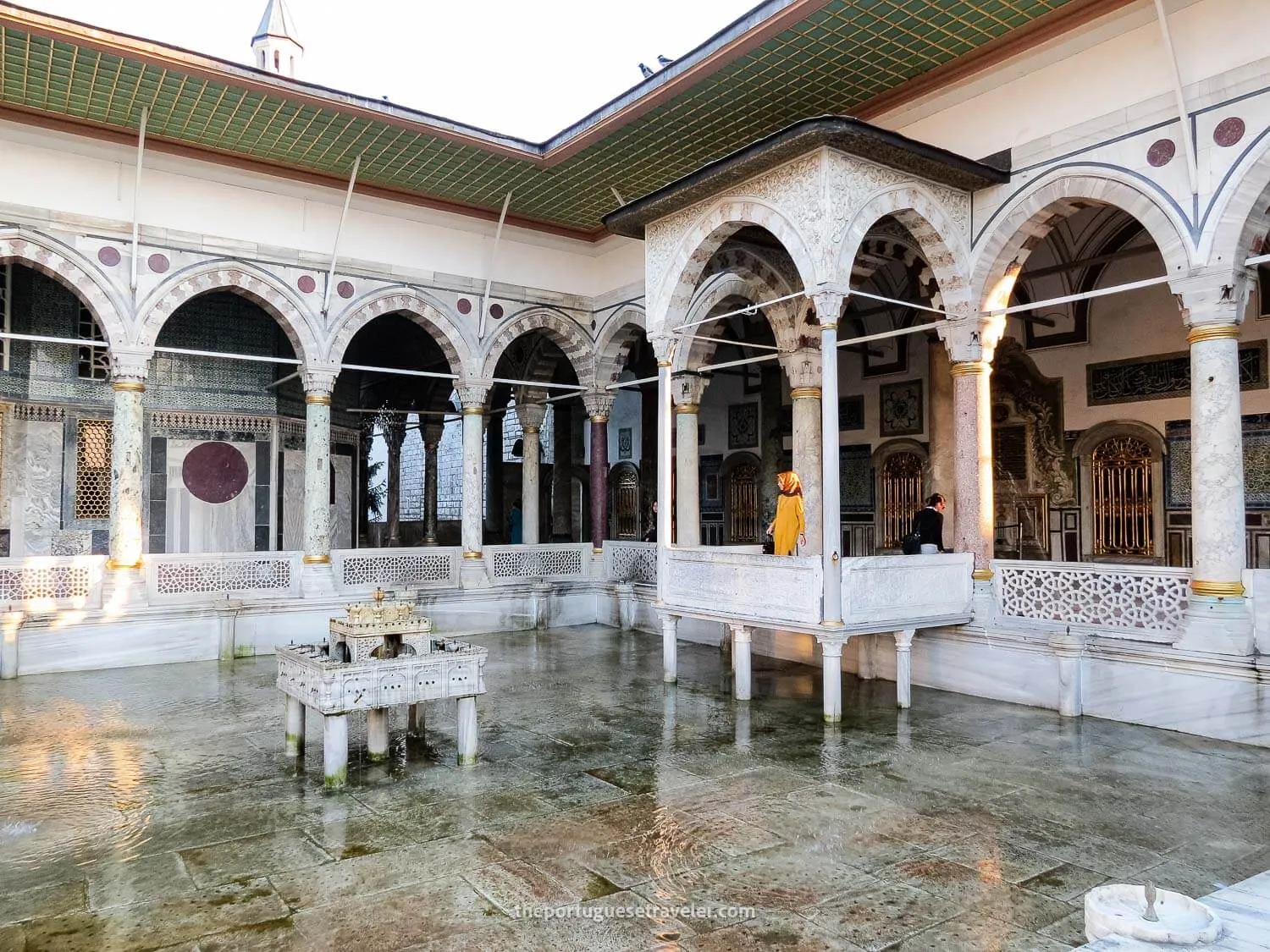
The fountain in the middle of Topkapi Palace
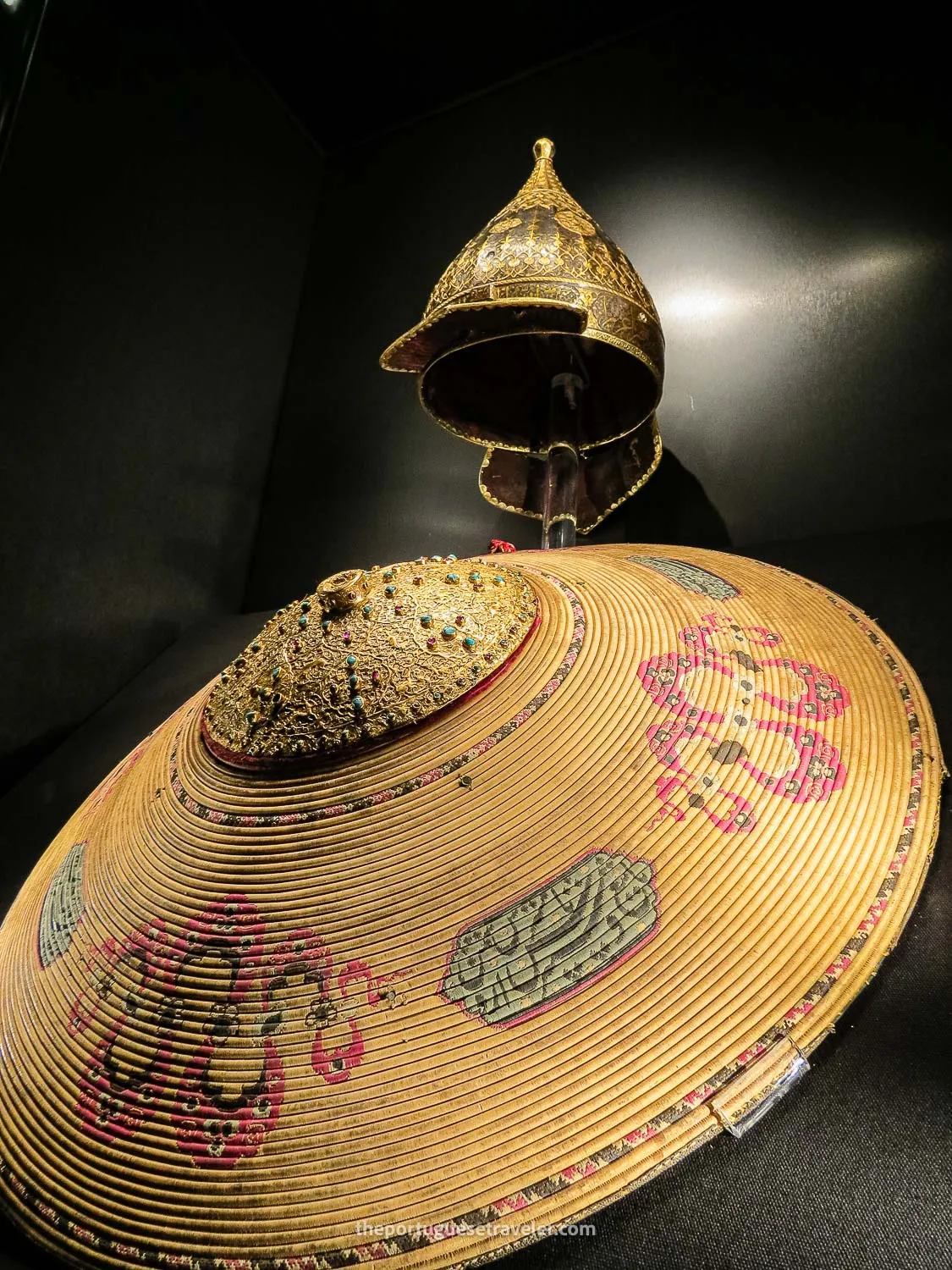
An exhibition at Topkapi Palace
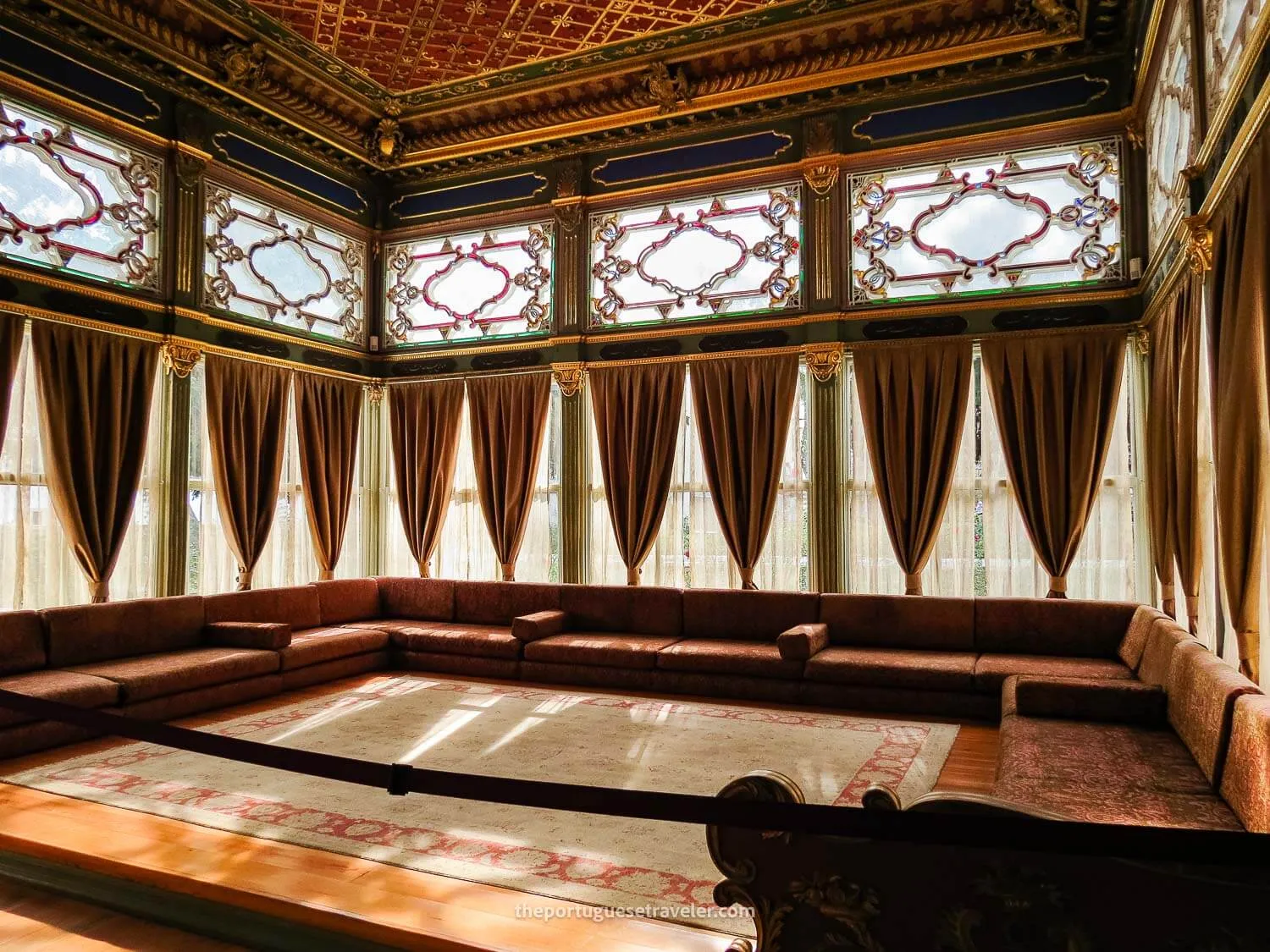
The interior of Topkapi Palace
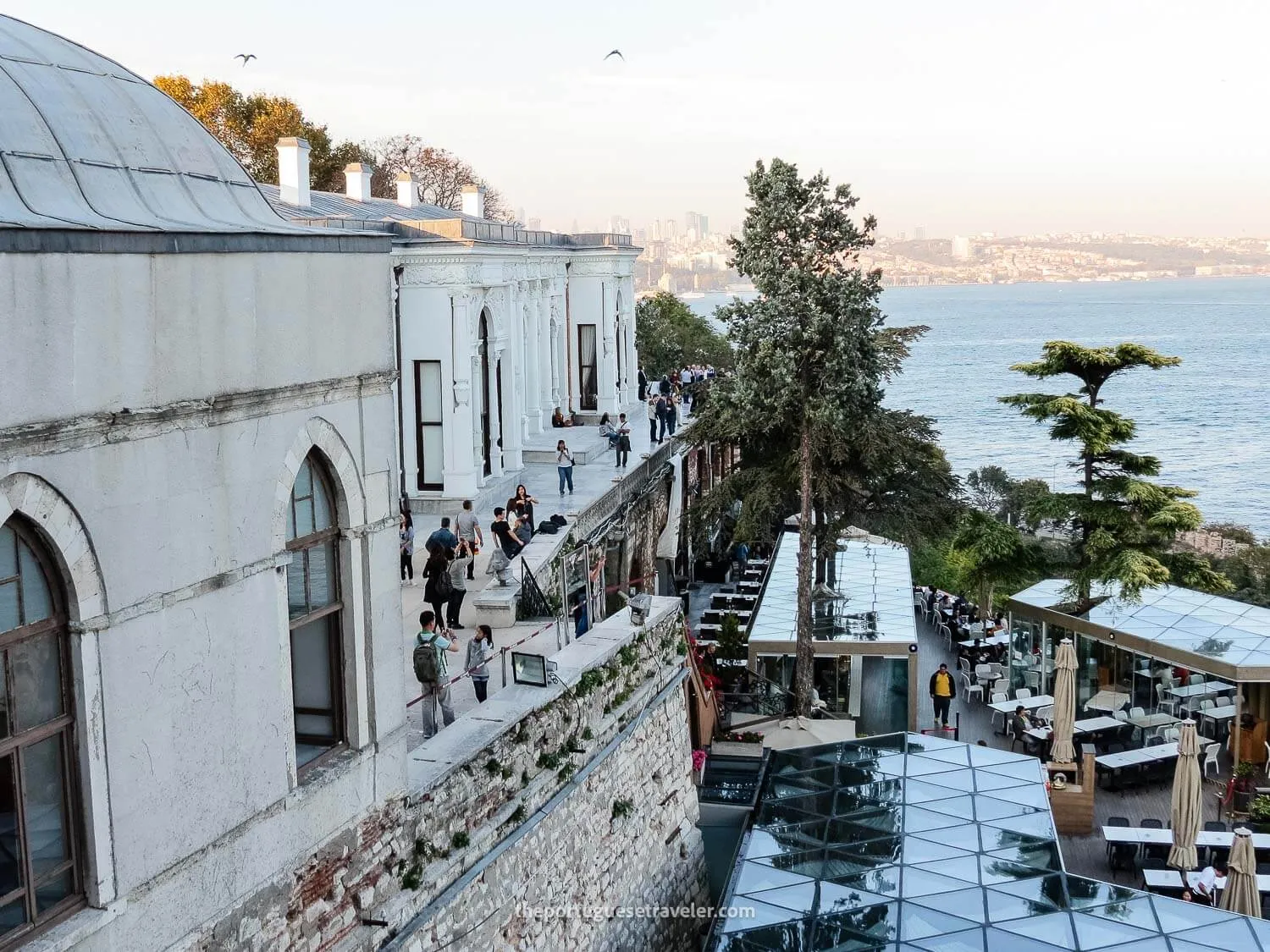
The restaurant of Topkapi Palace
24. Dolmabahçe Palace
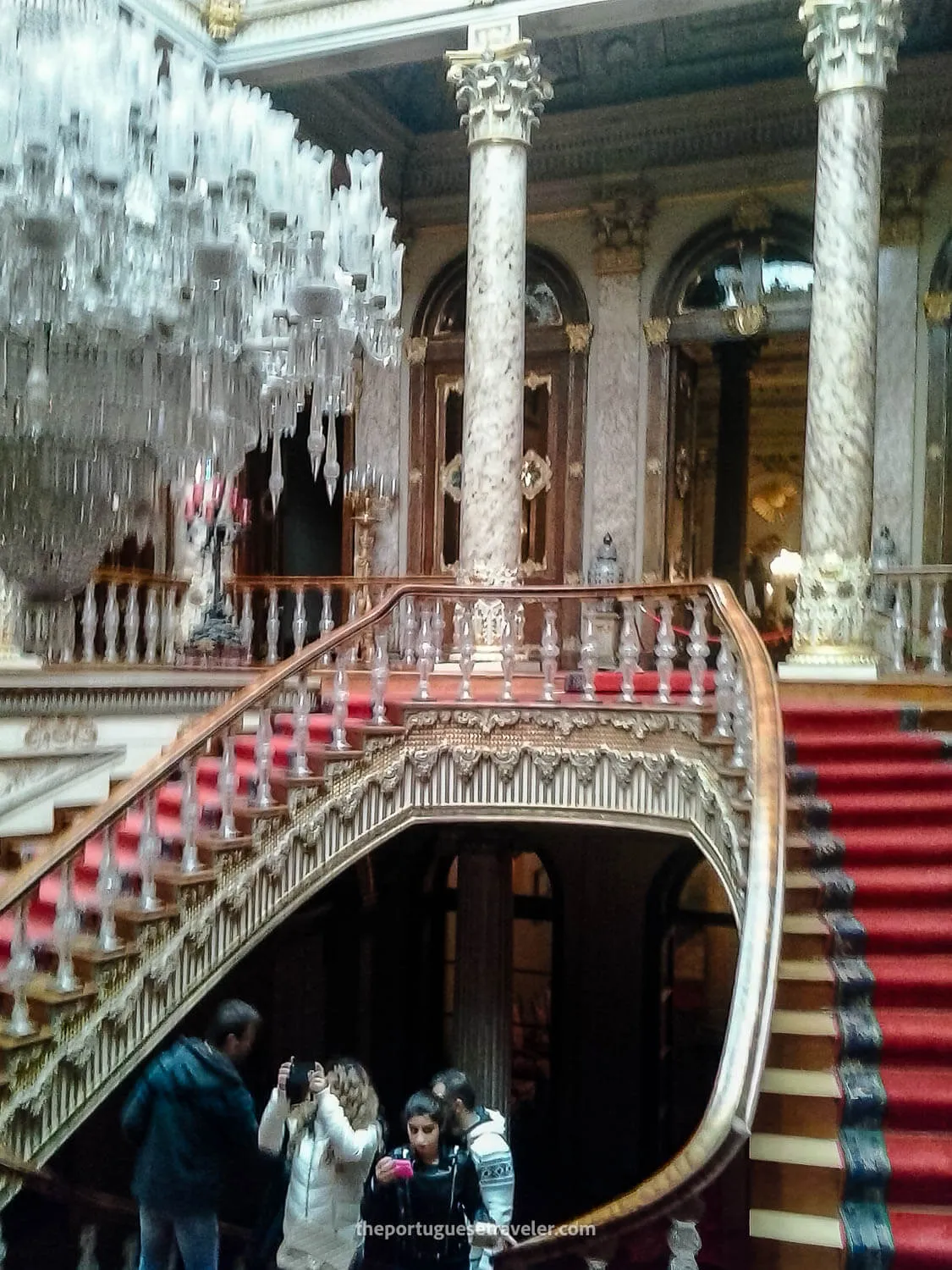
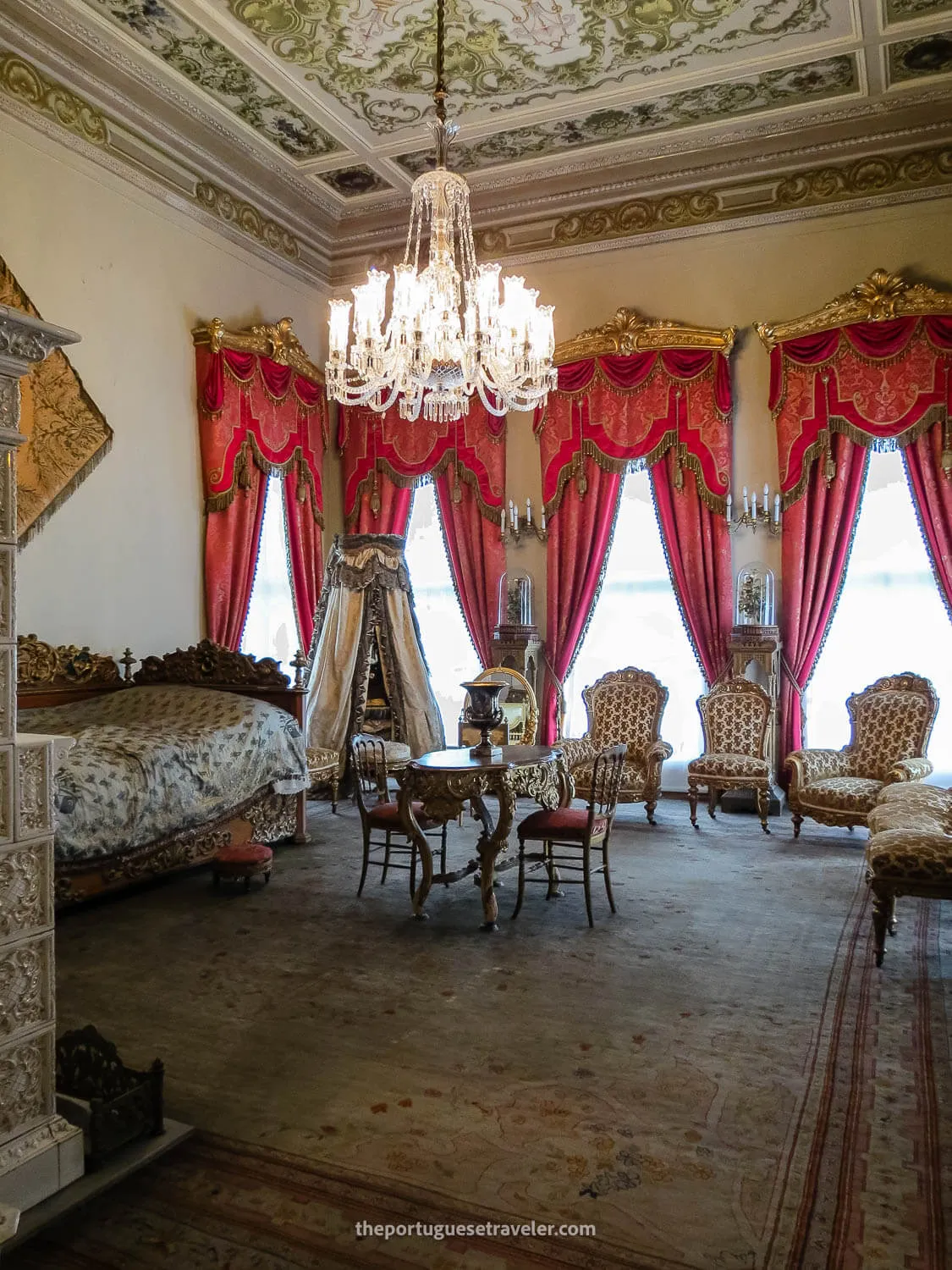
On the Bosphorus waterfront, the Dolmabahçe Palace is the most European of the Ottoman palaces. Built in the 19th century, it replaced Topkapı as the empire’s main residence and blends baroque, rococo and neoclassical design with Ottoman tradition. The crystal chandeliers are huge (one weighs 4.5 tons), and the ceremonial halls are decorated with gold leaf and marble. Mustafa Kemal Atatürk, founder of modern Turkey, lived and died here, and his room is preserved as a memorial. Visit in the morning for fewer crowds.
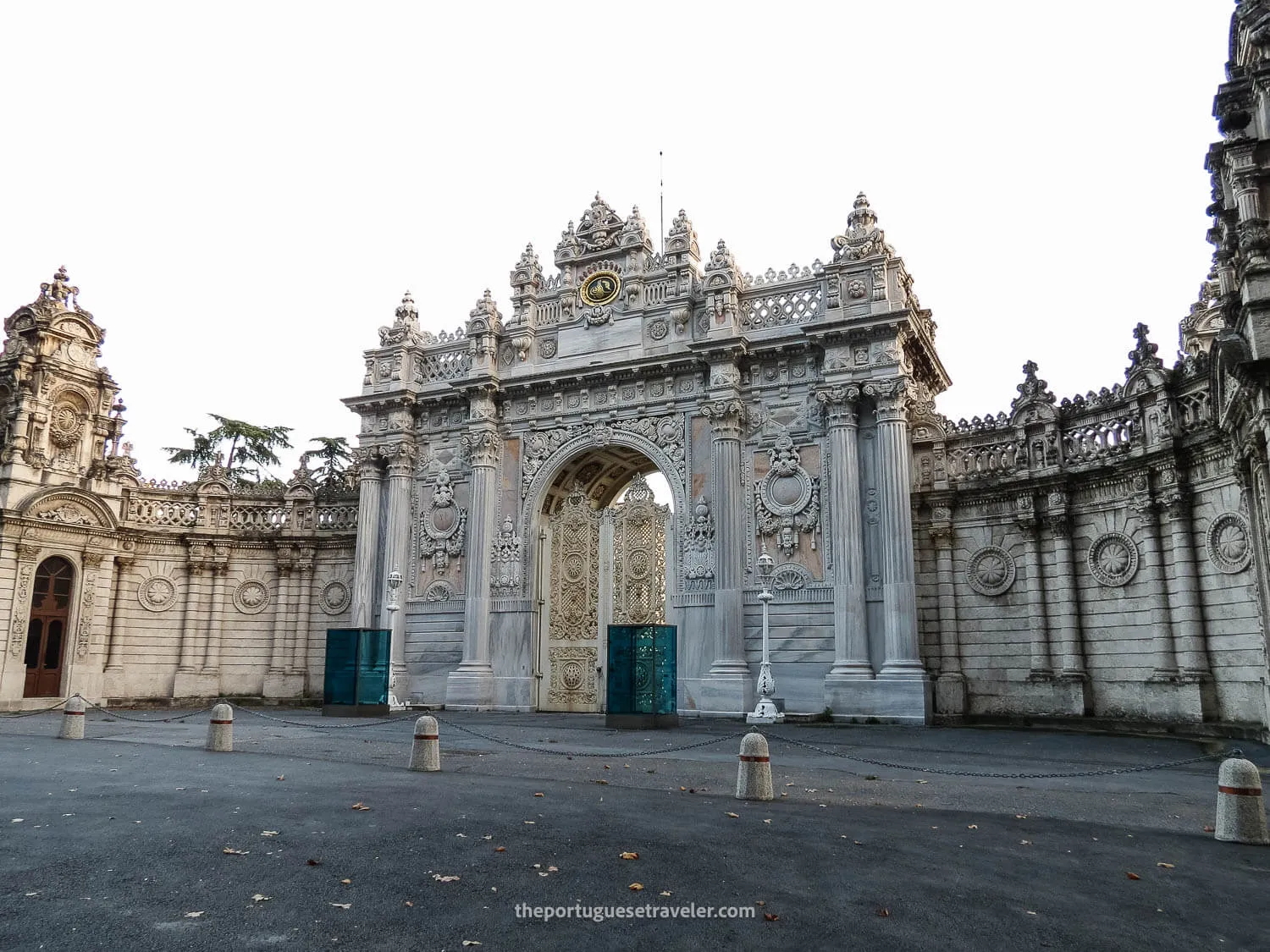
The Dolmabahçe Palace in Istanbul
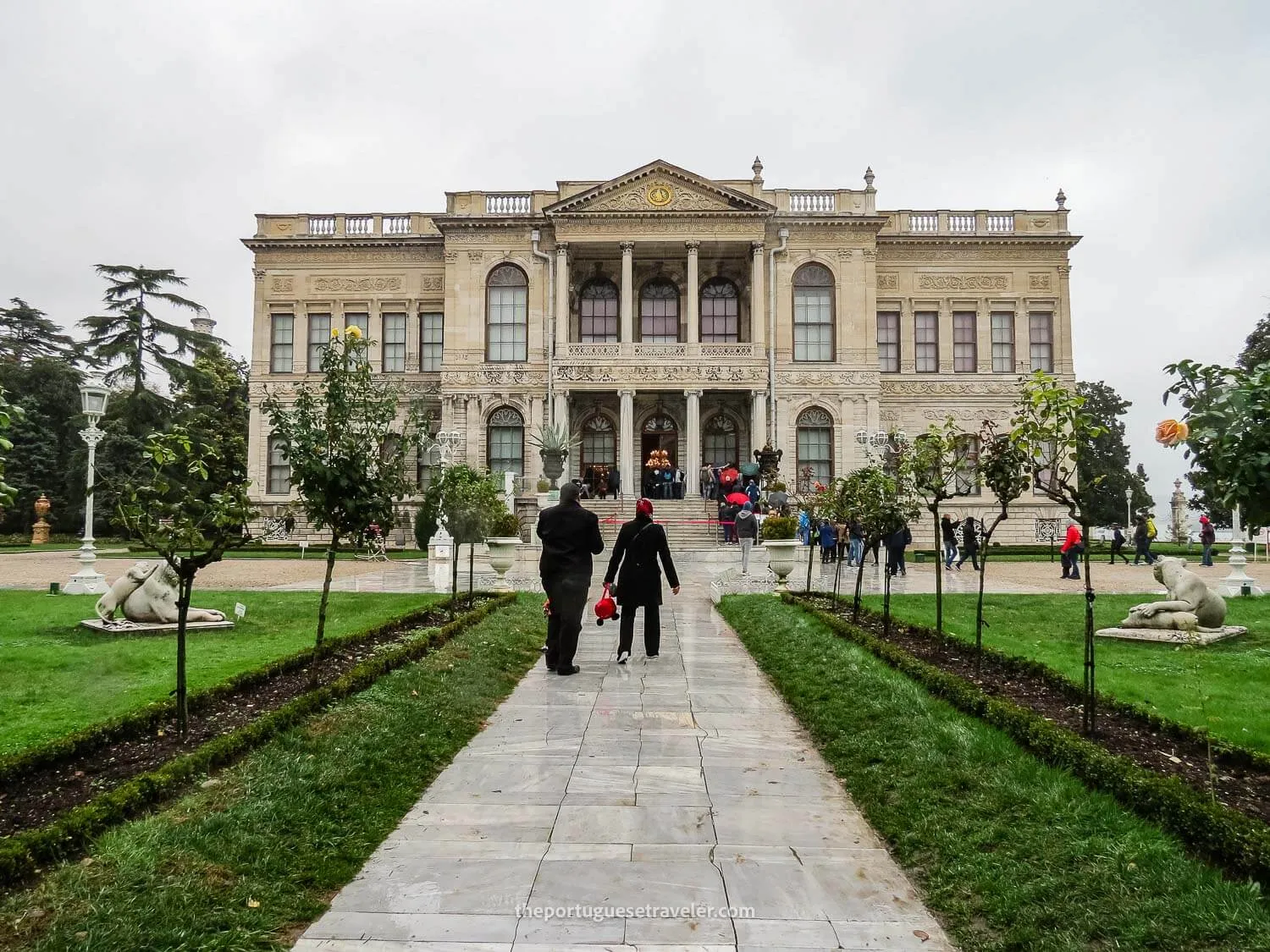
The Dolmabahçe Palace in Istanbul
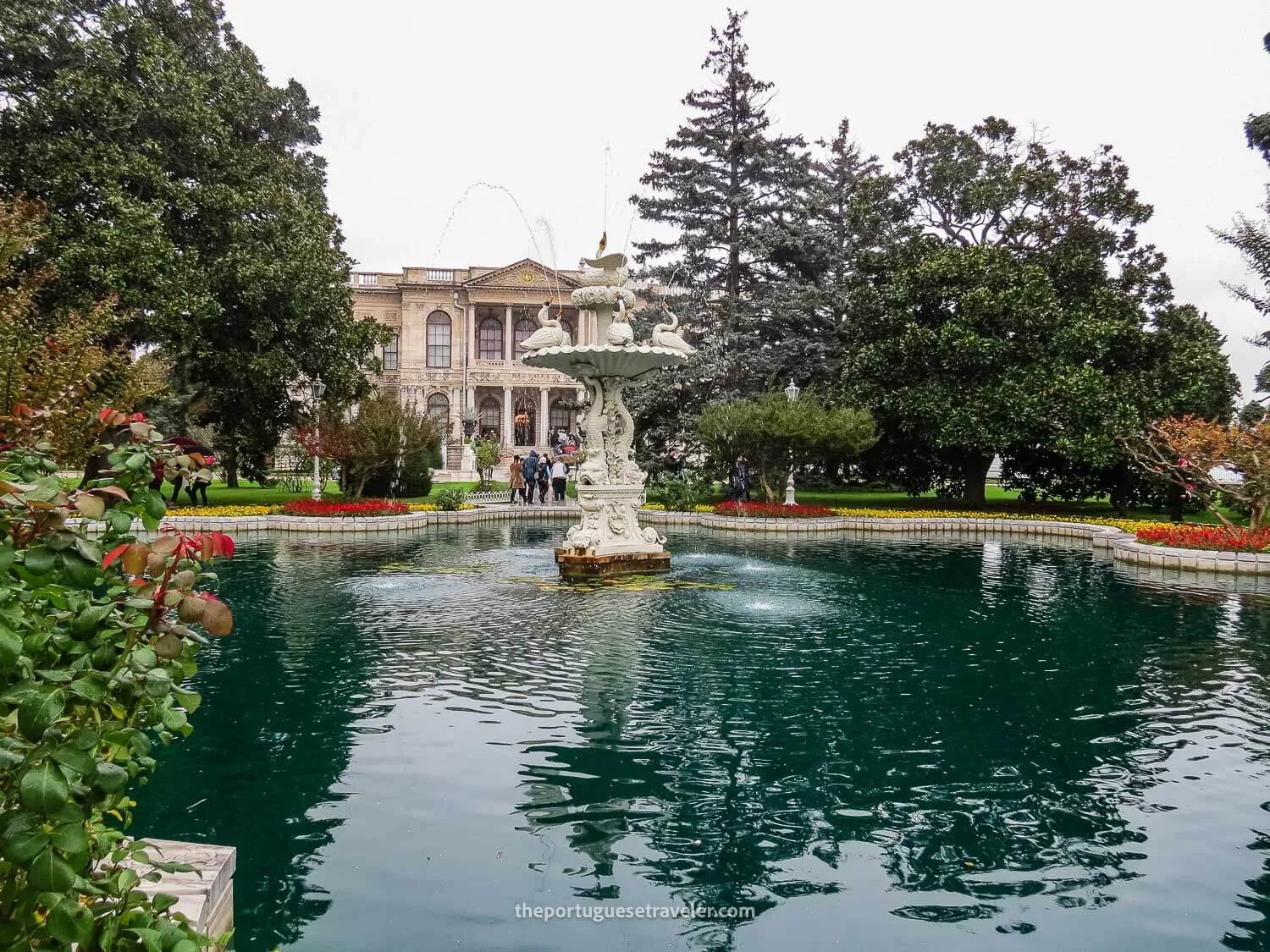
The Dolmabahçe Palace in Istanbul
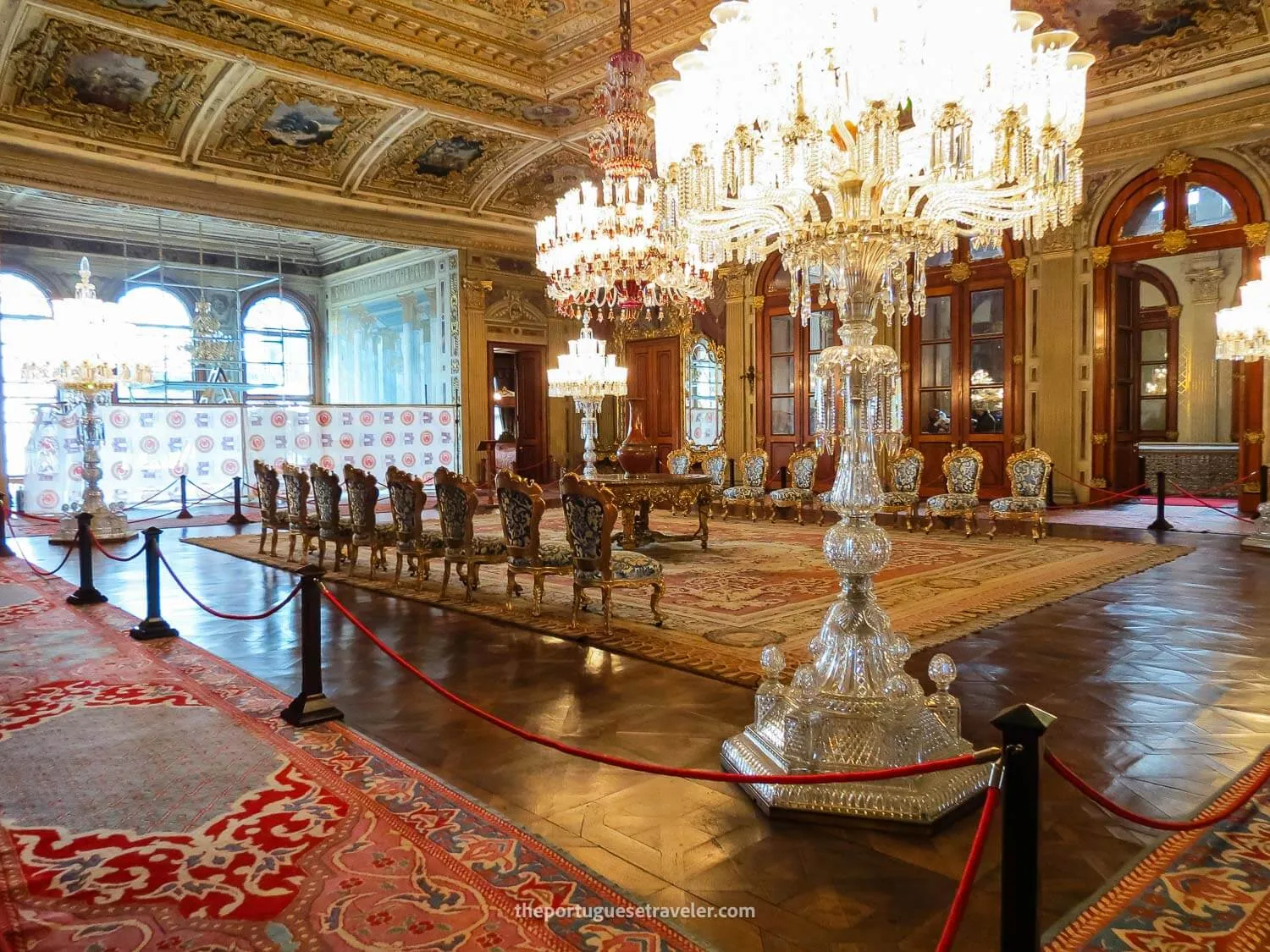
The main room in Dolmabahçe Palace
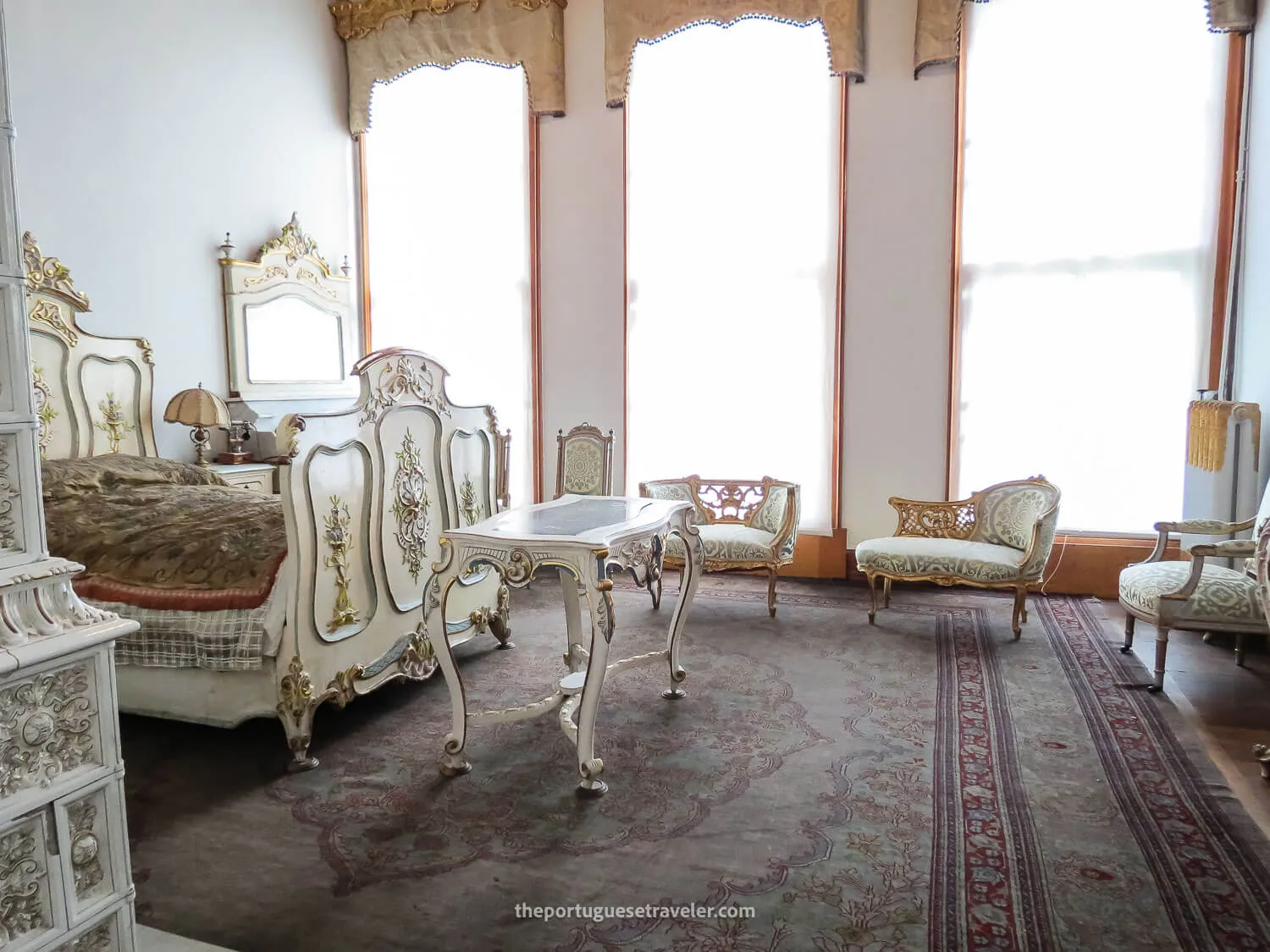
A room inside Dolmabahçe
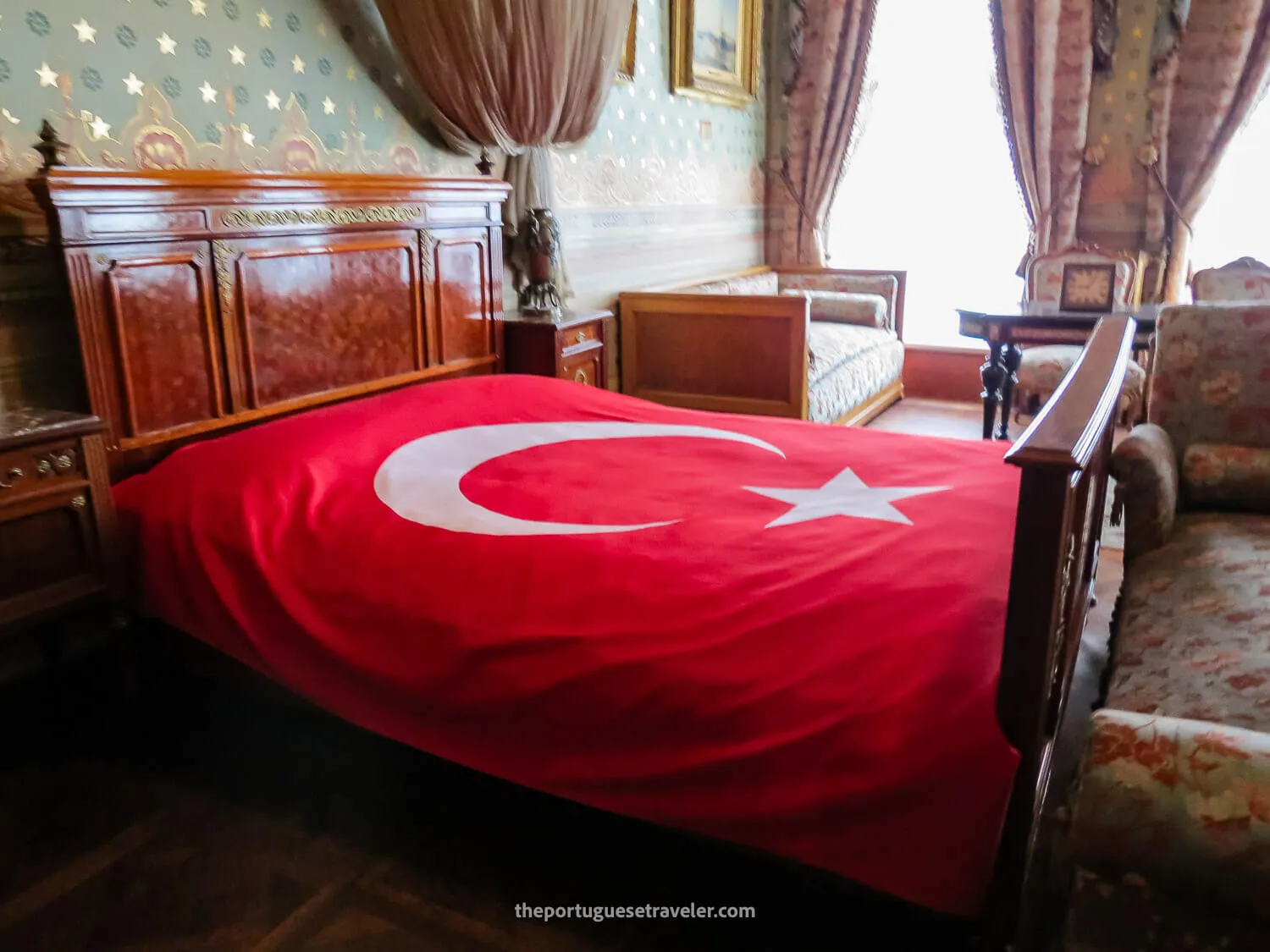
Ataturk’s bed in Dolmabahçe Palace in Istanbul
25. Beylerbeyi Palace
Cross to the Asian side to see the more intimate Beylerbeyi Palace, a summer retreat for the Ottoman sultans. Compared with Dolmabahçe, it is lighter, with elegant interiors and a seaside setting. The reception halls are decorated with carpets and chandeliers, and there are simpler pavilions used for relaxation. The terraced gardens are a quiet place to finish.
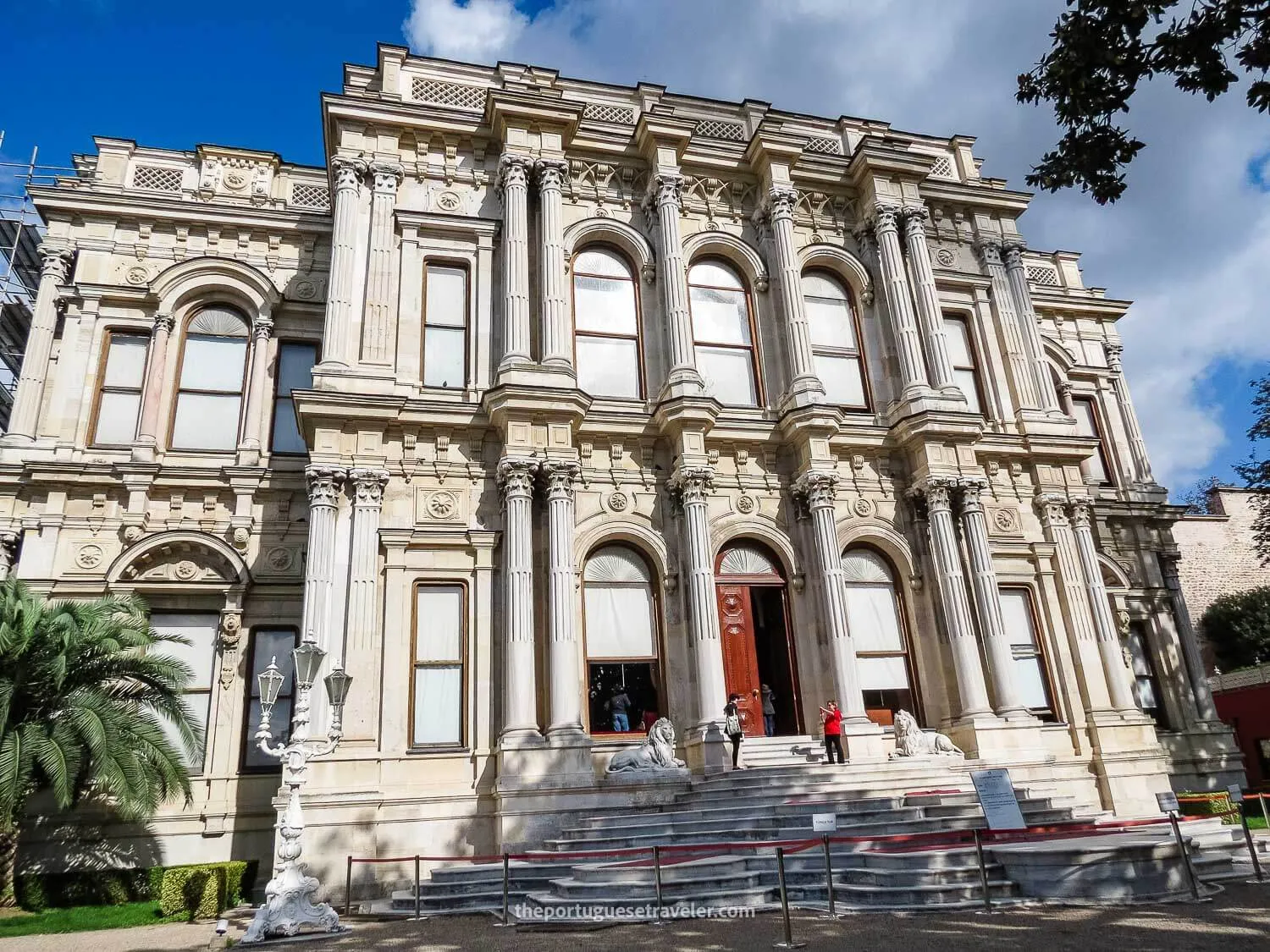
The Beylerbeyi Palace in Istanbul
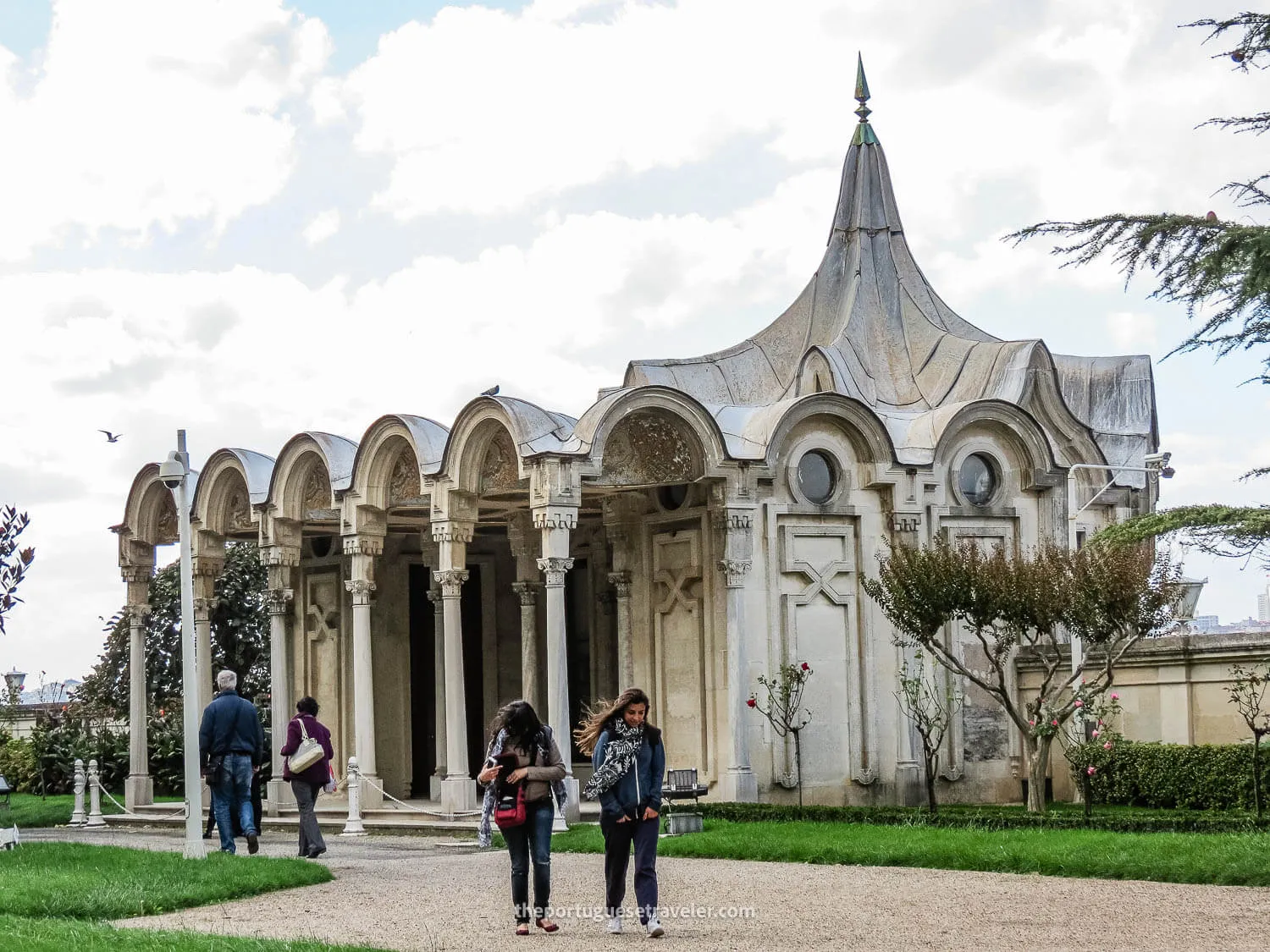
The Beylerbeyi Palace in Istanbul
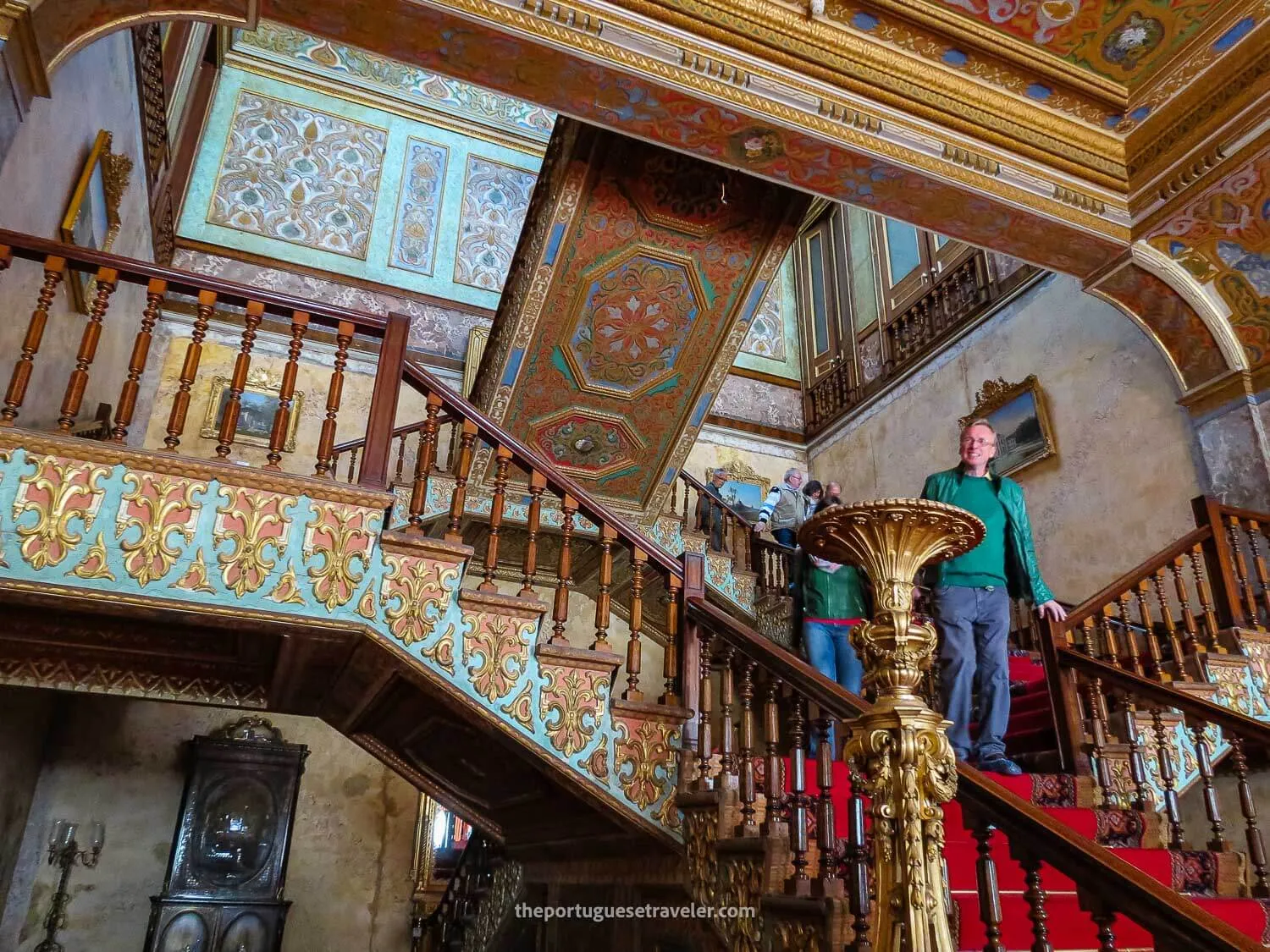
The interior of Beylerbeyi Palace in Istanbul
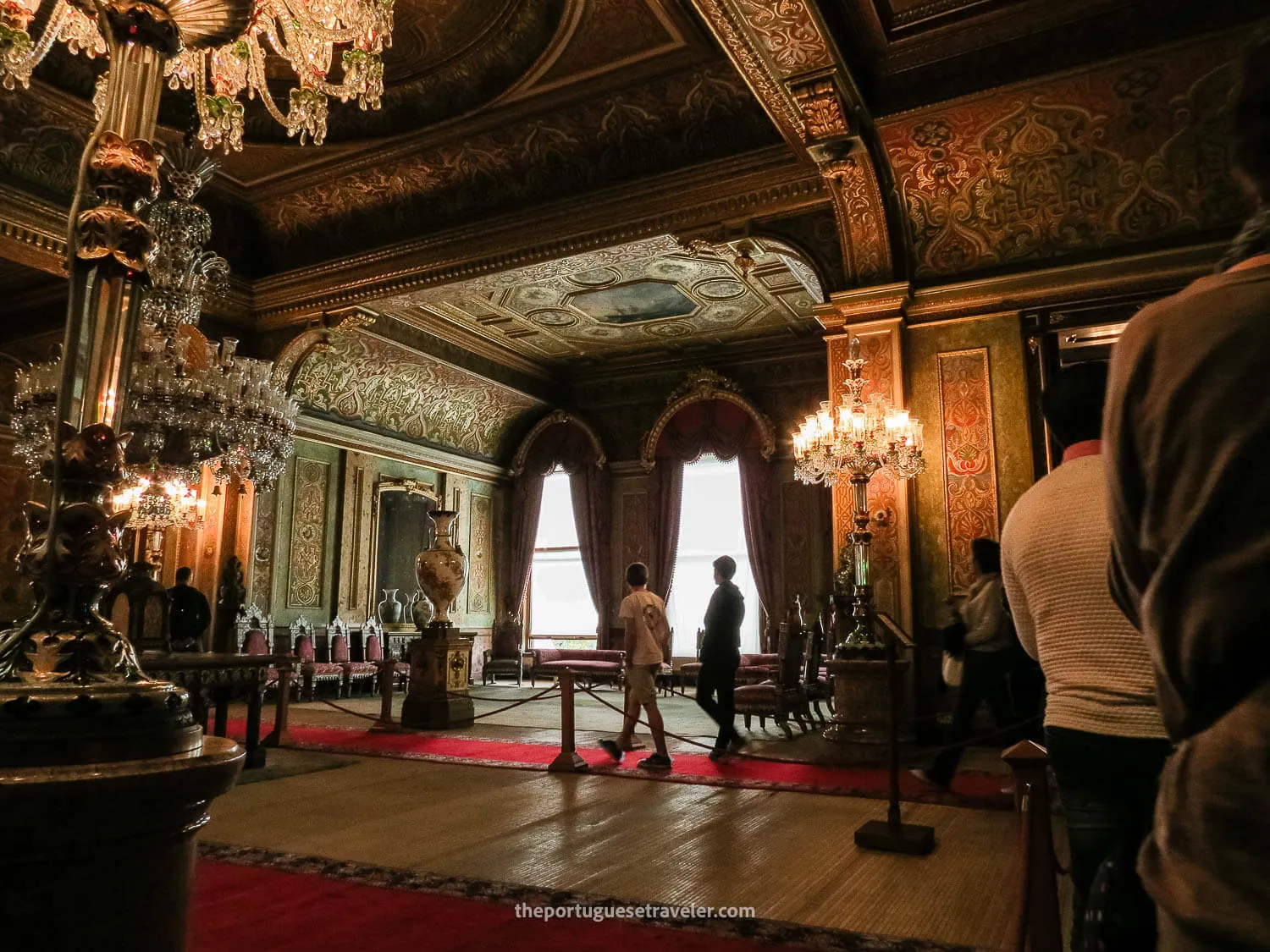
The interior of the Beylerbeyi Palace in Istanbul
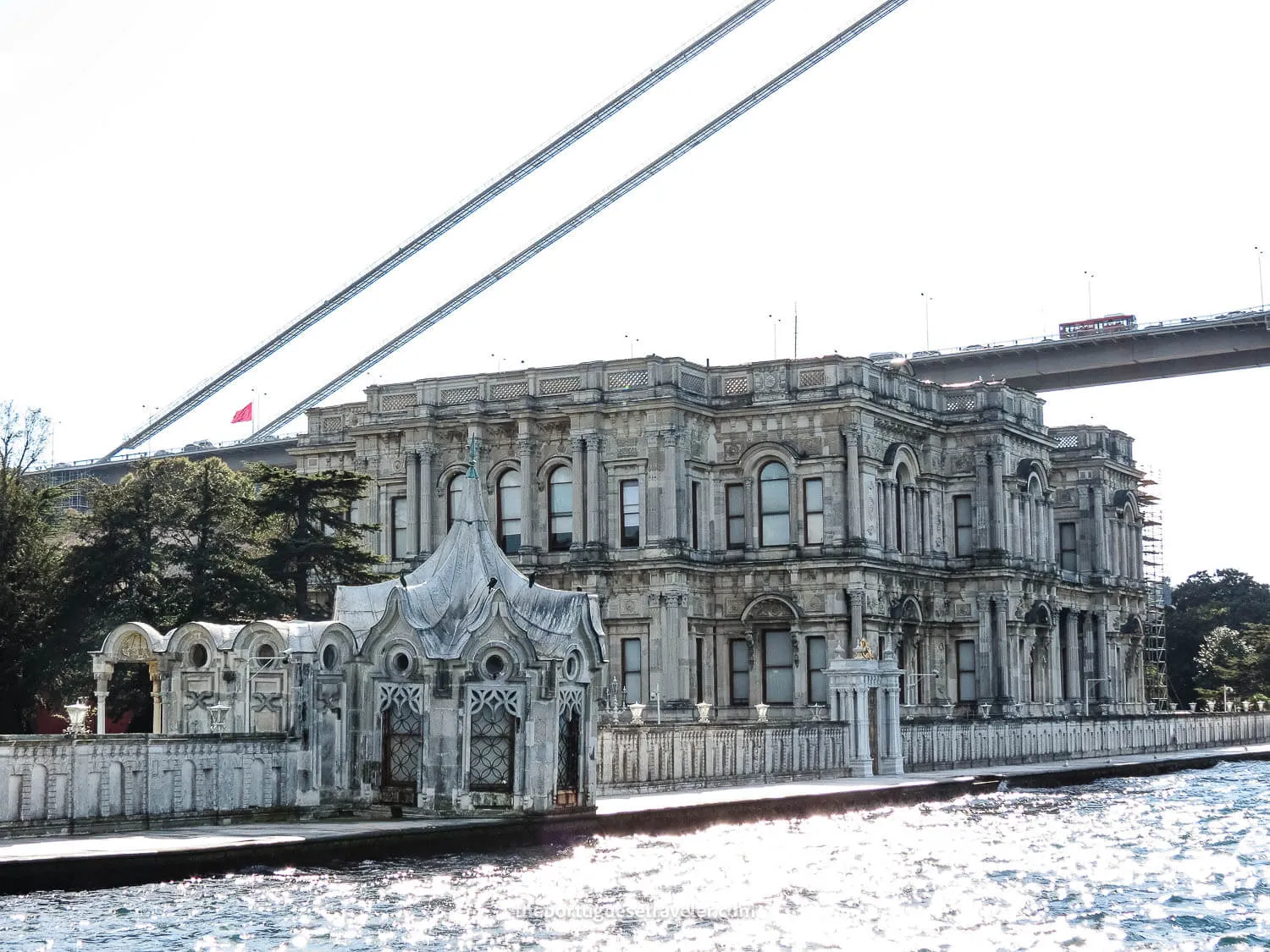
The Beylerbeyi Palace seen from the Bosphorus
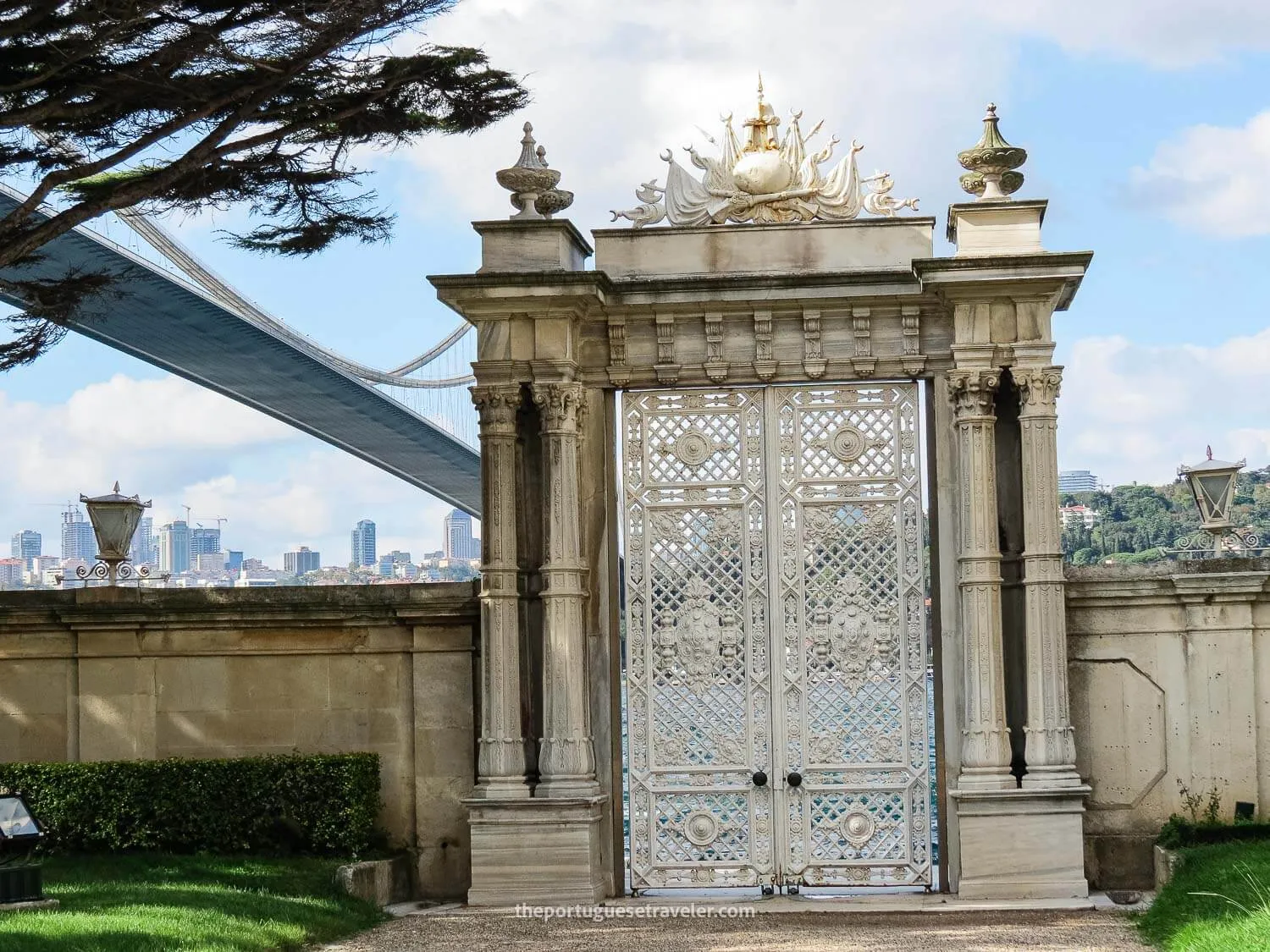
The water gate and the bridge of Beylerbeyi Palace
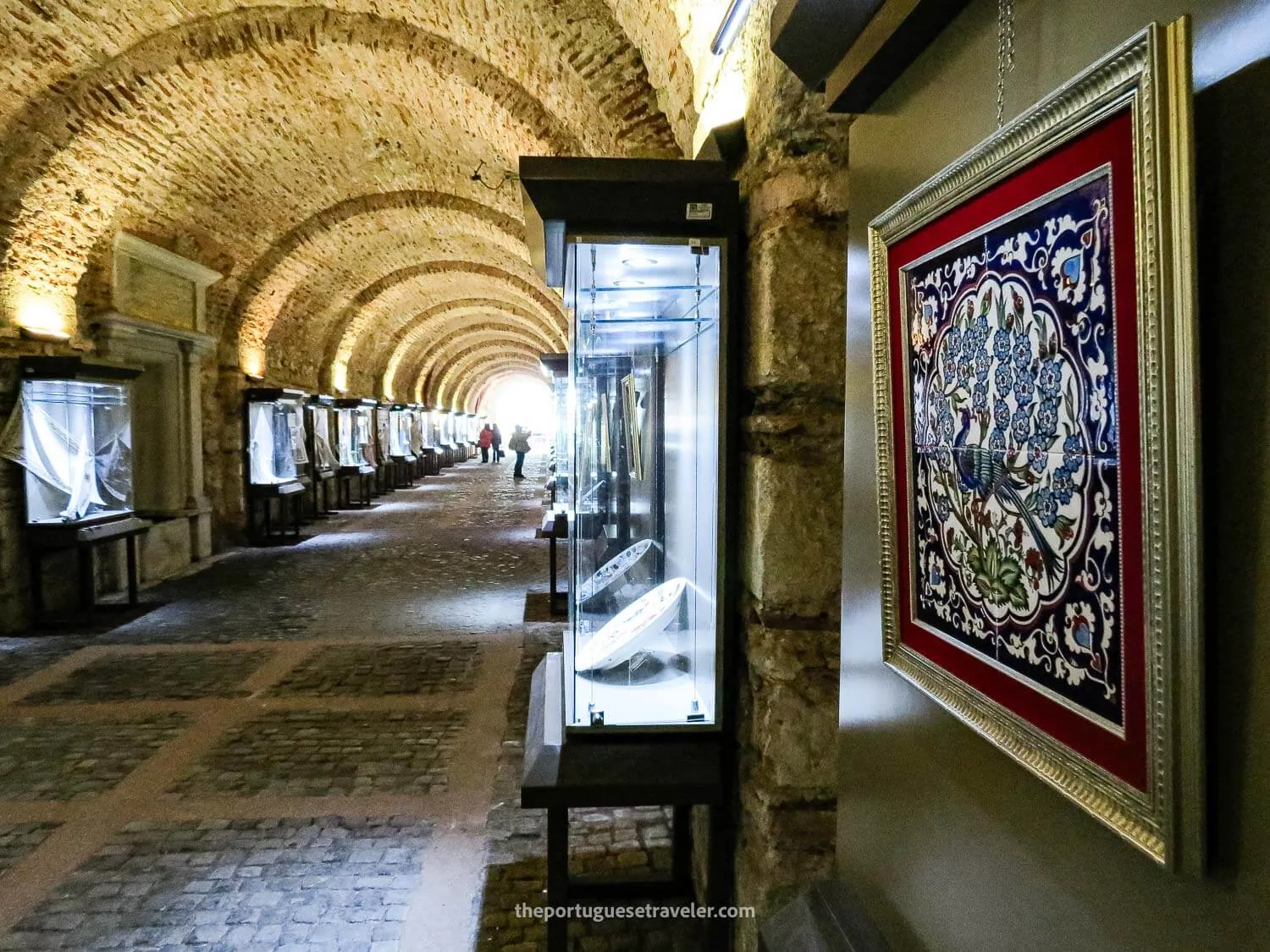
The Beylerbeyi Palace in Istanbul
26. Ortaköy Mosque (Büyük Mecidiye Camii)
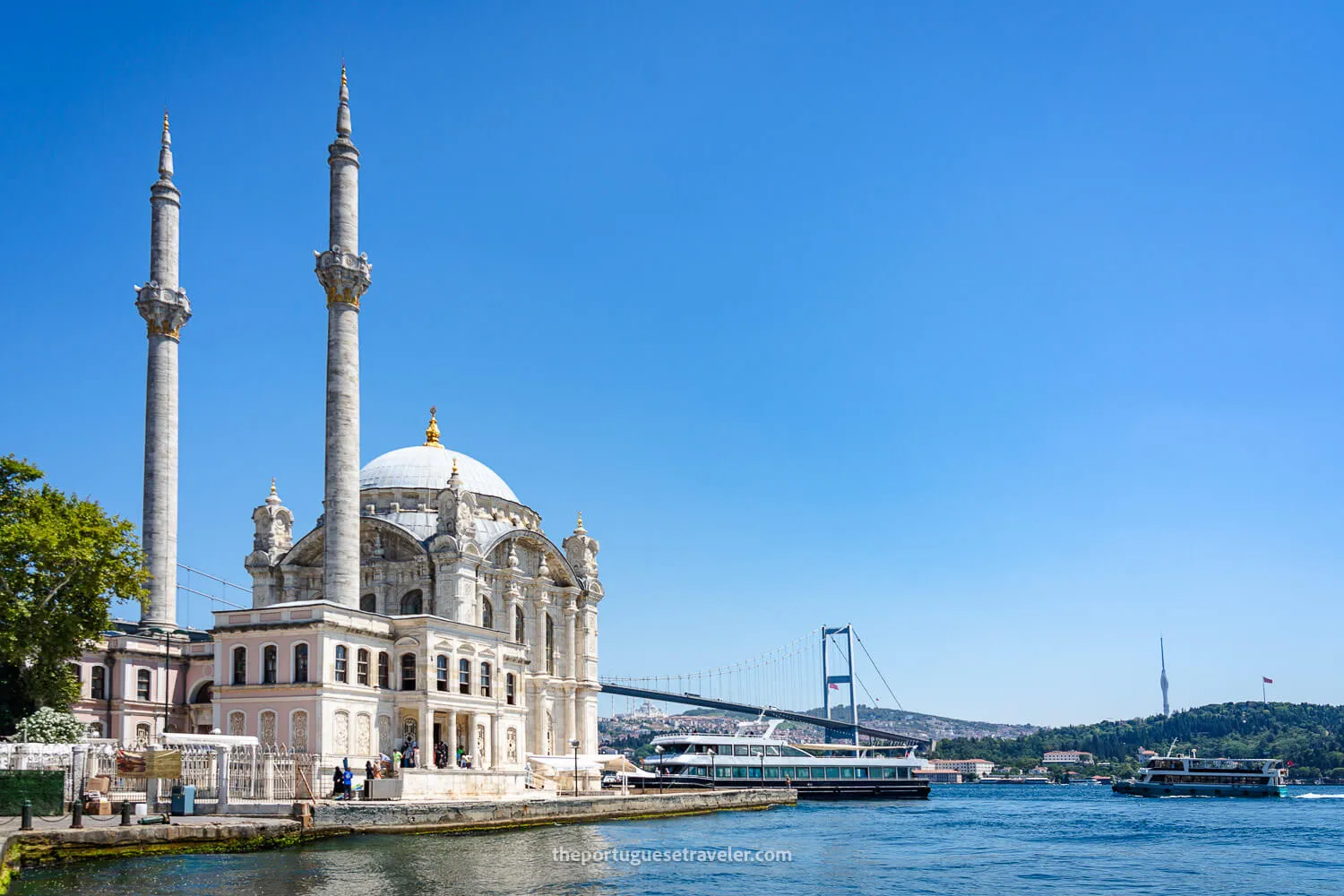
The Ortaköy Mosque sits right on the Bosphorus, with the Bosphorus Bridge behind it, and is one of Istanbul’s most photographed spots. Built in the mid-19th century, it is an example of Ottoman Baroque architecture. Inside are high windows and a light-filled prayer hall. Outside, the square has kumpir (stuffed baked potatoes) and simit, and a good view of the mosque and bridge together.
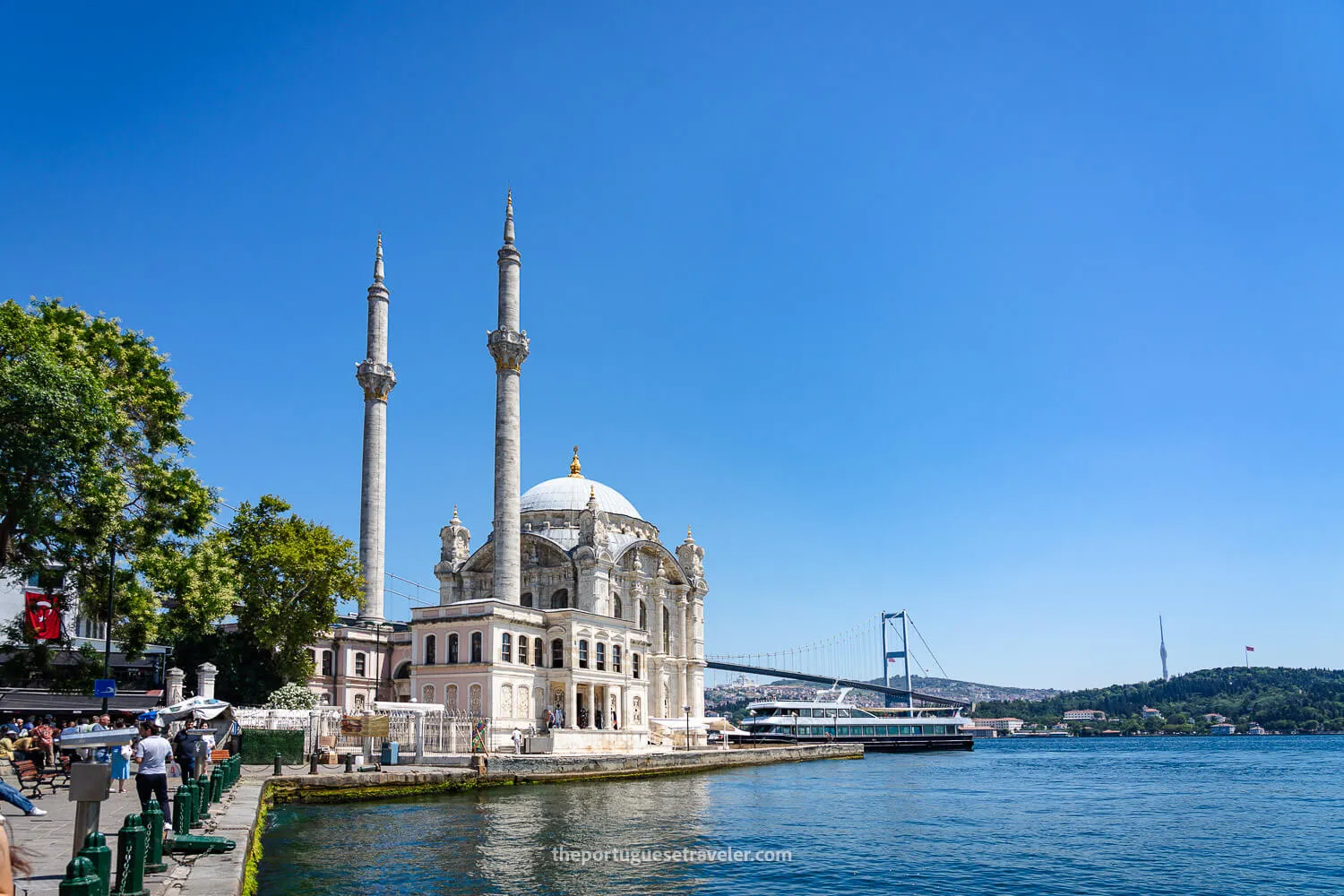
The Ortaköy Mosque
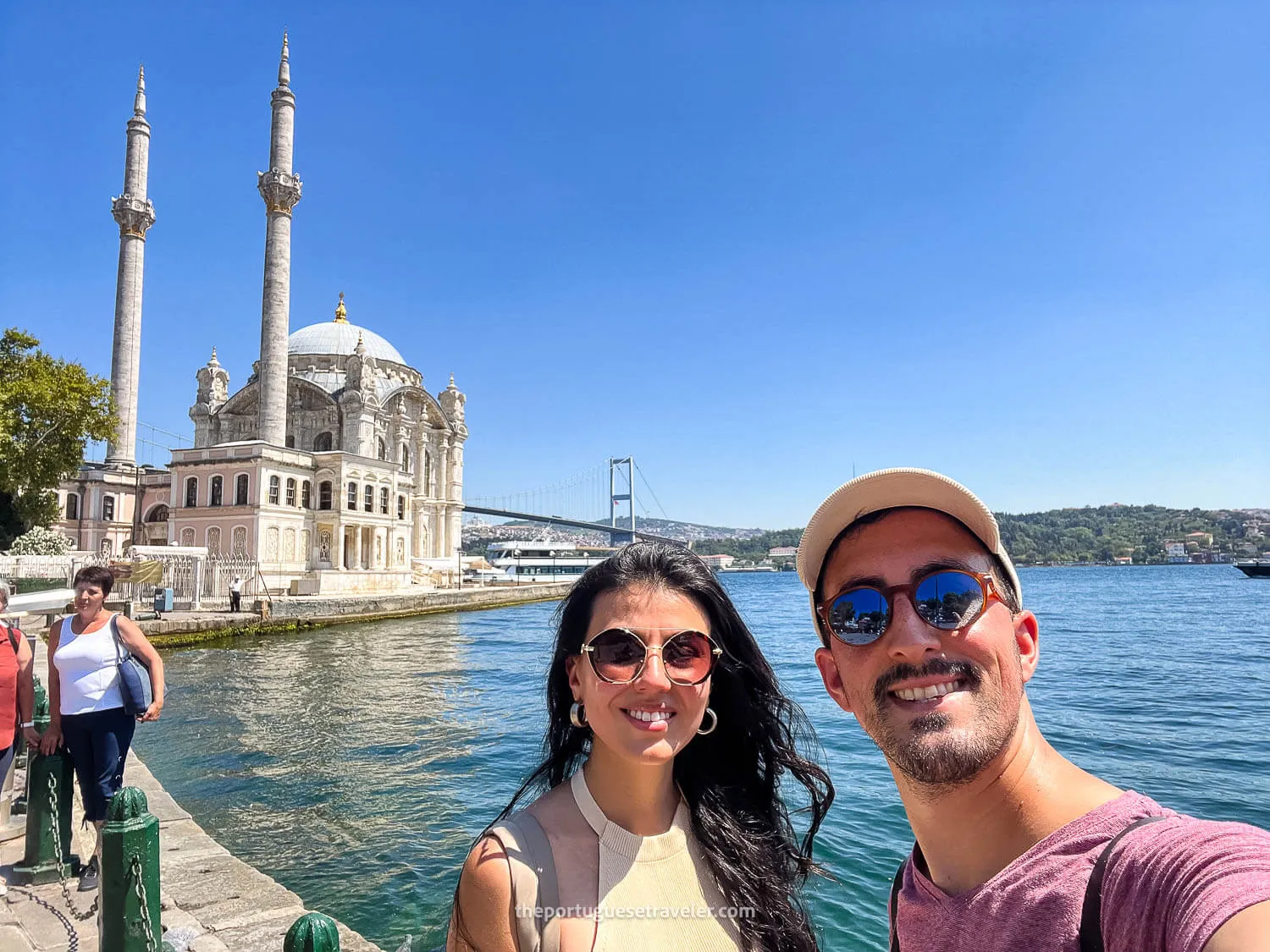
Me and Jhos at the Ortaköy Mosque
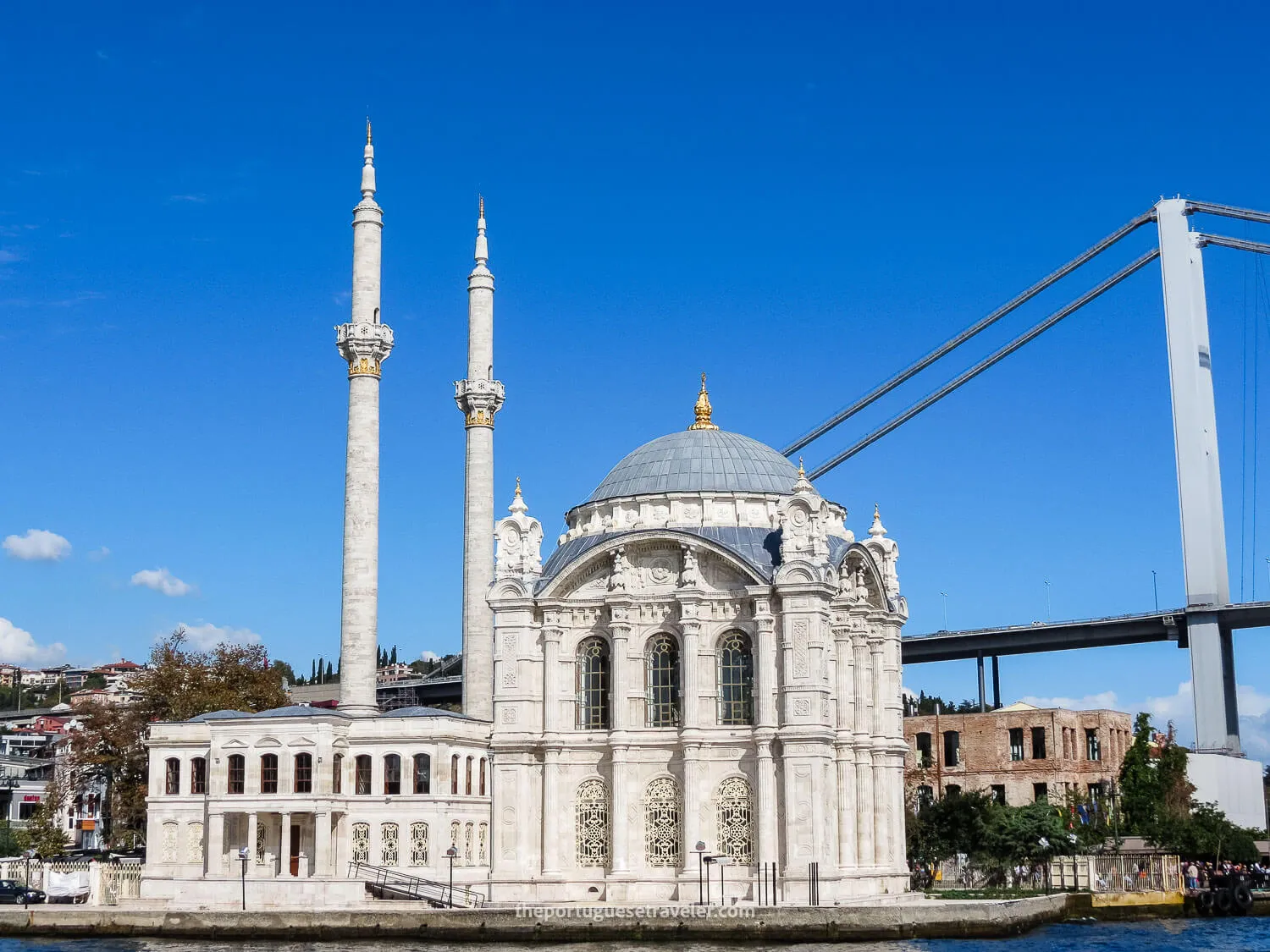
The Ortaköy Mosque
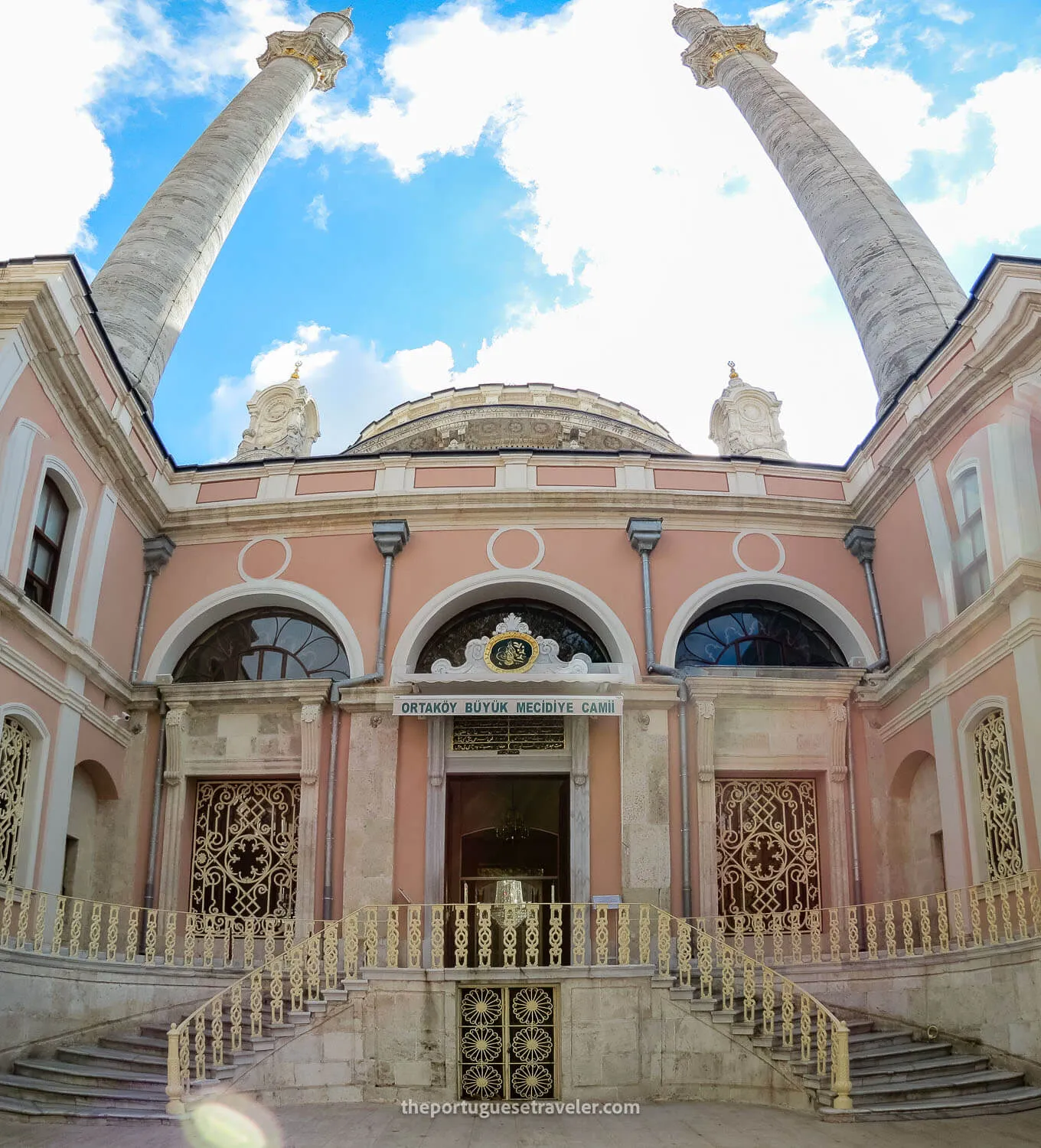
The entrance to the Ortaköy’s Mosque
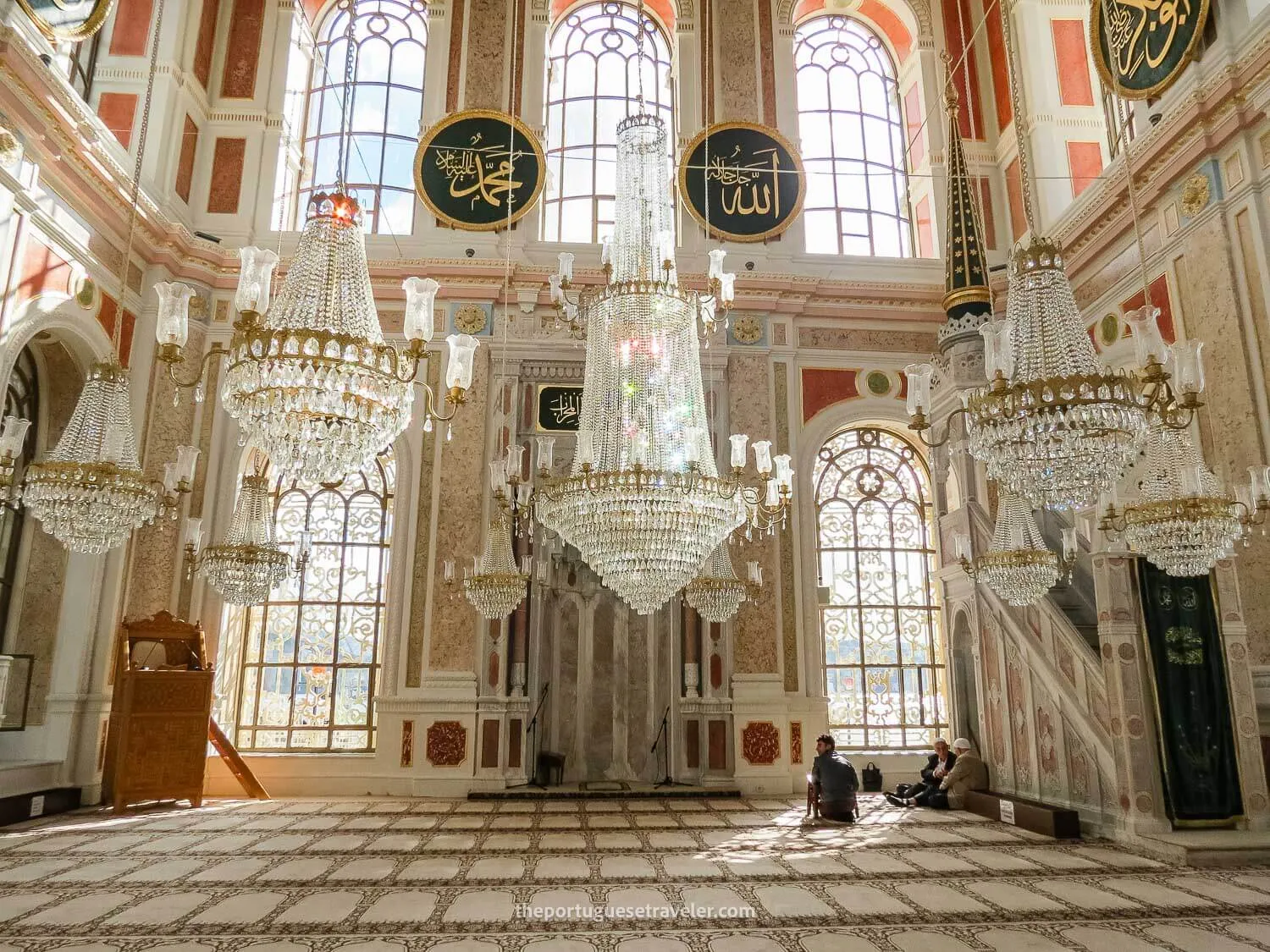
The interior of the Ortaköy Mosque
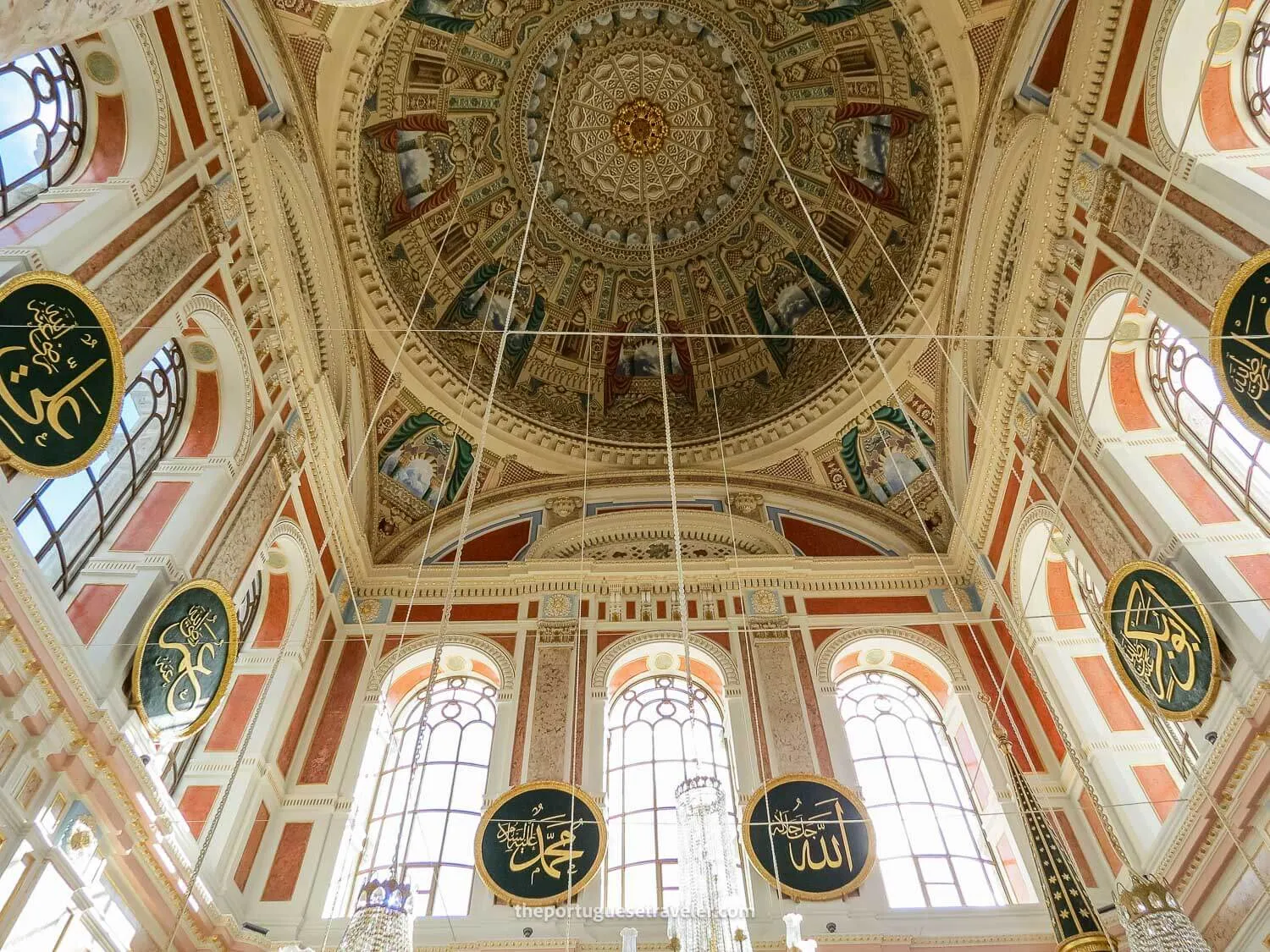
The ceiling of the Ortaköy Mosque
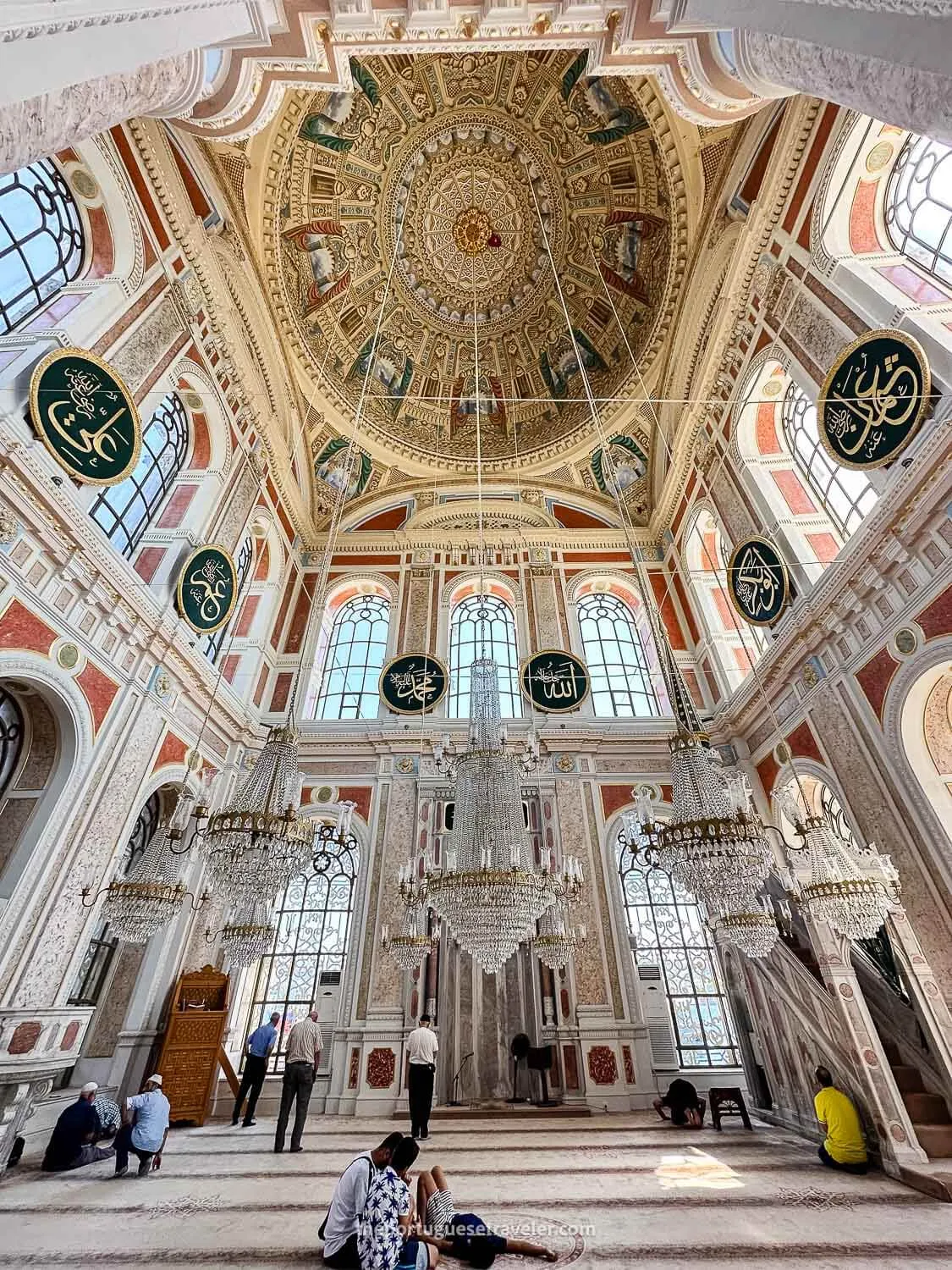
The interior of the Ortaköy Mosque
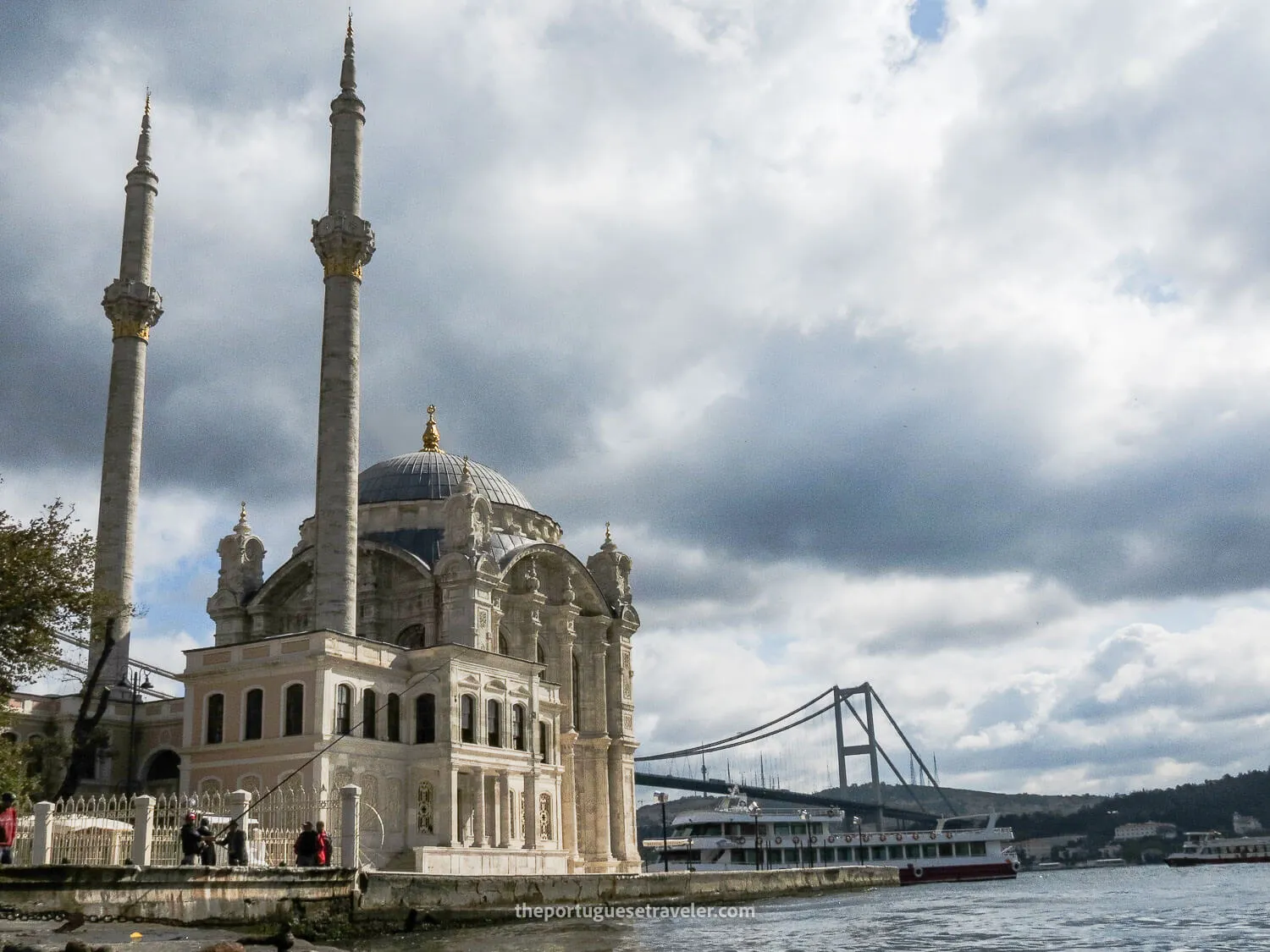
The Ortaköy Mosque
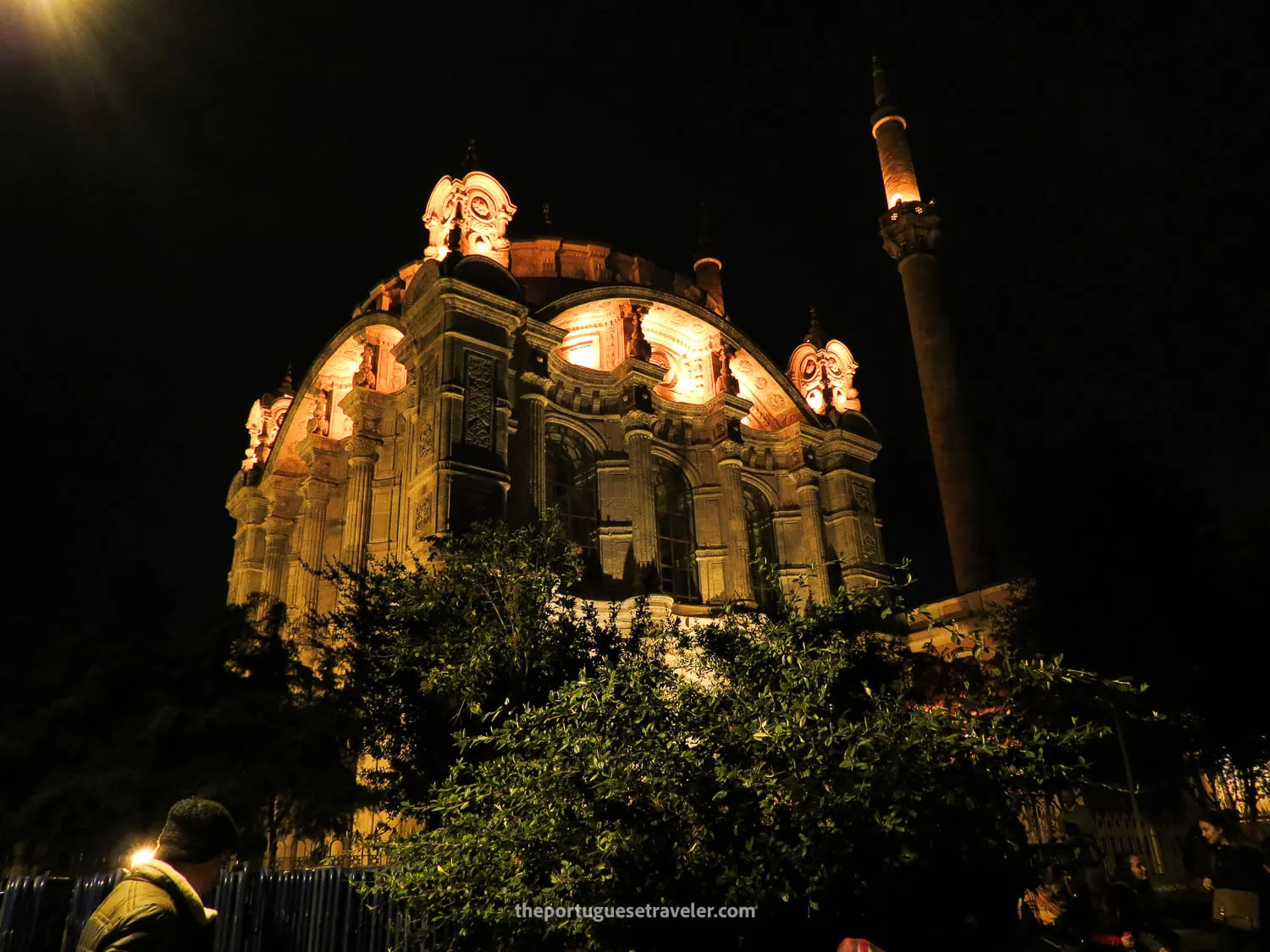
The Ortaköy Mosque at night
27. Süleymaniye Mosque
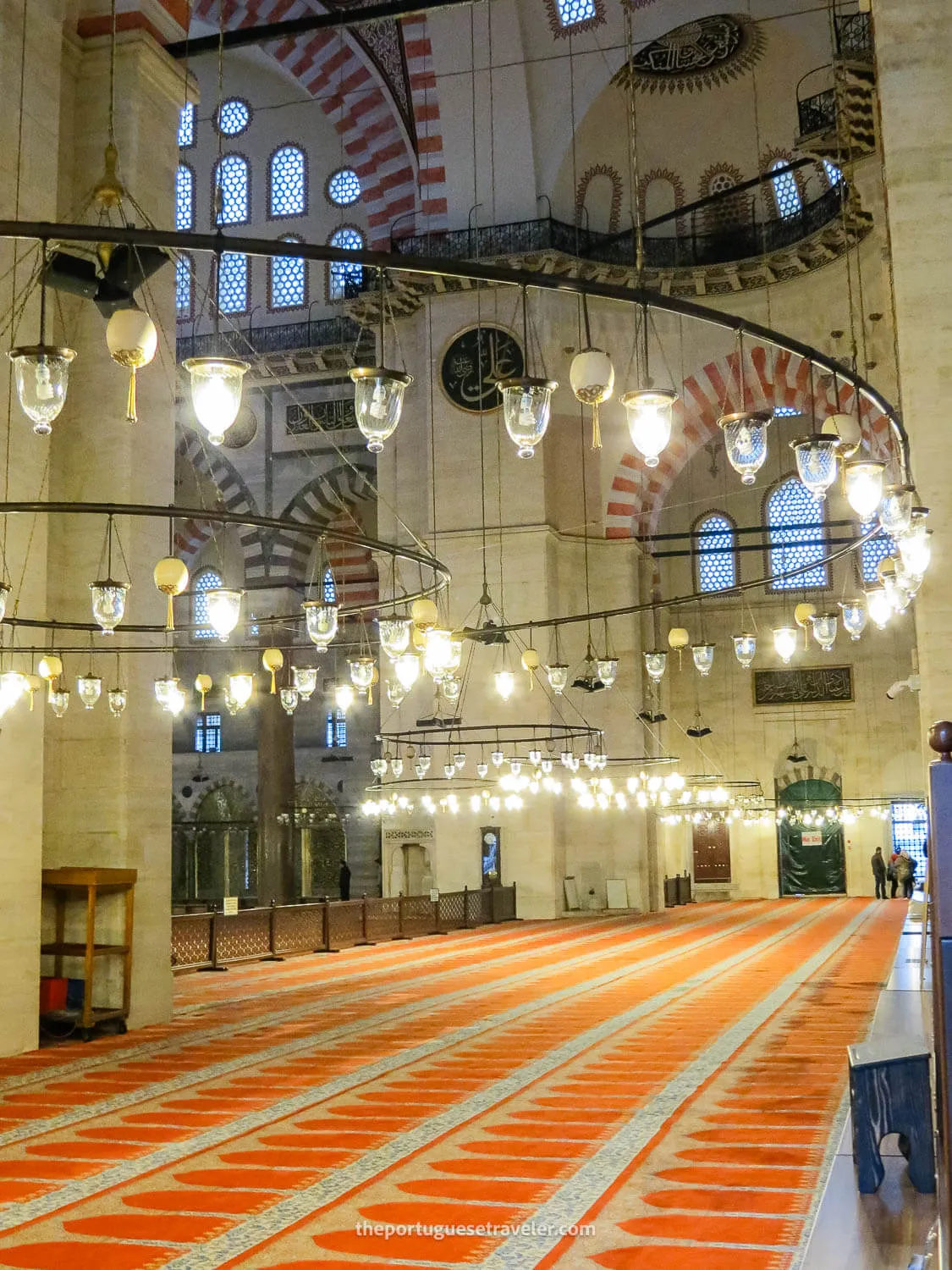
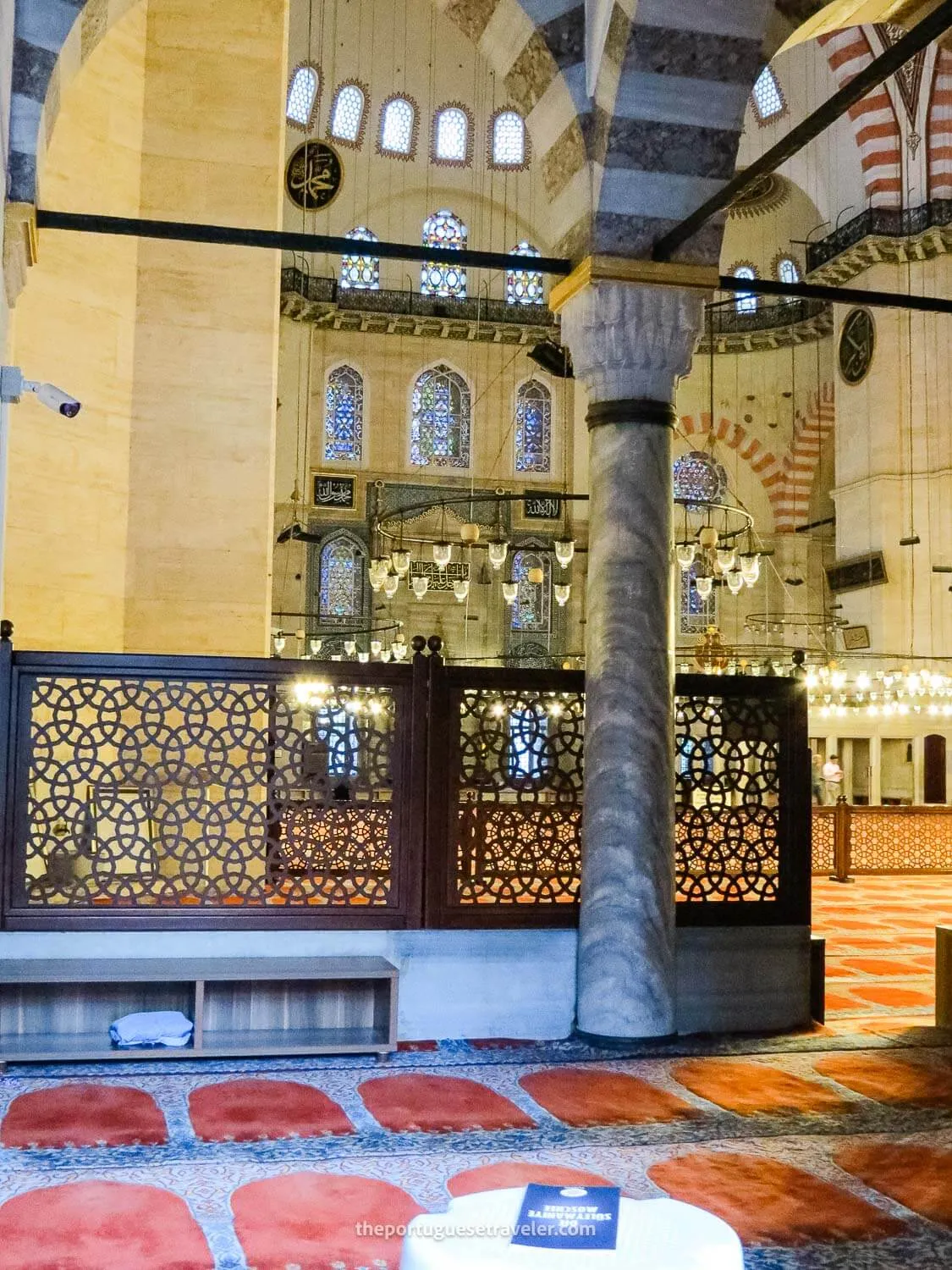
The Süleymaniye Mosque, designed by the great Ottoman architect Sinan for Sultan Süleyman the Magnificent, is one of Istanbul’s largest mosques and dominates the skyline. The proportions are harmonious and the courtyards are calm. Inside, light filters through stained-glass windows, and outside the gardens look over the Golden Horn. Explore the complex beyond the mosque: baths, schools and the tombs of Süleyman and his wife Hürrem Sultan (Roxelana) are here.
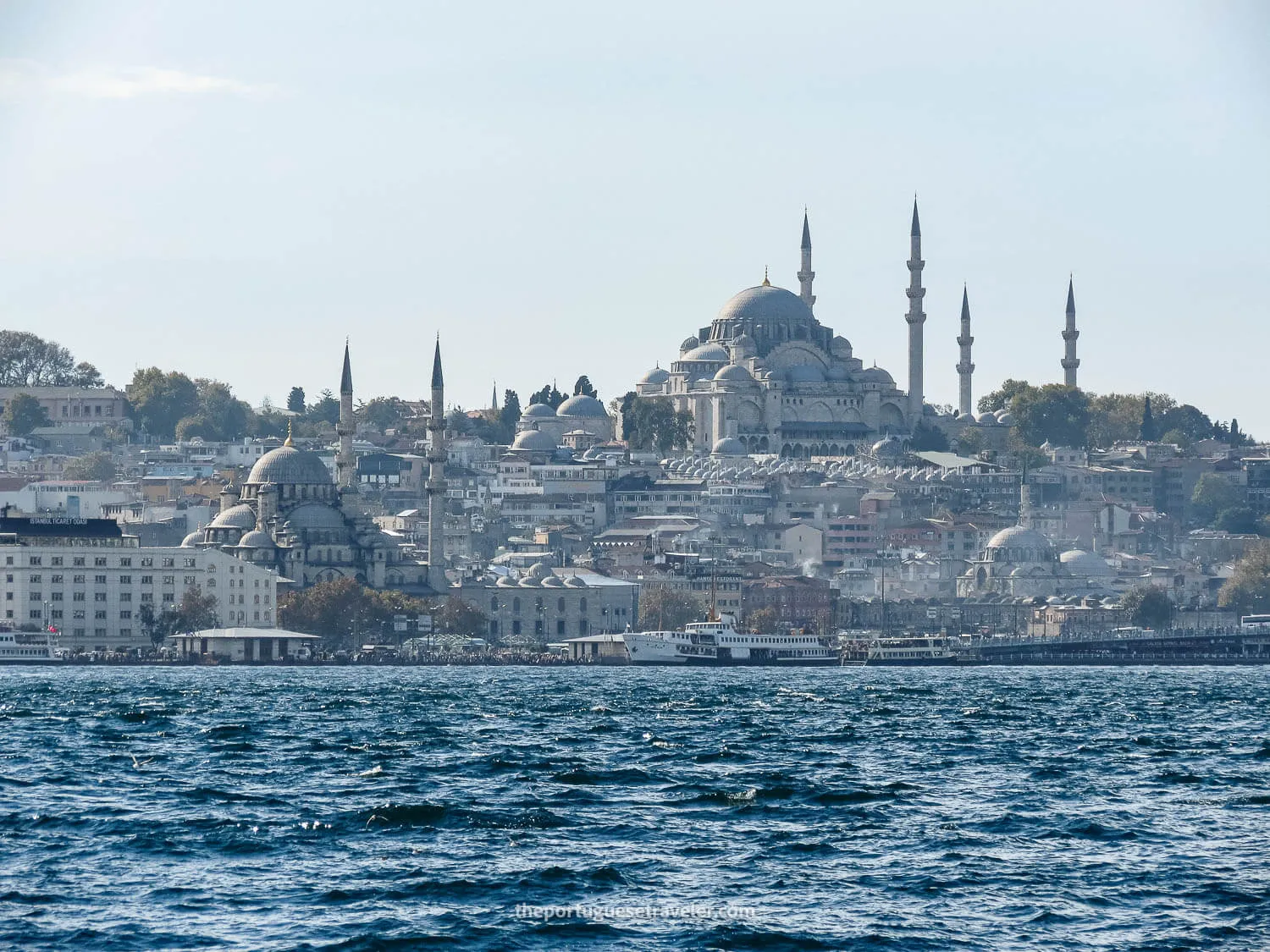
The Süleymaniye mosque seen from the Bosphorus
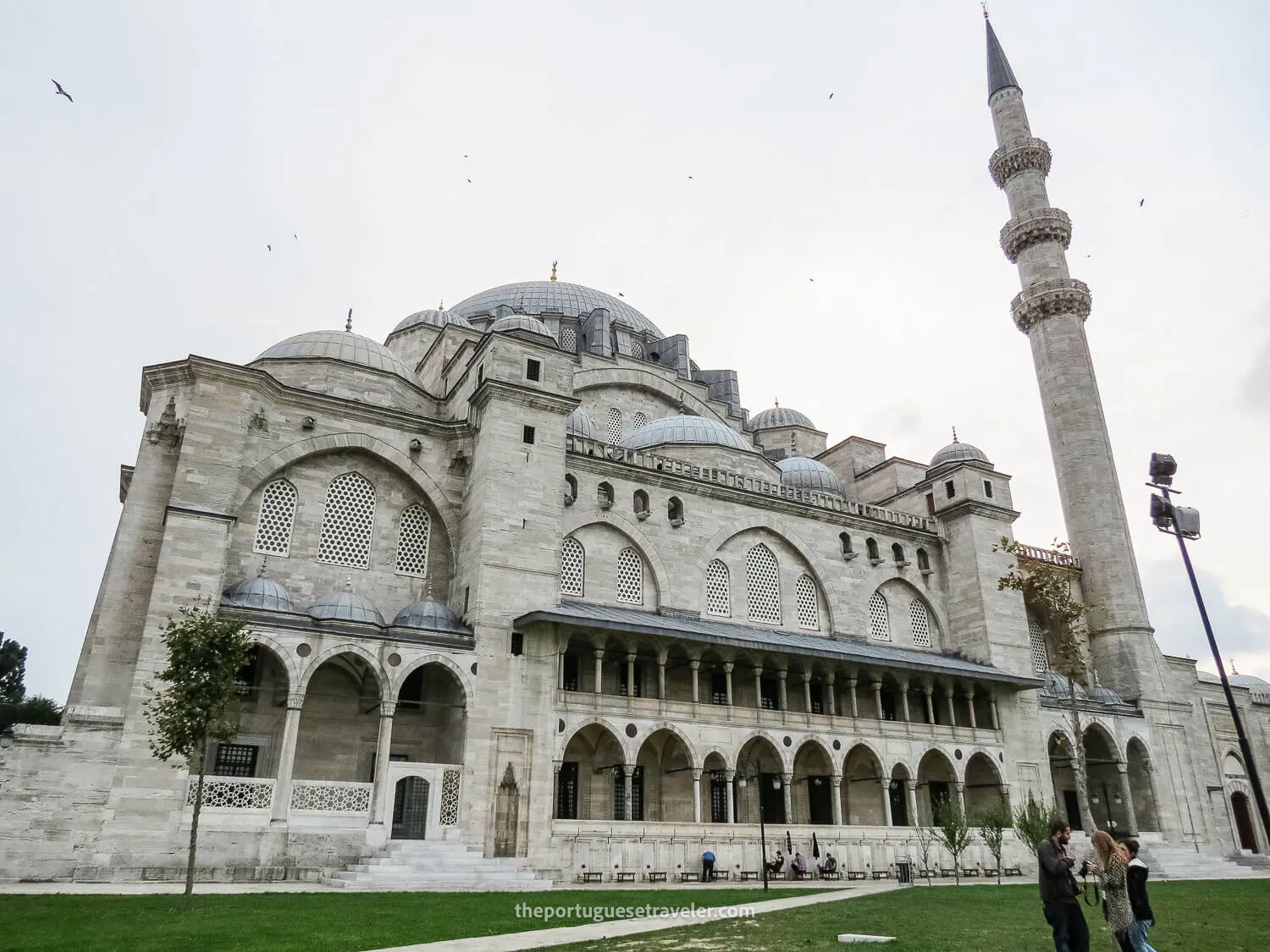
The Suleymaniye Mosque in Istanbul
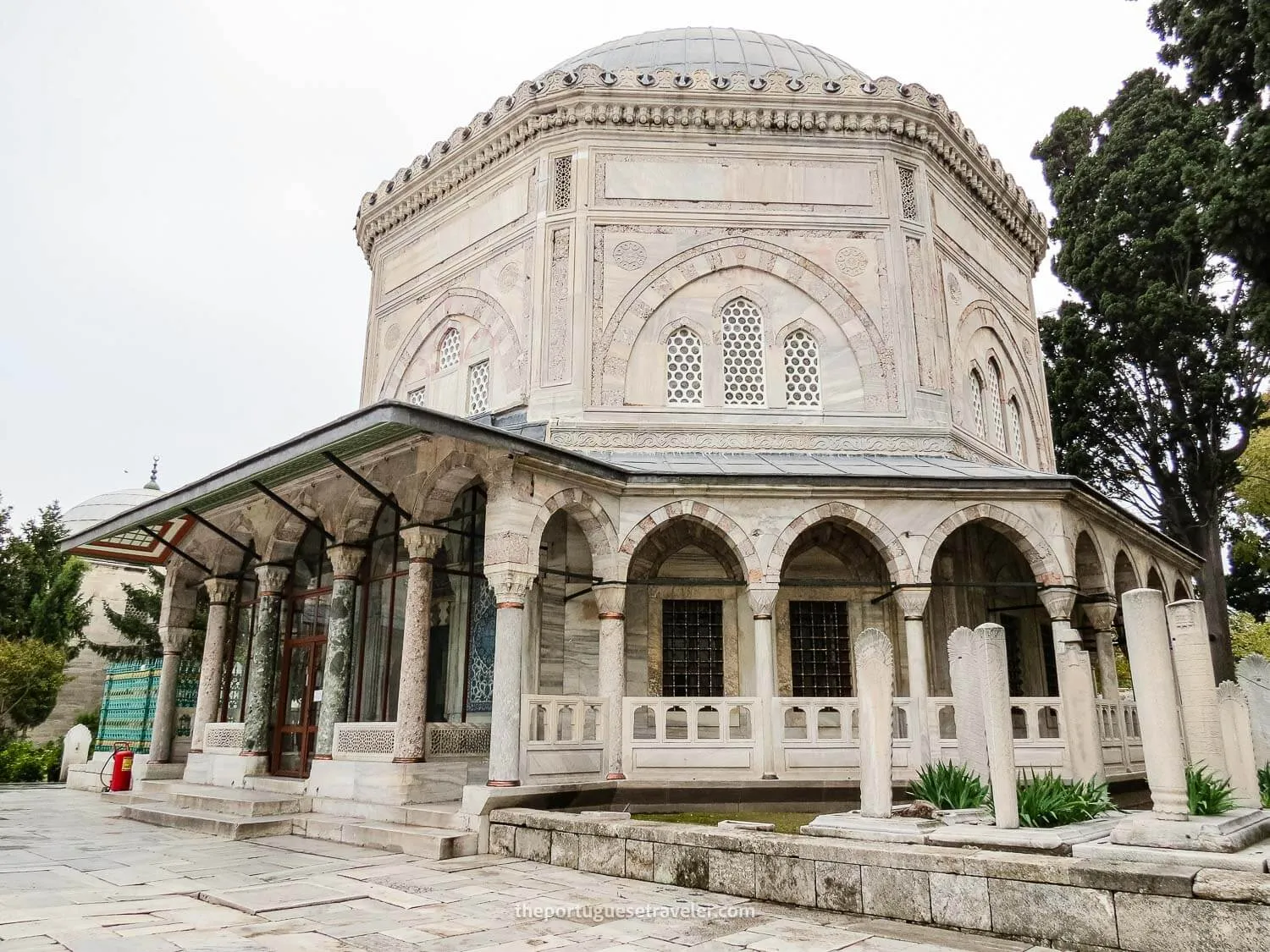
The Suleymaniye Mosque in Istanbul
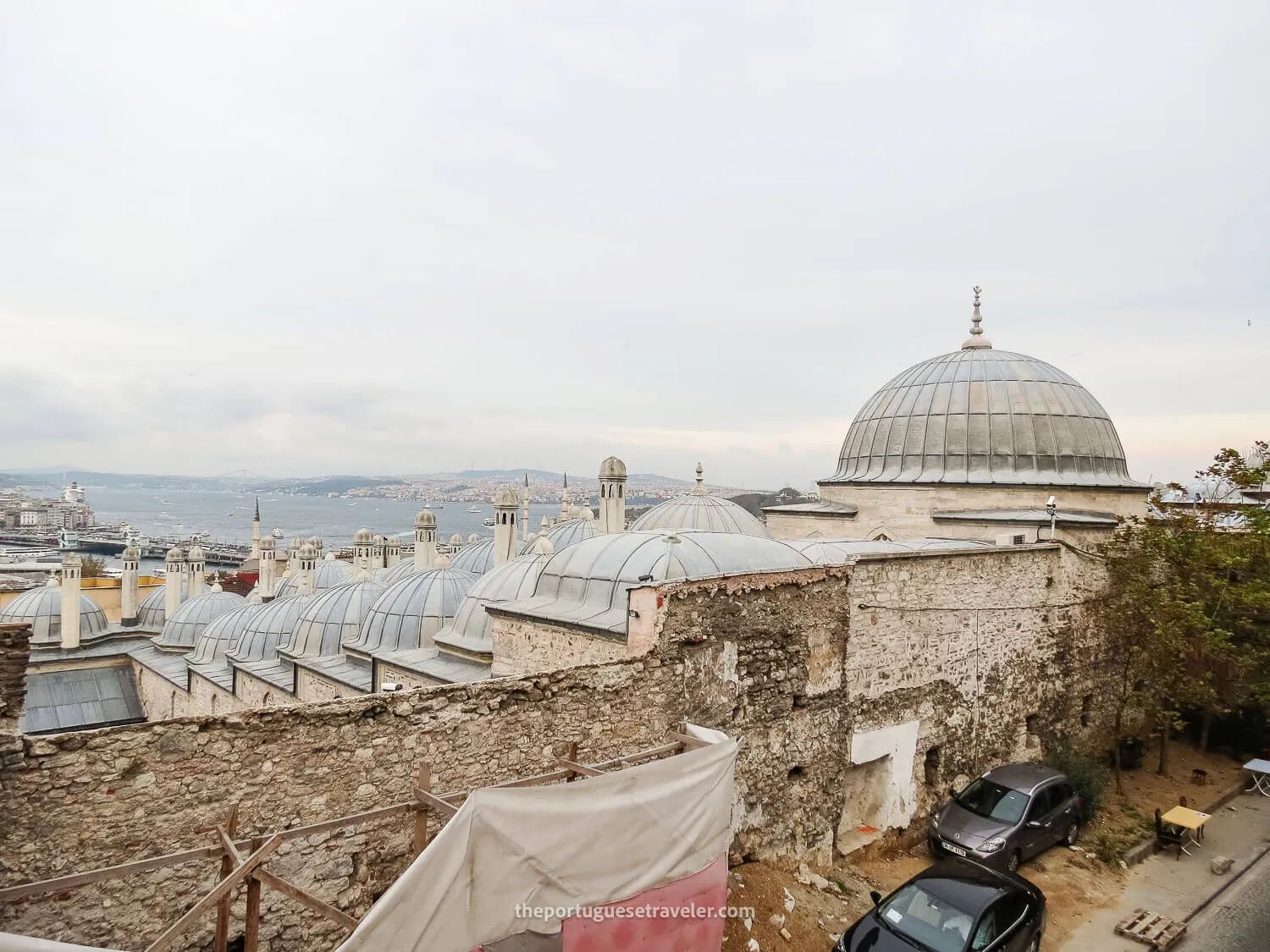
The view from the Suleymaniye Mosque in Istanbul
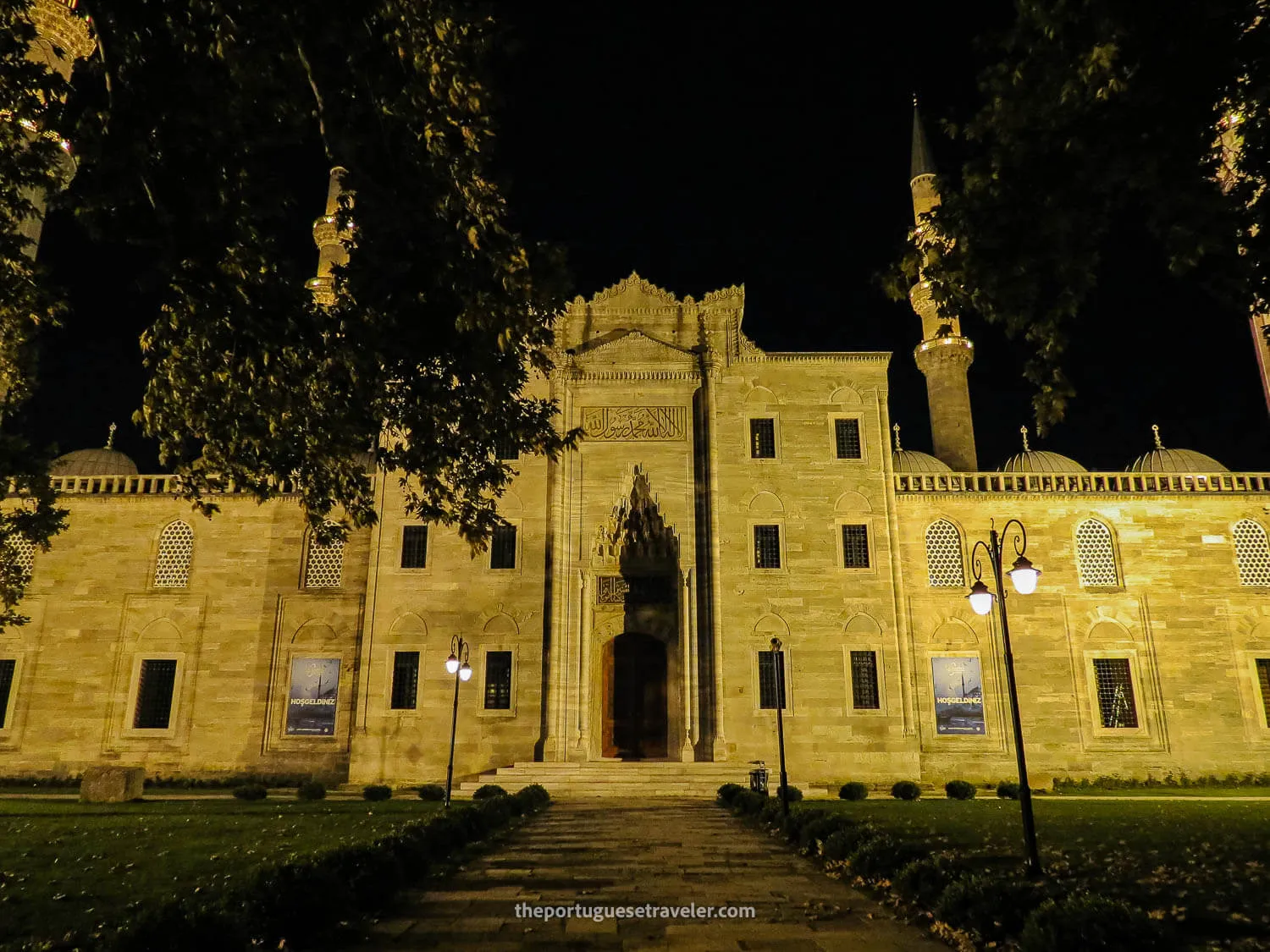
The Suleymaniye Mosque at night
28. Sultanahmet Mosque (Blue Mosque)
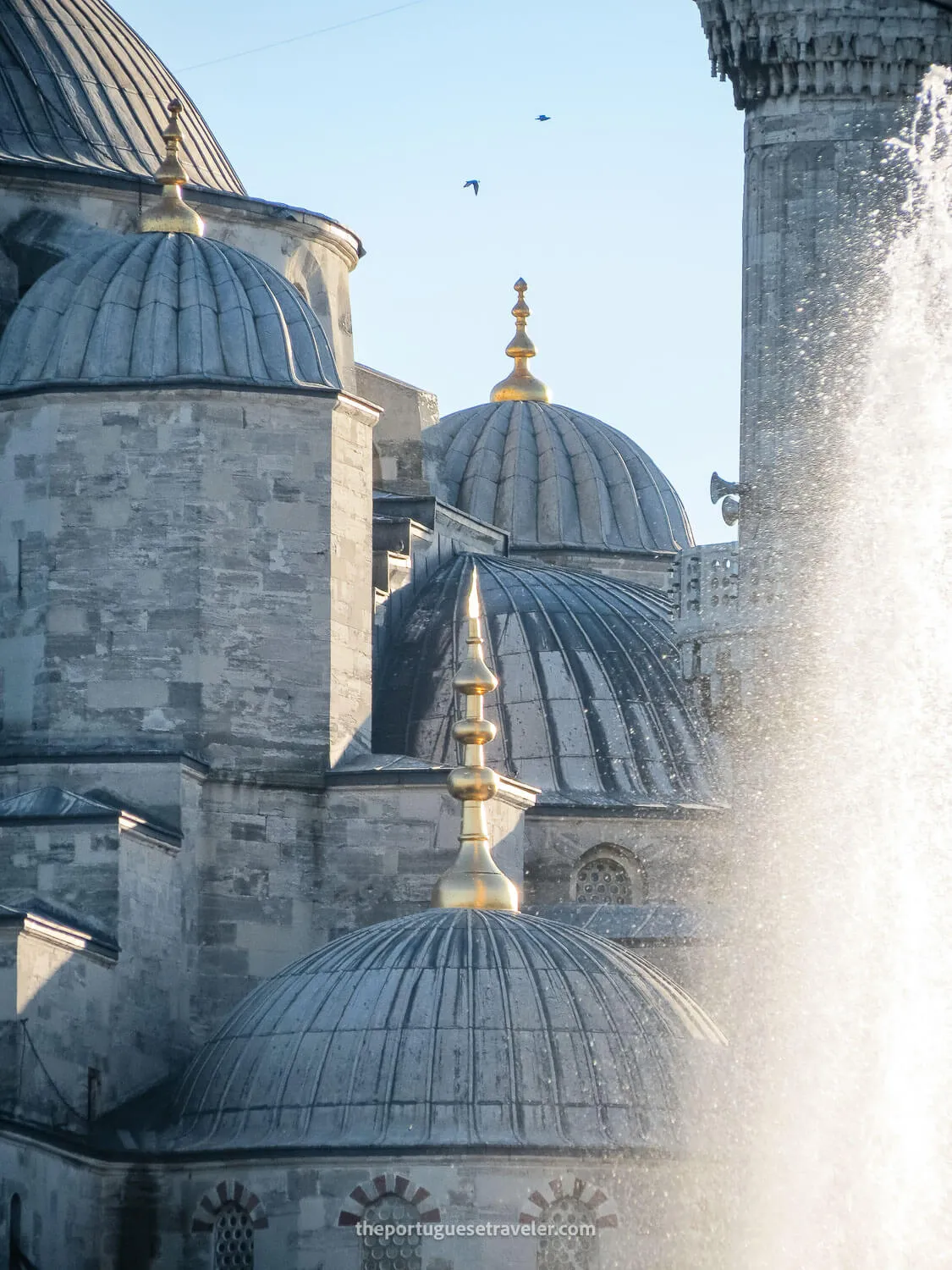
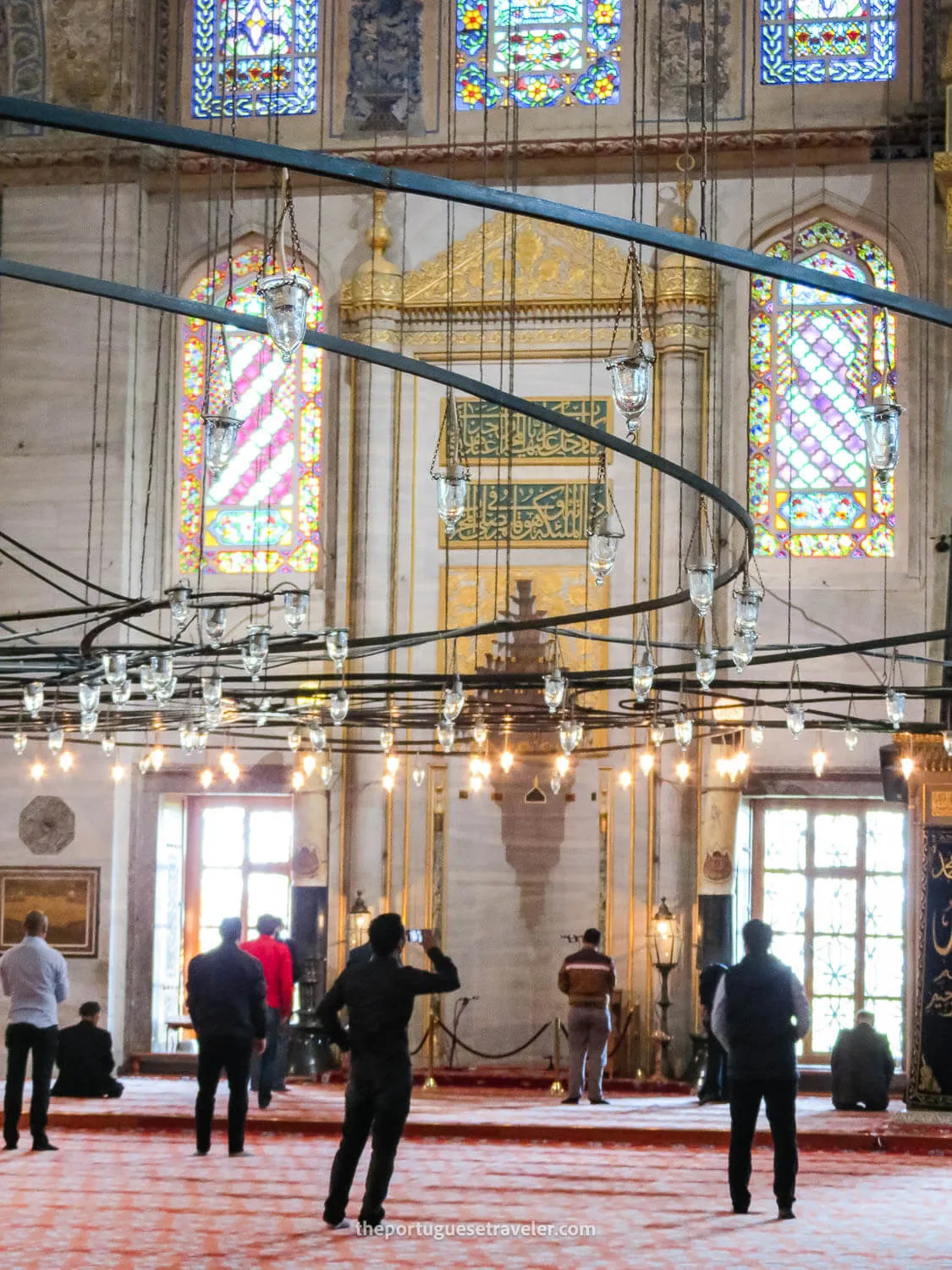
The Sultanahmet Mosque is nicknamed the Blue Mosque for its thousands of Iznik tiles. Built in the early 1600s, it is still an active place of worship, so time your visit around prayer hours. Look up at the domes and calligraphy, and at the six minarets, which caused controversy when it was built. From its courtyard you also get a view of Hagia Sophia across the square.
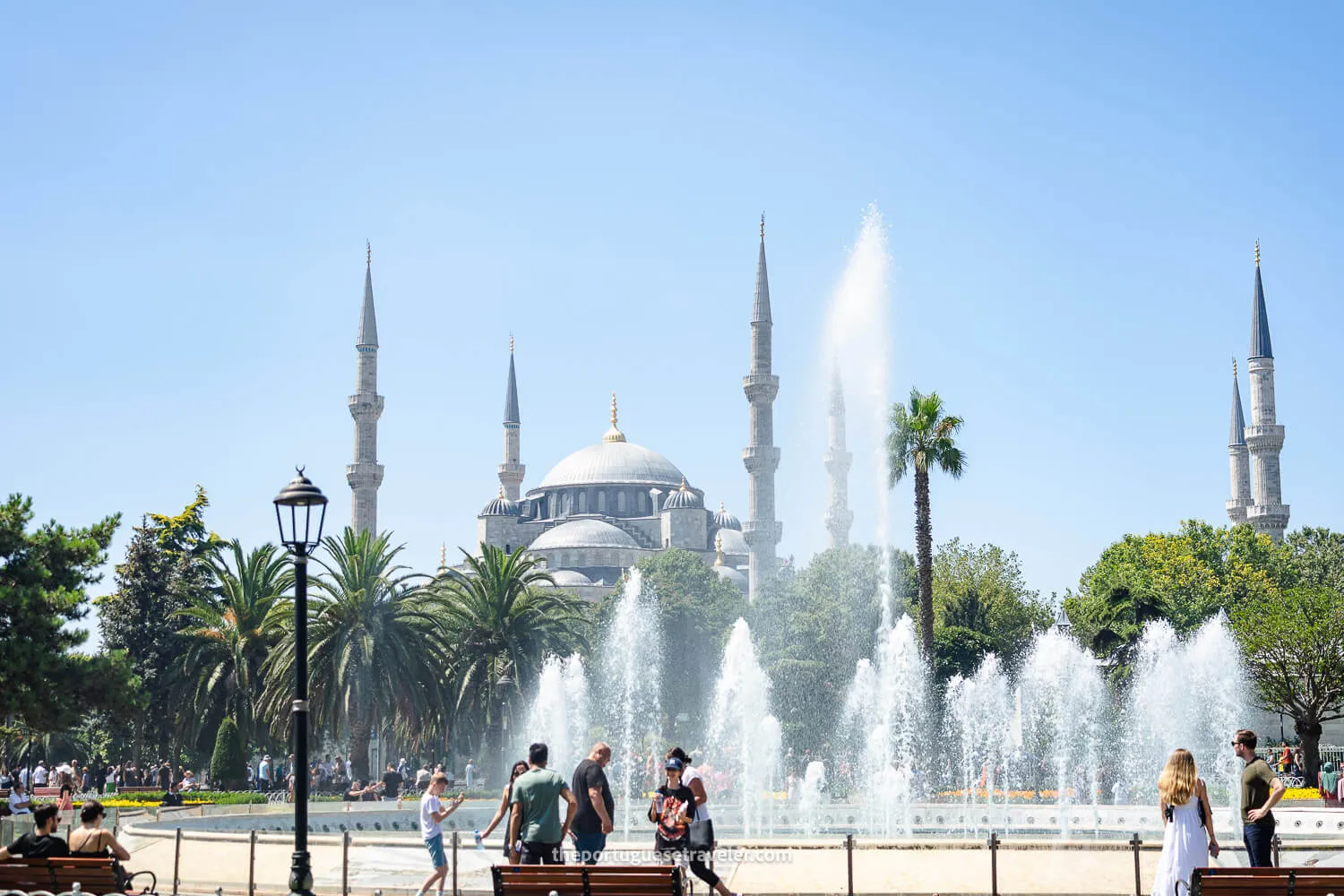
The Blue Mosque in Istanbul
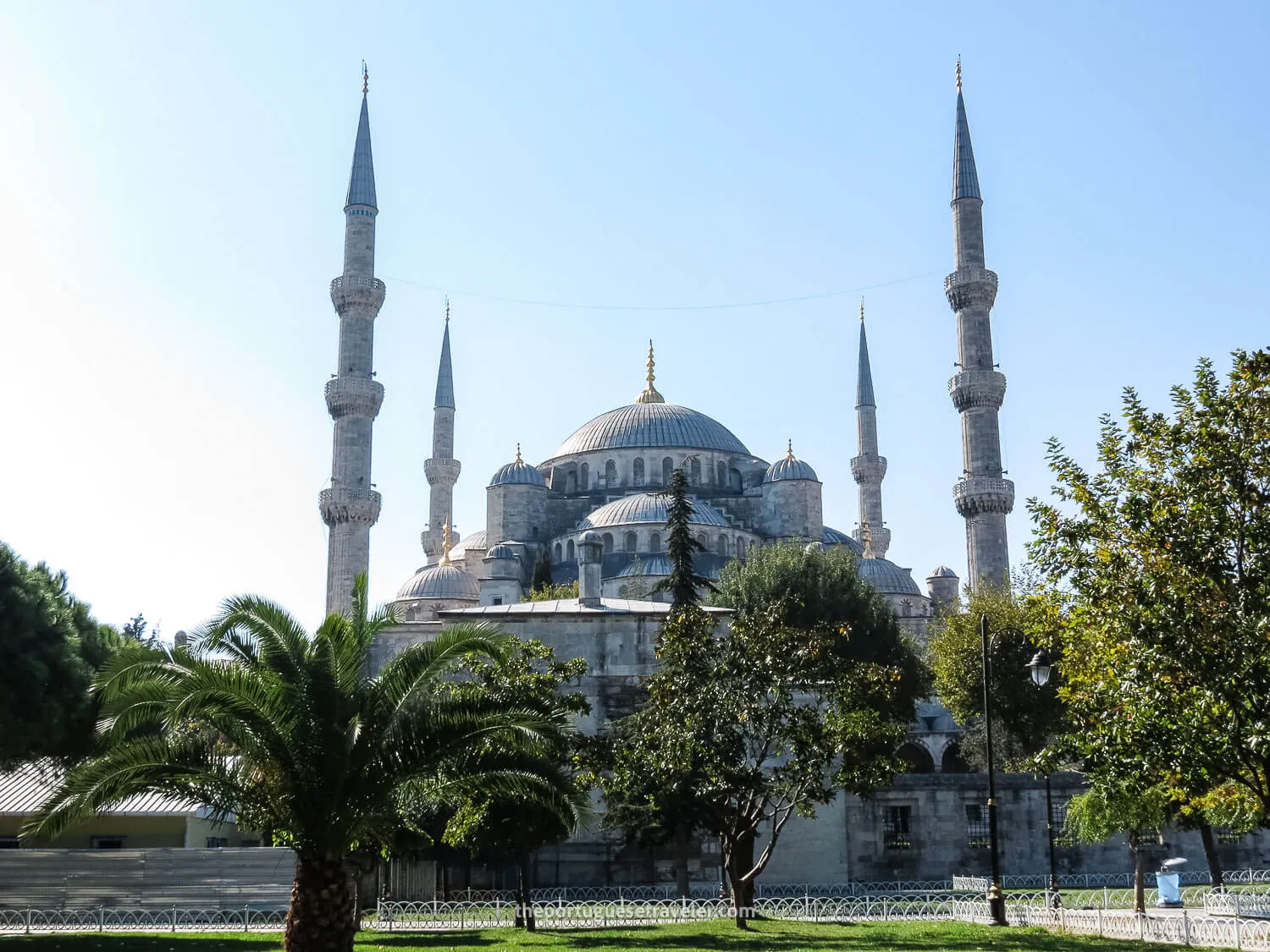
The Sultanahmet Camii, Blue Mosque in Istanbul
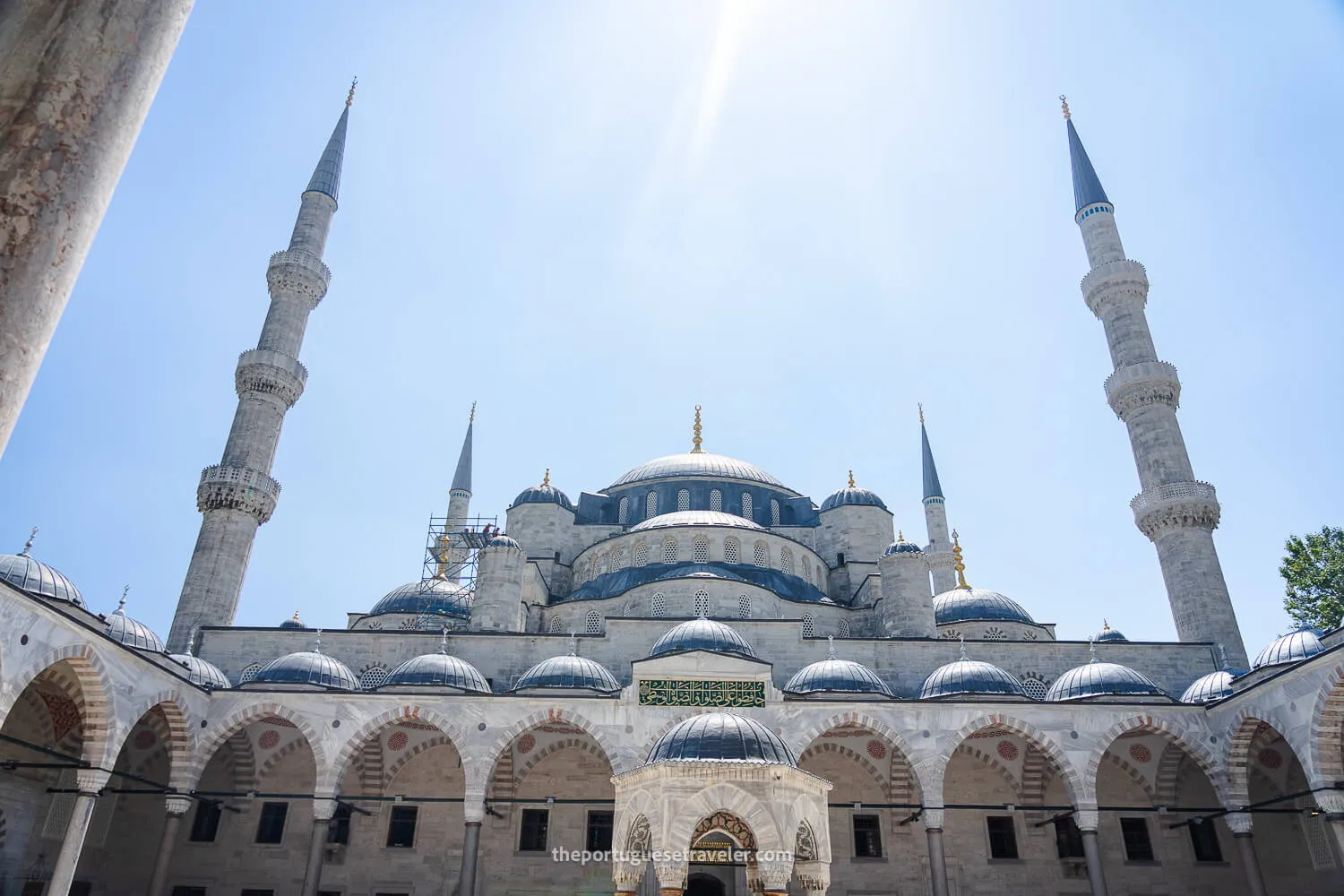
The Blue Mosque in Istanbul
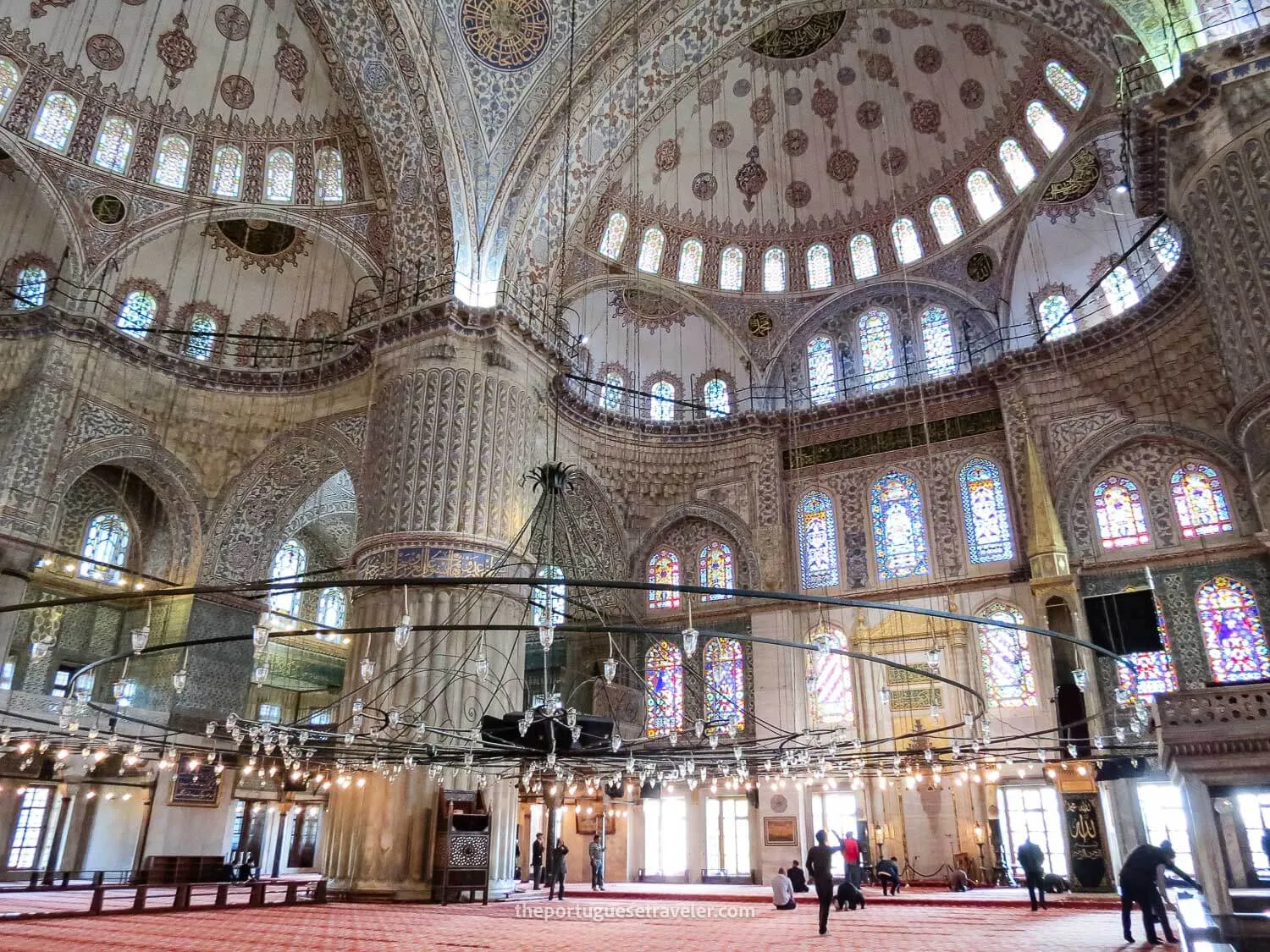
The interior of the Blue Mosque
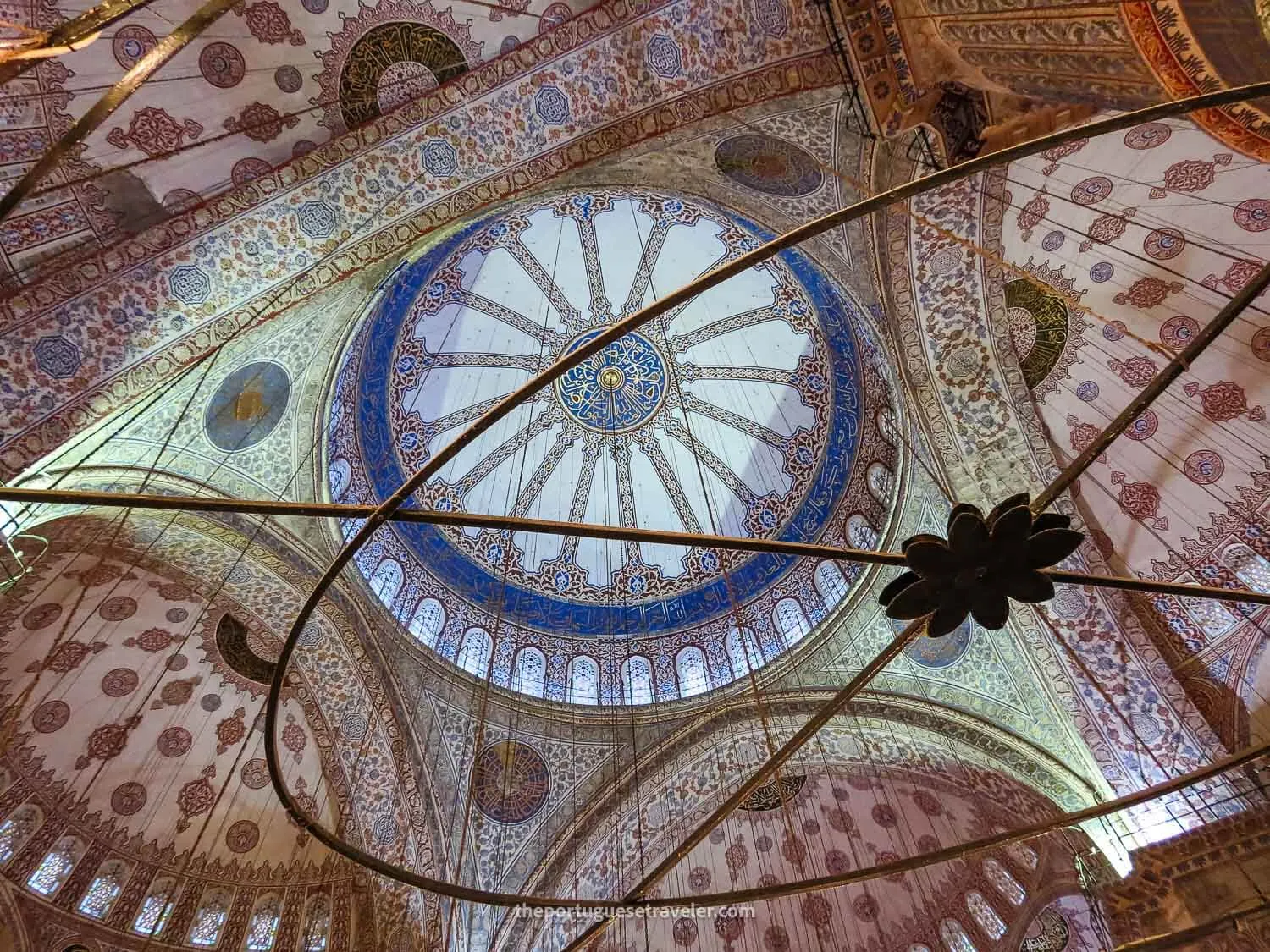
The ceiling of the Blue Mosque
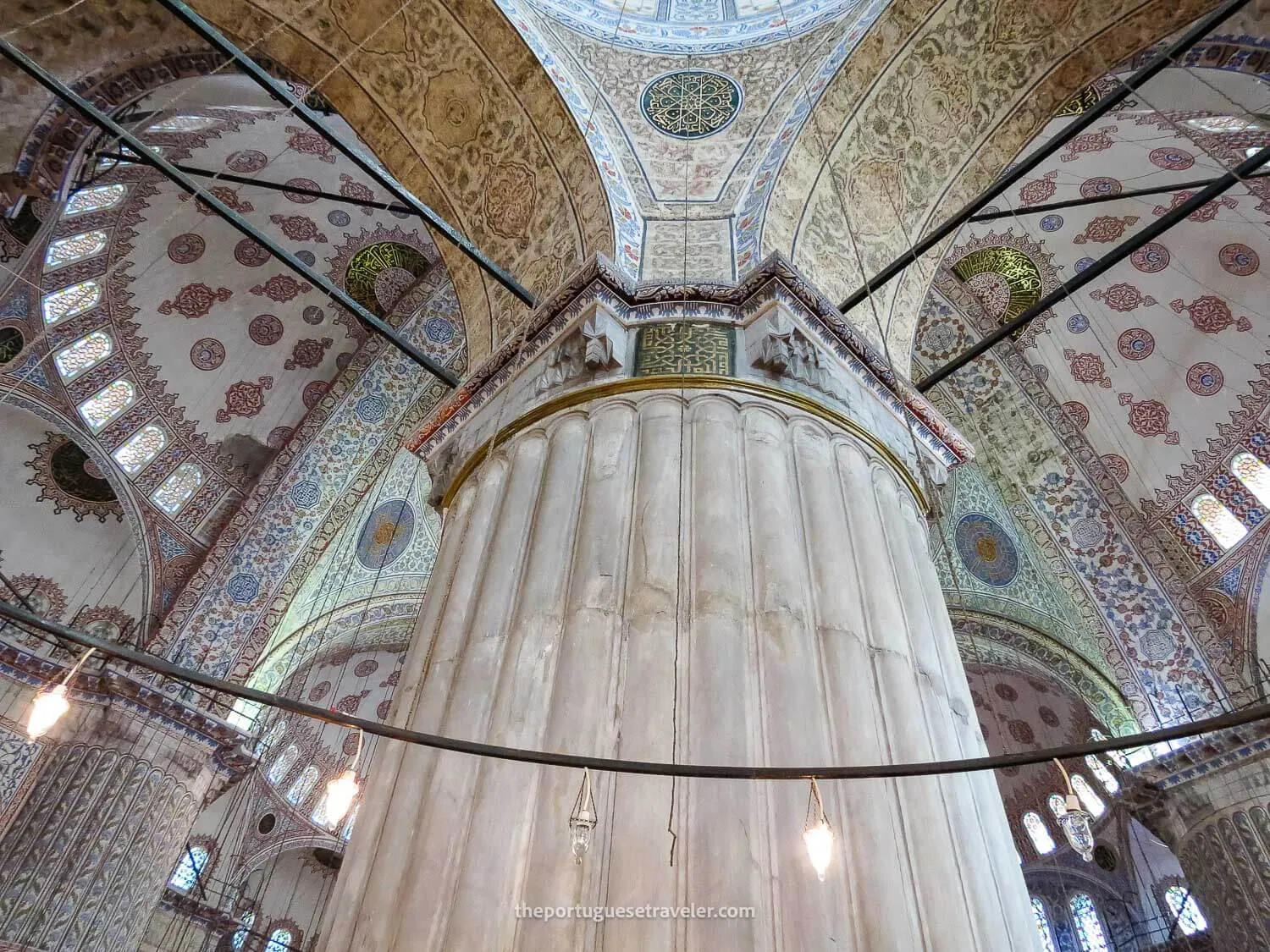
A massive pillar of The Sultanahmet Camii, Blue Mosque in Istanbul
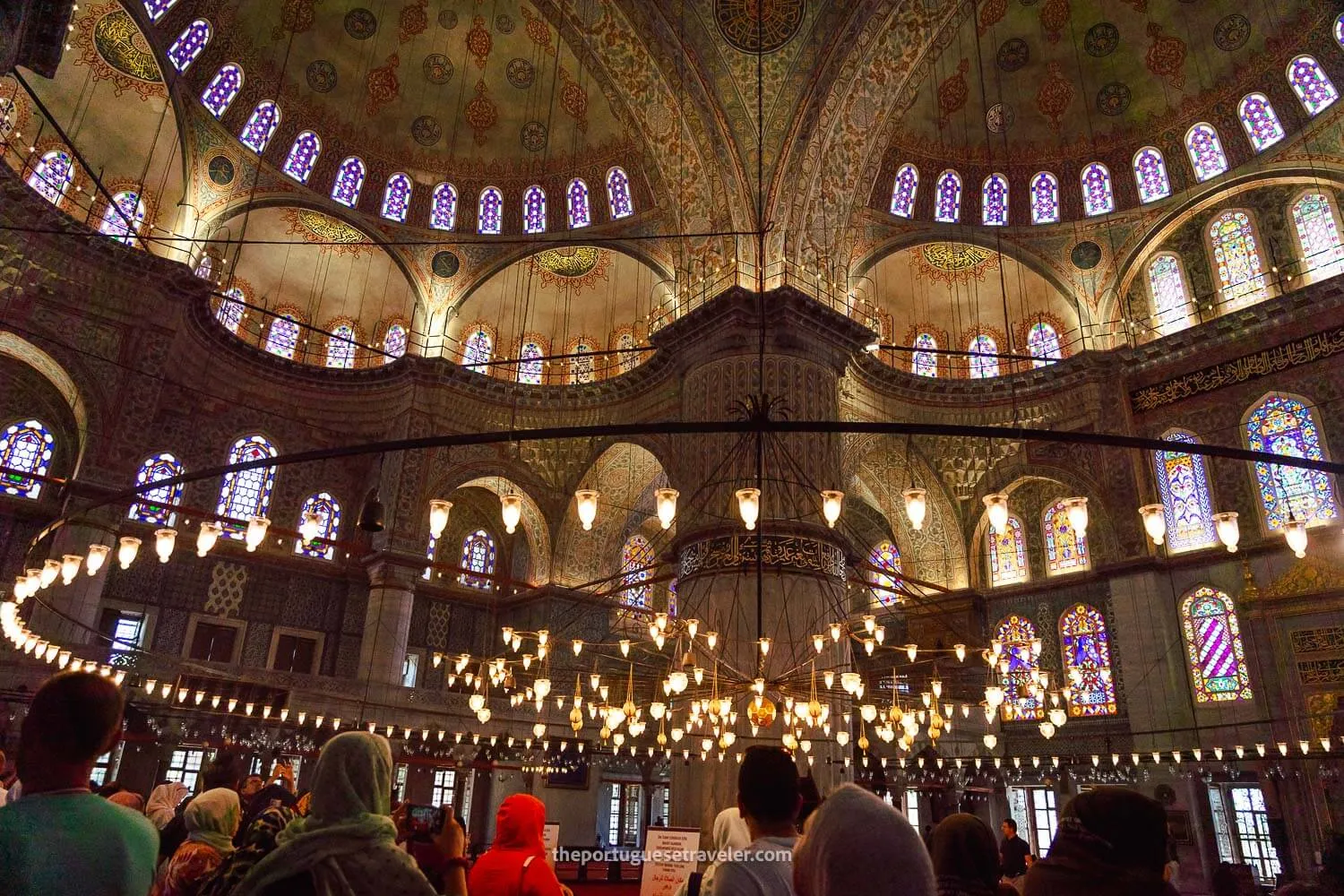
The Blue Mosque at night in Istanbul
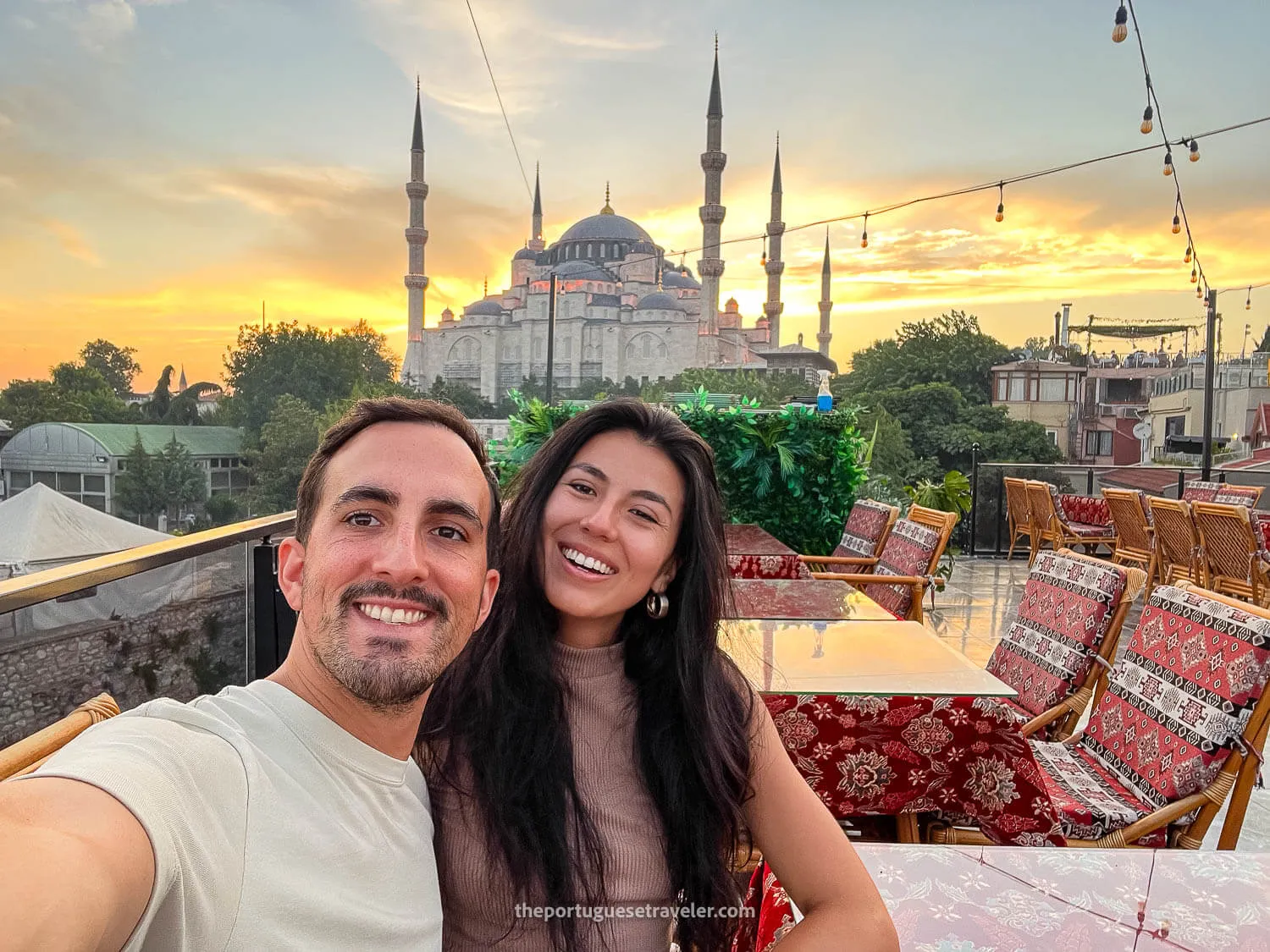
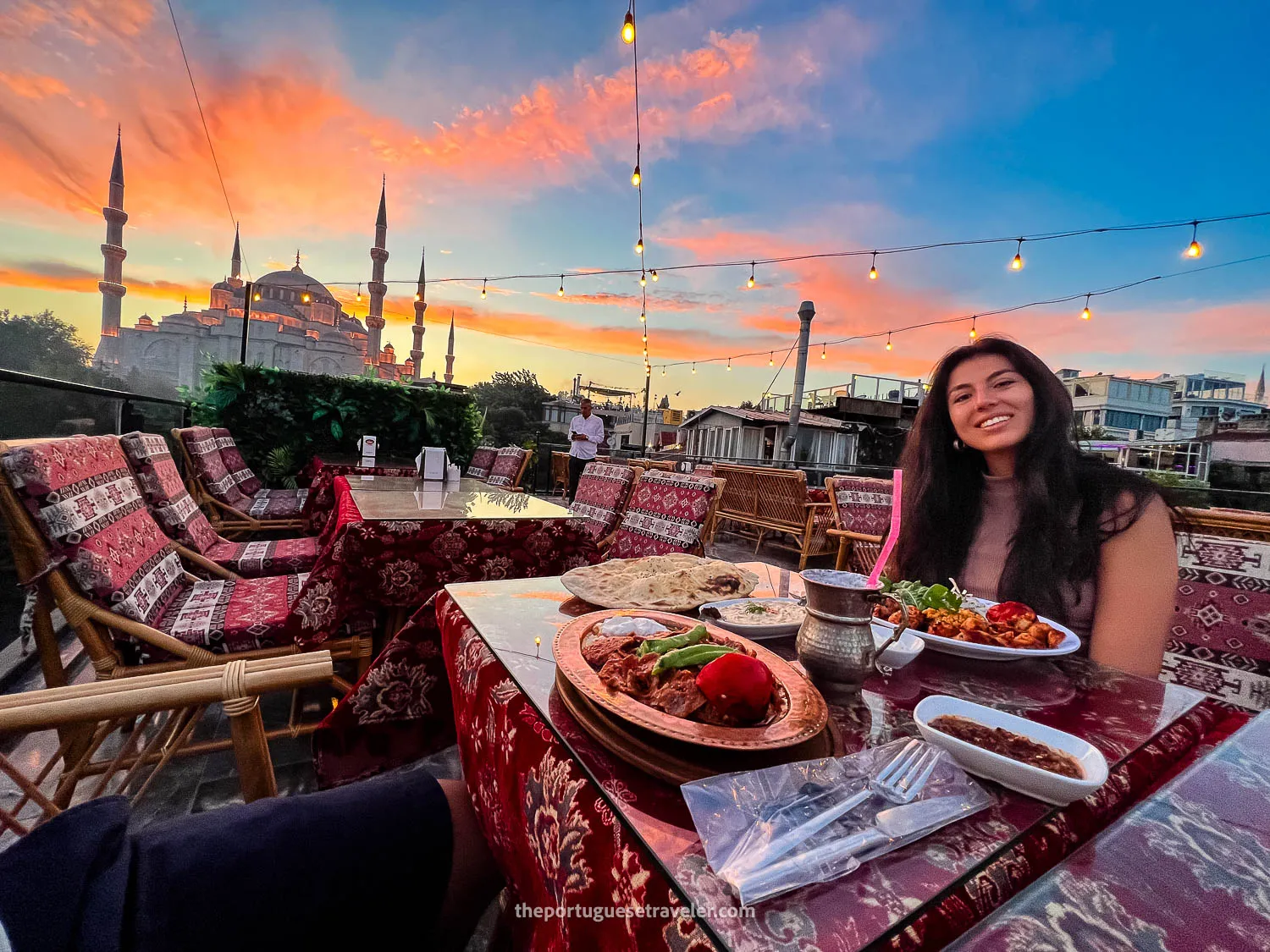
Me and Jhos at a rooftop dining with a view of the Blue Mosque at Sunset
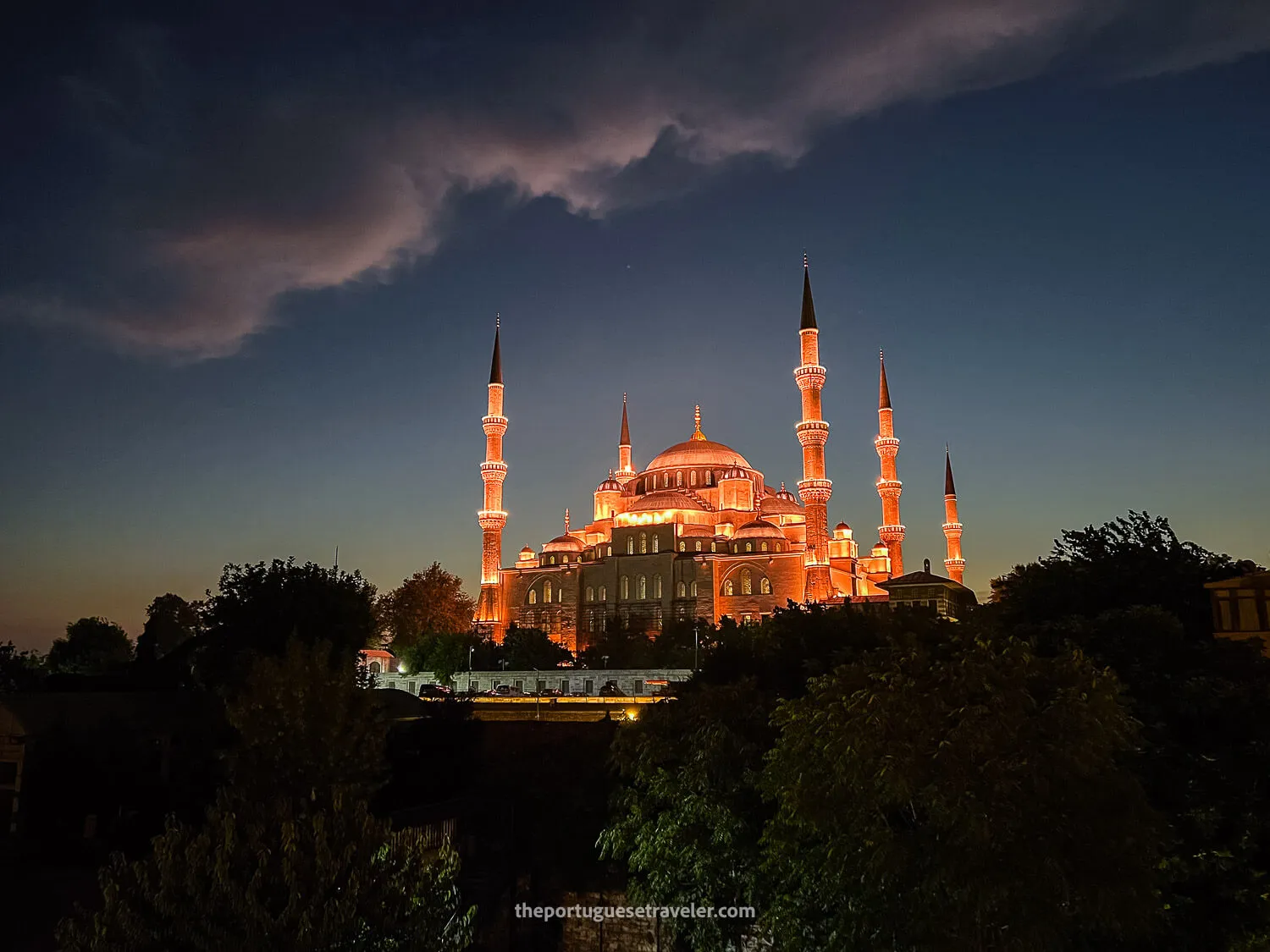
The Blue Mosque at night
29. Yeni Camii (New Mosque, Eminönü)
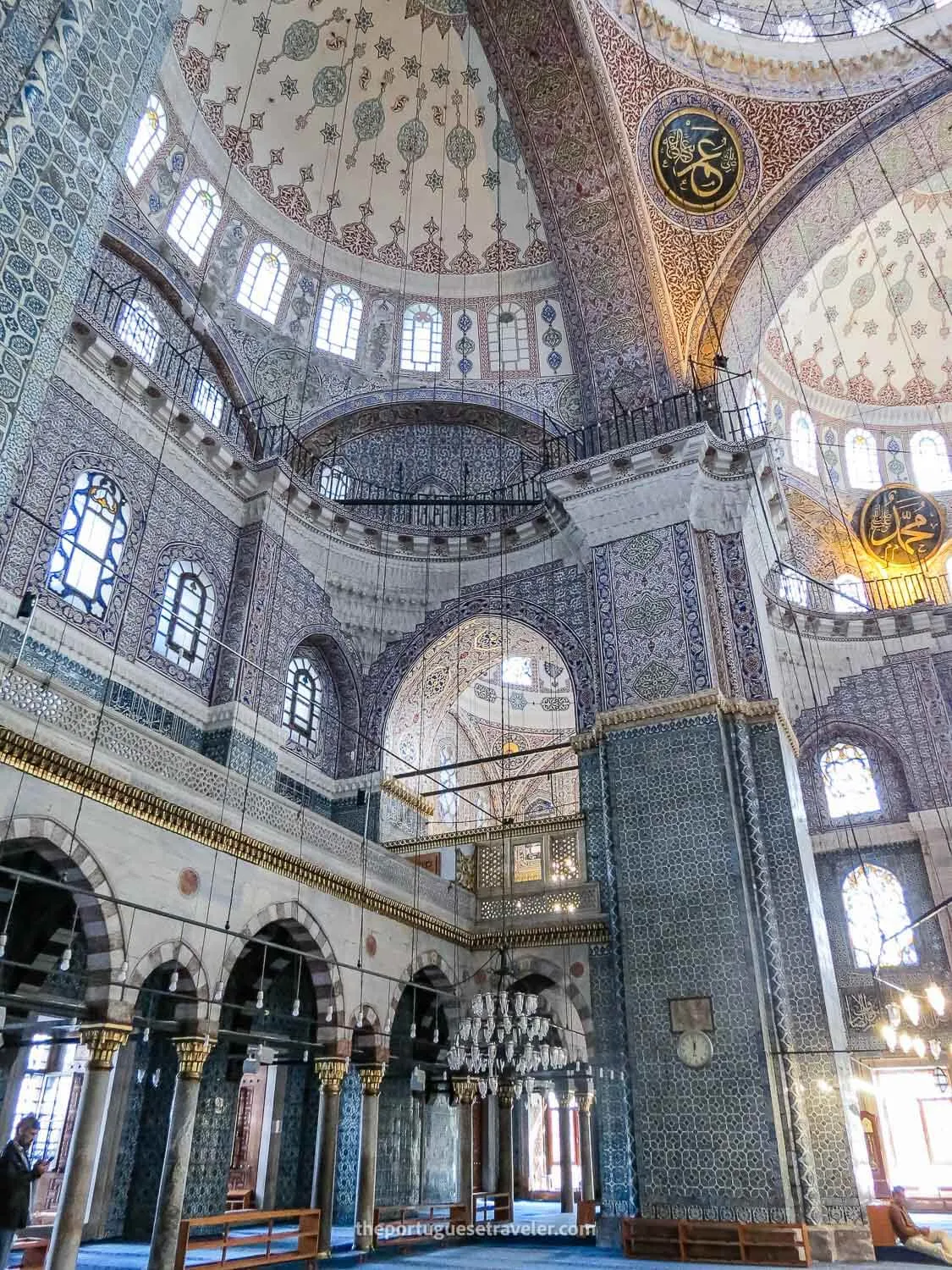
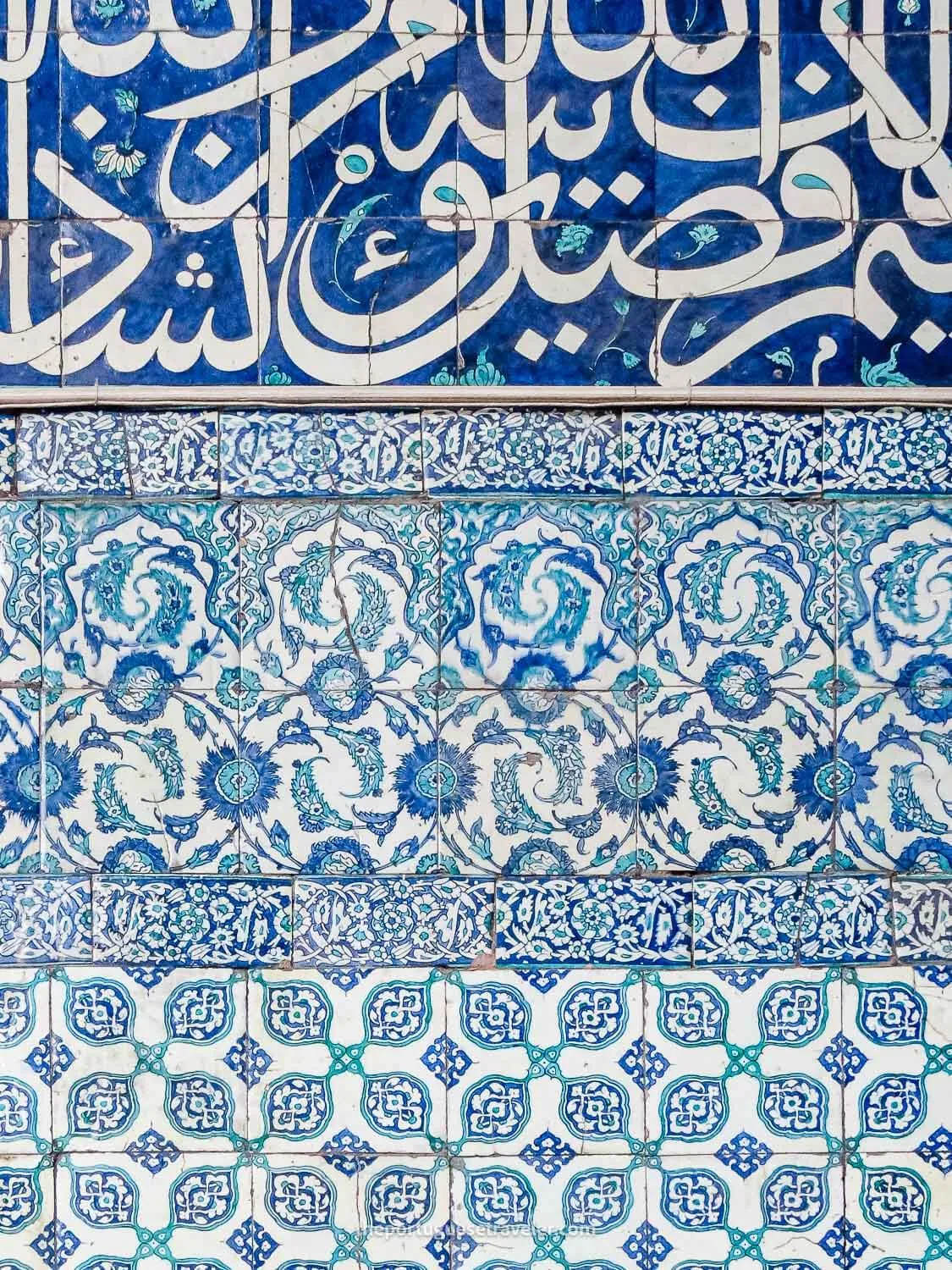
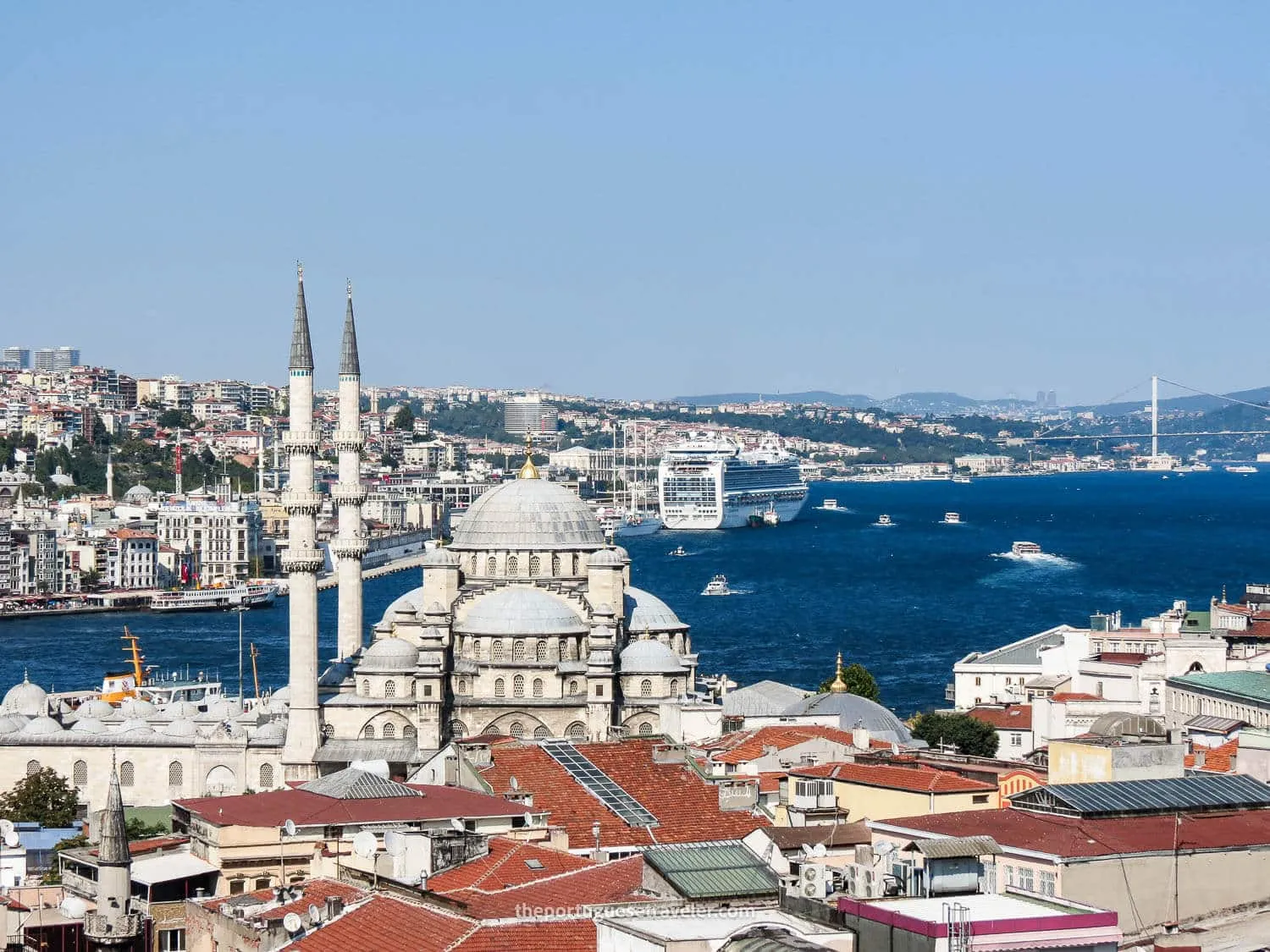
Right by the Spice Bazaar in Eminönü stands the Yeni Camii, or New Mosque. Construction began in 1597 and finished in 1665, and its domes and minarets make a fine silhouette as ferries pass. The interiors are richly decorated, and the Spice Bazaar is next door, so you can see both in one go: quiet devotion beside the bustle of daily commerce.
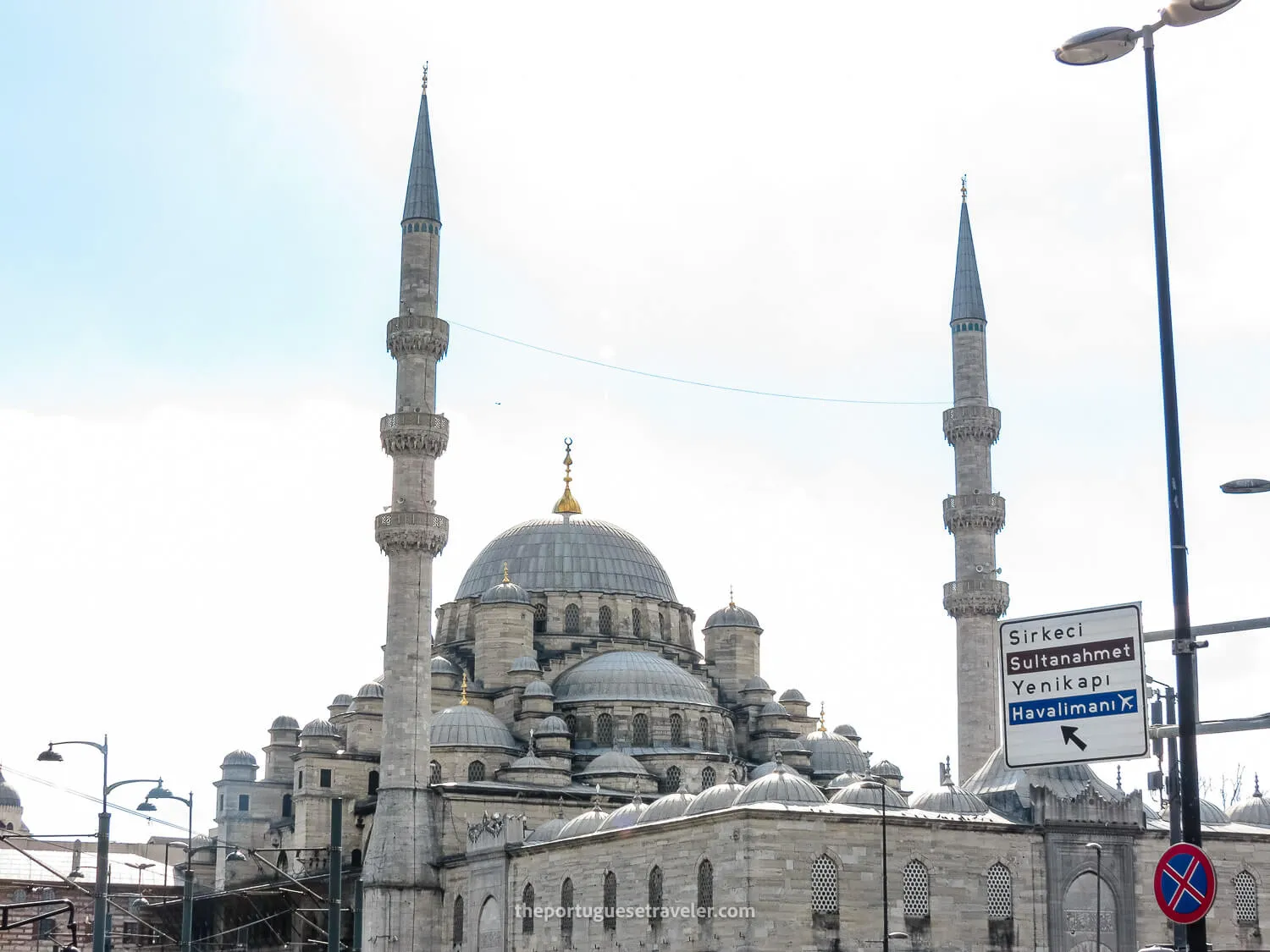
The Yeni Camii, New Mosque in Eminönu in Istanbul
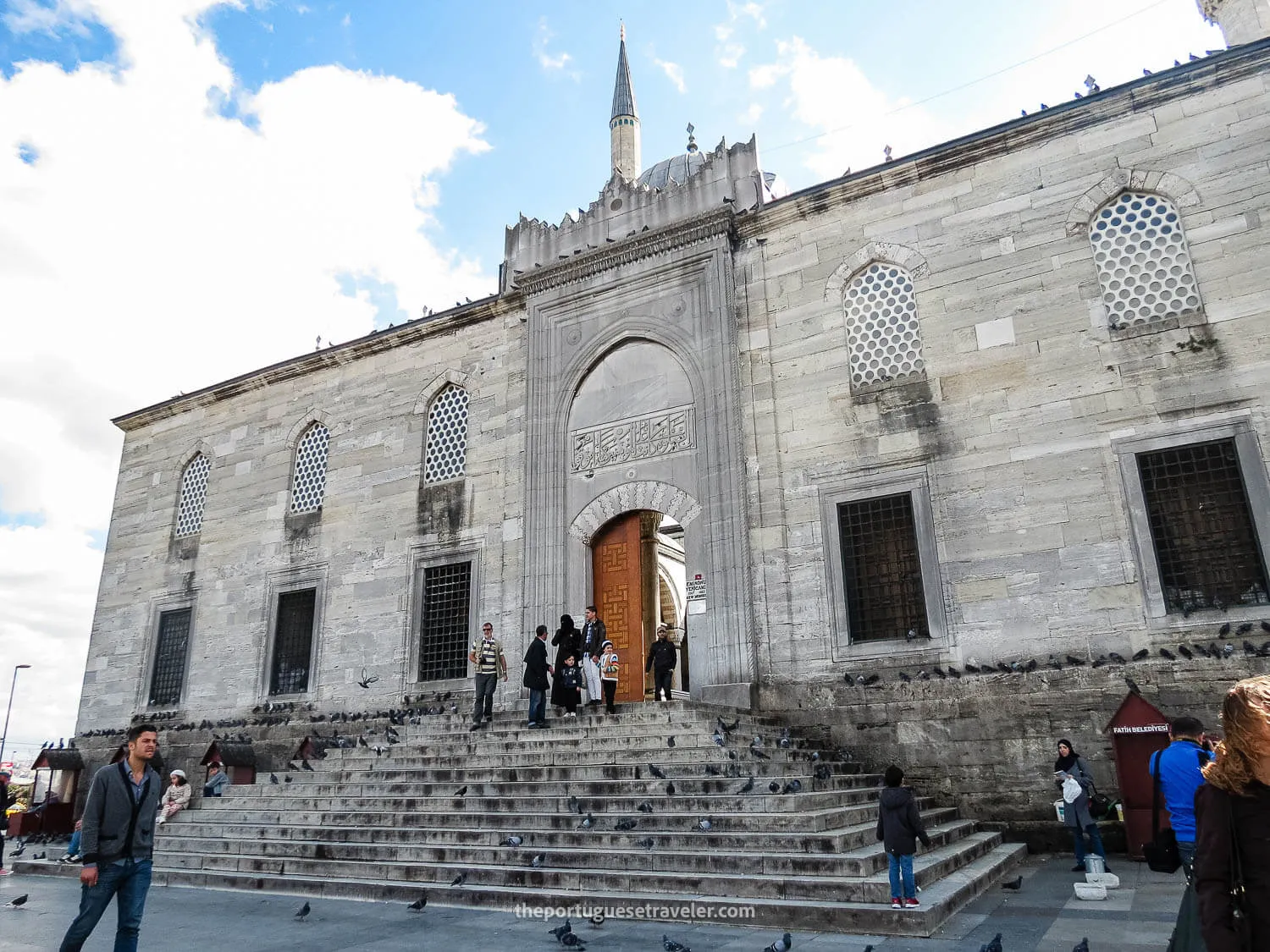
The Yeni Camii, New Mosque in Eminönu in Istanbul
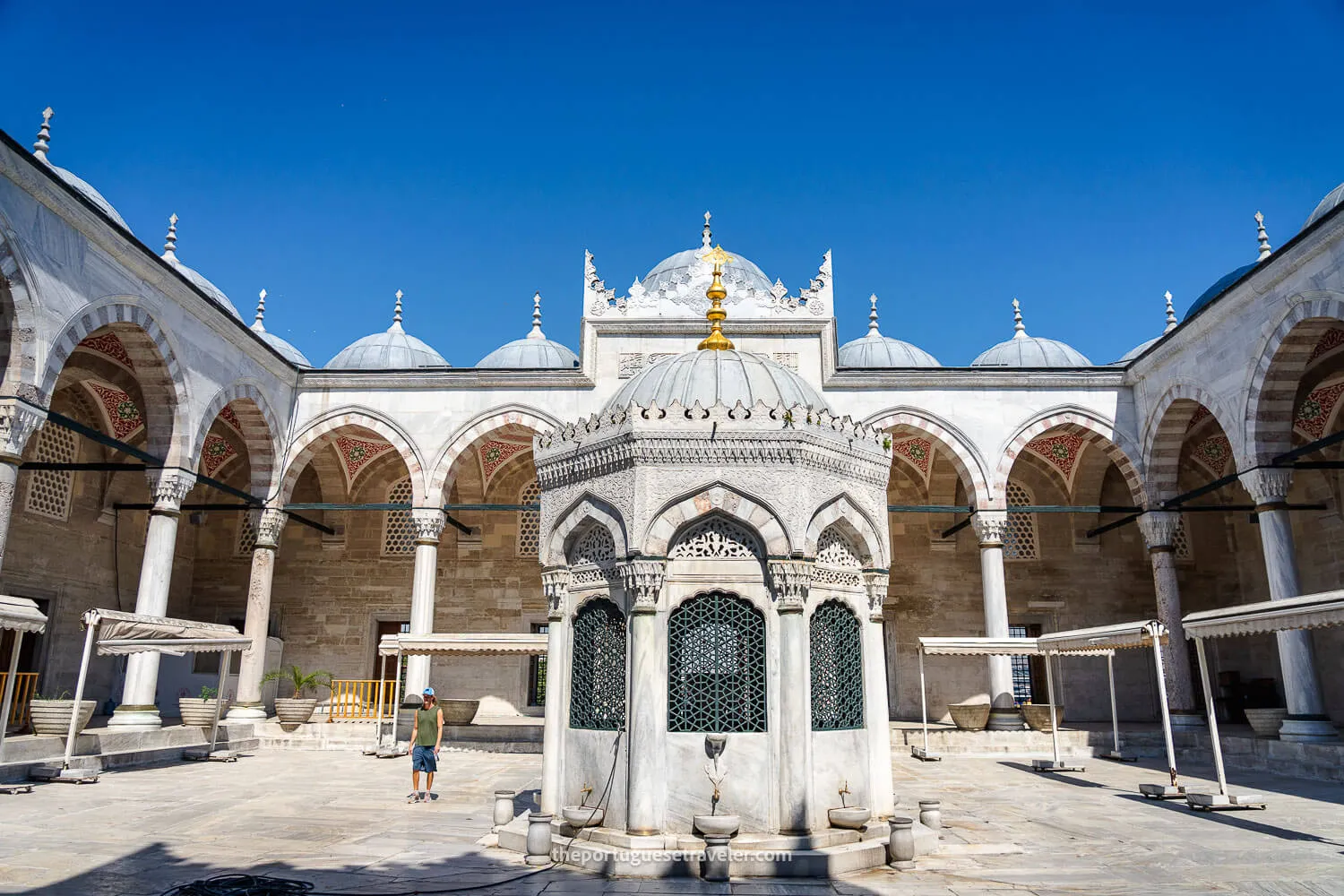
The courtyard of the Yeni Camii
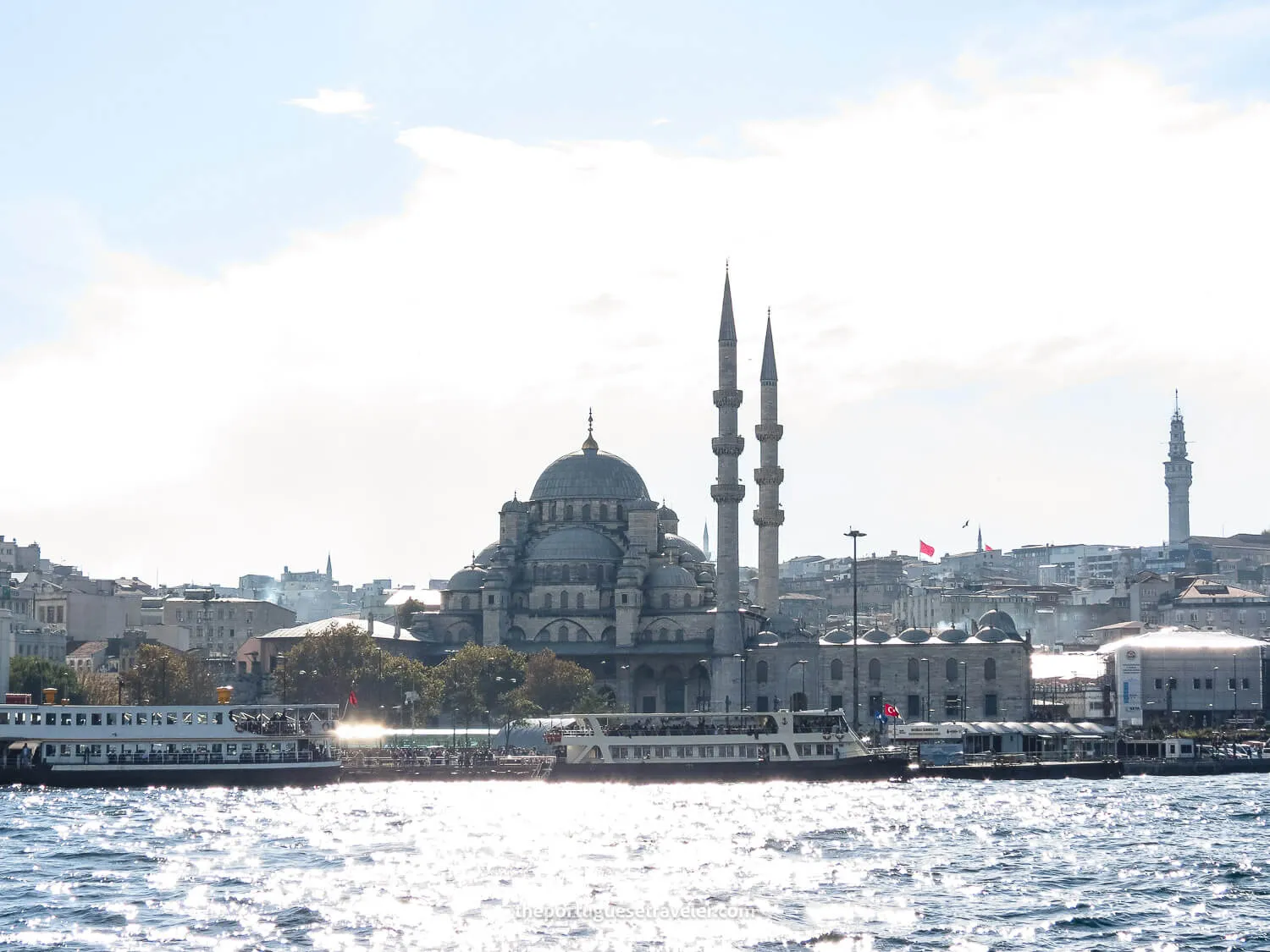
The Yeni Camii Mosque seen from the Bosphorus
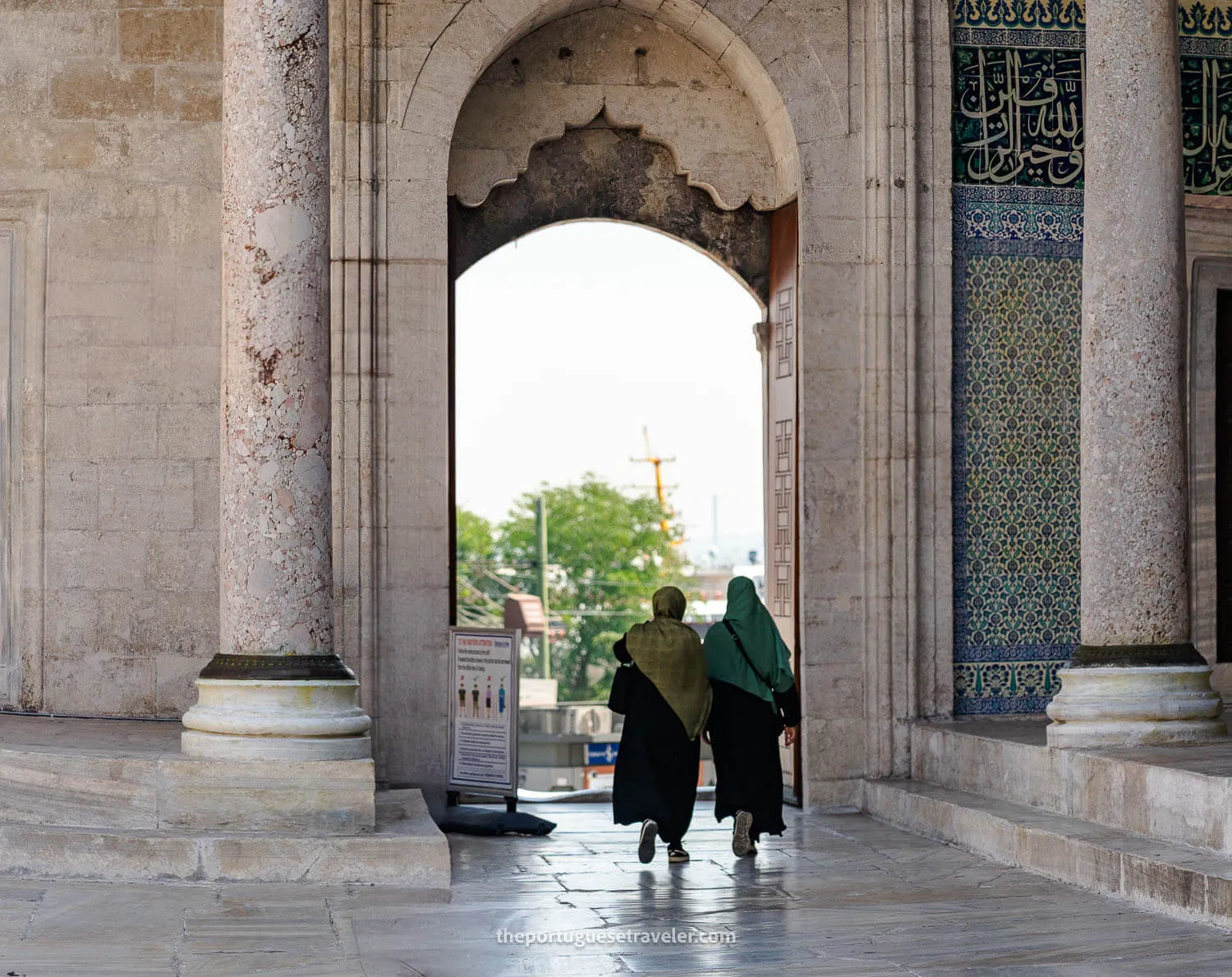
The courtyard of the Yeni Camii
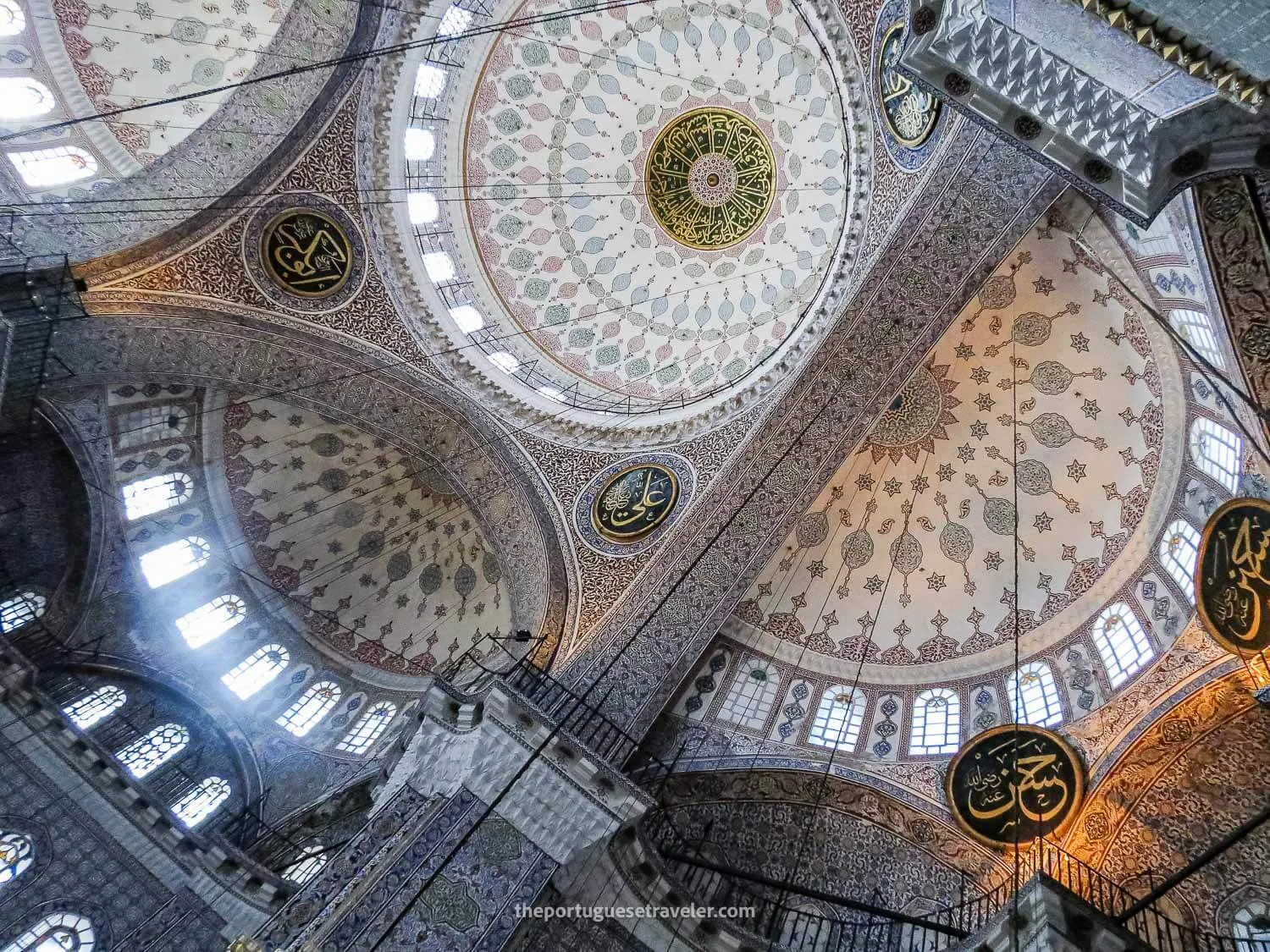
The ceiling of the Yeni Camii
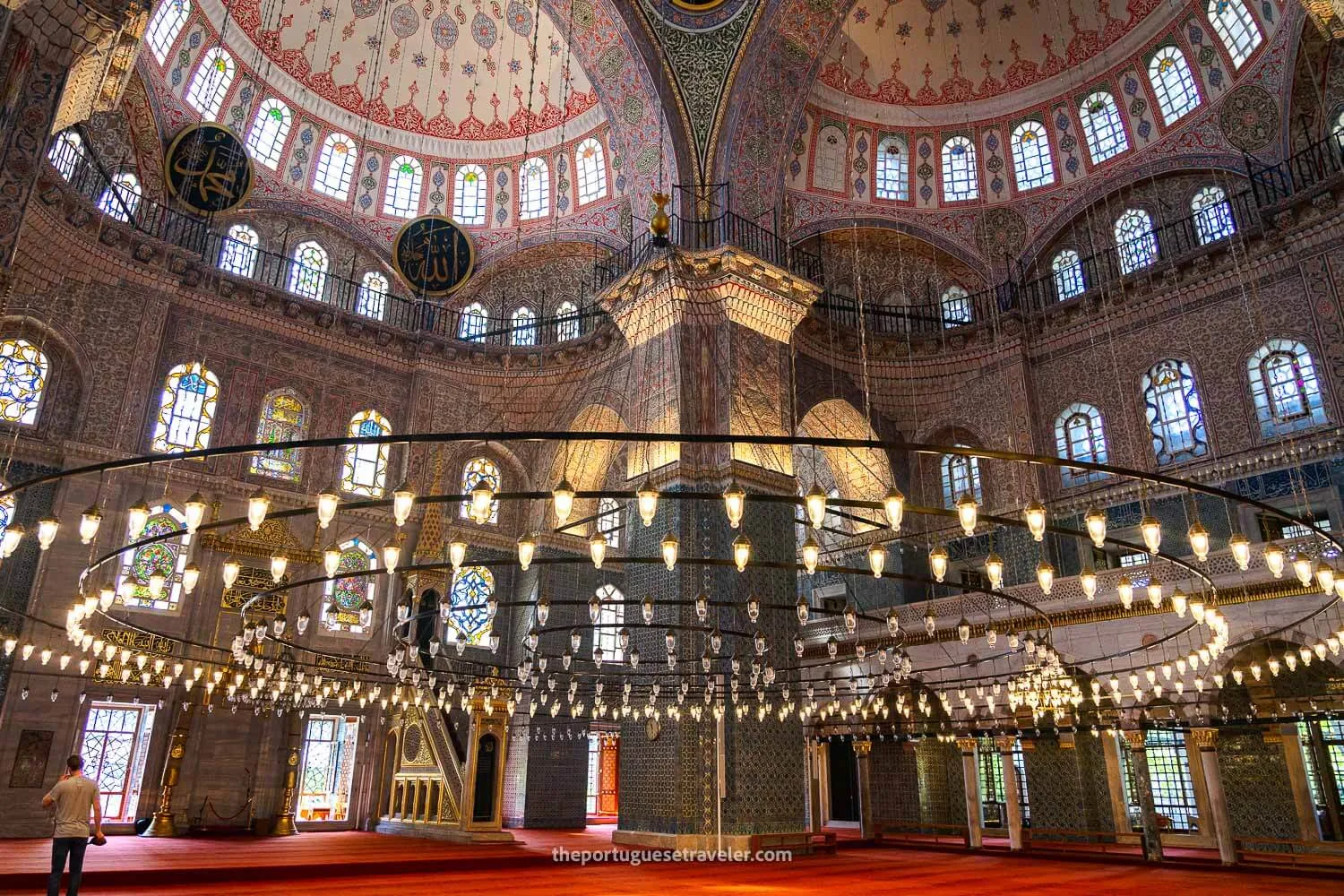
The interior of the Yeni Camii
30. Rüstem Pasha Mosque (Iznik tiles)
Above a row of shops near Eminönü, the Rüstem Pasha Mosque is easy to miss. It is known for its Iznik tiles, with floral and geometric designs covering almost every surface. It is smaller than the Blue Mosque and usually less crowded, so you can take your time with the tiles.
31. Eyüp Sultan Mosque & Pierre Loti Hill
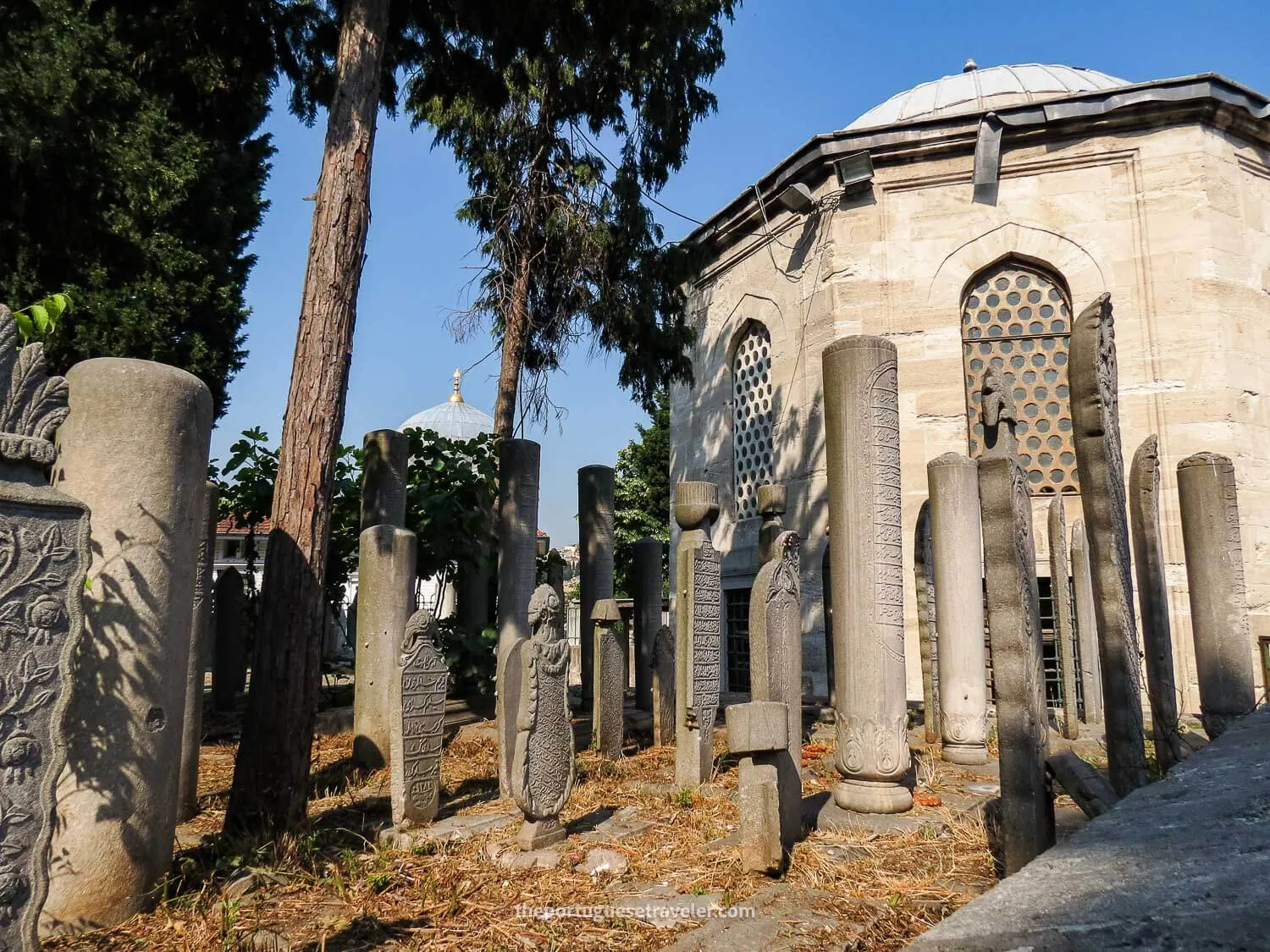
Eyüp Sultan Mosque is one of the most sacred sites in Istanbul, believed to be the burial place of Abu Ayyub al-Ansari, a companion of the Prophet Muhammad. Pilgrims come here, and the atmosphere is reverent. After the mosque and its historic cemetery, which climbs the hill, take the cable car (or walk through the tomb-lined paths) up to Pierre Loti Hill, where the view over the Golden Horn is one of the best in the city. There is a hilltop café for Turkish tea.
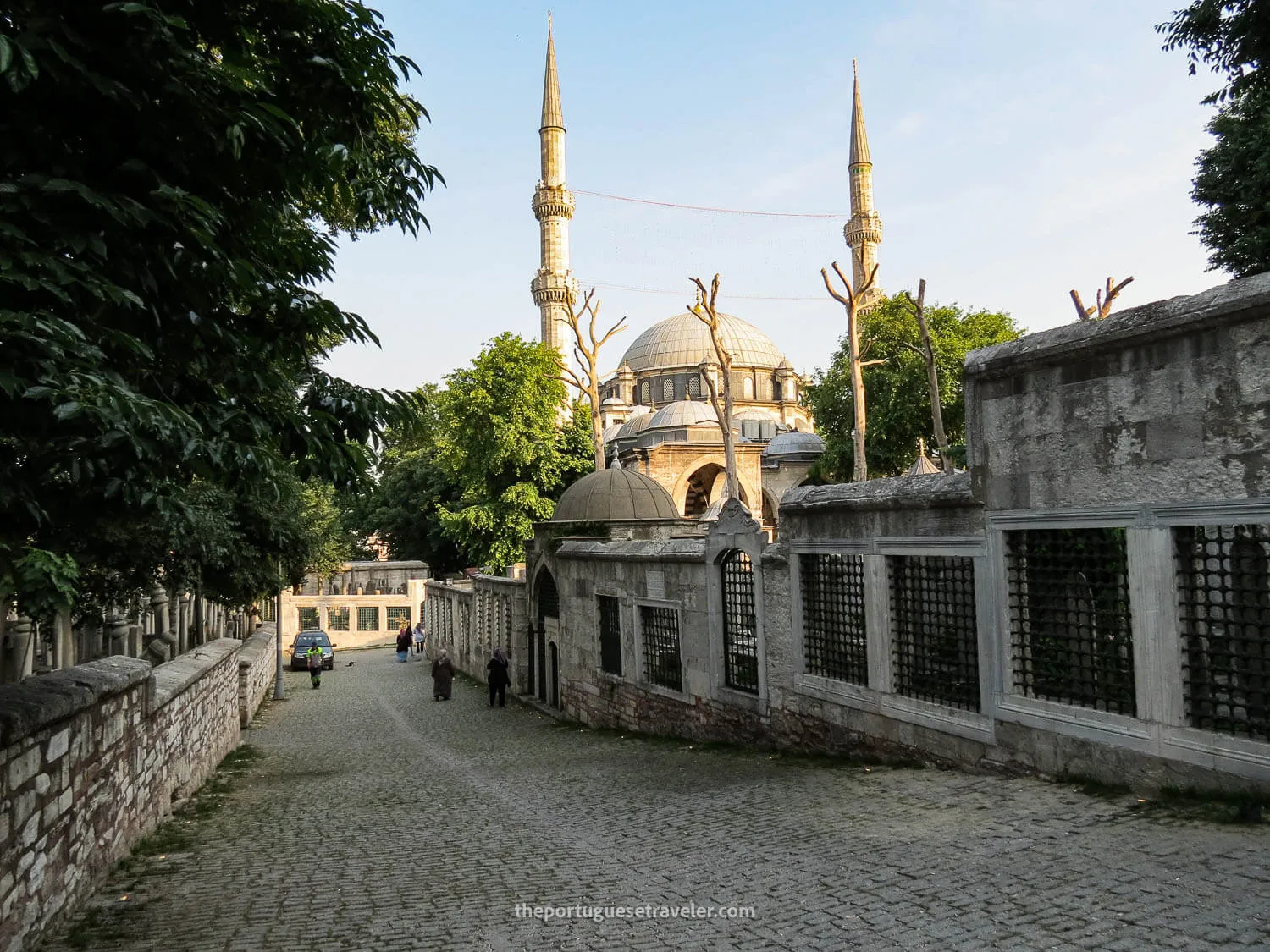
The Eyüp Camii, Eyup Mosque in Istanbul
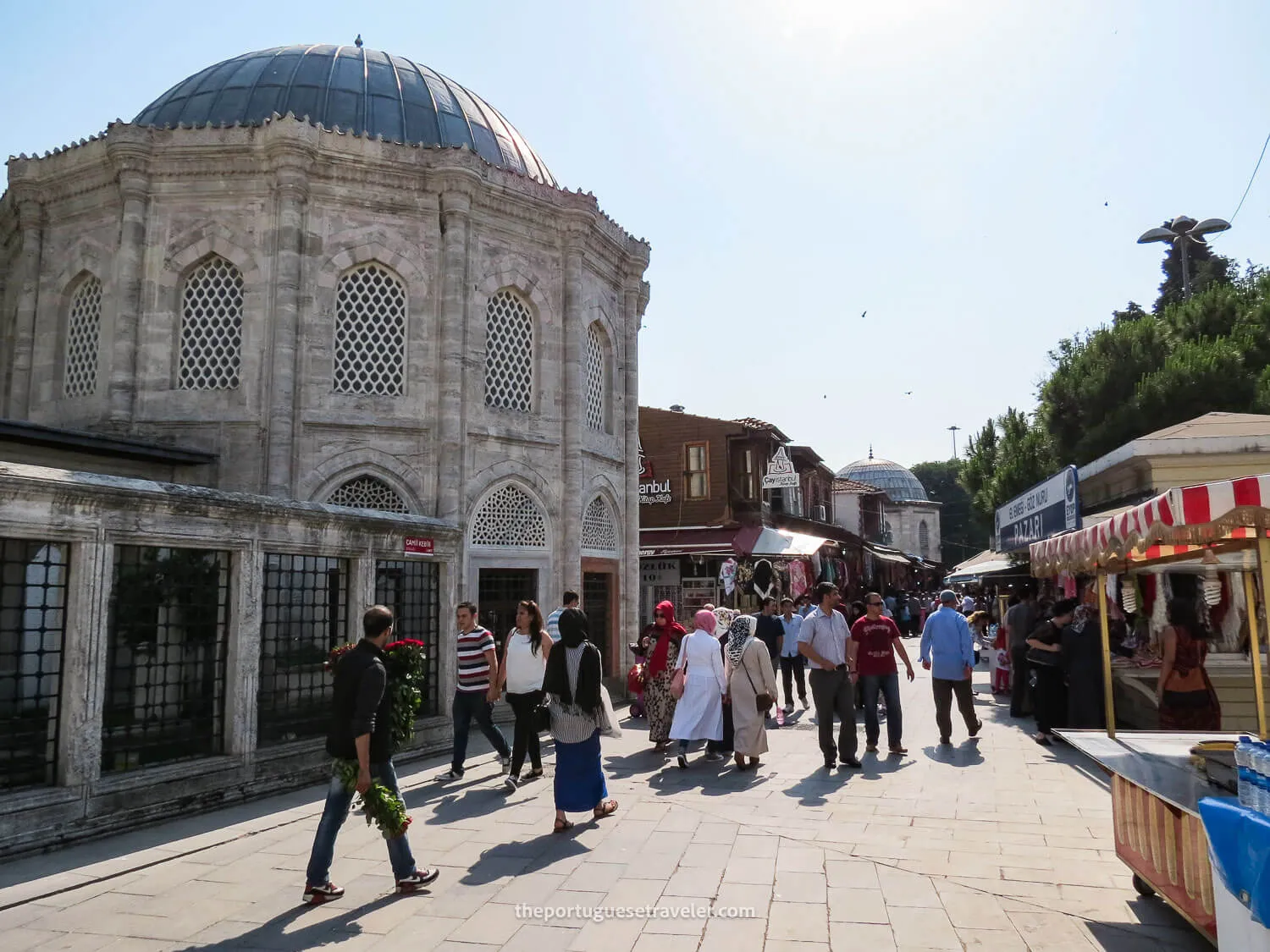
The Eyüp Camii, Eyup Mosque in Istanbul
The ceiling of the Eyüp Camii, Eyup Mosque in Istanbul
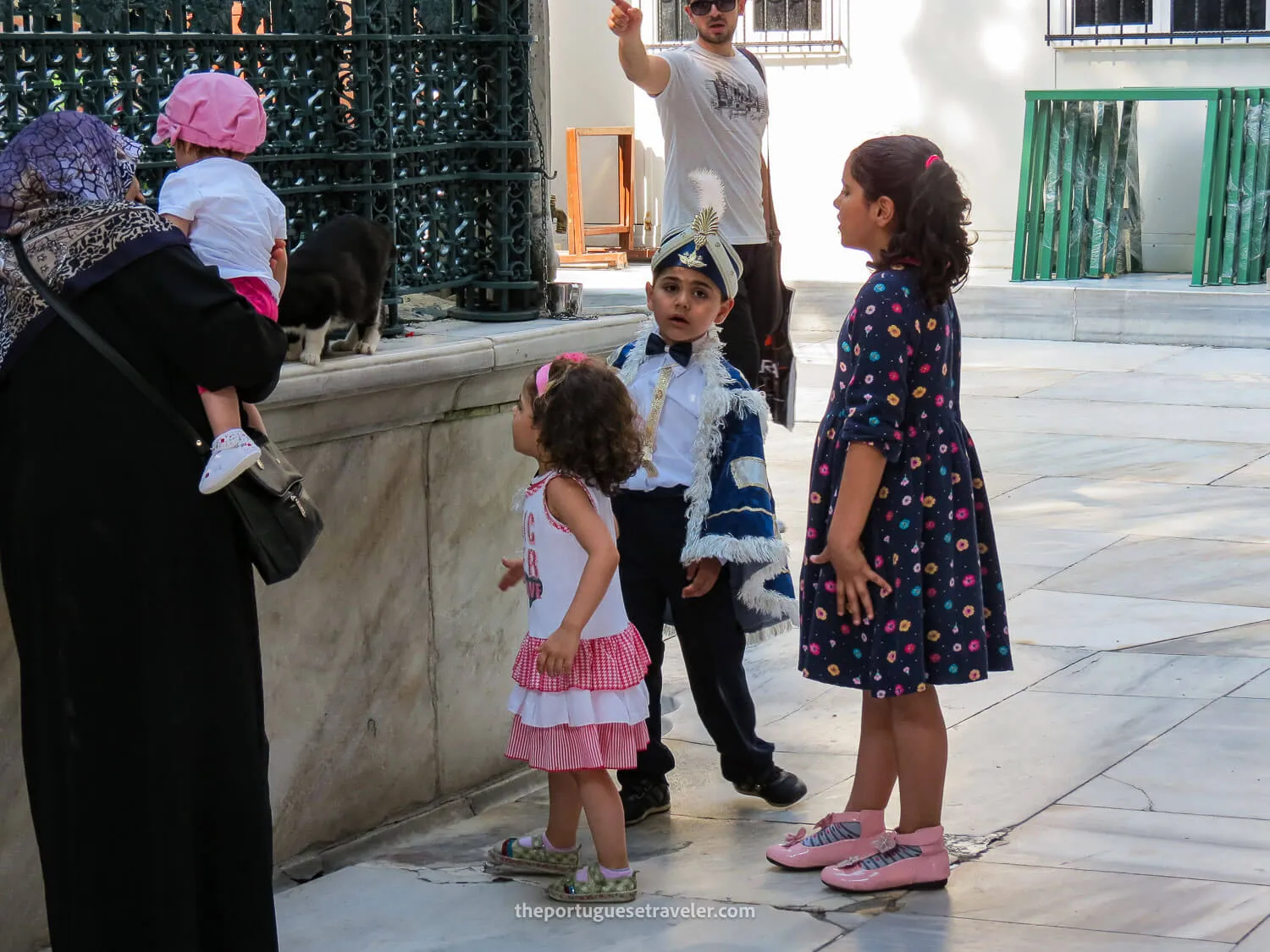
The Eyüp Camii, Eyup Mosque in Istanbul
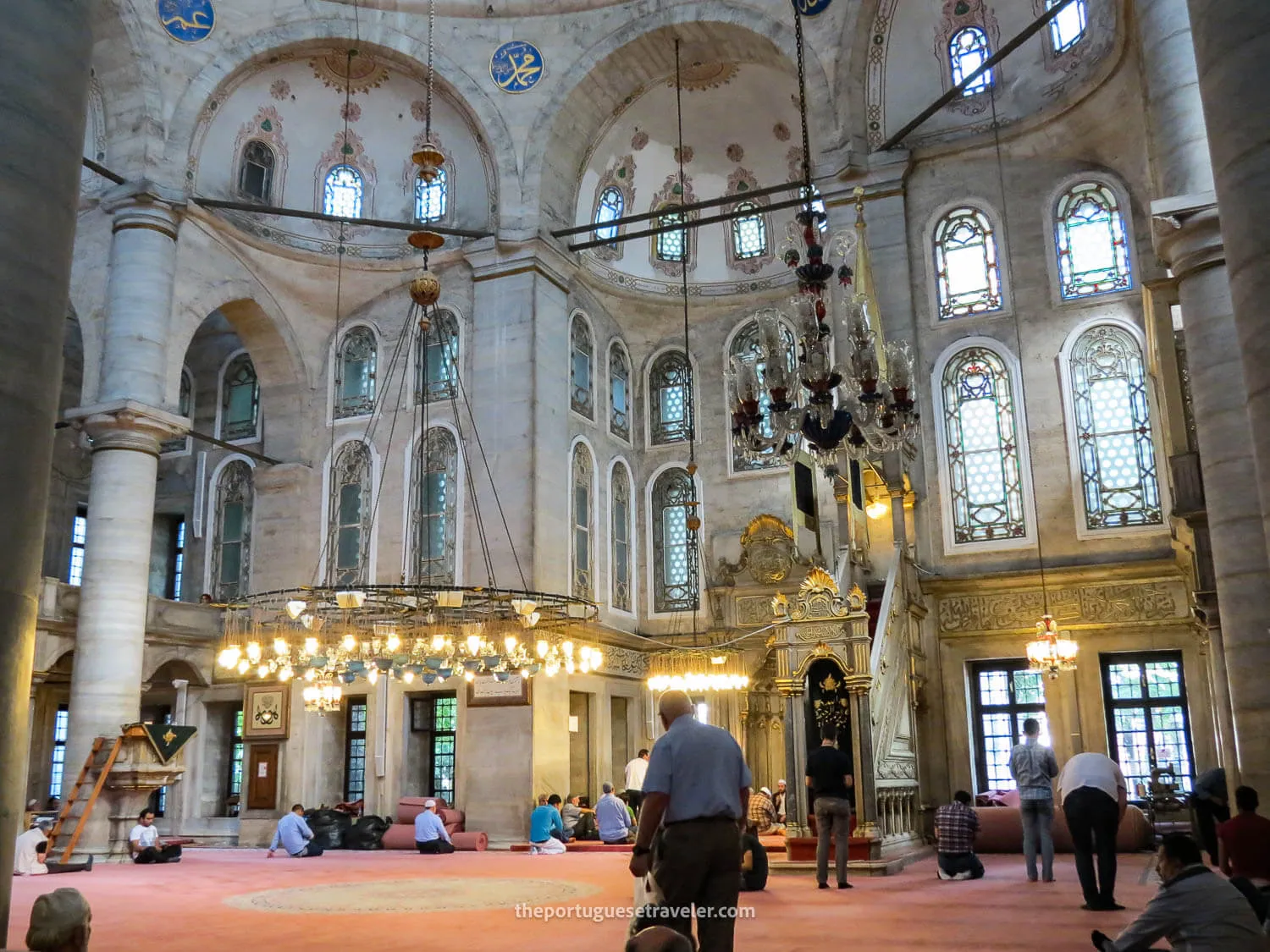
The interior of the Eyüp Camii, Eyup Mosque in Istanbul
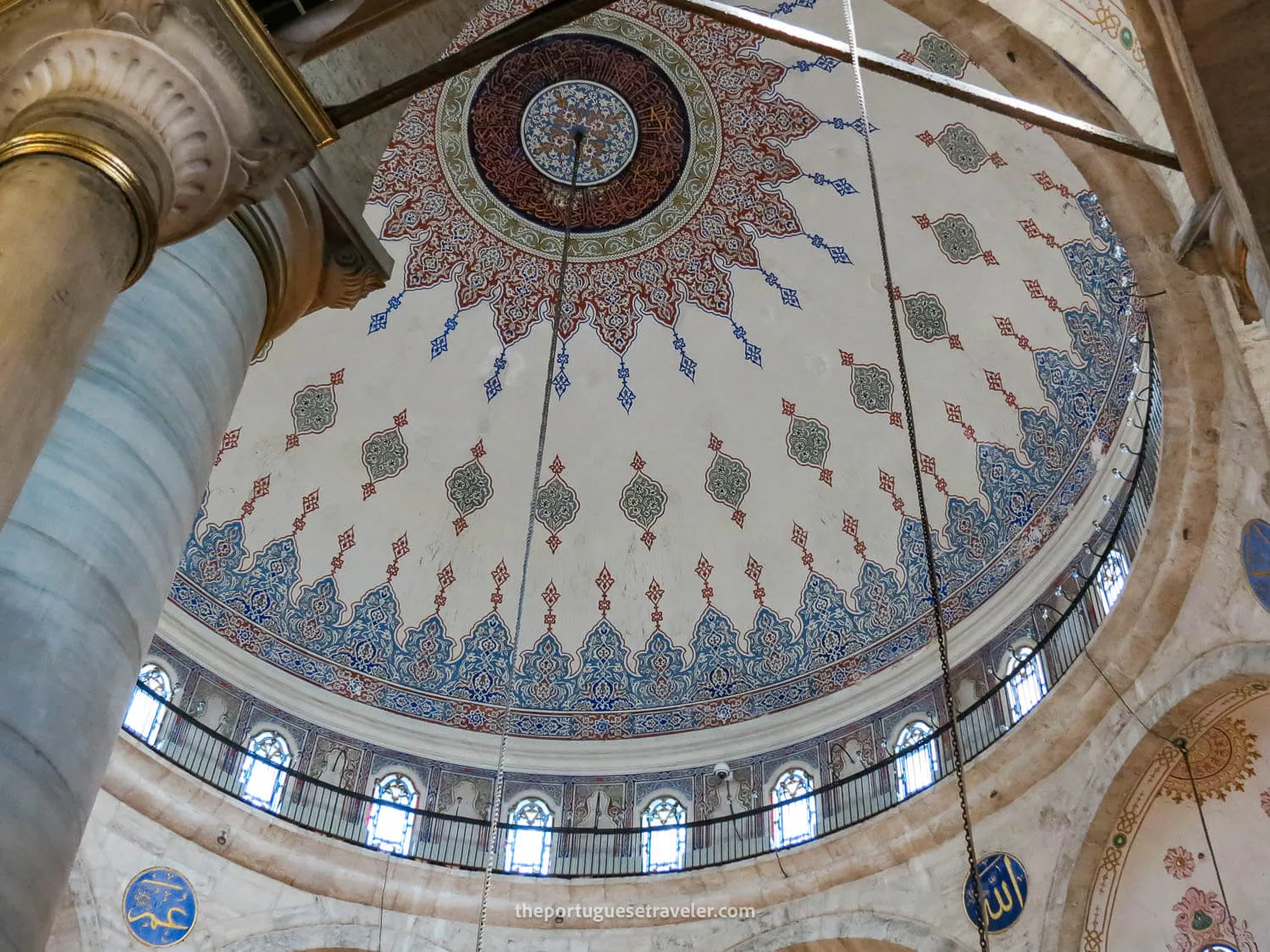
The ceiling of the Eyüp Camii, Eyup Mosque in Istanbul
32-33. Mihrimah Sultan Mosques: Edirnekapı & Üsküdar
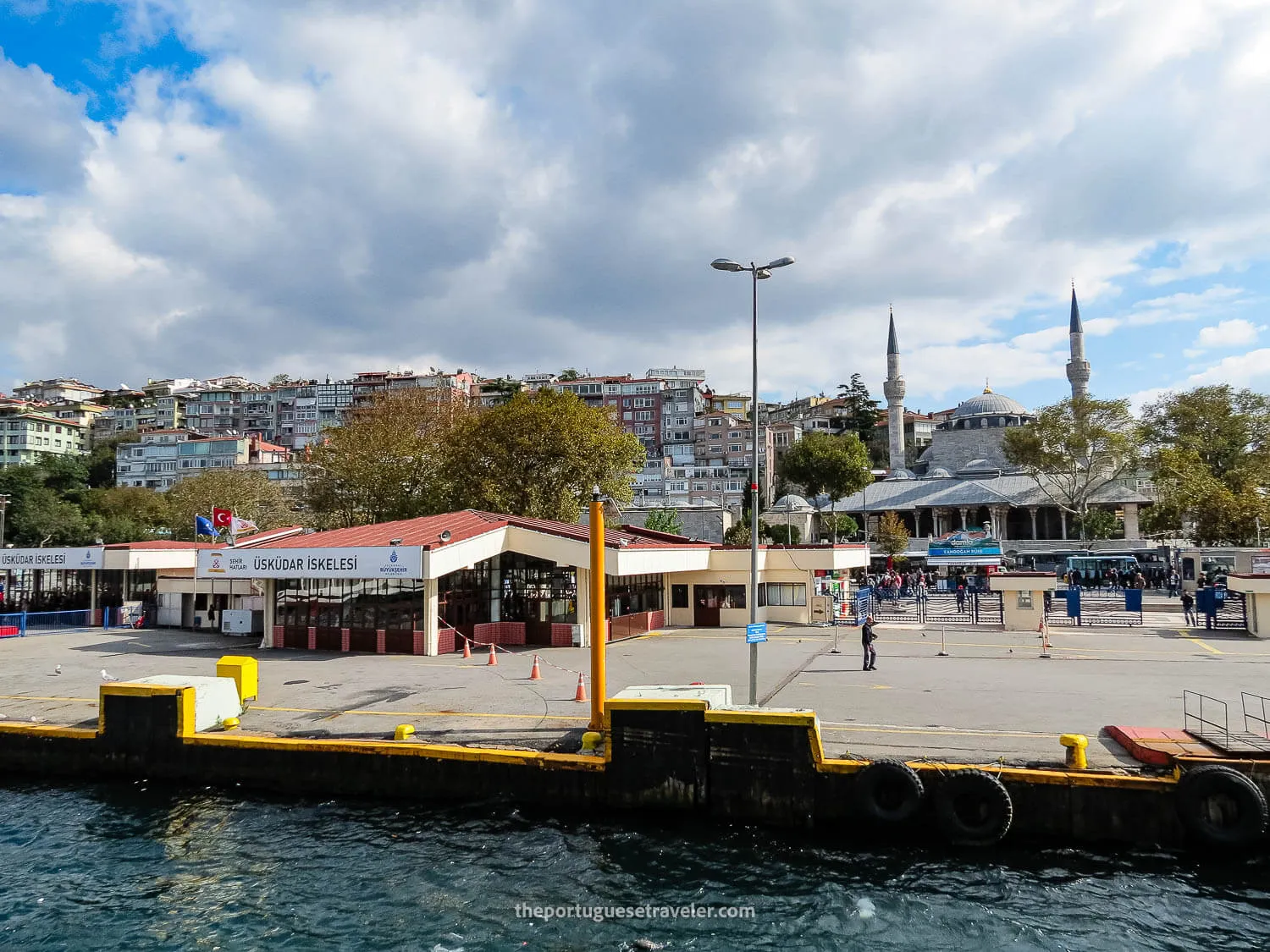
Both mosques were designed by Sinan for Mihrimah Sultan, daughter of Süleyman the Magnificent. The Edirnekapı mosque, on the old land walls, has a commanding position and a bold design. The Üsküdar mosque, on the Asian side, is more intimate and overlooks the Bosphorus. Legend has it that on Mihrimah’s birthday the sun sets behind one mosque while the moon rises over the other, an alignment said to reflect Sinan’s secret admiration for her.
34. Büyük Valide Han (workshops & rooftop views)
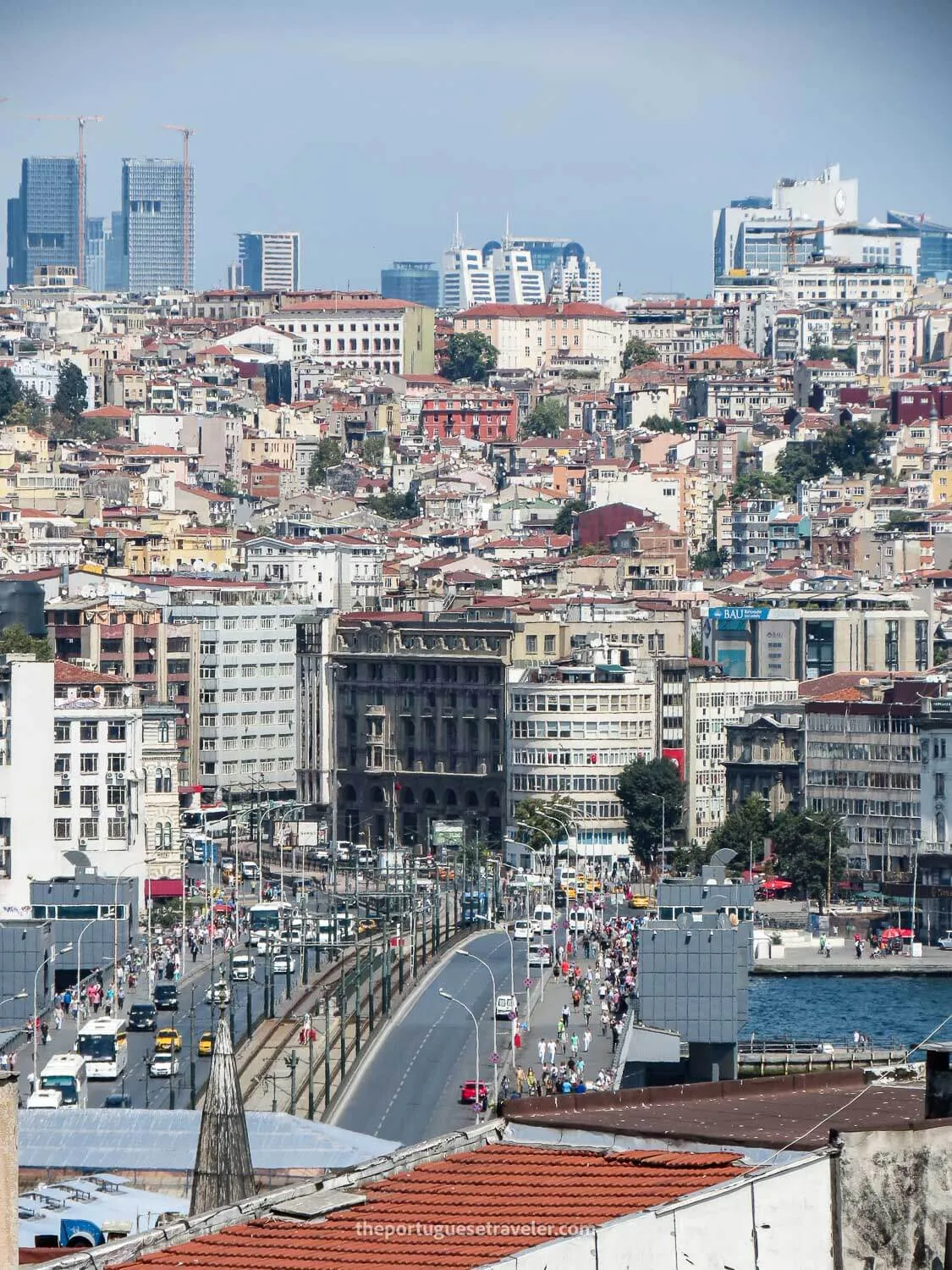
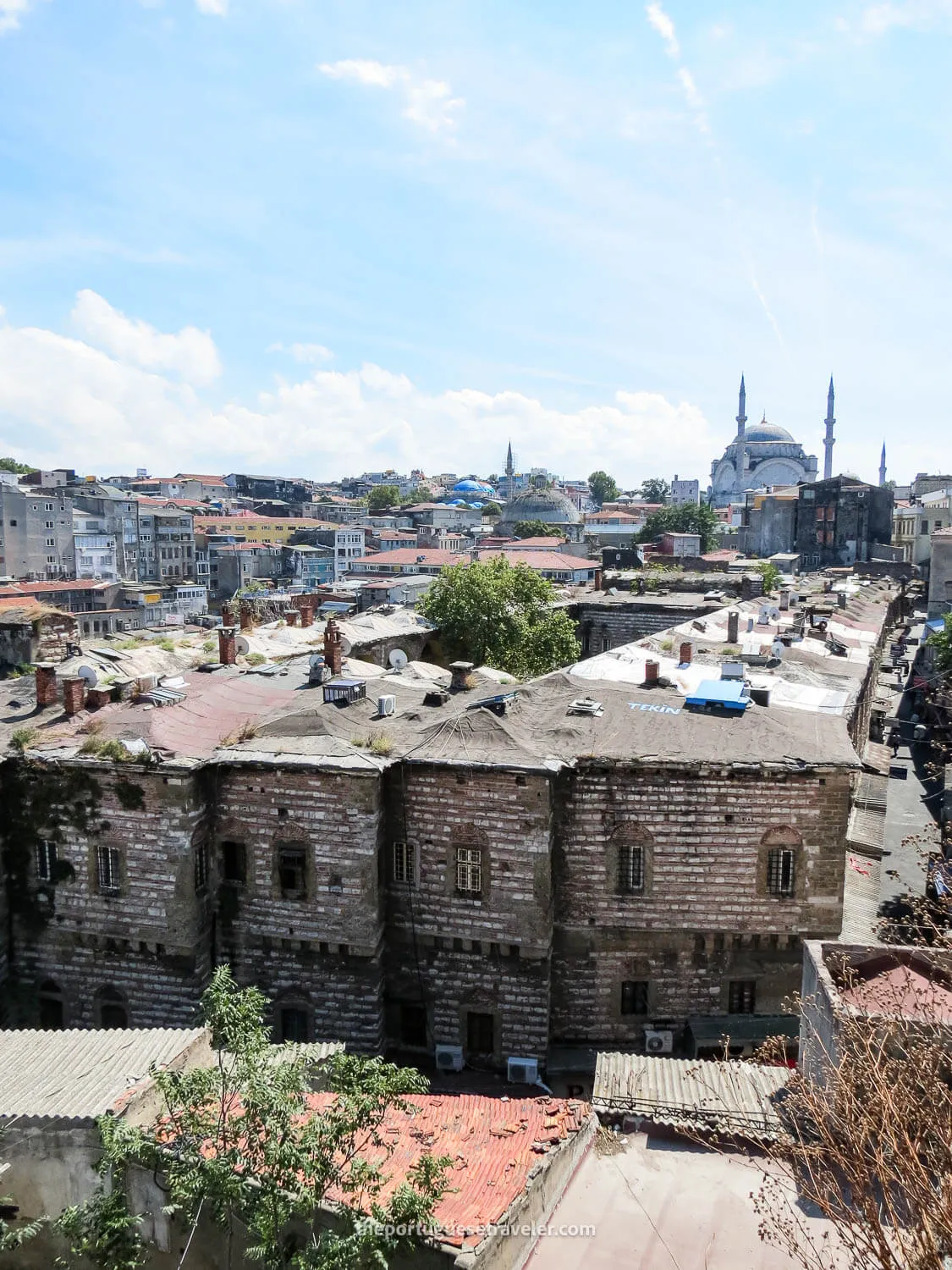
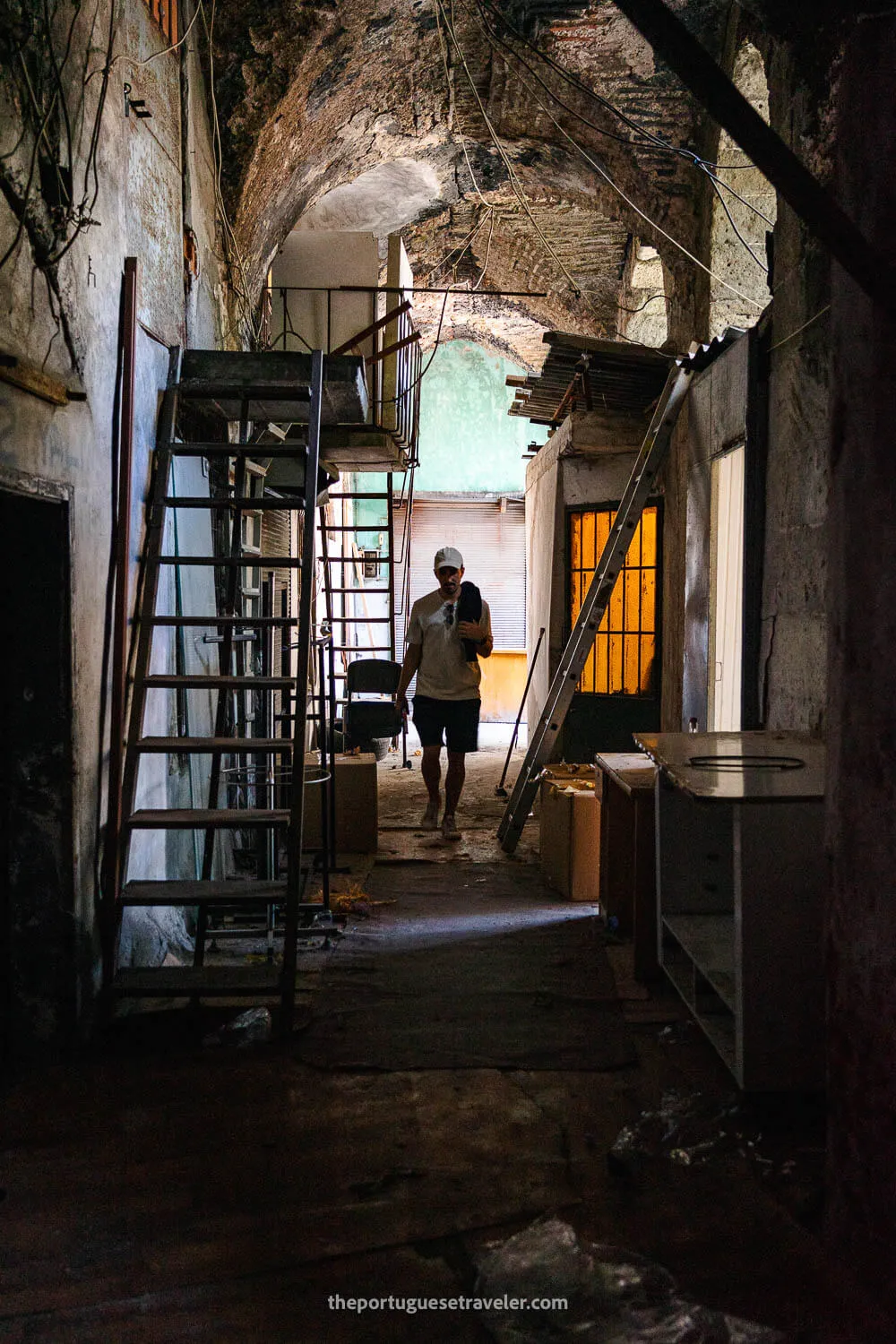
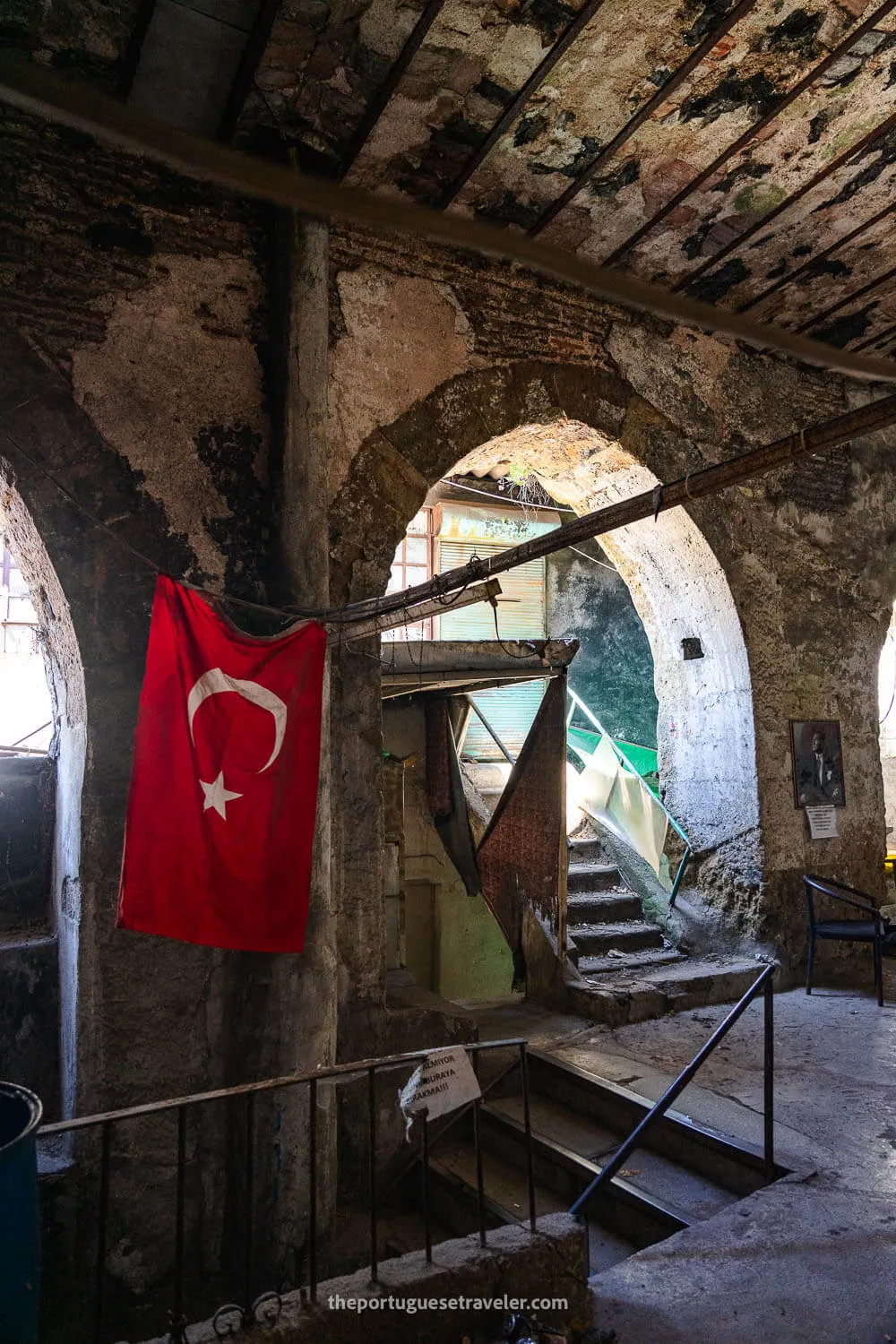
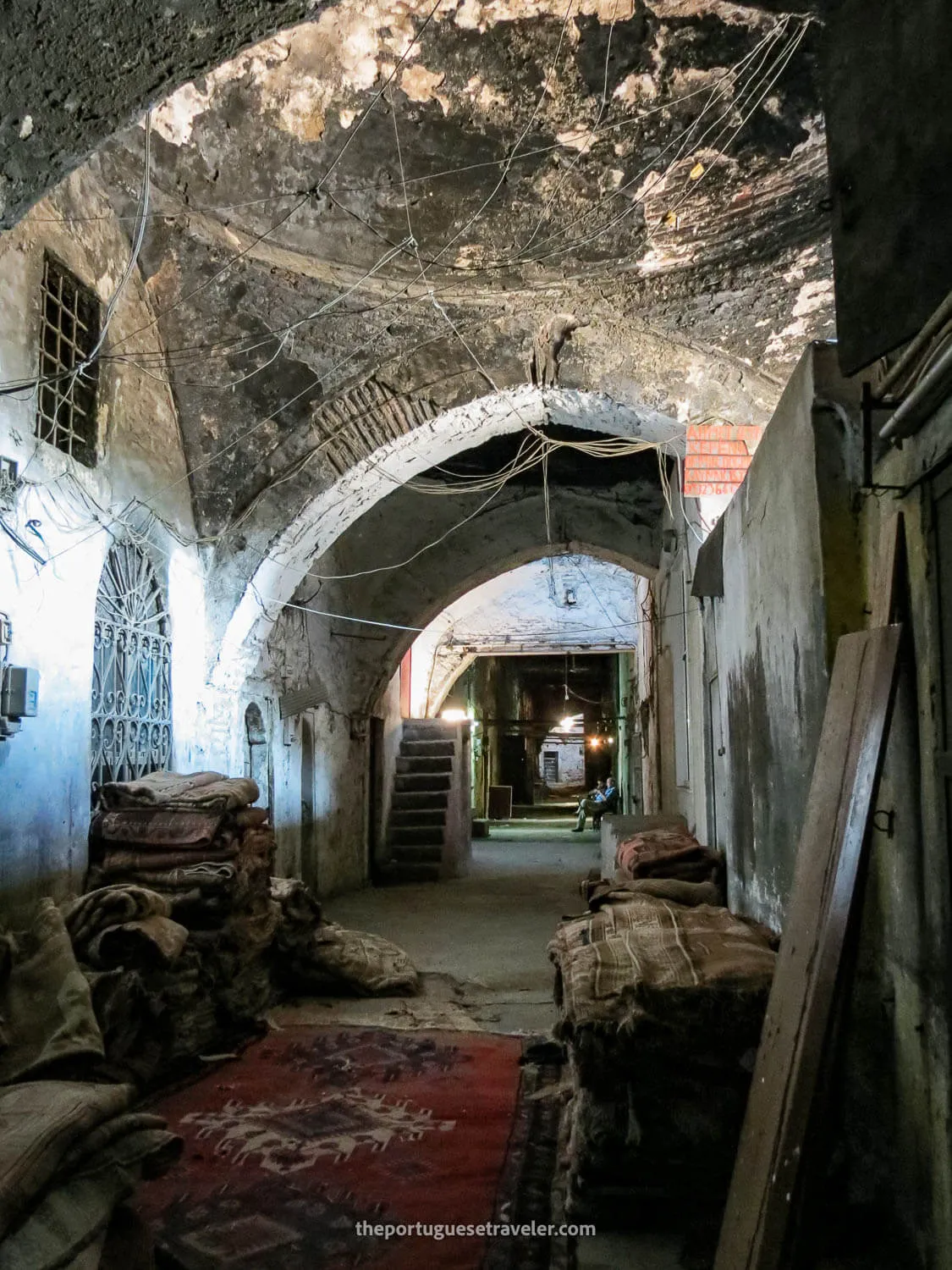
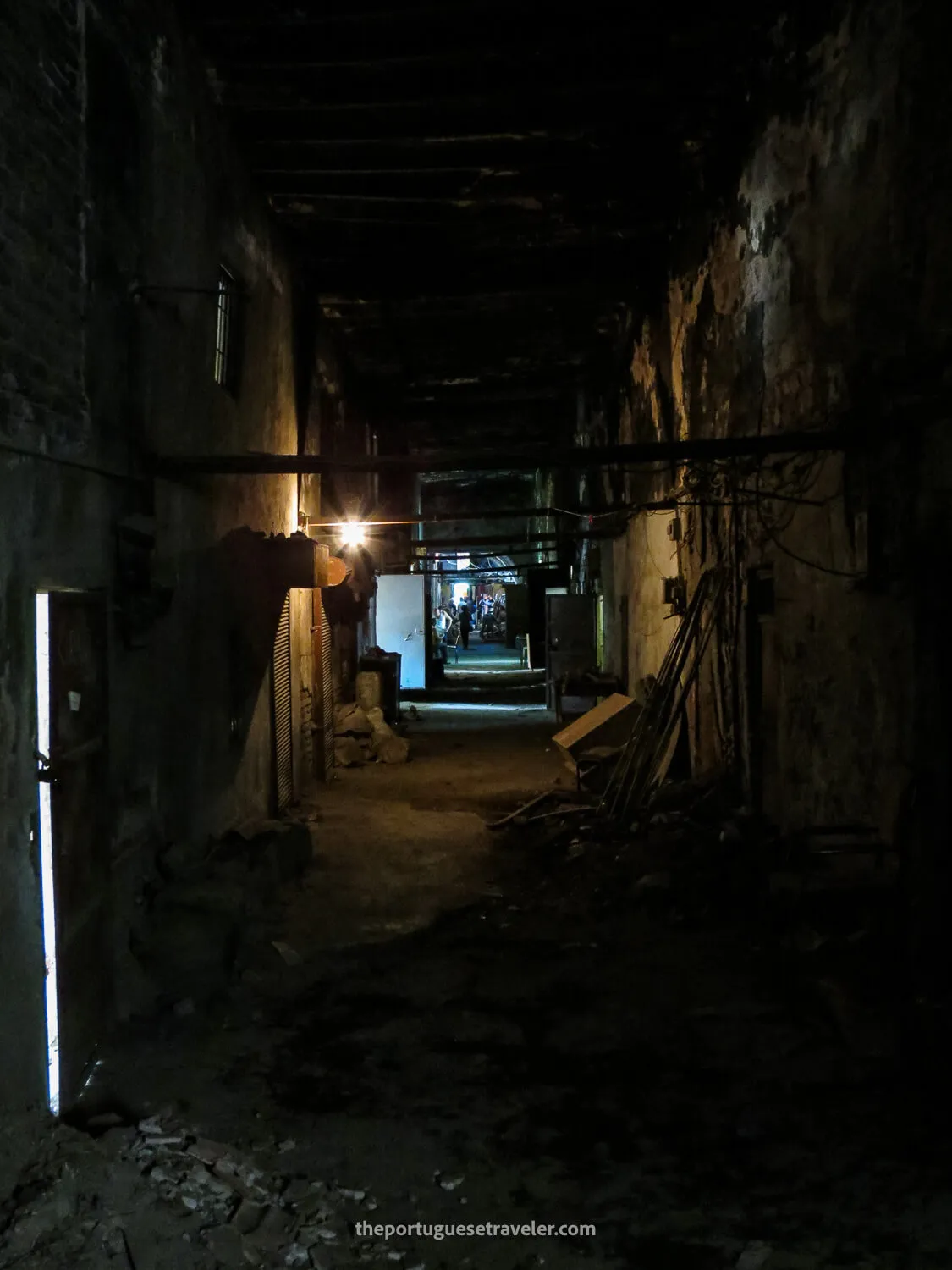
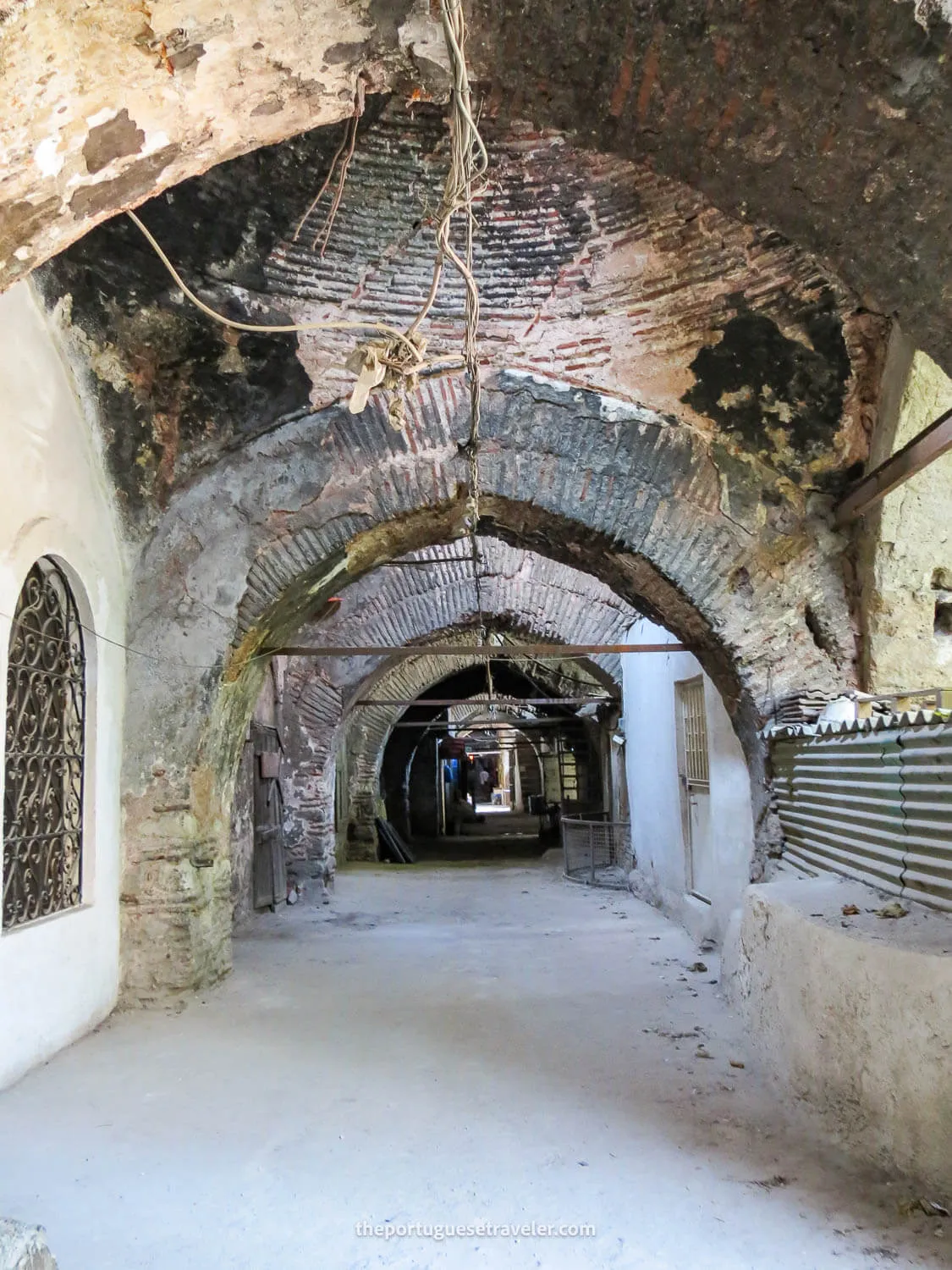
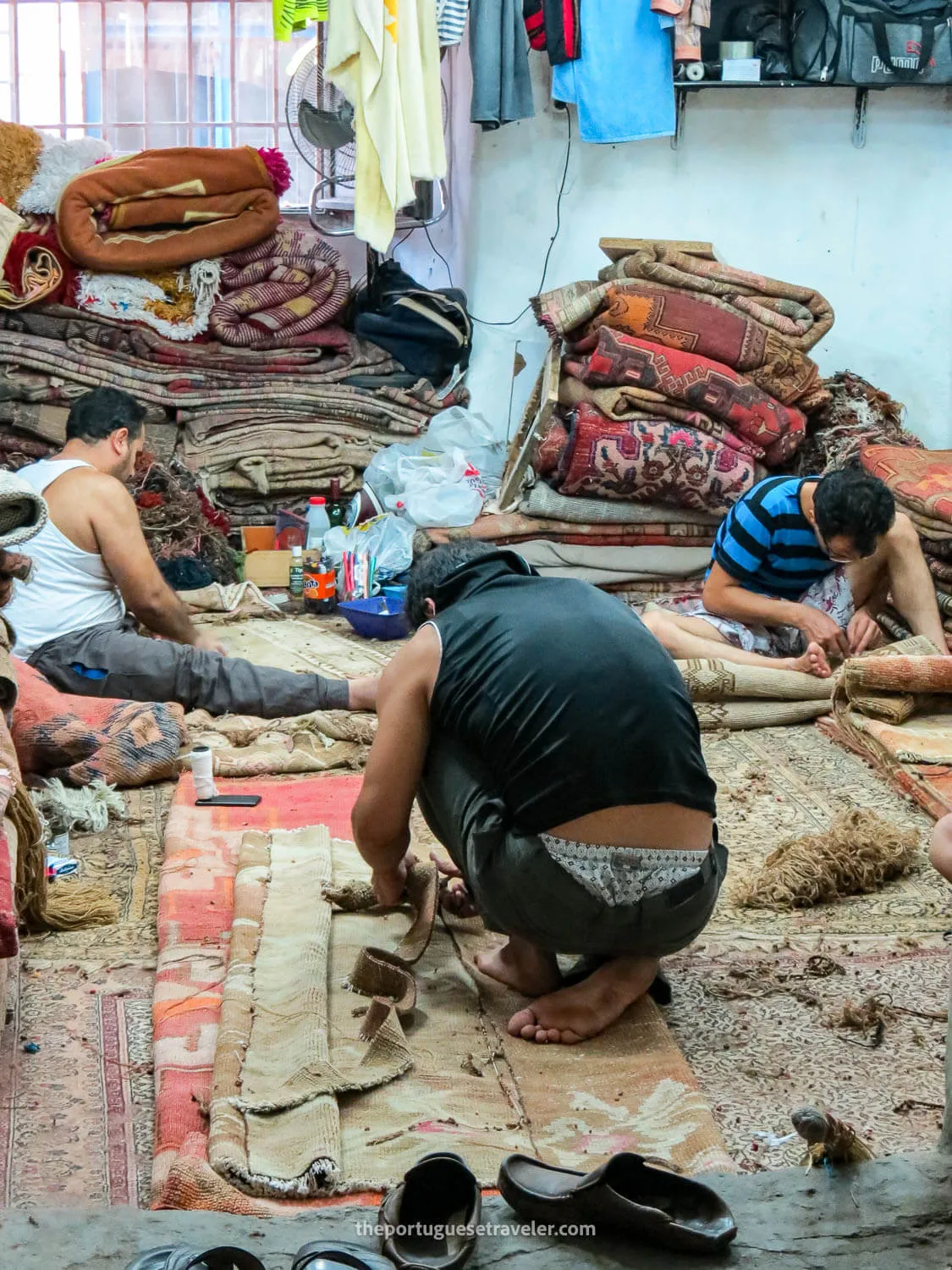
Climb up to the Büyük Valide Han, a historic caravanserai in the streets near the Grand Bazaar. Parts of it are in ruins, and the rooftop is the reason most people come. From there domes and minarets fill the foreground, with the Bosphorus beyond, above the noise of the bazaar.
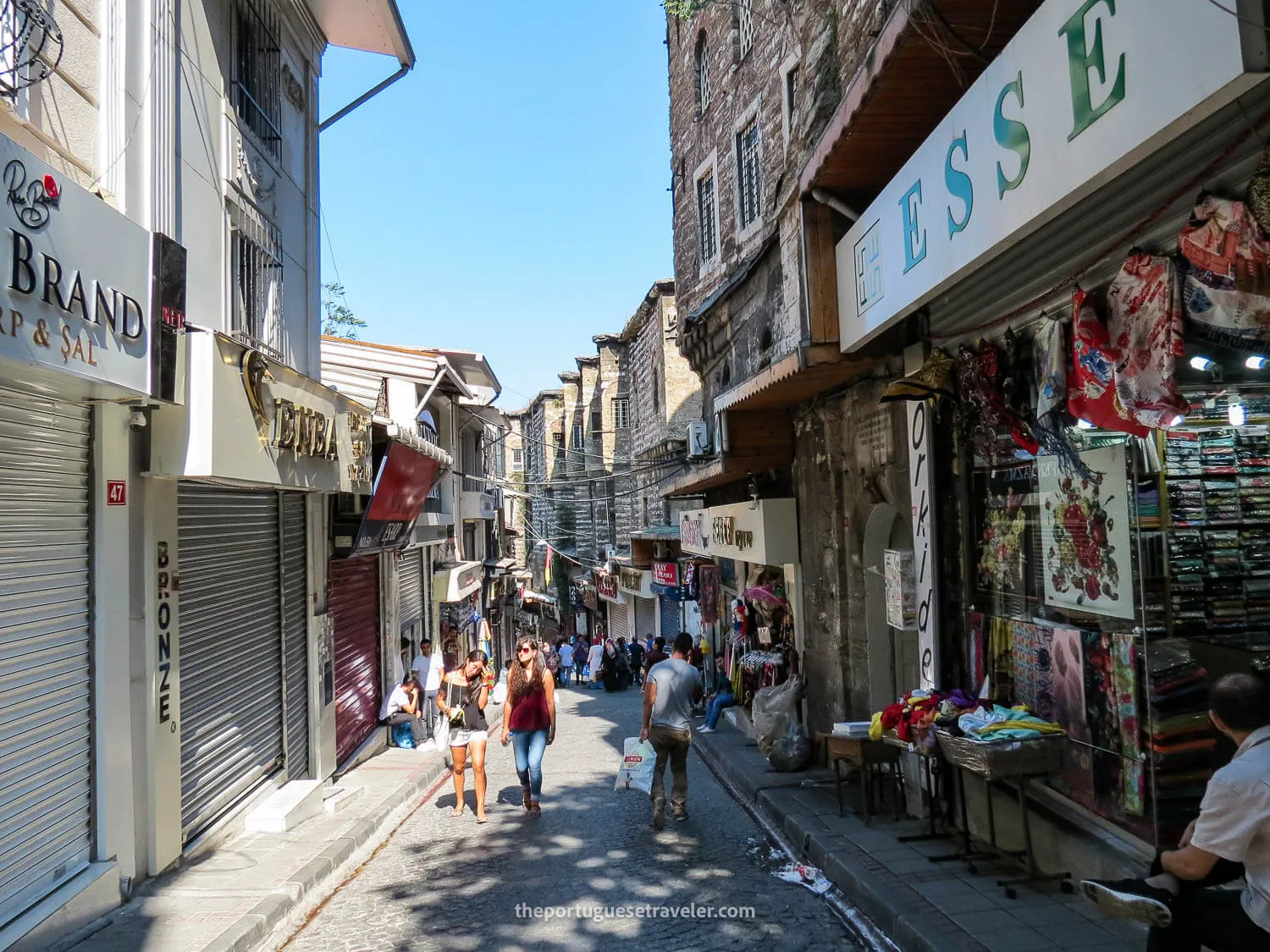
The outside of the Büyük Valide Han
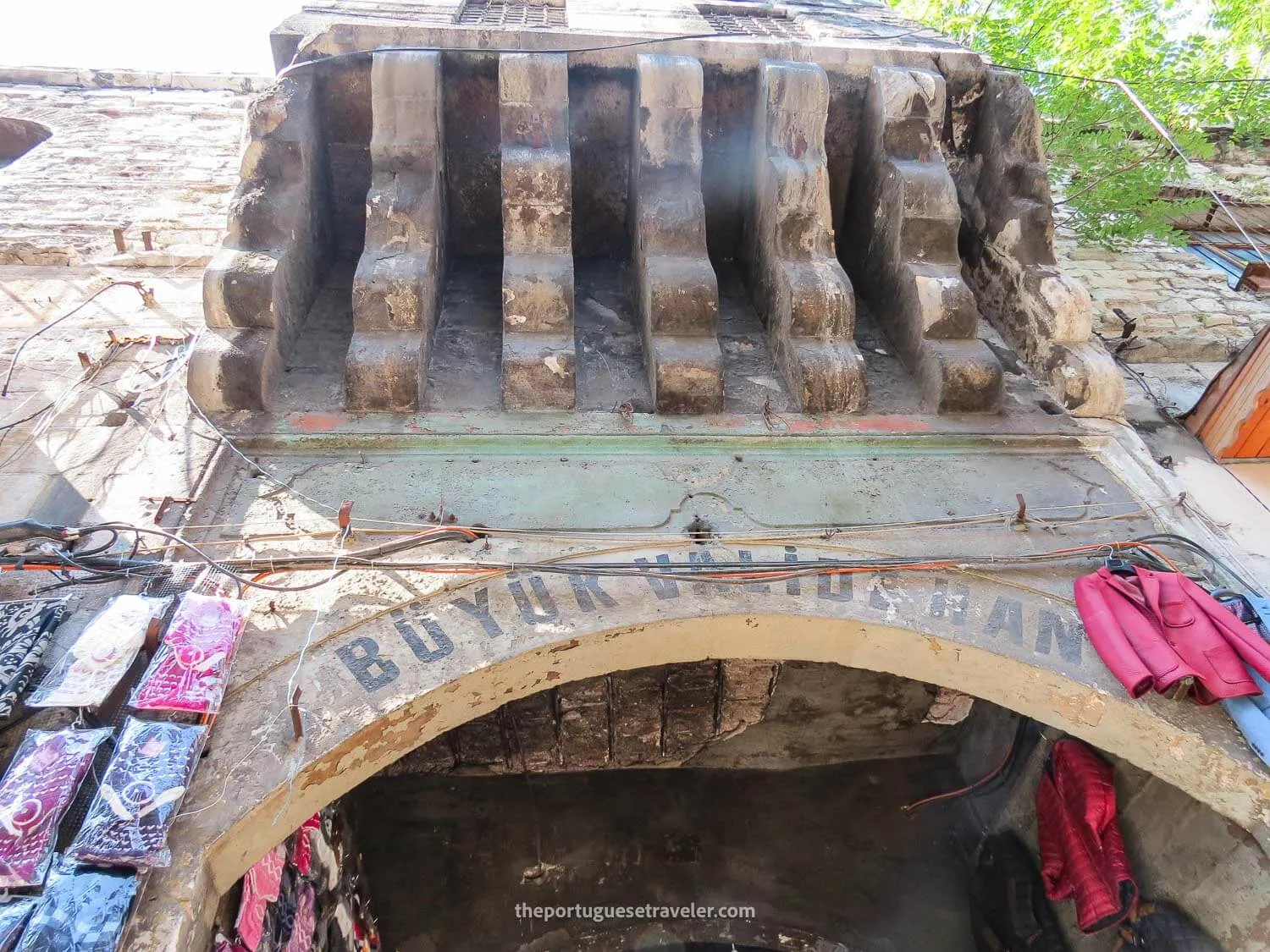
The gate of the Büyük Valide Han
A lamp workshop in Büyük Valide Han
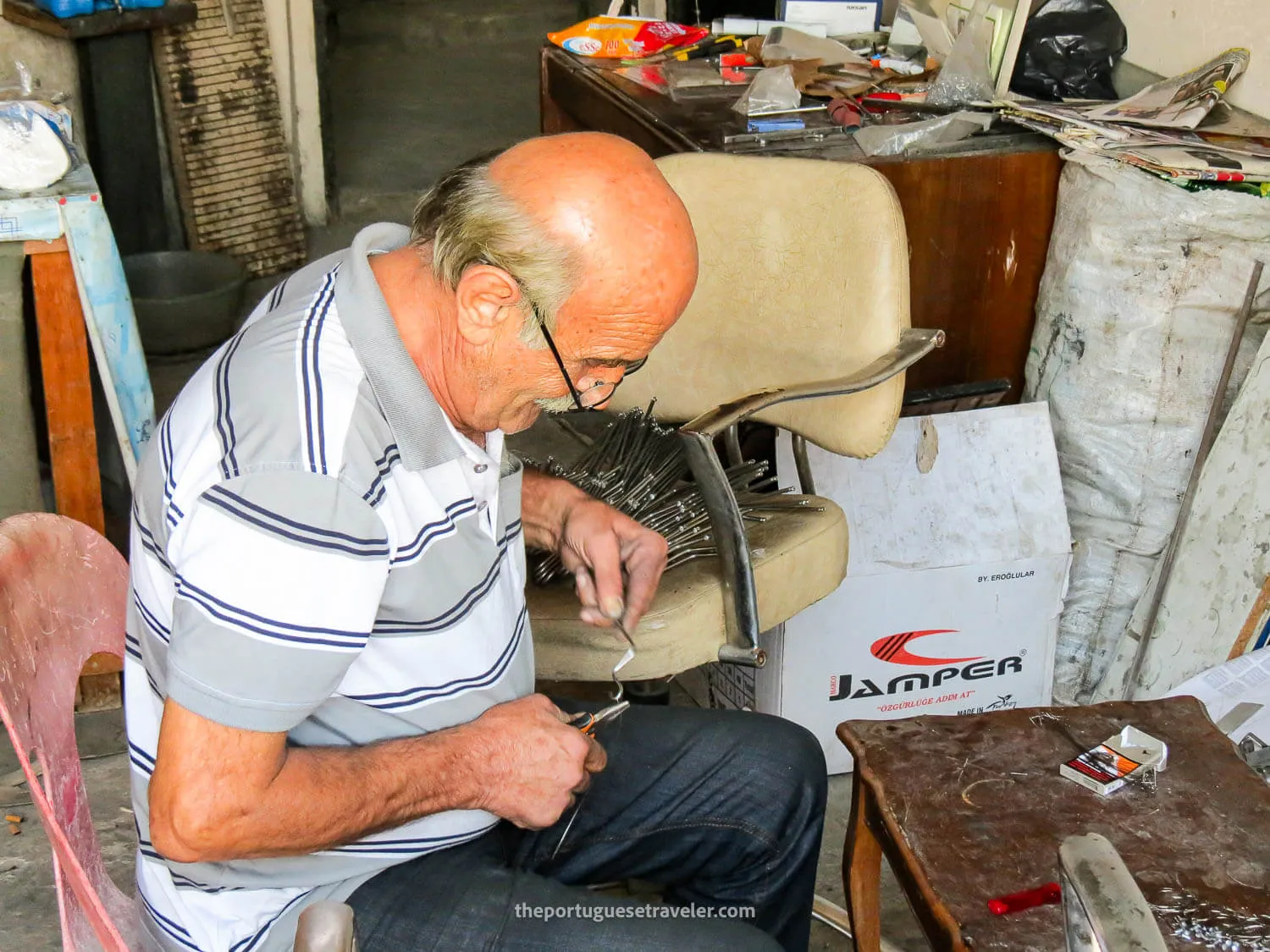
A cheese-cutting tool workshop inside Büyük Valide Han
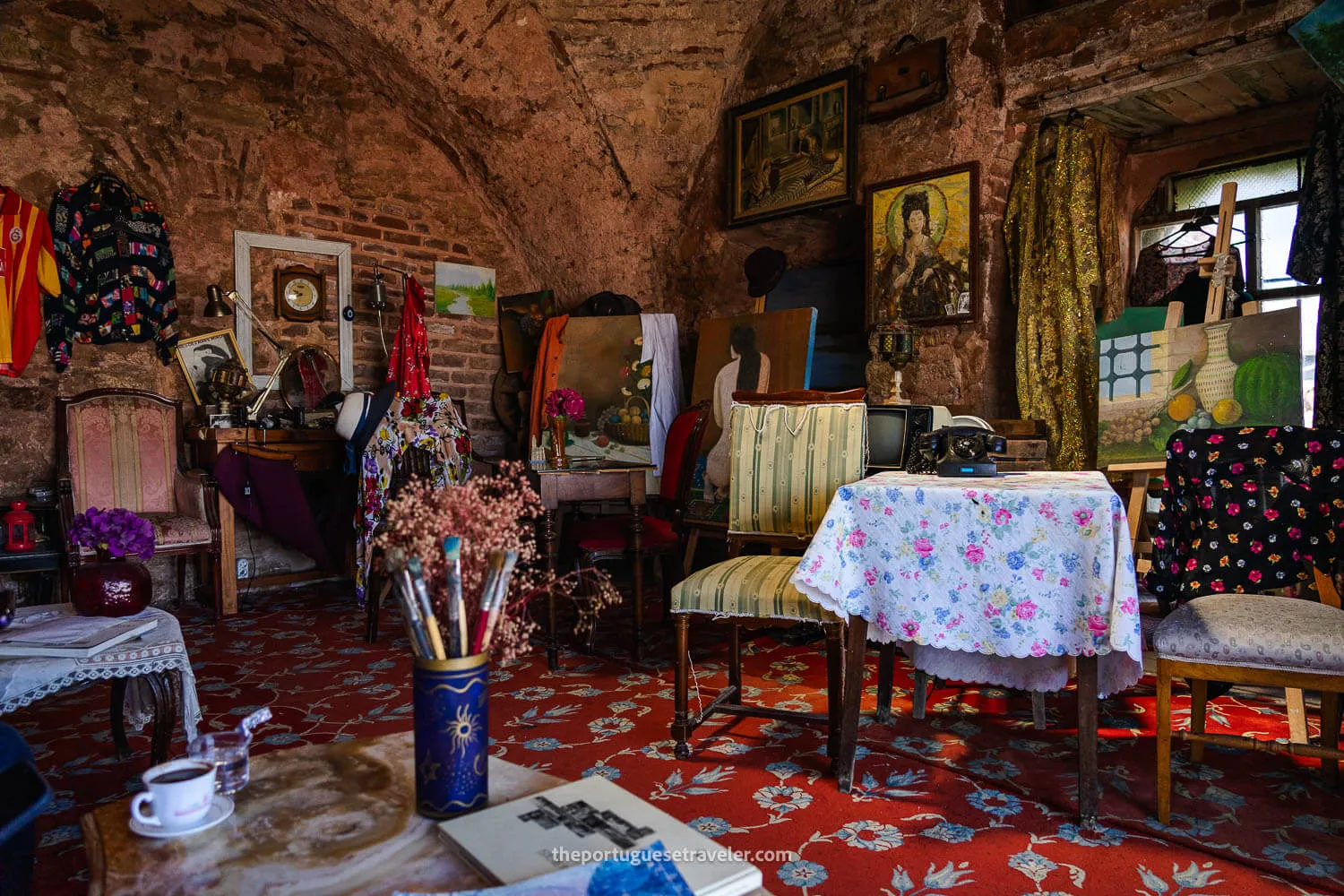
The interior of the Büyük Valide Han
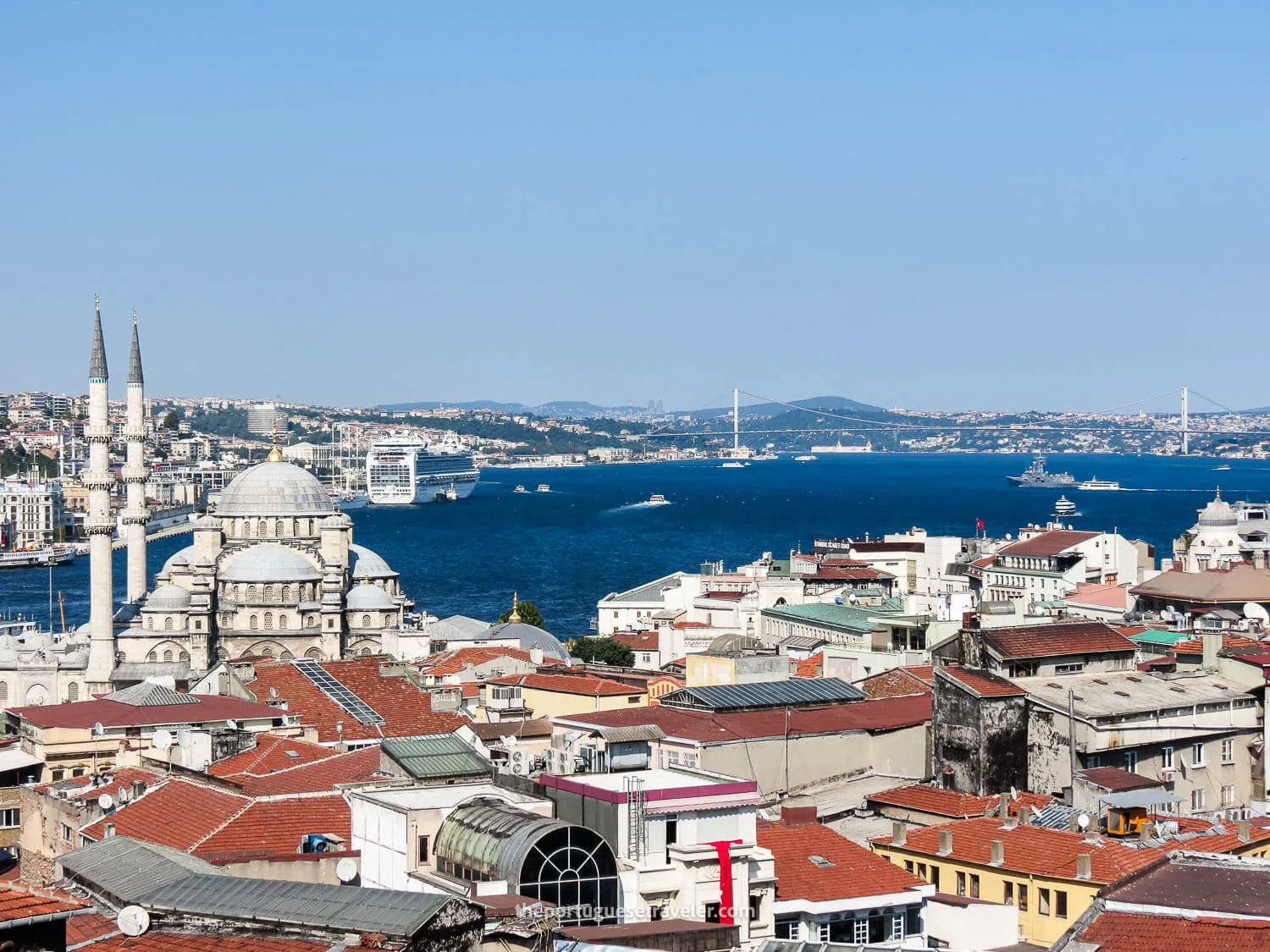
The view from the Büyük Valide Han’s rooftop
35. Yeni Valide Han
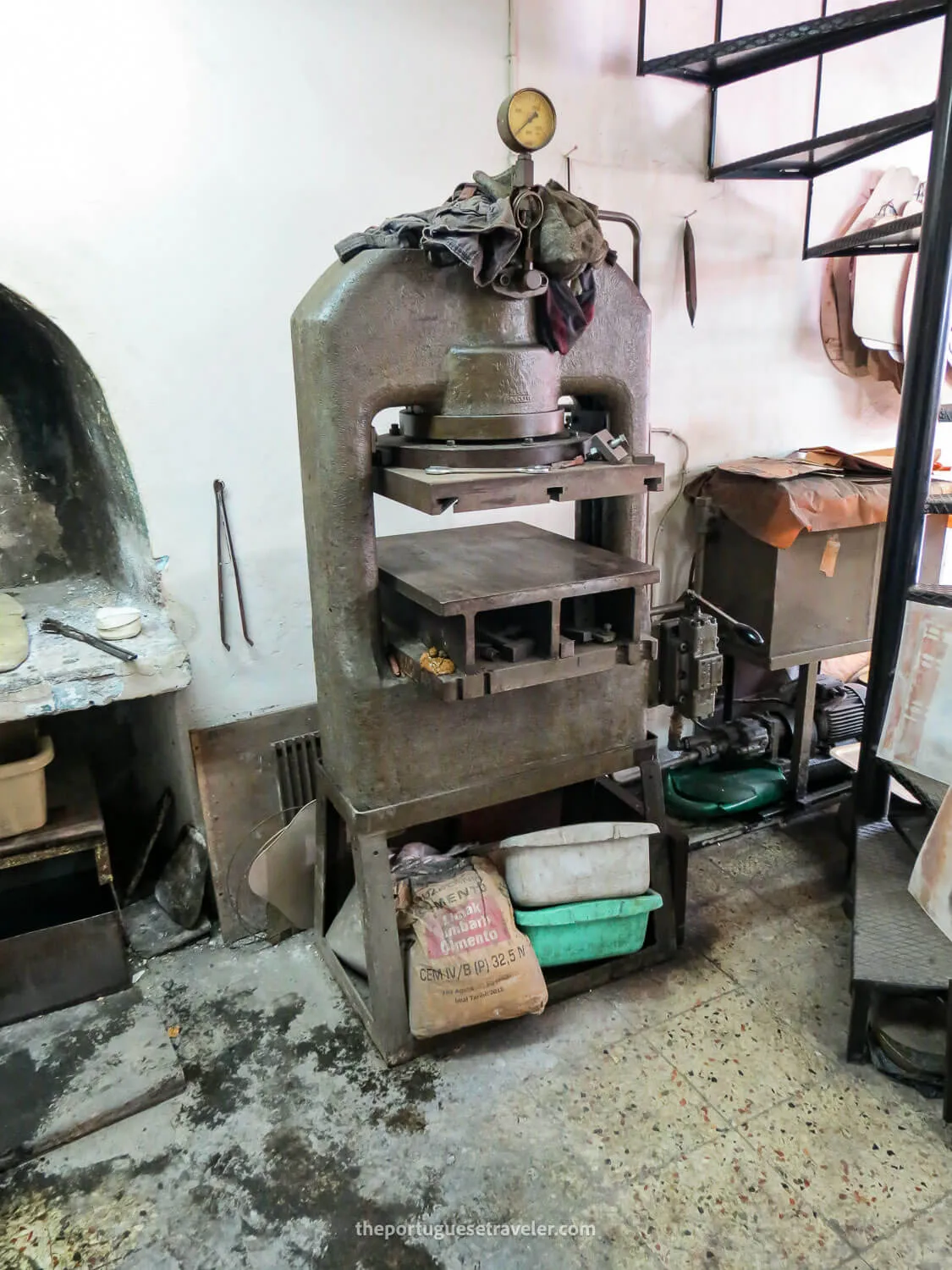
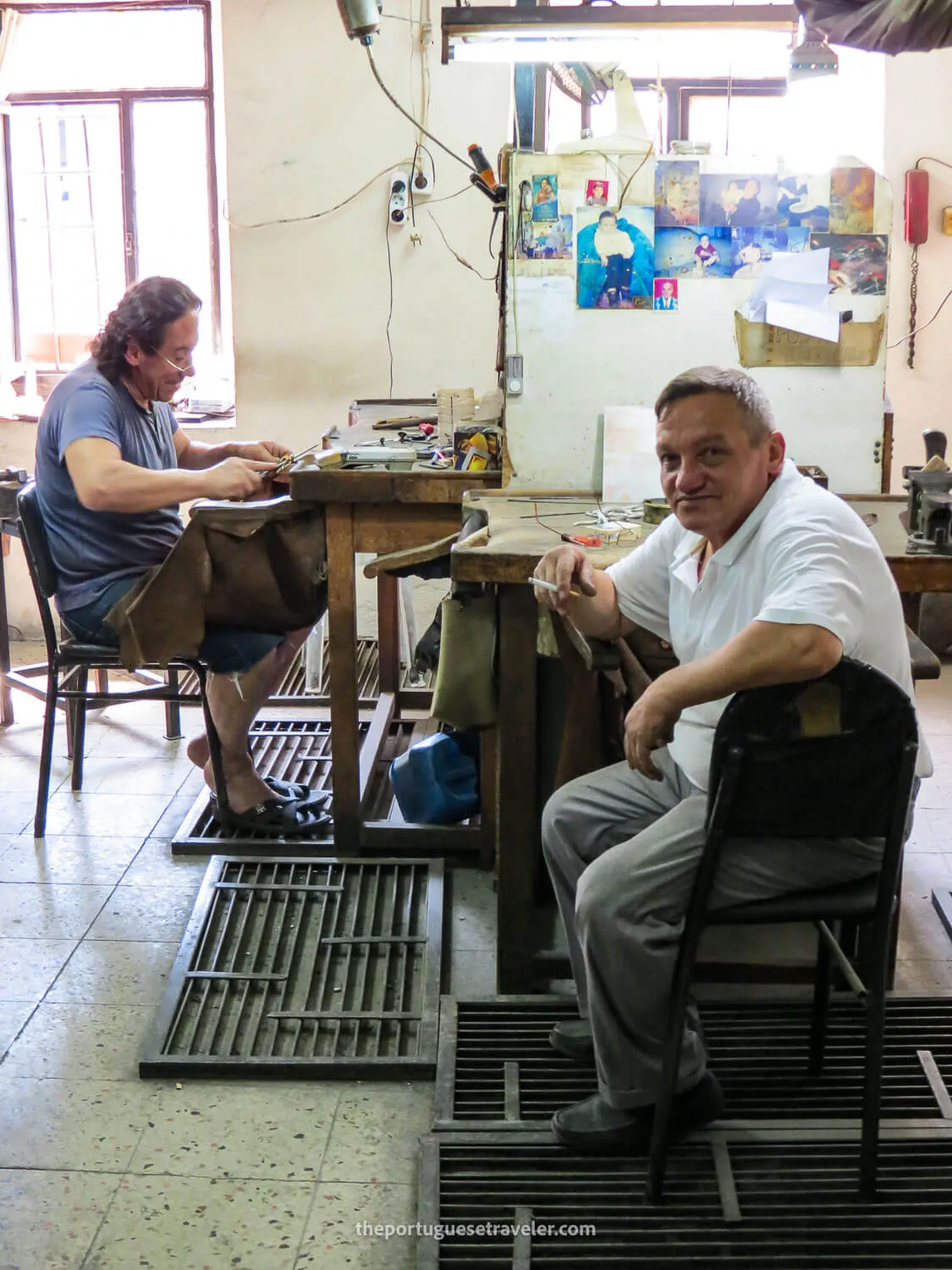
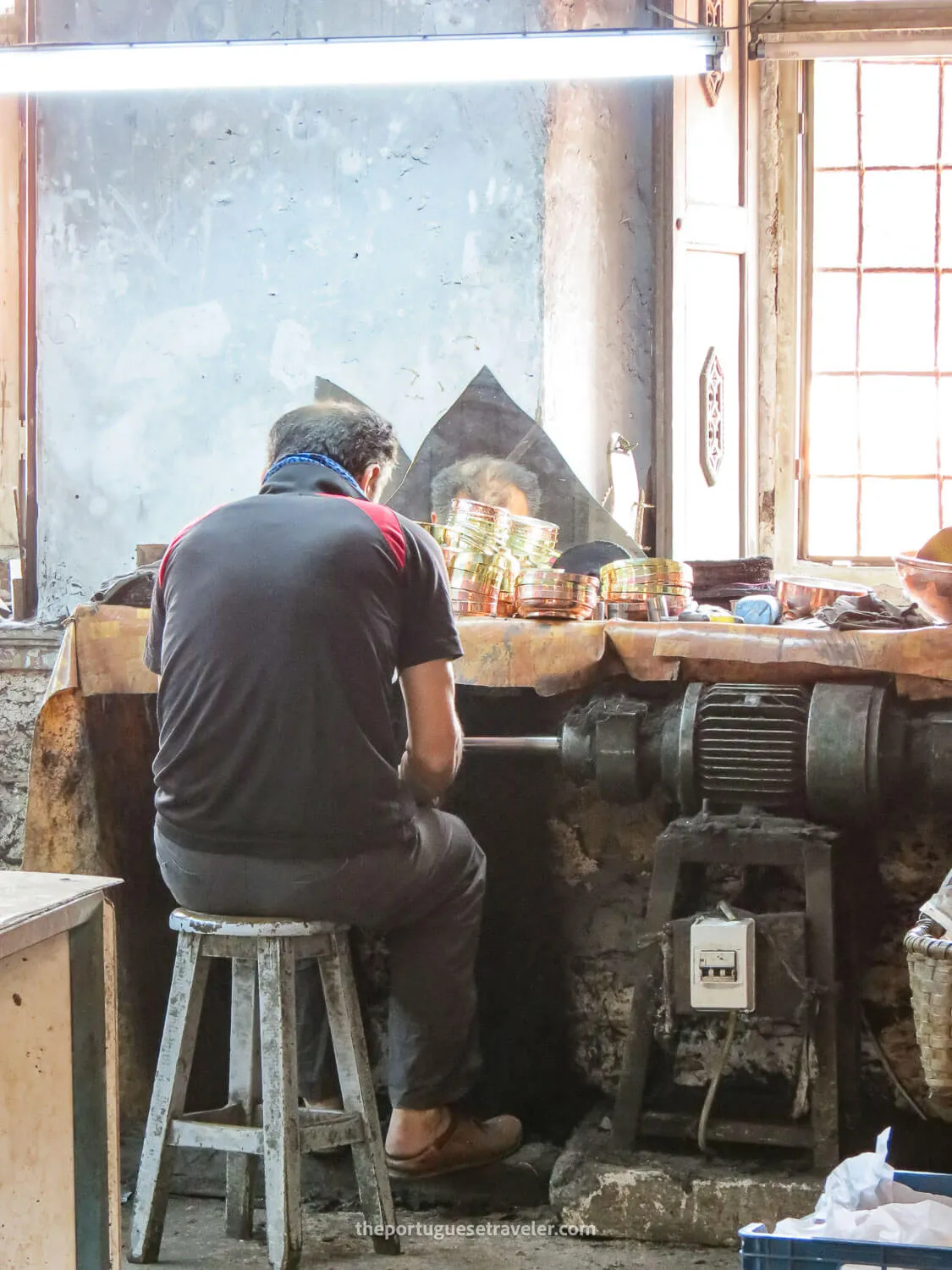
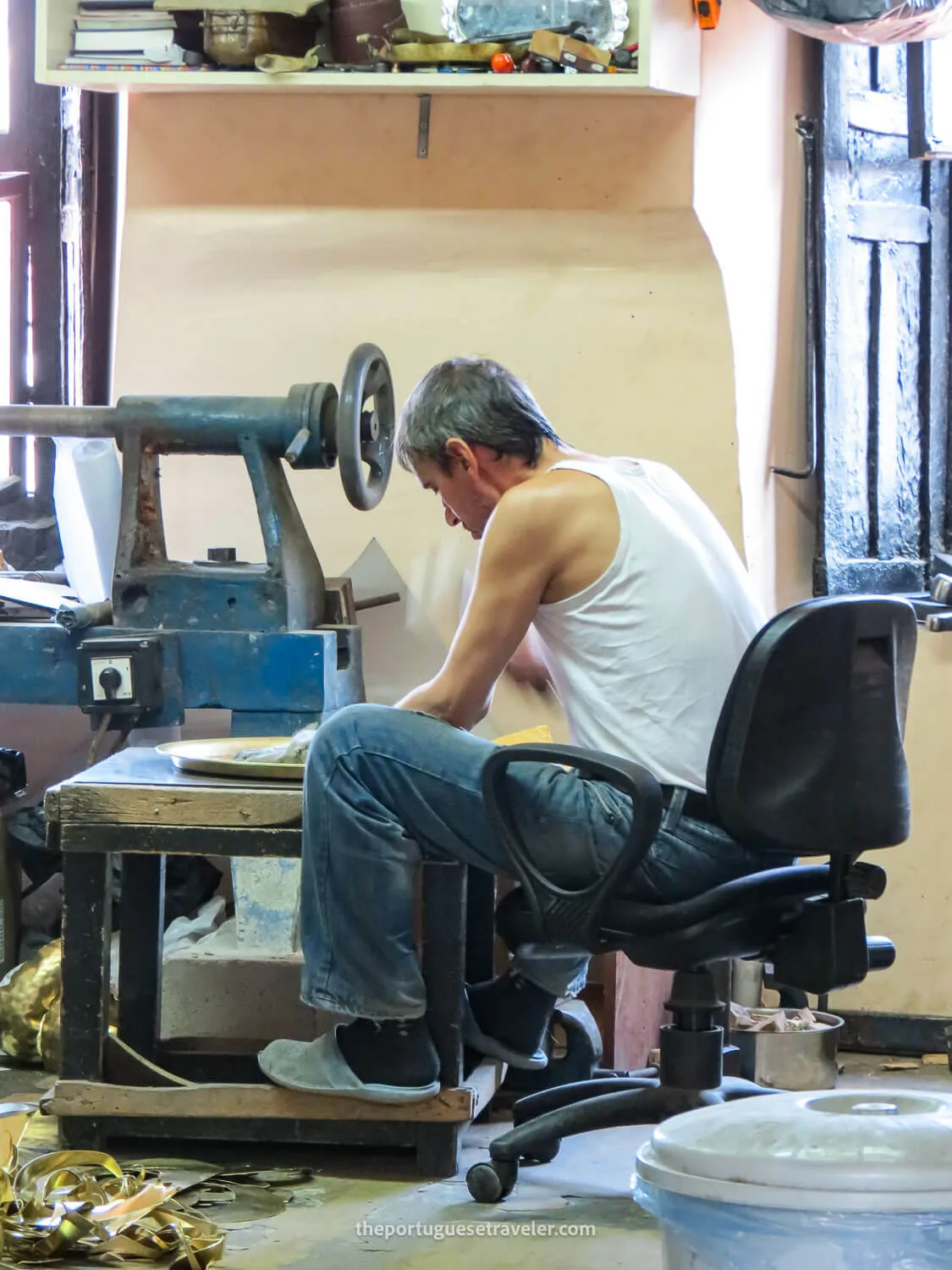
The Yeni Valide Han is another atmospheric caravanserai, from the days when merchants and traders filled Istanbul’s inns with goods from across the empire. Its courtyards and crumbling chambers feel raw and unpolished. If Büyük Valide Han is about rooftop views, this one is about atmosphere.
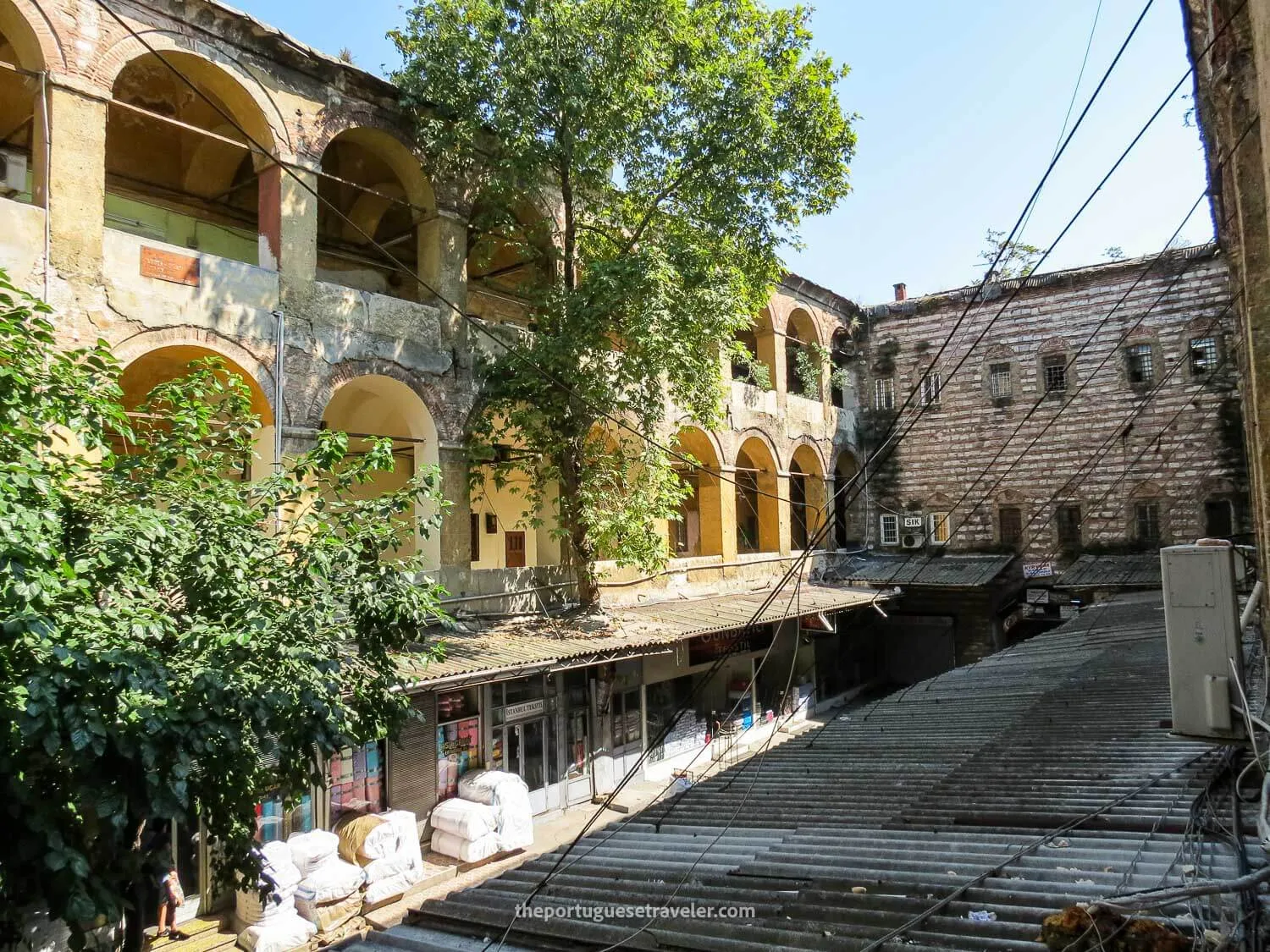
The Büyük Yeni Han in Istanbul
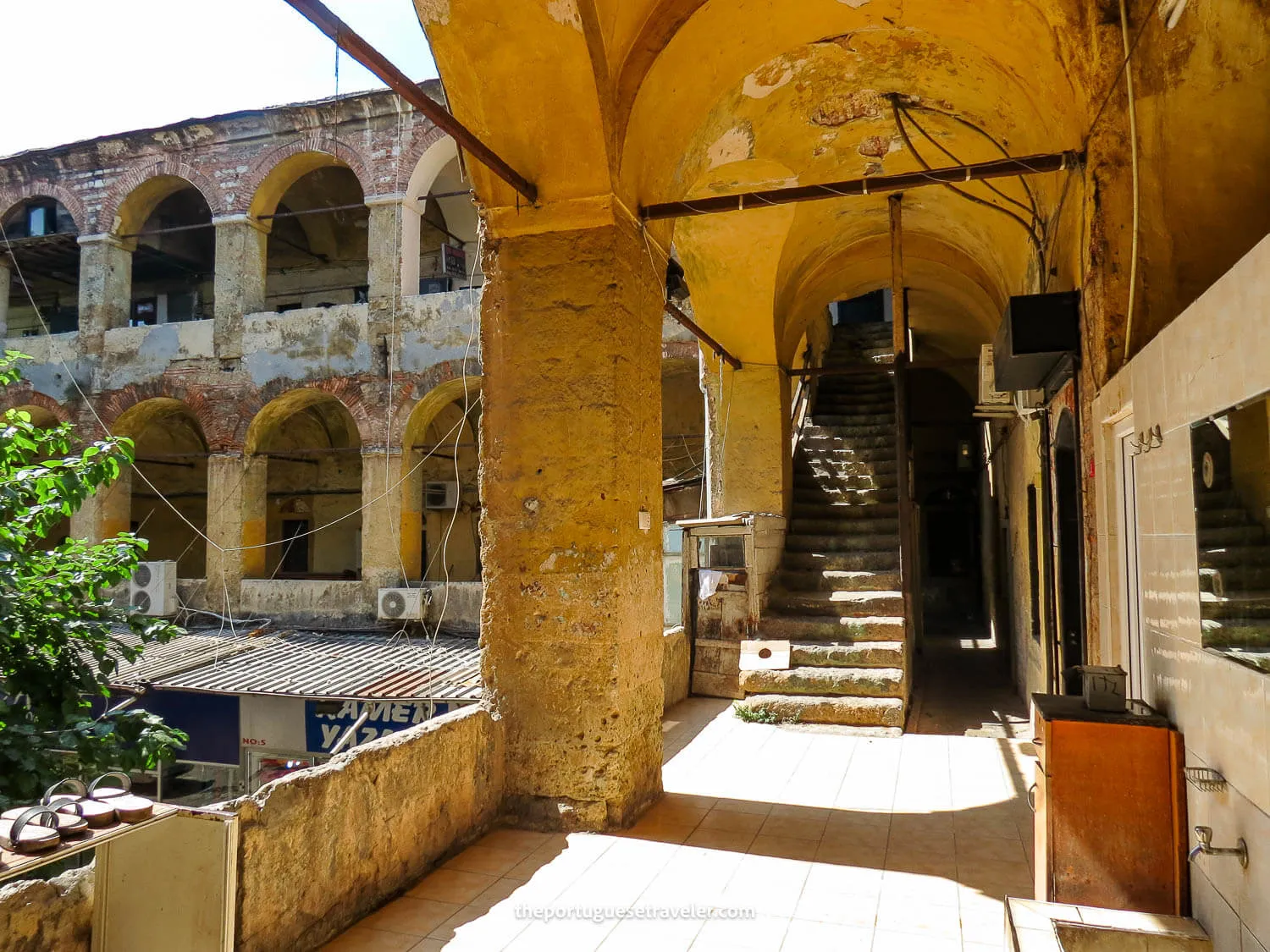
The Büyük Valide Han
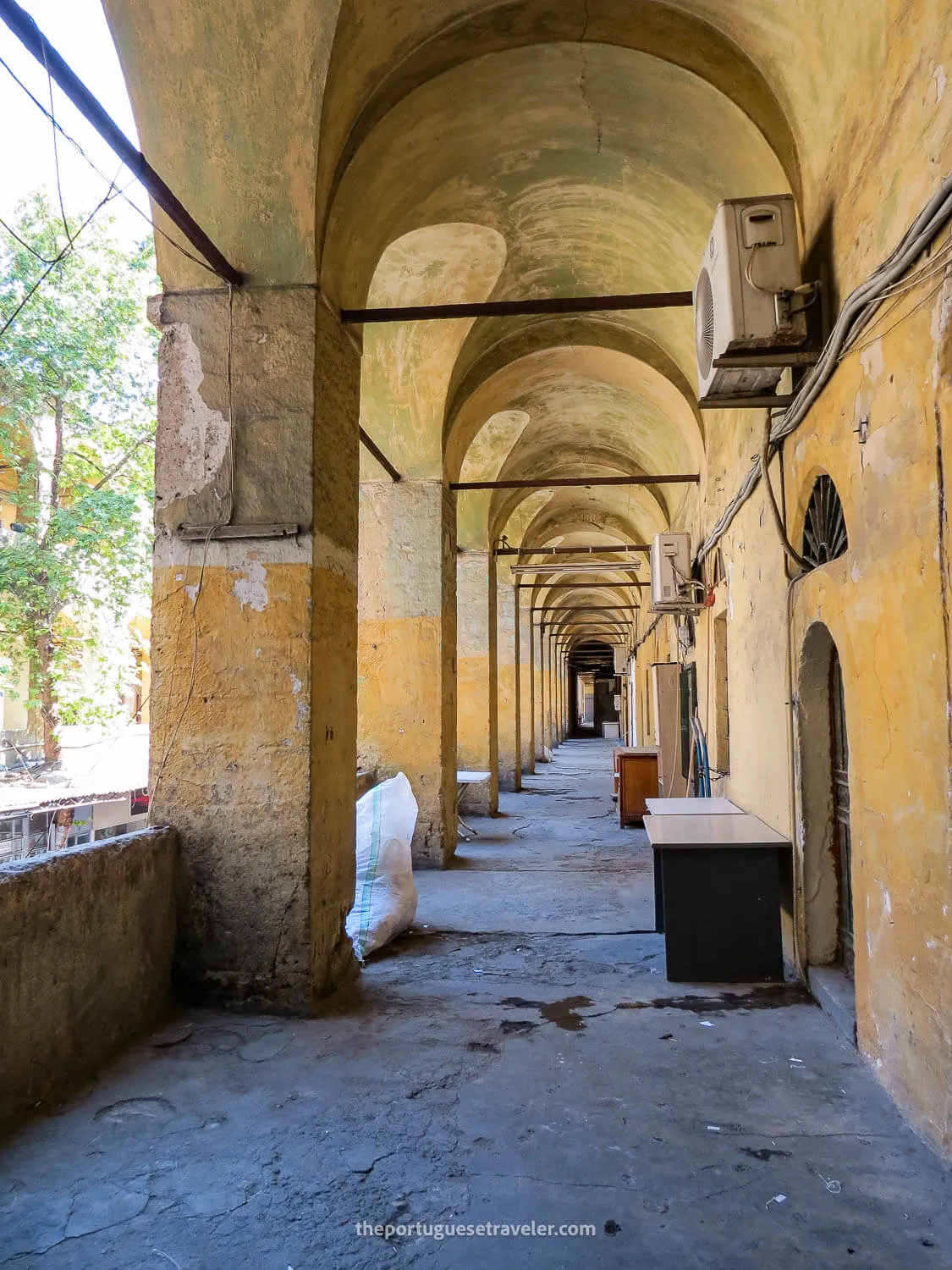
The Büyük Yeni Han in Istanbul
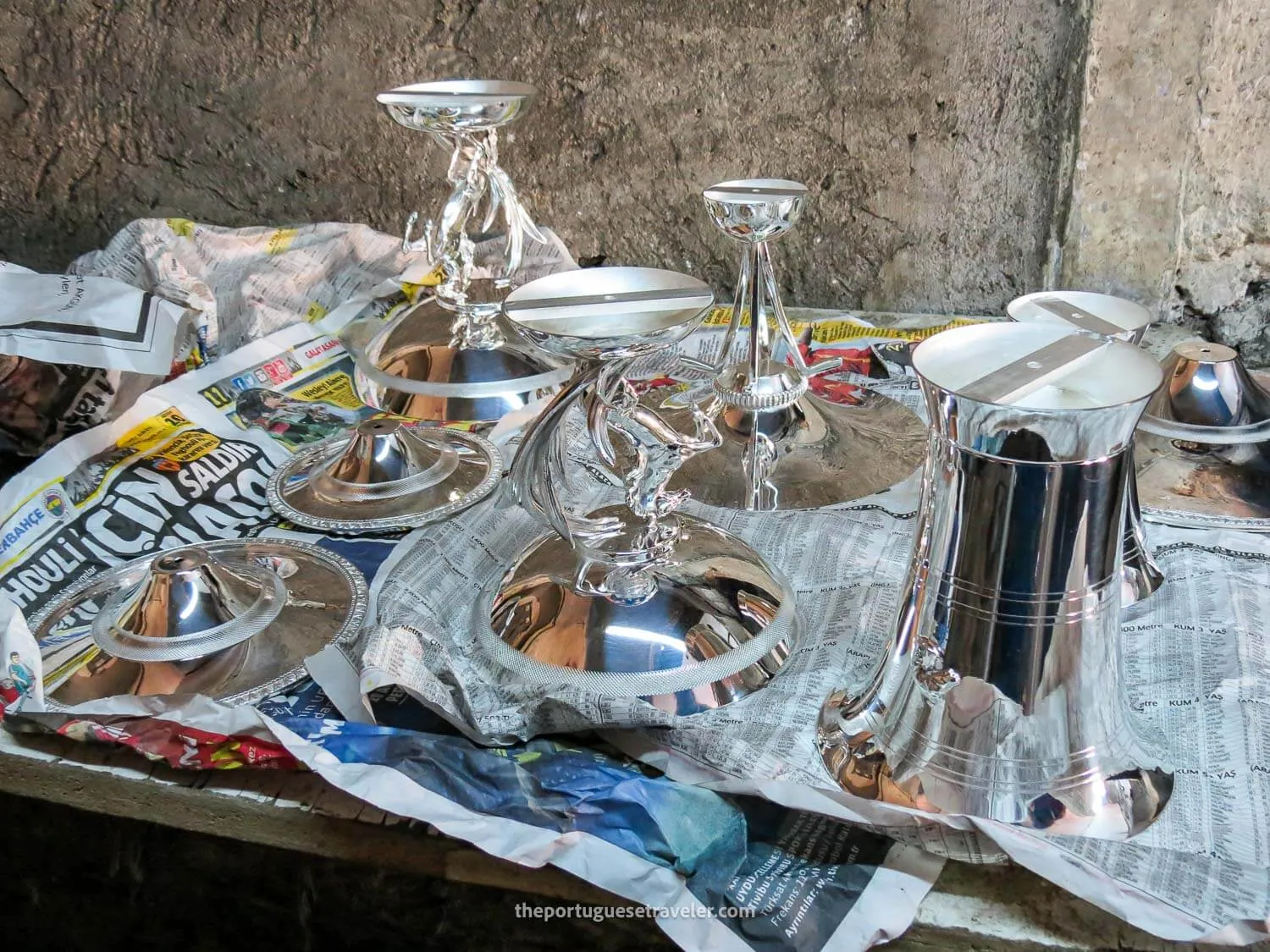
A silver workshop in Büyük Valide Han
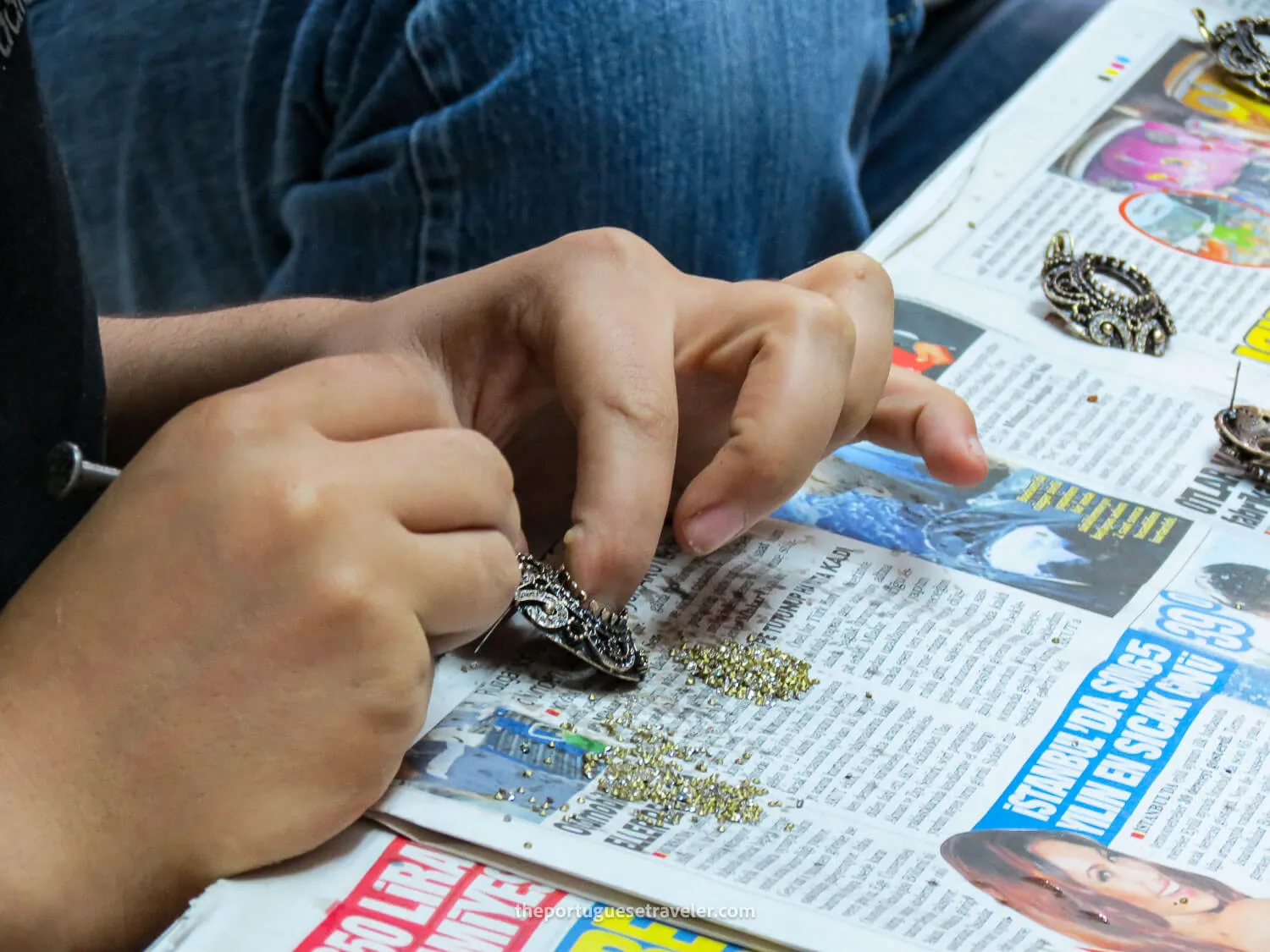
A jewellery workshop in the Büyük Yeni Han
36. Grand Bazaar (Kapalıçarşı)
The Grand Bazaar is one of the largest and oldest covered markets in the world, with over 4,000 shops spread across labyrinthine alleys. You will find carpets, ceramics, jewelry and lanterns. Haggling is part of it, so do not be shy. The bazaar has been trading since the 15th century. If you need a break, there are traditional tea houses inside.
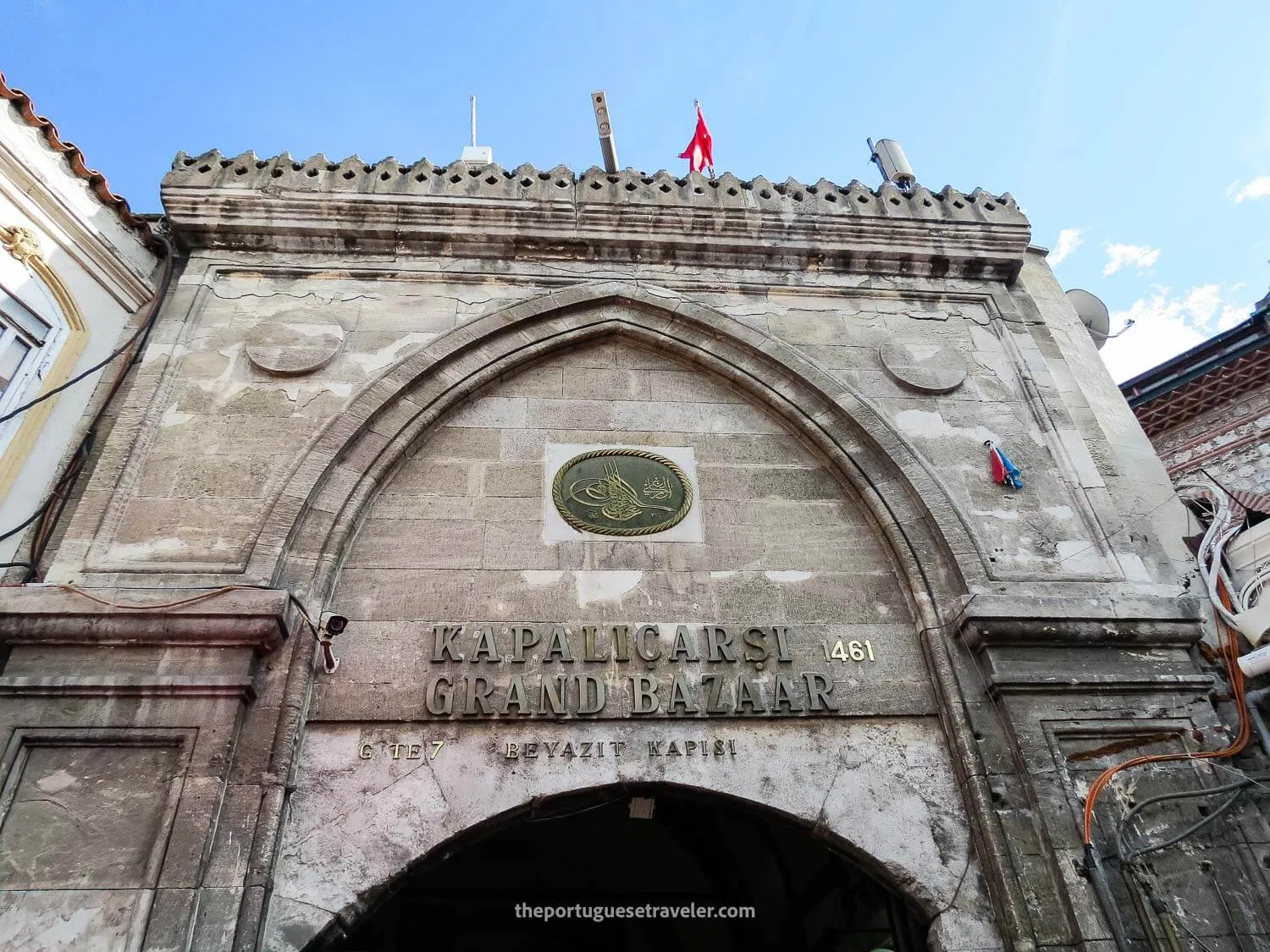
The entrance to the Grand Bazaar in Istanbul
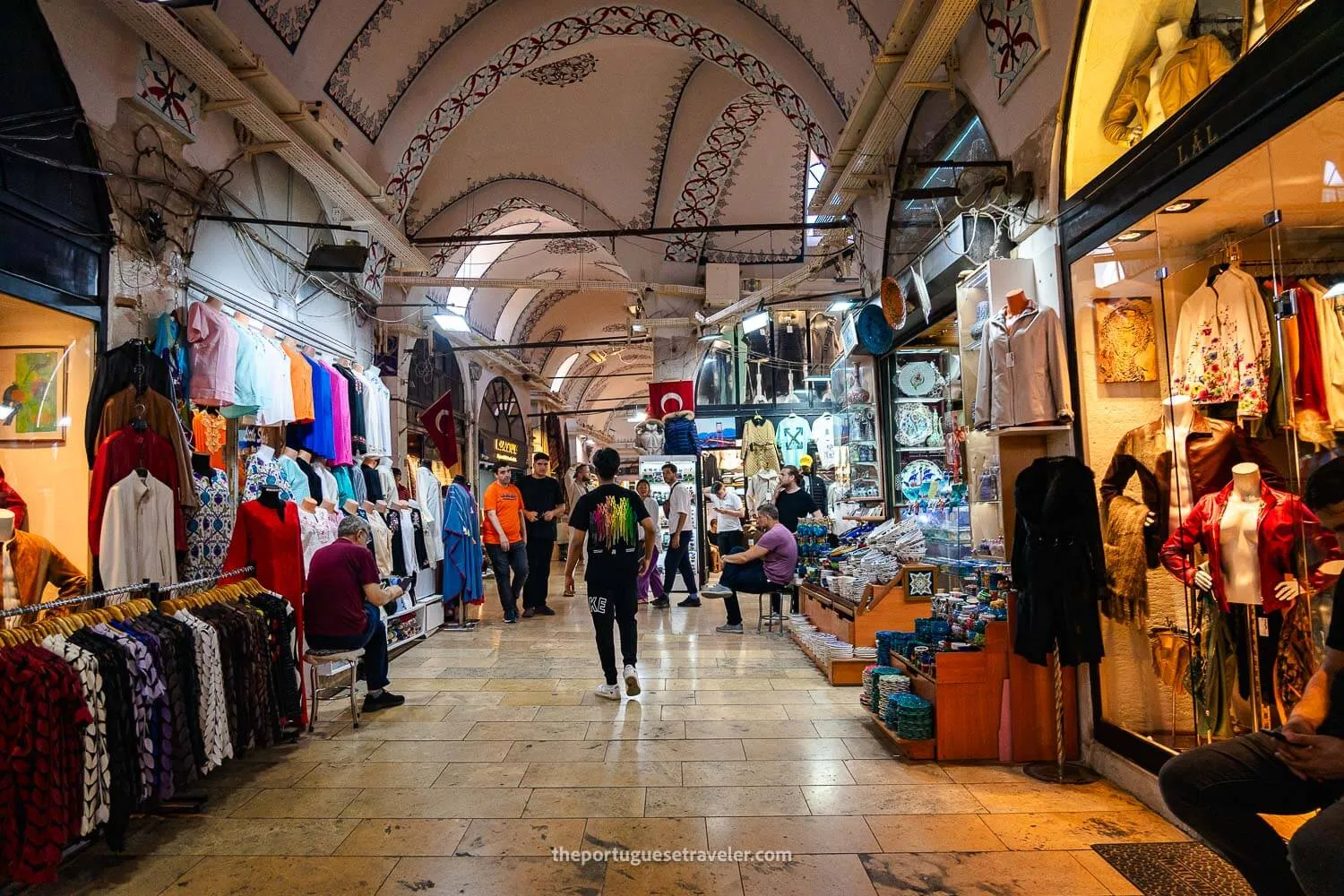
The Grand Bazaar of Istanbul
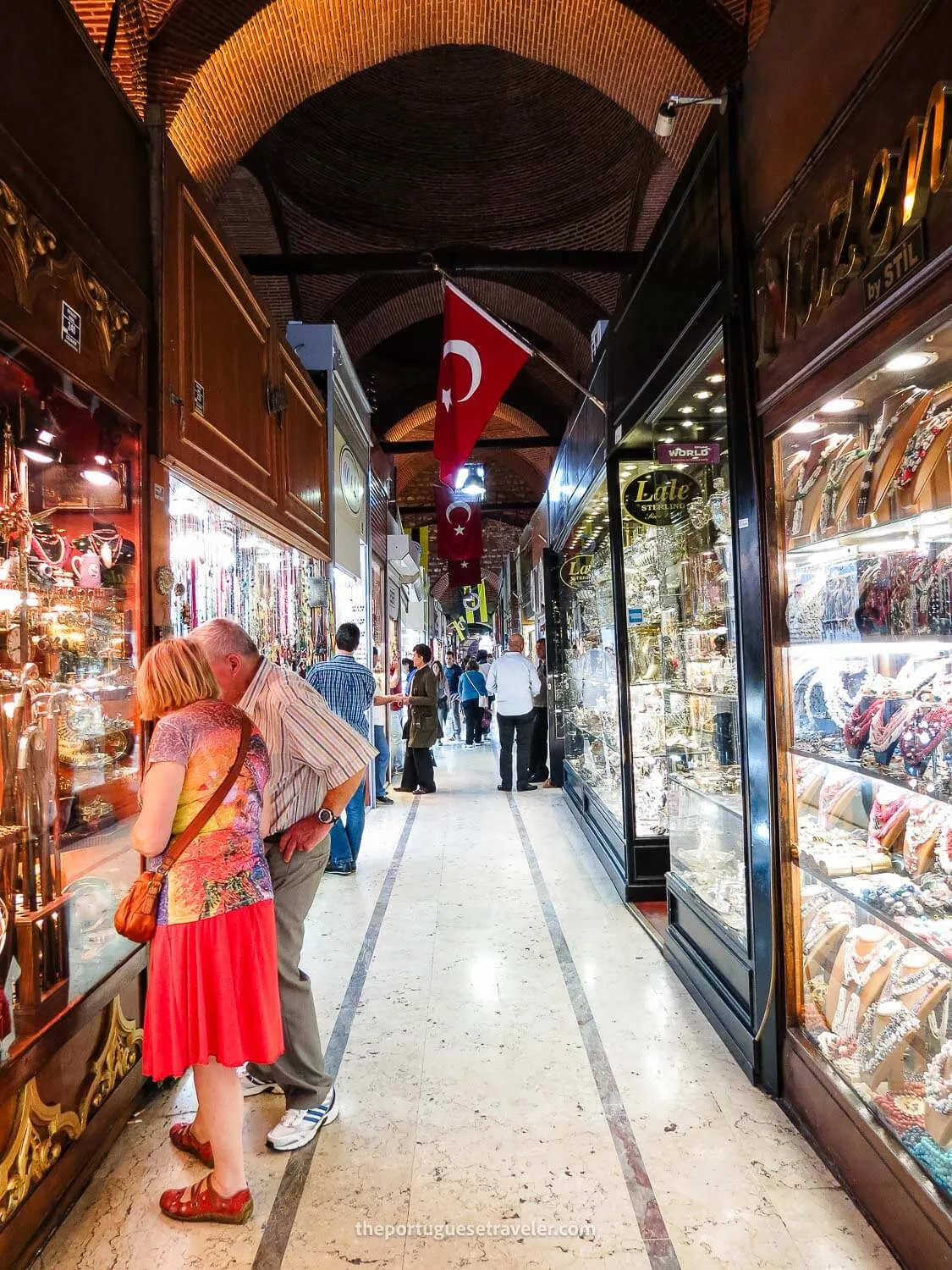
The Grand Bazaar in Istanbul
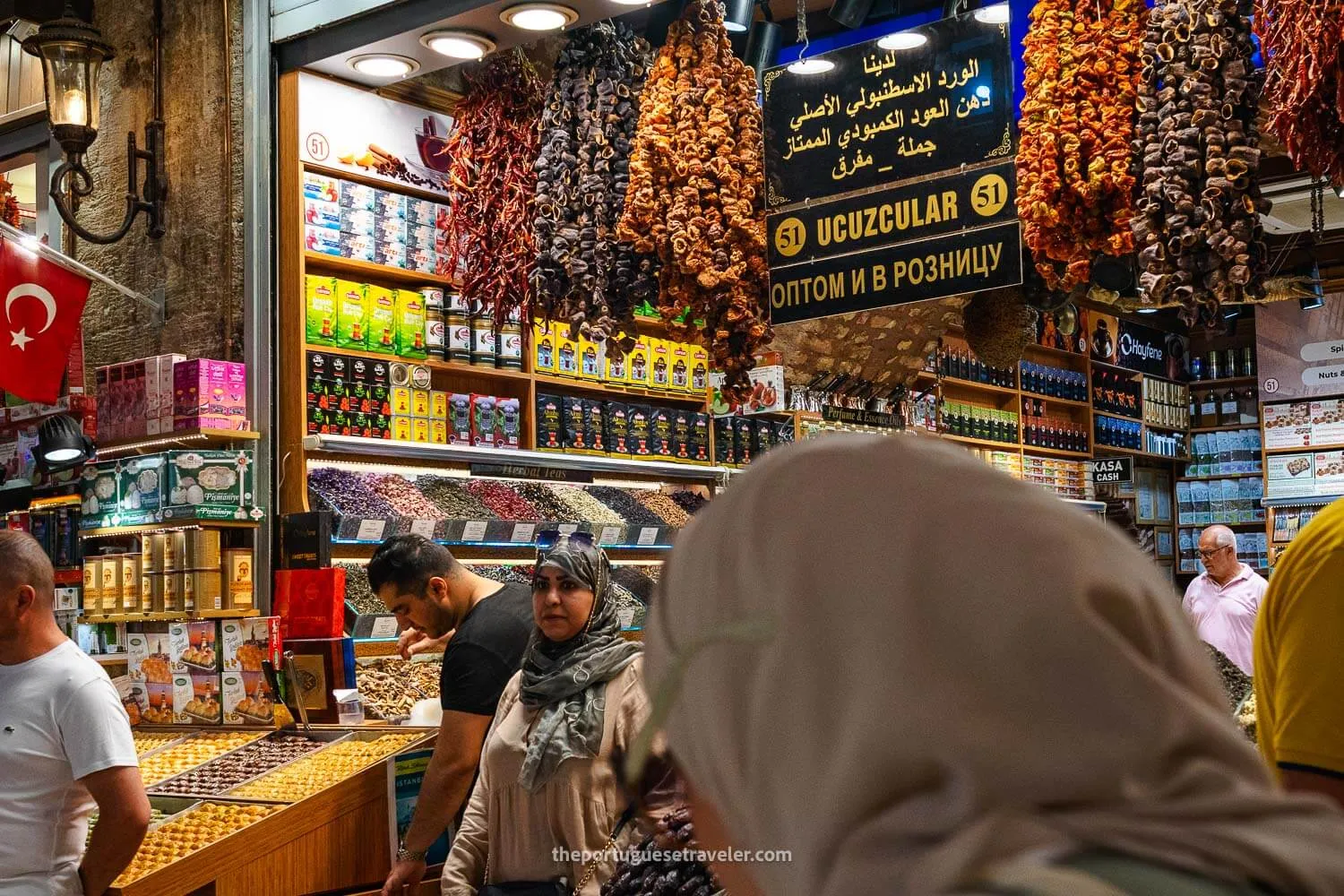
The Grand Bazaar in Istanbul
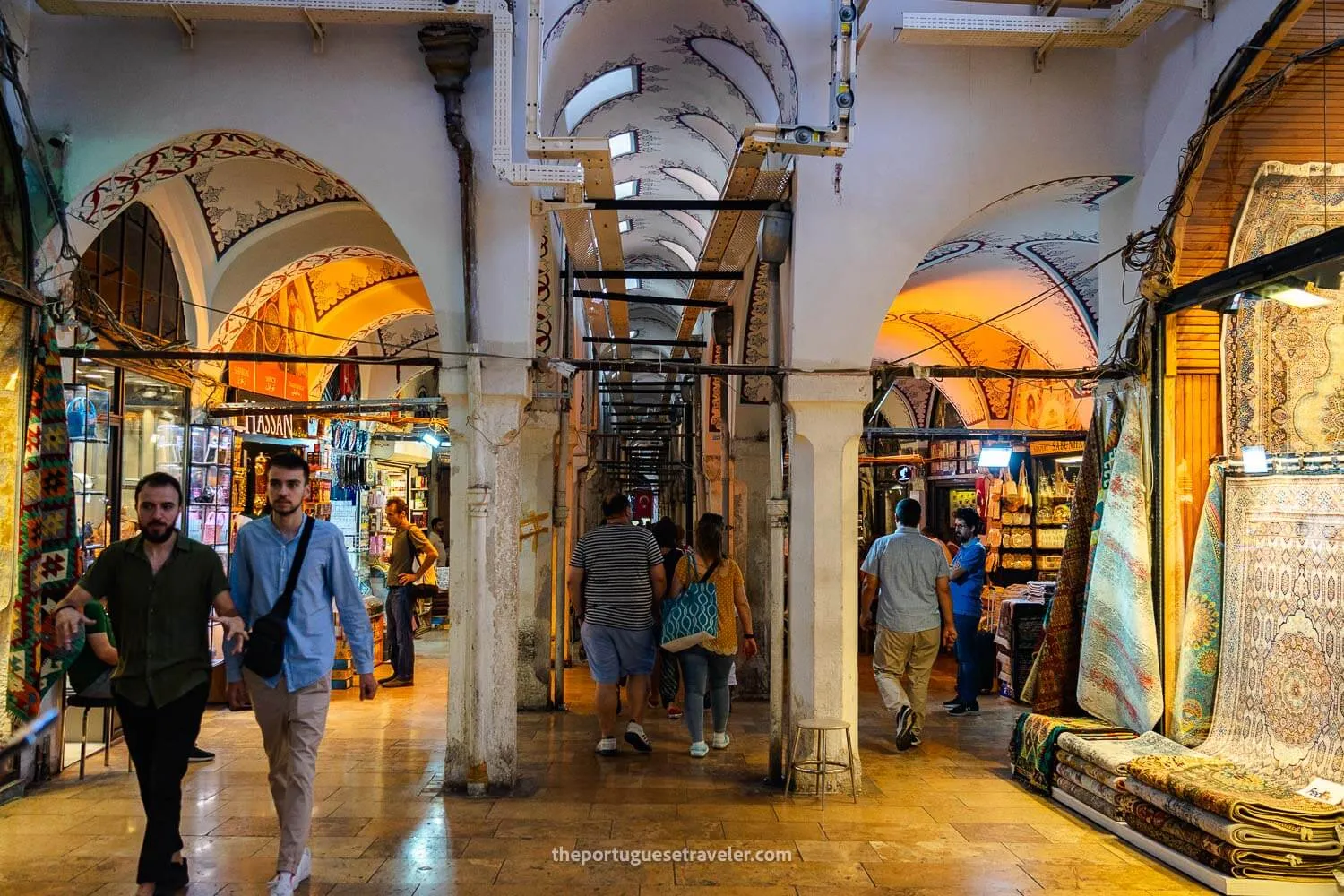
The Grand Bazaar in Istanbul
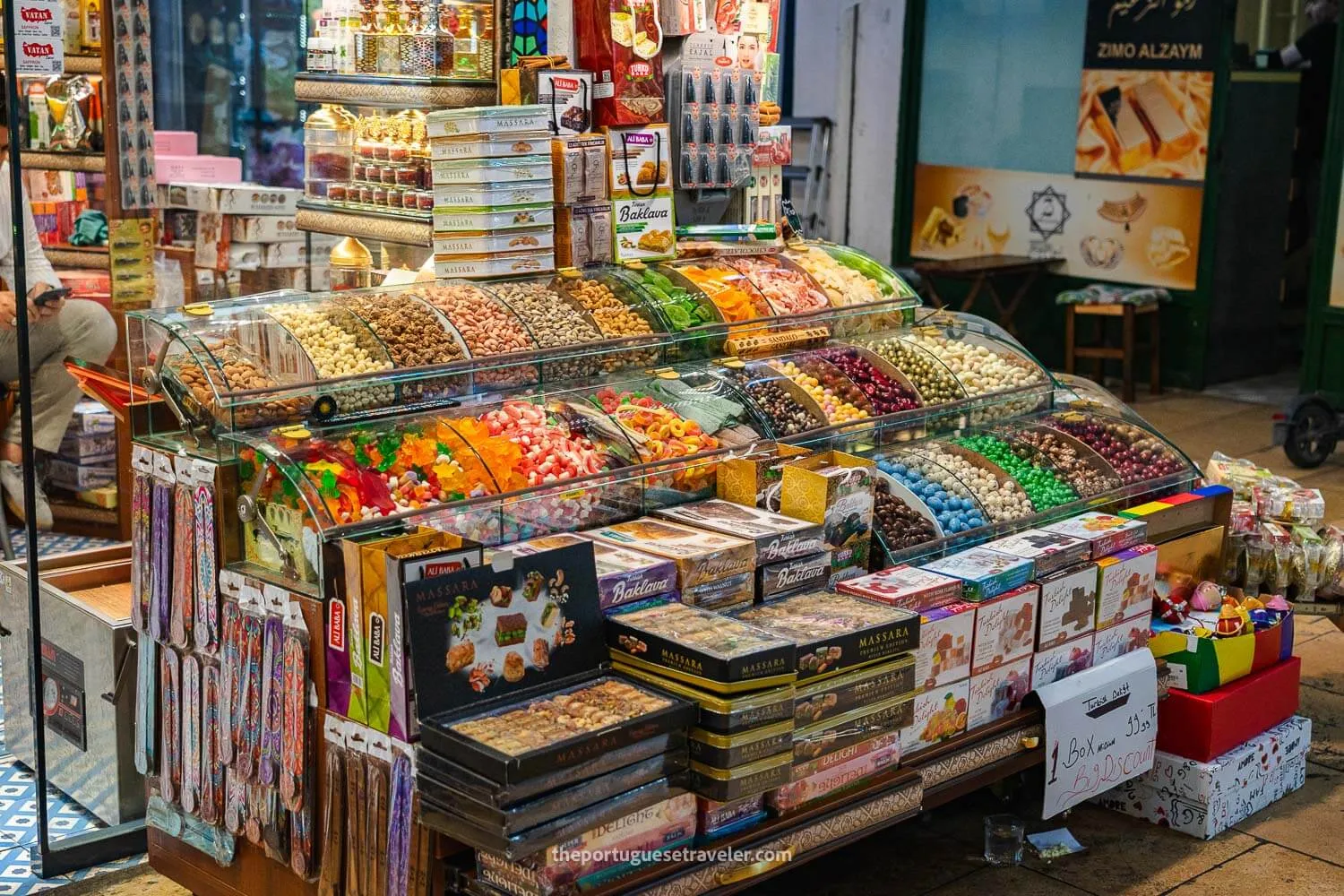
The Grand Bazaar in Istanbul
37. Spice Bazaar (Mısır Çarşısı)
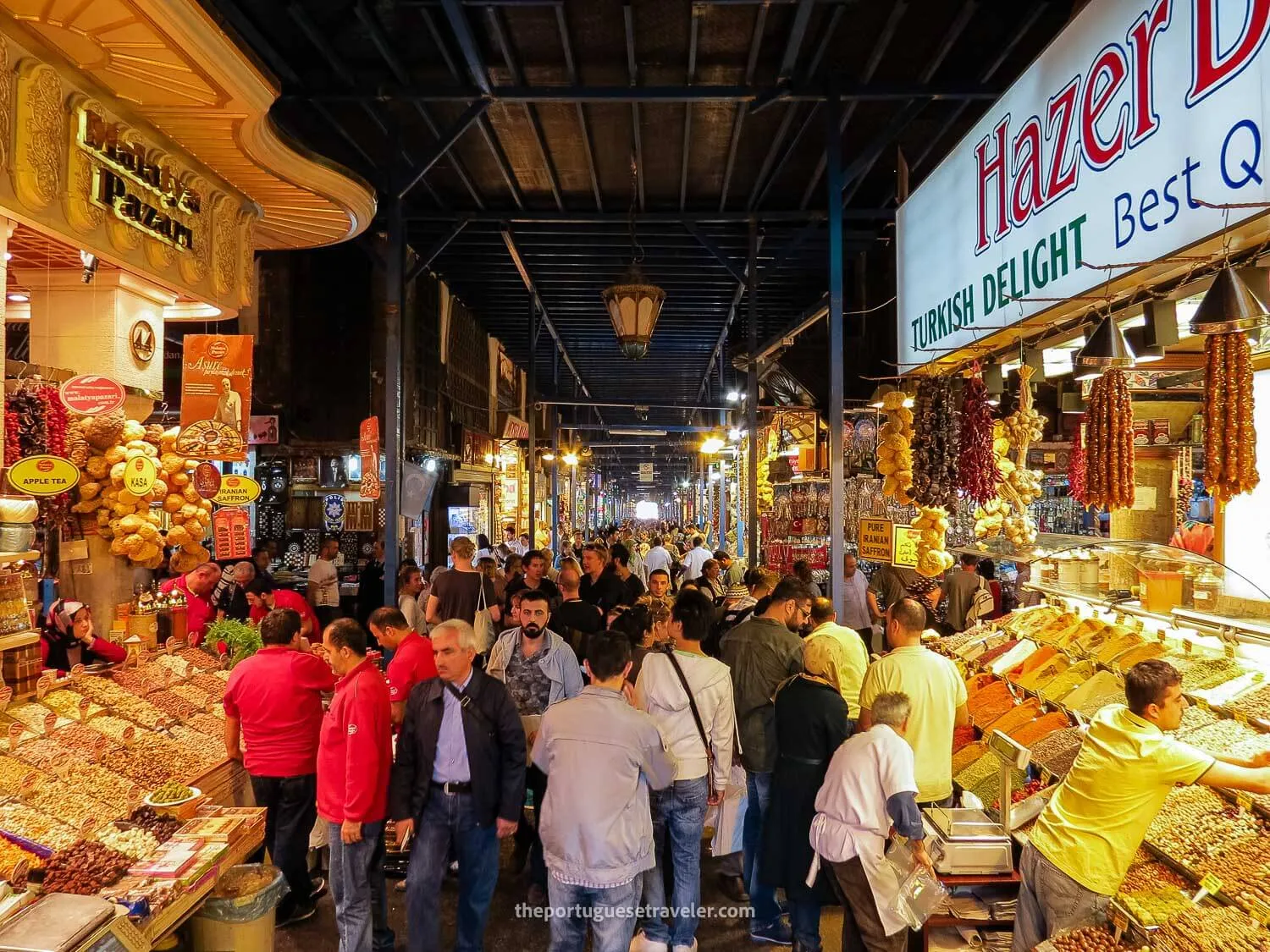
A short walk from the Grand Bazaar, the Spice Bazaar is smaller. Saffron, sumac and dried fruits are piled in pyramids, and stalls sell Turkish delight and nuts. It was built in the 17th century as part of the New Mosque complex. Try a sample of lokum (Turkish delight) before buying.
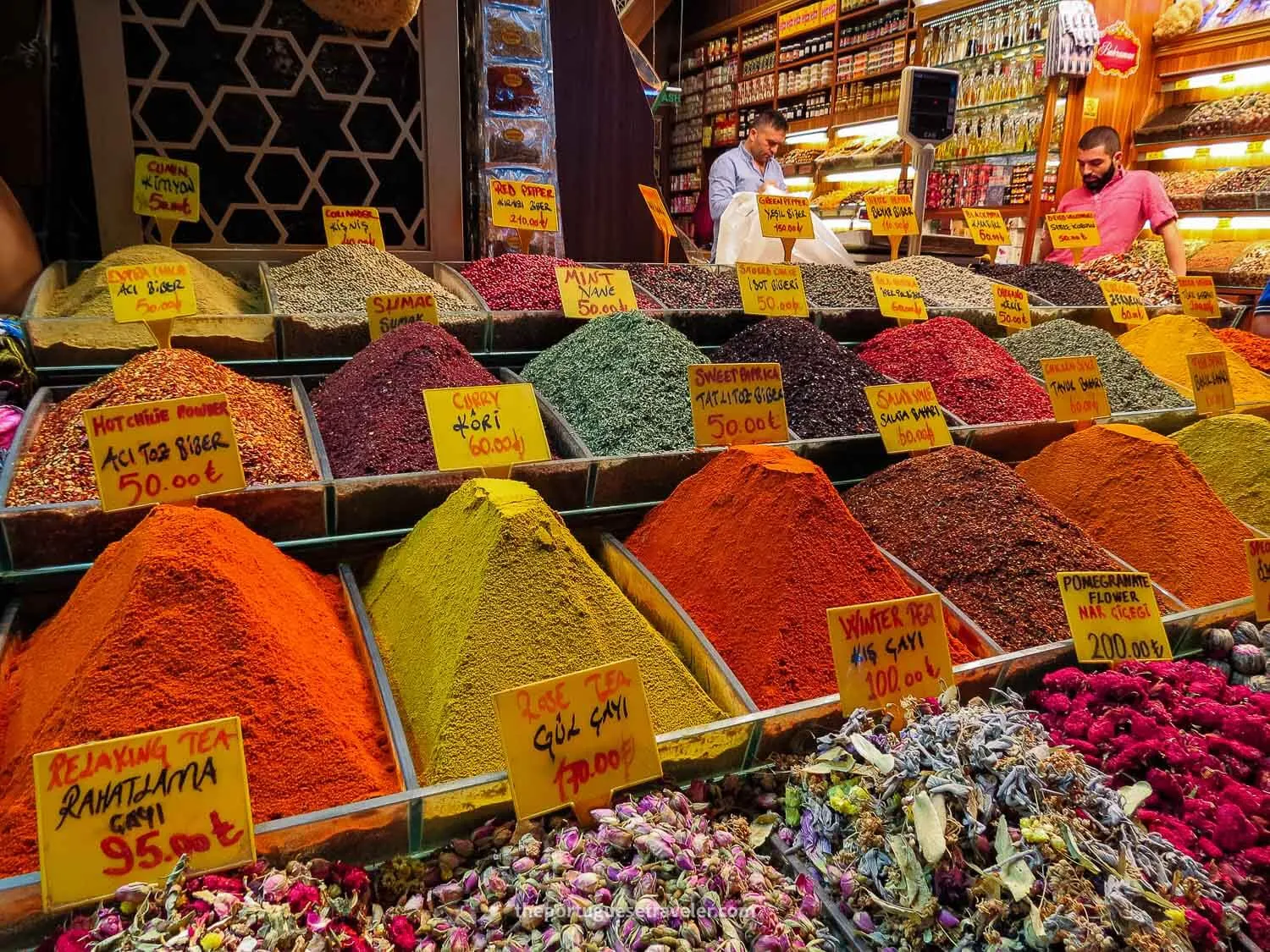
The Spice Bazaar in Istanbul
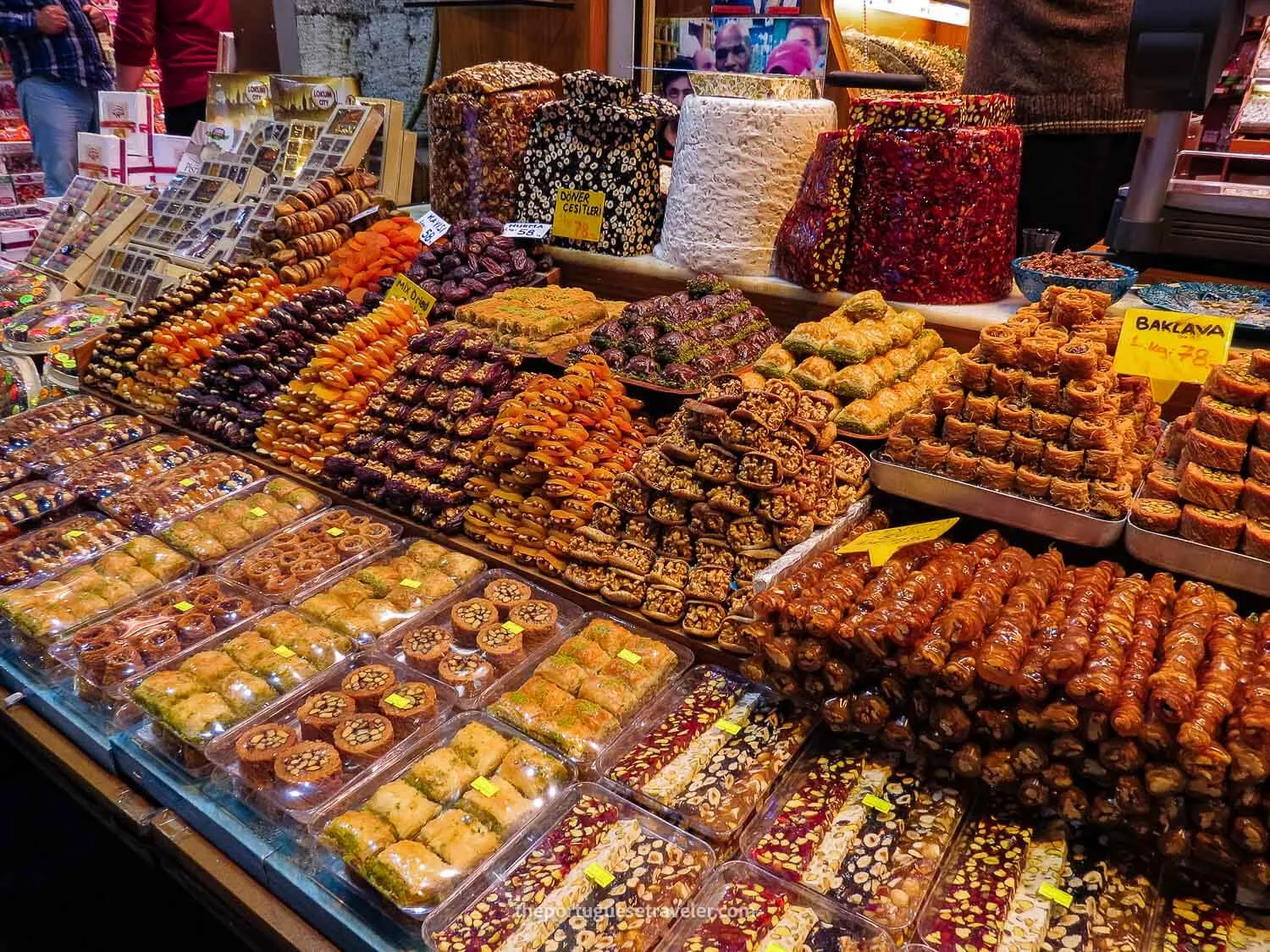
The Spice Bazaar in Istanbul
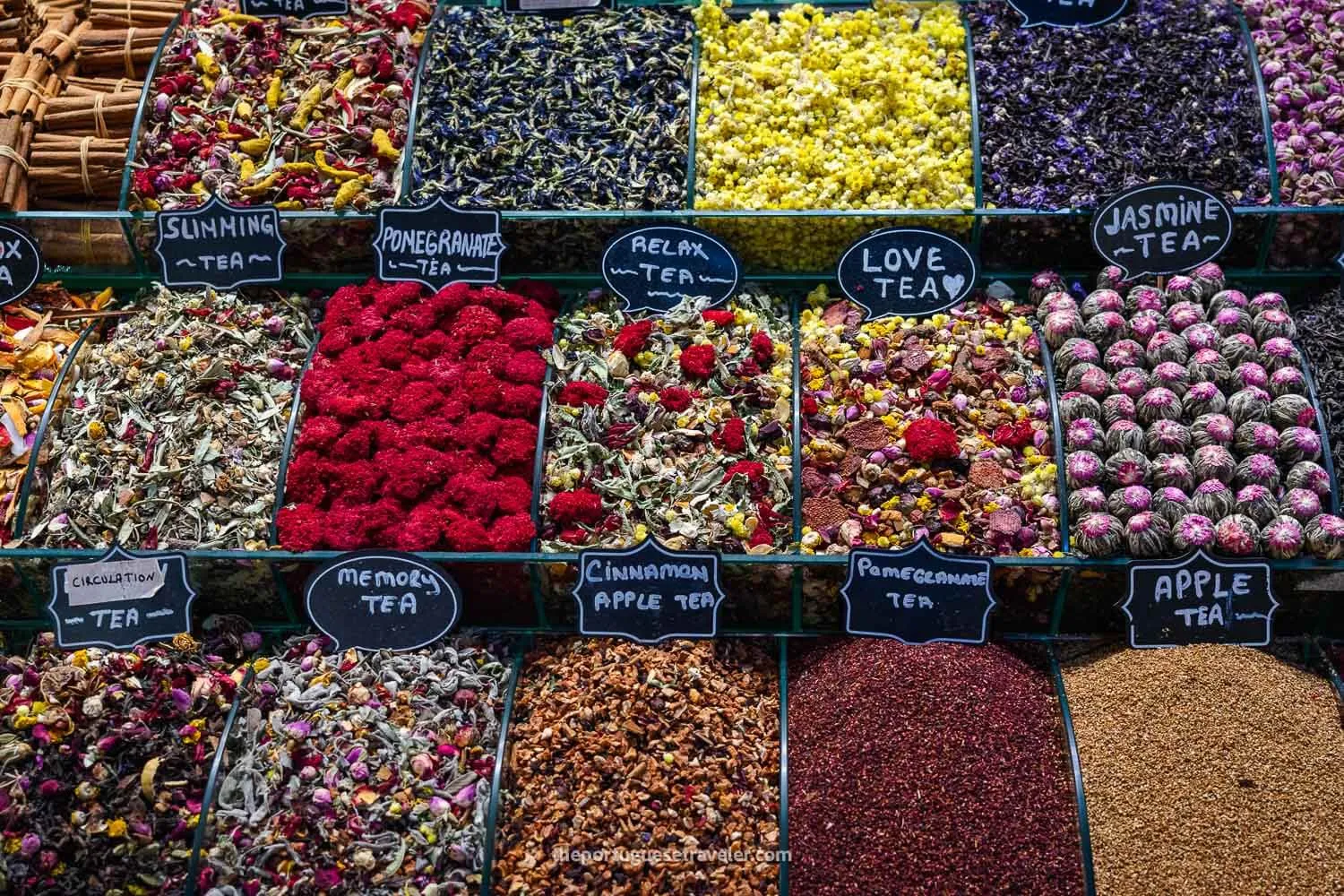
The Spice Bazaar in Istanbul
38. Tophane-i Amire (Ottoman barracks & art center)
Once an Ottoman artillery barracks, the Tophane-i Amire is now a cultural center with contemporary art exhibitions. The domed halls make a striking space for modern art. It is a good stop if you are exploring Karaköy’s art scene.
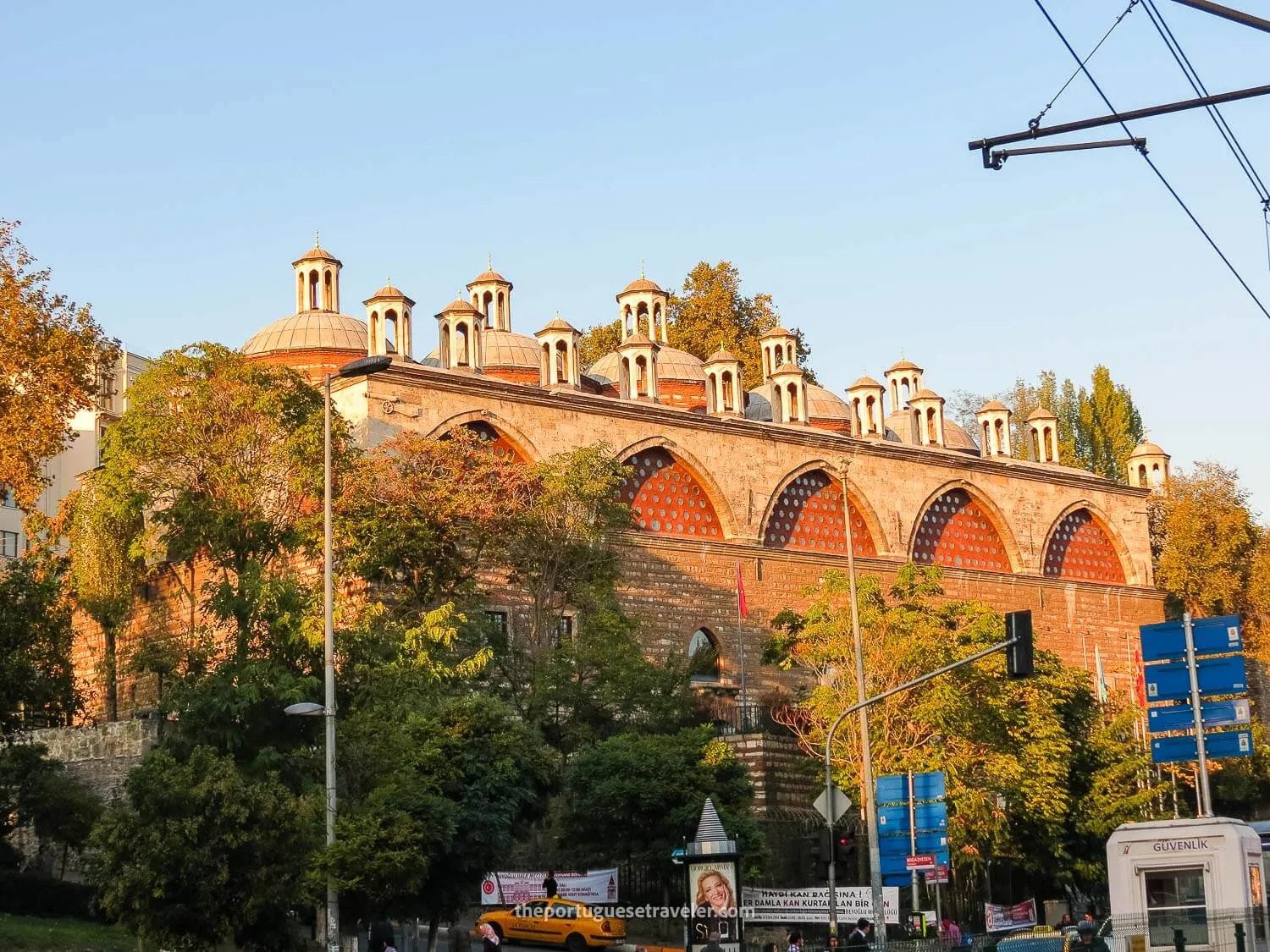
39. Maiden’s Tower (Kız Kulesi)
Standing on a tiny islet in the Bosphorus, the Maiden’s Tower has been a lighthouse, customs station and quarantine post. It is wrapped in myths, from a princess locked away by her father to tales of romance and tragedy. You can take a boat across, or see its silhouette at sunset from Üsküdar or Salacak. There is a café and restaurant inside.
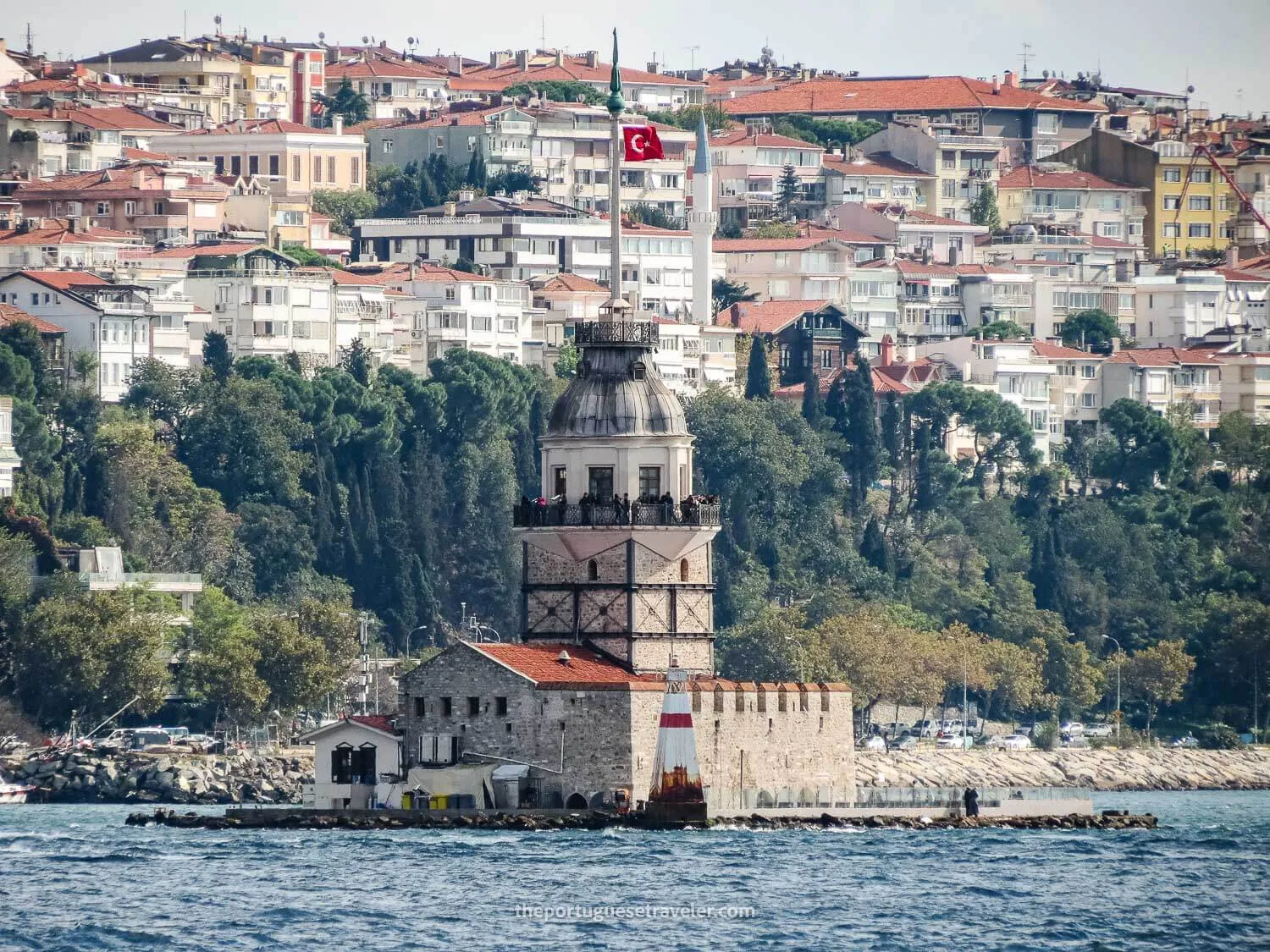
The Mayden’s Tower in Istanbul
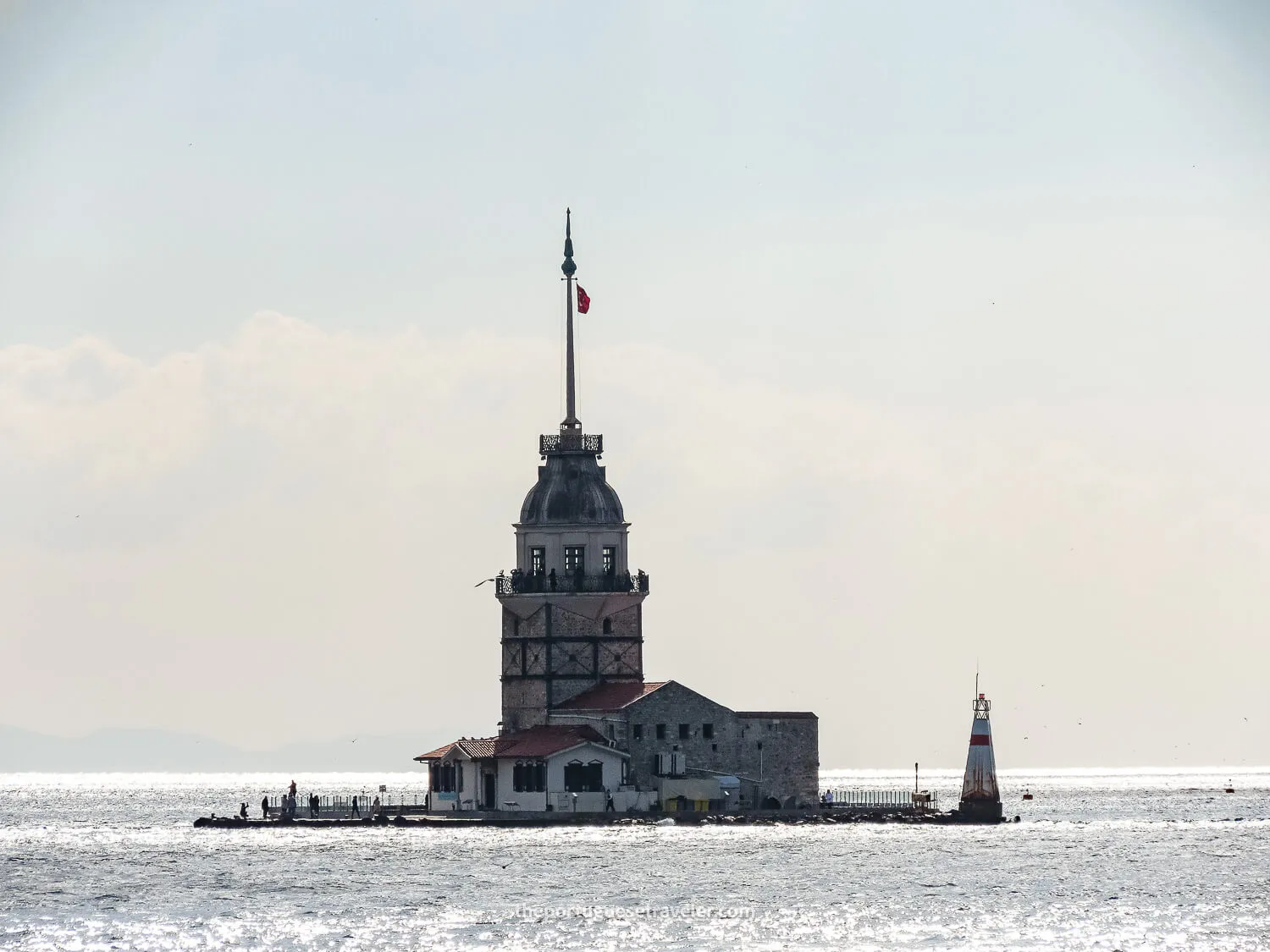
The Mayden’s Tower in Istanbul
40. Fountain of Ahmed III (Topkapı entrance)
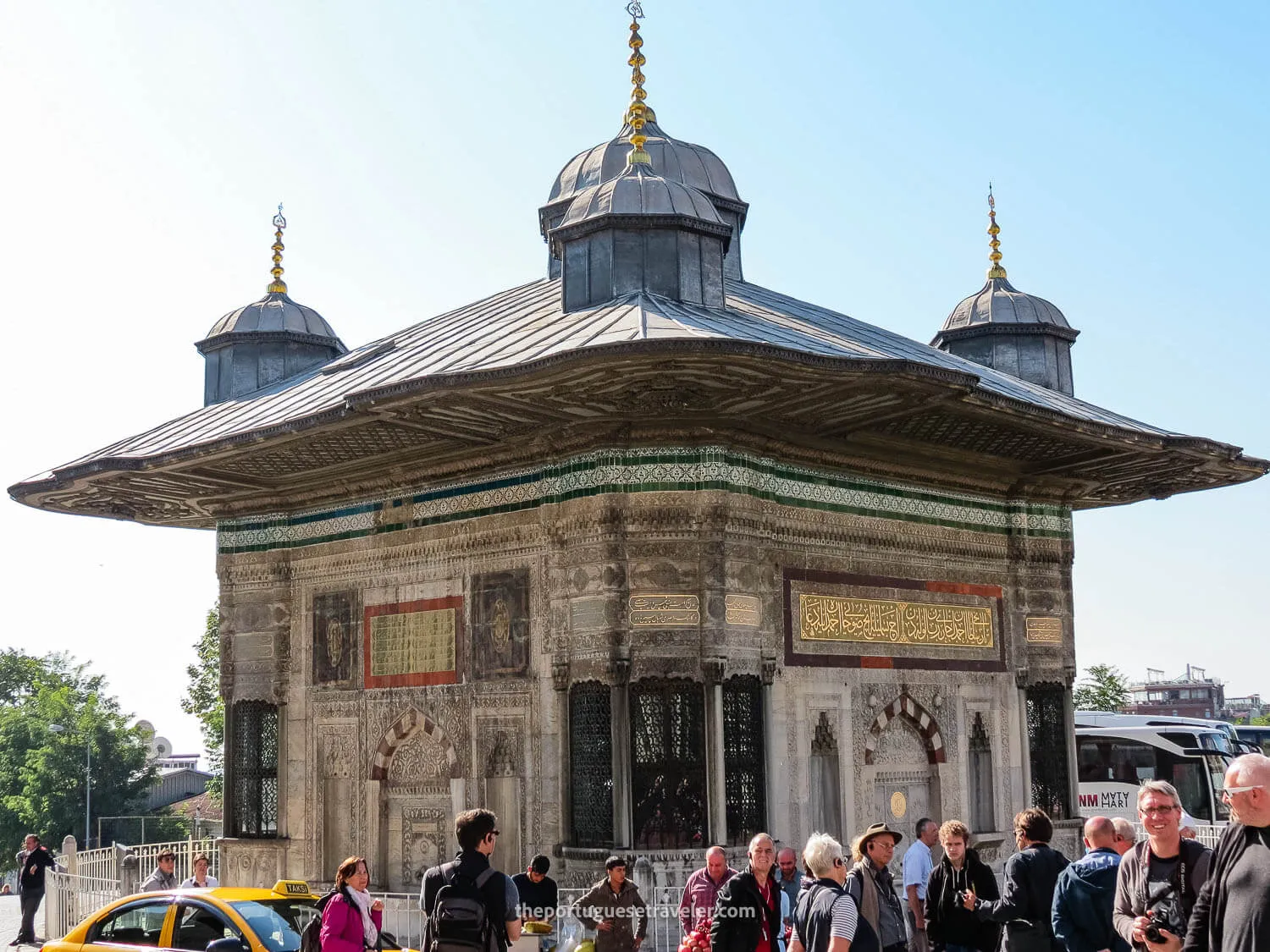
Just outside the main gate of Topkapı Palace stands the Fountain of Ahmed III, an example of Ottoman baroque architecture. Built in 1728, it has a richly decorated façade with floral motifs and poetic inscriptions. It was once a place where people collected water and shared news, and today it is a good photo stop before or after a Topkapı visit.
Museums & Arts
Istanbul’s museums cover thousands of years, from ancient artifacts and Islamic calligraphy to modern art and design. Many also host exhibitions and performances.
History & Archaeology
The city’s archaeological collections cover Istanbul’s role as a meeting point of civilizations: Roman sarcophagi, Ottoman manuscripts, Islamic science instruments and Byzantine mosaics are preserved here.
41. Istanbul Archaeological Museums
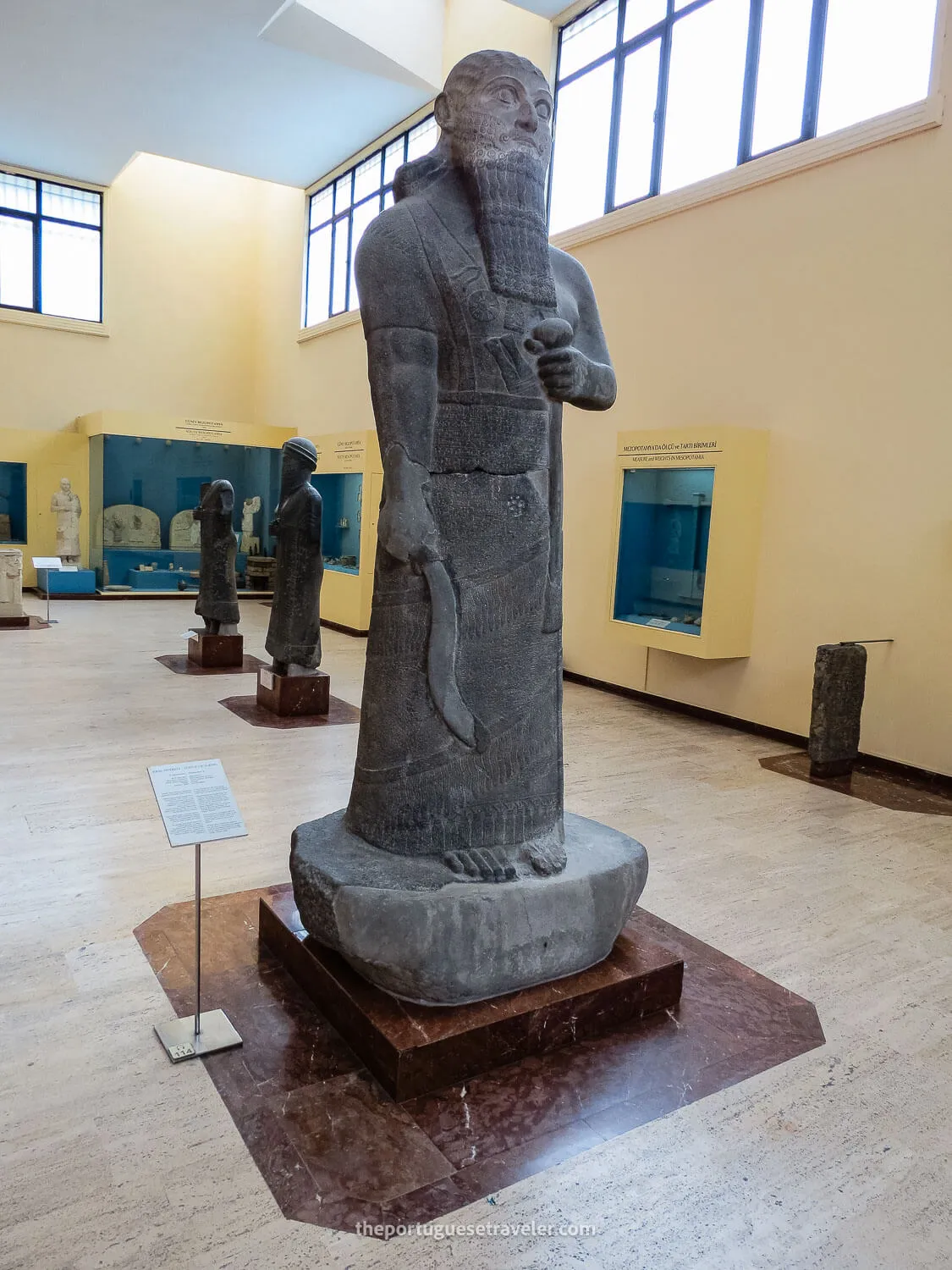
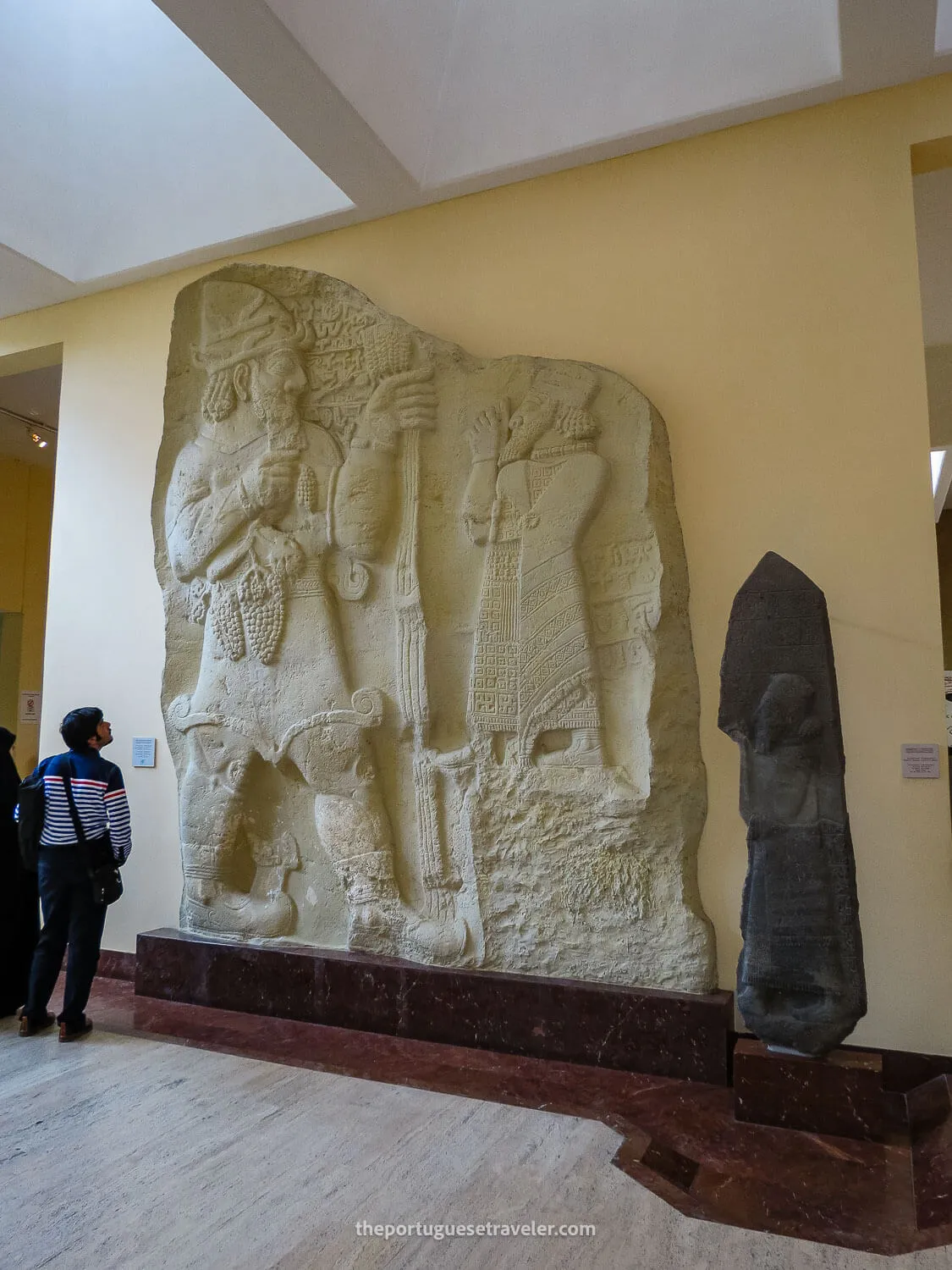
The Istanbul Archaeological Museums, beside Topkapı Palace, are three museums with artifacts from across ancient civilizations: Mesopotamian tablets, Egyptian sarcophagi and relics from Troy. One highlight is the Alexander Sarcophagus, known for its detailed carvings. Allow plenty of time, because the collection covers thousands of years.
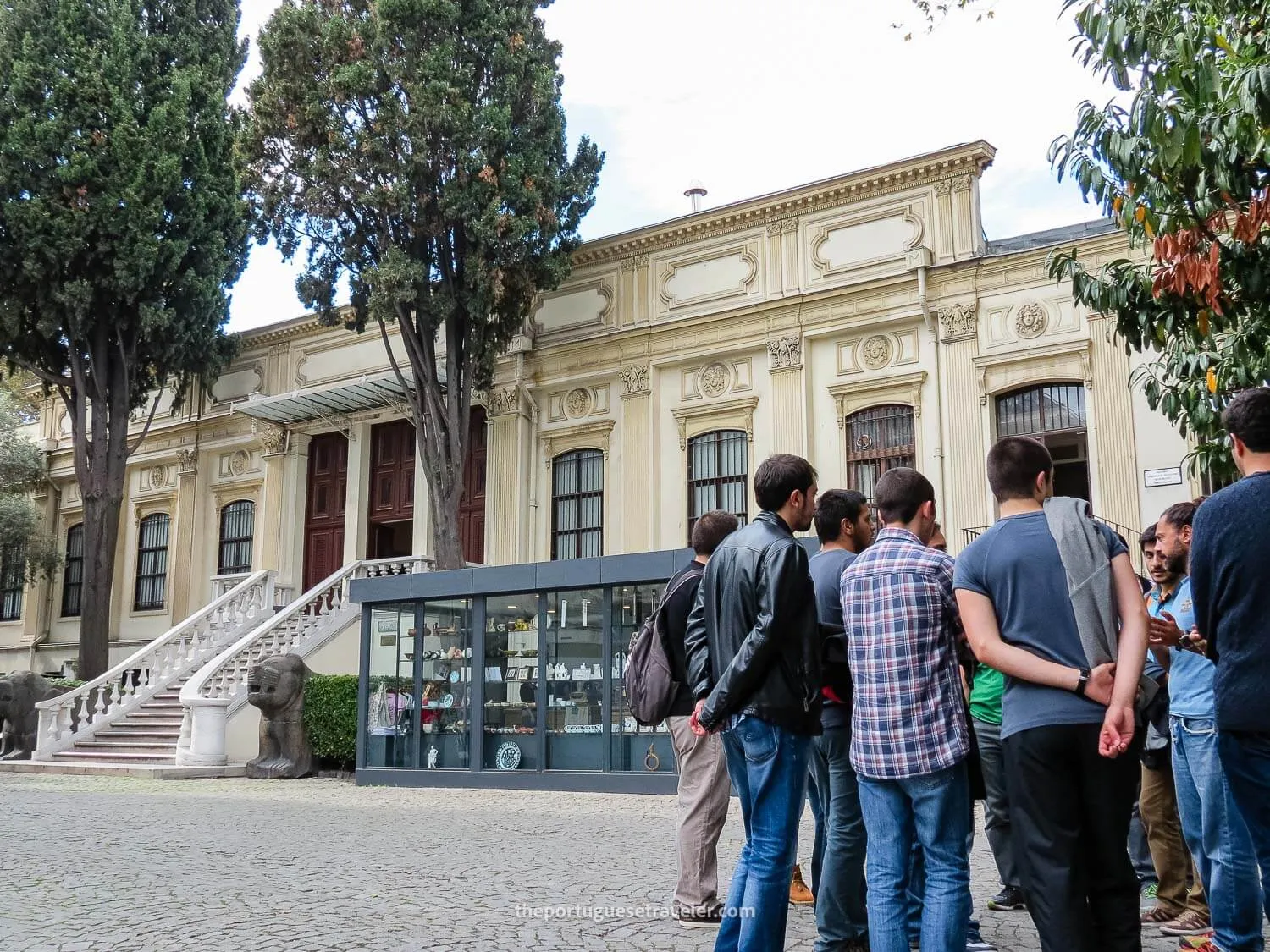
The Istanbul Archaeology Museum
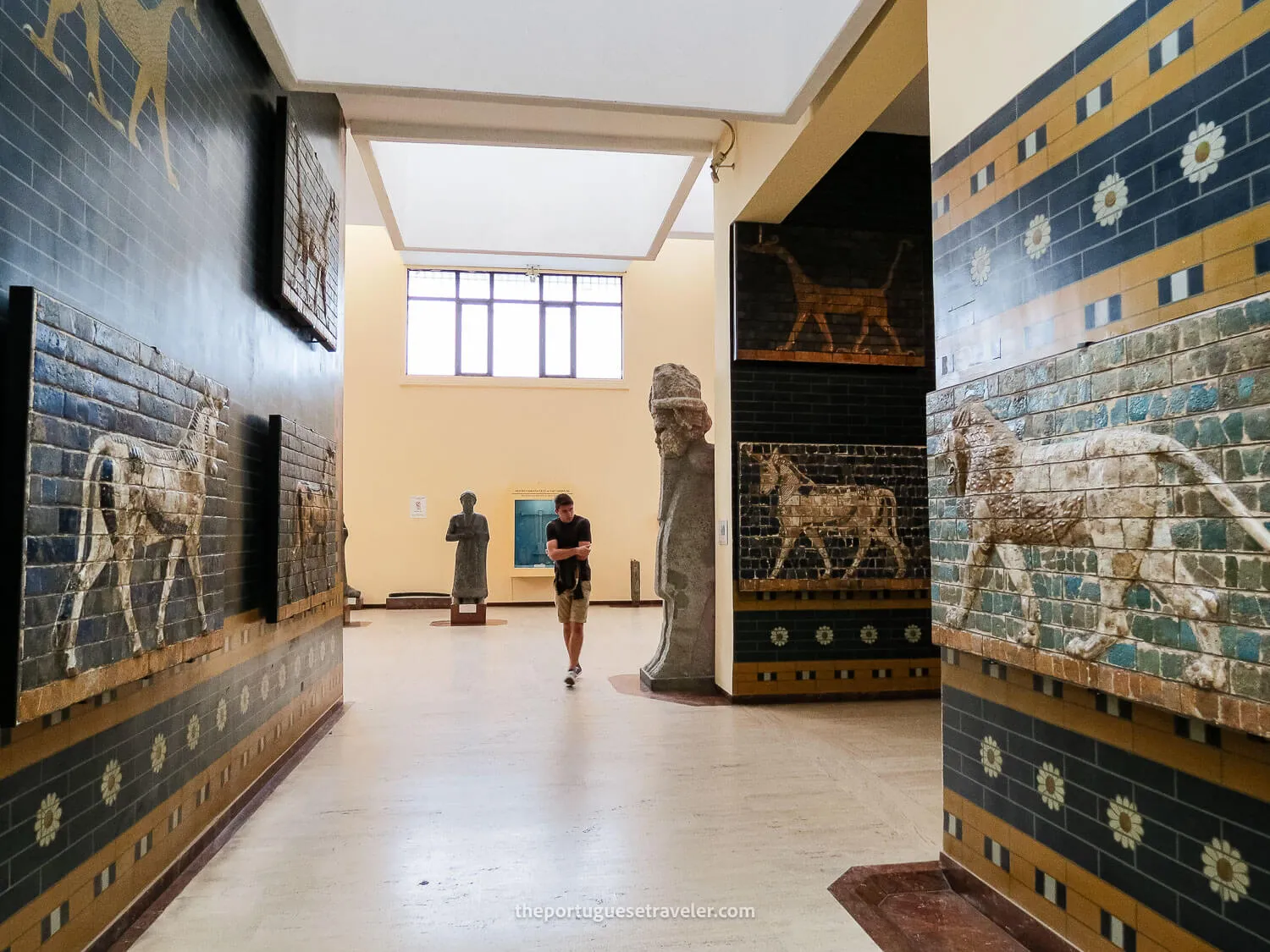
The Istanbul Archaeology Museum
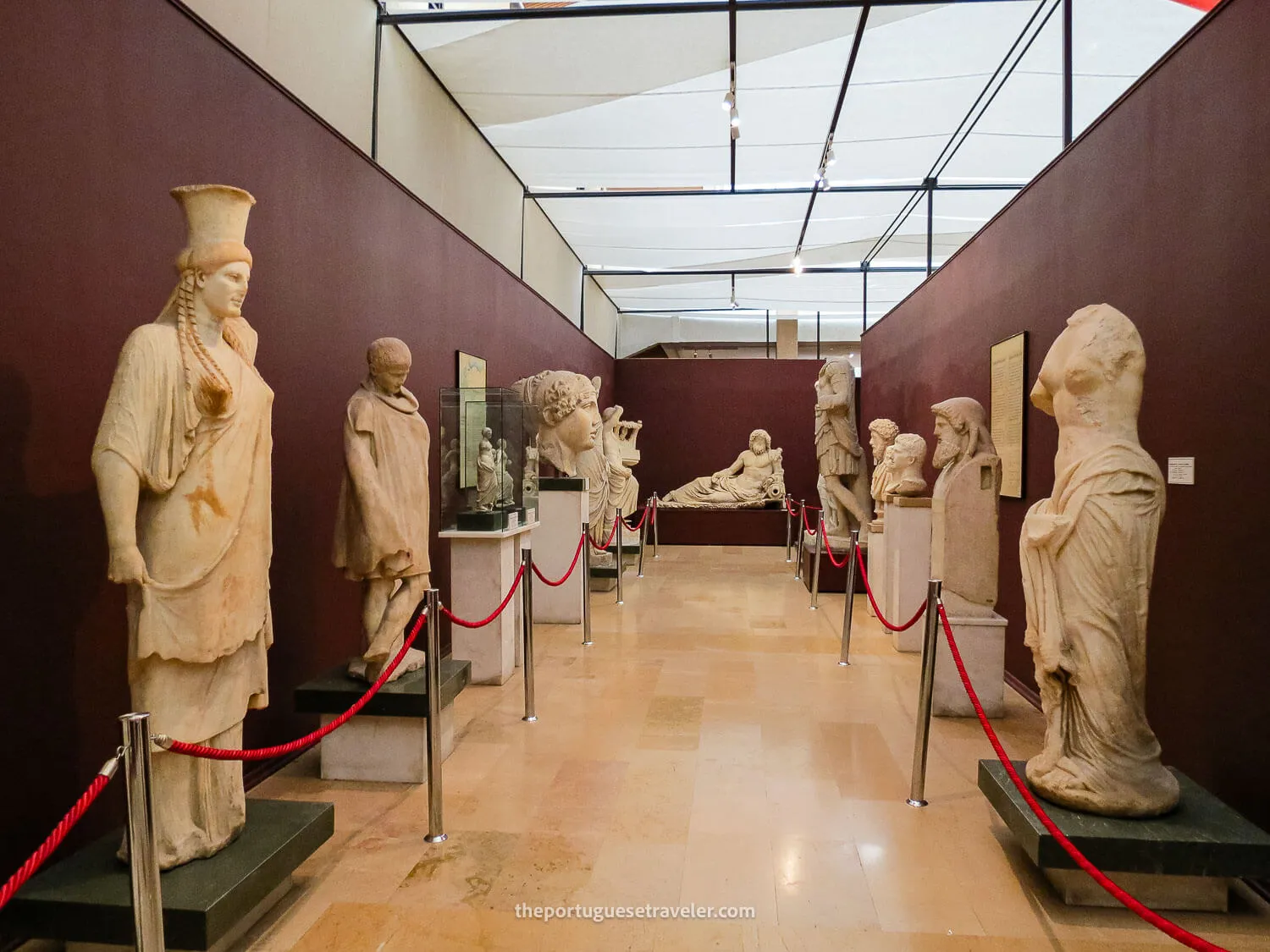
The Istanbul Archaeology Museum
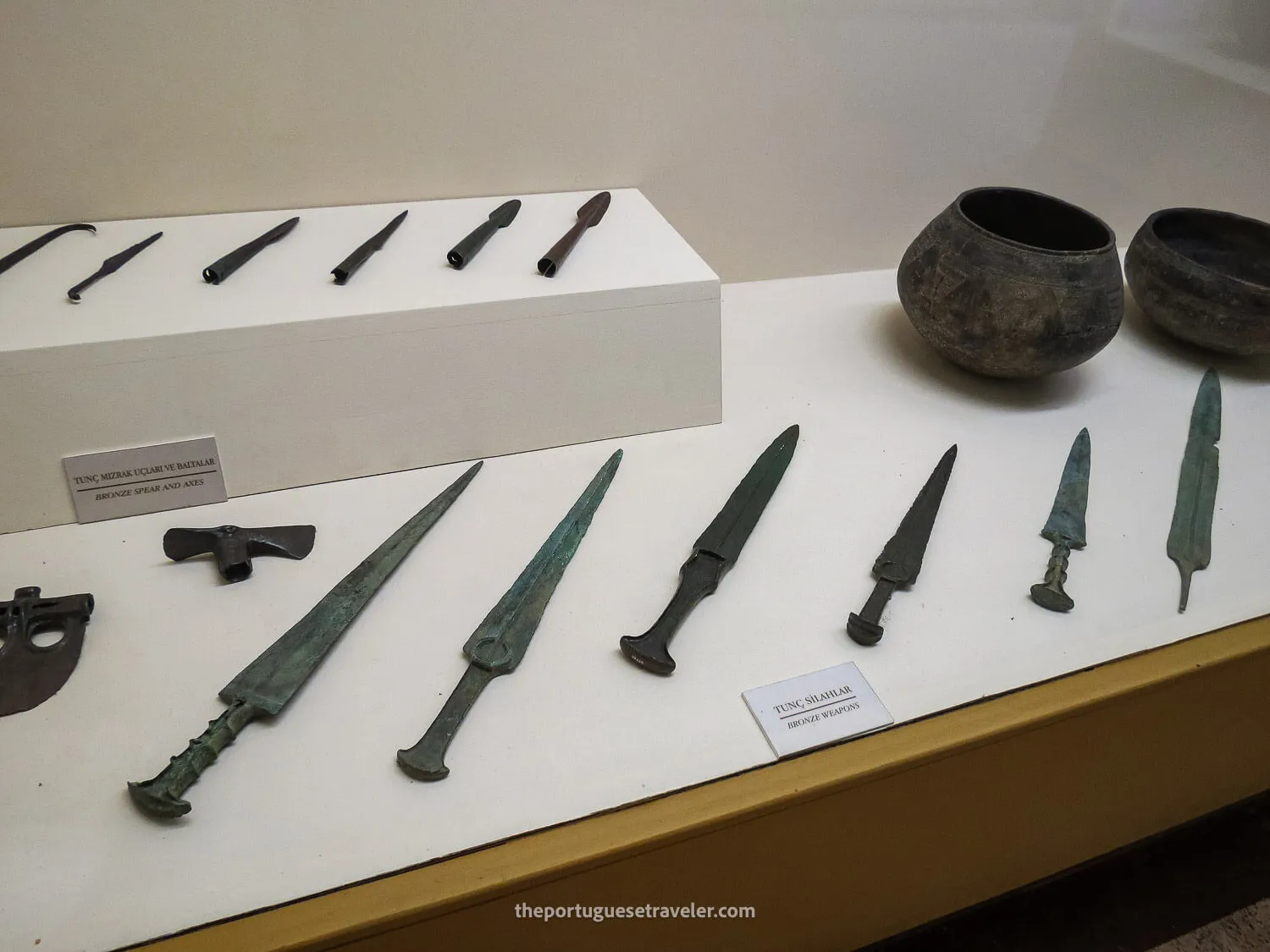
The Istanbul Archaeology Museum
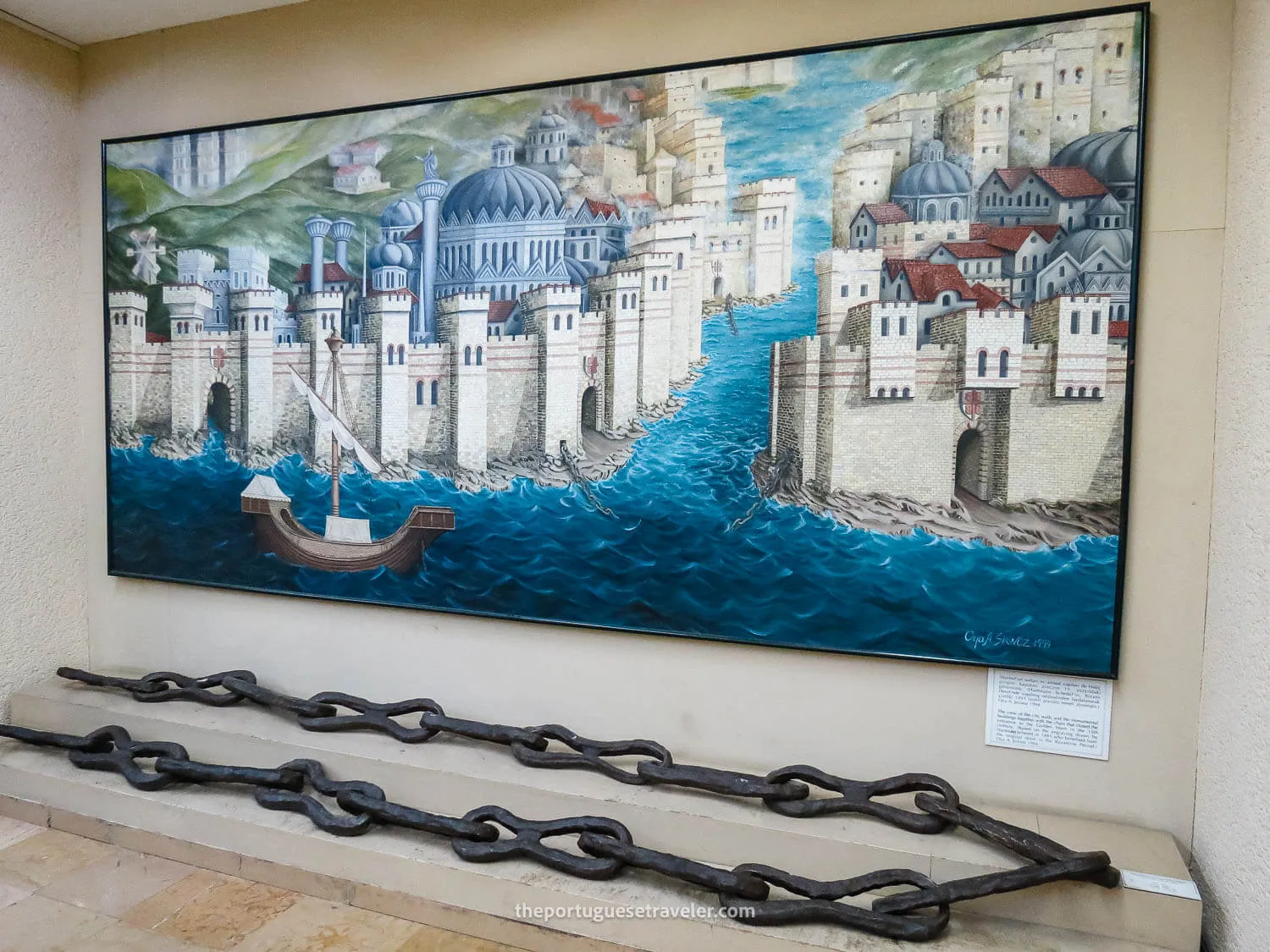
The Istanbul Archaeology Museum
42. Turkish & Islamic Arts Museum
Set inside a 16th-century palace across from the Blue Mosque, the Turkish & Islamic Arts Museum holds rare Qur’an manuscripts, calligraphy, carpets from across the Islamic world and decorated ceramics. The ethnographic display recreates traditional Turkish nomadic life with tents and everyday objects. It is a good visit after the mosques of Sultanahmet, because it adds context to the architecture.
43. Carpet Museum
Just steps from Hagia Sophia, the Carpet Museum is easy to overlook. It shows centuries of Anatolian carpet-making, from bold tribal designs to refined courtly pieces. Carpets in Turkey are not just floor coverings but reflect regional identity and symbolism. The museum is small, and it adds background to the rugs you see in the bazaars.
44. Calligraphy Museum
Located in the historic Beyazıt neighborhood, the Museum of Turkish Calligraphy covers one of Islam’s best-known art forms. Exhibits include Qur’an manuscripts, imperial edicts and panels by master calligraphers. Nearby bookshops and antique stores make it easy to continue the visit.
45. Museum of the History of Science and Technology in Islam
Housed inside Gülhane Park, this museum covers the contributions of Muslim scientists and inventors, with models of astrolabes, medical instruments, astronomical charts and early maps. It is a good stop if you are traveling with curious children or are interested in the roots of modern science.
46. Galata Mevlevi House (Whirling Dervish Museum)
At the foot of the Galata Tower is the Galata Mevlevihanesi, once a lodge for the whirling dervishes of the Mevlevi order. Today it is a museum on Sufi traditions, music and rituals, and whirling dervish ceremonies are held here. Even outside performance days, the instruments, manuscripts and costumes give an insight into Istanbul’s spiritual life.
Art & Culture
Beyond history, Istanbul has contemporary galleries, literary landmarks and alternative cultural centers. East and West meet in art as well as in politics and trade.
47. Pera Museum
In Beyoğlu, the Pera Museum bridges East and West through art. Its permanent collection includes Orientalist paintings, Anatolian weights and measures and tiles. It is best known for temporary exhibitions that bring international and Turkish artists together. Afterward you can walk down İstiklal Avenue or have coffee nearby.
48. Istanbul Modern (Modern Art Museum)
Relocated to a new building on the Karaköy waterfront, the Istanbul Modern is Turkey’s first museum of contemporary art. Floor-to-ceiling windows frame the Bosphorus, so the setting matters as much as the art. Inside are works by Turkish and international artists in painting, sculpture, photography and film.
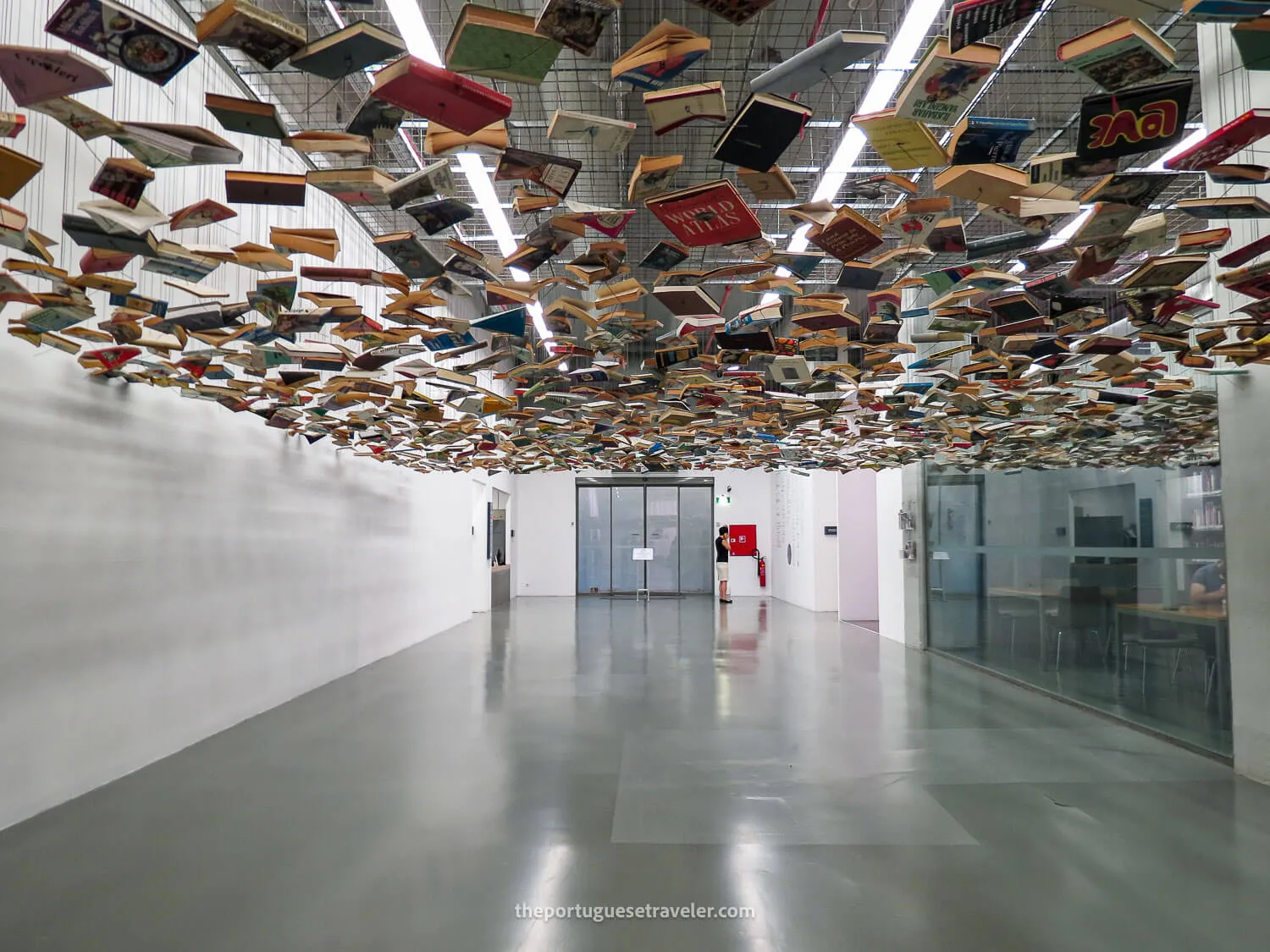
Istanbul Modern
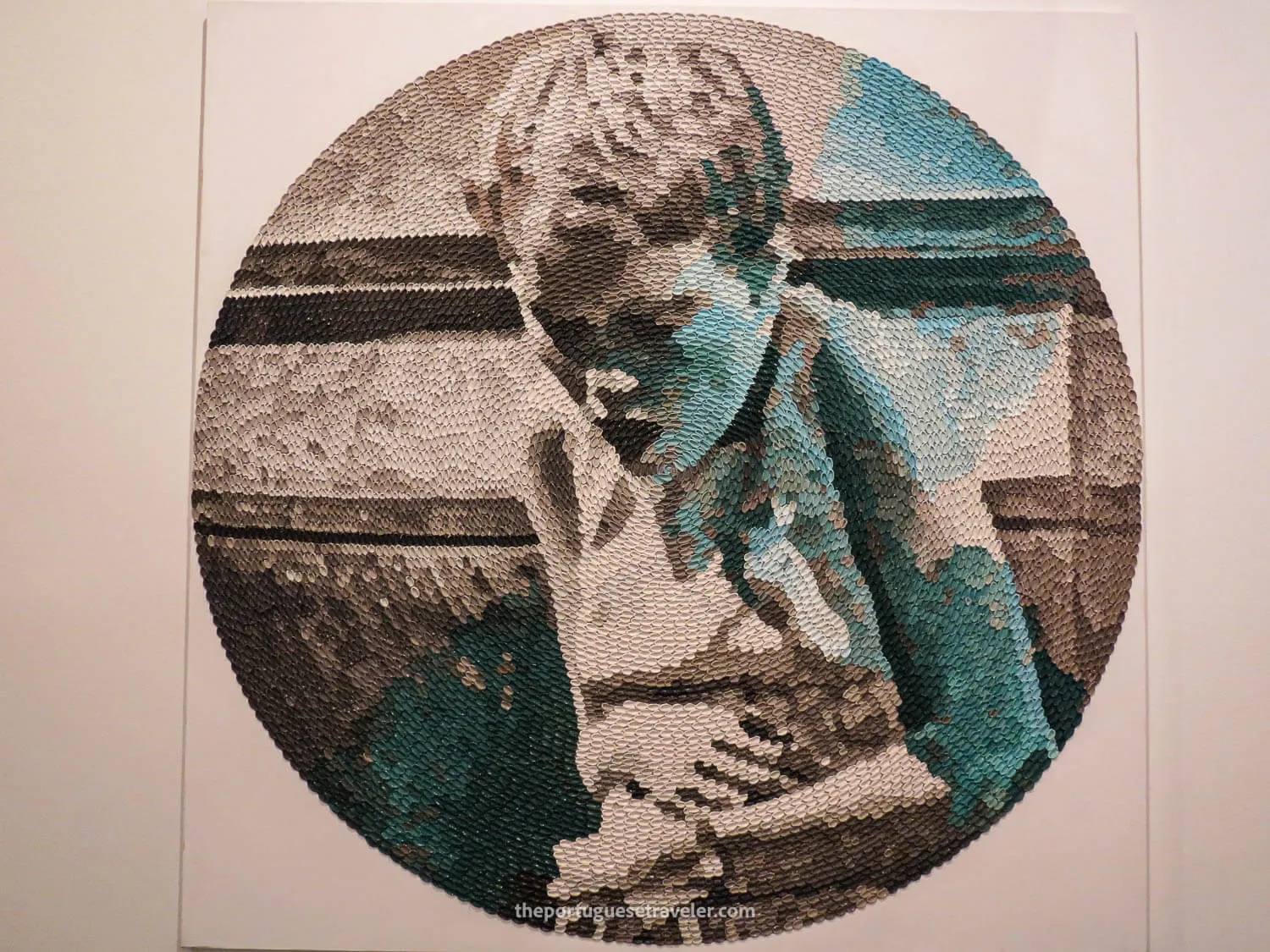
Istanbul Modern’s Exhibition
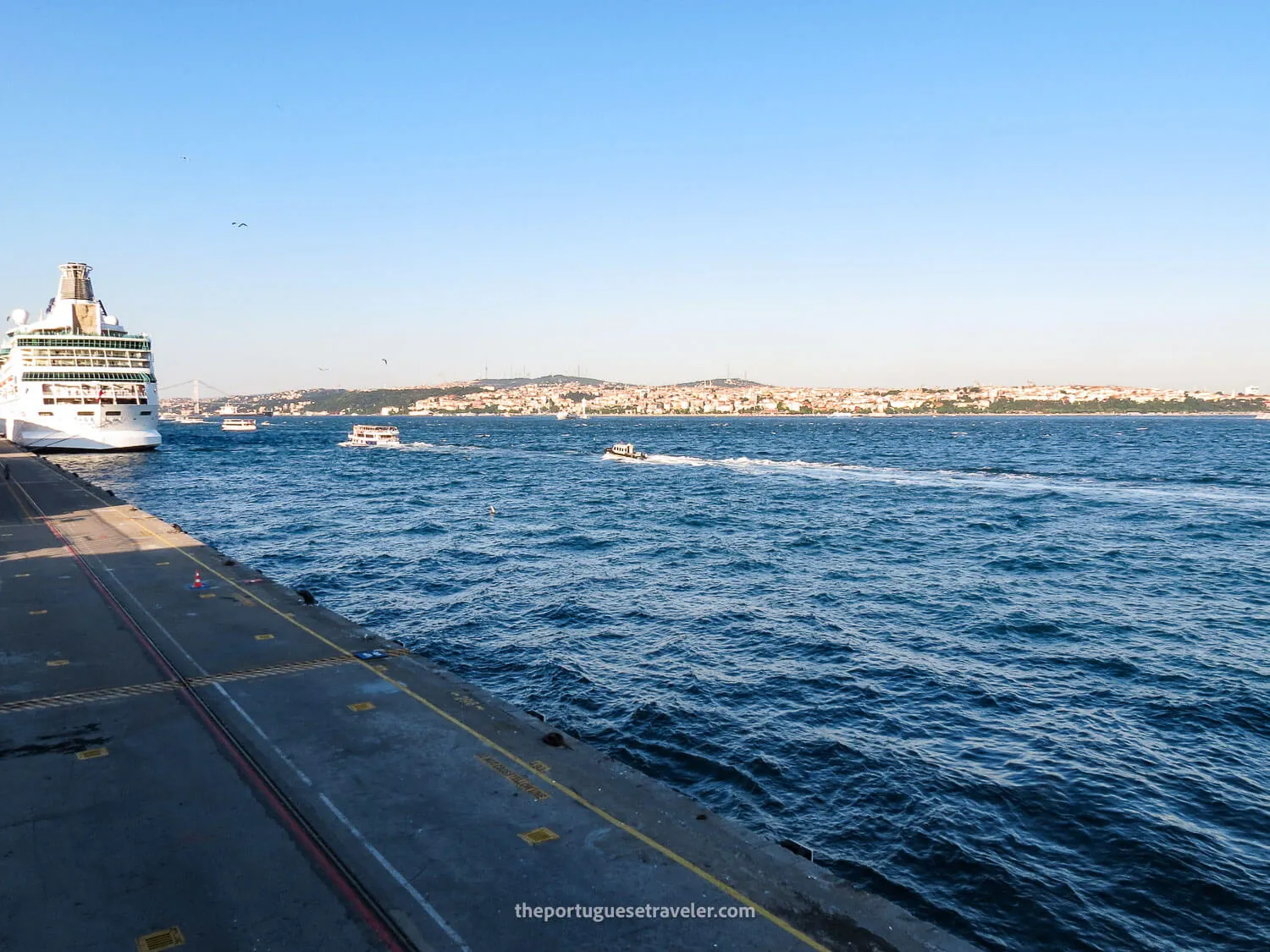
Istanbul Modern View
49. Museum of Innocence
The Museum of Innocence was created by Nobel laureate Orhan Pamuk and is based on his novel of the same name. It tells a love story through everyday objects, such as earrings, cigarette butts and old photos, displayed as if they belonged to fictional characters. Even if you have not read the book, it gives a view of Istanbul life from the 1950s to the 1980s. It suits literature fans and anyone who likes stories told through objects.
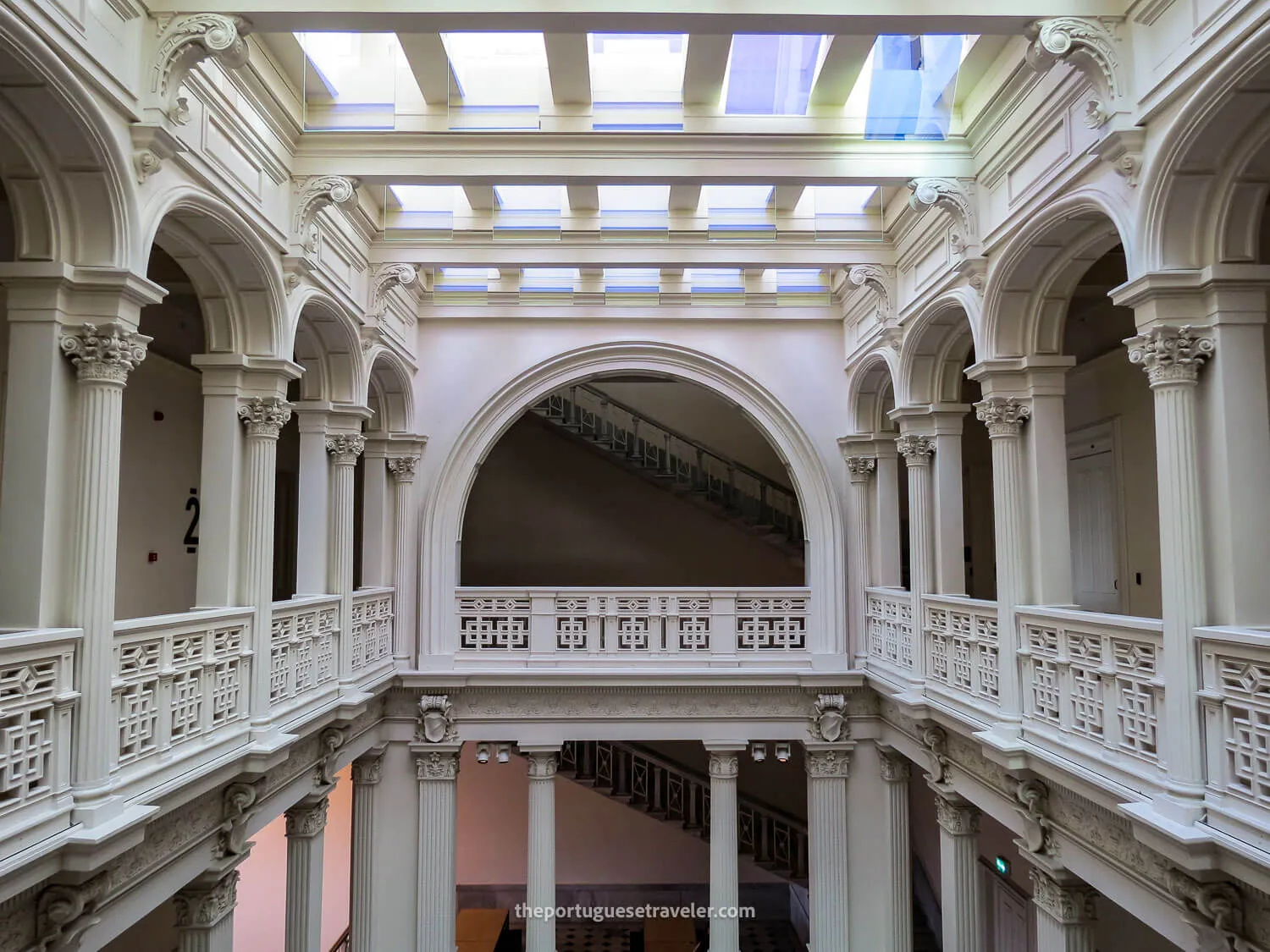
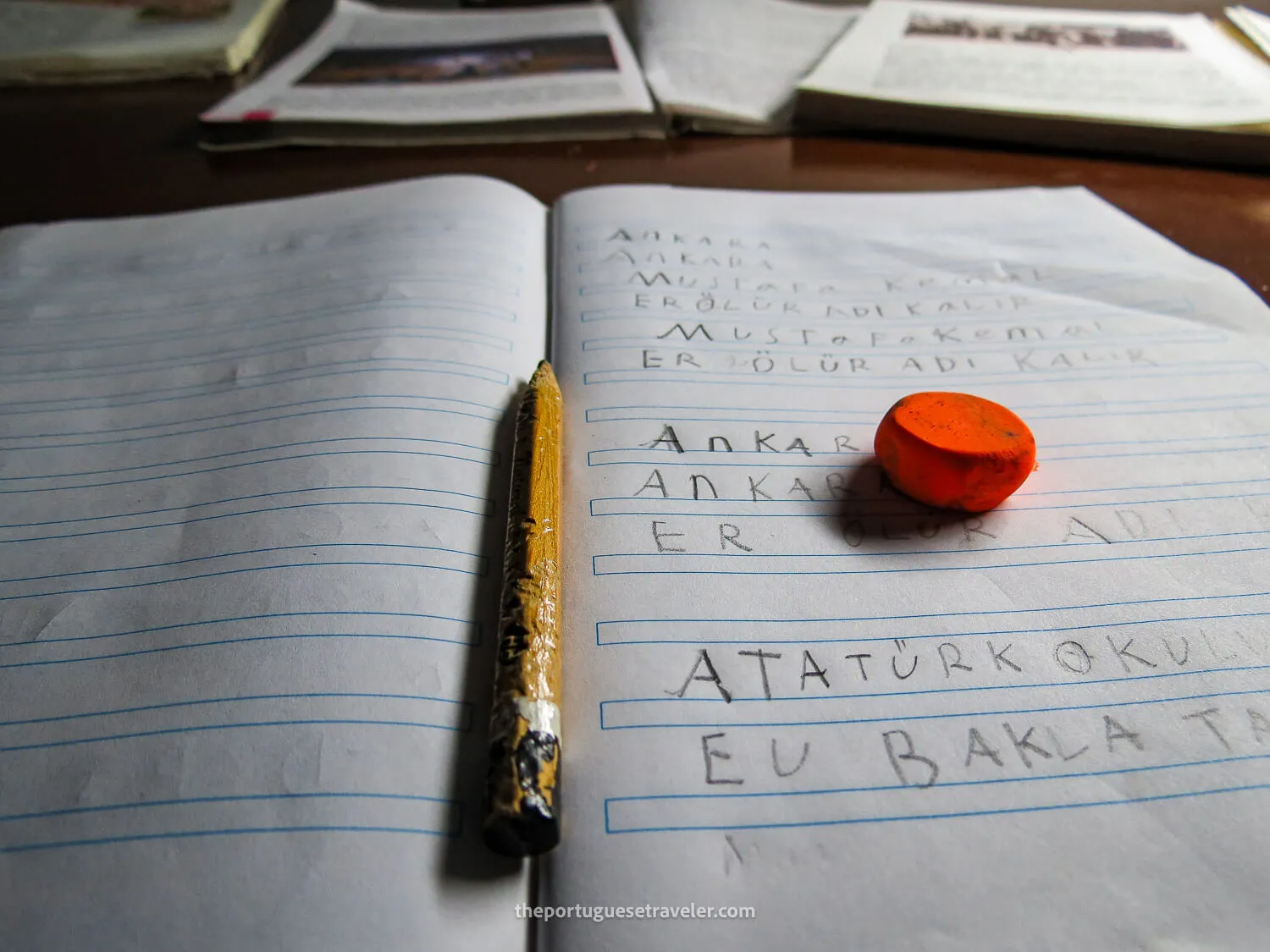
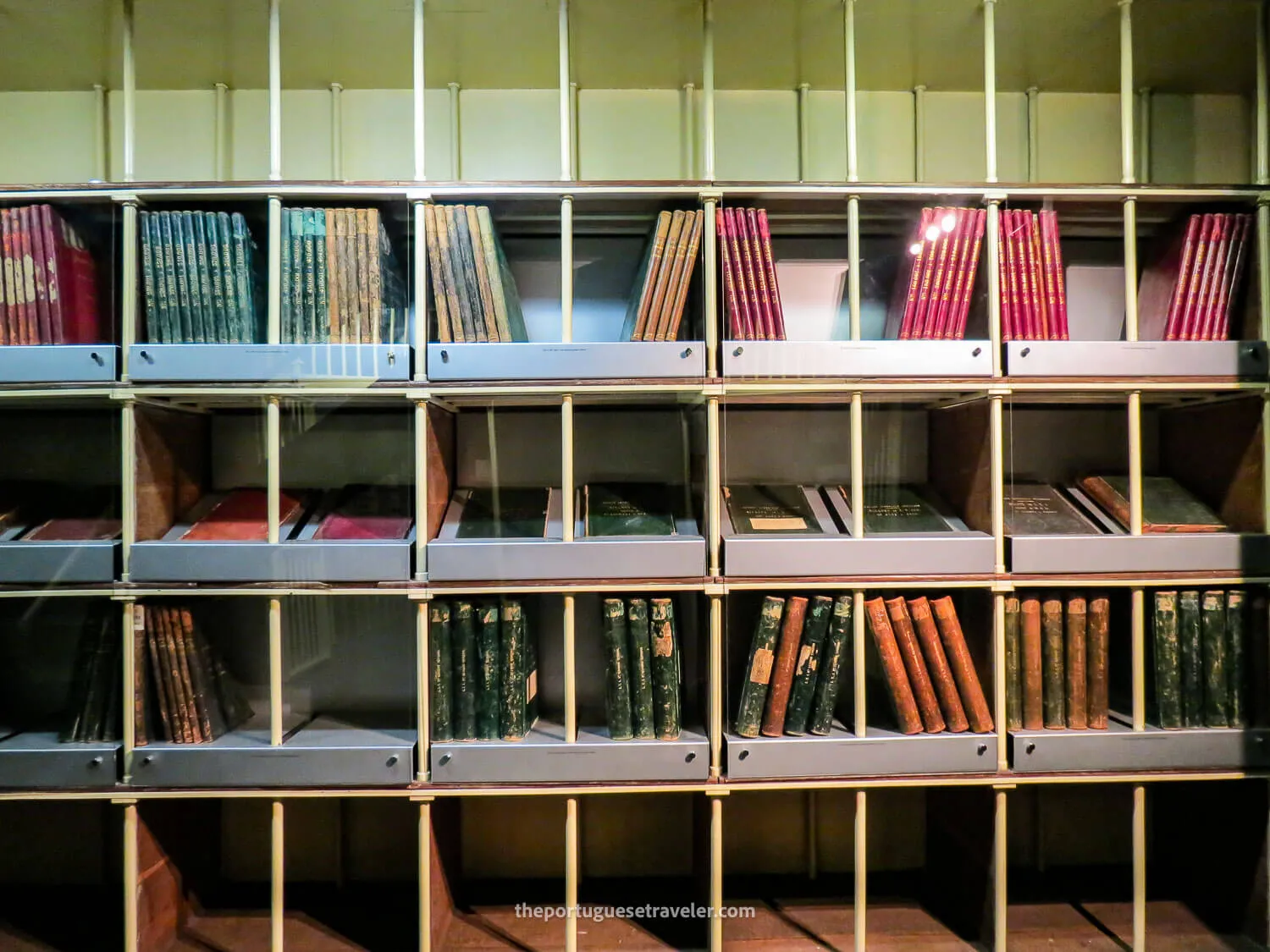
50. SALT Galata
Housed in a former Ottoman bank building, SALT Galata is a cultural center with art exhibitions, a research library, a café and co-working spaces. The architecture, with high ceilings and marble staircases, is worth a look. It fits well with a walk through Karaköy.
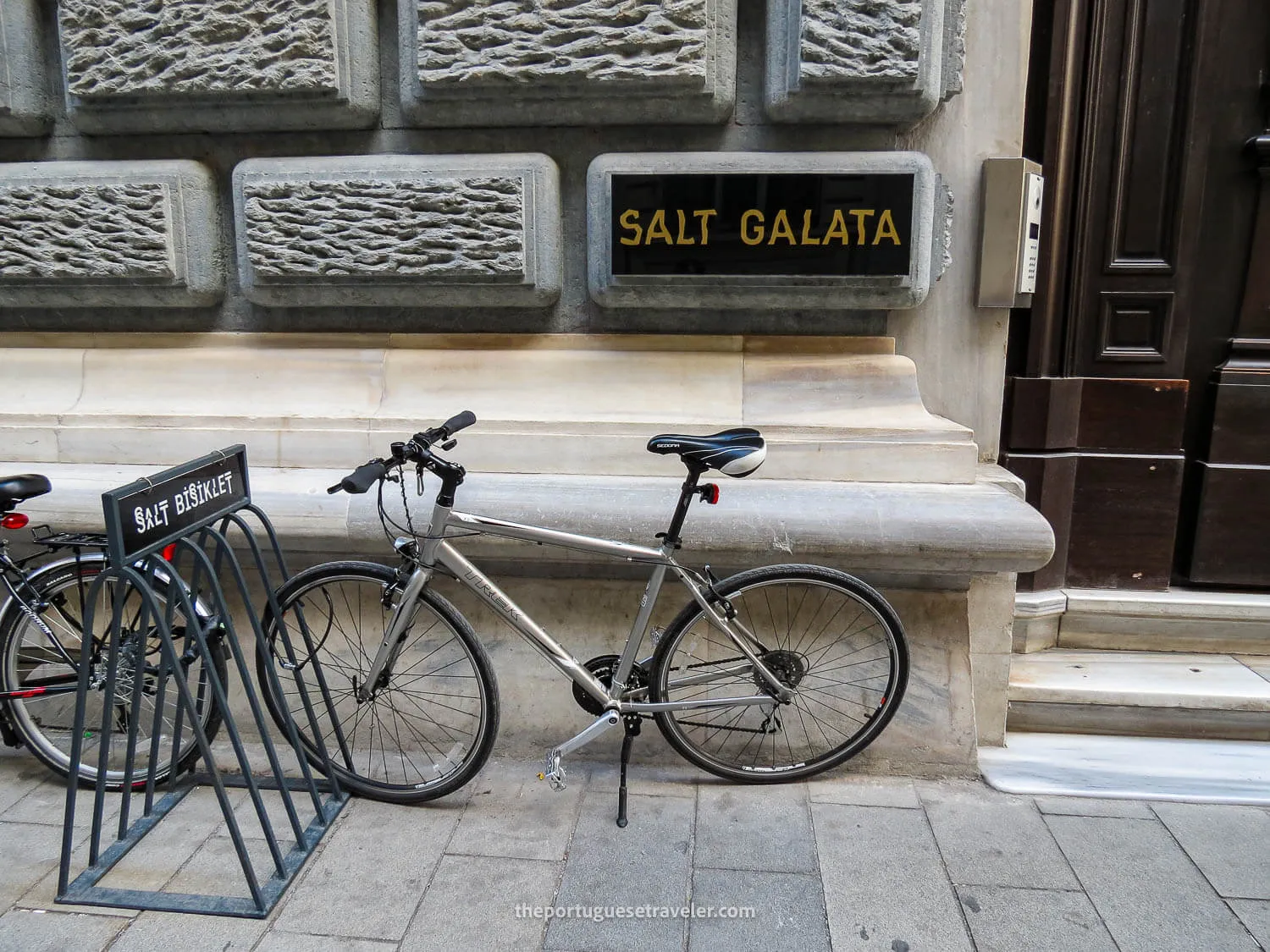
Salt Galata Museum
Salt Galata Museum
Salt Galata Museum
Salt Galata Museum
Heritage & Industry
Istanbul’s heritage is not limited to palaces and mosques. It also lives in its industries and institutions: converted factories, cultural centers and engineering museums tell stories of innovation and modernization.
51. Rahmi Koç Museum
On the Golden Horn, the Rahmi M. Koç Museum focuses on industry, transport and technology, with classic cars, vintage airplanes, steam engines and maritime artifacts, and many interactive displays. Children can climb aboard trains and submarines, and adults can look at the engineering. It is a family-friendly way to see Turkey’s industrial heritage.
52. Atatürk Cultural Center
Dominating Taksim Square, the Atatürk Cultural Center (AKM) is Istanbul’s main venue for performing arts. After a major renovation it reopened with new concert halls and theaters. You can catch an opera, ballet, symphony or contemporary performance here, and the building’s design makes it worth a stop even without a show.
Nature & Outdoor Spaces
Istanbul also has green escapes among the mosques and markets, from hilltop groves overlooking the Bosphorus to forest reserves on the city’s edges. Locals use them for fresh air, tea breaks and long walks.
City Parks & Gardens
The Ottoman sultans loved their gardens, and many of them survive as public parks. Today Istanbul’s parks are gathering places for families, joggers and couples. In spring, tulips bloom, echoing the flower’s long cultural roots in the city.
53. Gülhane Park
Gülhane Park was once the royal garden of Topkapı Palace and is now one of Istanbul’s most popular parks. Its tree-lined avenues recall Ottoman leisure life. In April the tulip festival fills the flowerbeds with color. There are hillside cafés with views of the Bosphorus, handy after exploring the busy historic district.
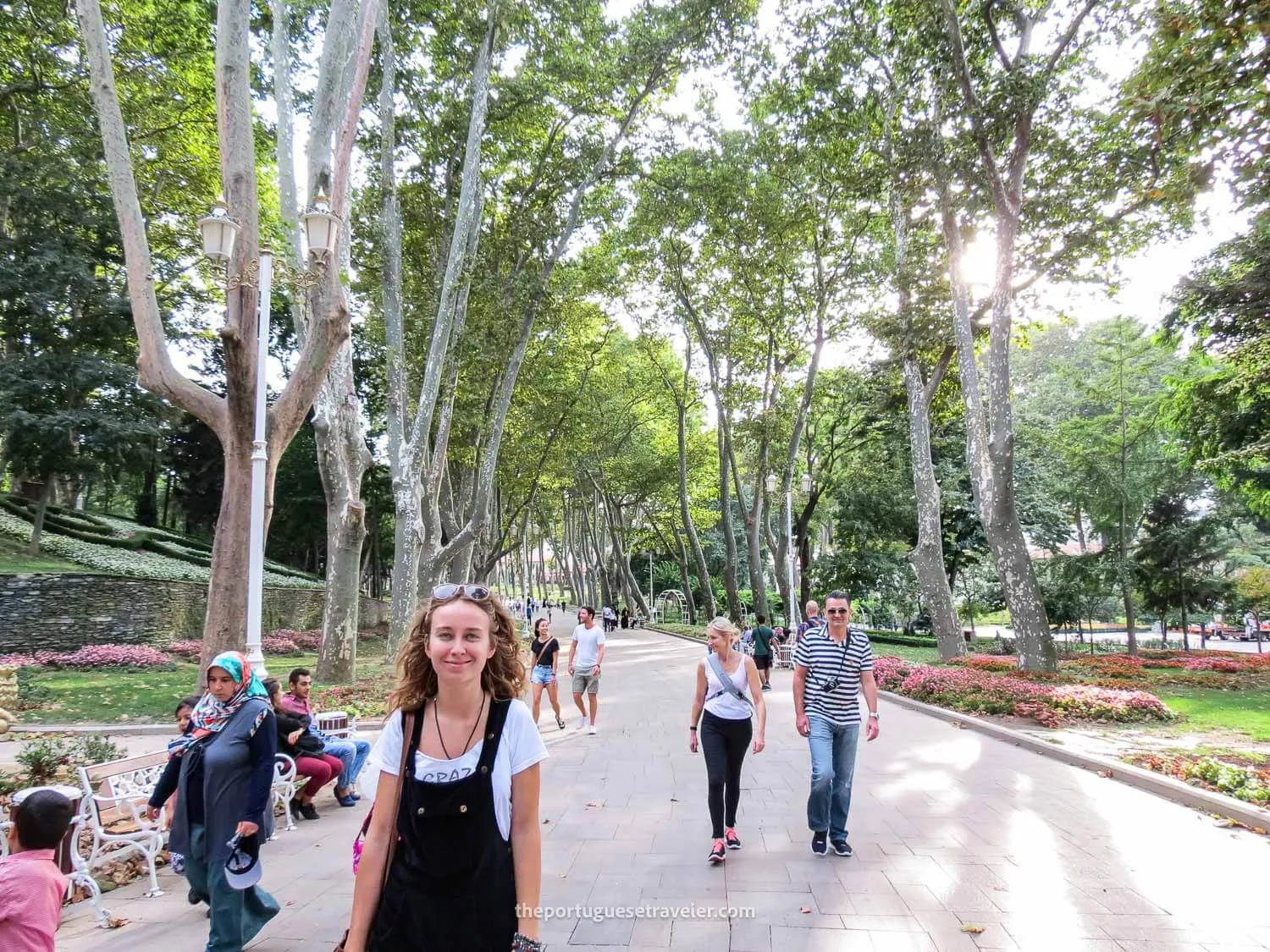
Ece at the Gülhane Park near Topkapi Palace in Istanbul
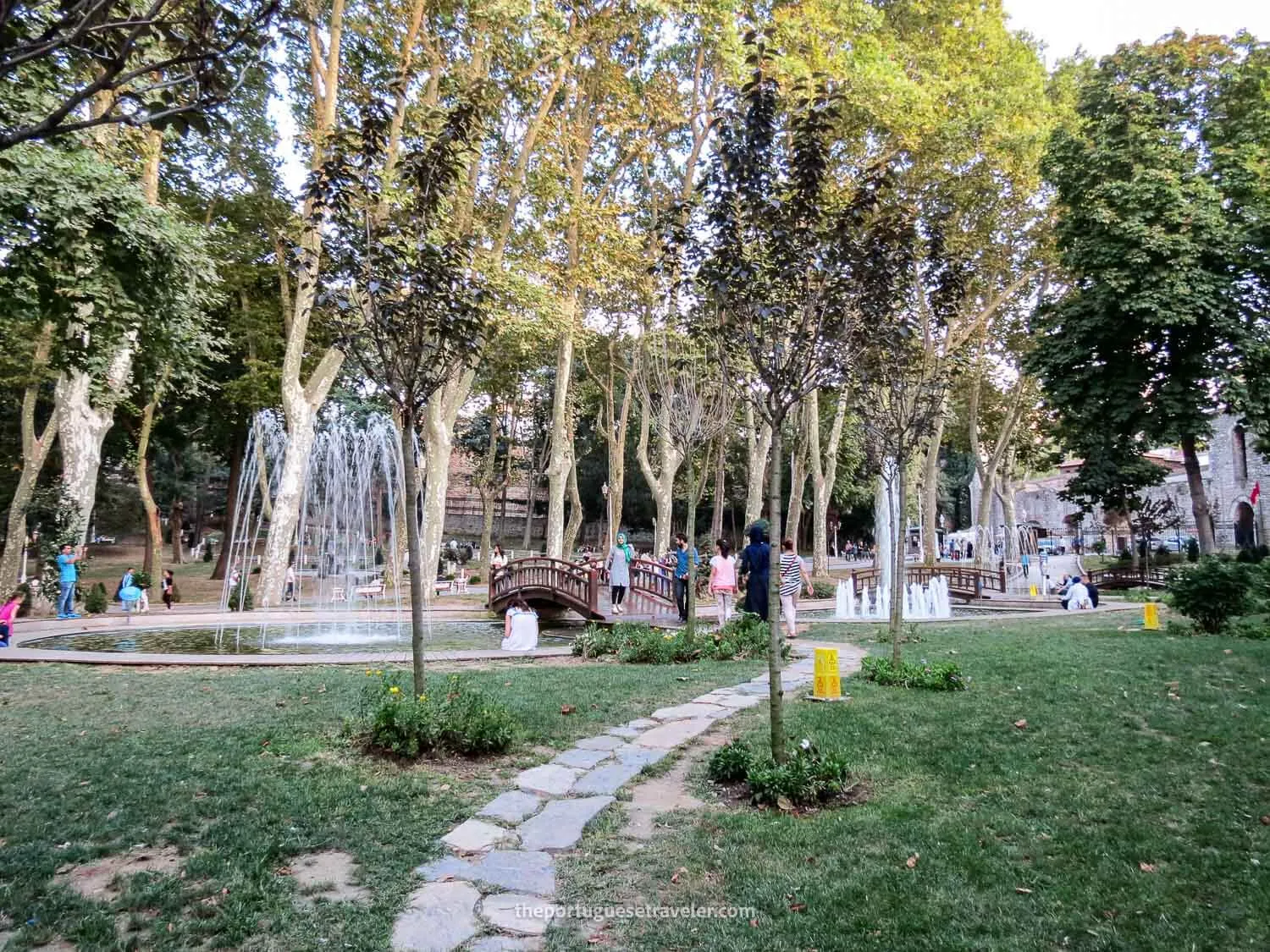
The Gülhane Park near Topkapi Palace in Istanbul
54. Yıldız Park
Between Beşiktaş and Ortaköy, Yıldız Park once belonged to the Ottoman sultans. Today it has pavilions, ponds and winding trails. Locals come for picnics, and visitors come for the calm and a look at imperial leisure. The historic Yıldız Pavilion is inside the park.
55. Emirgan Park
Emirgan Park is famous for its tulips and fills with color during the annual Tulip Festival every April. Its three historic pavilions, Yellow, Pink and White, now serve as cafés and restaurants. With walking paths, lakes and wide lawns, it is popular with Istanbul families and couples, and a good choice for a spring day.
56. Maçka Park
In the Şişli district, Maçka Park is where many of Istanbul’s urban crowd unwind. It is smaller than the palace gardens but lively, with jogging paths, playgrounds and open lawns. A cable car crosses over the park. If you are staying near Nişantaşı or Taksim, it is an easy place for a morning walk or an evening picnic.
57. Camlıca Grove
High on the Asian side, Camlıca Grove has panoramas over the Bosphorus and the European skyline. Tea gardens are scattered among pine and cypress trees, and it is a popular spot at sunset. You can sip tea in tulip-shaped glasses and watch the ferries below.
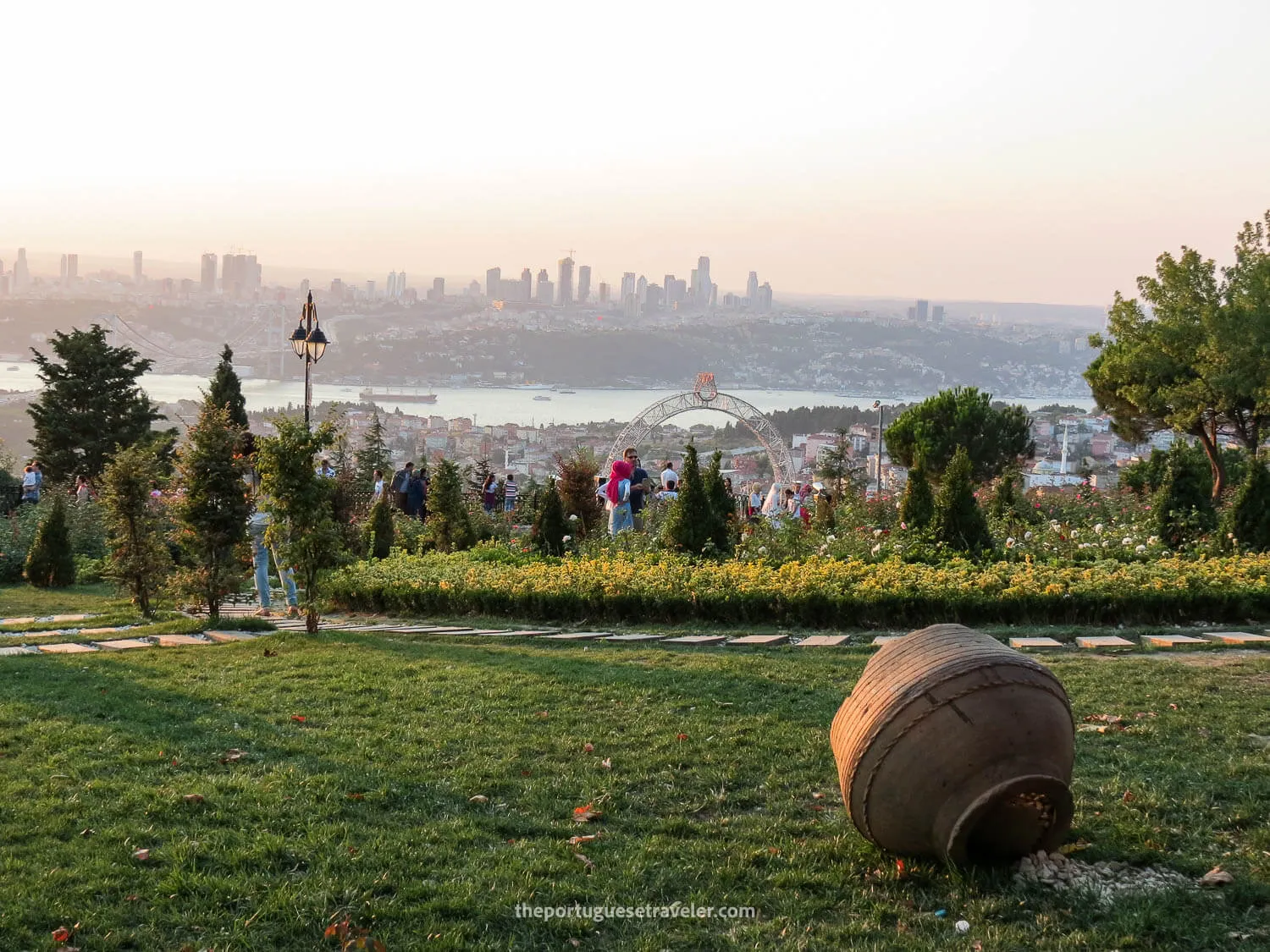
Camlica Hill Grove
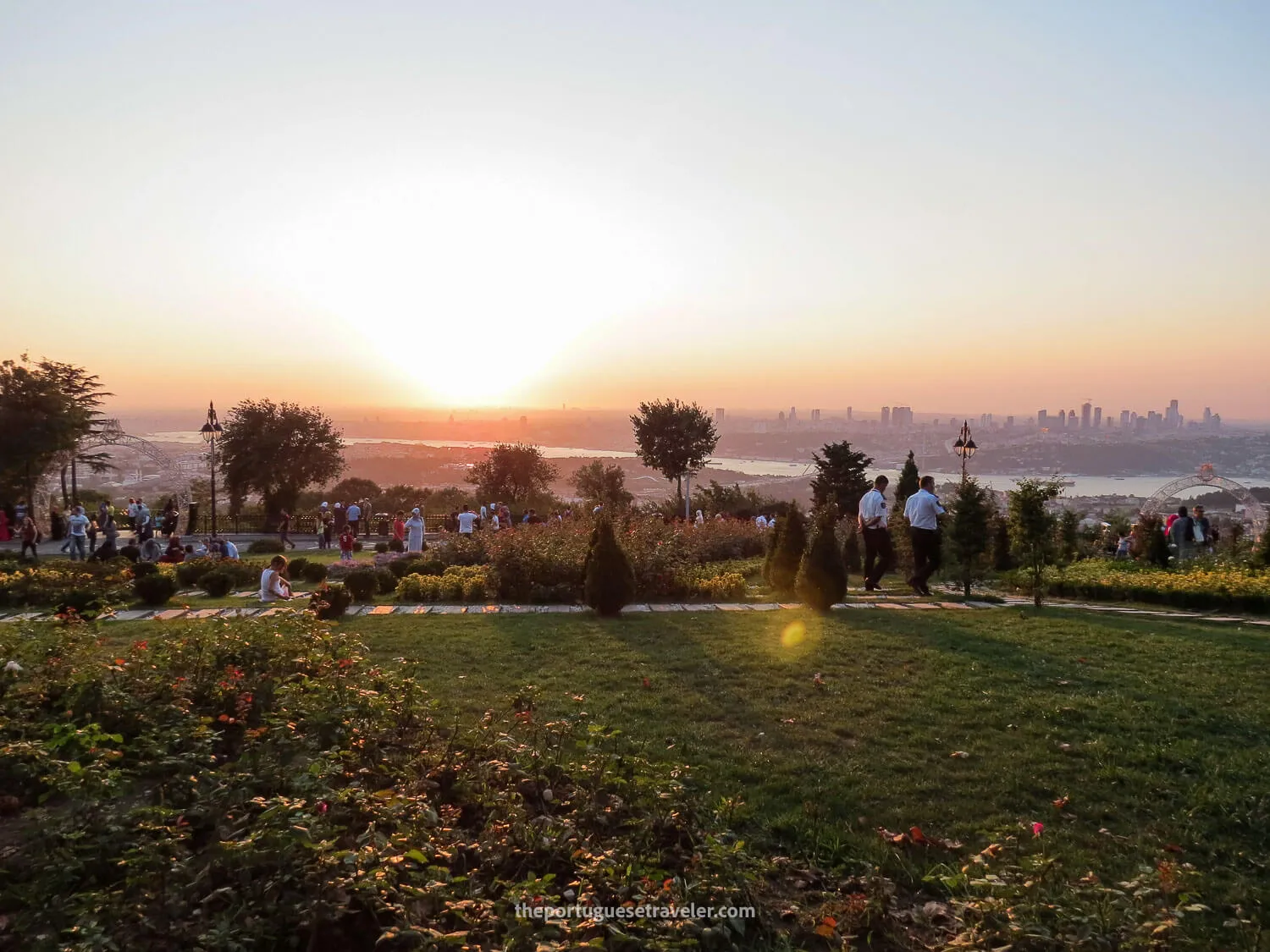
The Camlica Hill Groove
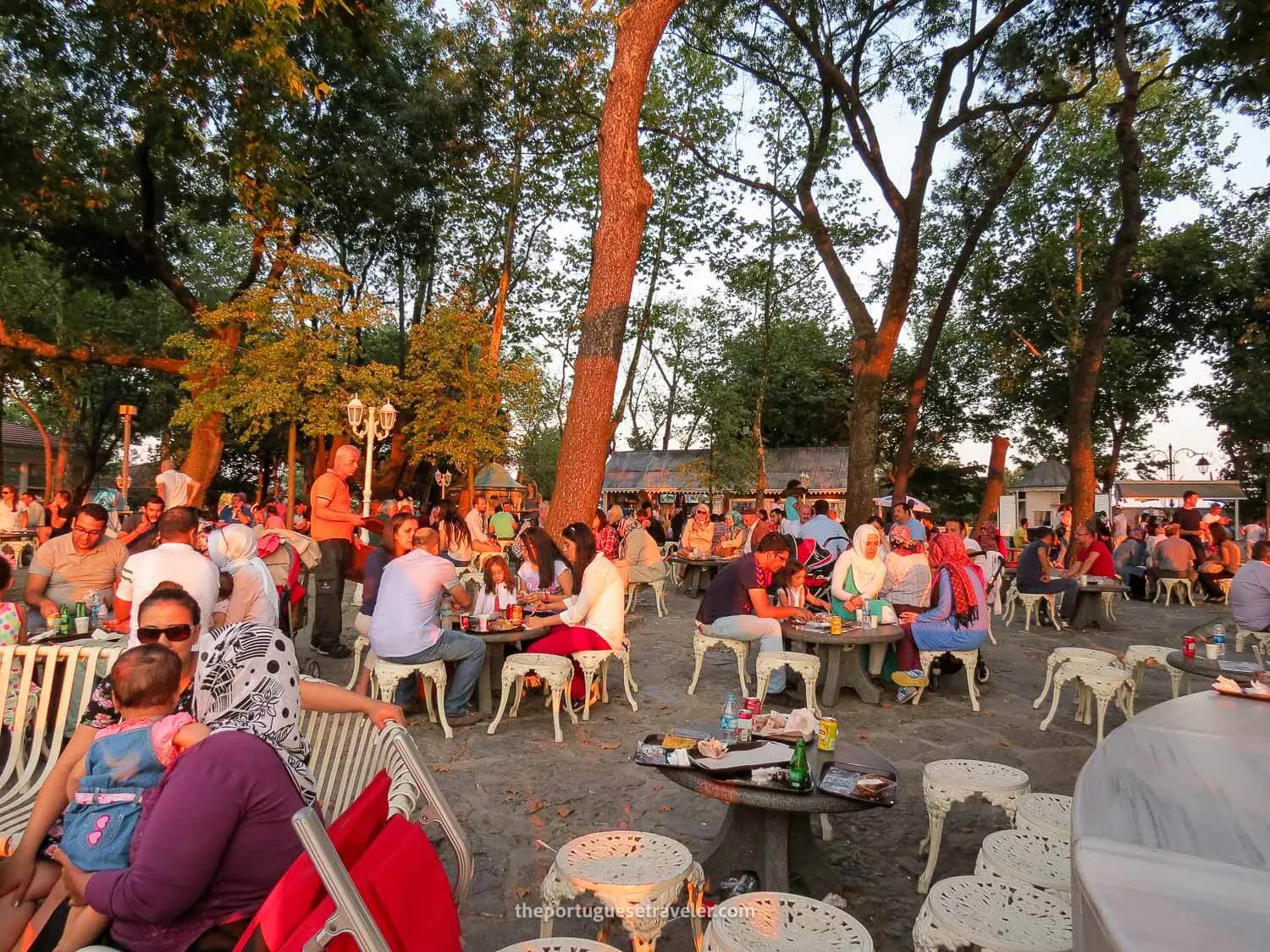
The café at Camlica Hill
Forests & Natural Escapes
Beyond the city core, Istanbul has forests and nature parks where the noise of traffic fades. They range from oak-covered hills to wildlife reserves and are good for hikes and picnics, minutes from the urban center.
58. Polonezköy Nature Park
A short drive from the city center, Polonezköy Nature Park is a rural escape. Polish settlers founded the village in the 19th century, and it keeps its heritage, with traditional houses and Polish cuisine on offer. The surrounding park has hiking trails, cycling paths and picnic spots.
59. Aydos Forest
On the Asian side, Aydos Forest is a local favorite for outdoor activities. It has a hilltop lake, pine-covered walking trails and picnic areas, and works for a day of hiking. It is popular on weekends with families and joggers, and quieter on weekday mornings.
Waterfront & Islands
Water defines Istanbul, from the fishing boats of the Golden Horn to the promenades of Moda. A ferry to the Princes’ Islands takes you to a slower setting with horse-drawn carriages, pine forests and sea views, and no cars.
60. Princes’ Islands
The Princes’ Islands are car-free islands in the Sea of Marmara, best explored by horse-drawn carriage (on Büyükada, the largest) or by bike. Wooden mansions line the streets, and pine-covered hills lead to monasteries. The ferry ride gives wide views of the city from the water. It works as a day trip, and Büyükada is known for its ice cream.
61. Golden Horn walk & bridges
The Golden Horn is an inlet lined with promenades, cafés and historic neighborhoods. Along its shores you can see fishermen on the Galata Bridge, colorful houses in Balat and parks in Eyüp. Its bridges are good spots for photographs, especially at sunset when the mosque silhouettes stand out. It is both a scenic walk and a look at old and new Istanbul.
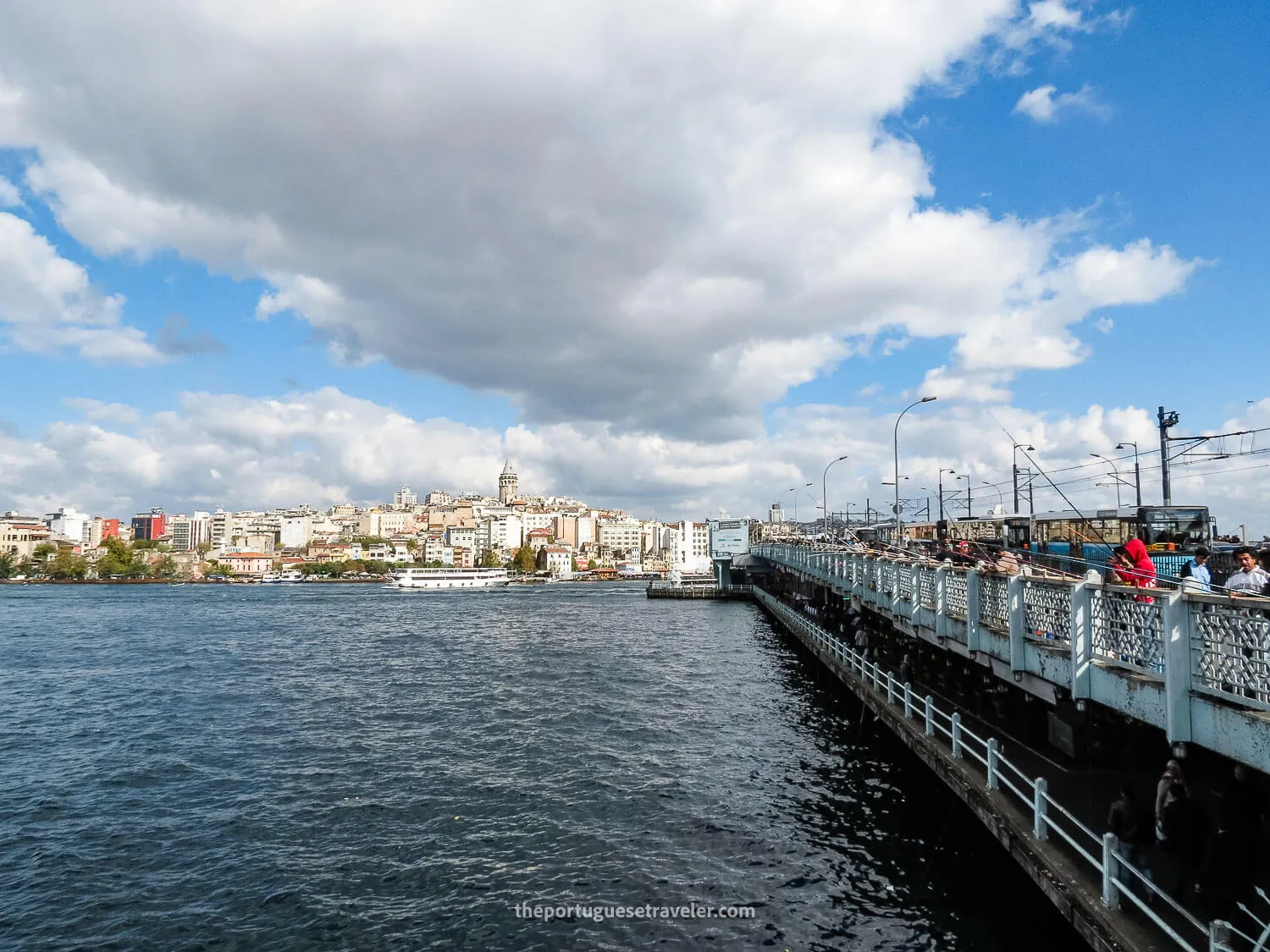
The Galata Bridge
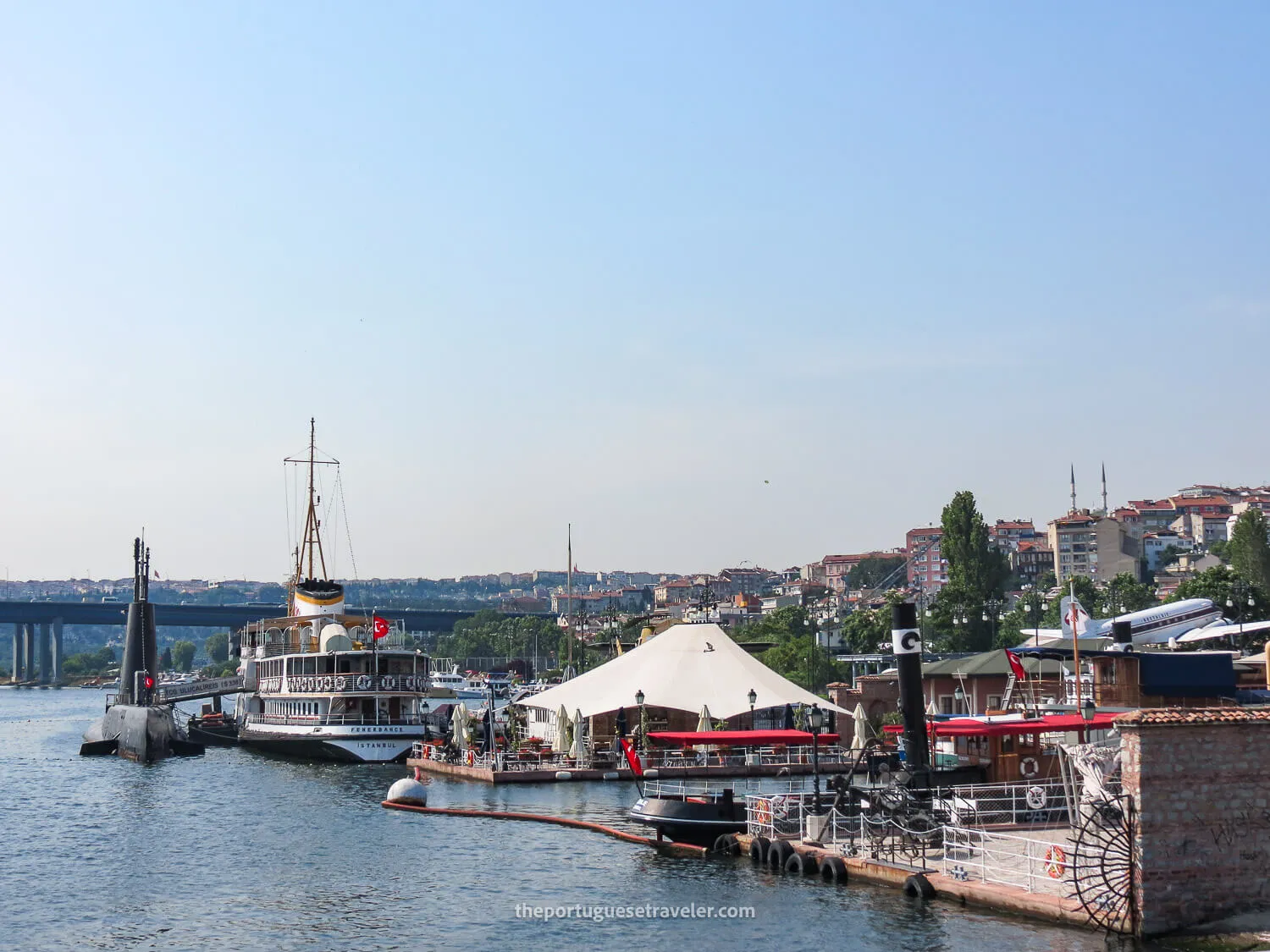
The Golden Horn
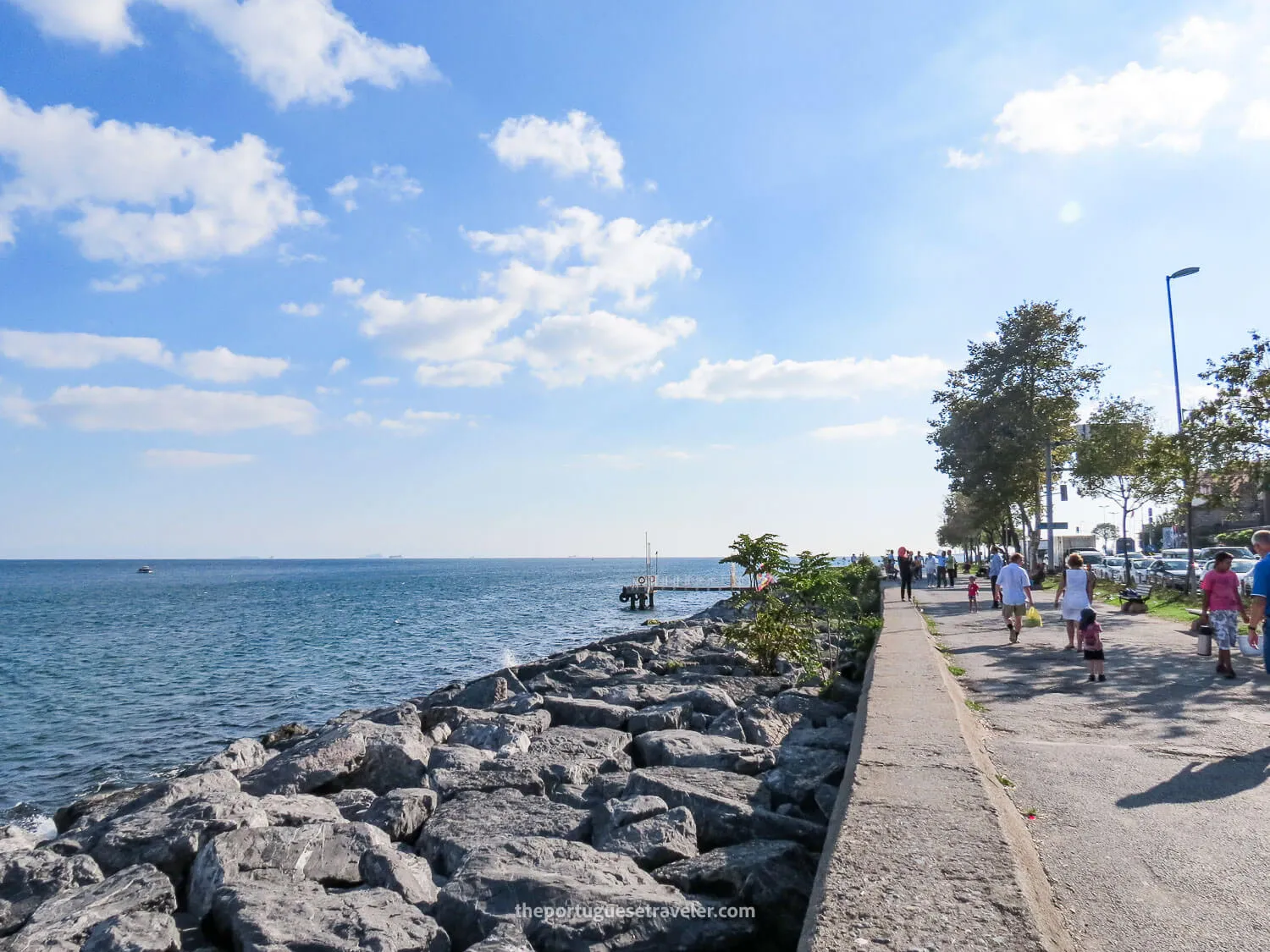
The waterfront of Istanbul
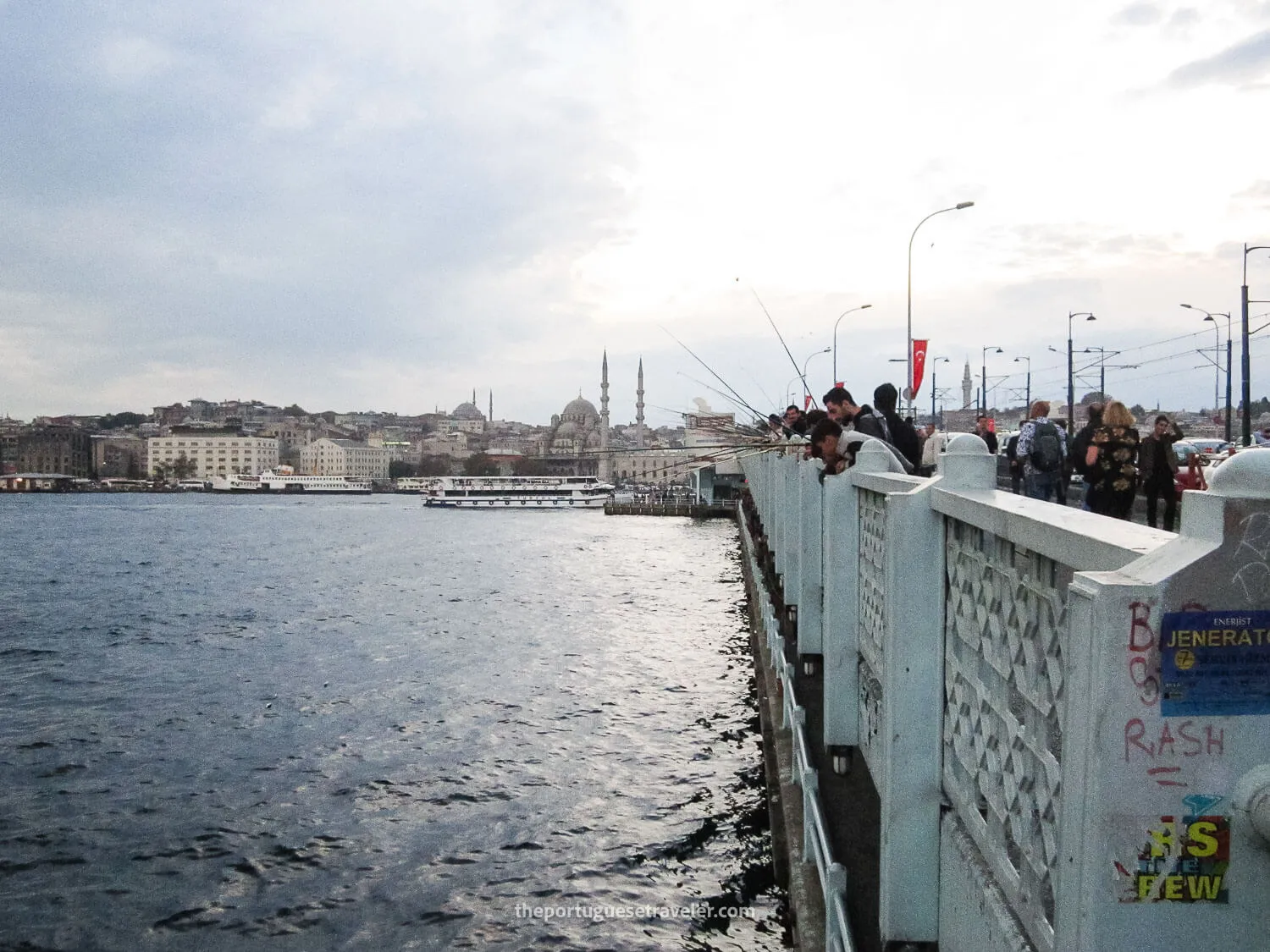
The Galata Bridge
Best Viewpoints
Istanbul is a city of hills, and its viewpoints are as well known as its monuments. From historic towers, hilltop cafés or modern skyscrapers, the panoramas show the Bosphorus, domes and minarets in one frame, and sunrise and sunset can turn the whole city gold.
Historic Towers & Landmarks
Towers have long been part of Istanbul’s identity, from Genoese watchtowers to Ottoman fire lookouts. They were defensive and also helped the city watch over its waterways and skyline. Today visitors can climb them and see the city in every direction.
62. Galata Tower
The Galata Tower has watched over Istanbul since 1348. Climb to the top (or take the elevator) for a 360° view of the Bosphorus, the Golden Horn and the rooftops stretching to the horizon. At sunset the mosques of Sultanahmet glow in golden light. Afterward you can walk the cobbled streets below, with their cafés and bars.
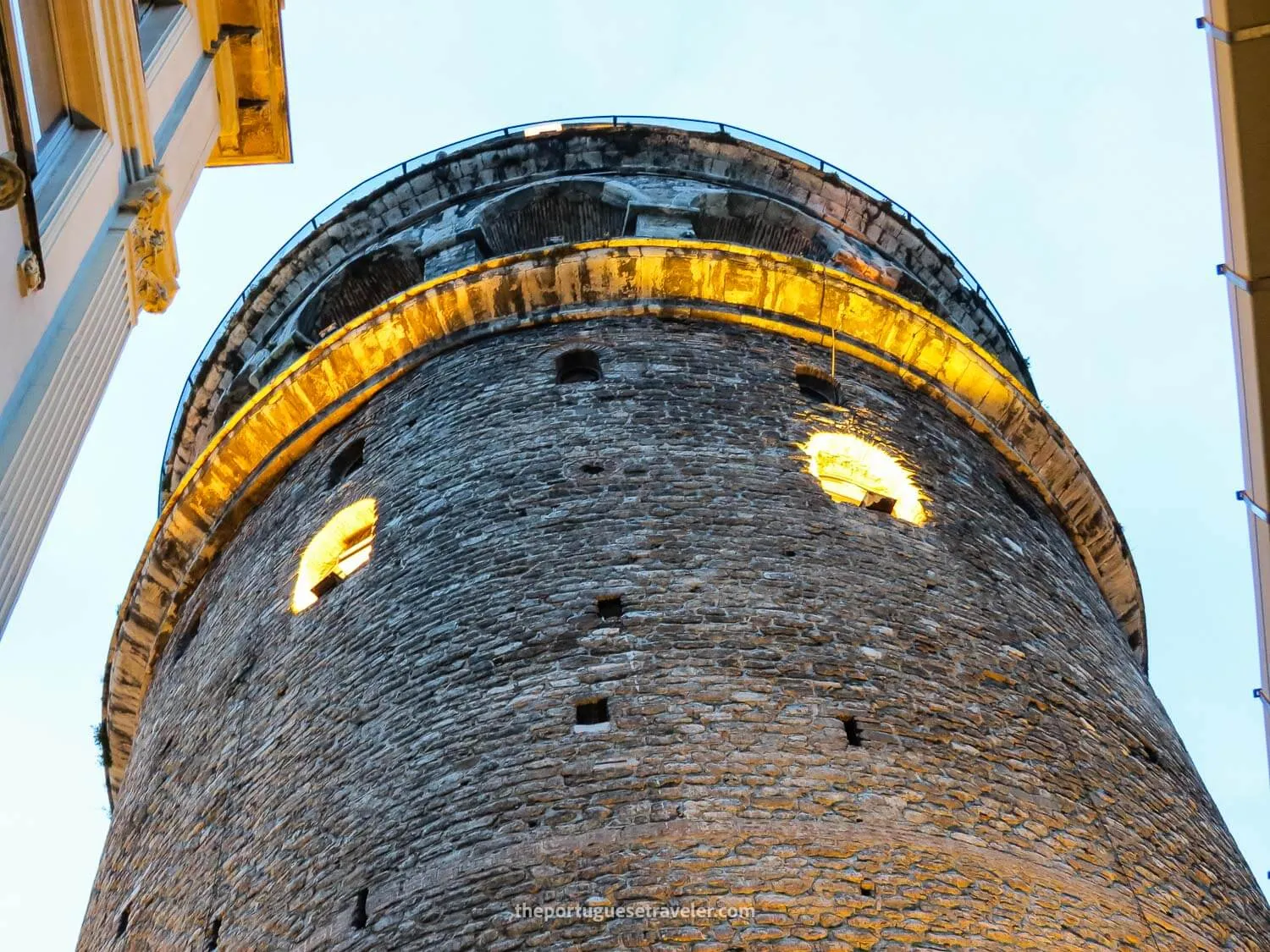
The top of Galata Tower
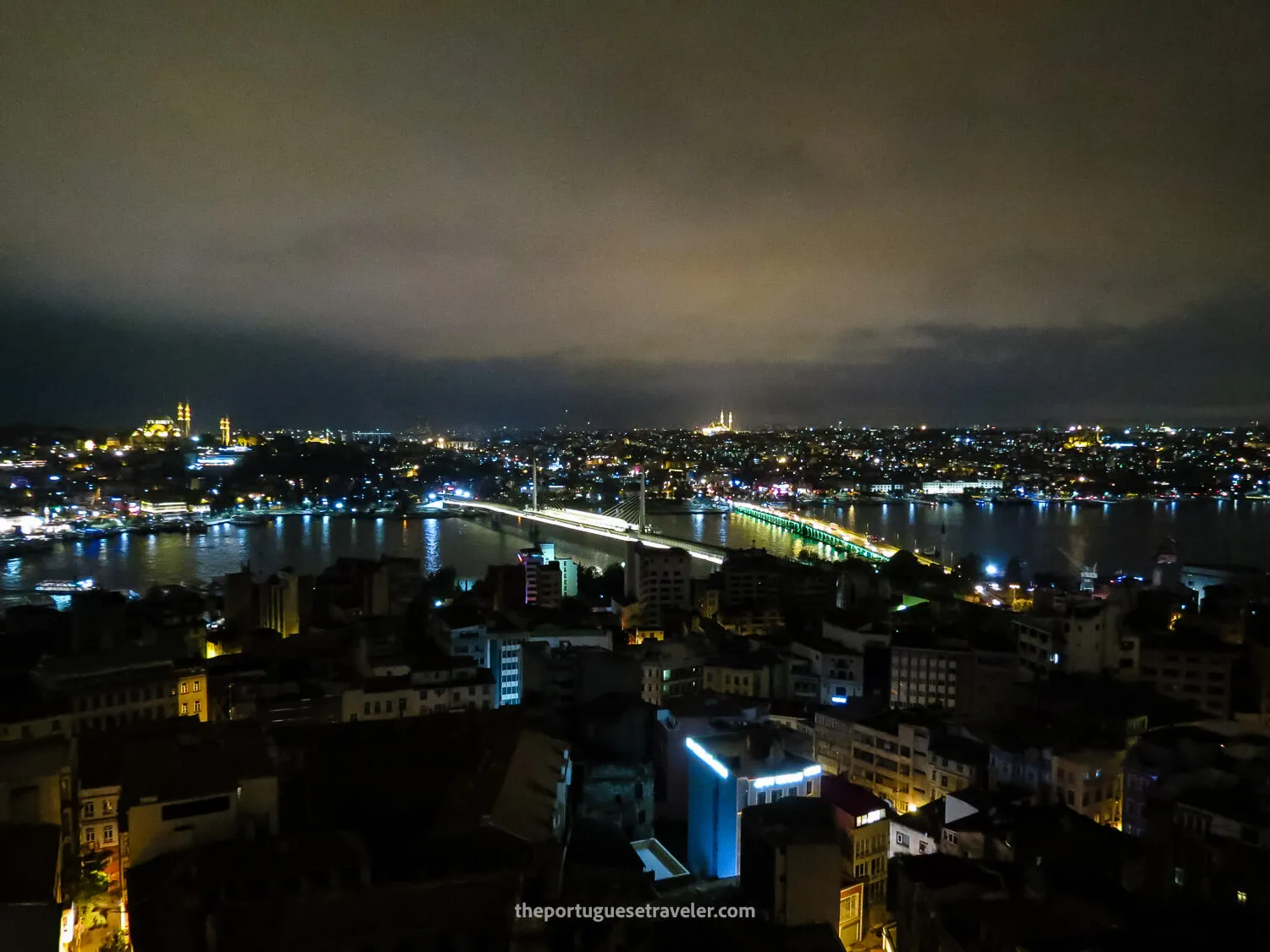
Galata Tower Viewpoint
63. Maiden’s Tower
Standing on a tiny islet in the Bosphorus, the Maiden’s Tower is the subject of many legends, from love stories to prophecies. You can take a short boat ride to visit the tower, which now has a café and a small exhibition. You can also look at it from the Üsküdar or Salacak shore, especially at dusk when it lights up.
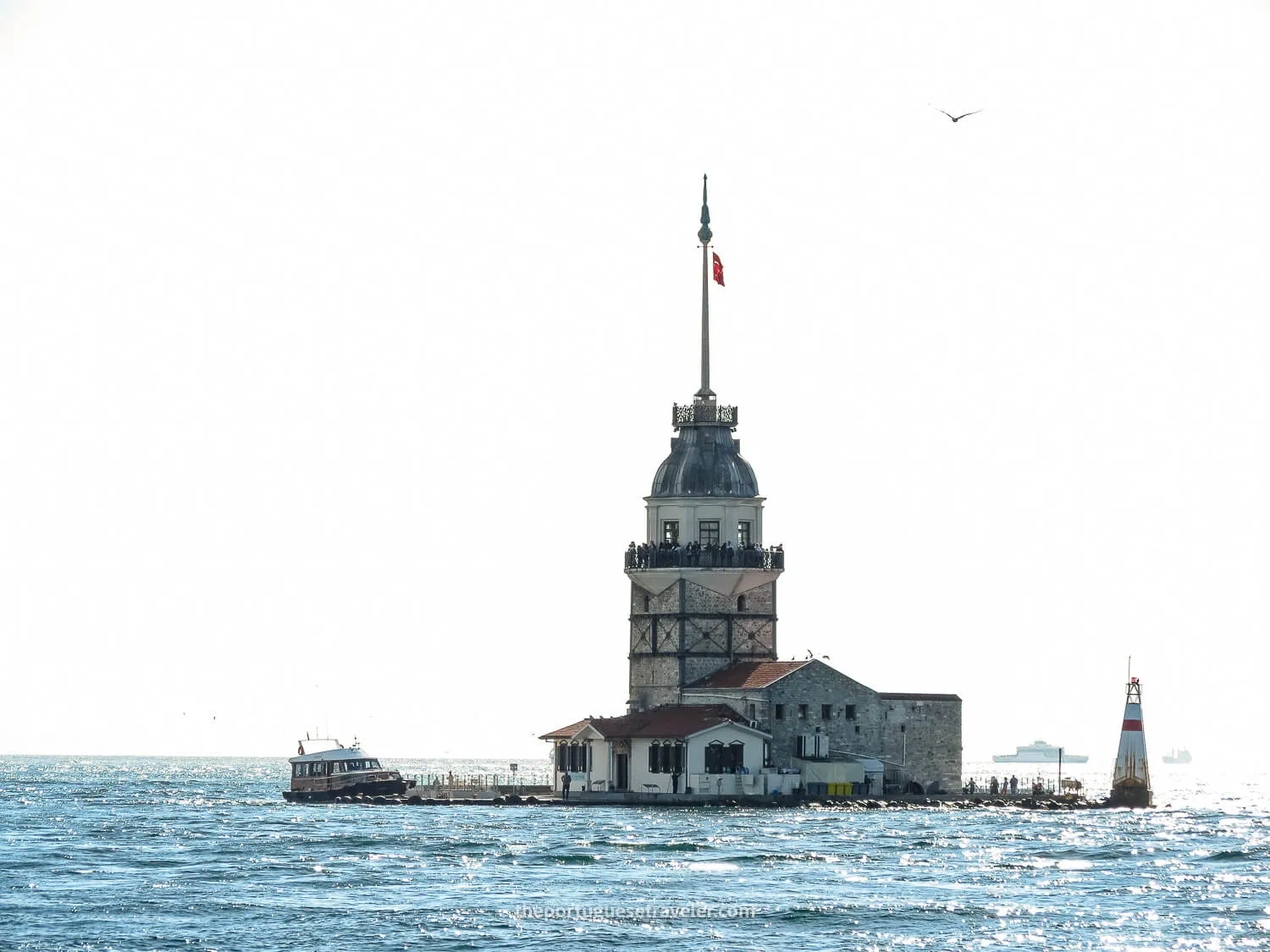
64. Beyazıt Tower
Inside Istanbul University’s main campus, the Beyazıt Tower has served as a fire-watch tower since the 18th century. It is less visited than Galata Tower, but it gives a different view of the city, above the old book market and Beyazıt Square. It is easy to combine with a visit to the Grand Bazaar nearby.
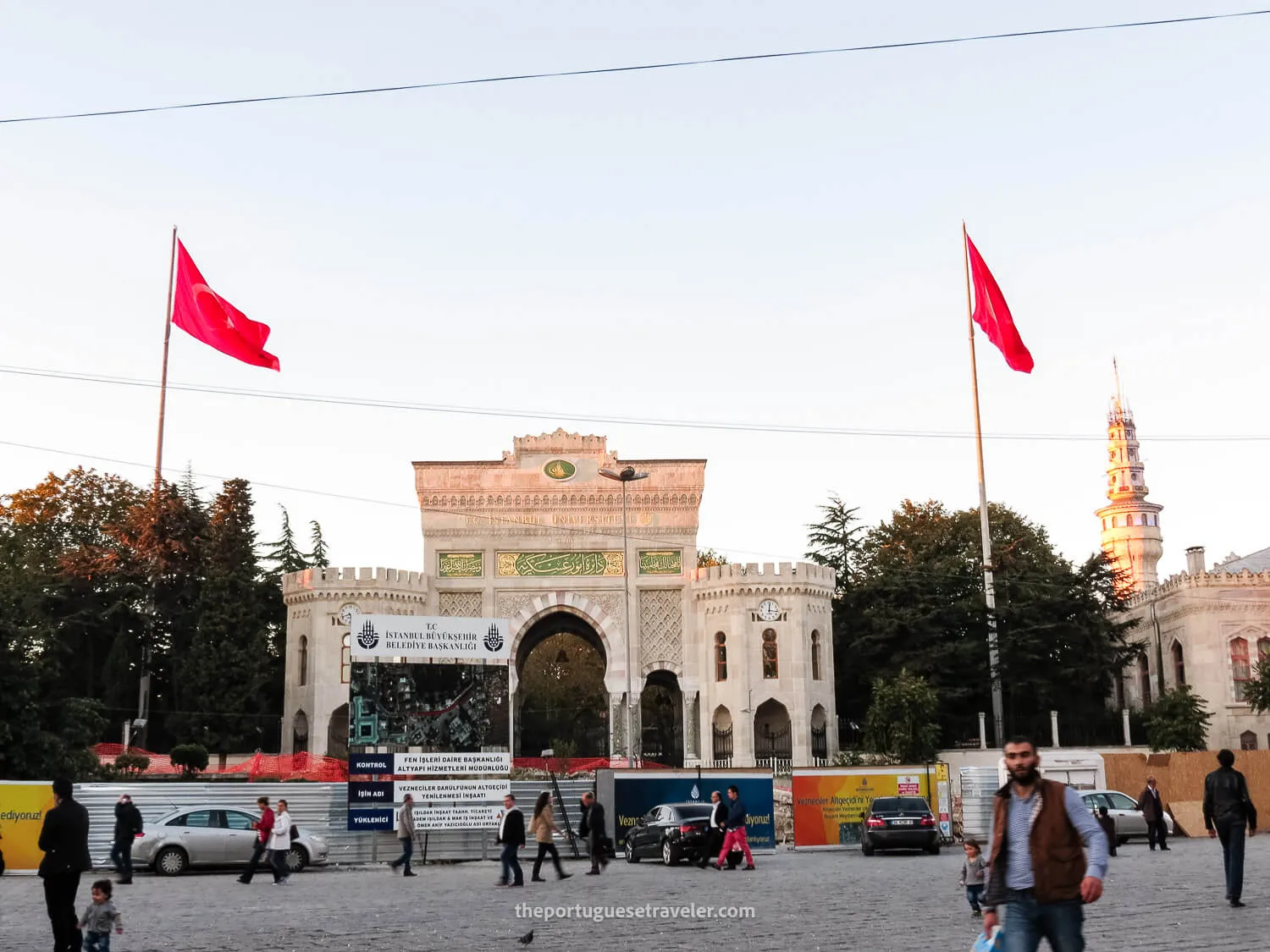
65. Büyük Valide Han rooftop
Inside an old Ottoman inn near the Grand Bazaar, the Büyük Valide Han rooftop is a favorite with photographers. From here you get a raw view of Istanbul’s skyline, with domes, minarets and the Bosphorus in the distance. The han itself is a maze of old workshops still used by craftsmen. It is not an official tourist spot, but it is a less polished vantage point.
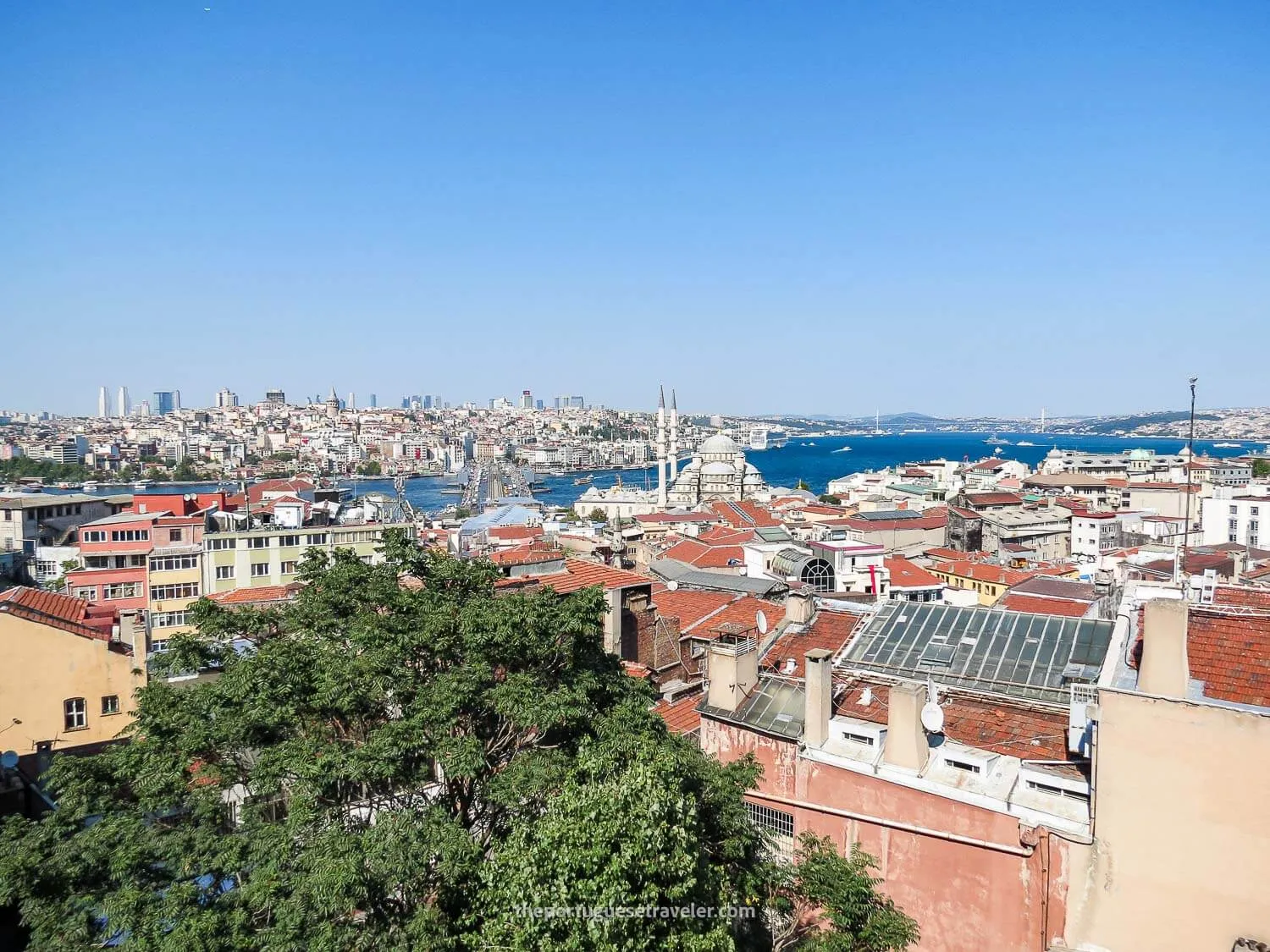
The Büyük Valide Han Rooftop
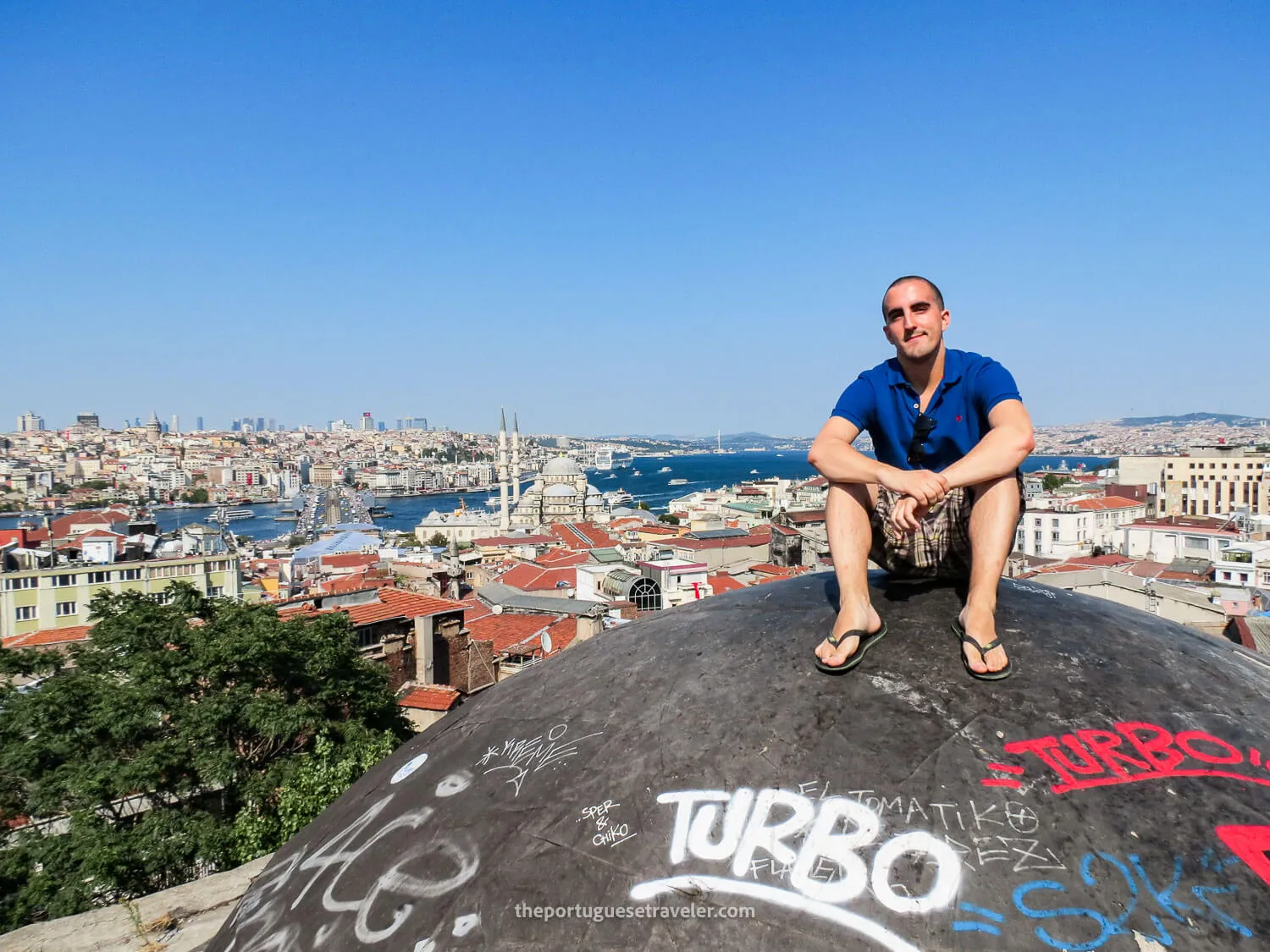
The Büyük Valide Han Rooftop
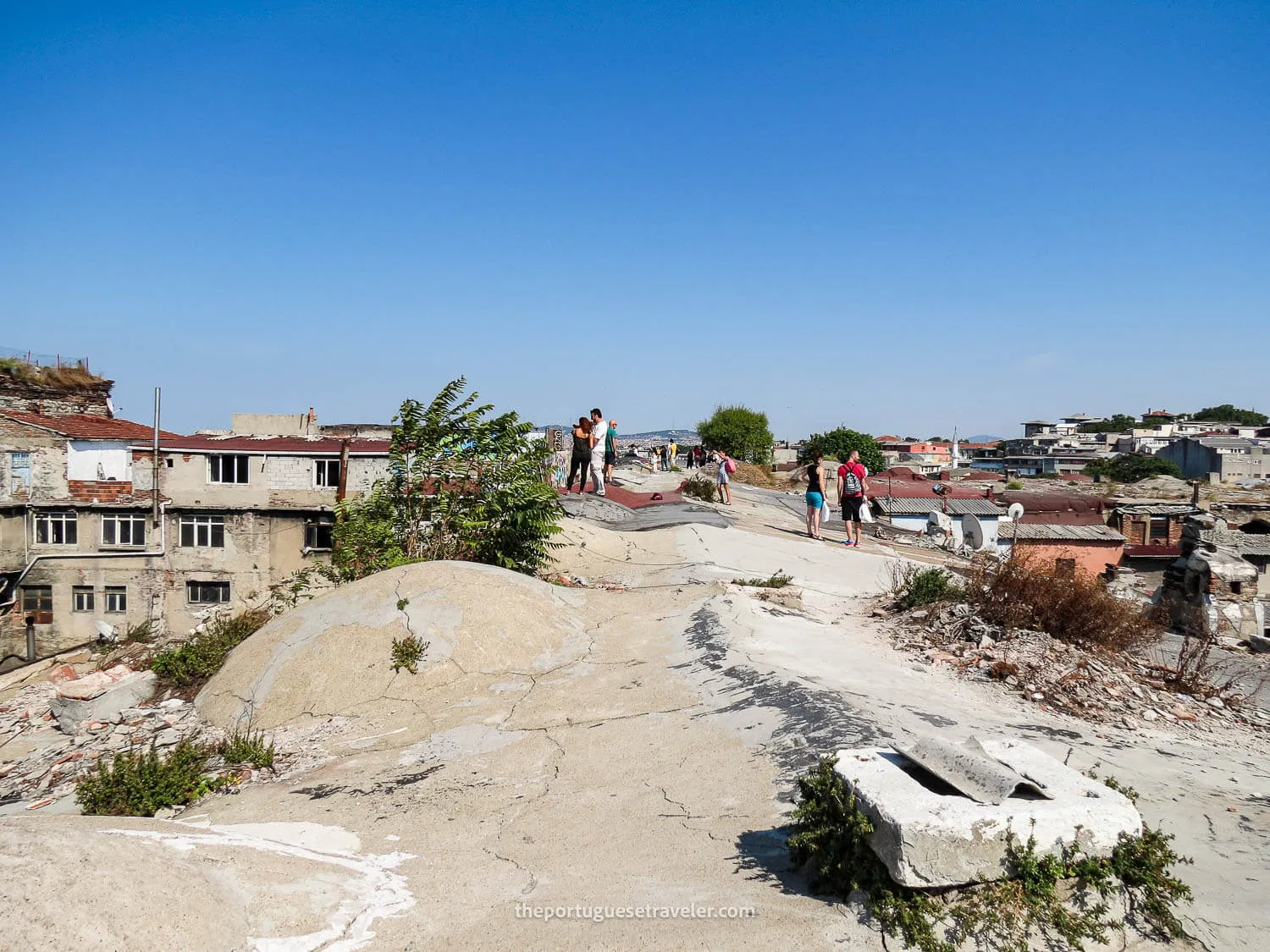
The Rooftop
Scenic Hills & Parks
Istanbul’s seven hills each have their own character, and some rise above the rest for their views. From Camlıca to Pierre Loti, these ridges have long been loved by locals and written about in poetry, and they make natural balconies for tea.
66. Pierre Loti Hill
Pierre Loti Hill is named after the French writer who fell in love with Istanbul, and it has one of the best views over the Golden Horn. You can reach the top by cable car or on a steep walk through Eyüp’s historic cemetery. At the top there is a traditional tea garden with a panorama of domes, rooftops and water.
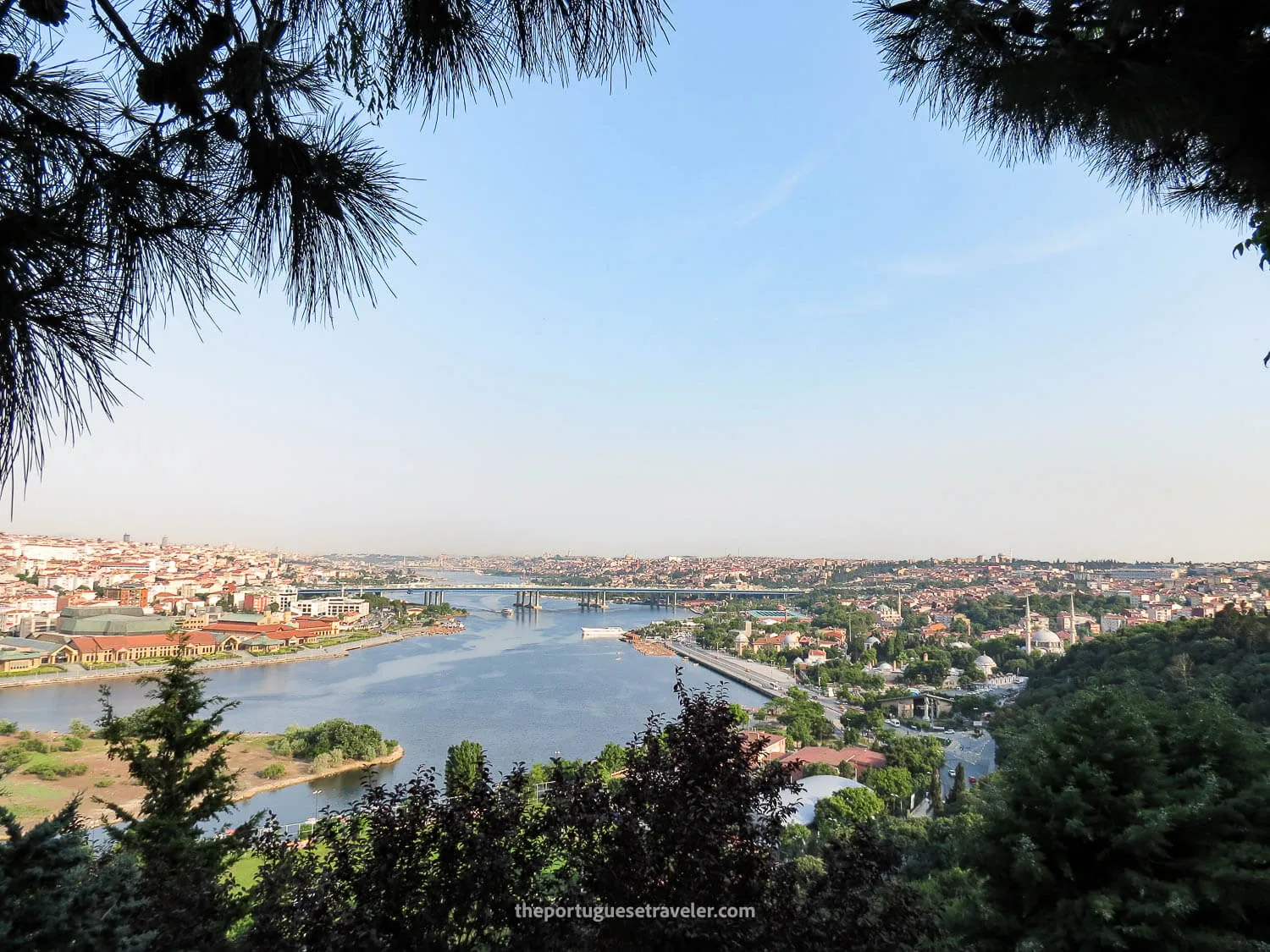
Pierre Loti Viewpoint
The Walls of Constantinople
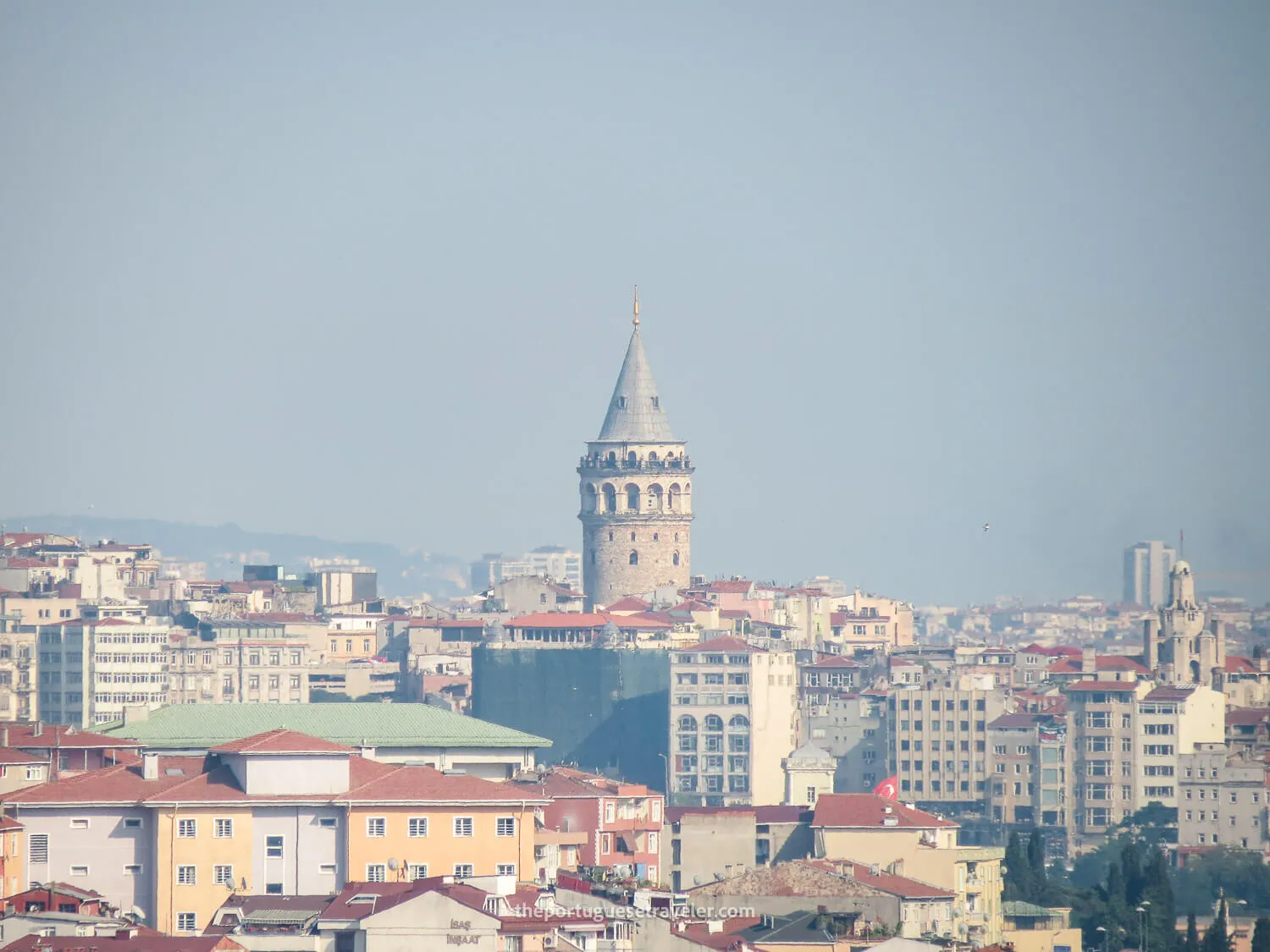
The Galata Tower seen from Pierre Loti
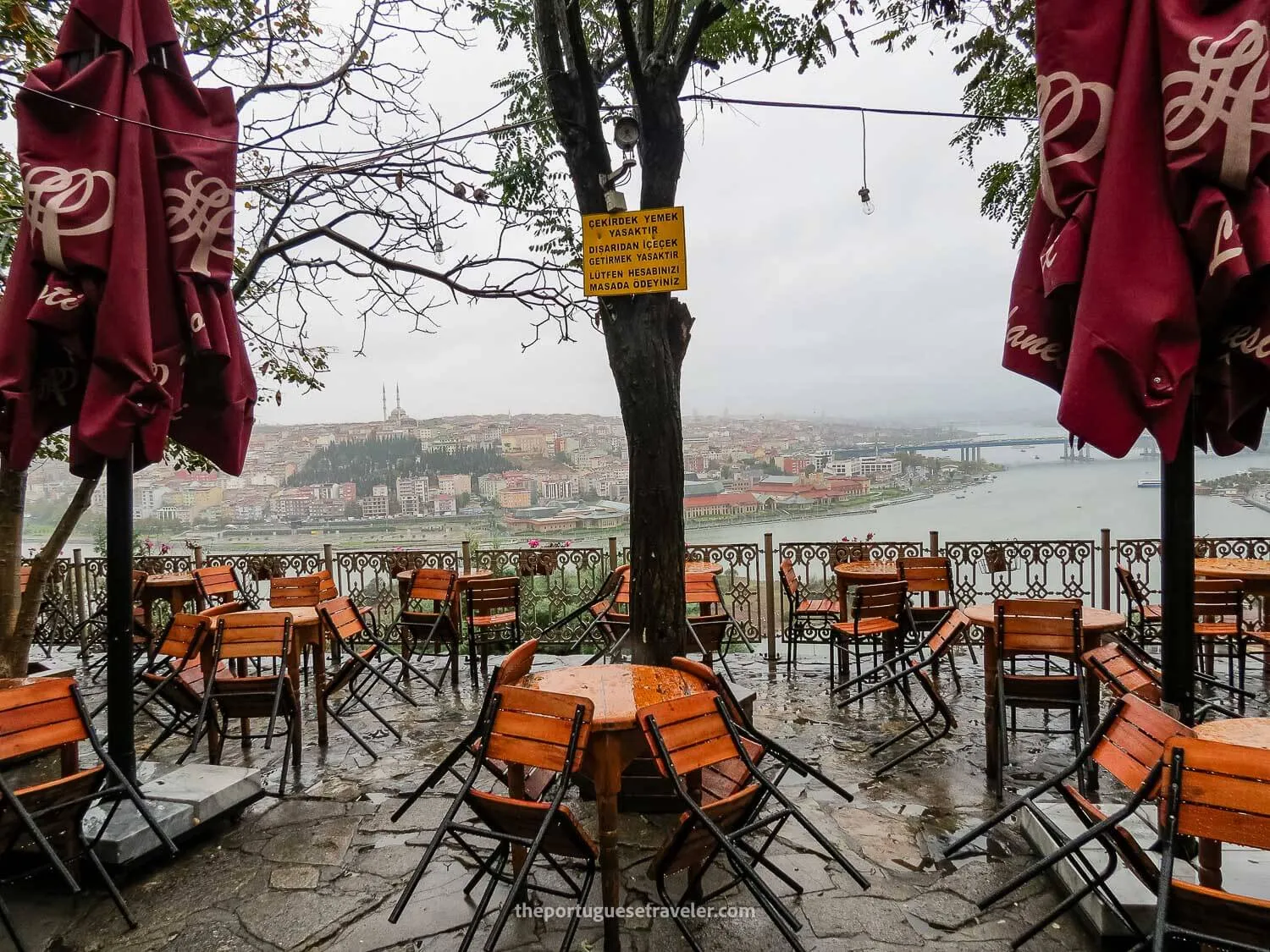
The cafe at Pierre Loti
67. Gülhane Park Tea Garden
Inside historic Gülhane Park, a small tea garden on the hillside has a simple view over the Bosphorus. It is not the grandest vista in Istanbul, but it is quiet, with trees and passing ferries. It suits an afternoon break after Topkapı Palace.
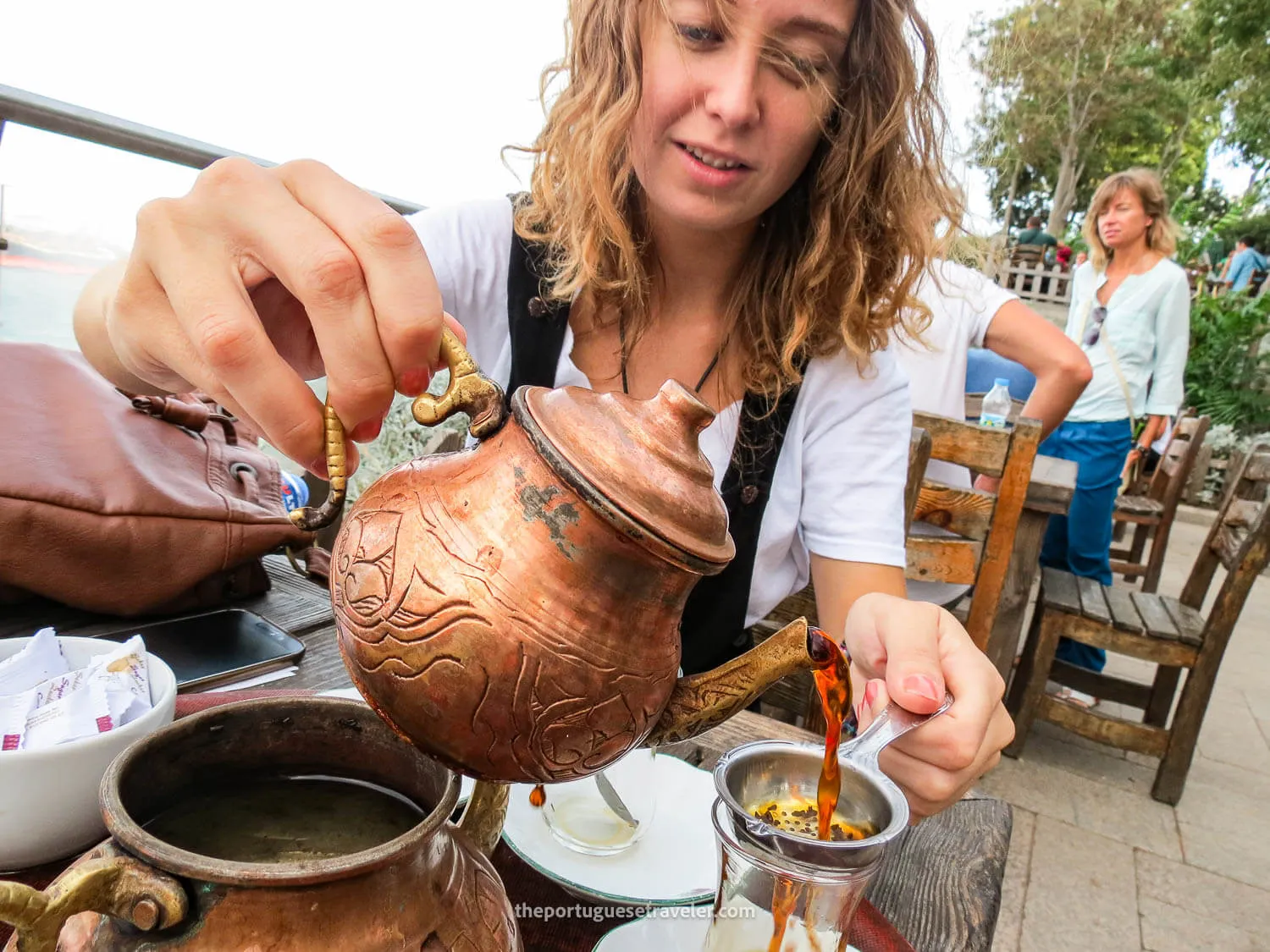
Ece and me at the Gülhane Park Tea Garden
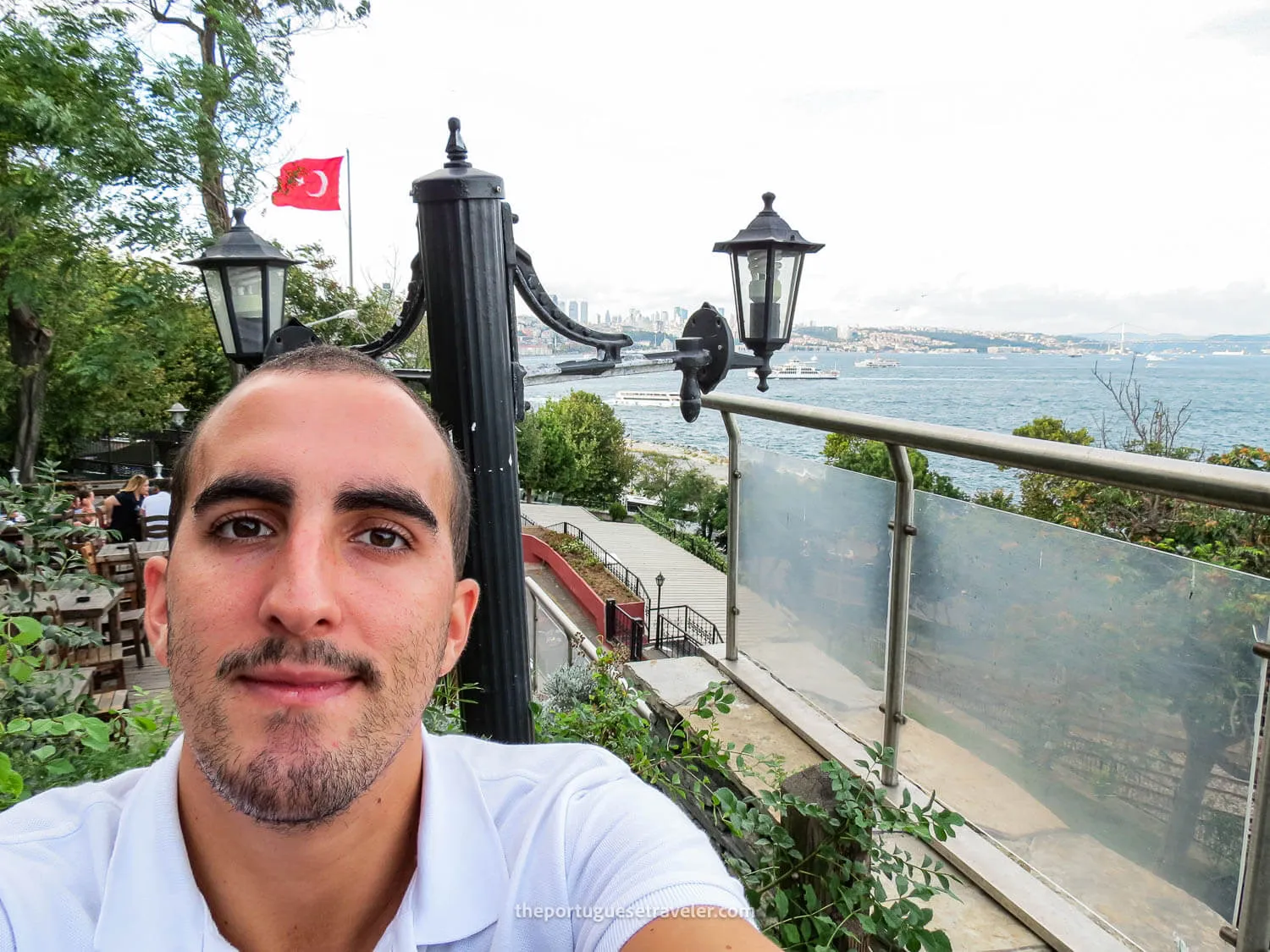
Me at the Tea Garden
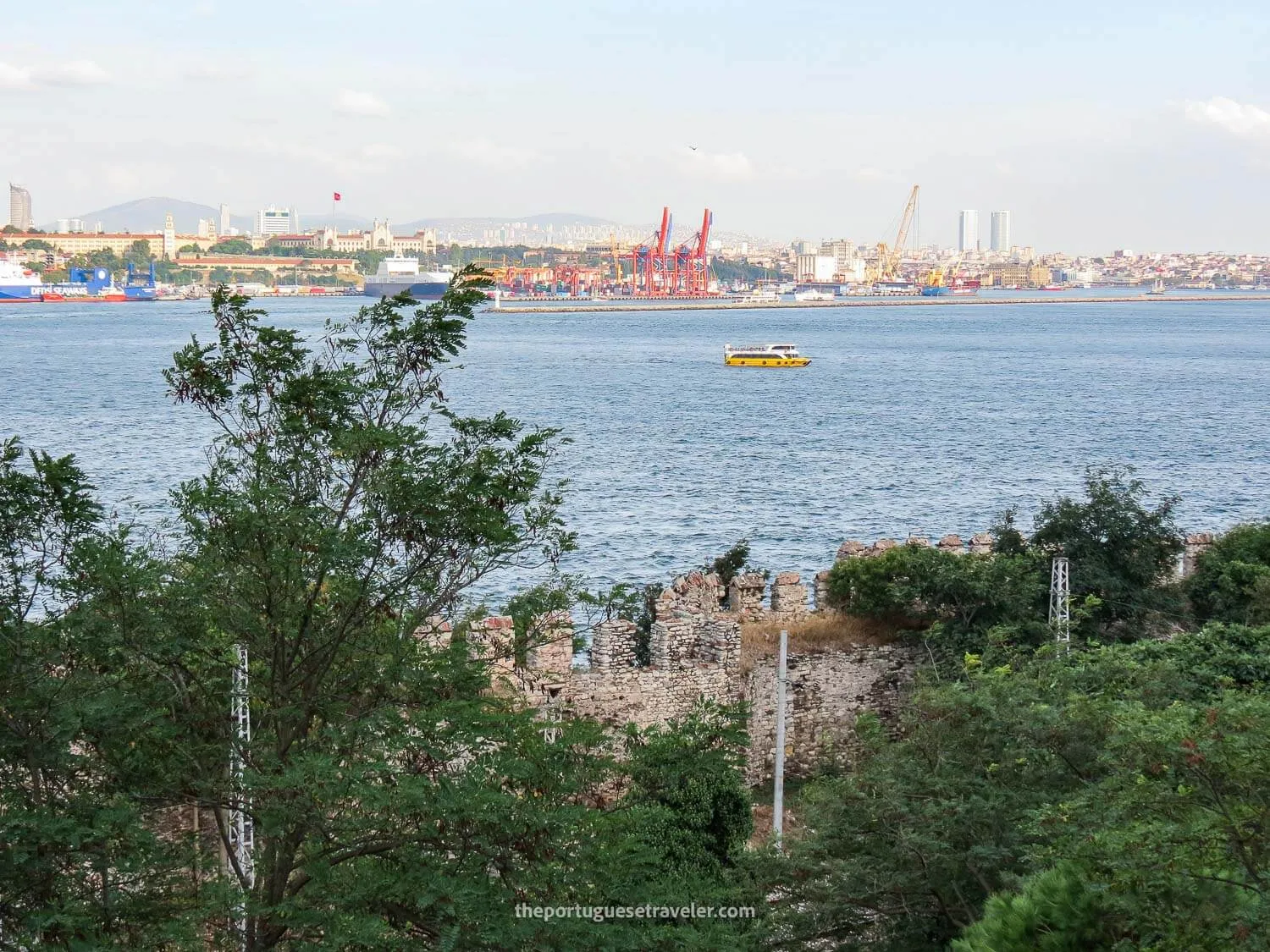
The view at the Gülhane Park Tea Garden
68. Camlıca Hill
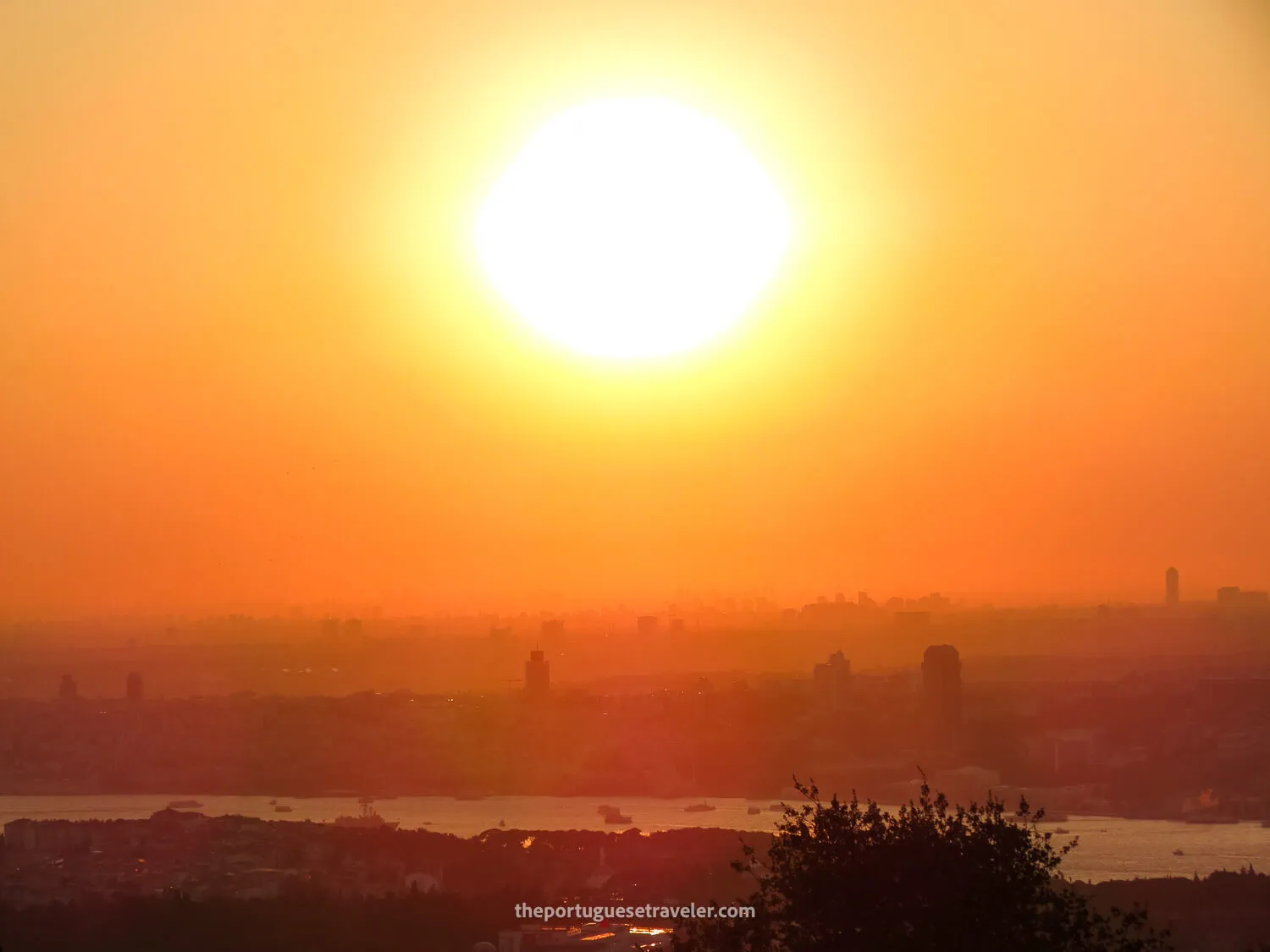
On the Asian side, Camlıca Hill is the highest point in Istanbul, with a wide view across both continents. It is popular at sunset, when the city lights come on and the Bosphorus Bridge lights up. Tea gardens and walking paths make it a family spot, and photographers come for the wide panoramas.
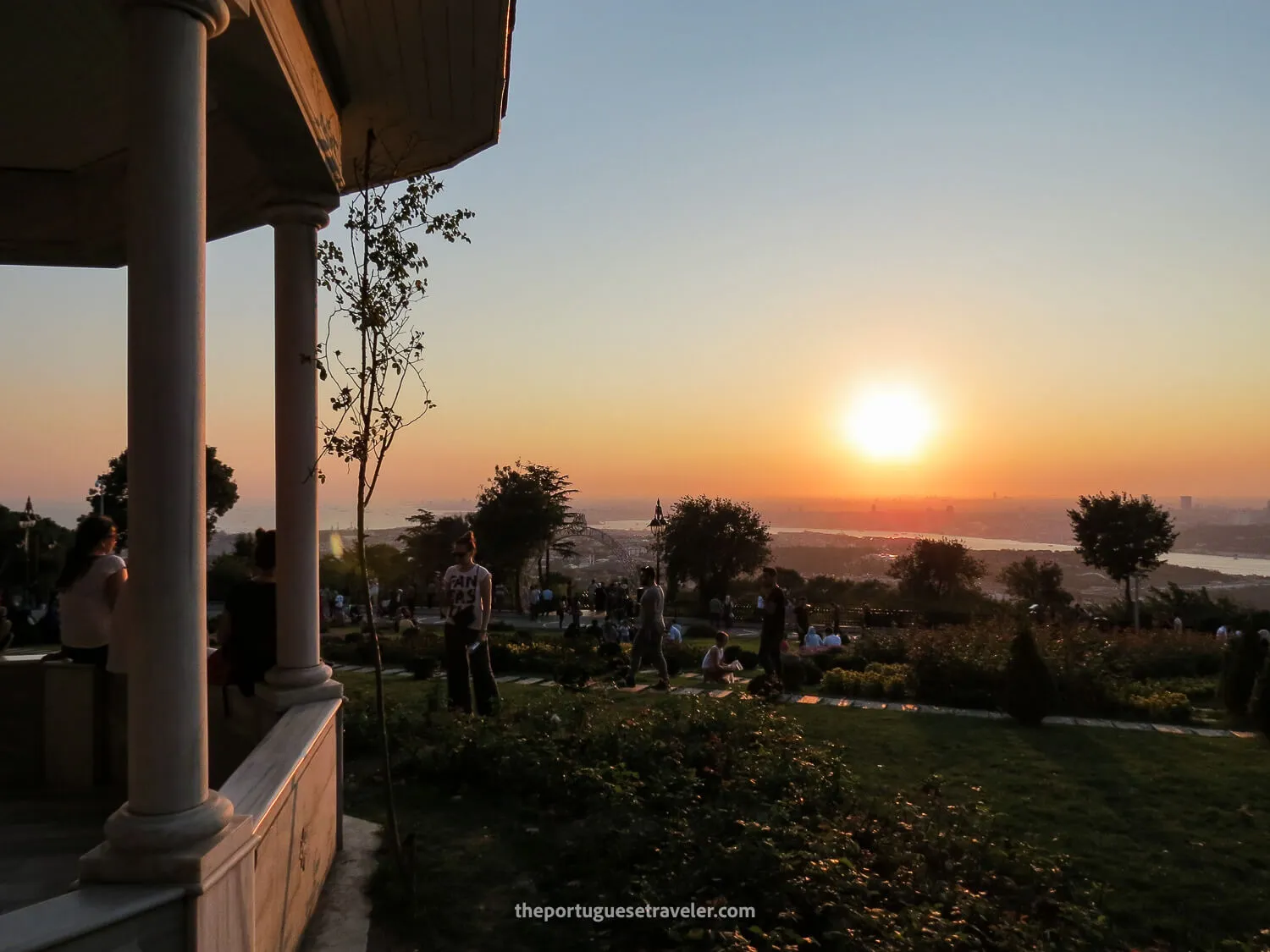
Camlica Hill Groove at Sunset
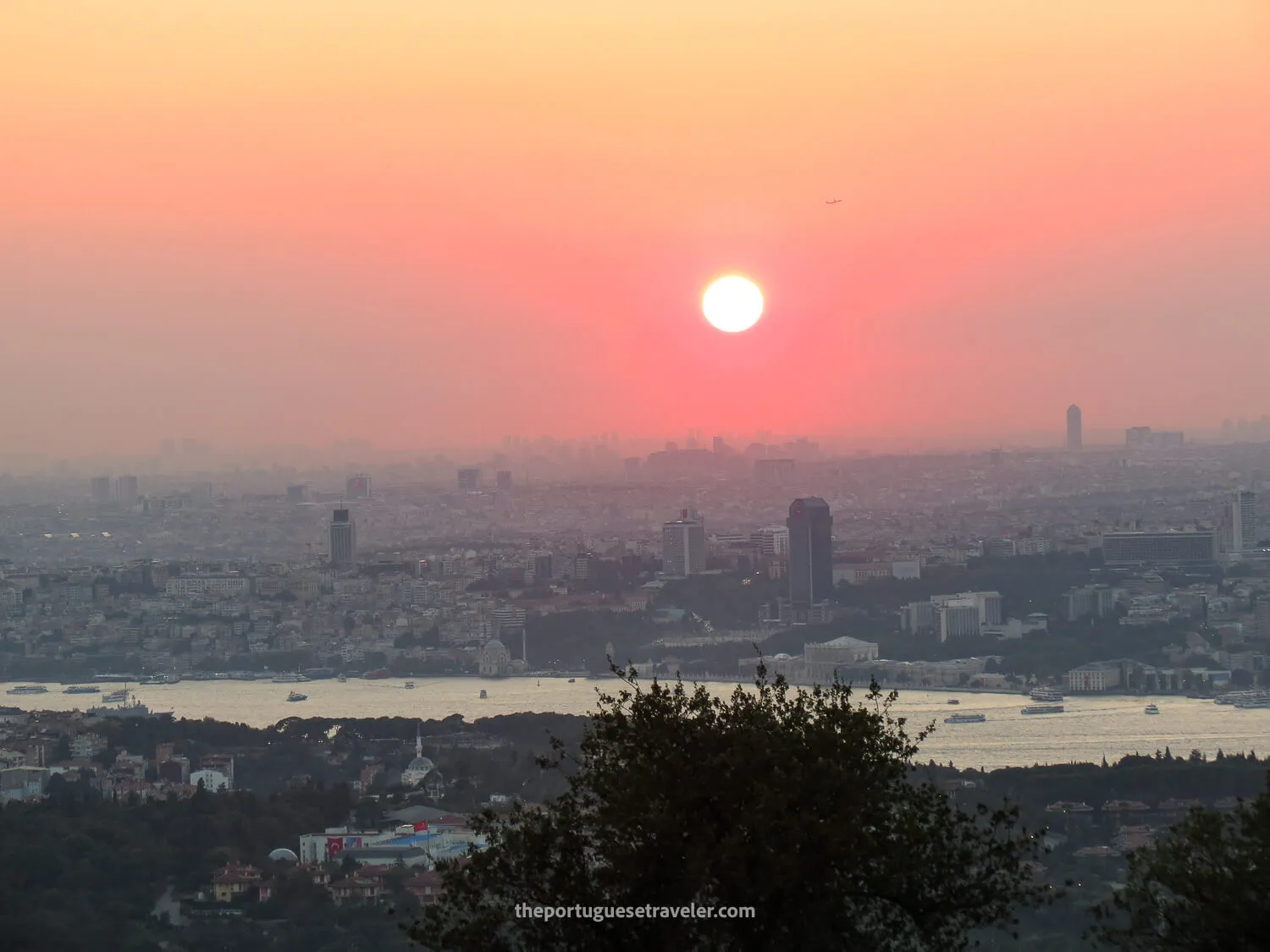
Camlica Hill Groove at Sunset
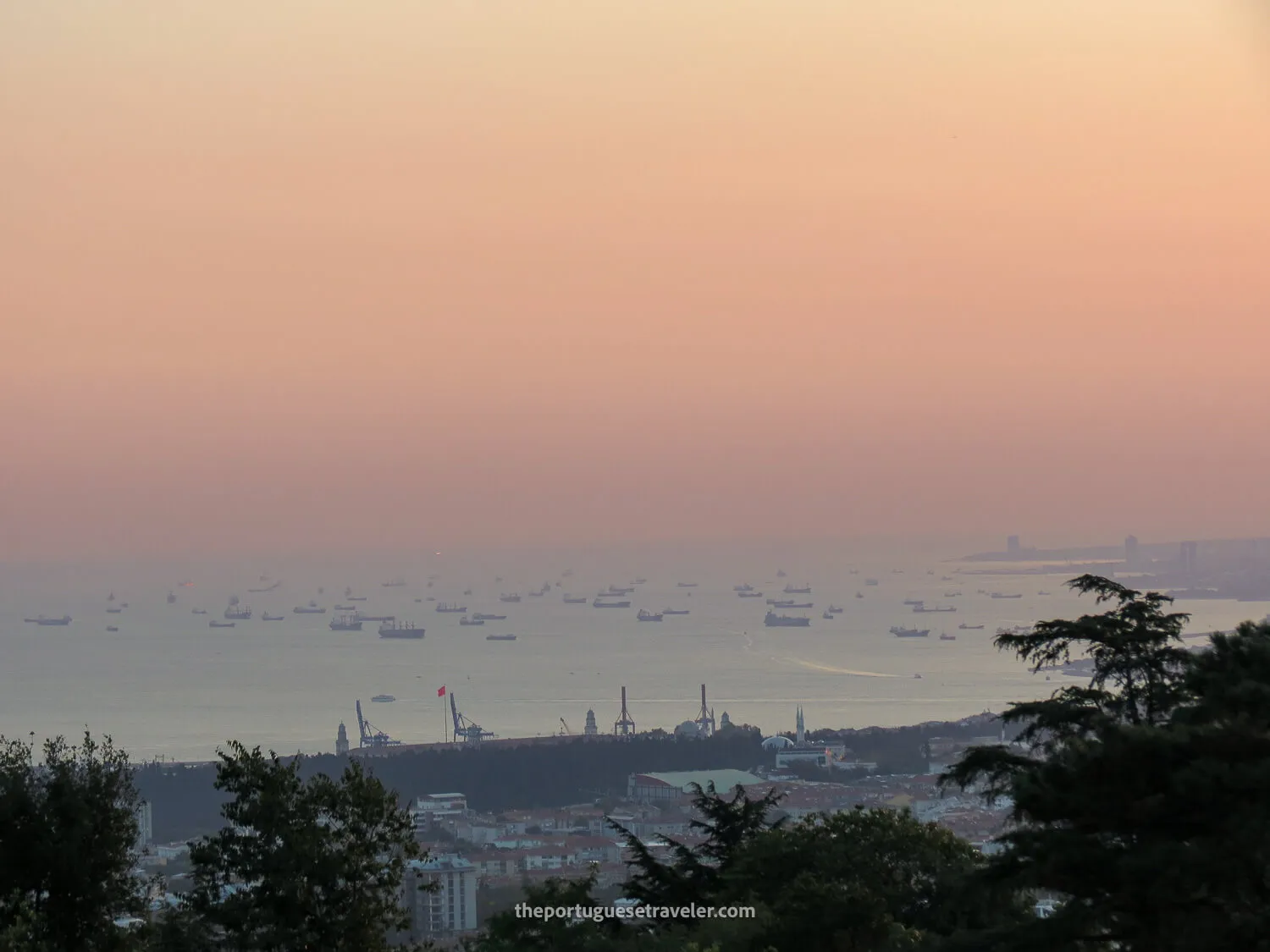
Camlica Hill Groove at Sunset
Camlica Hill View
69. Ulus Park terrace
In the upscale Ulus neighborhood, the Ulus Park terrace overlooks the Ortaköy Mosque and the Bosphorus Bridge. It is a spot for a quiet tea or an evening meal. The park itself has shady paths and benches.
Modern Observation Decks
Istanbul’s observation decks give a more contemporary perspective. Skyscrapers like Sapphire Tower offer views where Asia and Europe can be seen in one glance, with the Bosphorus still at the center.
70. Sapphire Tower Observation Deck
In the Levent business district, the Sapphire Tower has one of Istanbul’s highest observation decks. From 236 meters up you can see the whole city, from the Princes’ Islands to the Black Sea on a clear day. A 4D helicopter simulation ride gives a virtual “flight” over the city. It is a modern contrast to the old towers.
Waterfront Views
The Bosphorus is central to life in Istanbul. Cafés, mosques, markets and squares open onto the water, and you can watch ferries, fishing boats and seagulls from many angles. The waterfront ranges from lively Ortaköy to laid-back Moda.
71. Ortaköy Square
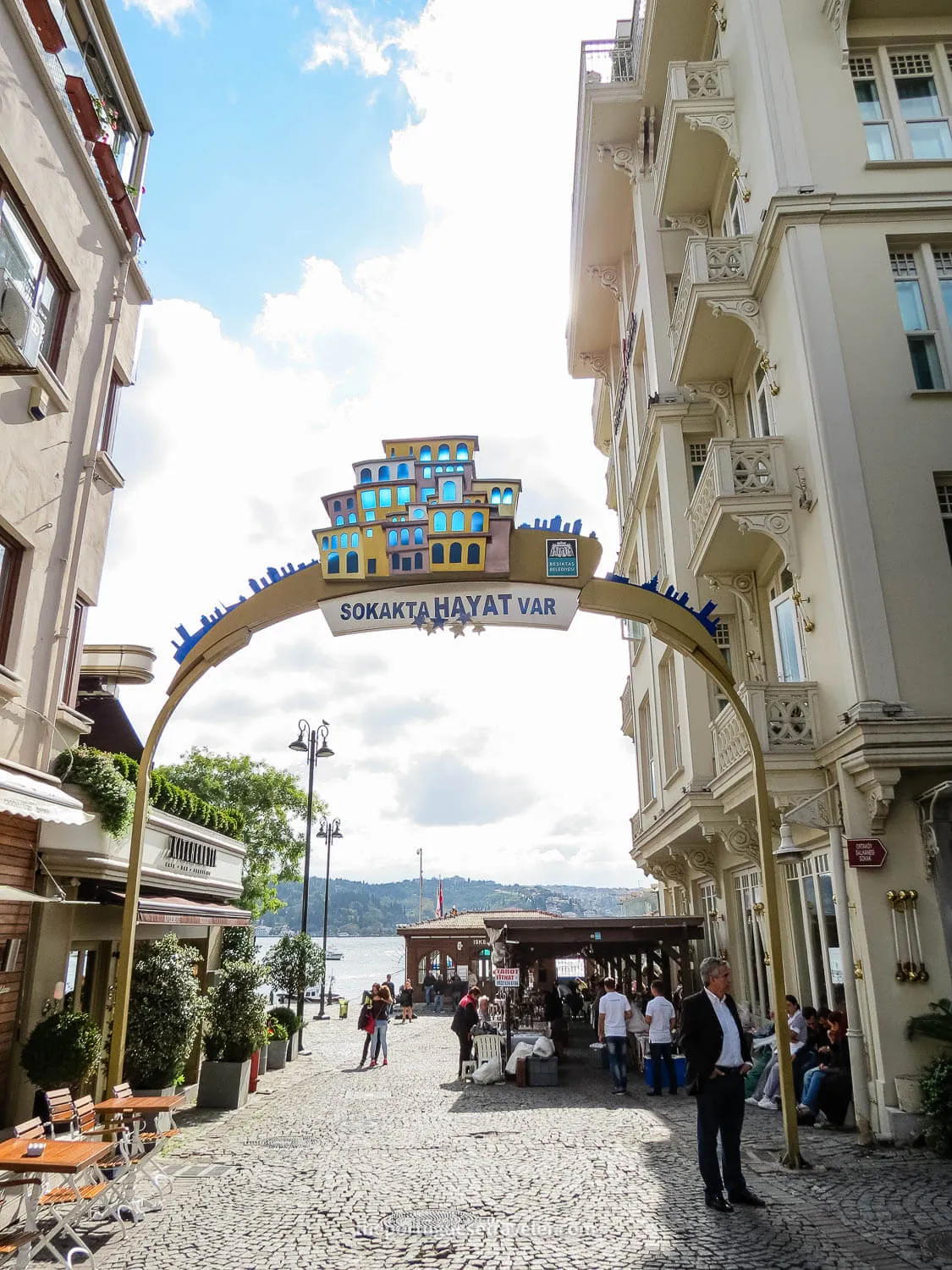
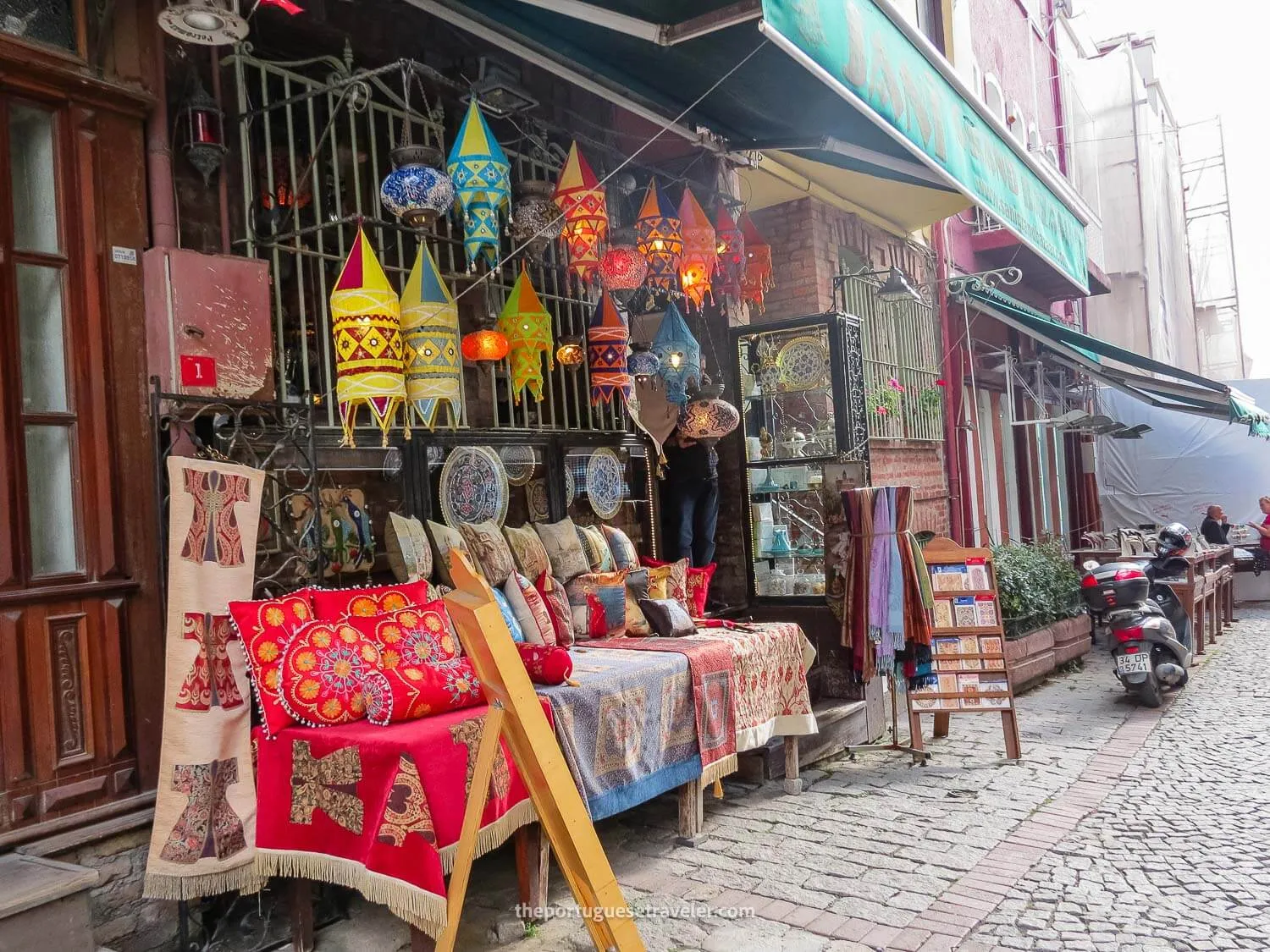
Right by the Bosphorus Bridge, Ortaköy Square combines views of the water with local street life. The Ortaköy Mosque, built right on the water, is framed by the bridge behind it. Street vendors sell baked potatoes (kumpir) and simit, and cafés spill onto the square. Come in the late afternoon and stay to see the bridge light up at night.
Ortaköy Square
Ortaköy stores
Ortaköy Mosque Square
72. Moda seaside promenade
On the Asian side, the Moda seaside promenade has relaxed views of the Sea of Marmara. Locals jog, picnic or sit on the rocks by the water. It is a favorite sunset spot, and a good way to end a day in Kadıköy.
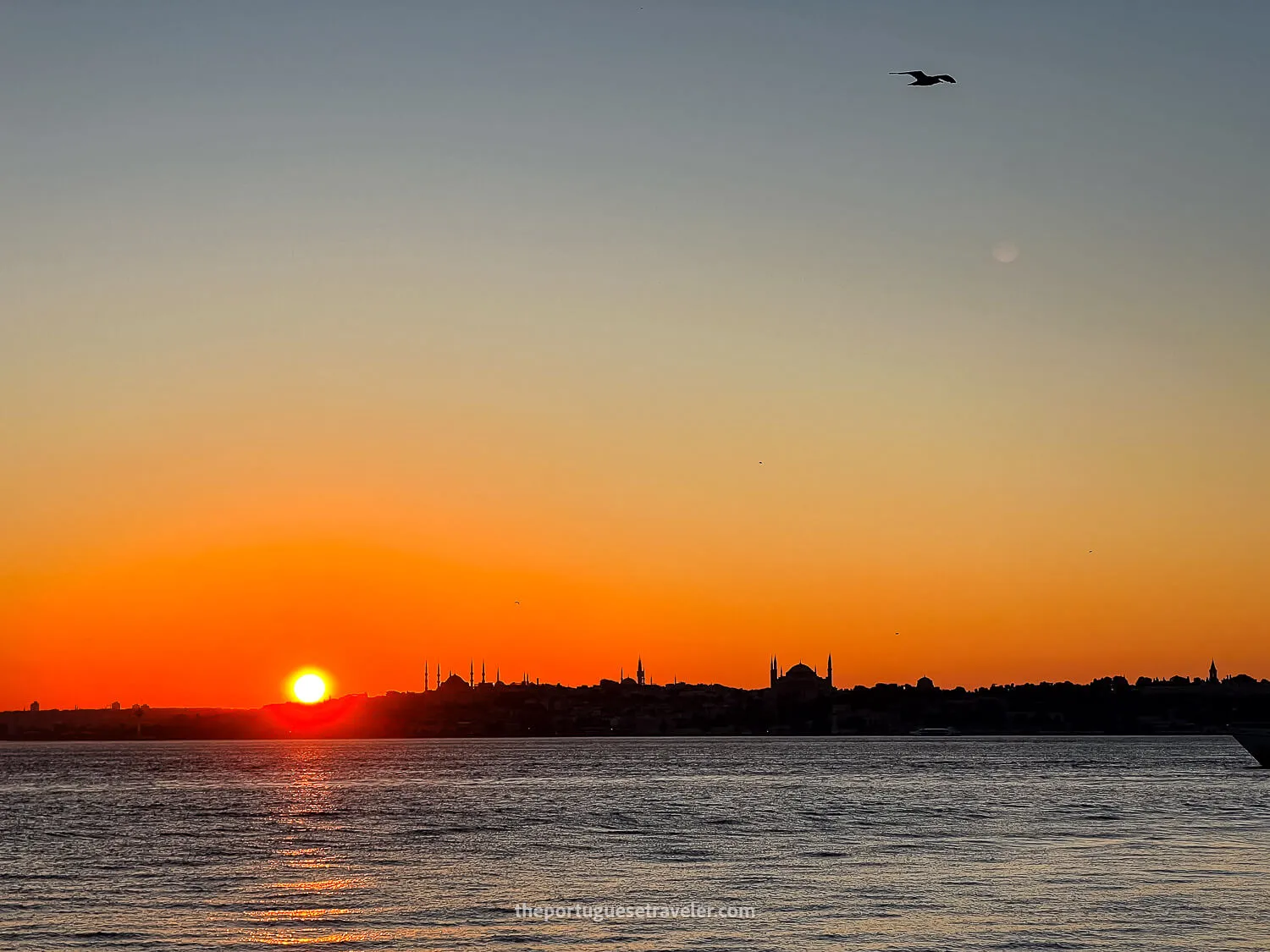
Moda at Sunset in Kadiköy
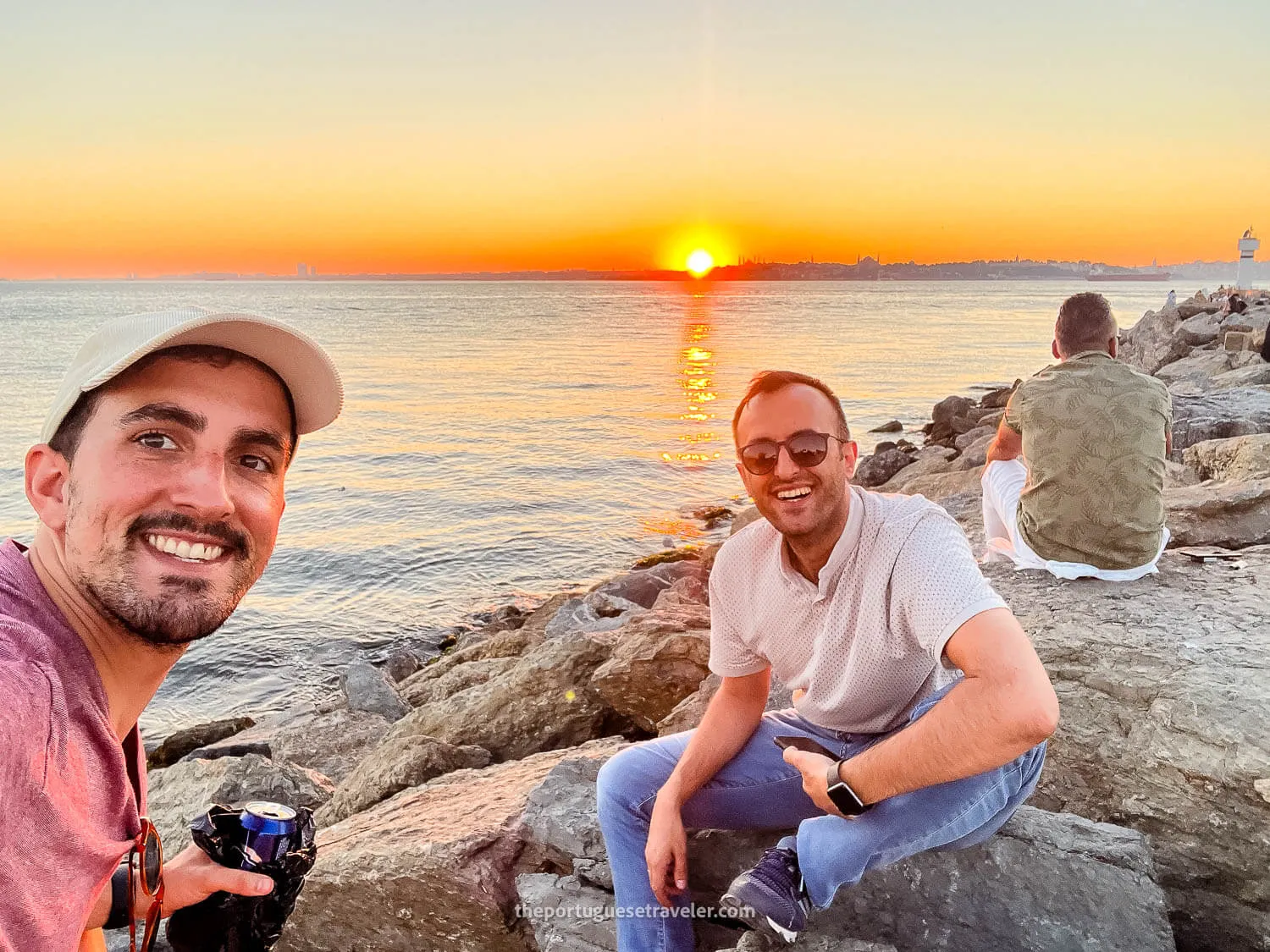
Me and Ali at sunset in Moda
Food & Experiences in Istanbul
Food in Istanbul reflects layers of empires and influences, from street snacks to seafood dinners by the Bosphorus.
Best Local Dishes & Drinks to Try
Istanbul’s food has been shaped over centuries: kebabs, pastries soaked in syrup, and drinks that warm or refresh depending on the season. Many dishes reflect migrations and traditions.
73. Iskender Kebap
My favourite Turkish dish. Iskender kebap is thinly sliced döner meat laid over pita bread, covered in hot tomato sauce and melted butter, and served with a dollop of yogurt. It is rich and hearty. Try it in a traditional lokanta (casual eatery) in Sultanahmet or Beyoğlu, where the sizzling butter is poured at the table.
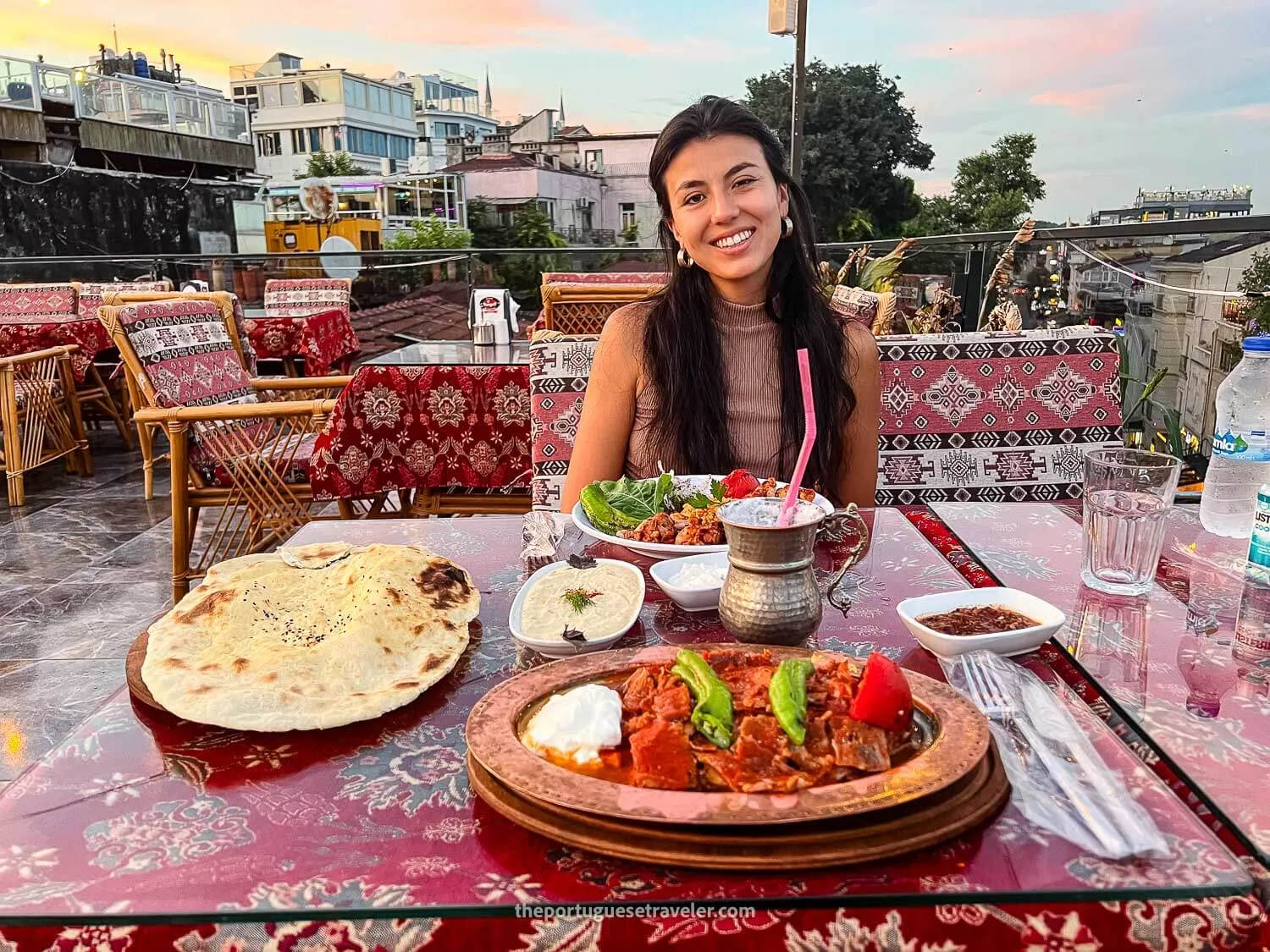
Iskender Kebap in Istanbul, my favourite dish
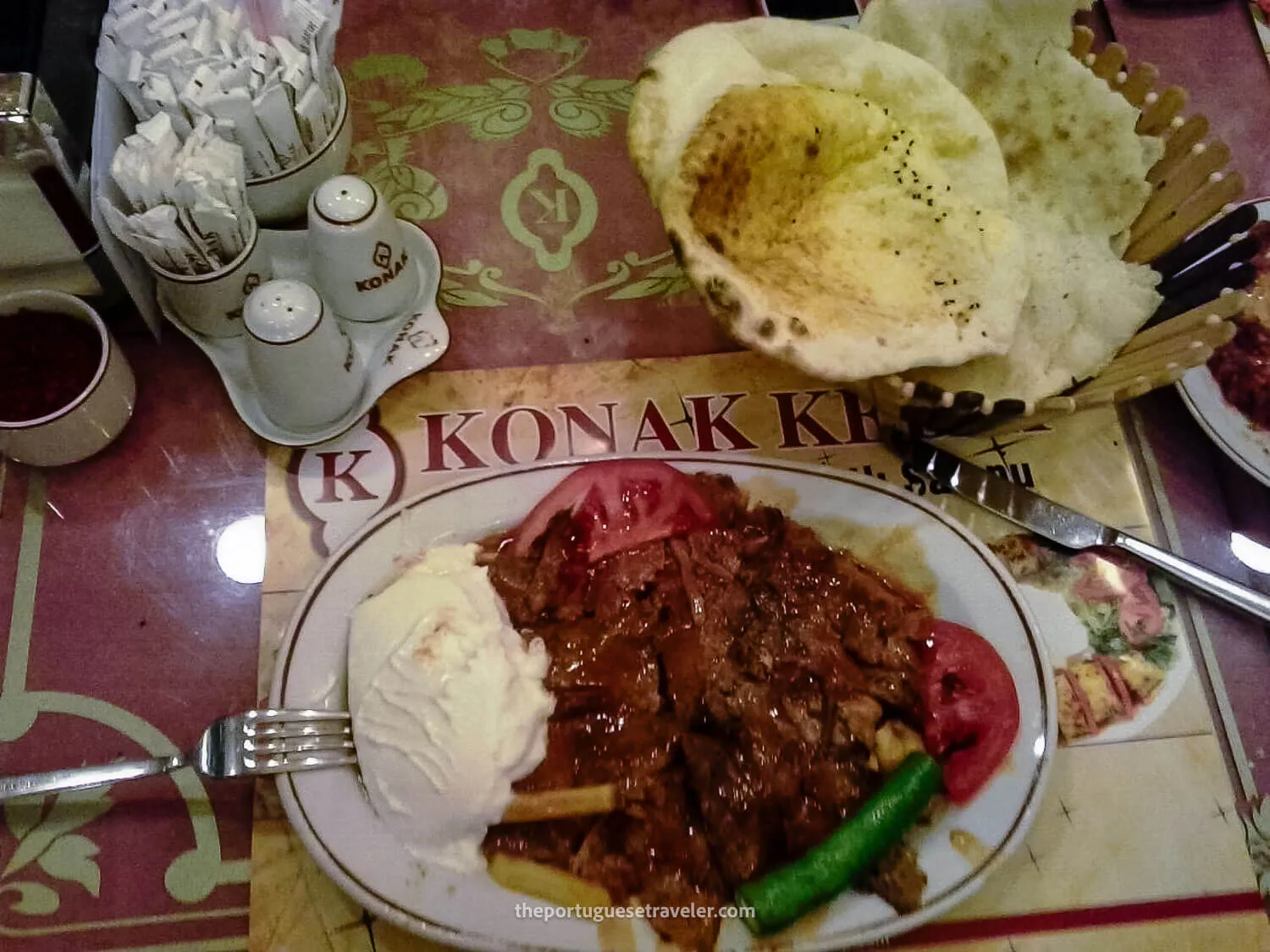
Iskender Kebap near Galata Tower
74. Adana Kebap
Adana kebap is for people who like spice. It comes from southern Turkey and is minced lamb seasoned with chili and grilled on long skewers. It is served with flatbread, grilled vegetables and parsley. Pair it with ayran, the salty yogurt drink, to balance the heat.
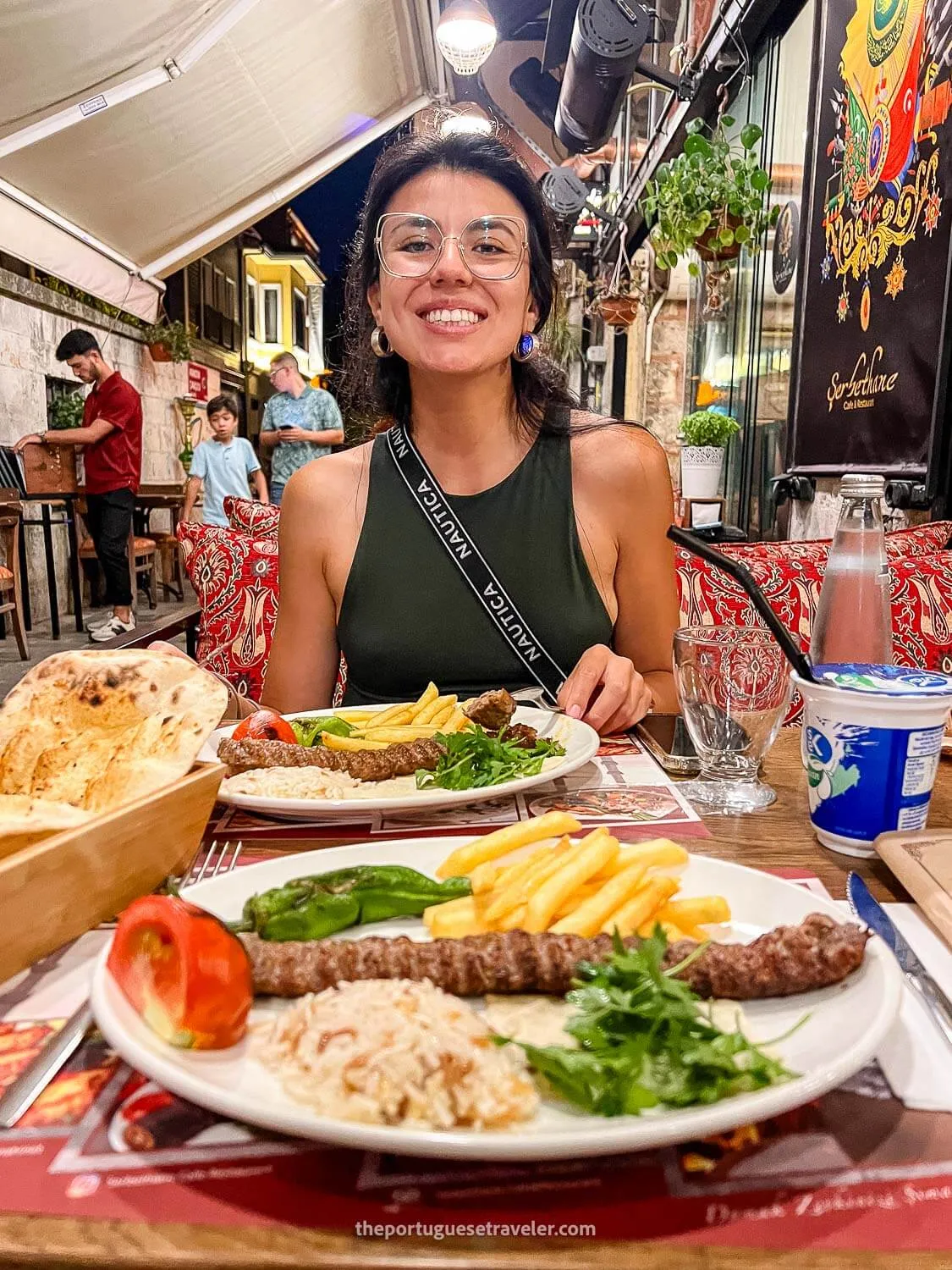
Adana Kebap in Istanbul
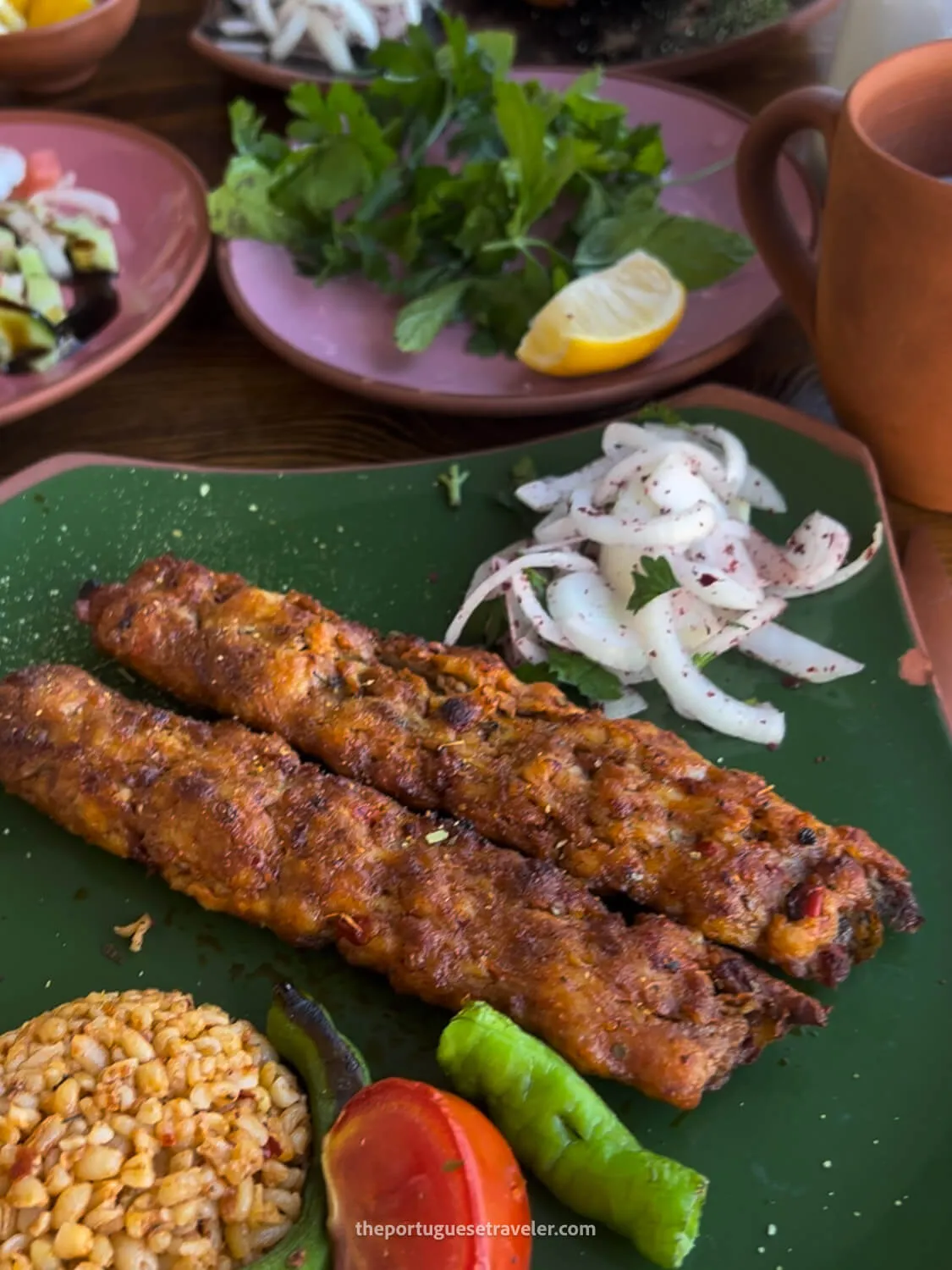
Adana Kebap in Cappadocia
75. Lahmacun & Pide
Lahmacun, sometimes called “Turkish pizza,” is a thin flatbread topped with minced meat, onion, herbs and spices, baked until crisp. Roll it up with parsley and a squeeze of lemon and eat it on the go. Pide is thicker and boat-shaped, topped with cheese, meat or eggs. Both are inexpensive and filling, and good for a quick bite between sights.
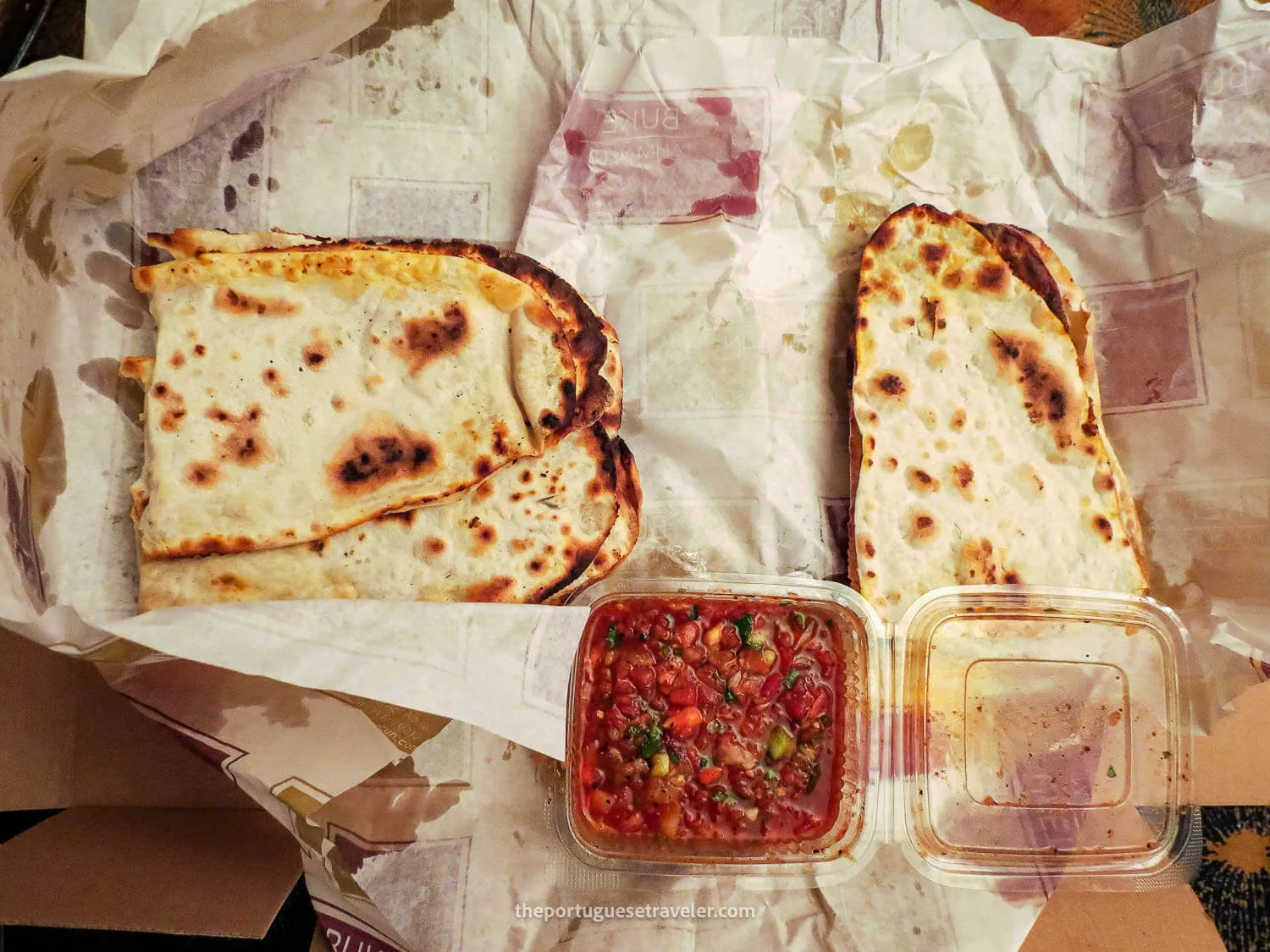
Lahmacun in Istanbul
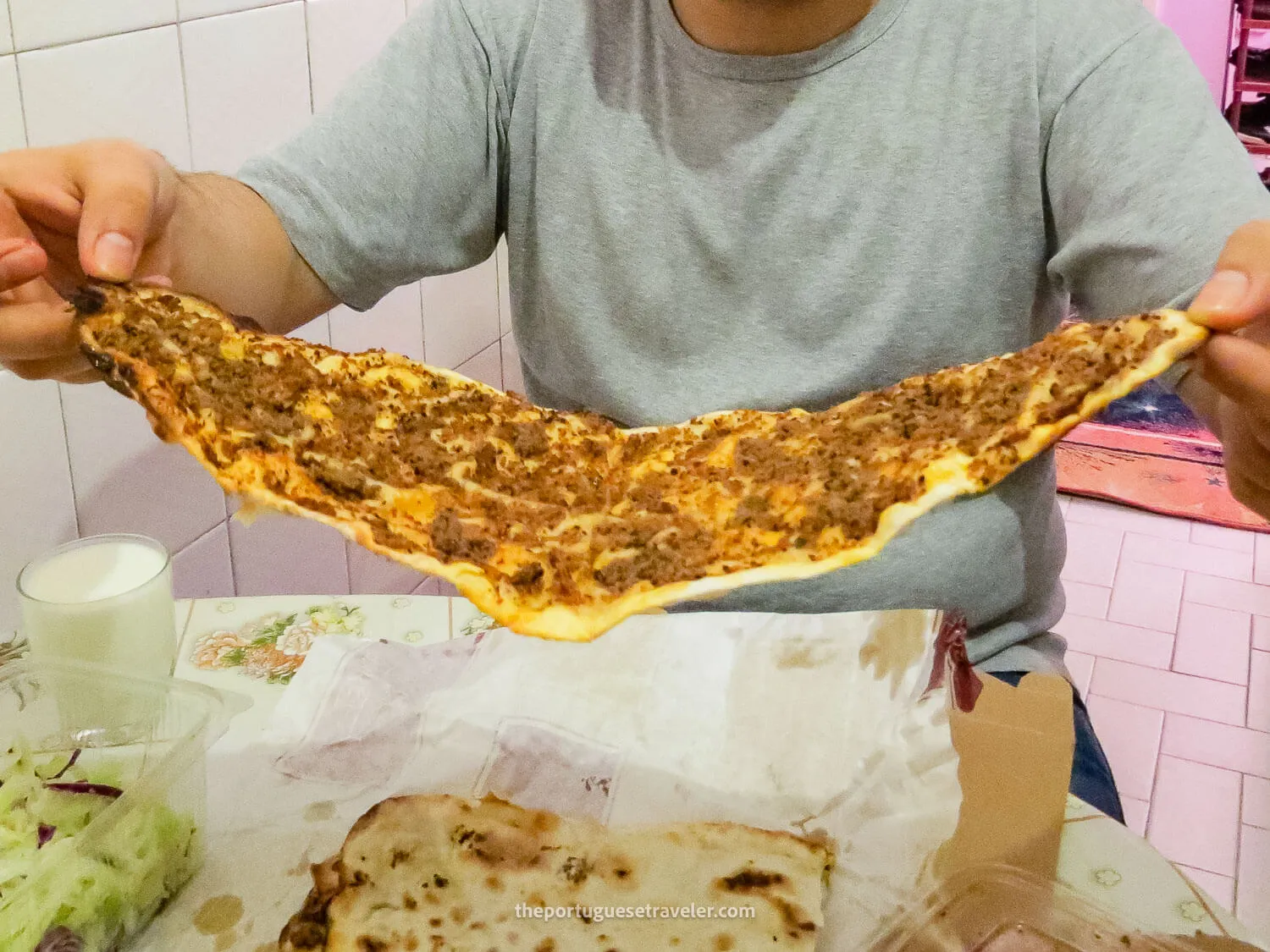
Lahmacun in Istanbul
76. Mantı
Mantı are tiny parcels filled with spiced meat and topped with garlicky yogurt and melted butter infused with paprika, often called “Turkish ravioli.” Look for a traditional mantı house in Fatih or Kadıköy.
77. Baklava
Baklava is worth trying: layers of flaky pastry filled with pistachios or walnuts and soaked in sweet syrup. Karaköy Güllüoğlu is one of the best-known places to try it, and bakeries across the city have their own variations. It goes well with a strong Turkish coffee.
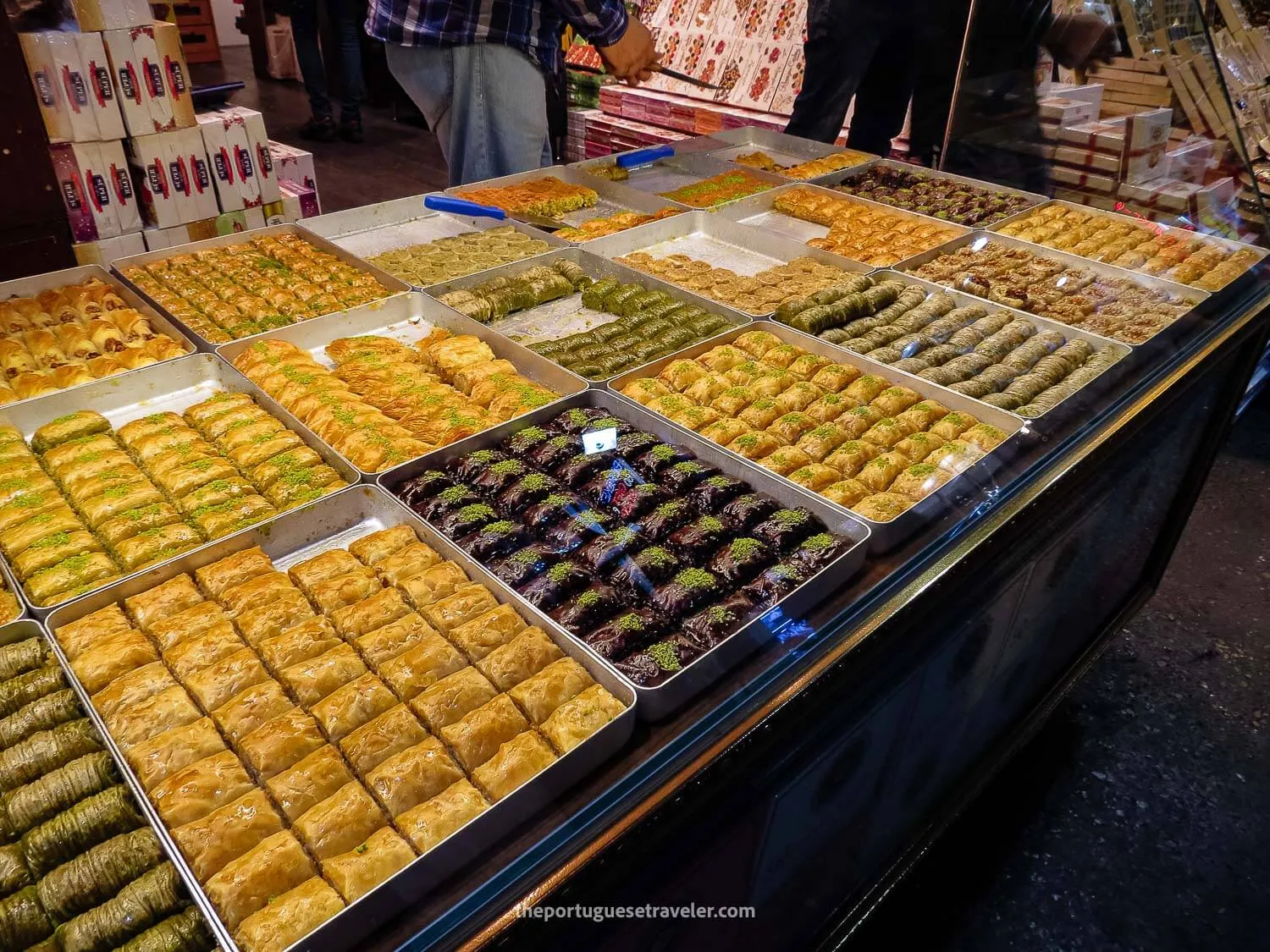
Baklava at the Spice Bazar
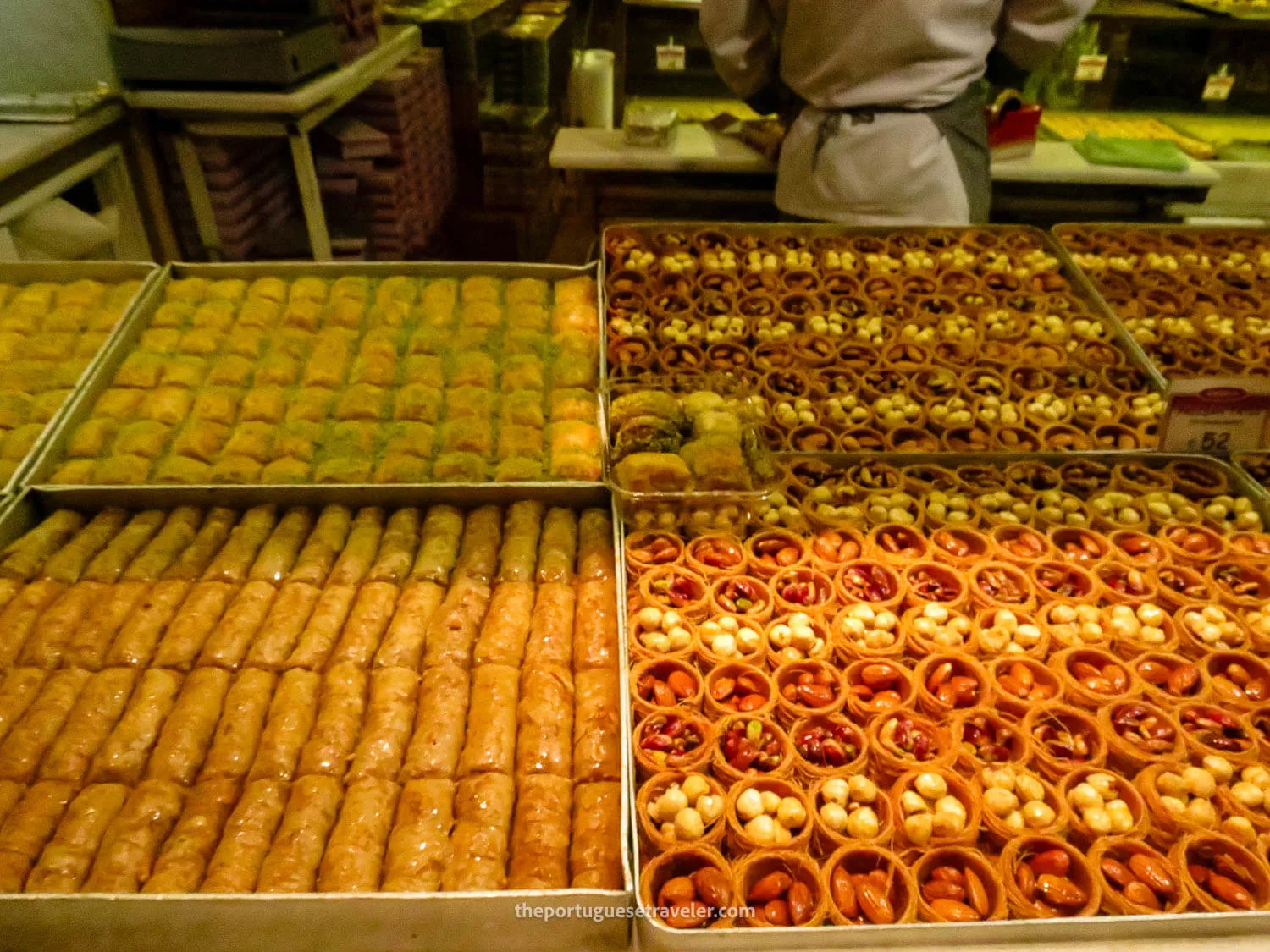
Baklava and other sweets in Istanbul
Baklava at the Spice Bazar
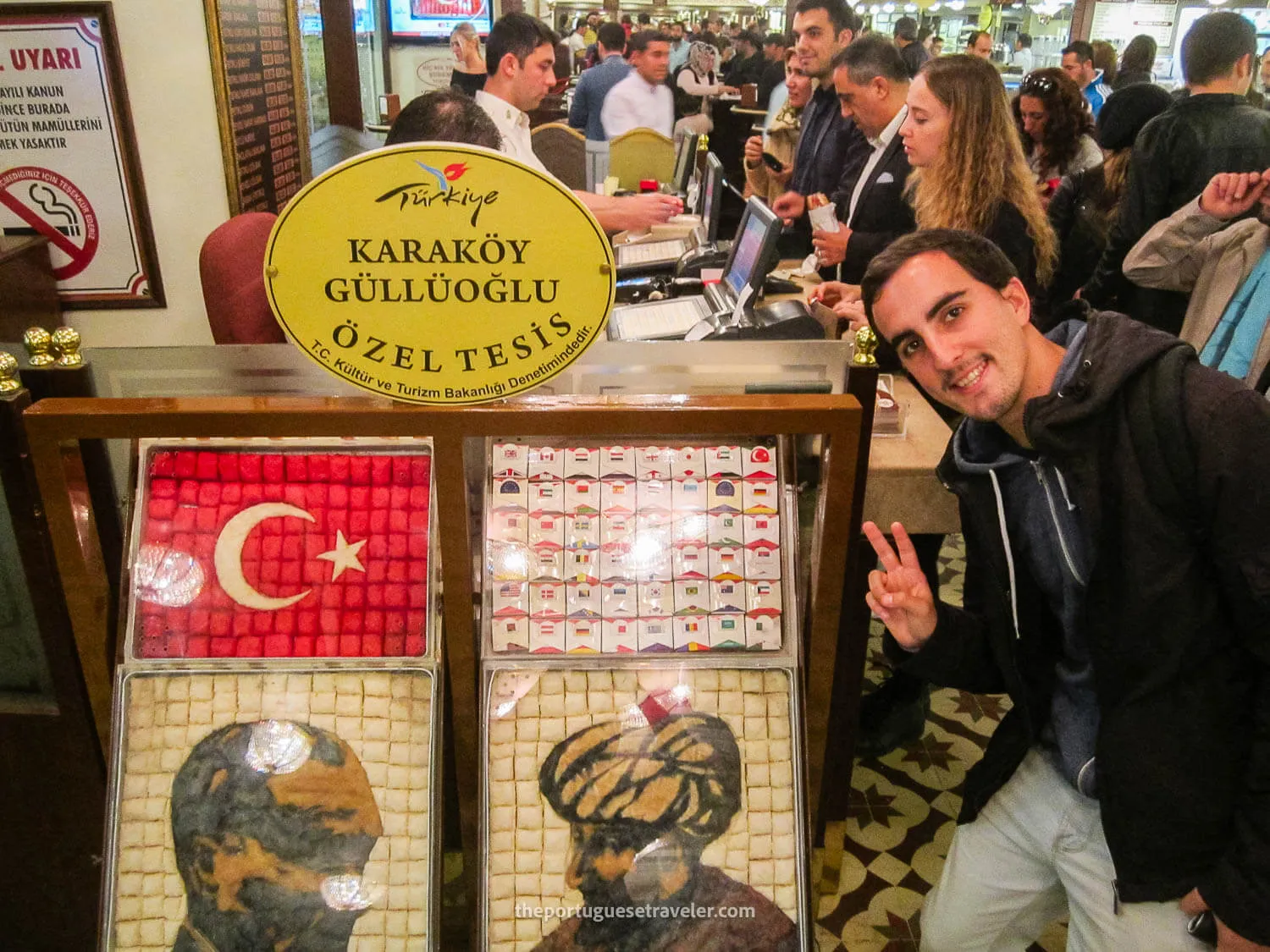
Me and Baklava
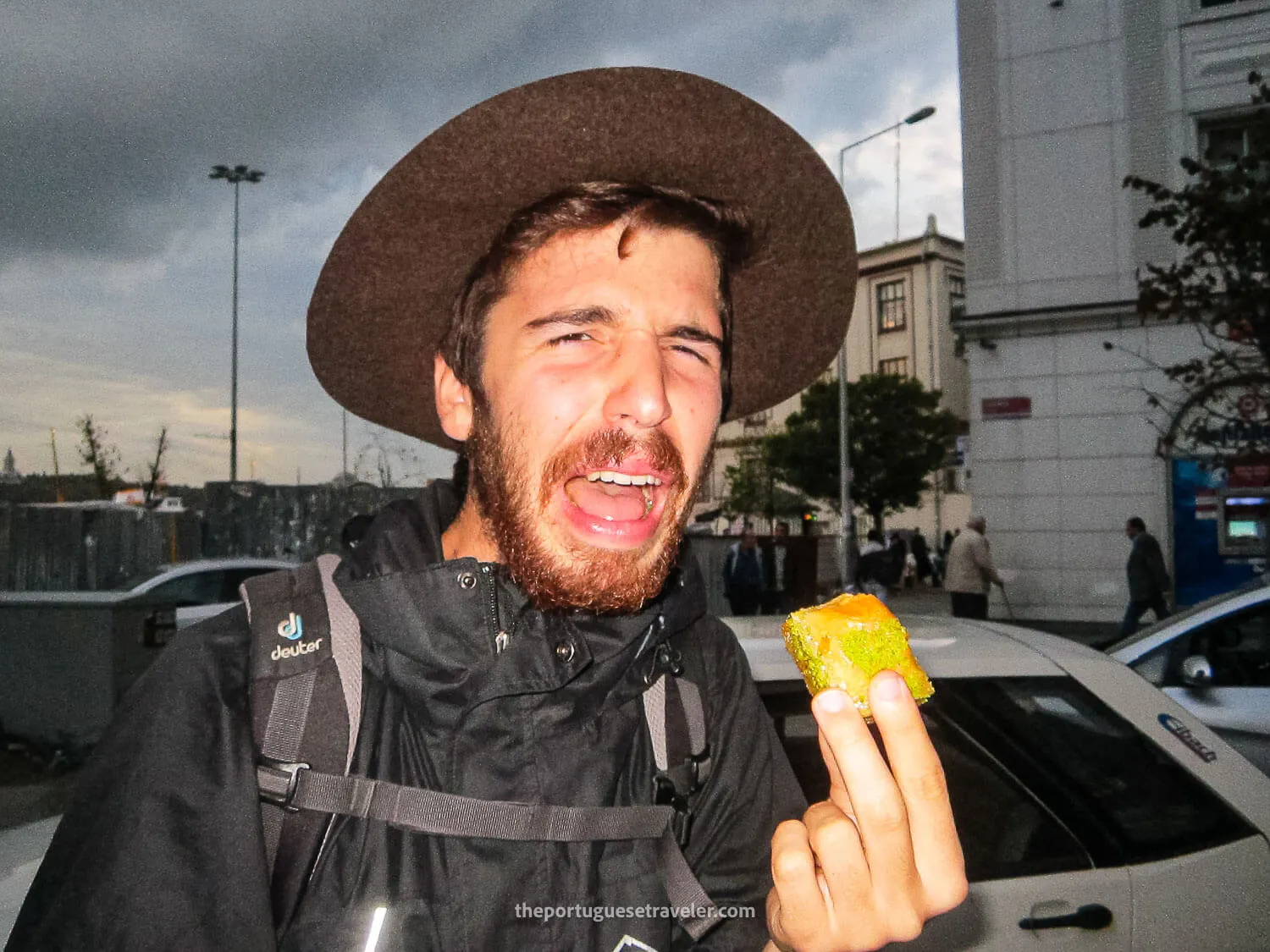
Konstantinos & Baklava
78. Künefe
For a warm dessert, order künefe: shredded filo dough layered with melted cheese, baked golden, then soaked in syrup and topped with pistachios. It is gooey and sweet, and best fresh from the oven at a specialist dessert shop.
79. Lokum
Lokum is chewy and sweet and has been popular since Ottoman times. Flavors range from rose and lemon to pistachio and pomegranate, often dusted with powdered sugar. A historic confectionery like Hacı Bekir is a good place to pick up a box as a souvenir.
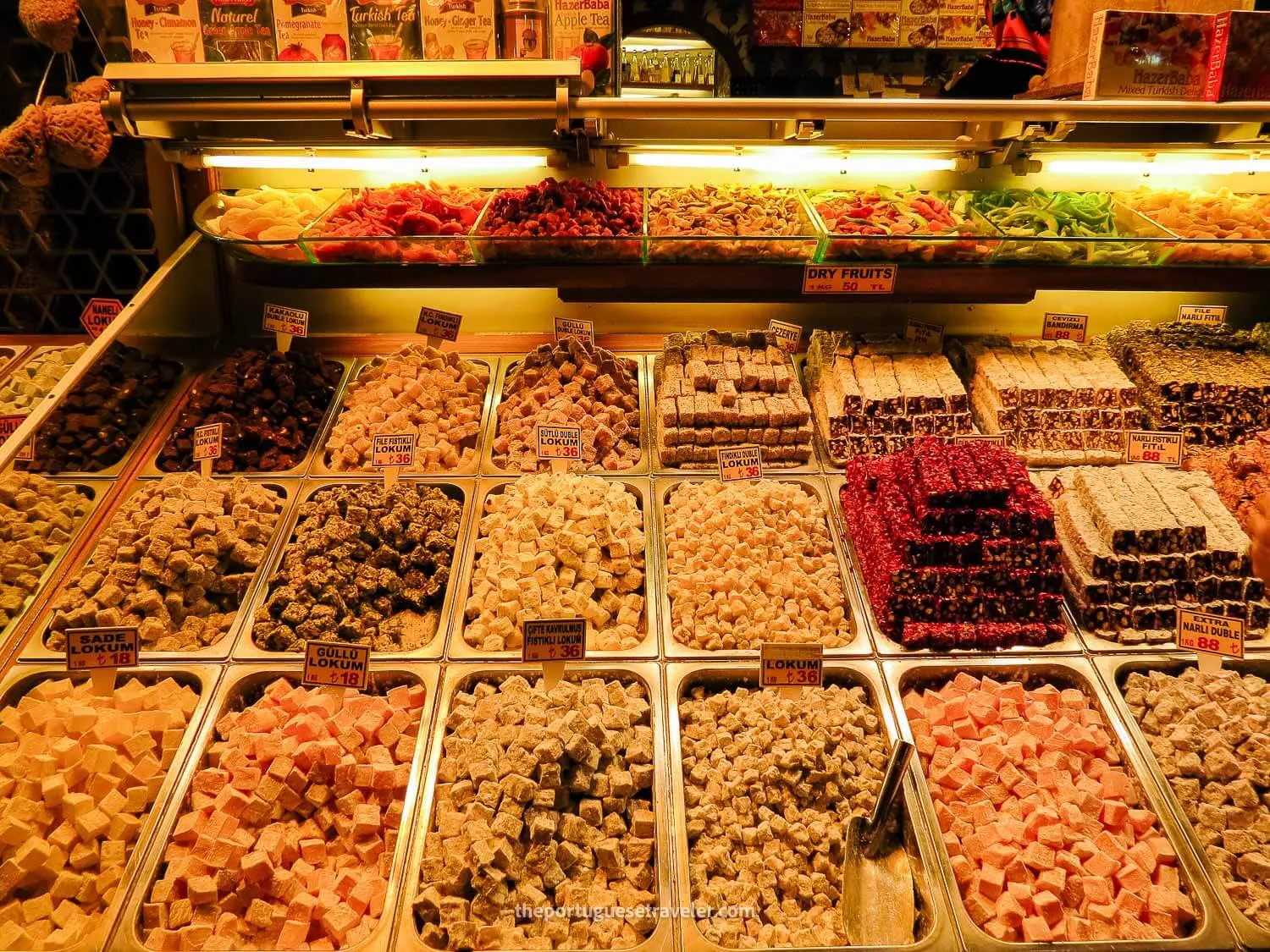
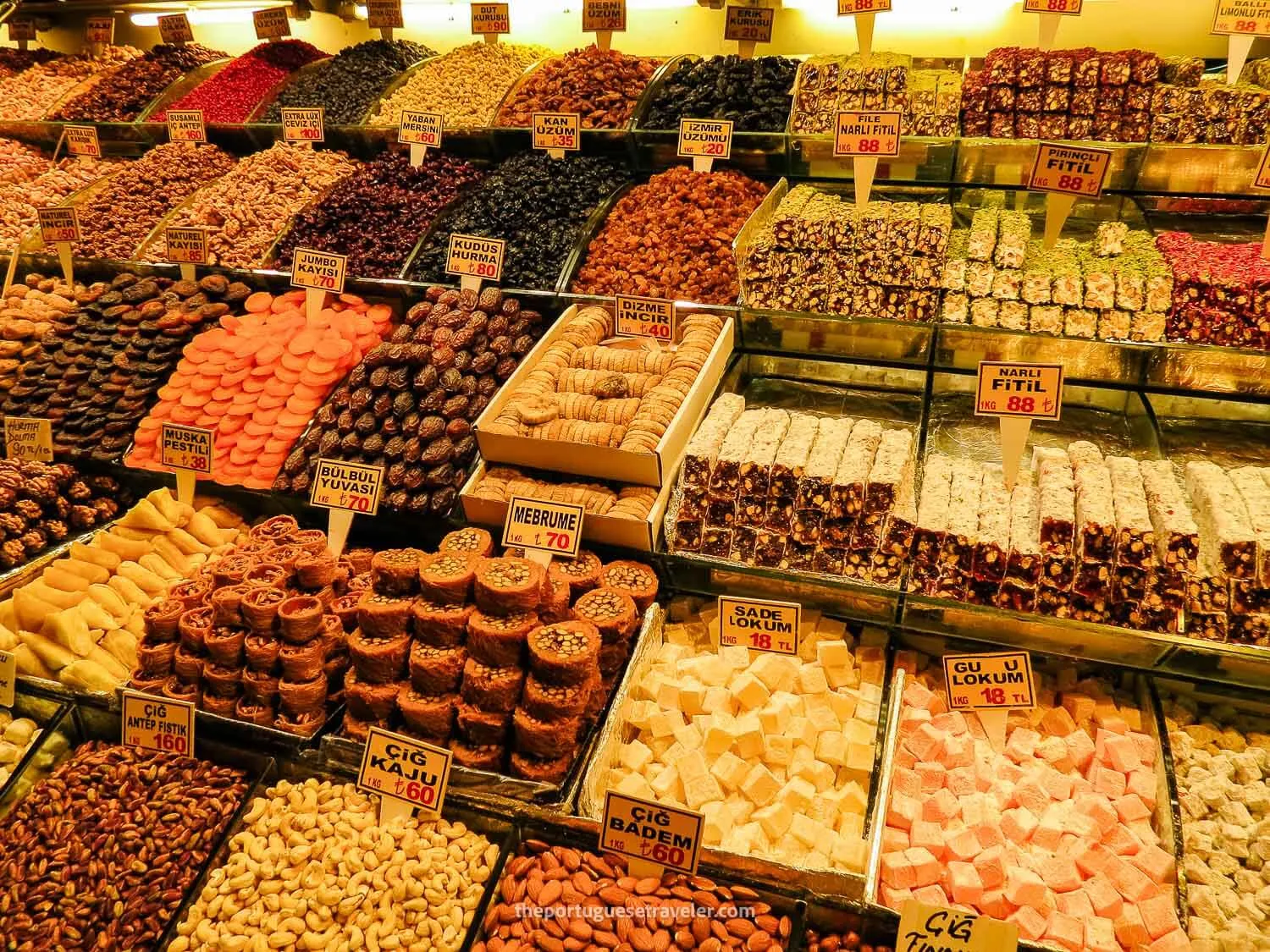
Lokum or Turkish Delight at the Spice Bazar
80. Boza
Boza is a winter drink, thick and slightly fermented, made from millet or bulgur. It is tangy and sweet and topped with cinnamon and roasted chickpeas. Vefa Bozacısı, known as Istanbul’s oldest boza shop, has served it for over a century.
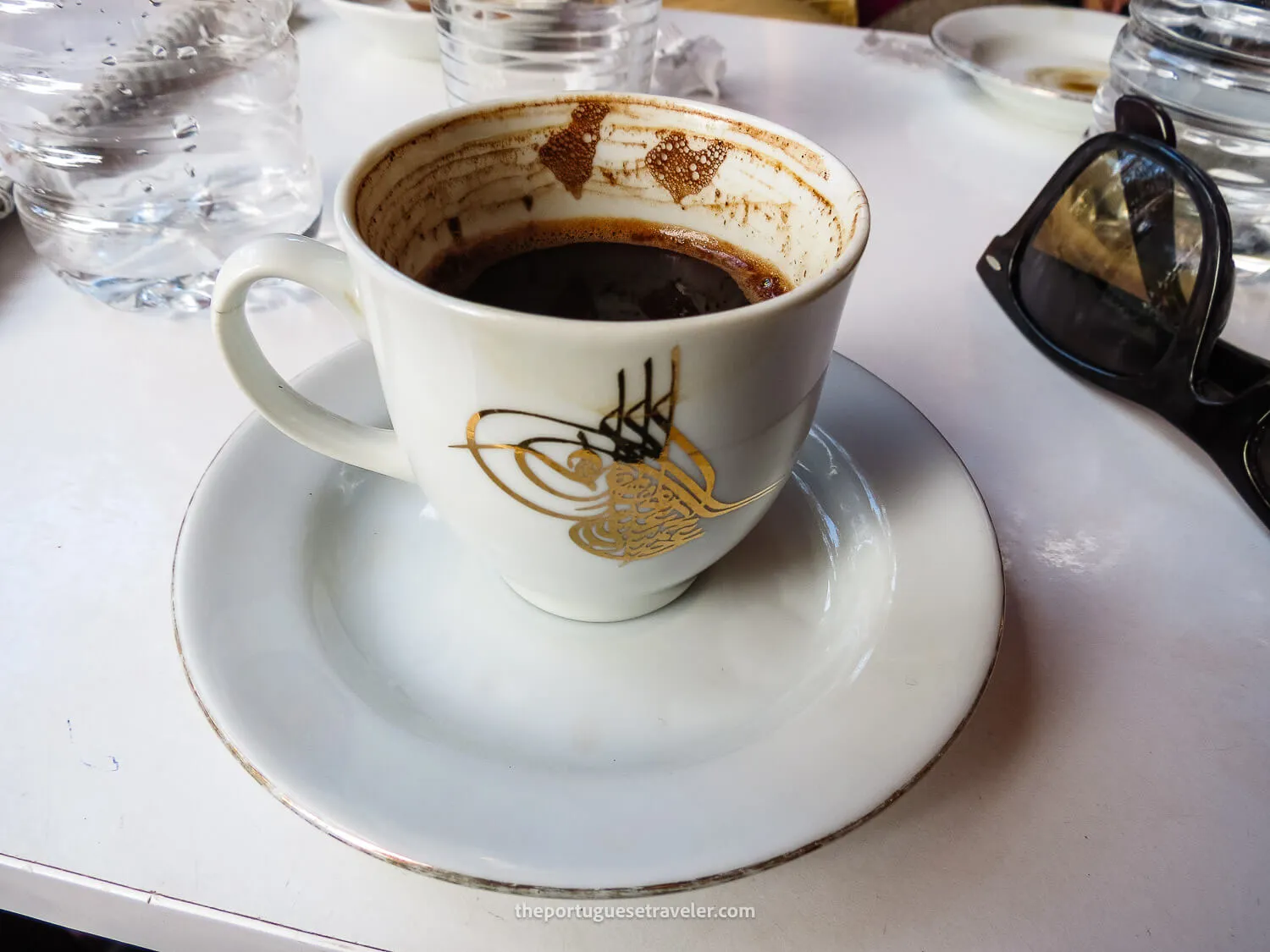
81. Turkish Coffee
Turkish coffee is strong, unfiltered and served in small cups, and it is treated as a ritual as much as a drink. After finishing, locals sometimes “read the grounds” left in the cup as a form of fortune-telling. Try it at a historic café in Sultanahmet or at a traditional coffeehouse in Kadıköy.
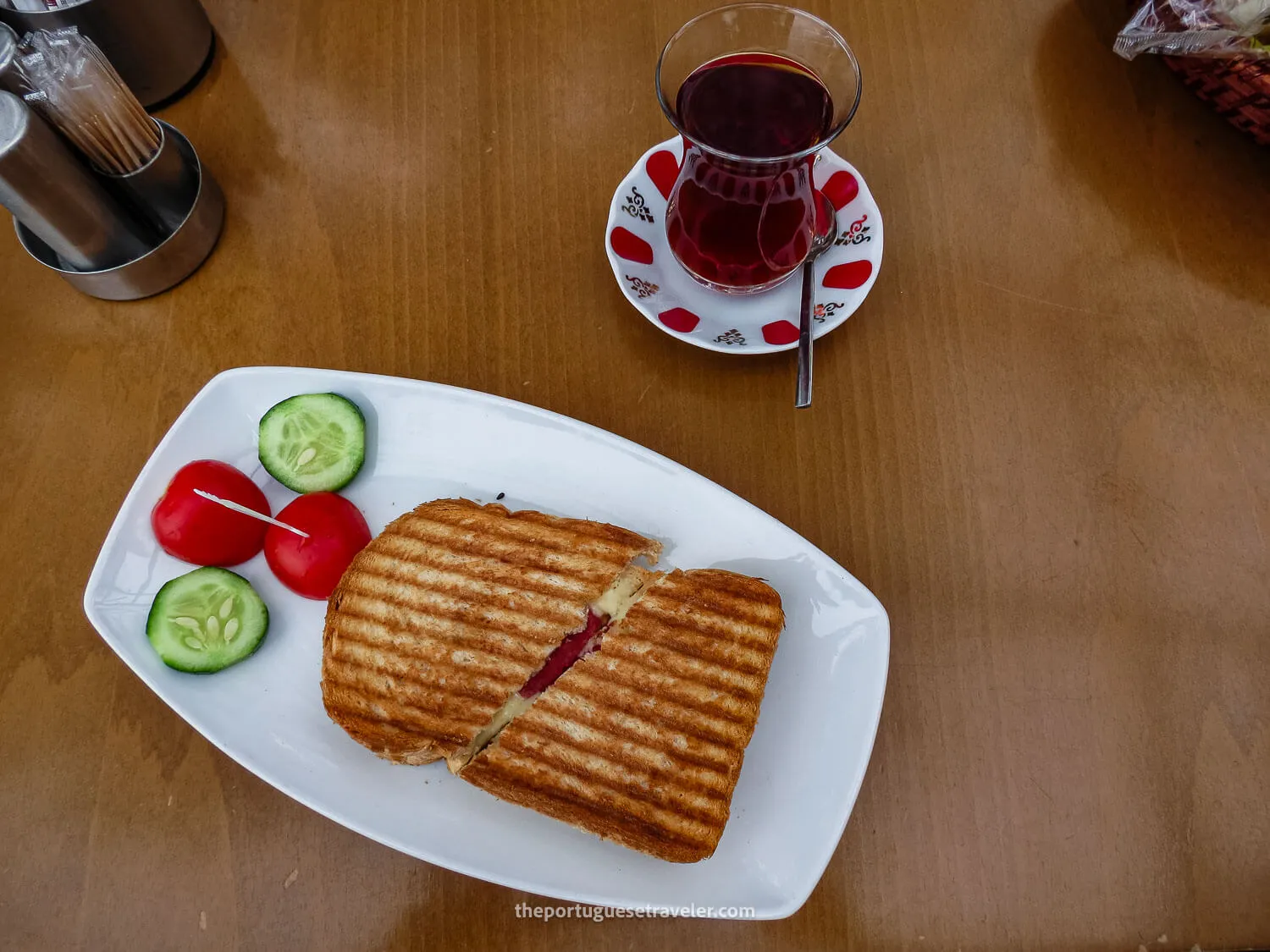
82. Çay
Everywhere in Istanbul you will be offered çay, served in tulip-shaped glasses. Locals drink it all day, in bazaars, at ferry terminals or while playing backgammon in tea gardens. Accepting a cup is a way to connect with the culture, and tea is one of the cheapest drinks in the city.
83. Ayran
Ayran is a cold yogurt drink mixed with water and a pinch of salt. It goes well with kebabs and street food and cuts the richness of the meat. You will find it everywhere, from street vendors to restaurants.
Best Street Food or Markets
If you want to eat like a local, head to the streets. Vendors serve simit with sesame, fish sandwiches and stuffed mussels. Markets like Eminönü or Kadıköy are full of color, smell and taste.
84. Simit from street vendors
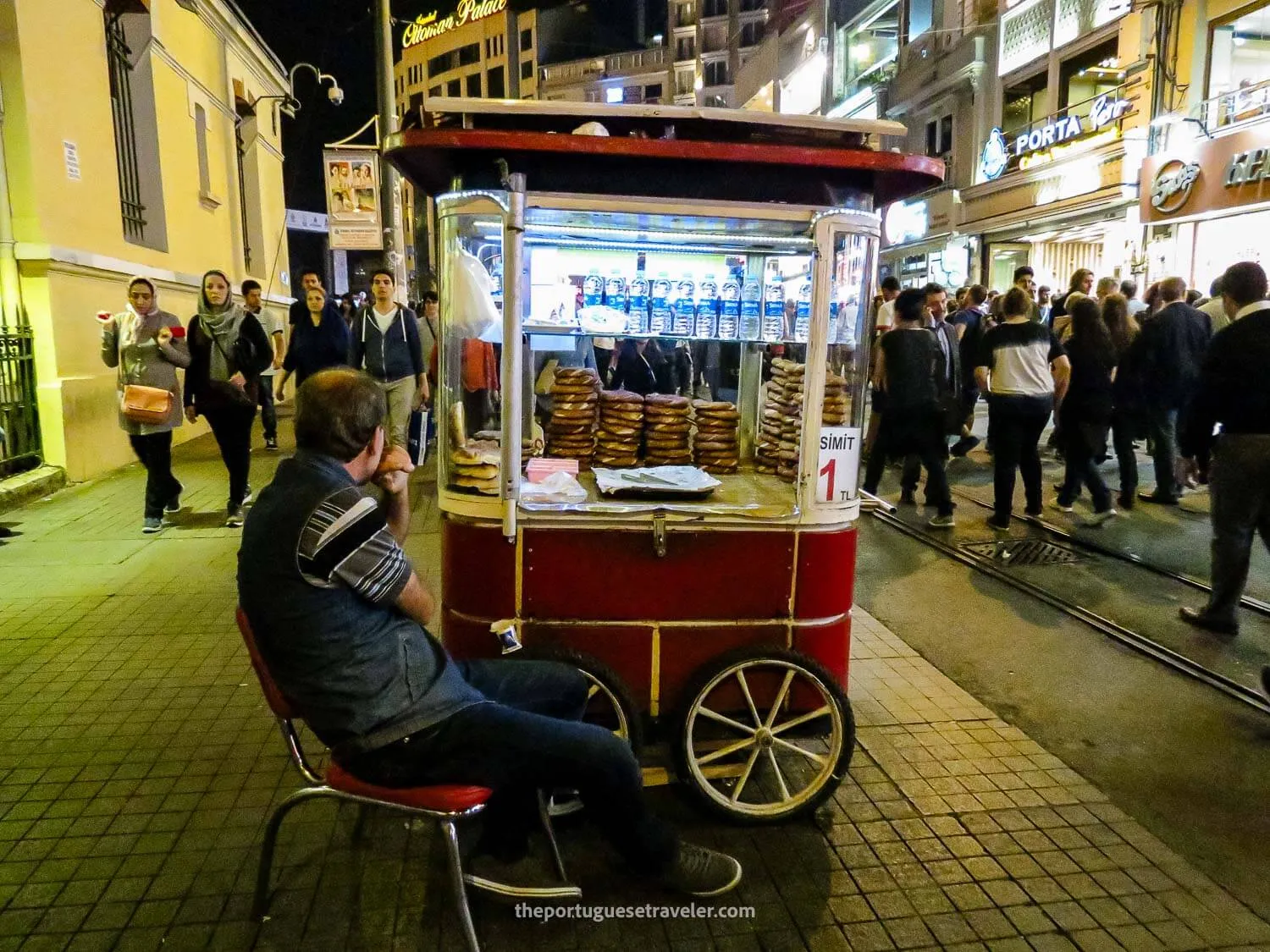
Vendors with red carts all over the city sell simit, round sesame-crusted bread rings, crispy outside and soft inside. Have one with a glass of tea for a breakfast on the go.
85. Balık Ekmek
Down by the Eminönü waterfront, fishermen grill fresh fish and put it in bread with onions and lettuce: the balık ekmek (fish sandwich). Eating one by the water with ferries passing is a classic Istanbul tradition.
86. Islak Burger
At Taksim Square, late-night crowds line up for islak burgers, small burgers soaked in garlicky tomato sauce and kept steaming in glass boxes. They are greasy, spicy and a local favorite after a night out on Istiklal Street.
87. Kokoreç
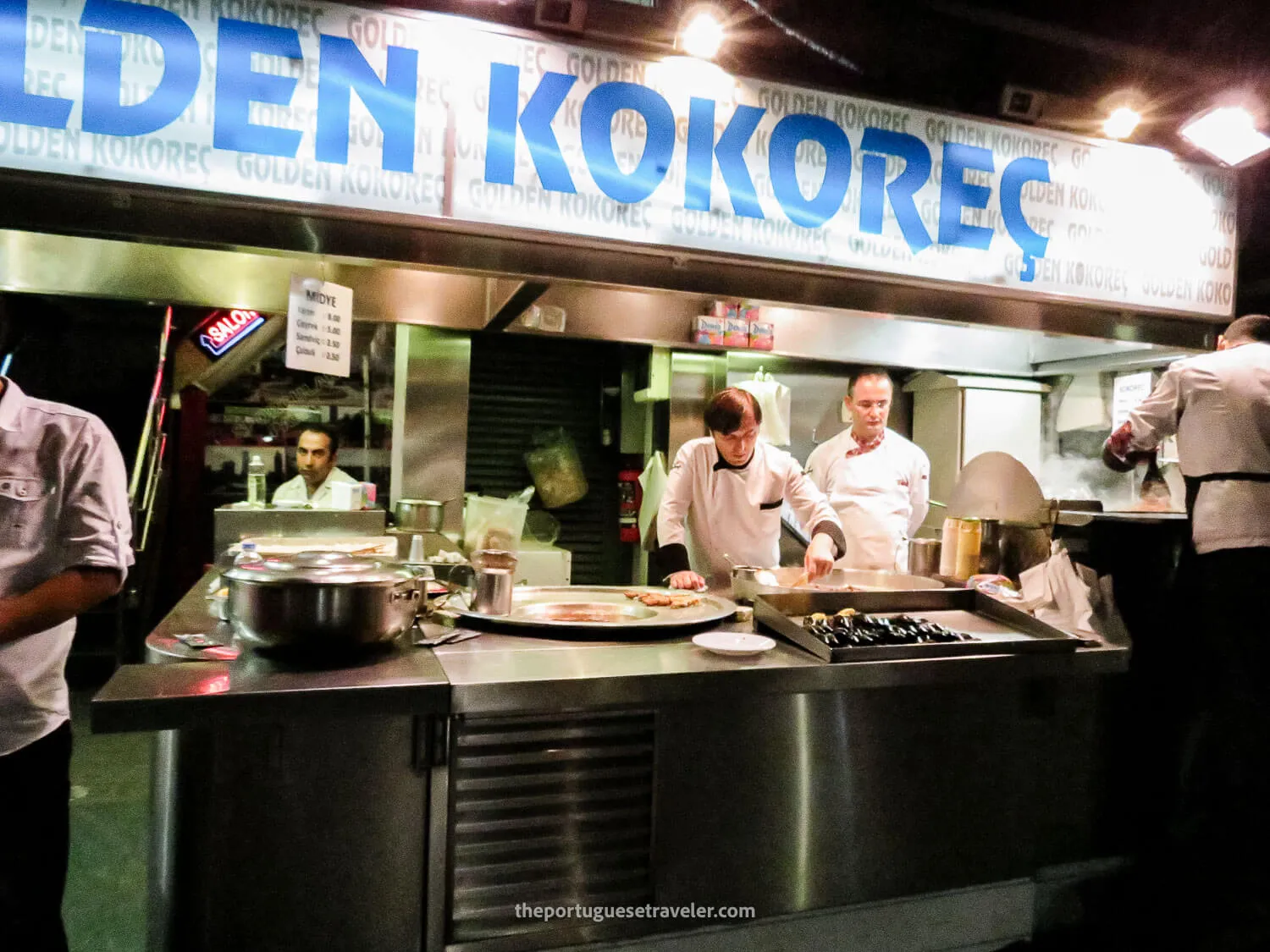
Kokoreç is spiced lamb intestines grilled on a spit and chopped into bread with oregano and chili. It is a bold taste of Istanbul street food culture. Try it from a busy stand in Beyoğlu or Kadıköy, where turnover is high.
88. Döner Kebab
Döner is found everywhere. Thin slices of meat (lamb, chicken or beef) are shaved from a vertical rotisserie and put into bread or wraps with salad. It is cheap and filling and the city’s staple fast food.
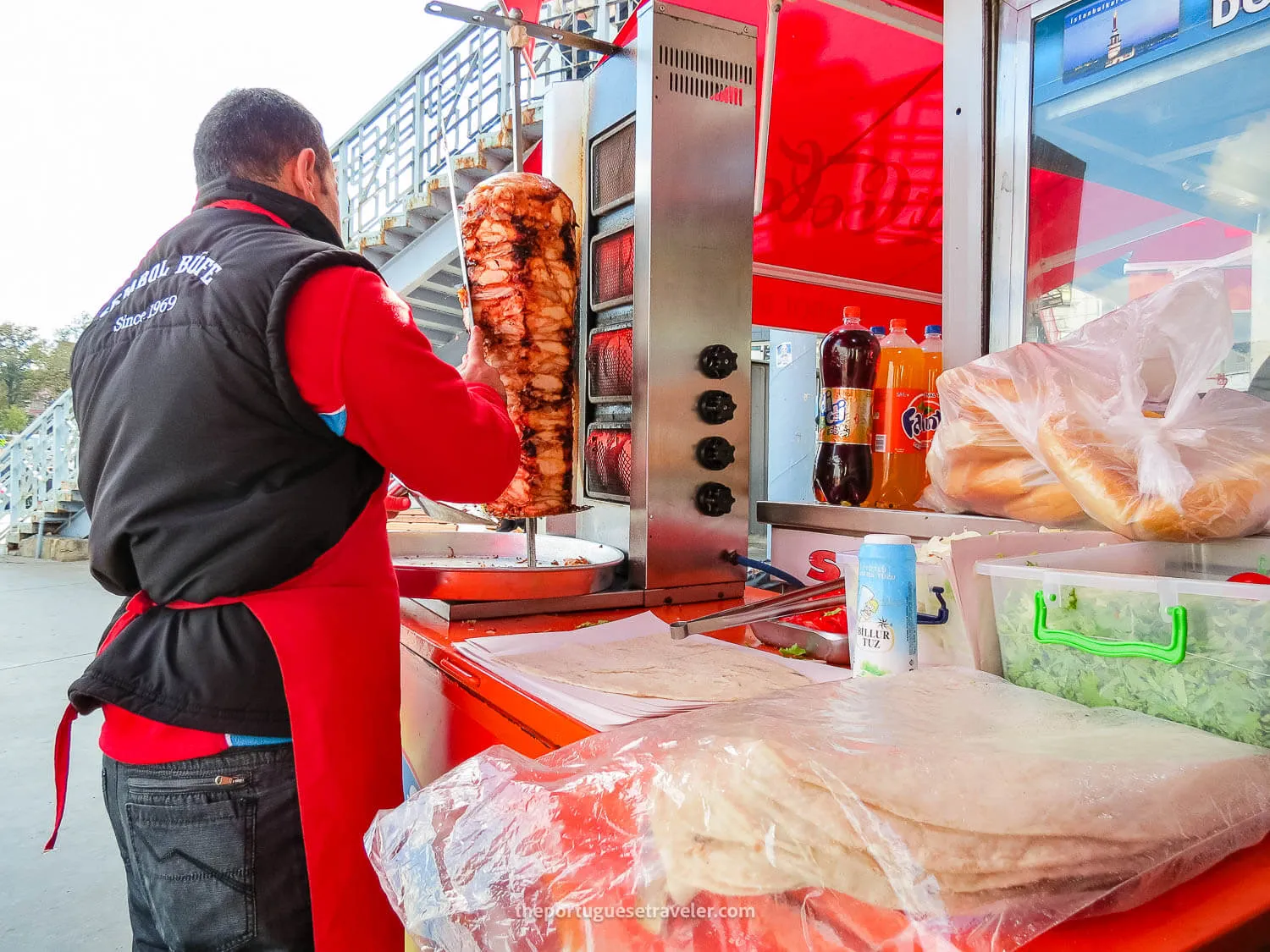
A Doner Kebap in the making
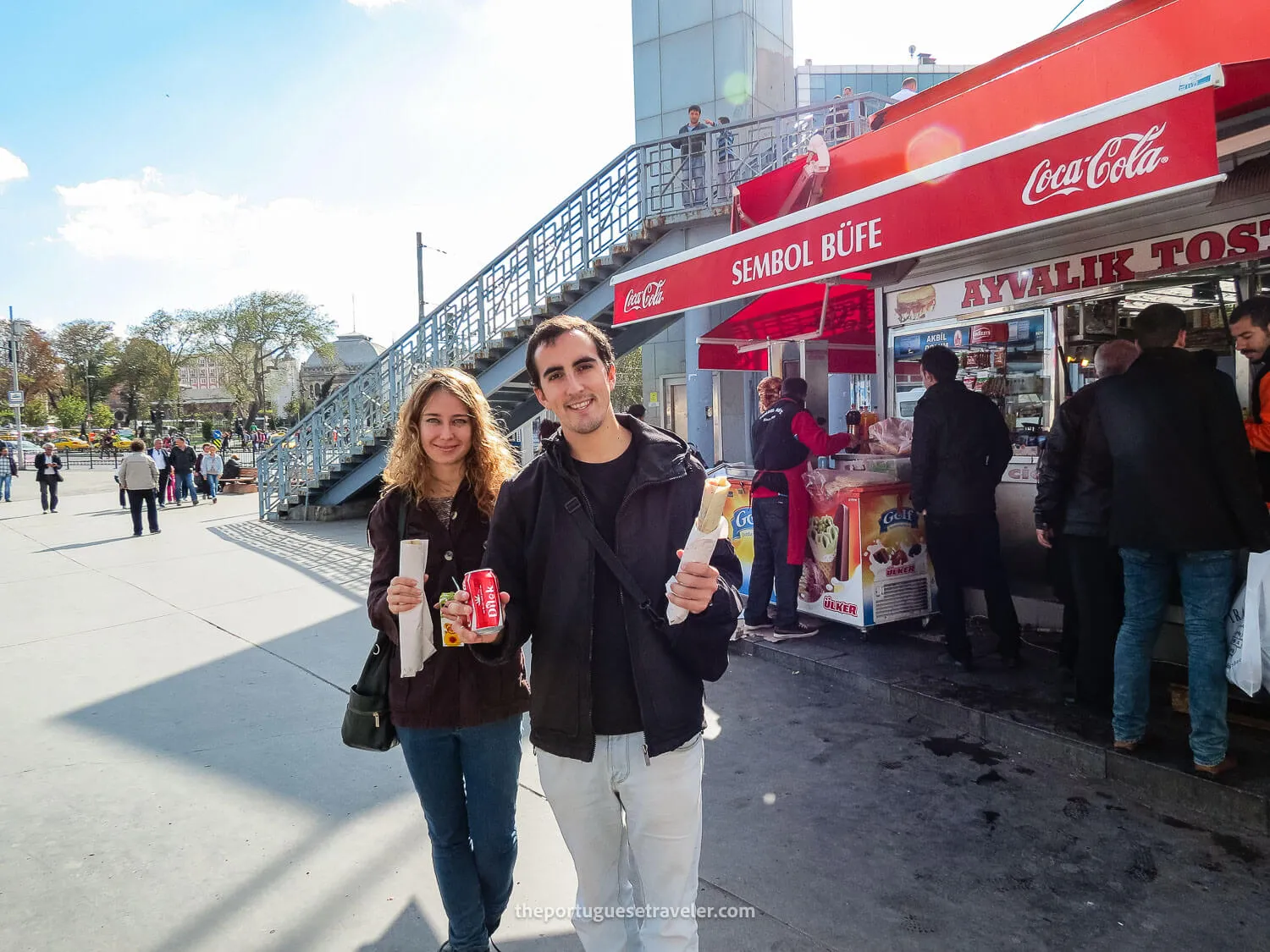
A Durum Kebap near Yeni Camii
89. Midye Dolma
All along the waterfront you will see trays of midye dolma, mussels stuffed with spiced rice, herbs and sometimes pine nuts. Squeeze a bit of lemon on top and eat them on the spot. They are surprisingly filling.
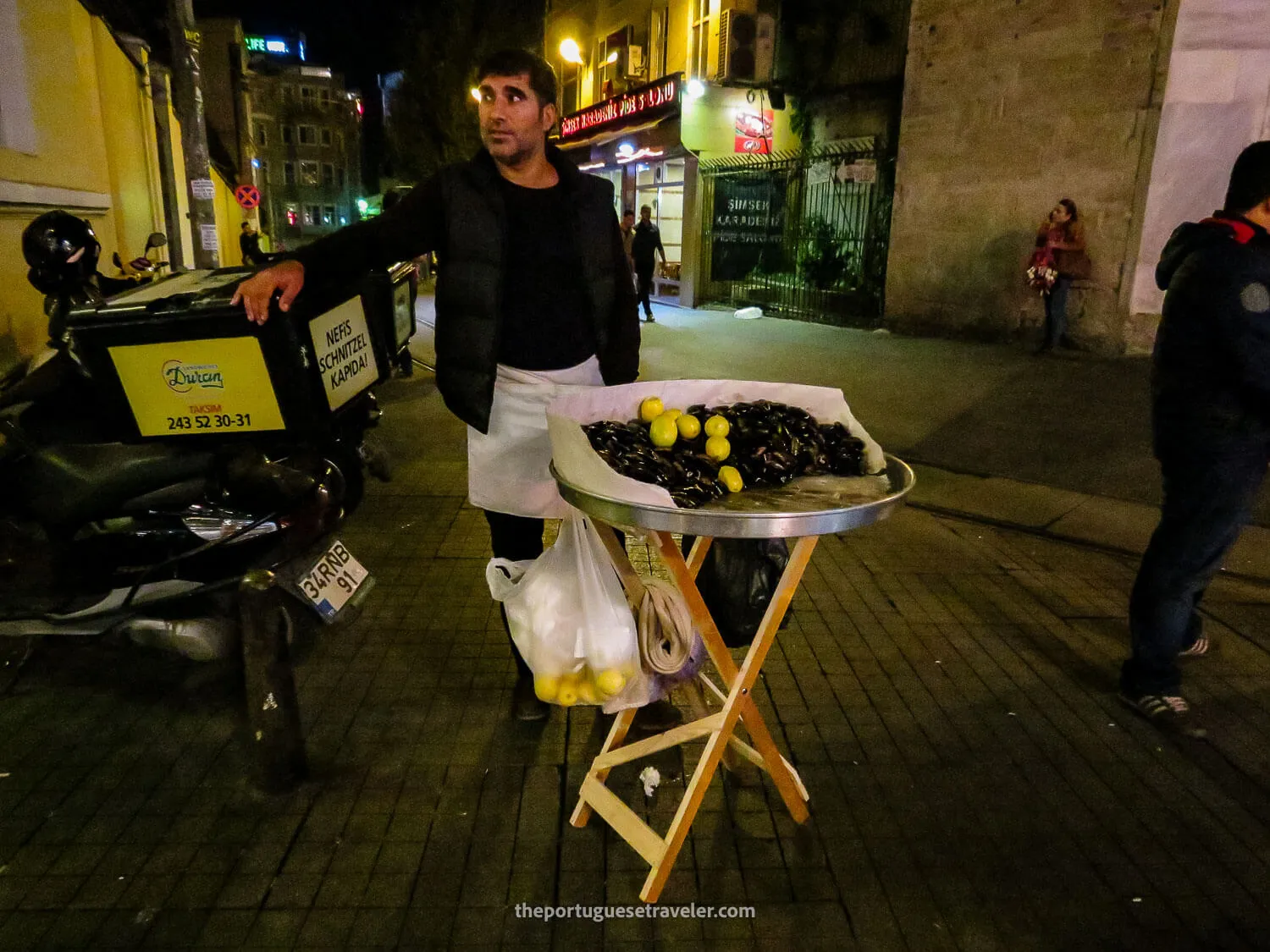
Midye Dolma seller in Istanbul
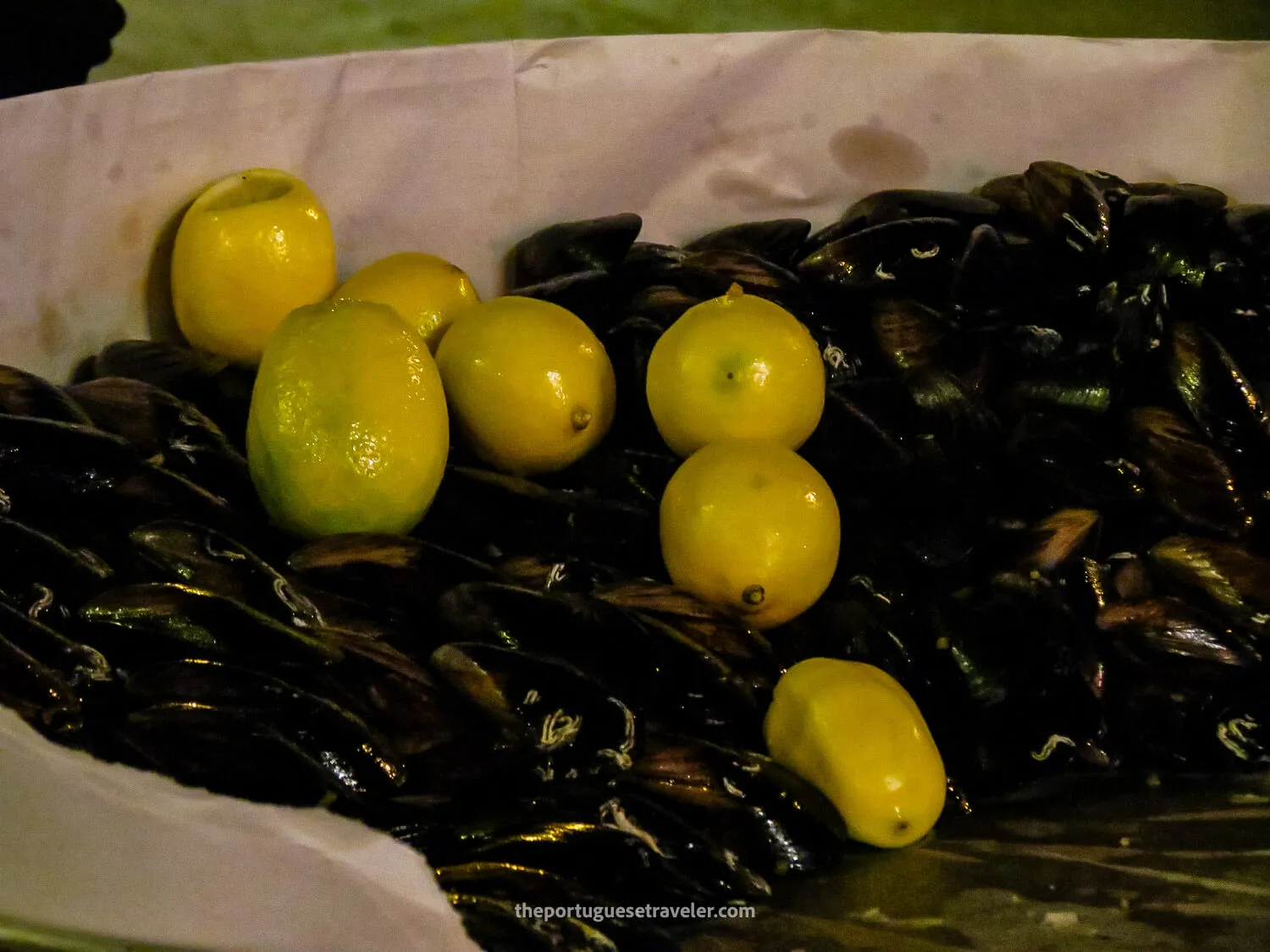
Midye Dolma seller in Istiklal Caddesi, Istanbul
90. Nar Suyu / Portakal Suyu
Fresh pomegranate (nar) or orange juice is squeezed on the spot by many vendors. A glass of nar suyu is refreshing after a long walk through the city’s hills.
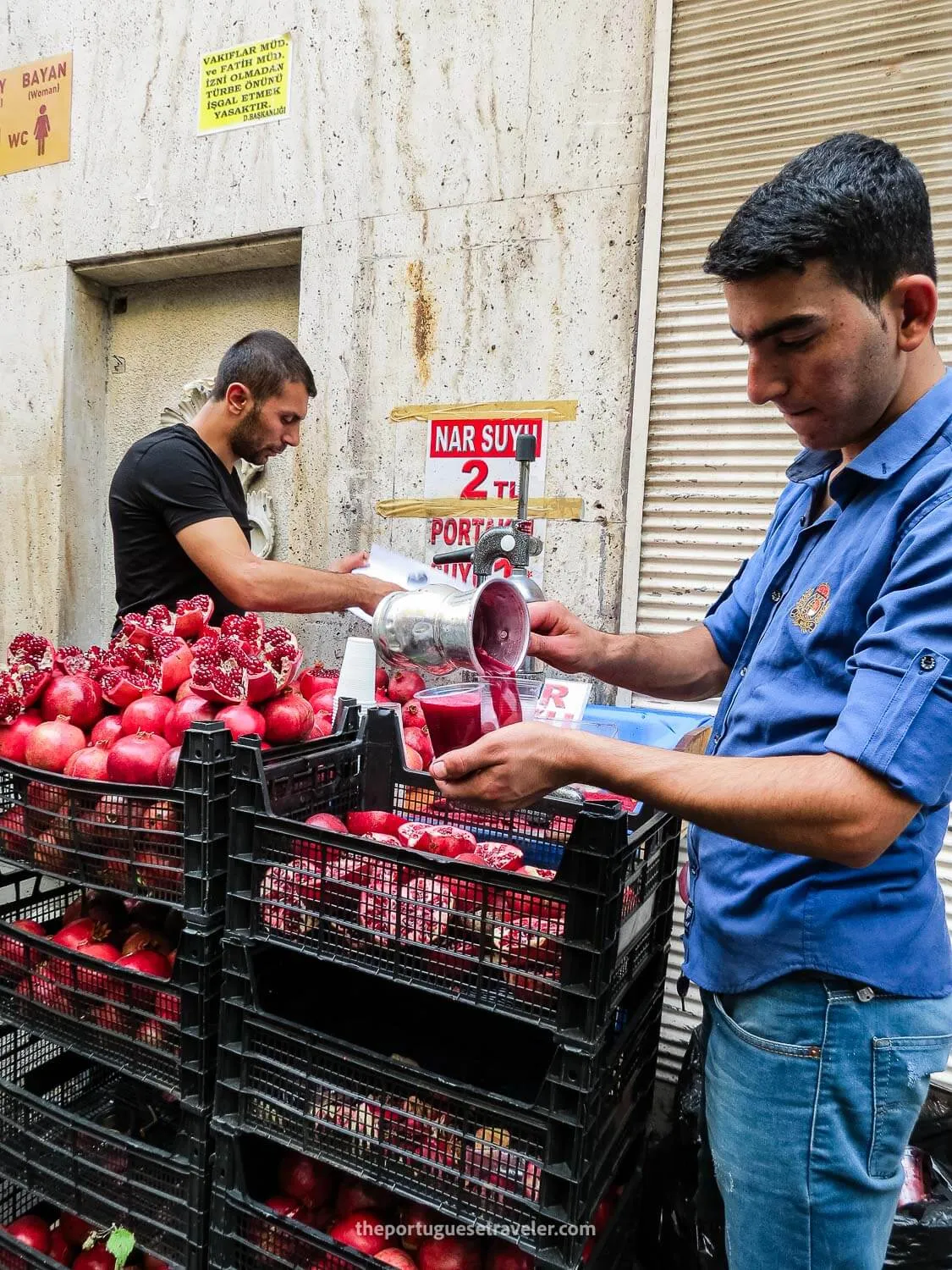
Best Food Experiences
Food in Istanbul is also about atmosphere: a leisurely Turkish breakfast with honey and clotted cream, a meyhane table with meze and raki, or a rooftop dinner with the city lights below.
91. Turkish Breakfast
If you try one meal in Istanbul, make it the Turkish breakfast (kahvaltı). The table has olives, cheeses, honey, clotted cream (kaymak), jams, tomatoes, cucumbers, menemen (eggs scrambled with tomatoes and peppers) and baskets of bread, with endless refills of tea. Try a long breakfast at a Bosphorus-side café in Beşiktaş or Ortaköy.
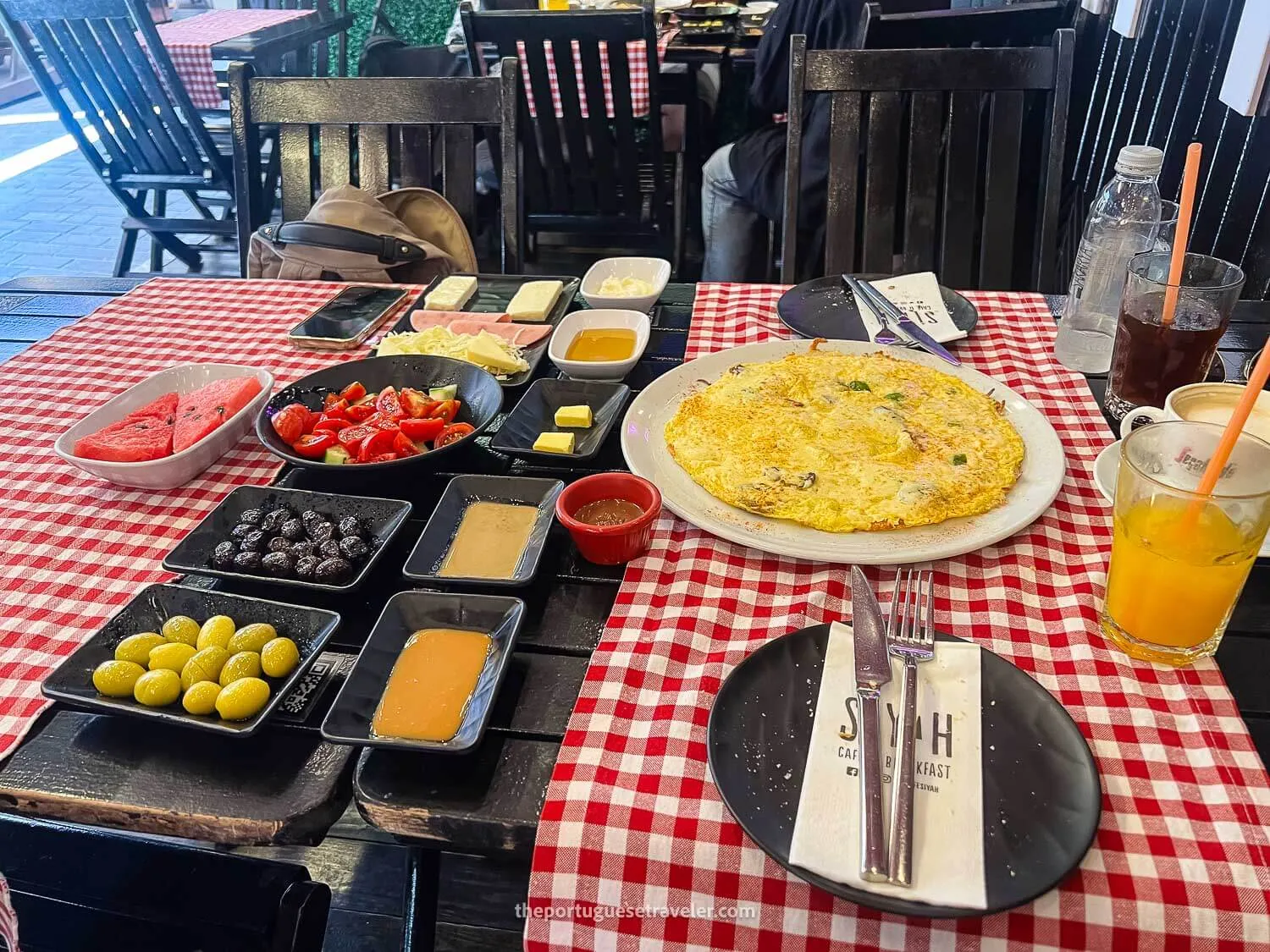
The Real Turkish Breakfast in Besiktas
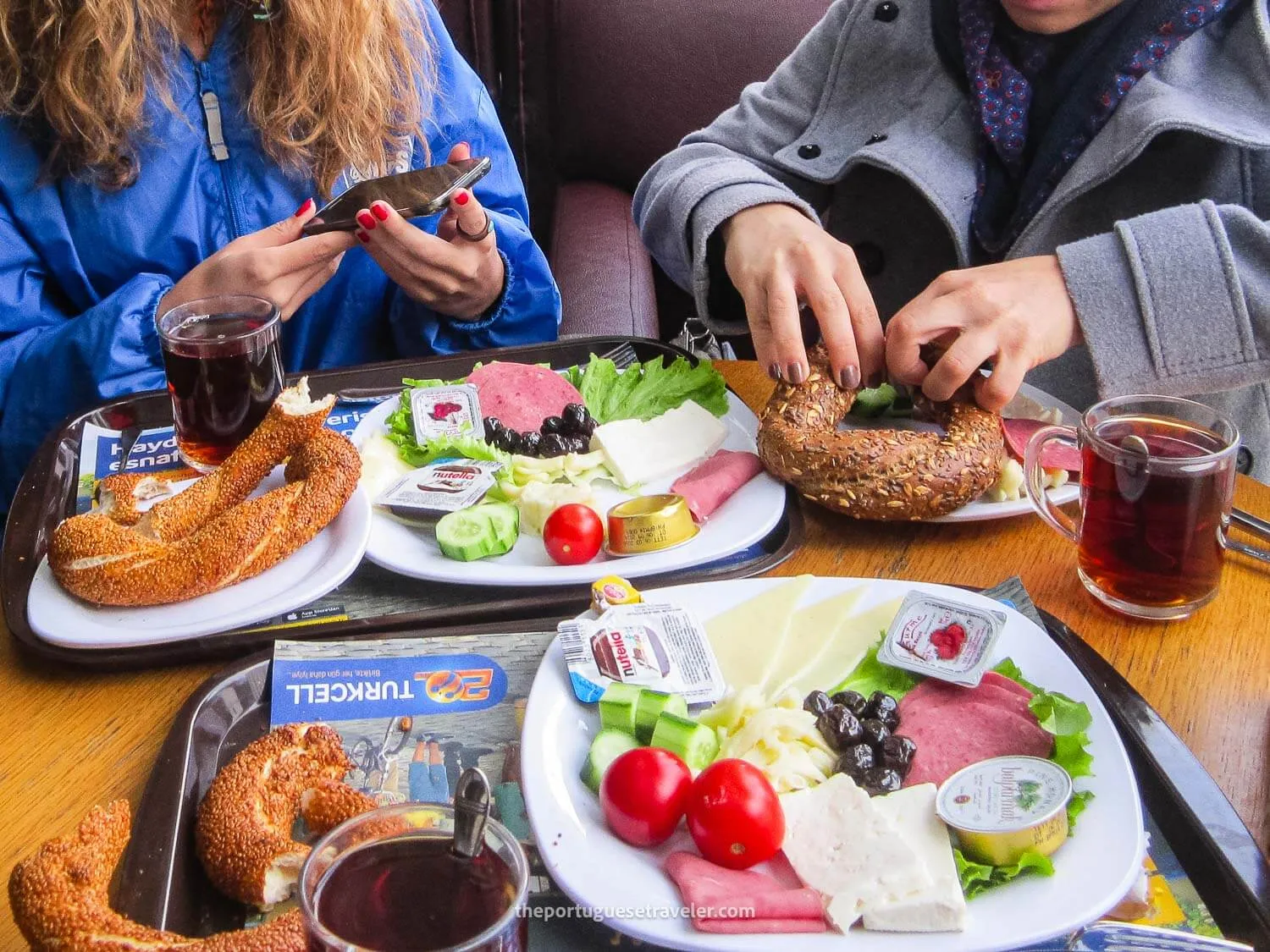
Turkish Breakfast in Istanbul
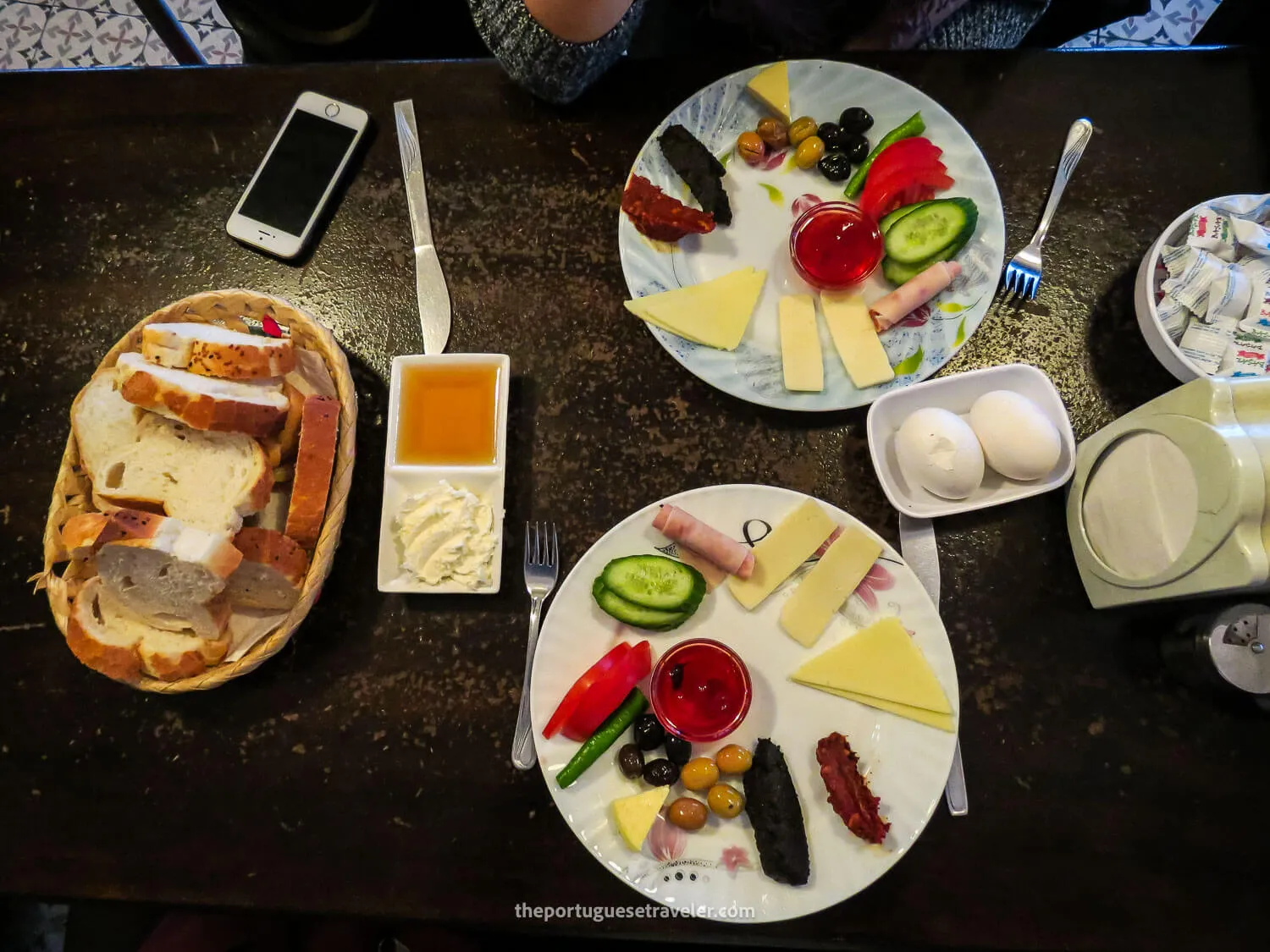
Turkish Breakfast in Istanbul
92. Rakı & Meze at a Meyhane
For a night out Istanbul-style, go to a meyhane (traditional tavern). Meals revolve around small plates of meze, such as stuffed grape leaves, grilled eggplant, white beans, cheeses and fresh seafood, with rakı, the anise-flavored drink. It is best taken slowly, with friends, and musicians sometimes play traditional songs at the table.
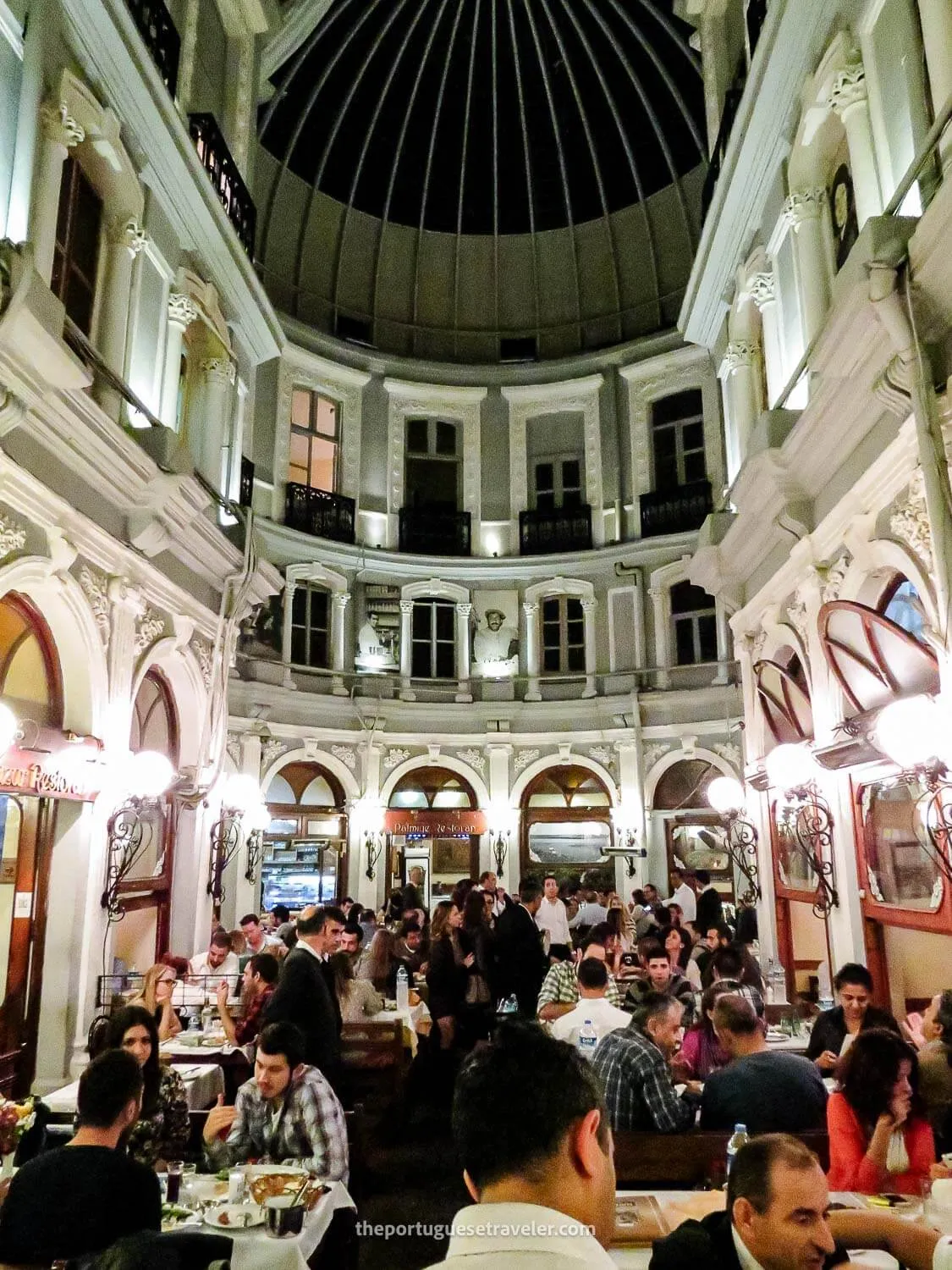
93. Rooftop Dining
Istanbul’s skyline looks best from a rooftop terrace at dinner. Many rooftops in Sultanahmet, Karaköy and Galata look out over Hagia Sophia, the Bosphorus or the Blue Mosque lit up at night, and combine dining with the view.
94. Bosphorus Seafood Restaurants
Dining by the water is a classic Istanbul experience. Along the Bosphorus, especially in neighborhoods like Arnavutköy, Bebek and Anadolu Kavağı, there are seafood restaurants. Order a spread of meze, the grilled fish of the day and a glass of rakı while ferries pass.
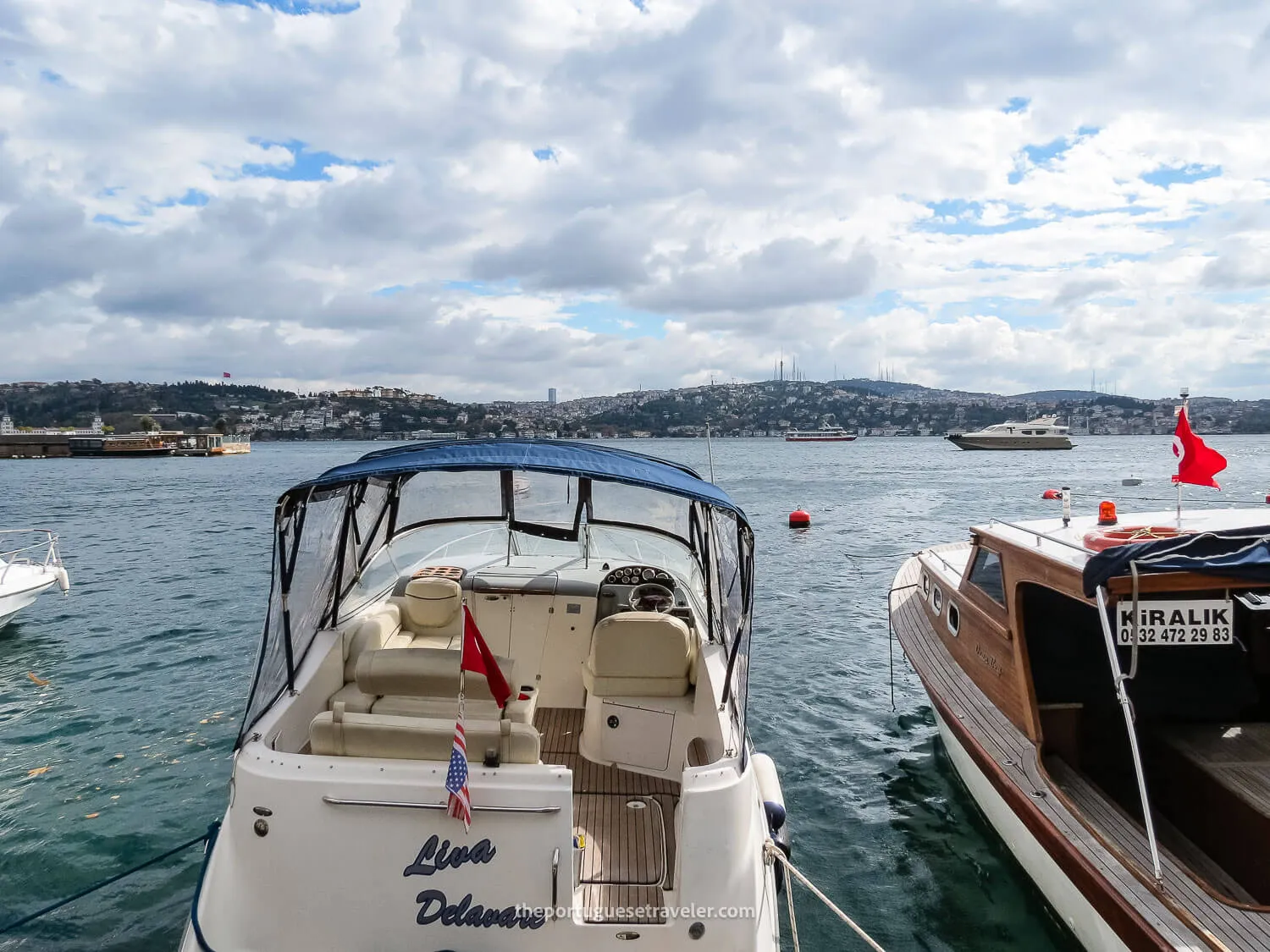
Traditional Experiences & Events
Istanbul’s traditions include music, theater and religious rituals. Experiencing them gives a glimpse of the city beyond its monuments, from sacred ceremonies to folk performances.
Music, Dance & Rituals
Whirling dervishes, shadow puppet plays that once entertained sultans and folk dances carry echoes of past centuries. These are living traditions that blend spirituality, humor and artistry.
95. Whirling Dervish Ceremony (Galata Mevlevihanesi)
The Whirling Dervishes perform a Sufi ritual of music and dance known as the sema. At the historic Galata Mevlevihanesi, dervishes spin in long white robes to flutes and drums, symbolizing the soul’s journey to divine love. It is a chance to see a living tradition of Turkish spirituality.
96. Turkish Folk Music & Dance performance
A Turkish folk music and dance show features colorful costumes and lively instruments. From the fast-paced Black Sea horon to the Anatolian halay, performances introduce Turkey’s regional traditions. You can catch a show in a cultural center or dinner theater.
97. Traditional Shadow Puppet (Karagöz & Hacivat show)
The comic banter between Karagöz and Hacivat, two shadow puppet characters, dates back to Ottoman times. The shows are performed on a backlit screen with colorful puppets and are full of humor and satire. Some theaters in Sultanahmet and cultural festivals still keep the tradition alive.
Timeless Experiences
Some experiences in Istanbul are classics: relaxing in a hammam, cruising between two continents or sipping tea by the Bosphorus. They show the city’s mix of tradition and leisure.
98. Historic Turkish Bath
A visit to a Turkish hammam is a classic. Inside the steamy, domed chambers you are scrubbed, massaged and bathed. Some of the city’s historic baths, like Hurrem Sultan Hammam near Hagia Sophia or Çemberlitaş Hammam, combine wellness with Ottoman architecture.
99. Bosphorus Day/Night Cruise
See Istanbul from the water with a Bosphorus cruise, with Europe and Asia on either side. By day you pass palaces, mosques and mansions along the strait, and at night the city lights up. You can choose a public ferry, a private yacht or a dinner cruise.
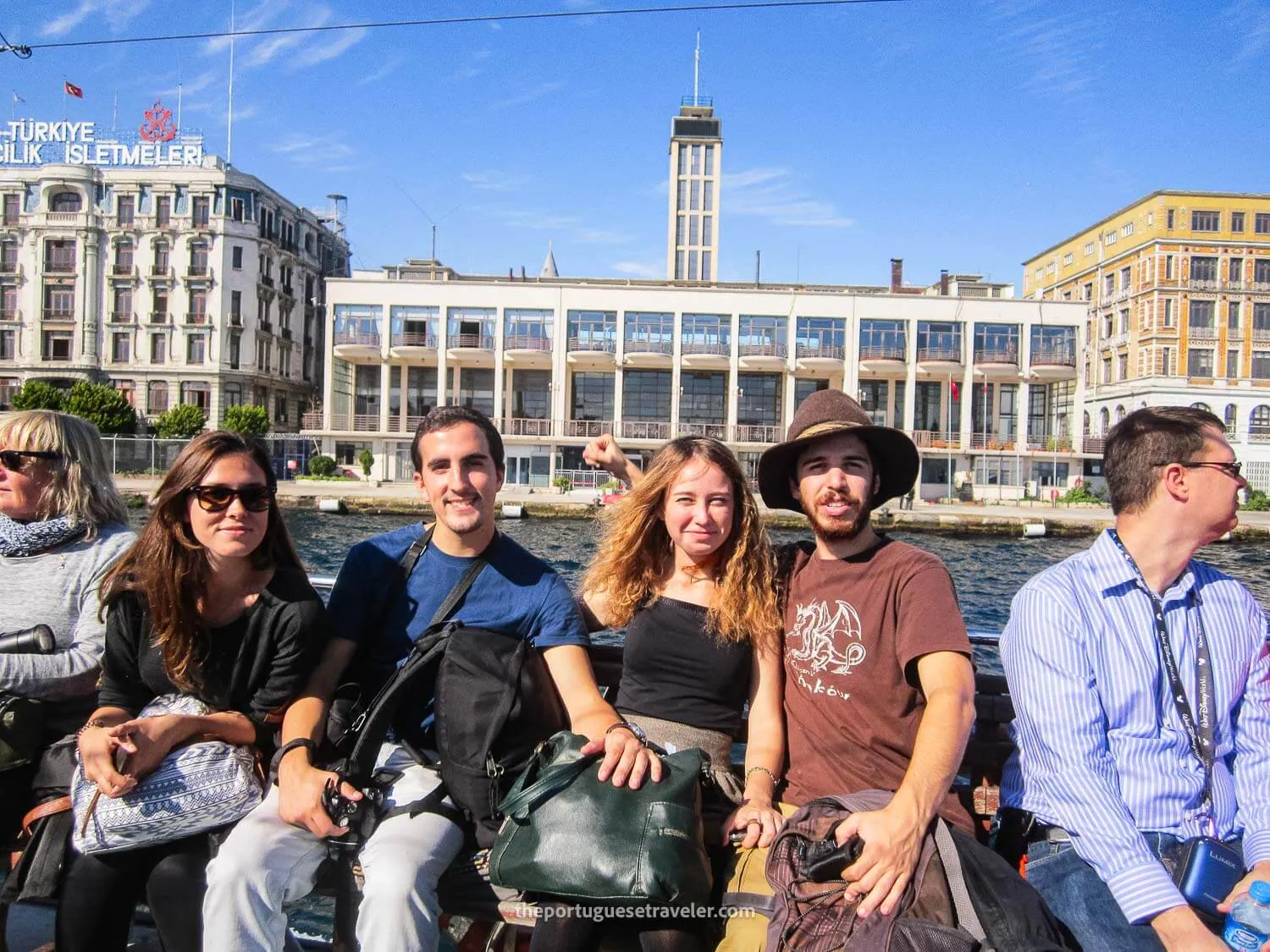
Bosphorus Cruise in Istanbul
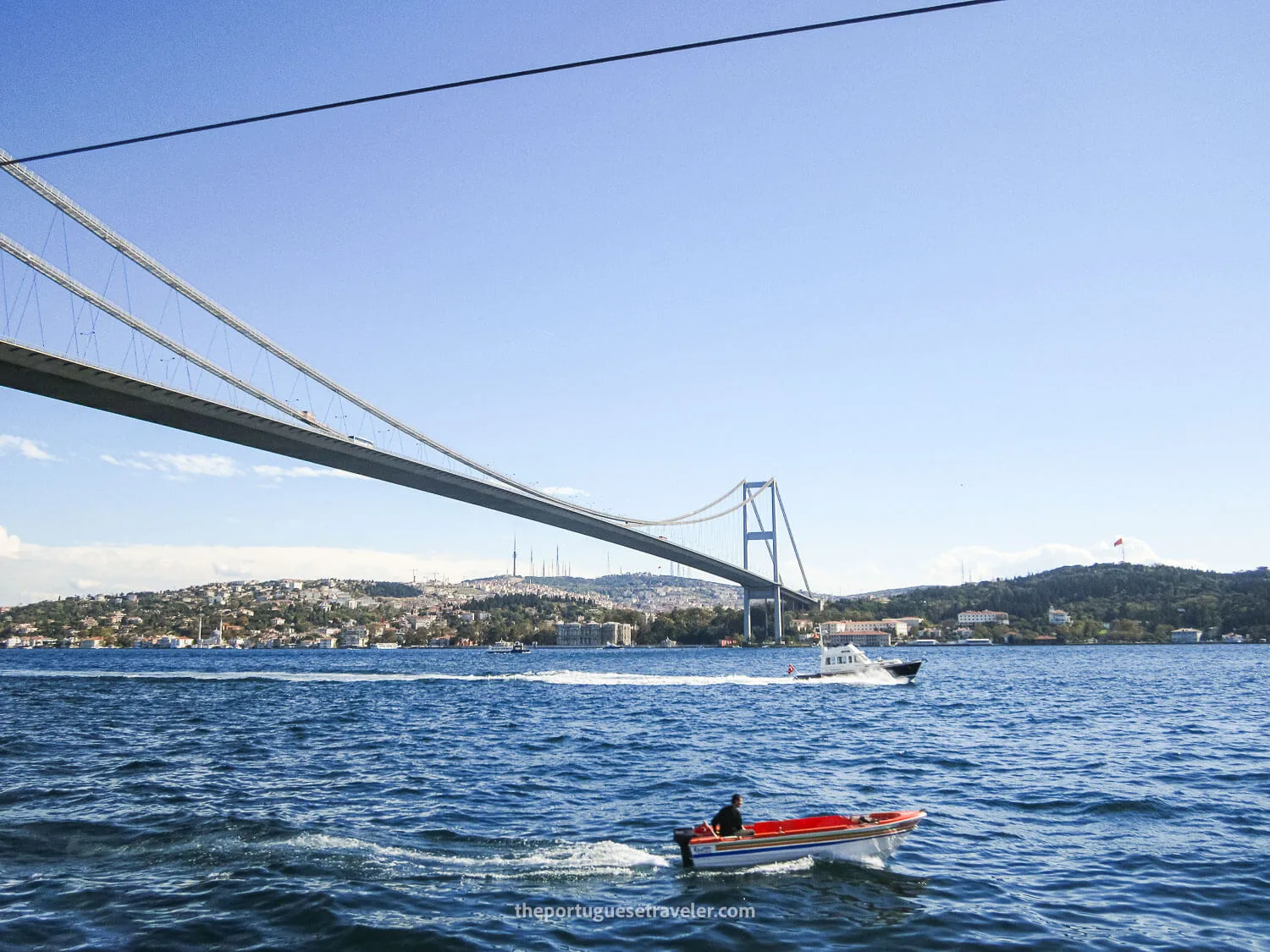
Bosphorus Cruise in Istanbul
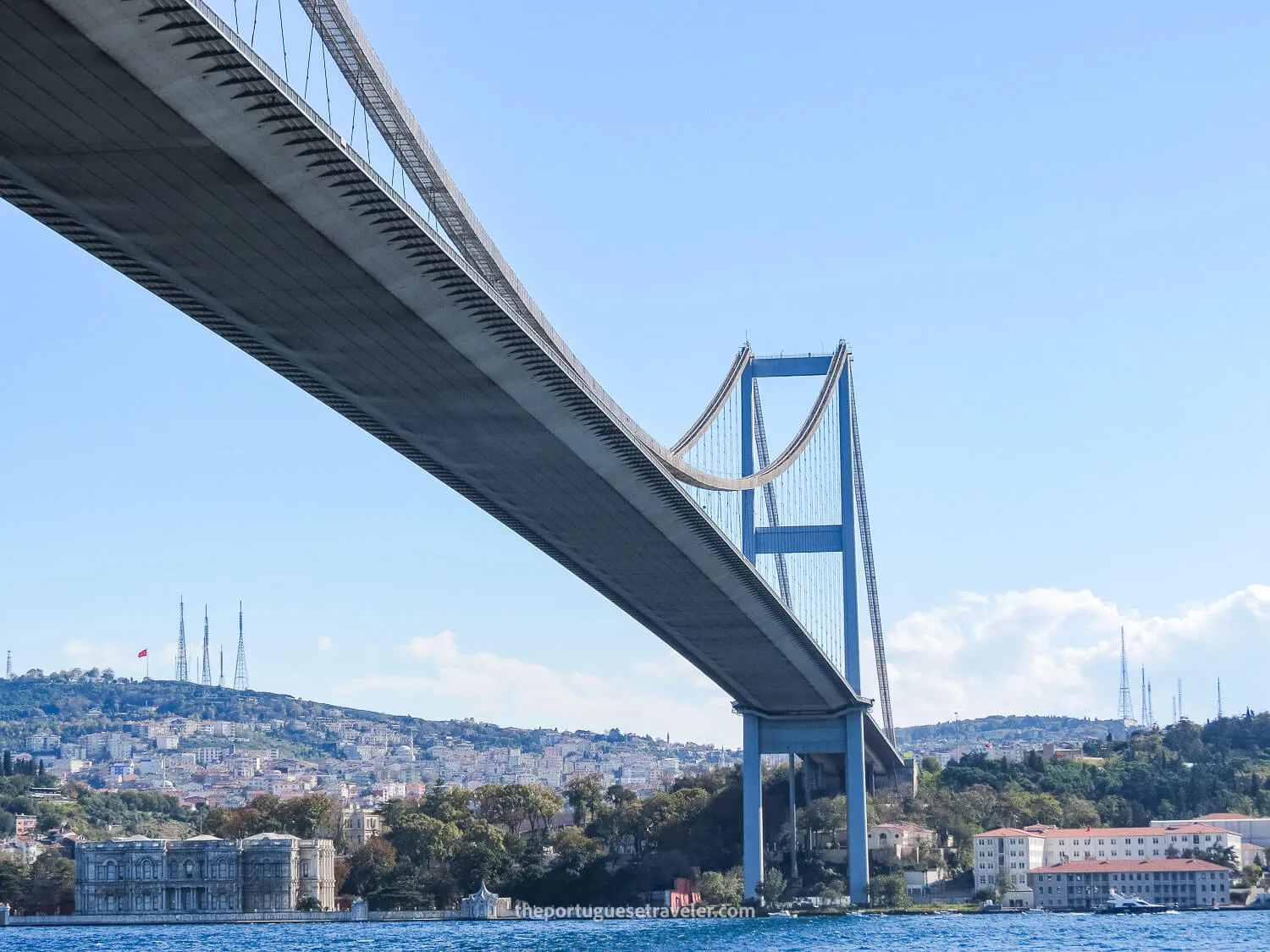
The bridge in Istanbul
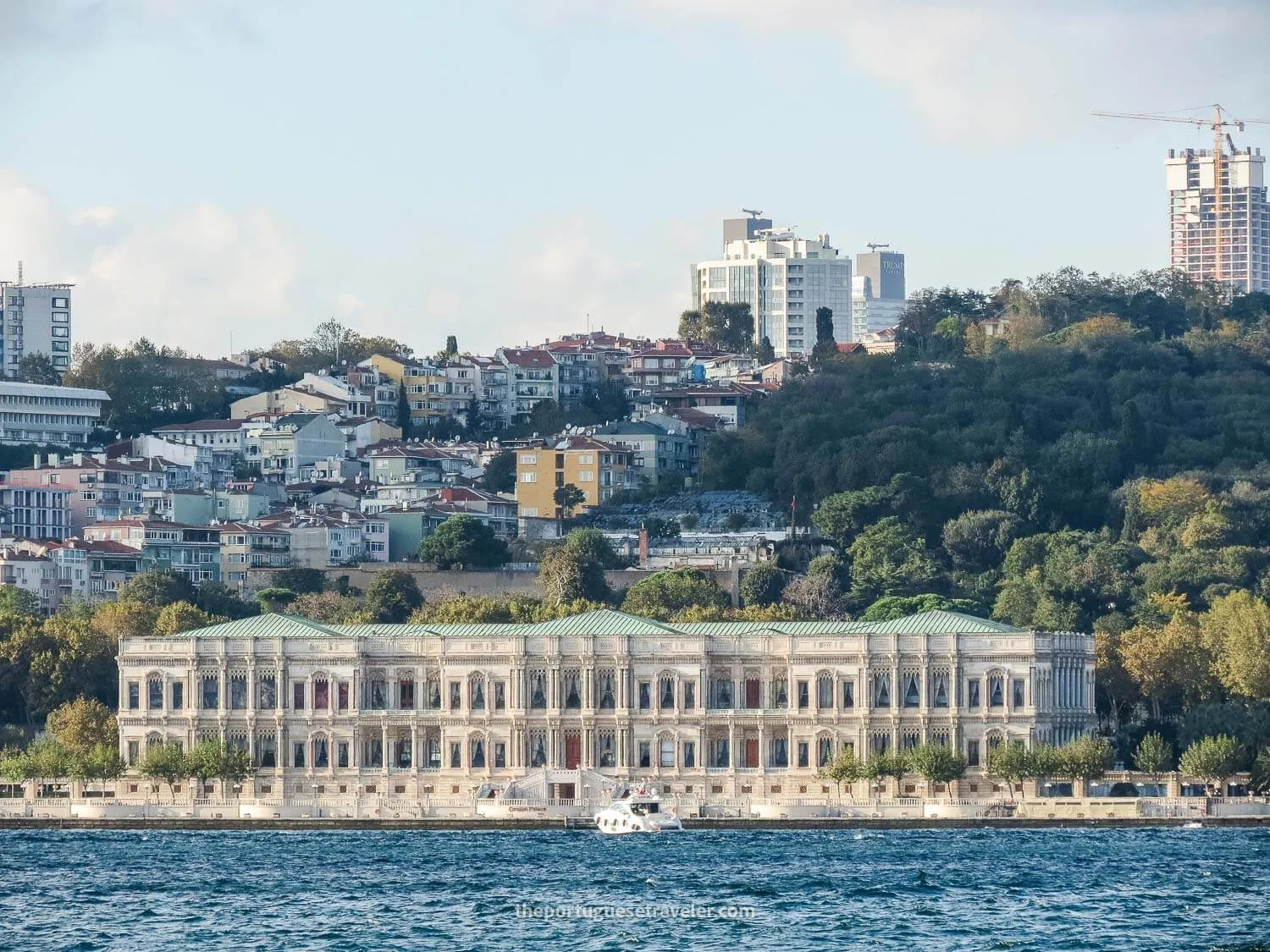
Bosphorus Cruise in Istanbul
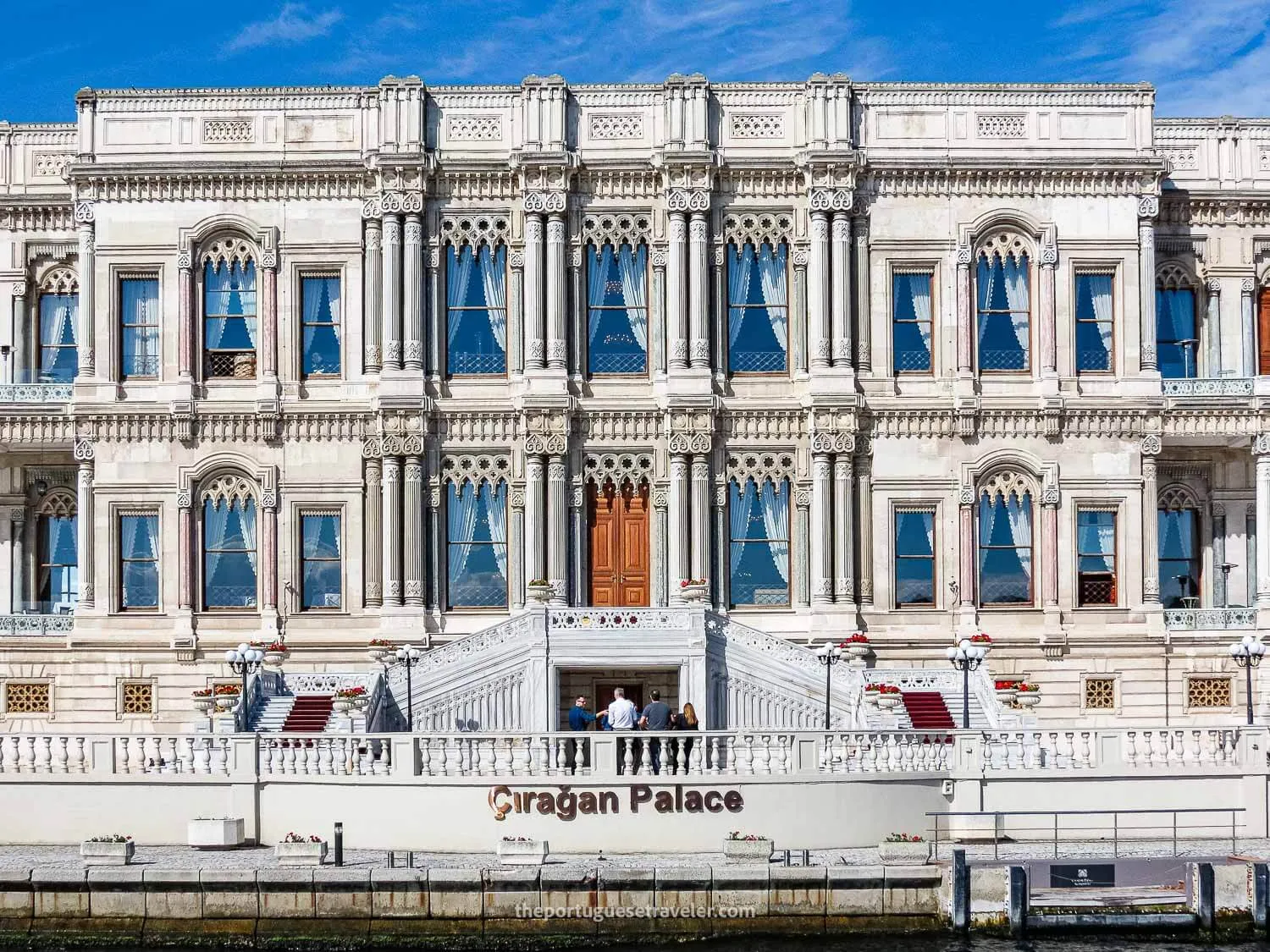
The Ciragan Palace at the Bosphorus Cruise in Istanbul
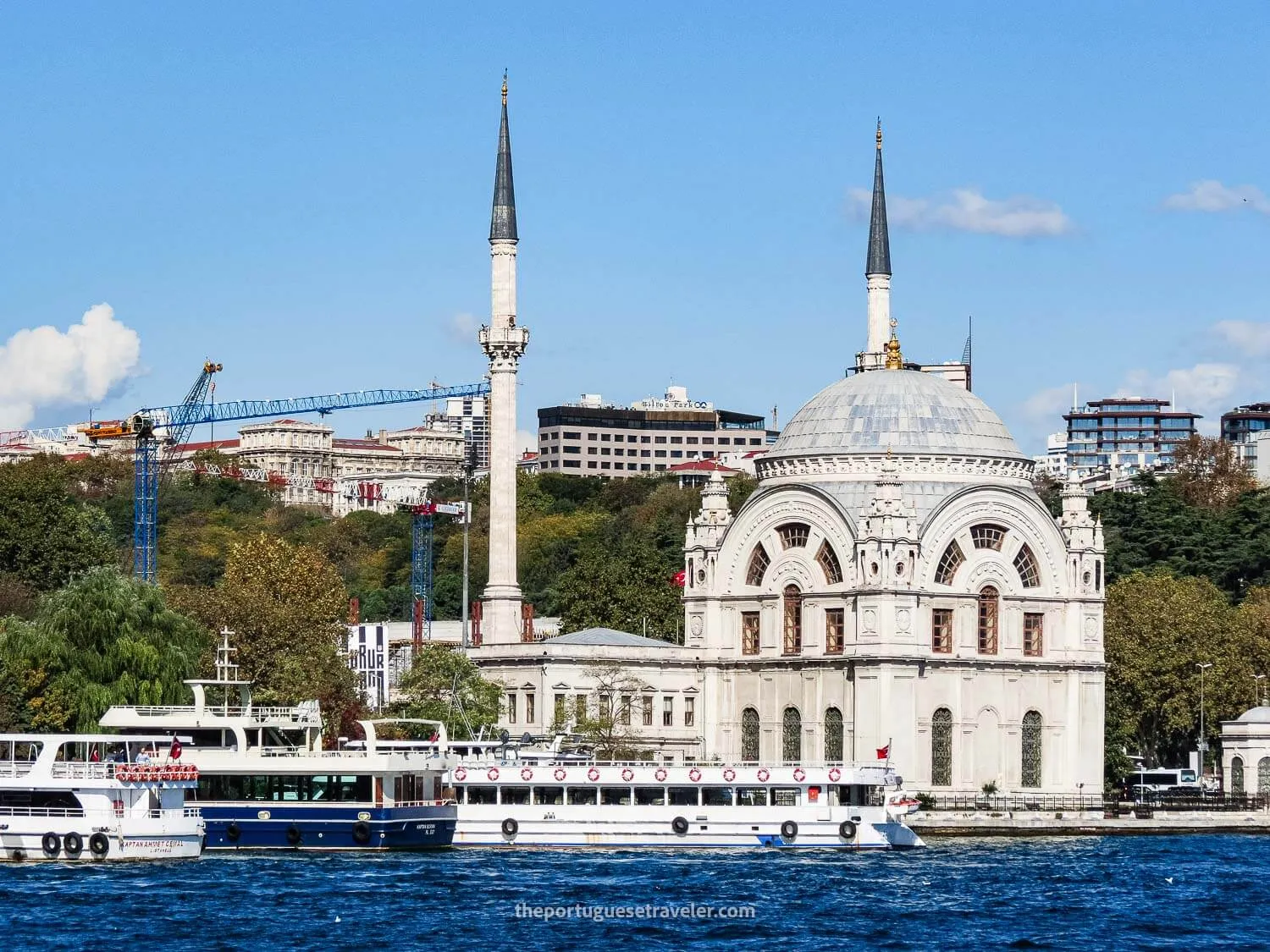
The Ortaköy Mosque in the Bosphorus Cruise in Istanbul
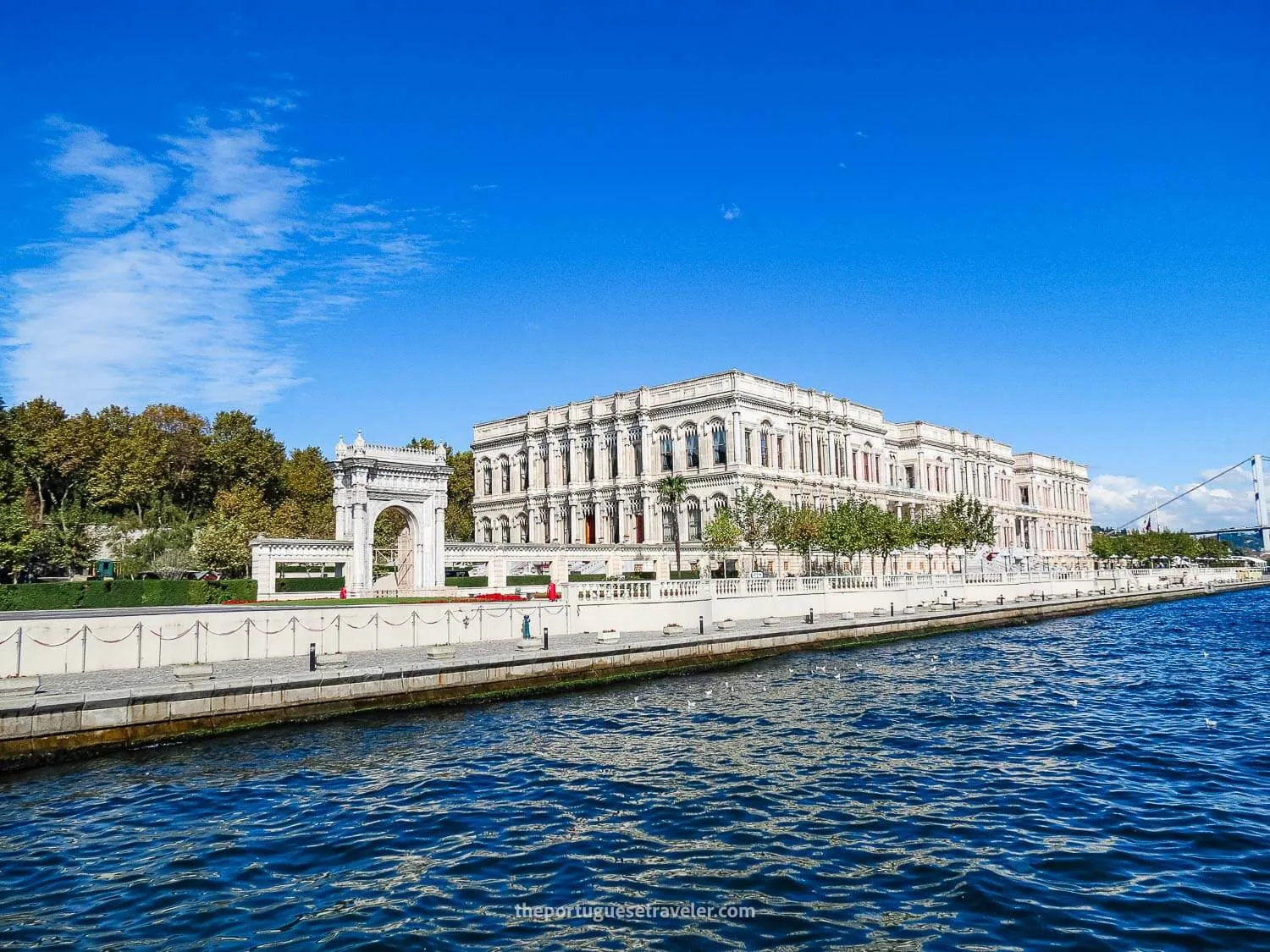
The Dolmabahçe Palace seen from the Bosphorus Cruise
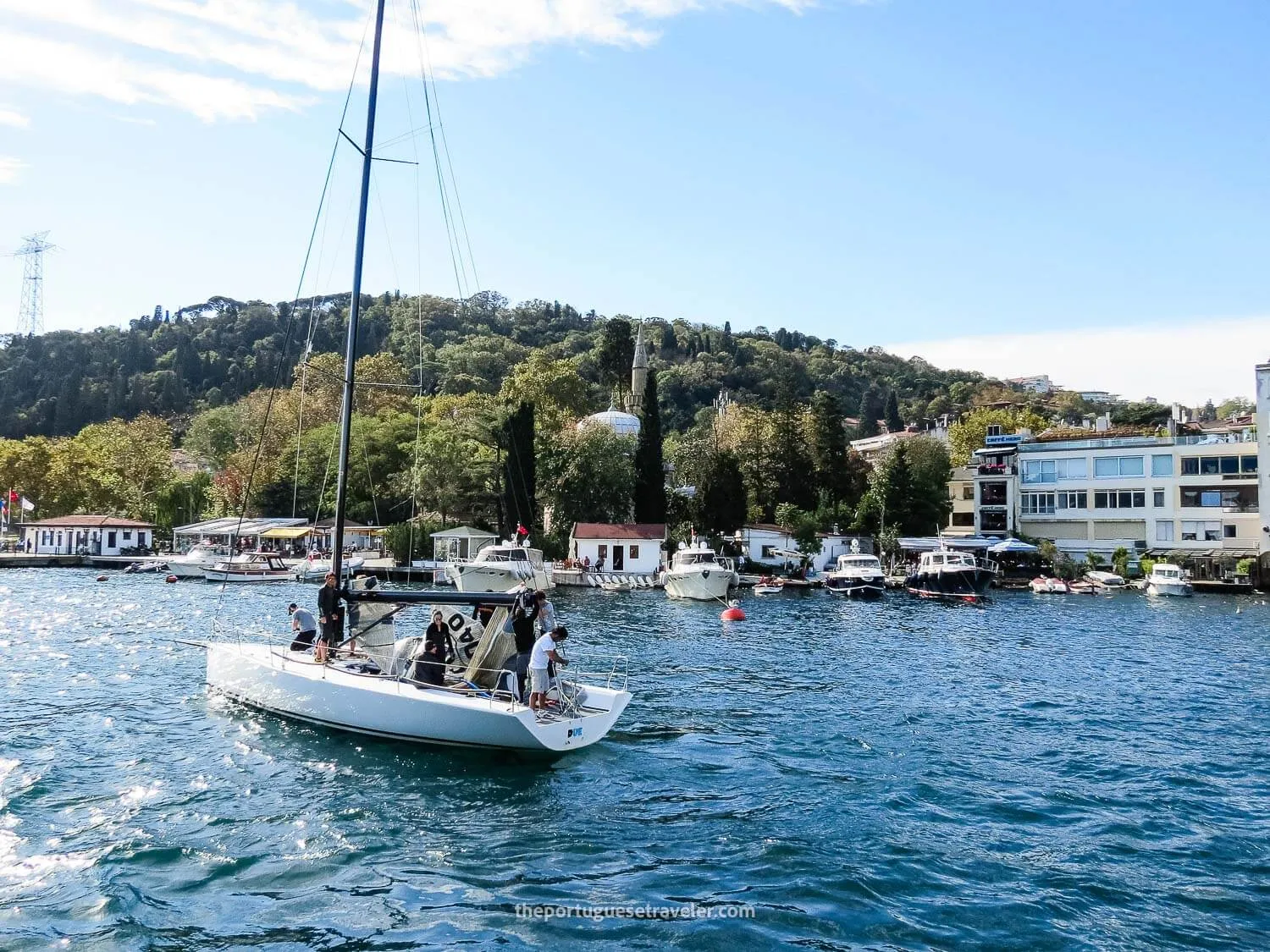
Bebek seen from the Cruise
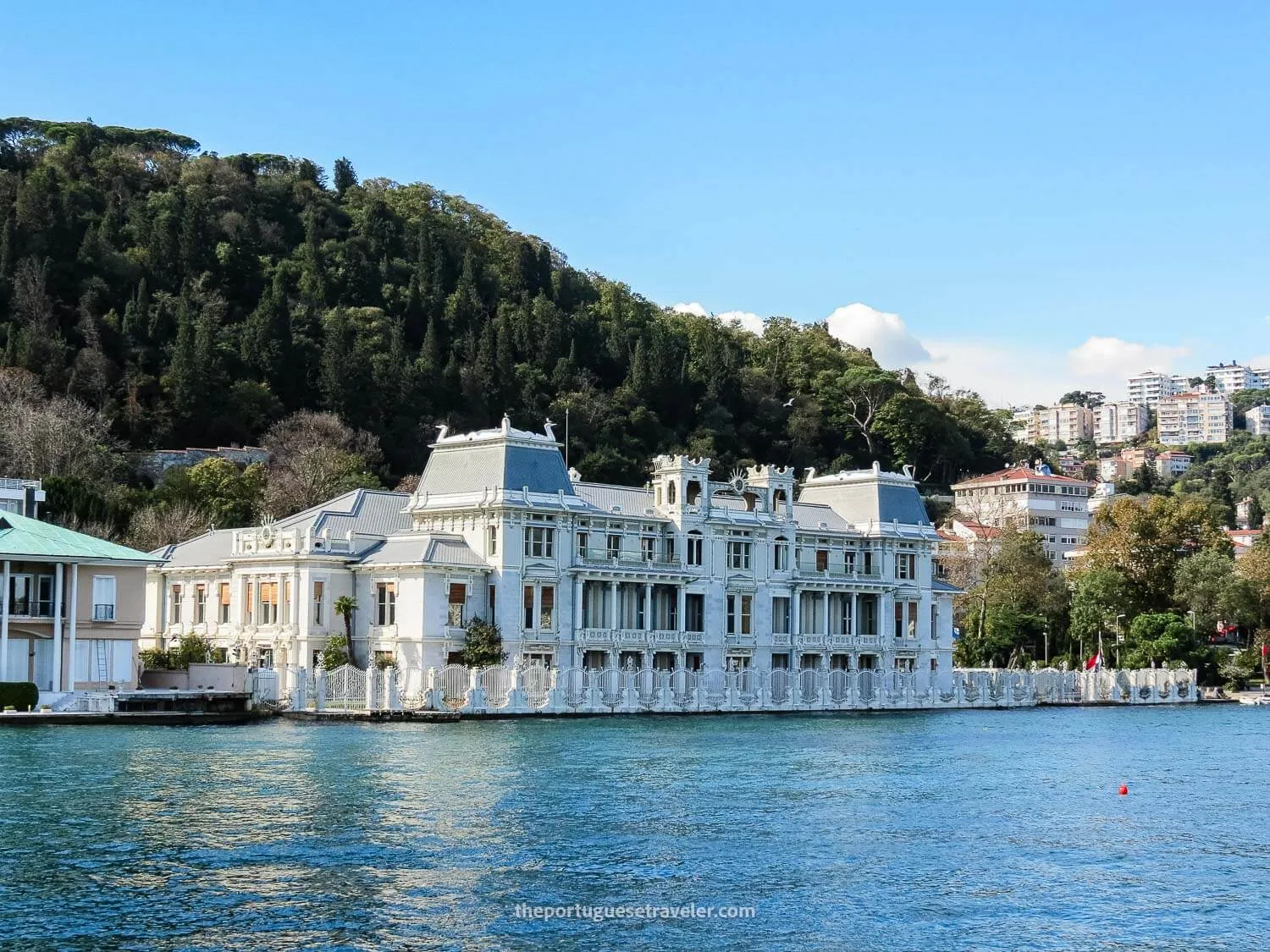
The palaces seen from the Cruise
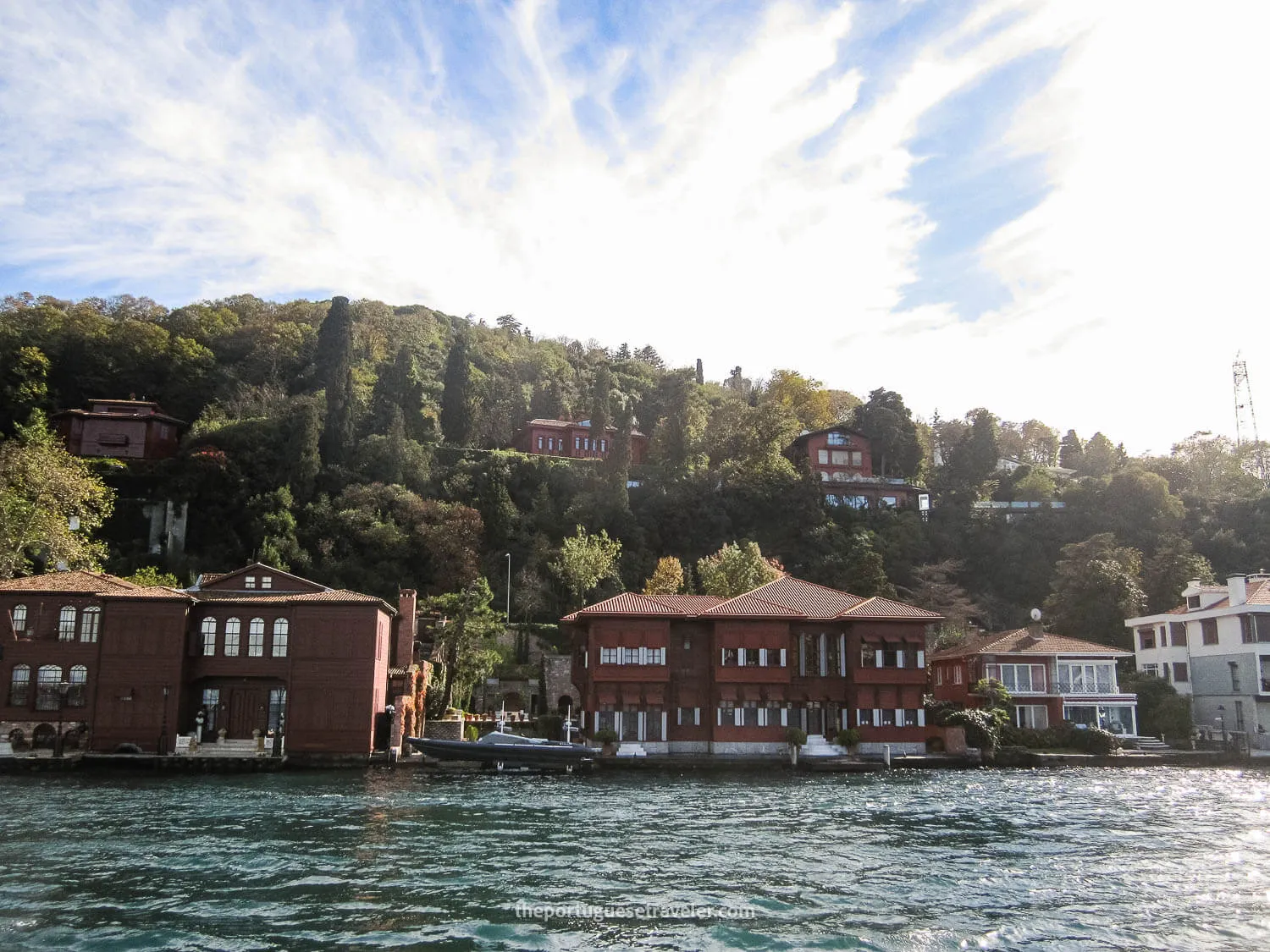
Bosphorus Cruise in Istanbul
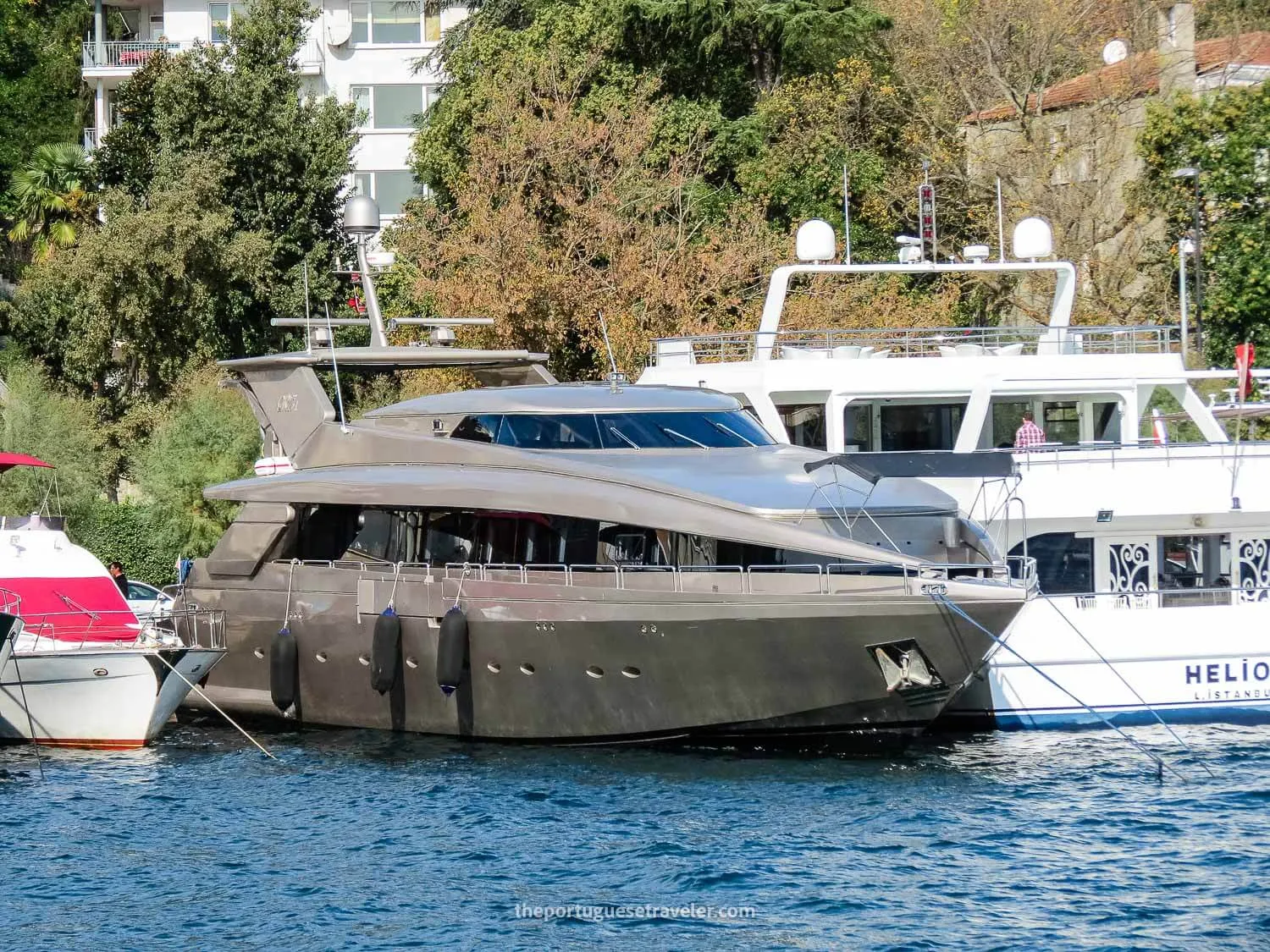
A luxury yacht in Bebek
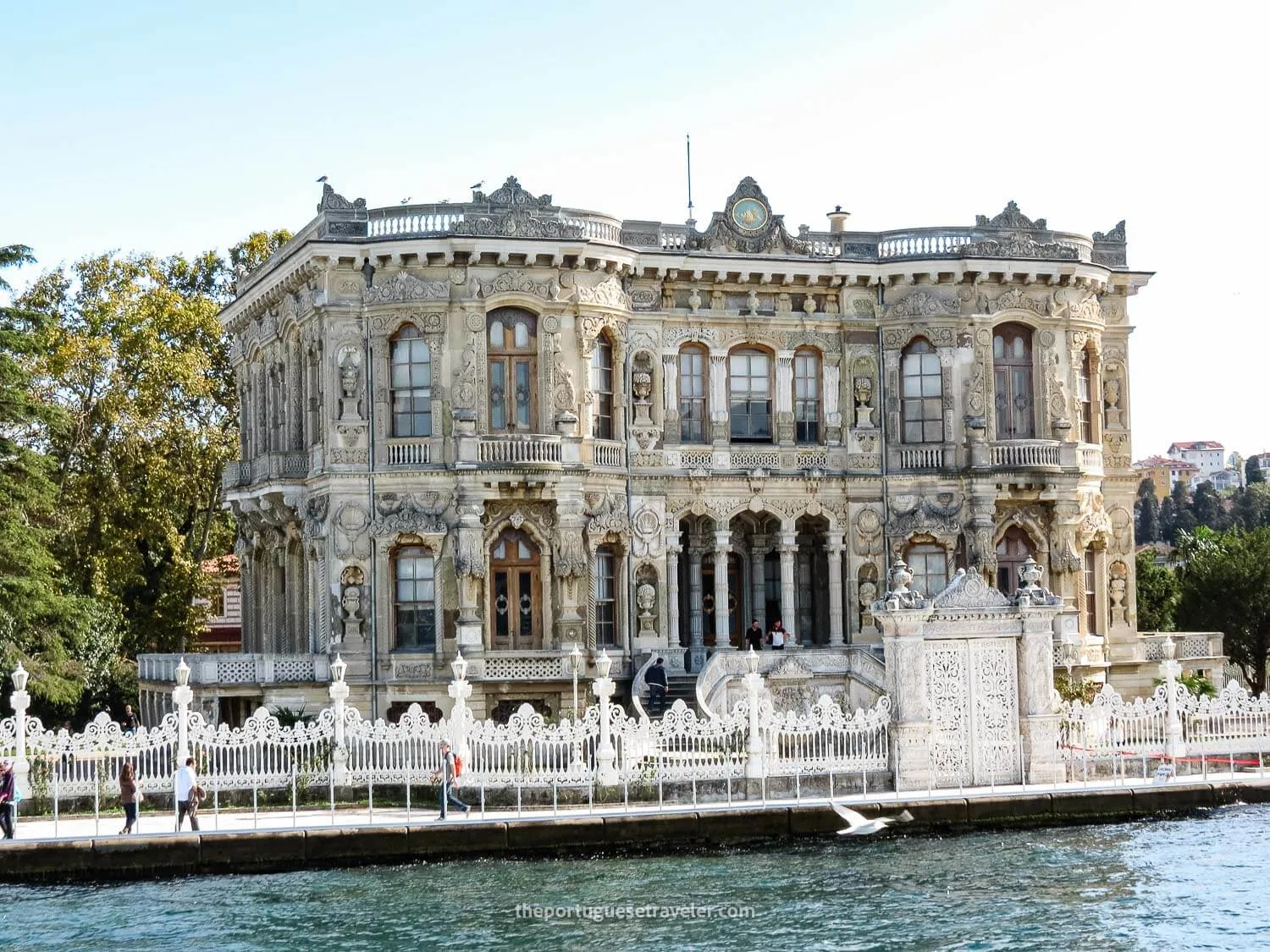
A Barroque Palace in the Bosphorus
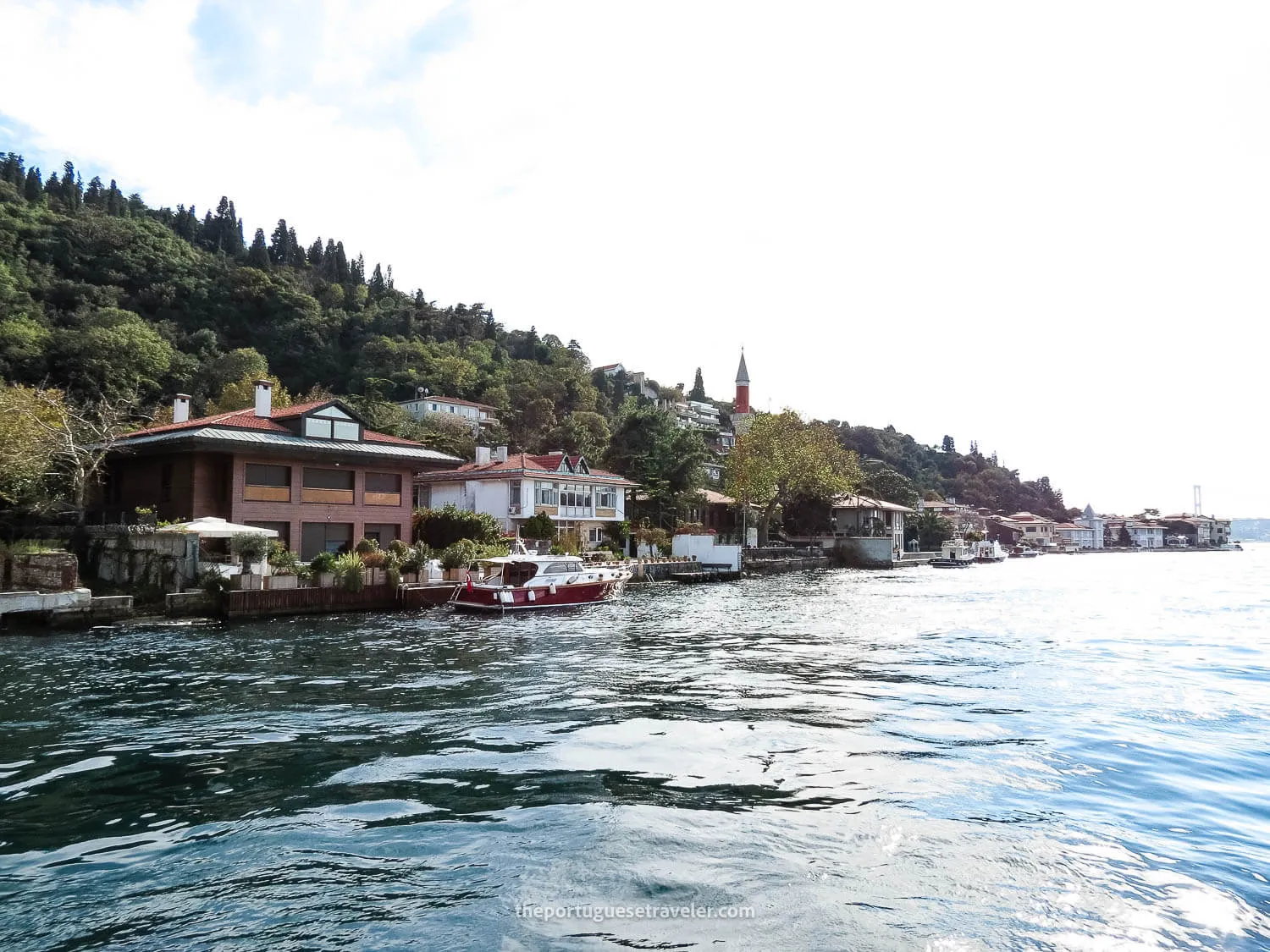
The rich villas at the Bosphorus
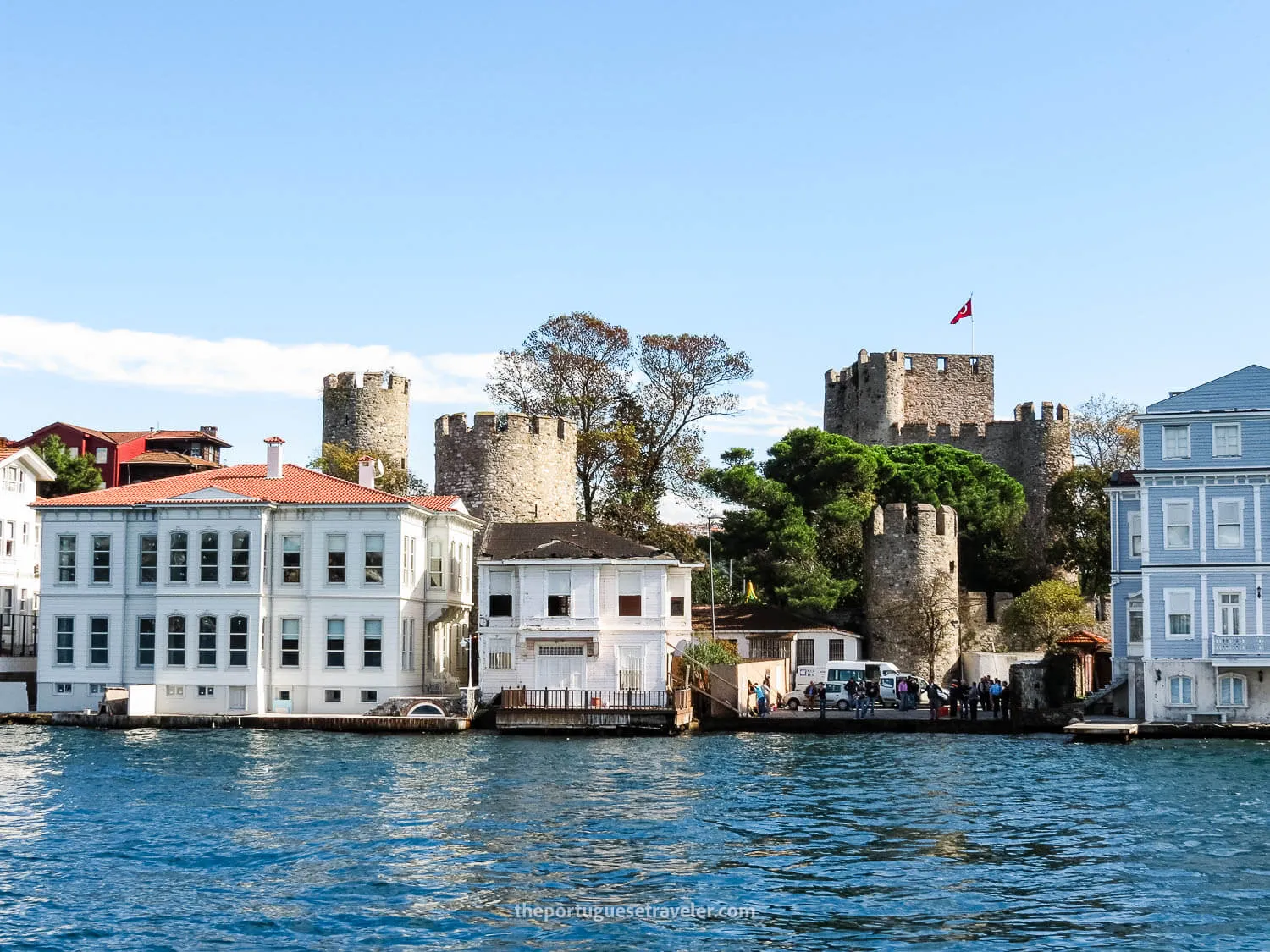
Bebek neighbourhood in Istanbul
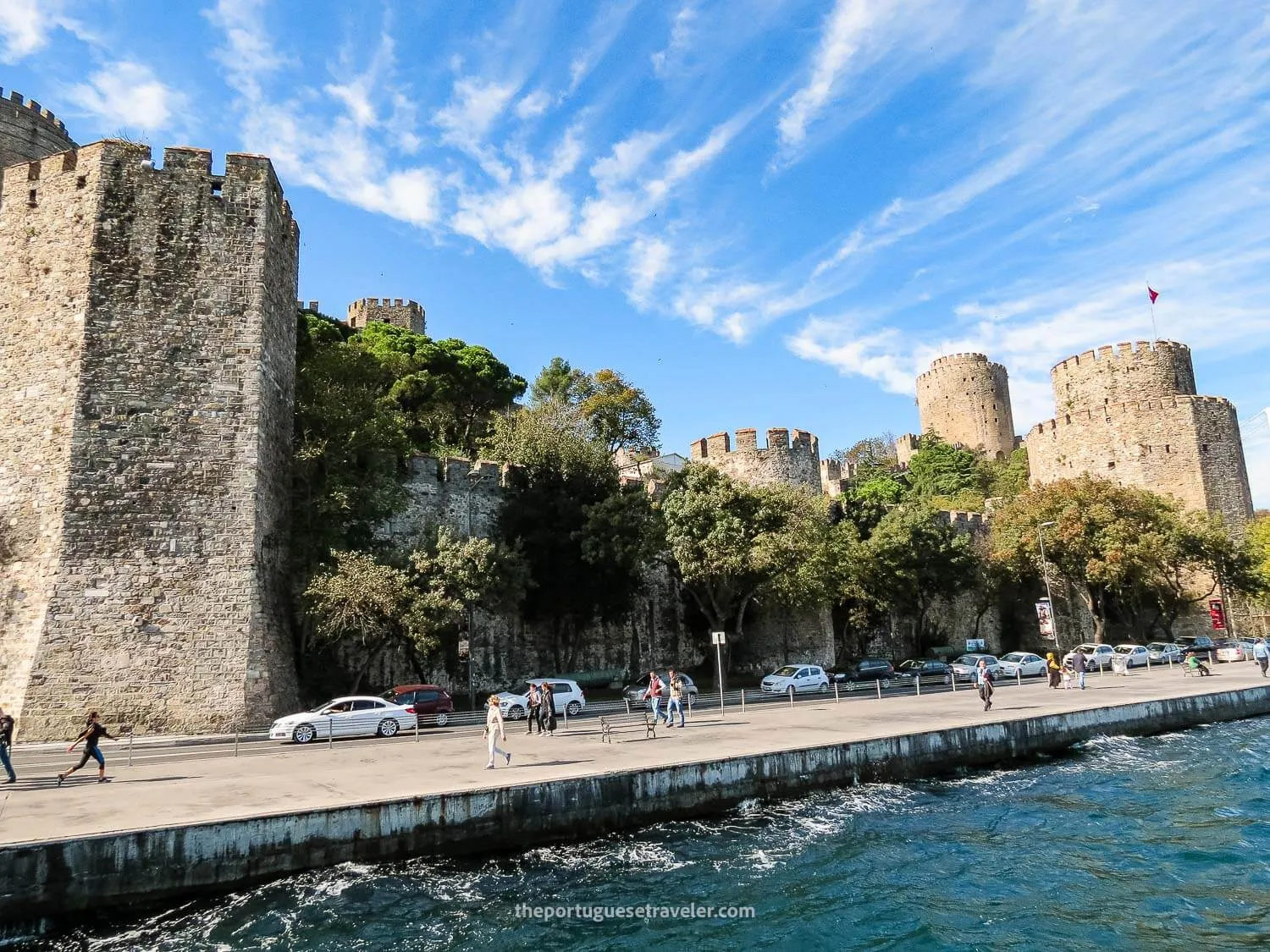
The Rumeli Hisari Fortress in the Bosphorus
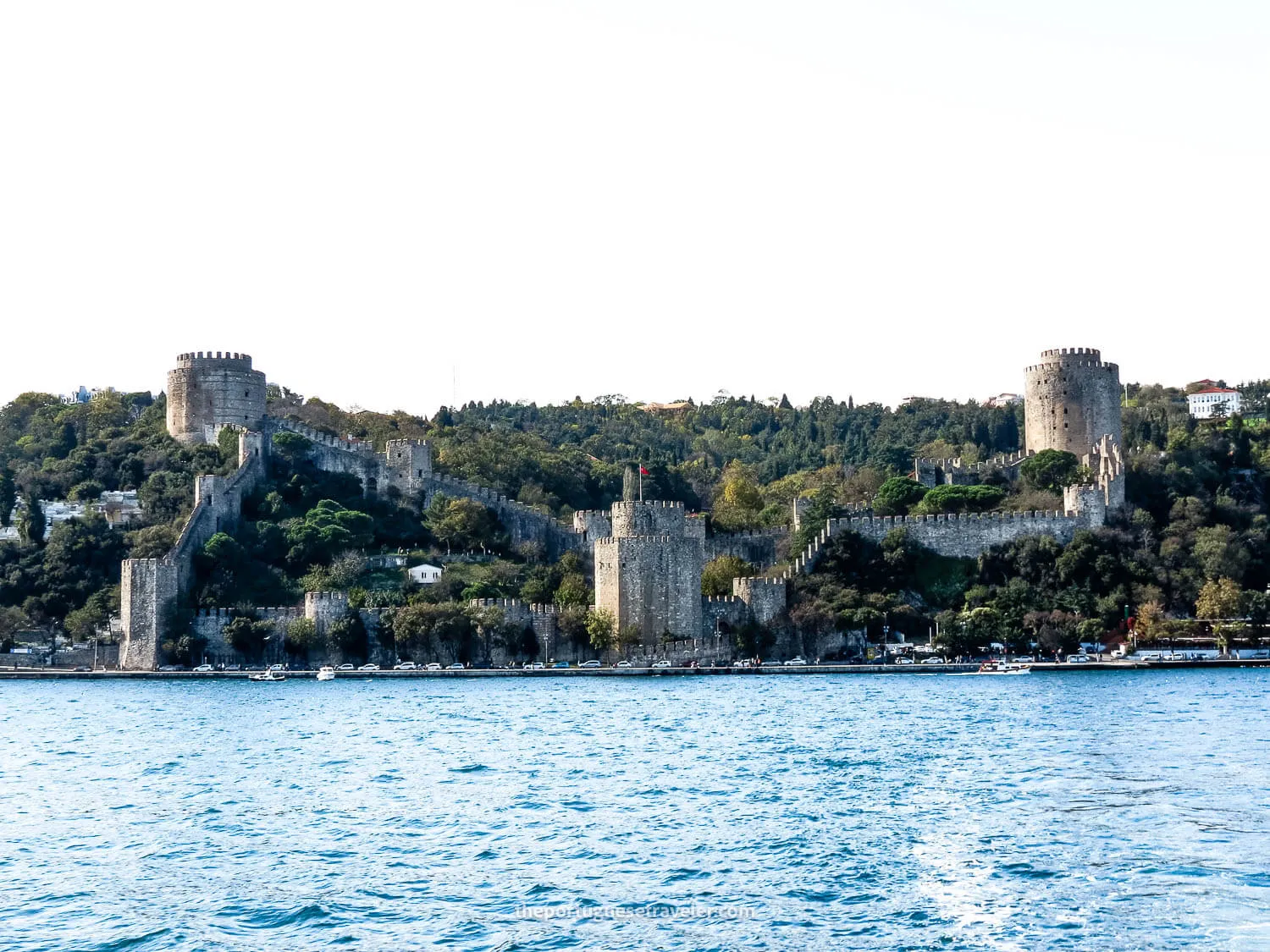
The Rumeli Hisari Fortress in the Bosphorus
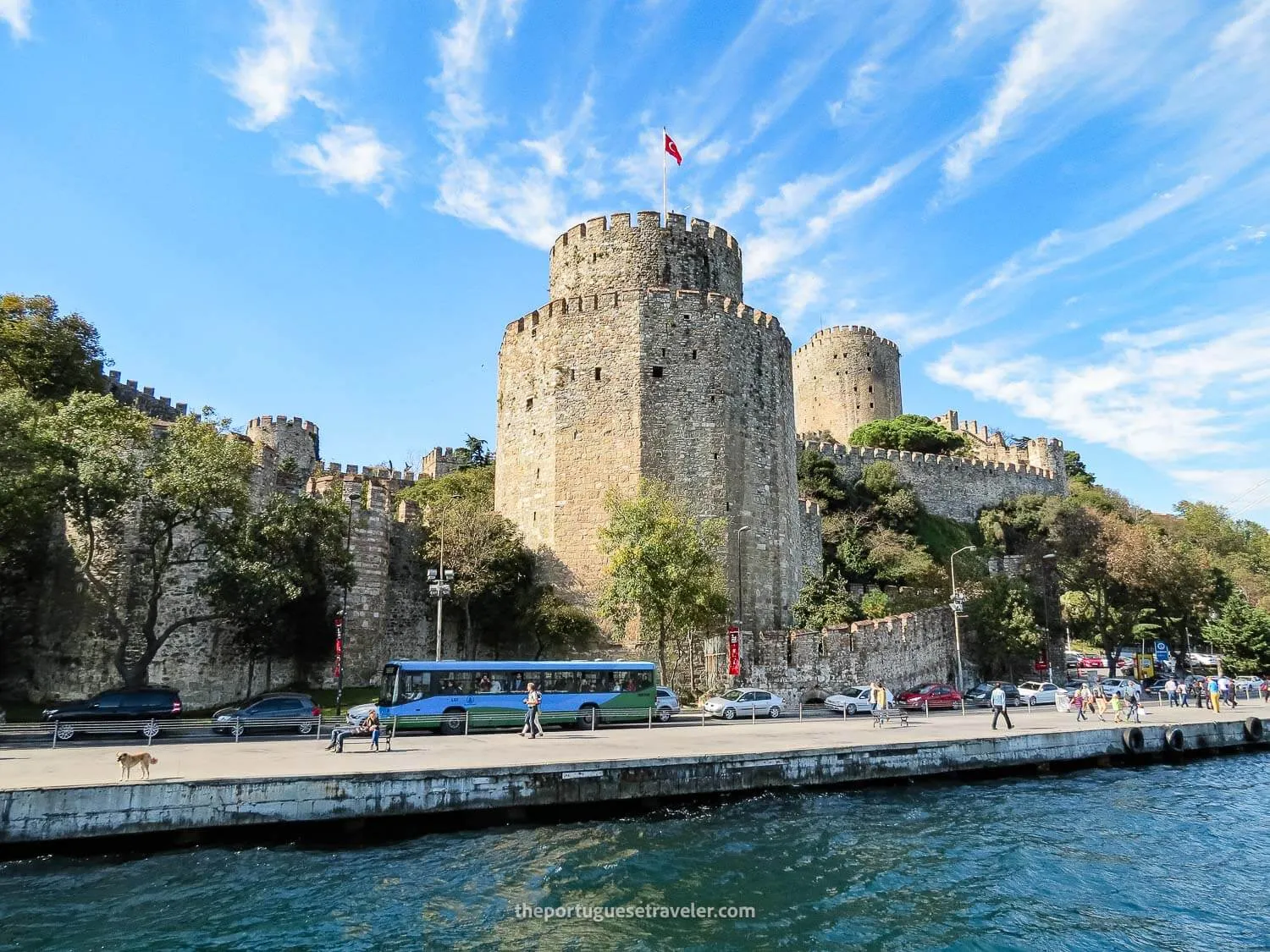
The Rumeli Hisari Fortress in the Bosphorus
Seasonal Highlights
Istanbul changes with the seasons. In spring, tulips fill the parks, recalling the Ottoman “Tulip Era.” Summer brings lively waterfront evenings, autumn softens the city, and winter can bring mist around the mosques and domes.
100. Tulip Festival in Emirgan & city parks (April)
Every spring Istanbul has its Tulip Festival, when millions of tulips bloom in the city’s parks and avenues. Emirgan Park is the best-known site, with tulips arranged in patterns, walking paths and Bosphorus views. Tulips were once a symbol of the Ottoman Empire, which is why the flower is part of the city’s identity.
Best Tours in Istanbul
Istanbul has layers of history, culture and endless neighborhoods, so a guided tour can help. Whether on foot, by bike or in a hands-on cooking class, tours can bring the stories to life and show details you might otherwise miss. These are listings from a booking partner of this site.
Guided Verified Tours (Originals by GetYourGuide)
Guided tours range from Sultanahmet’s main monuments to a Topkapı Palace Harem tour, with guides adding history and anecdotes.
Cooking classes, workshops, or unique experiences
Beyond traditional sightseeing, there are hands-on experiences. Cooking classes teach you to roll dolma and make baklava, and bike tours follow the Bosphorus or the Golden Horn. Other options are photography walks, street art tours or ferry-hopping between Europe and Asia.
Neighborhoods & Experiences
Istanbul is a city of neighborhoods, each with its own rhythm, from palaces and hipster cafés to seaside promenades and colorful backstreets.
Europe Side
The European side is Istanbul’s historic and cultural core, where the empires built their palaces, the markets operate and the nightlife runs late. The districts range from Sultanahmet’s domes to Bebek’s waterfront:
- Sultanahmet – Historic heart with Hagia Sophia, Blue Mosque, and Topkapı Palace.
- Eminönü & Sirkeci – Bustling bazaars, ferry hub, and the Spice Market.
- Taksim & Istiklal Avenue – Pedestrian street with a nostalgic red tram, shops and nightlife.
- Galata – Galata Tower and boutique-filled backstreets.
- Karaköy – Trendy cafés, street art, and design shops.
- Cihangir – Bohemian quarter with art spaces and laid-back cafés.
- Beşiktaş – Fish market, lively taverns, and youthful energy.
- Nişantaşı – Chic shopping district with art nouveau architecture and galleries.
- Şişli – Residential and cultural hub with major shopping centers.
- Ortaköy – Famous for its baked potatoes, lively bazaar, and Bosphorus-side mosque.
- Arnavutköy – Waterfront with seafood restaurants and historic wooden houses.
- Bebek – Stylish seaside promenade with cafés and yacht views.
Asia Side
Across the Bosphorus, the Asian side has a calmer, more local atmosphere. It has fewer monumental landmarks and more everyday life, with markets, seaside promenades and neighborhoods where modern life blends with tradition:
- Kadıköy – Bustling hub of markets, bookshops, nightlife, and meyhanes.
- Moda – Relaxed seaside district with cafés and sunsets.
- Üsküdar – Historic mosques, Maiden’s Tower views, and seaside tea gardens.
- Kuzguncuk – Village-like quarter with synagogues, churches, and colorful houses.
- Çengelköy – Traditional Bosphorus tea gardens with a local, old-town feel.
Golden Horn
The Golden Horn is a natural harbor that shaped the city’s history and is now surrounded by lively districts. Its shores mix Ottoman mosques, Byzantine remnants and colorful neighborhoods like Balat and Fener. You can walk or take a ferry along it:
- Fener & Balat – Colorful historic neighborhoods with Greek Orthodox and Jewish heritage.
Best Day Trips from Istanbul
Around Istanbul there are options for a short escape, from the ancient city of Edirne to Bursa and the beaches of Şile. Day trips give a change from the city’s pace.
Nearby Towns, Natural Wonders, or Heritage Sites
If you want a break from the city, there are places a short trip away. Some are historic, some are about nature, and a few are quiet corners. These are popular options:
- Princes’ Islands (Burgazada & Sedef) – quieter alternatives
- Cappadocia - Hot air balloons, Underground cities, Fairy chimneys
- Bursa – Ottoman capital, Iskender kebap
- Sapanca Lake & Maşukiye – nature escape
- Şile & Ağva – Black Sea beaches & riverside cafés
- Edirne – Selimiye Mosque, Ottoman heritage
- Gallipoli & Troy – WWI memorials & ancient ruins
- Yalova – thermal baths & waterfalls
- Polonezköy – village founded by Polish settlers
- Iznik (Nicaea) – Byzantine council site & Ottoman tiles
- Tekirdağ – rakı, köfte, seaside
- Anadolu Feneri & Rumeli Feneri – Villages at the Black Sea end of the Bosphorus.
 Rent a Car: For convenience, book a car with Discovercars and pick it up directly at the airport.
Where to Stay in Istanbul
Where you stay depends on what you want from the trip: near Hagia Sophia’s domes, near the nightlife on Istiklal or by the Bosphorus. There are hotels for most budgets, from hostels and boutique stays to luxury palace hotels. 
Accommodation: This is our selection of the 20 Best Hotels in Istanbul.
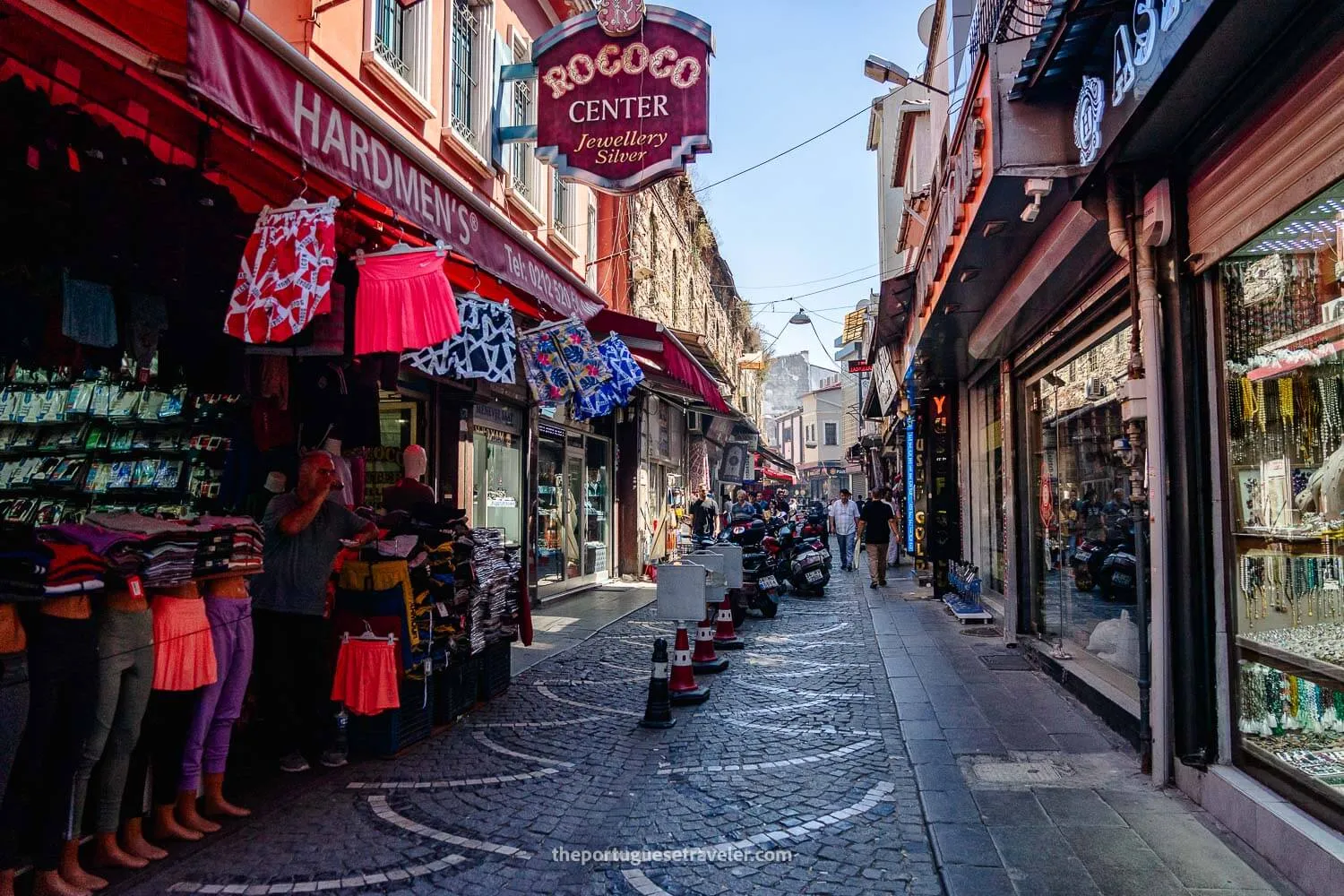
Sultanahmet neighborhood in Istanbul
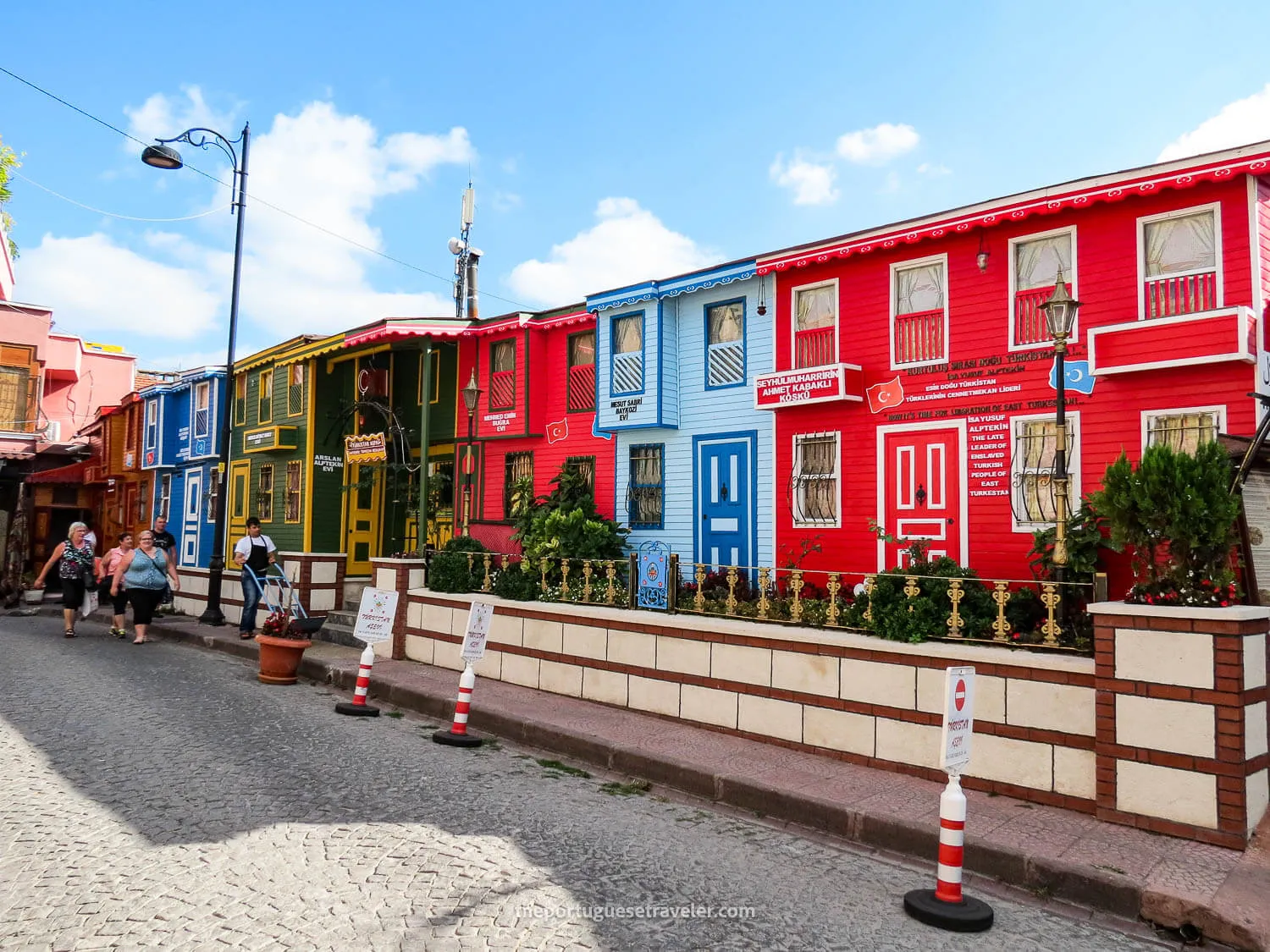
Sultanahmet neighborhood in Istanbul
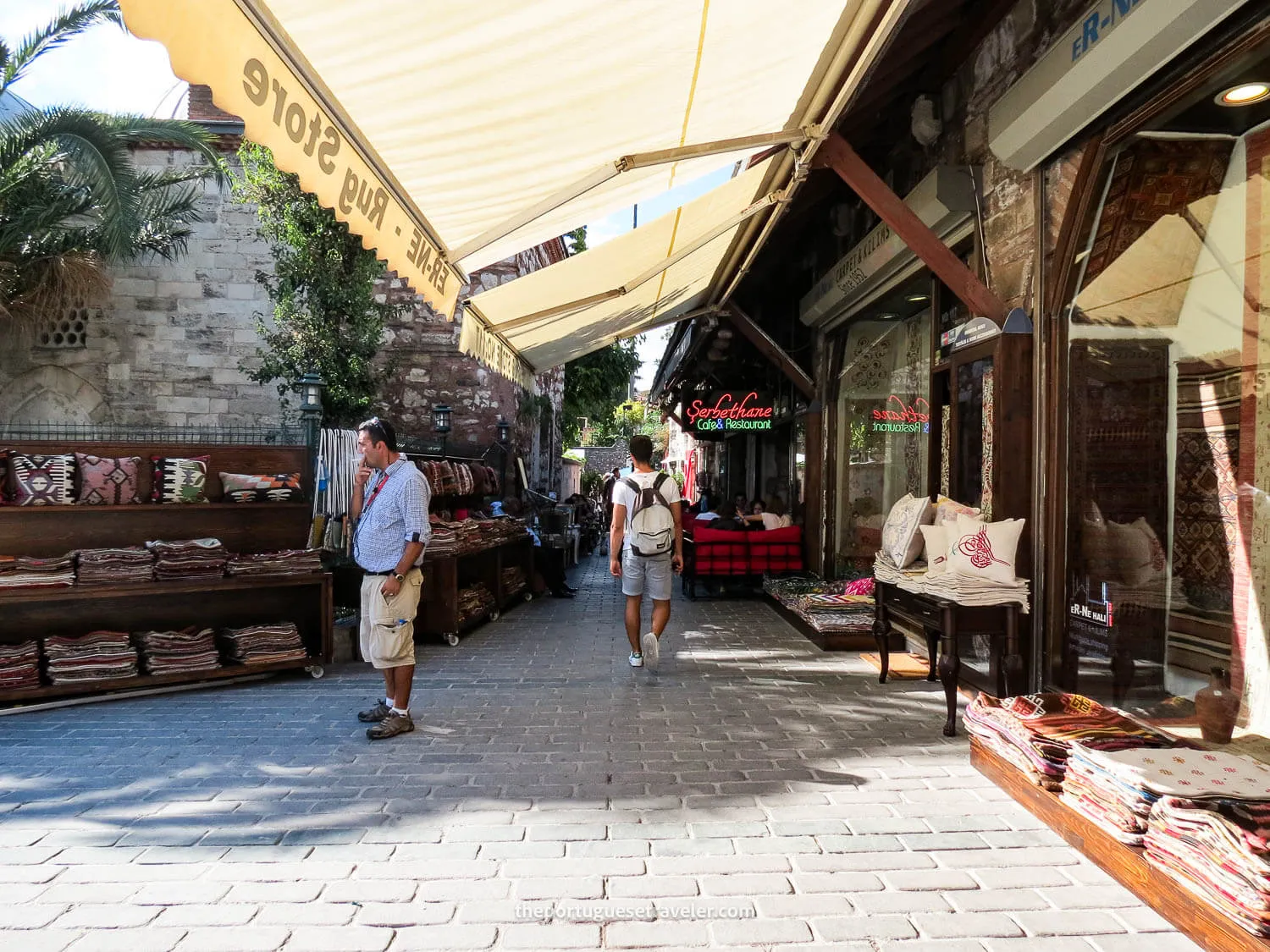
Sultanahmet neighborhood in Istanbul
Areas to Consider
Where you stay shapes your Istanbul trip, and each neighborhood has its own character: the historic streets of Sultanahmet, the nightlife of Beyoğlu, the Bosphorus setting of Beşiktaş and the laid-back Kadıköy on the Asian side. Here are the main districts:
Sultanahmet: Best for history lovers If it is your first time in Istanbul, Sultanahmet puts you in the middle of the ancient sights. Hagia Sophia, the Blue Mosque and Topkapı Palace are a short walk away, and the cobblestone streets have traditional restaurants and boutique hotels.
Beyoğlu (Taksim, Galata, Cihangir): Best for nightlife, dining, and local vibes Beyoğlu has a different rhythm from Sultanahmet. Lively Istiklal Avenue is lined with shops, cafés and bars, and Galata has its tower and winding streets. Cihangir adds a bohemian touch, with laid-back cafés and art spaces.
Beşiktaş & Ortaköy: Youthful energy and Bosphorus charm Beşiktaş is popular with students and young locals, with taverns, fish markets and football culture. A short walk along the water leads to Ortaköy, known for its bazaar, baked potatoes and a mosque right on the Bosphorus.
Kadıköy & Moda (Asia side): Trendy, local, and laid-back Across the water on the Asian side, Kadıköy feels less touristy and more local. It has street food, art and nightlife, while Moda’s seaside promenade is slower, with cafés and sea views.
Nişantaşı & Şişli: Chic shopping and upscale comfort For a more modern stay, Nişantaşı has luxury boutiques, art nouveau architecture and stylish cafés. Neighboring Şişli combines residential areas with major shopping centers and easy metro access.
Best Hotels in Istanbul
On our 2023 trip we stayed at the Efzen Hotel, near the Blue Mosque. The other hotels below come from research and listings, not from my own stays.
Luxury Hotels
For a refined stay, options include the Four Seasons Hotel Istanbul at Sultanahmet, a well-known address among the city’s major monuments. Newer, in Karaköy, is the Peninsula Istanbul, with views of the Bosphorus and Golden Horn and a short distance to the Old Town. For a historic Ottoman mansion steps from Hagia Sophia, there is the Hagia Sofia Mansions Istanbul, Curio Collection by Hilton.
Boutique / Mid-Range Hotels
The Pera Palace Hotel in Beyoğlu is a historic hotel with literary fame, a short walk from İstiklal Avenue. Across the Golden Horn in Galata, the Ecole St. Pierre Hotel occupies a restored French school. The Walton Hotels Galata is a boutique option with access to both Sultanahmet and Beyoğlu.
Budget / Value Hotels
Travelers on a tighter budget have options too. The Sultan Hamit Hotel is within a few minutes of Hagia Sophia, and the Hotel Empress Zoe is in Sultanahmet. For the most economical stay, Cheers Hostel is an affordable base for exploring on foot.
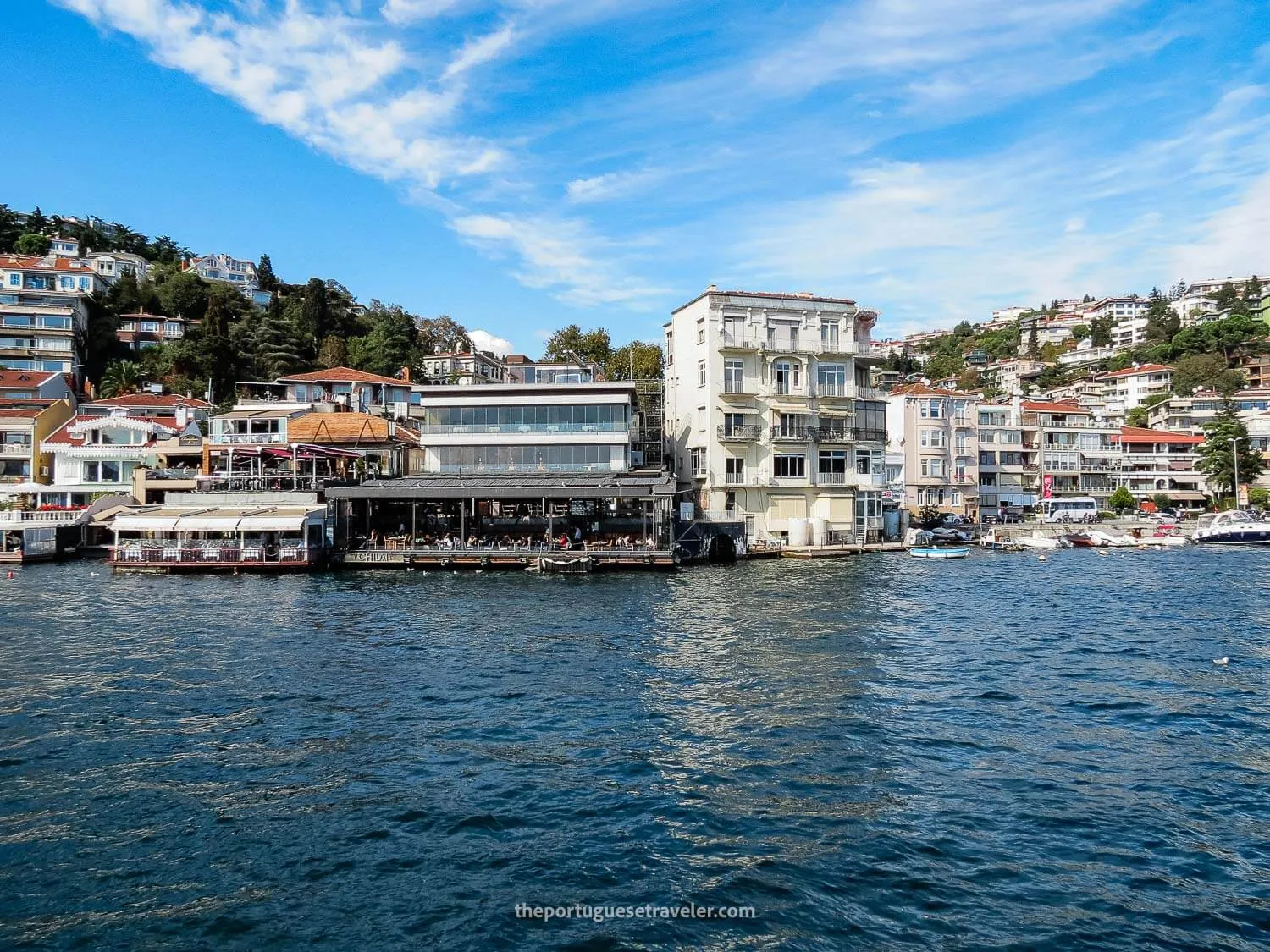
Bebek neighbourhood in Istanbul
Visitor Tips & FAQs
Practical notes on etiquette, safety, connectivity and money.
Safety and Etiquette in Istanbul
Istanbul is generally safe for tourists, but like any major city, stay aware of your surroundings, especially in crowded areas such as bazaars, public transport and ferry terminals. Keep an eye on your belongings, avoid badly lit streets at night, and dress respectfully when visiting mosques (covering shoulders and knees is recommended).
Travel insurance that covers medical issues, lost luggage and trip interruptions is worth having.
 Travel Insurance: Travel insurance is worth having for medical needs, luggage or unexpected travel issues. Heymondo Travel Insurance is one option. Heymondo is a partner of this site and I have not used it.
Packing Tips
When packing for Istanbul, pack in layers. The city has four distinct seasons: summers can be hot and humid, and winters are chilly with the occasional snow. A light jacket, comfortable walking shoes and a scarf (handy for mosque visits) are useful year-round. Bring a universal adapter, and a small backpack helps on day trips.
SIM Card for Istanbul (Internet)
Staying connected makes navigation, translations and restaurant bookings easier. You can buy a local SIM on arrival, but it often requires registration and can cost more for short stays.
A more convenient option is to buy an eSIM before traveling. Providers like Holafly and Airalo let you activate data when you land, with no need to swap physical cards. Both are partners of this site. I used Airalo in Sri Lanka and have not used Holafly.
Currency and Exchange
The local currency is the Turkish Lira (TRY). Many places accept cards, but small shops and street vendors often prefer cash. Exchange offices usually give better rates than airports, and ATMs are widely available.
Is Istanbul worth visiting?
Yes. Istanbul has Roman, Byzantine and Ottoman history, good food and neighborhoods that are very different from one another. I first visited in 2014, lived there in 2015 and have kept coming back.
My Experience in Istanbul
I first visited Istanbul in the autumn of 2014, just after finishing my Erasmus in Austria. Many of my new friends were Turkish, and I couldn’t wait to see their capital city. Fun fact: before going, I had played one of my favorite games, Assassin’s Creed: Revelations, which is set in Istanbul. Through it, I had already “climbed” the Galata Tower, leapt off the Hagia Sophia and Blue Mosque, fought Janissaries, sneaked through the Basilica Cistern, and wandered the Grand Bazaar. Experiencing all of that in a video game had already been thrilling—but standing in the real city, the true epicenter of that history, was like a dream come true.
Arrival in Taksim
My first glimpse of Istanbul was at night. The plane landed late, and I went straight to Taksim, where the flat I shared with friends was located. We wandered down Istiklal Avenue, full of energy even late into the night. I tried my first lahmacun, and as we strolled further, I saw simit vendors, chestnut roasters, corn sellers, and oyster stands everywhere. Restaurants displayed colorful trays of food behind glass windows, while hidden churches, baklava shops, Turkish delight stores, and art galleries lined the street. Eventually, we found ourselves in the lively Çiçek Pasajı, a historic arcade filled with restaurants where people ate meze and drank rakı. It was my first taste of Istanbul nightlife, and I was hooked.
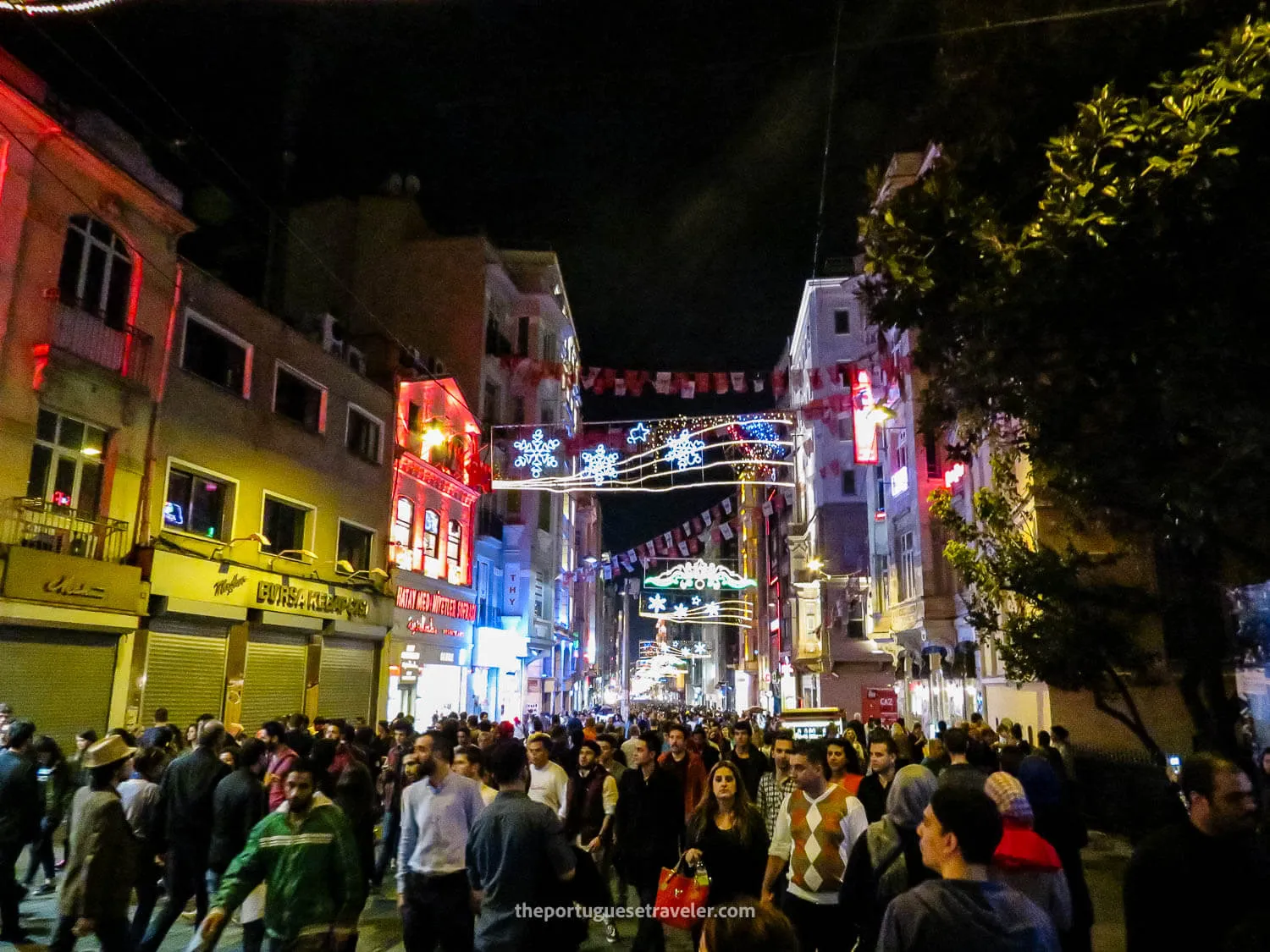
Istiklal Caddesi in Istanbul
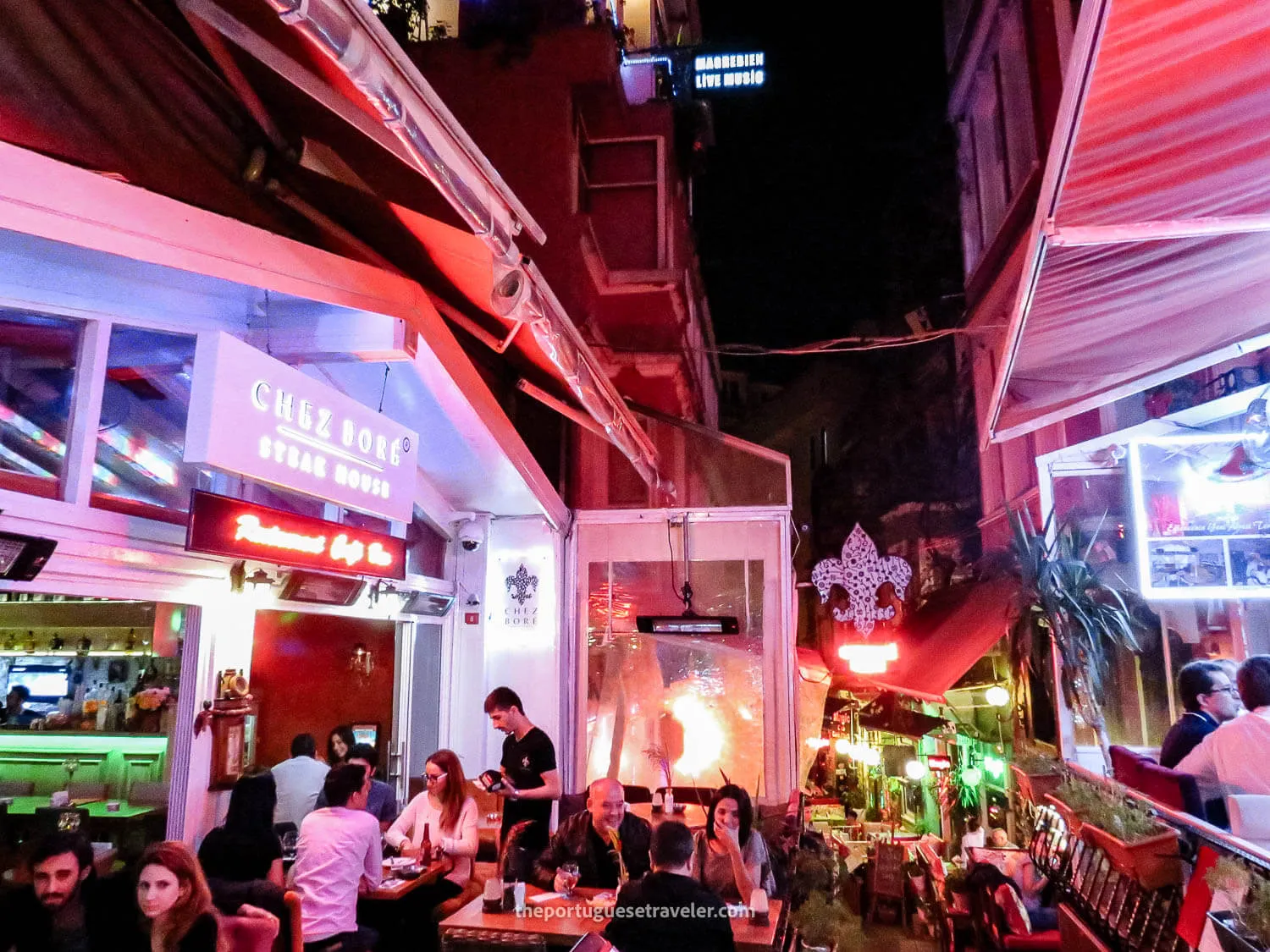
Istiklal Caddesi in Istanbul
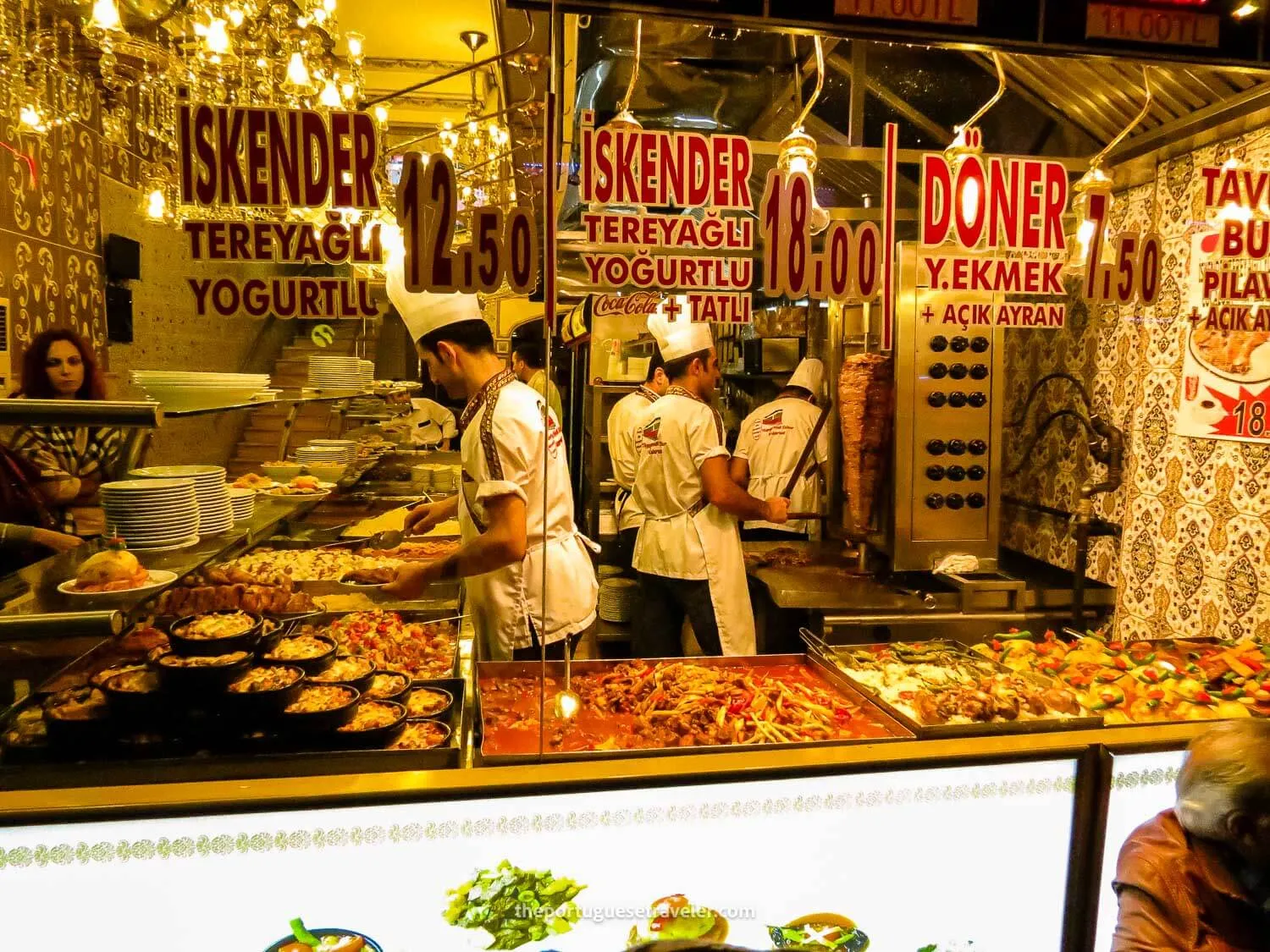
A restaurant in Istiklal Caddesi
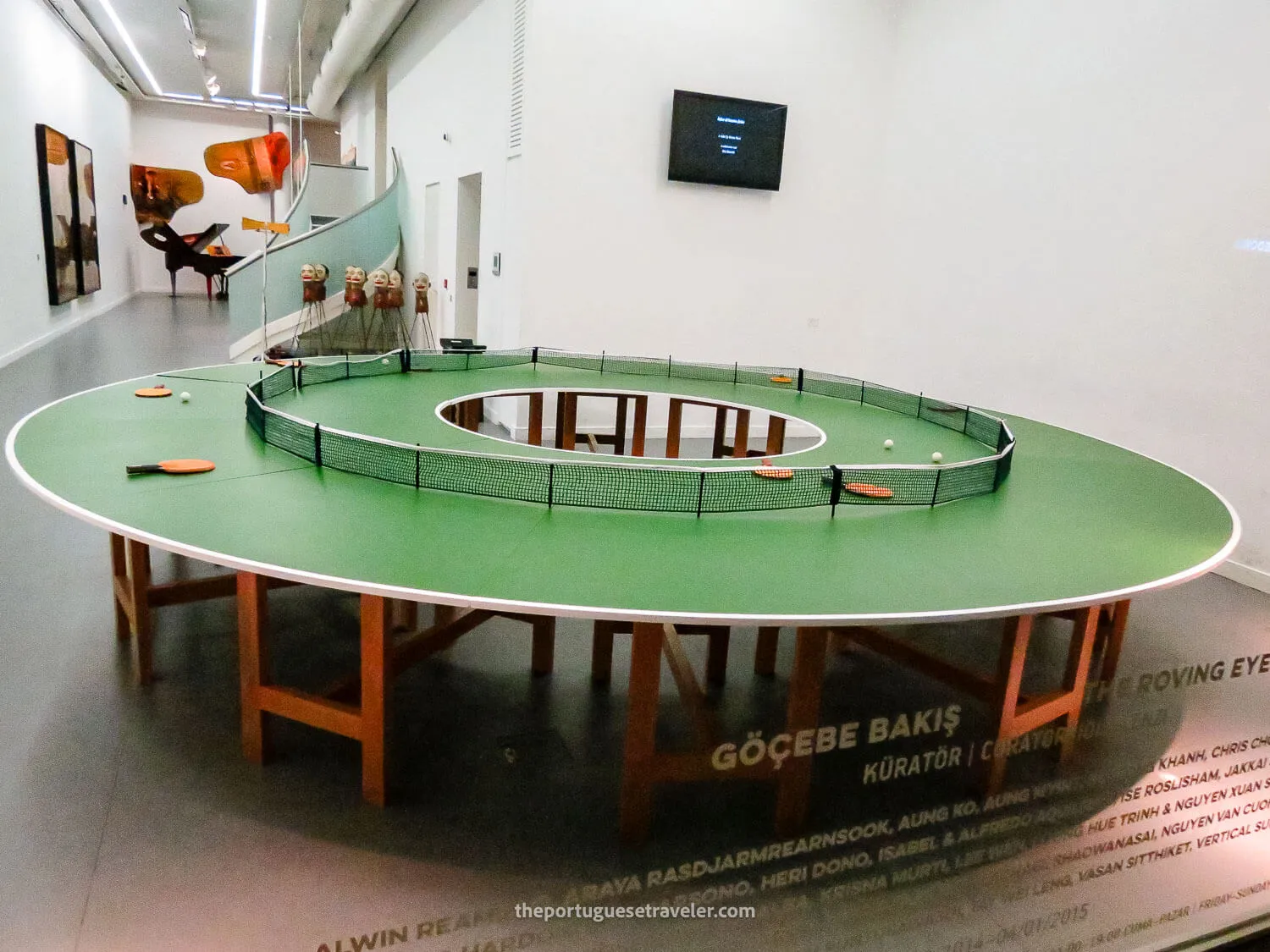
Istiklal Caddesi in Istanbul
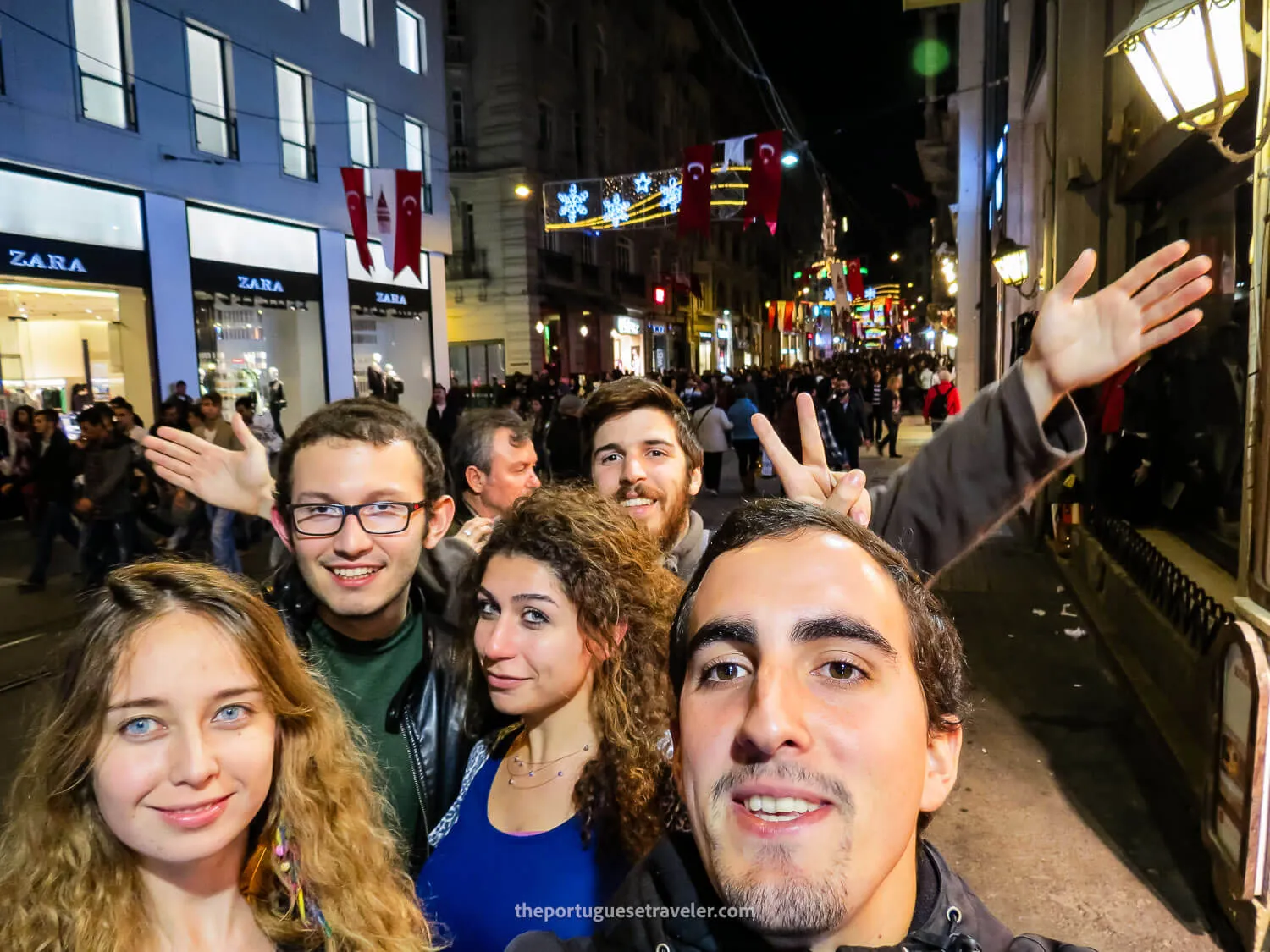
The group in Istiklal
Along the Bosphorus
The next day, we walked from Taksim down past Dolmabahçe Palace and Çırağan Sarayı, arriving in Ortaköy. Its beautiful mosque framed against the Bosphorus Bridge was breathtaking, a perfect blend of Islamic baroque architecture and waterfront views. We continued on foot to Bebek, a stylish neighborhood with yachts, mansions, and cafés, where we stopped for snacks before heading home.
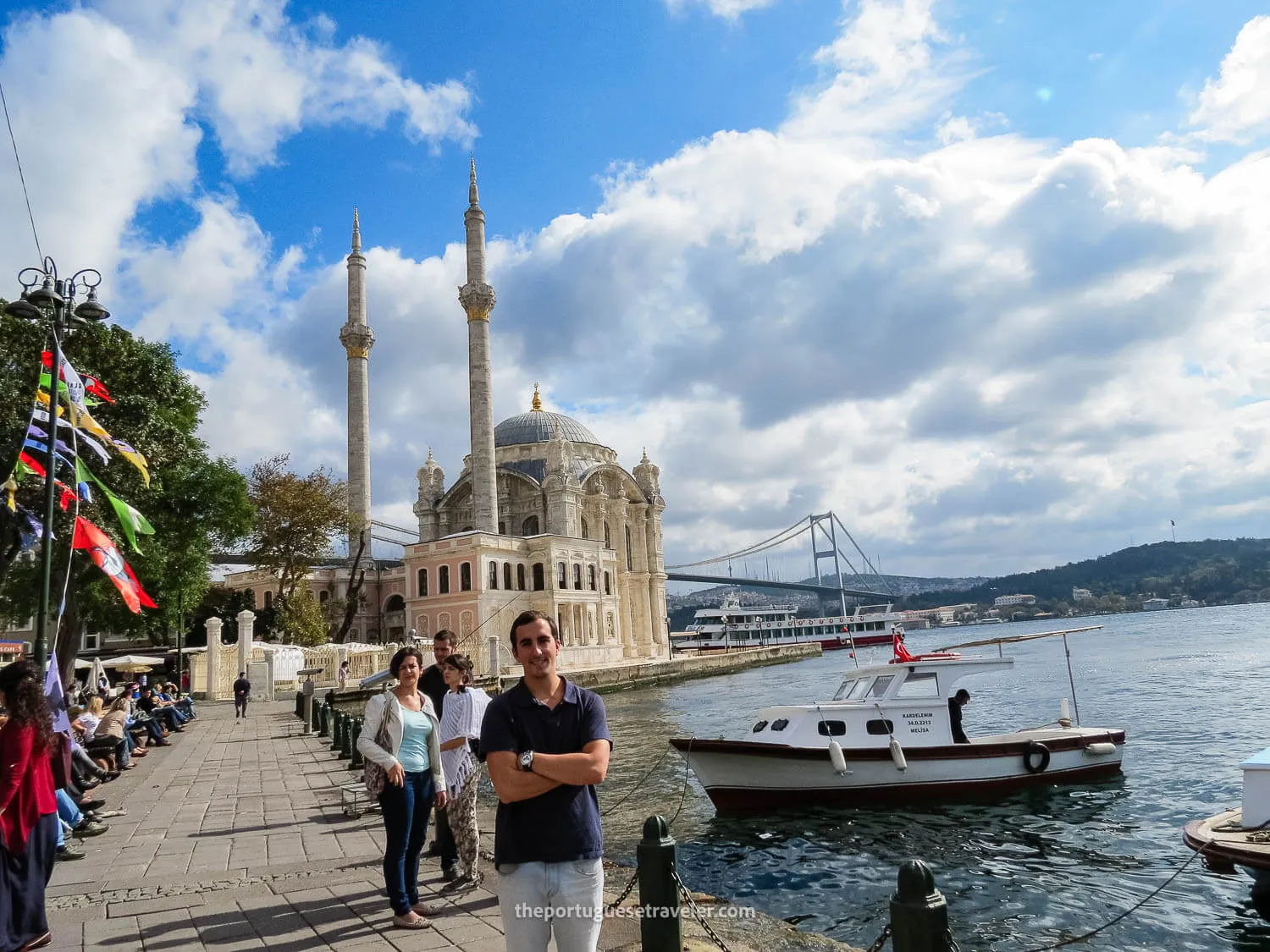
Me in Ortaköy
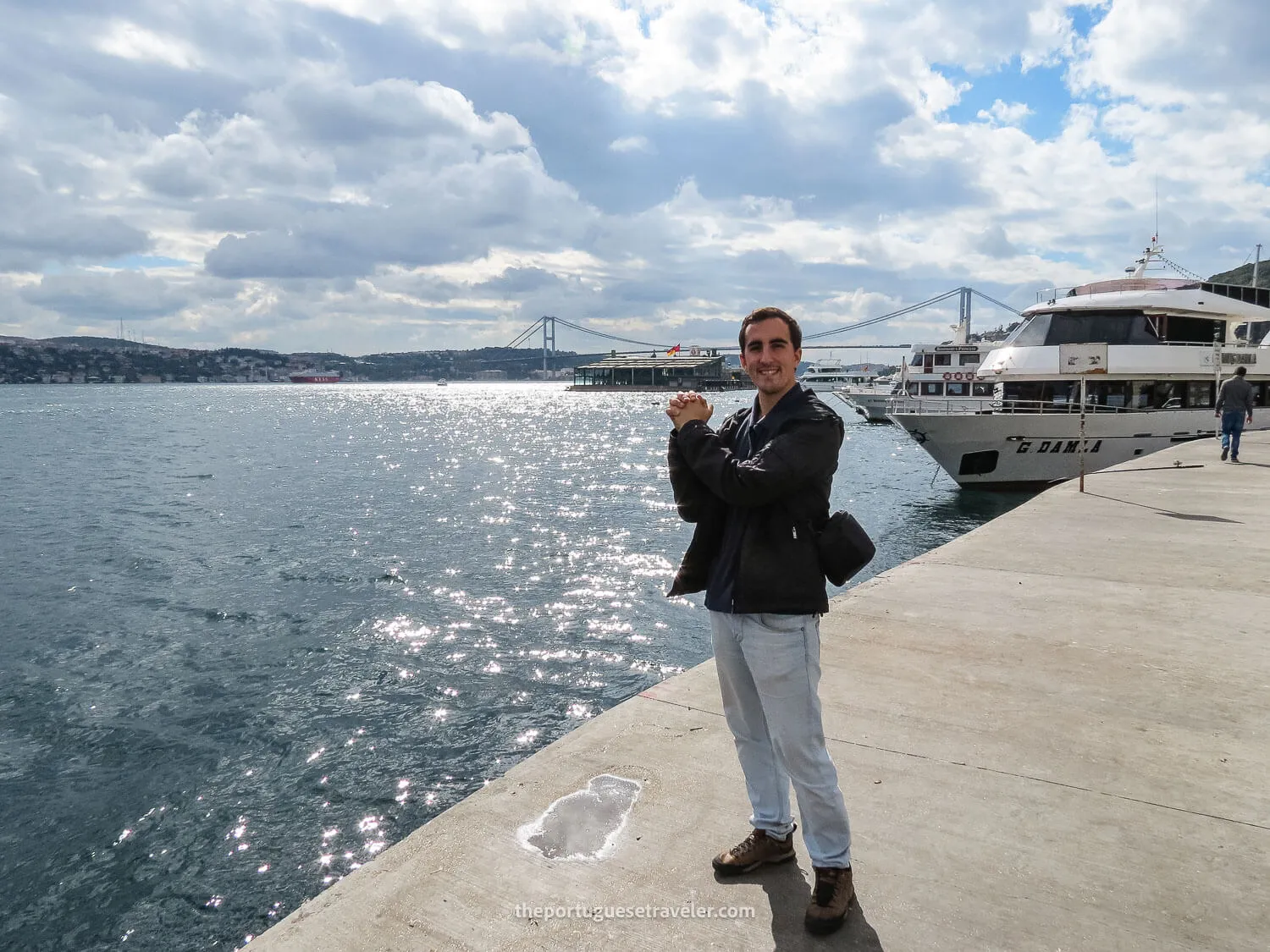
Me in Arnavutkoy
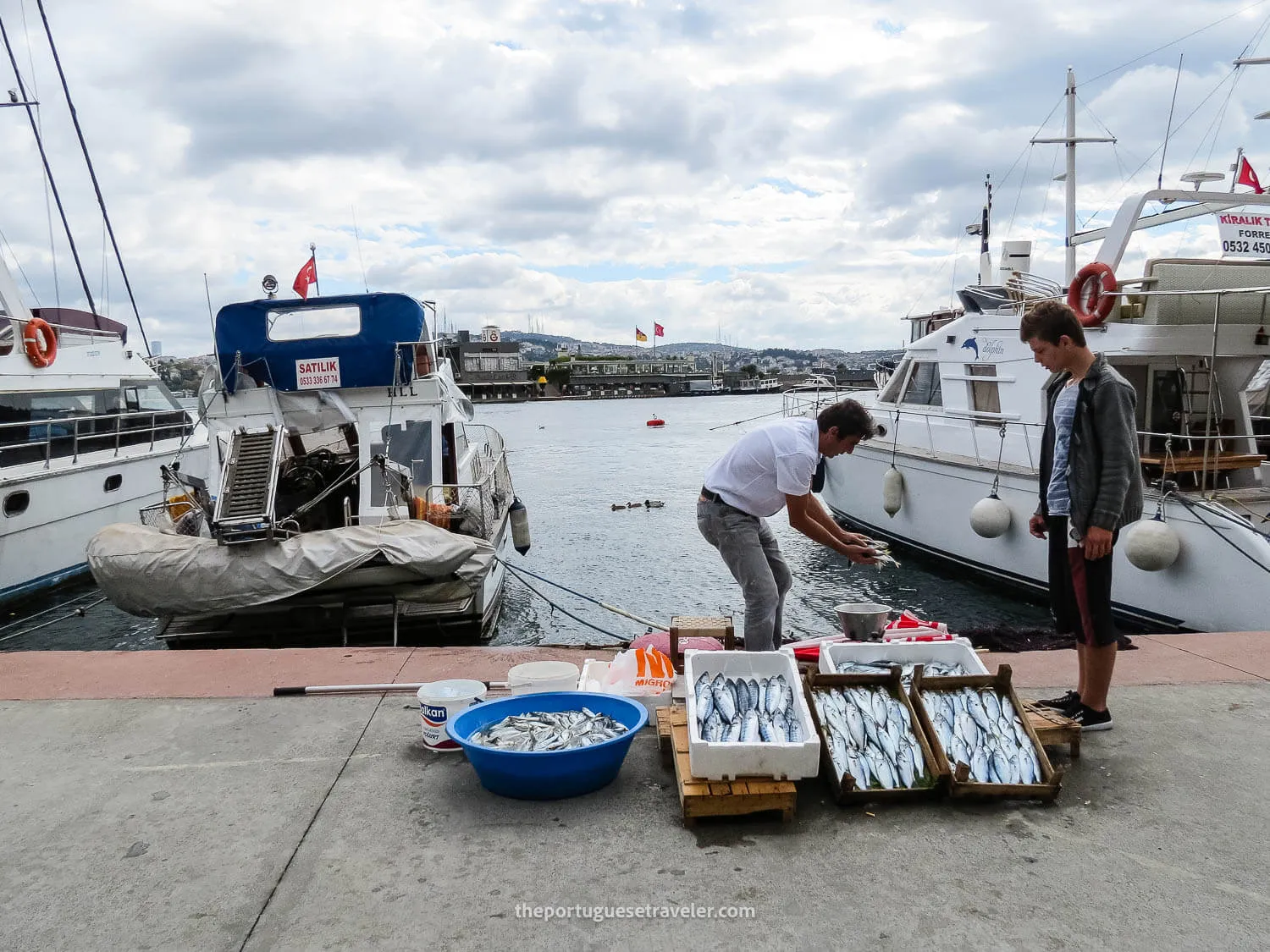
Arnavutkoy’s fishermen
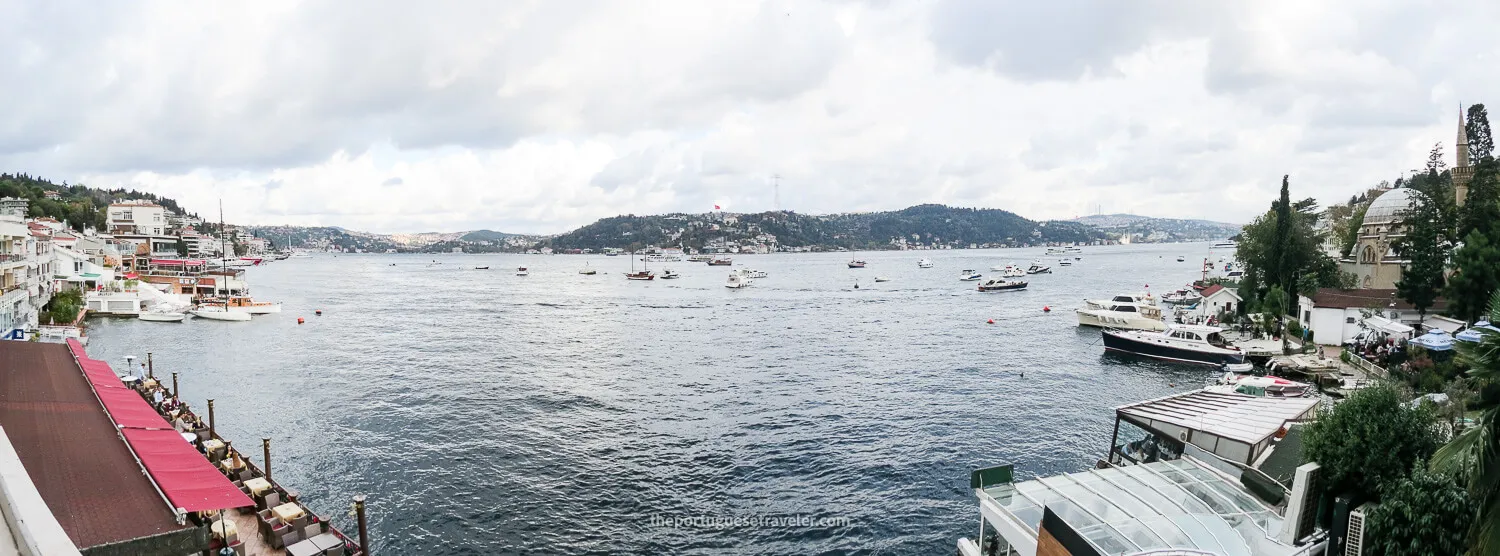
Bebek’s Panorama
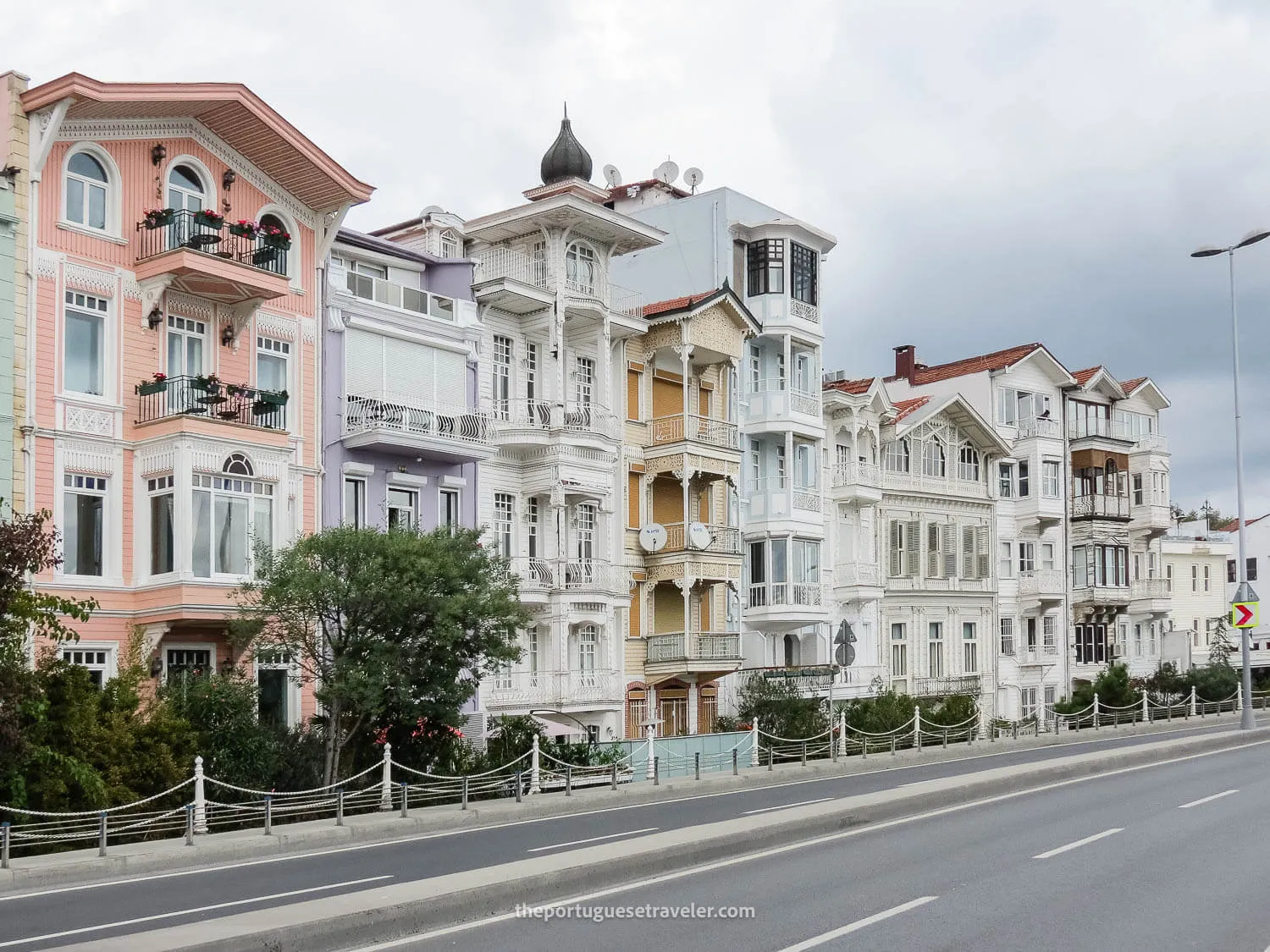
Bebek’s rich neighbourhood
First Time in Asia
Soon it was time to see the historic heart of the city—the same landmarks I had explored virtually years earlier. We crossed the Galata Bridge to Eminönü, where the Yeni Camii (New Mosque) rose majestically. Inside, its blue tiles and intricate details were dazzling. We ate kebap by the river with views of Hagia Sophia and Topkapı Palace in the distance, then boarded a ferry to Asia. Passing the Maiden’s Tower, with its legends of love and captivity, I felt the thrill of stepping onto another continent for the first time. Üsküdar welcomed us with its mosques and busy streets, and we soon visited Beylerbeyi Palace, a smaller but elegant cousin of Dolmabahçe.
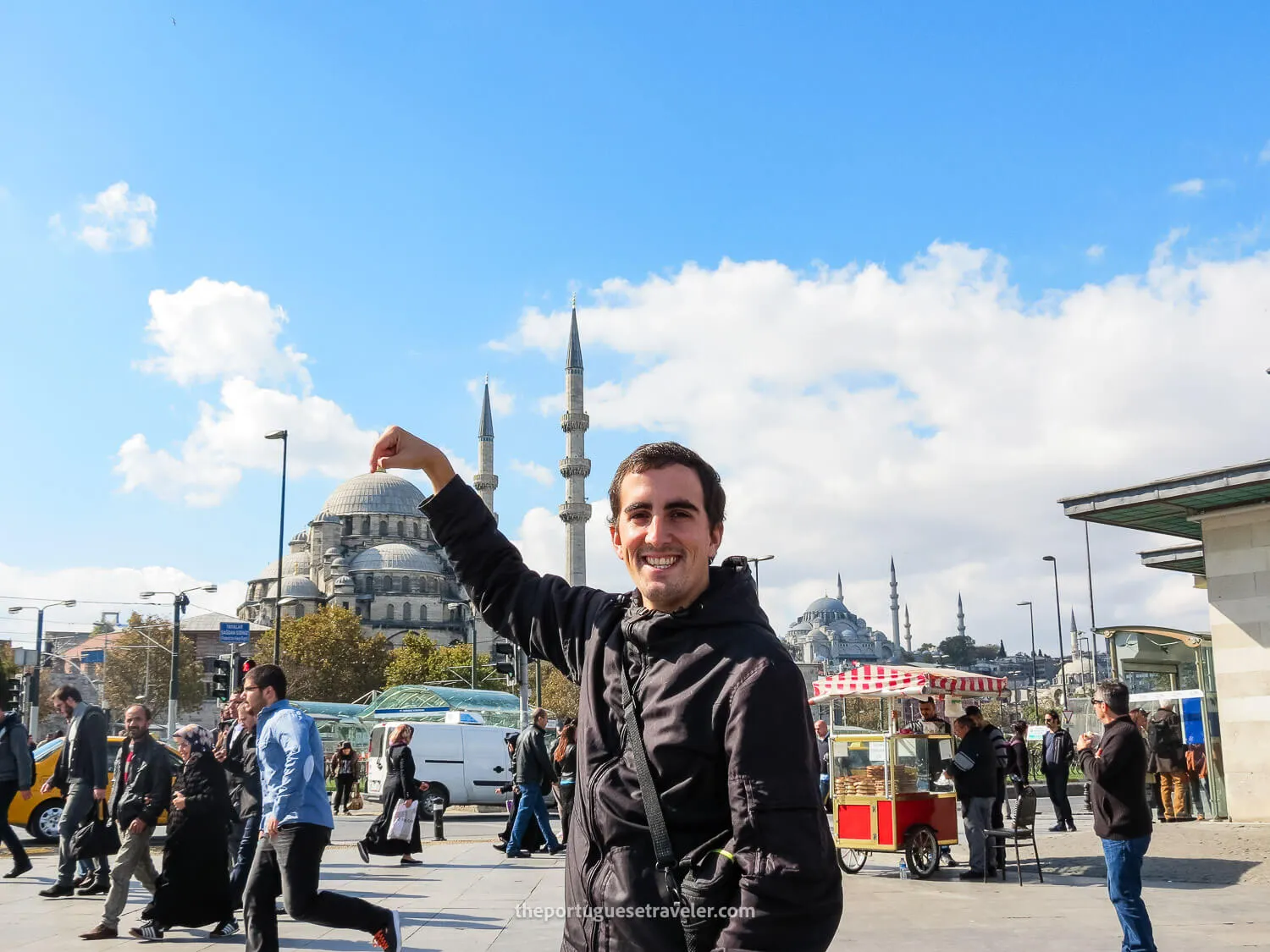
Me touching Yeni Camii
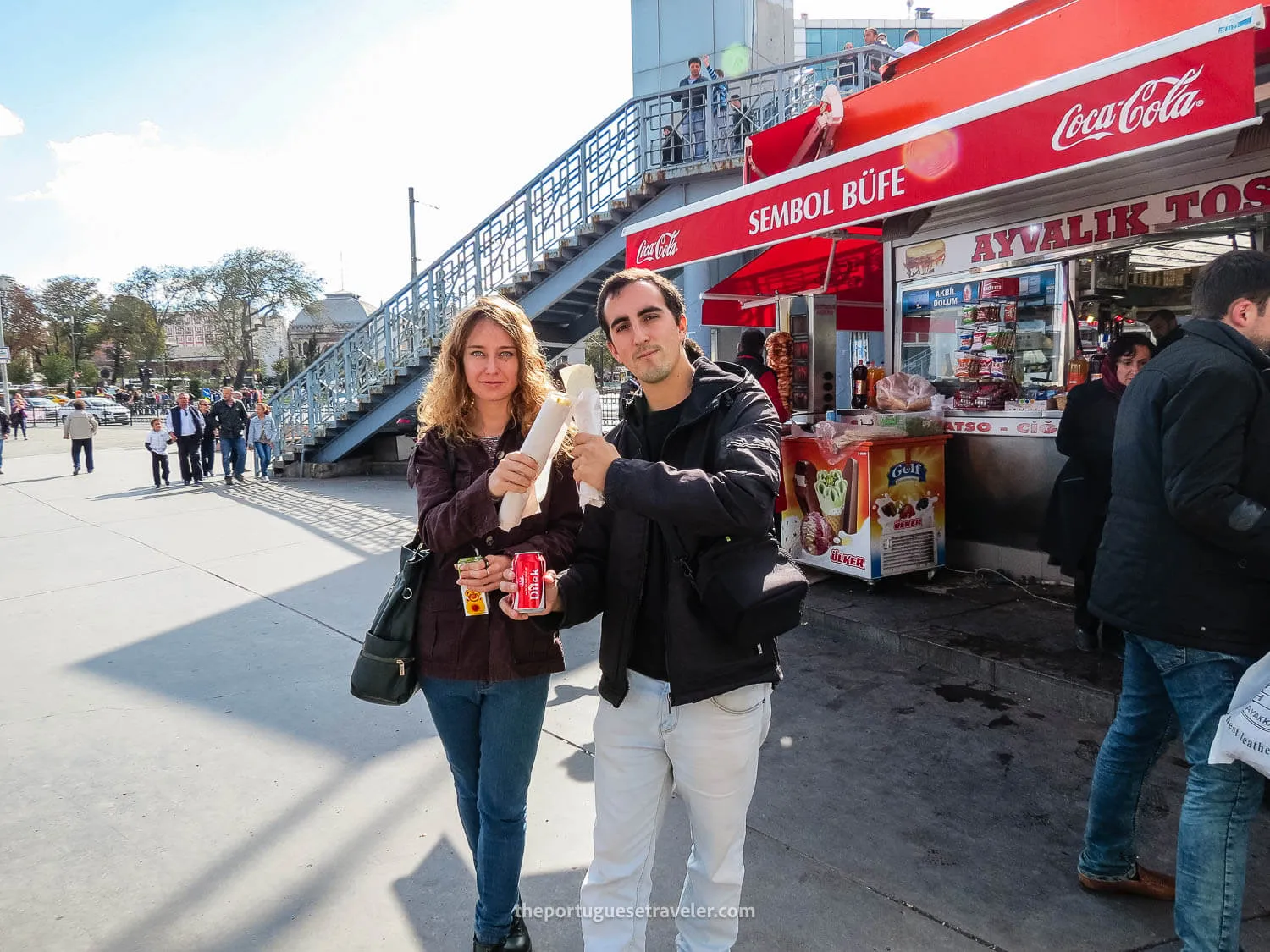
Me and Ece eating a Durum by the river
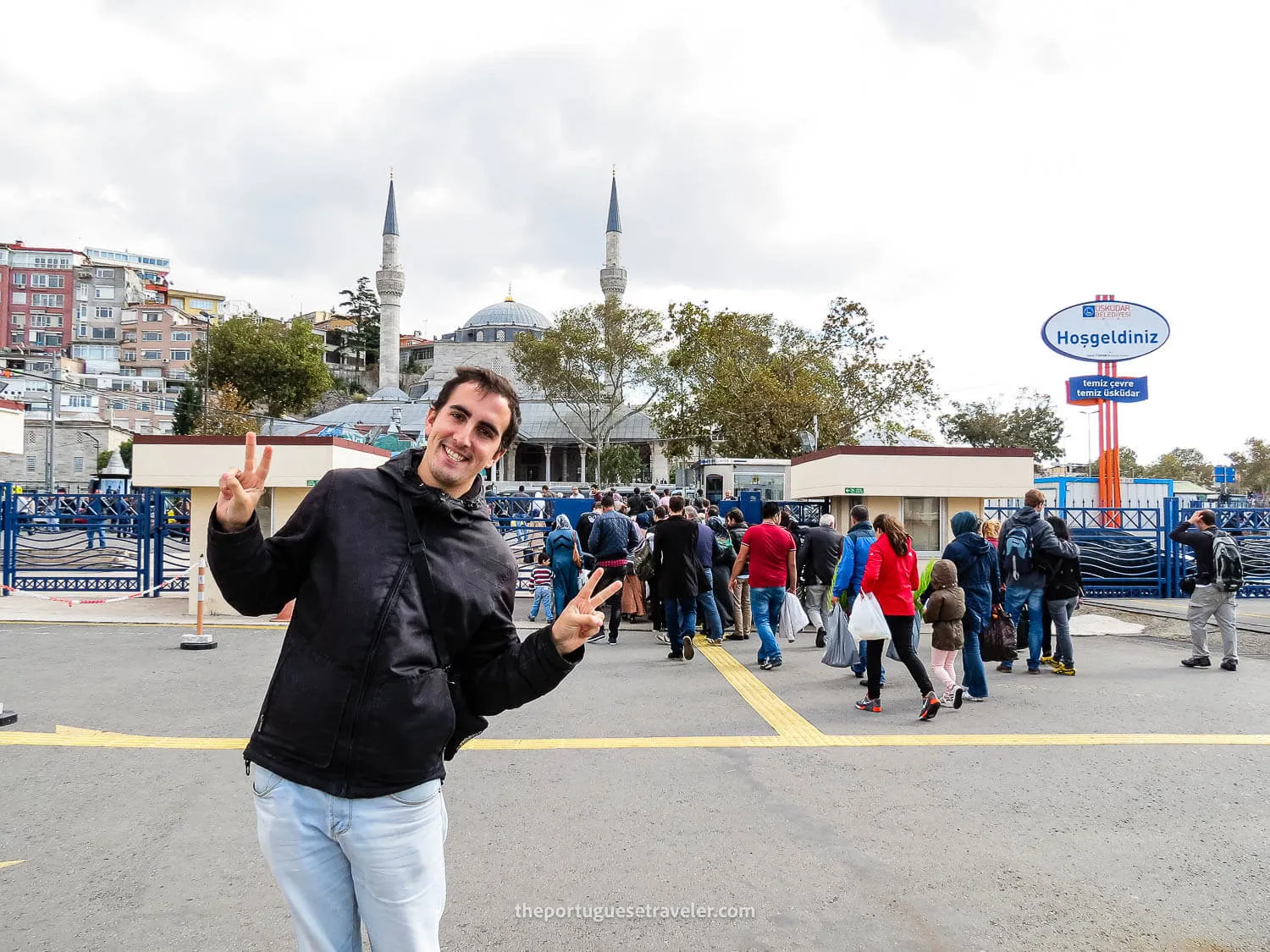
Me for the first time in Asia
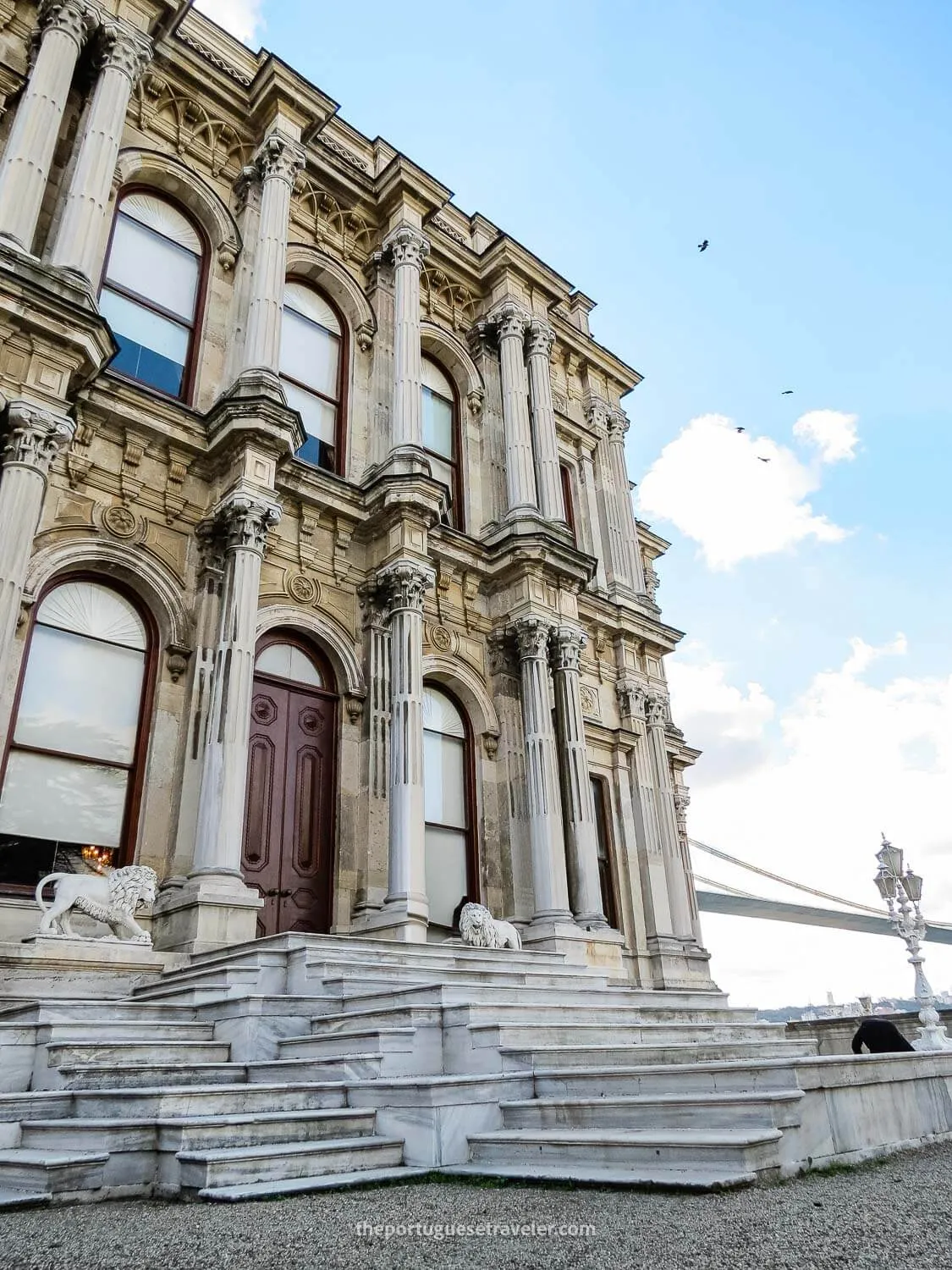
The Beylerbeyi Palace in Istanbul
Discovering Sultanahmet
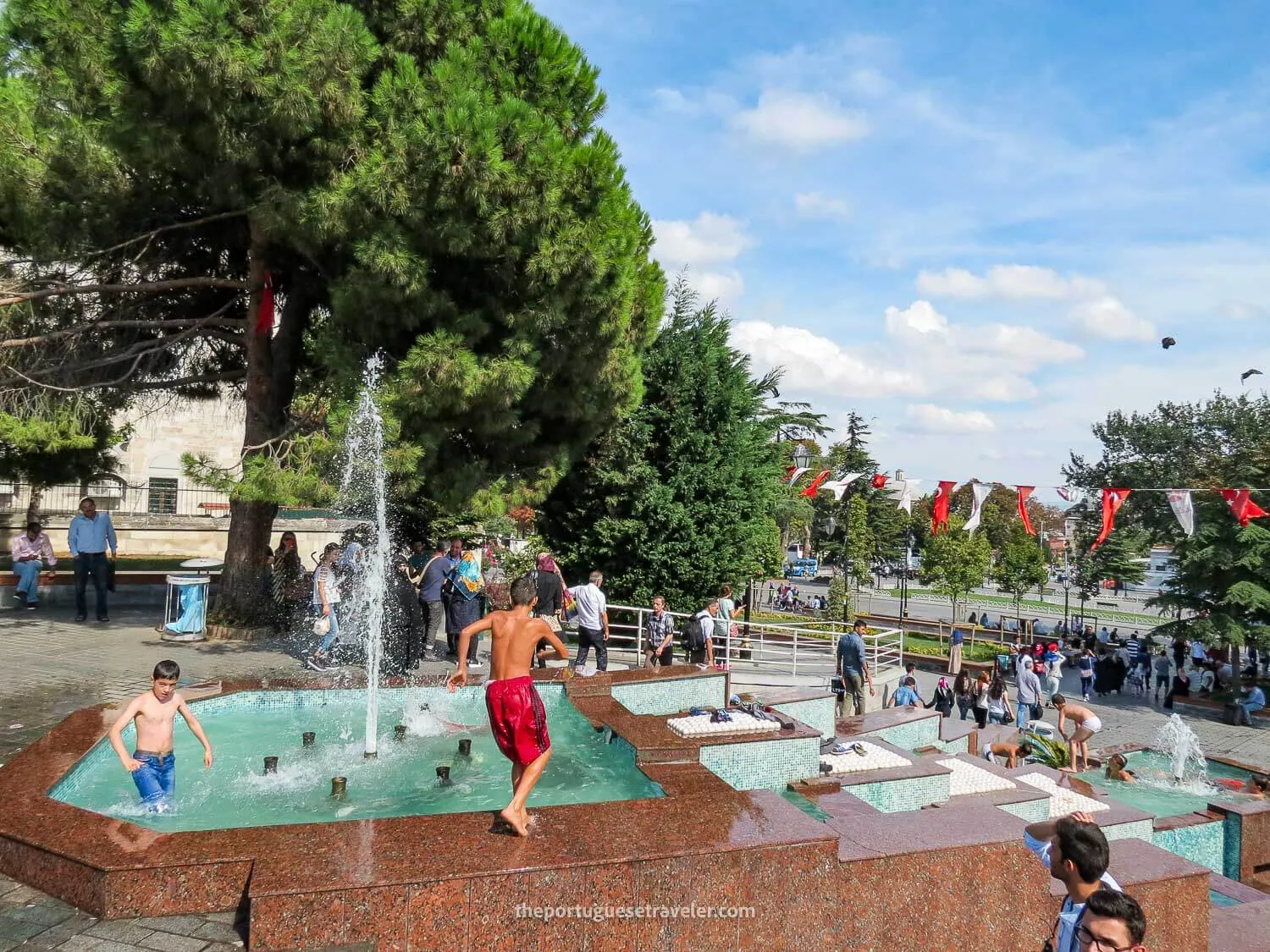
When we finally reached Sultanahmet, the heart of old Constantinople, it felt like stepping back in time. We passed women making gözleme, admired colorful restaurants, and came face to face with Hagia Sophia. Nearby stood the ornate Fountain of Ahmed III, the sprawling Topkapı Palace, and the Blue Mosque with its six minarets and massive domes. Inside the mosque, the colossal pillars and detailed decorations left me in awe. We explored the Hippodrome, with its ancient obelisks and serpent column, before entering Hagia Sophia itself—the highlight of my trip. In 2014, it was still a museum. Its vast hall, marble columns, bronze doors, and mix of Christian mosaics and Islamic calligraphy created a truly unique atmosphere. Standing there, in what was once the holiest site of the Eastern Roman Empire, was beyond words.
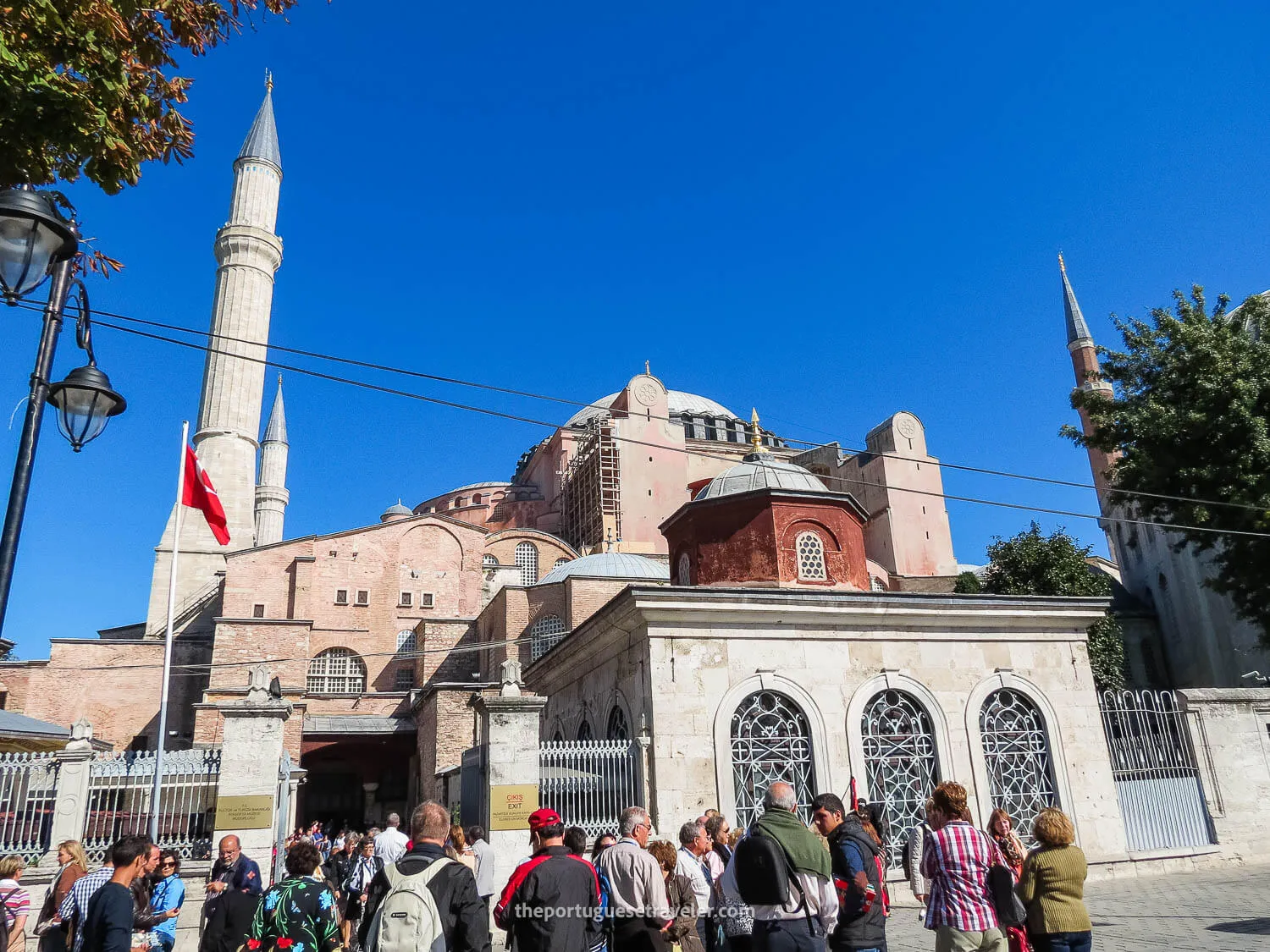
Hagia Sophia in 2014
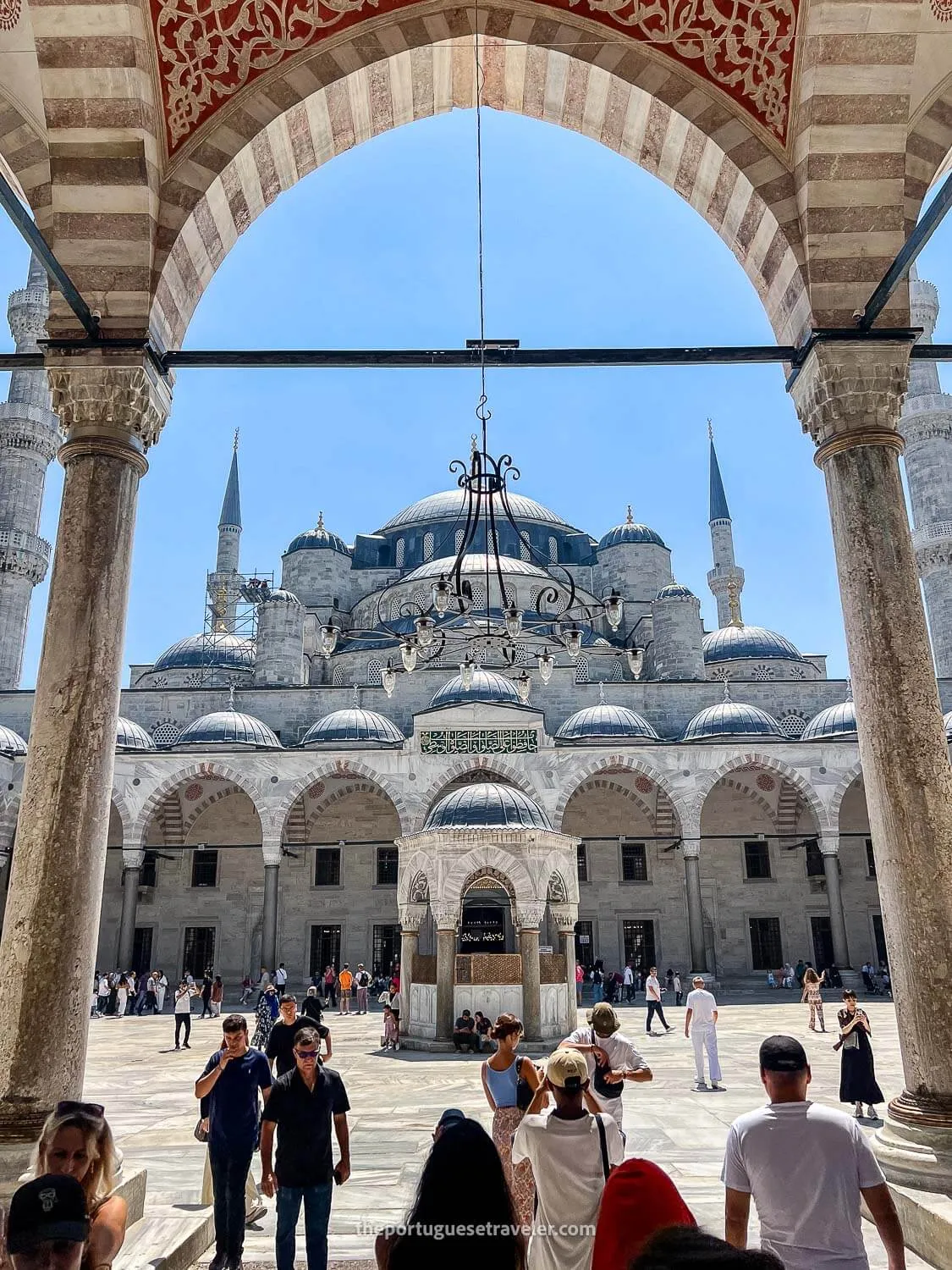
The Blue Mosque in Istanbul
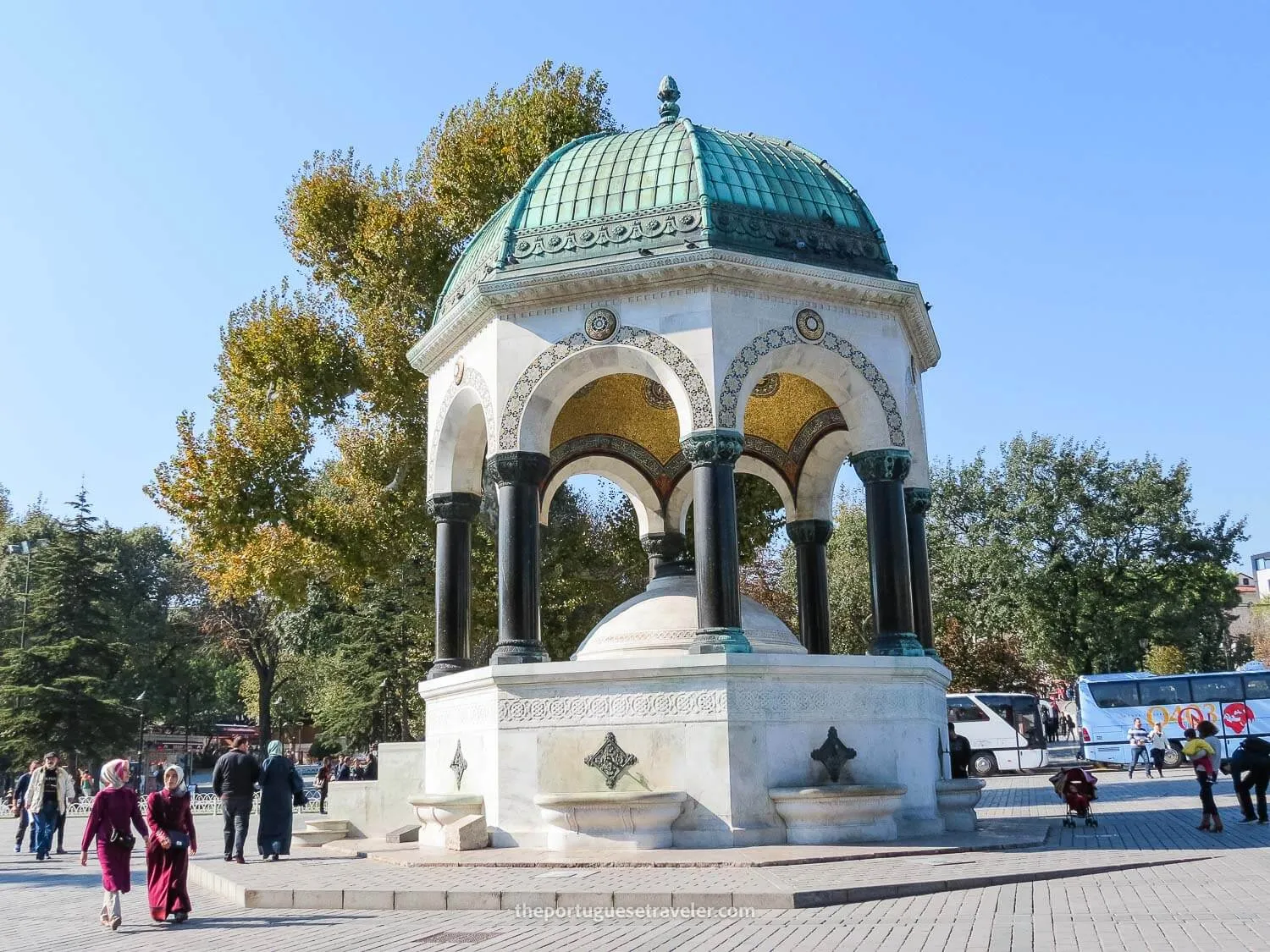
The Fountain in the Hippodrome
Hagia Sophia in 2014
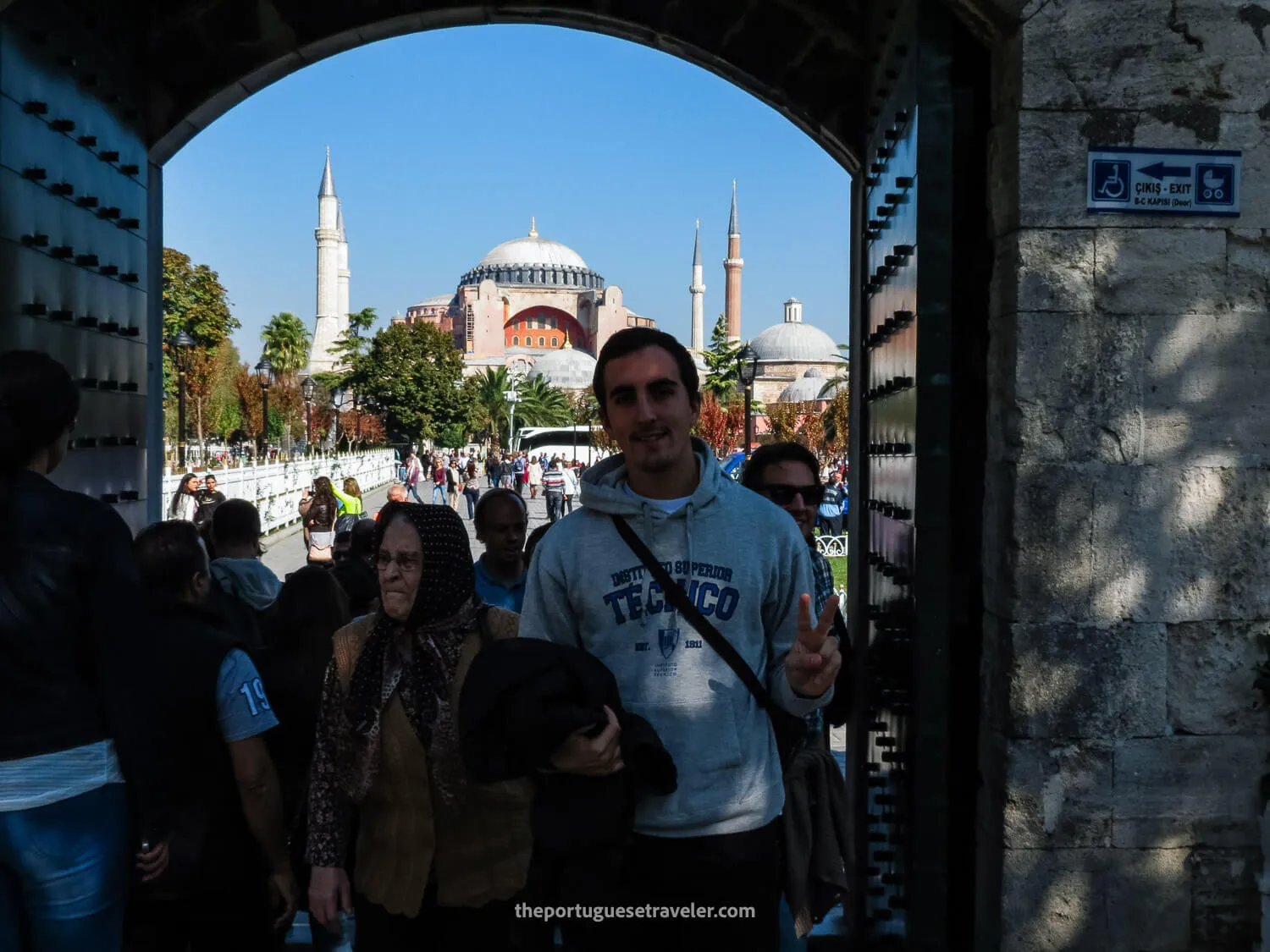
Me and Hagia Sophia
Days Full of Wonders
The following days were just as full. We explored Topkapı Palace, with its gardens, pavilions, and views over the Bosphorus; the chaotic and colorful Grand Bazaar; the Spice Bazaar with its intoxicating aromas; and the Basilica Cistern, with its eerie Medusa heads and forest of columns. I visited the Istanbul Archaeological Museum, learning about civilizations from Babylon and Persia to Byzantium and the Ottomans. With friends, I discovered Suleymaniye Mosque, Rumeli Fortress, Galata Tower with its sweeping views at night, and hidden neighborhoods full of life and history.
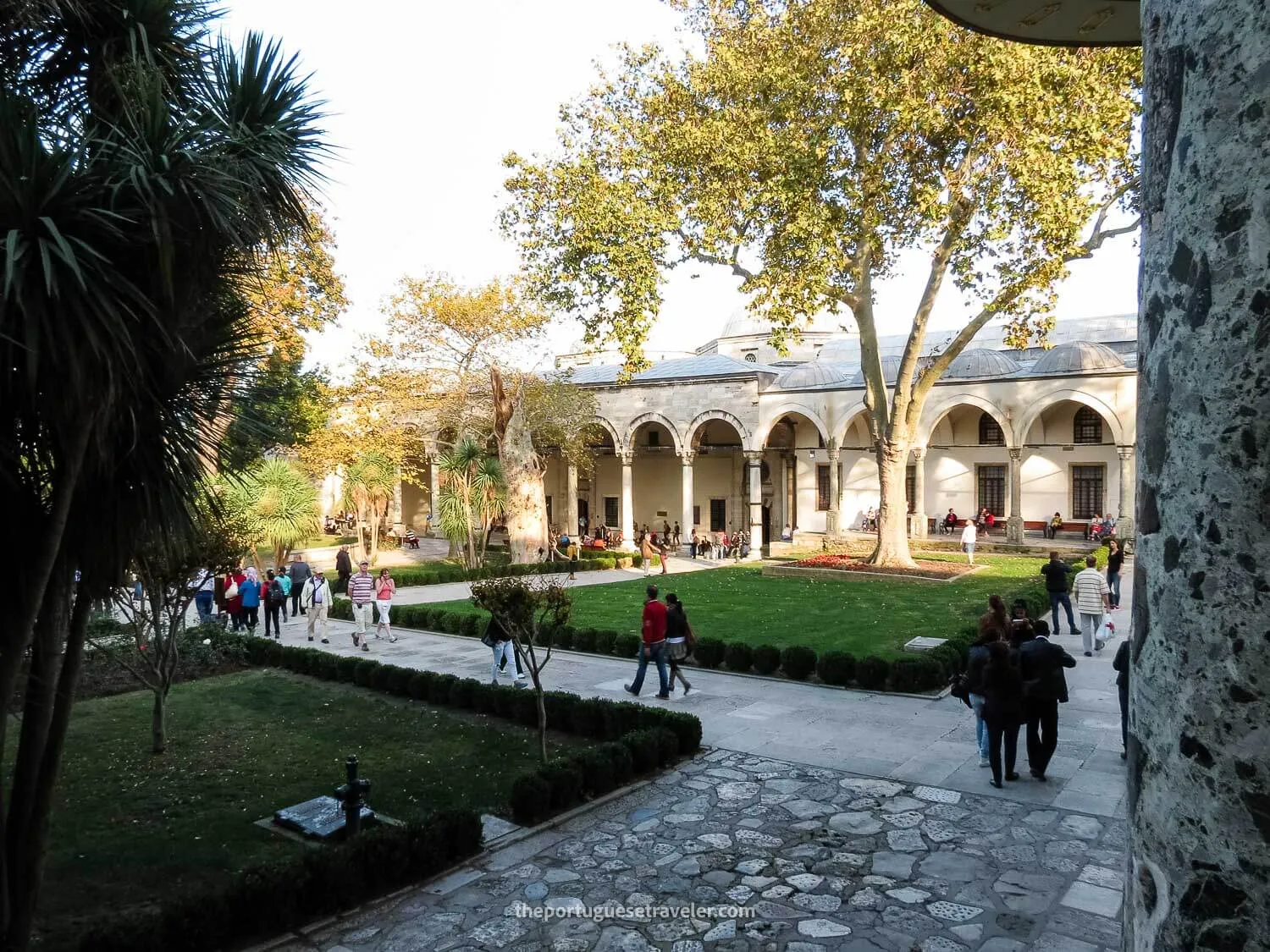
Topkapi Palace in Istanbul
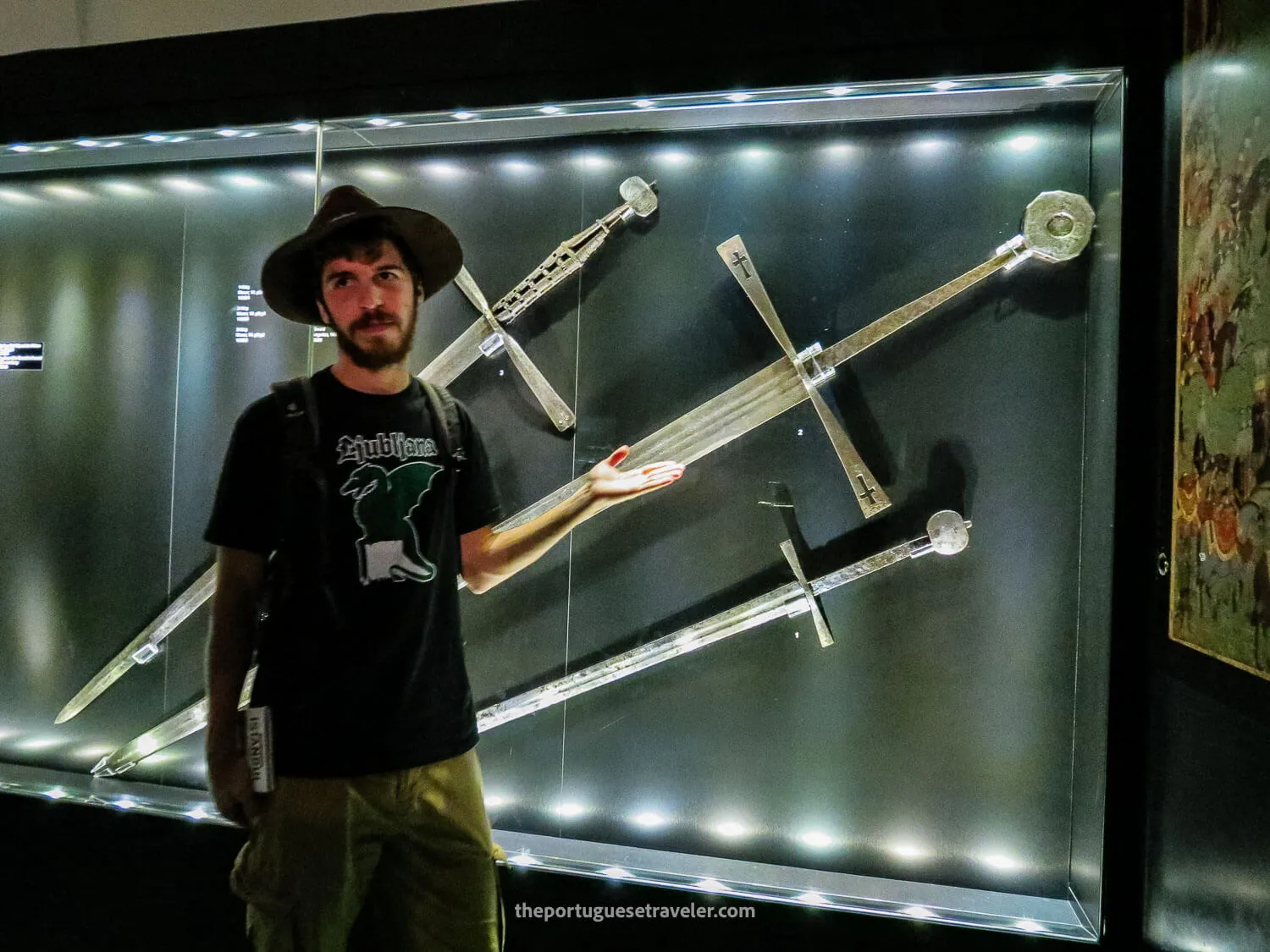
Kostas in Topkapi
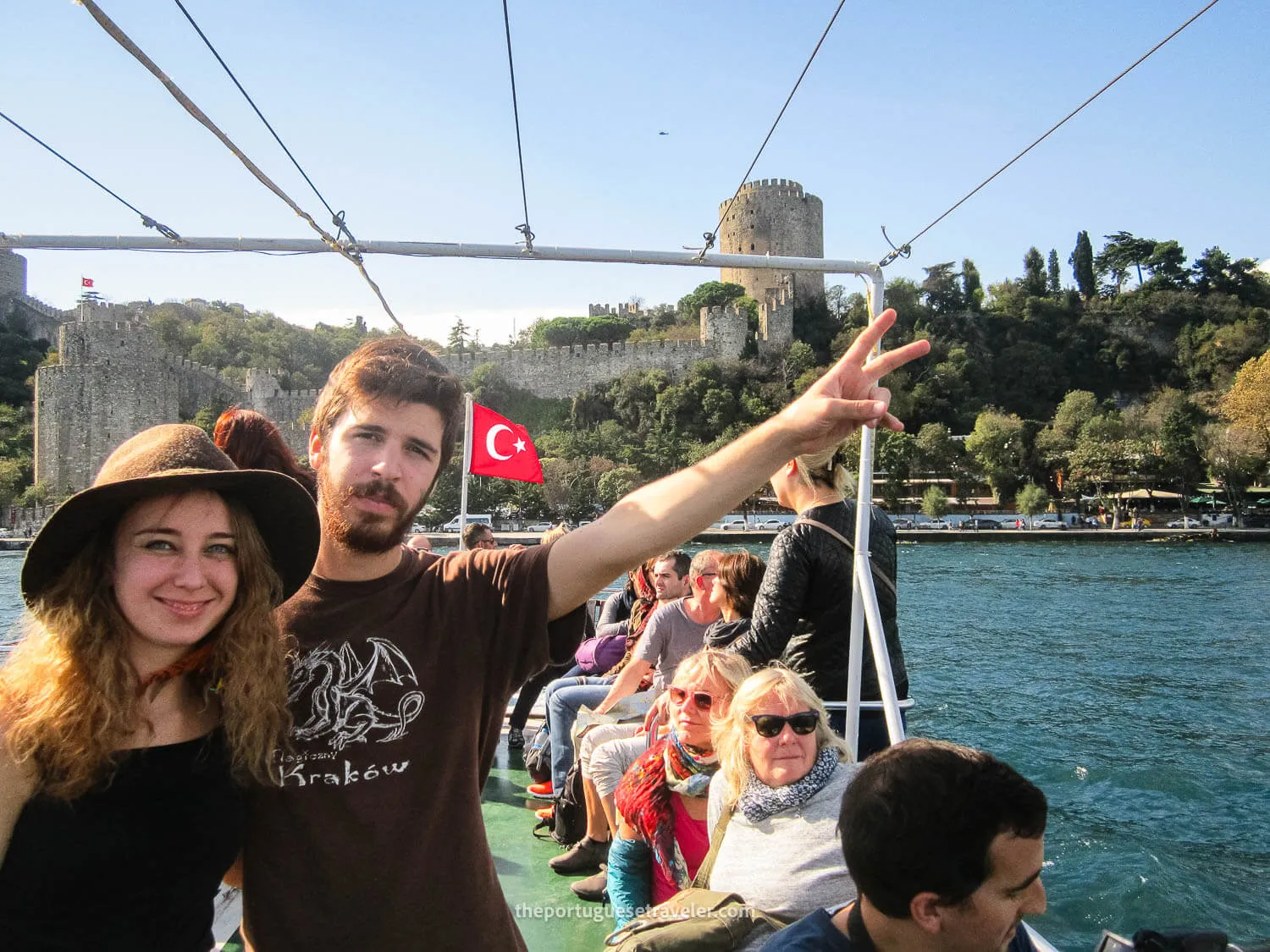
Kostas and Ece in the Bosphorus Cruise
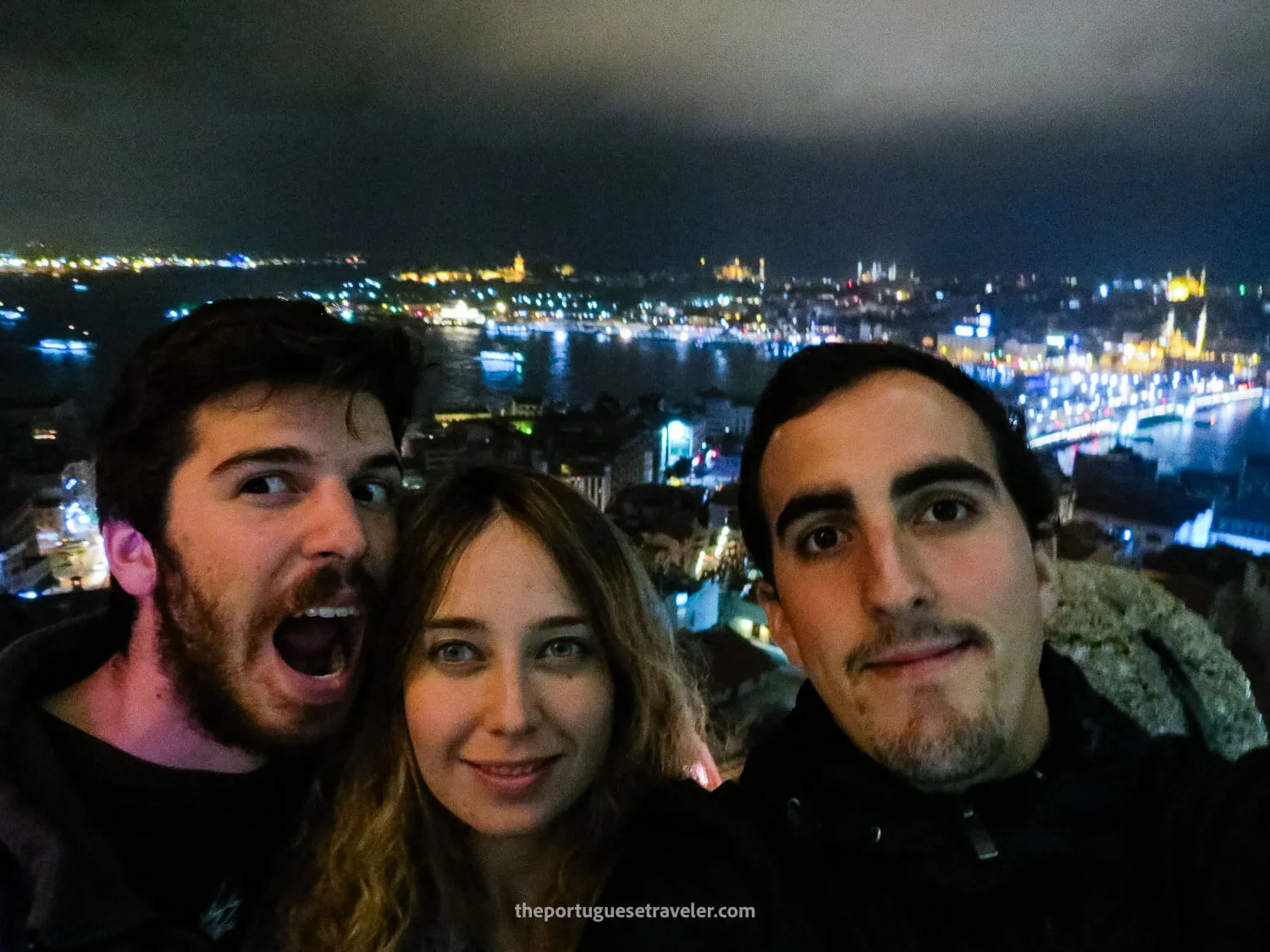
Me and my friends atop Galata Tower
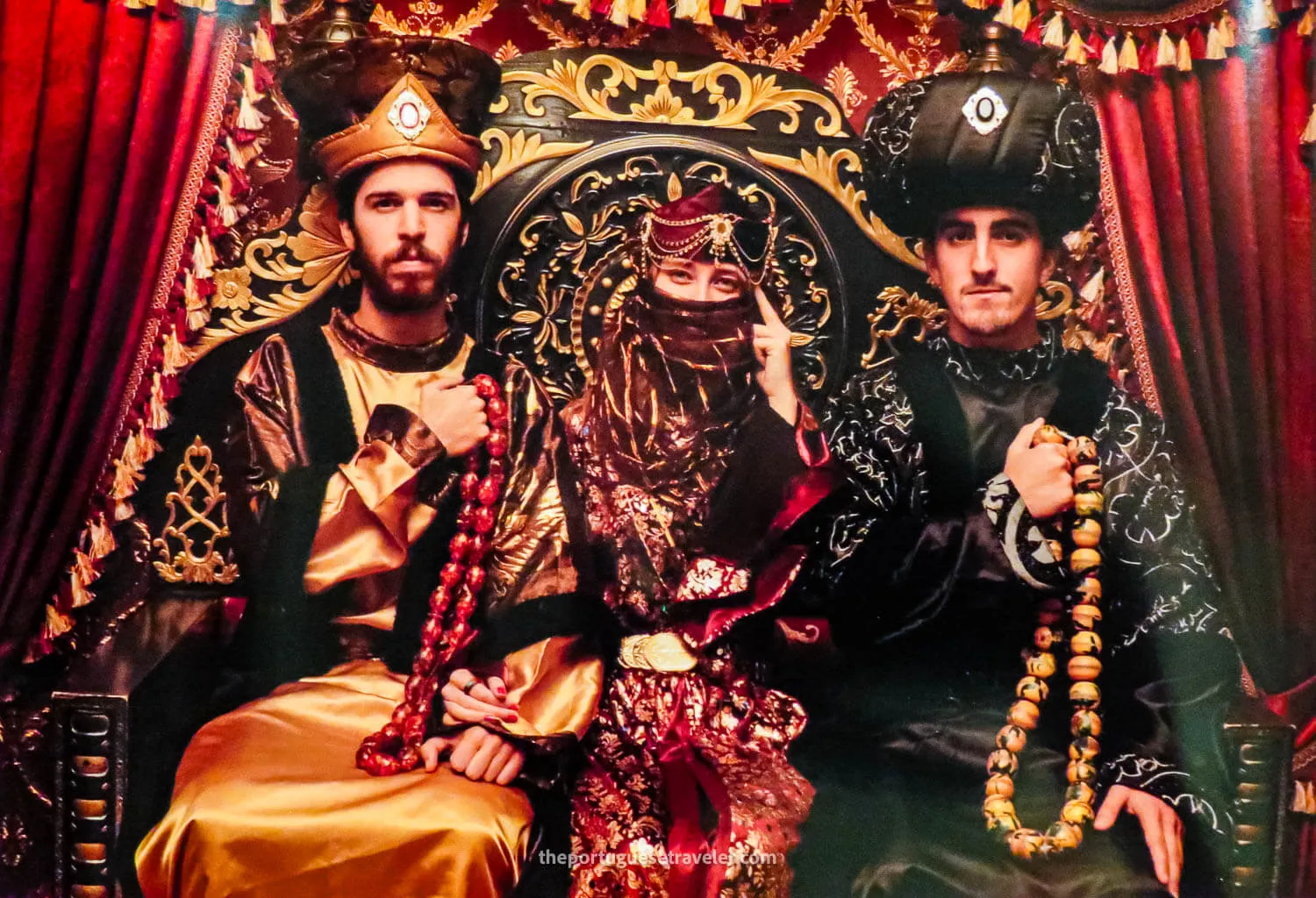
Sultan’s João, Kostas and Ece
Living in Istanbul
Those first days were packed, but they left such a mark that I returned to Istanbul in 2015 for an internship. Life there wasn’t always easy—job instability, language barriers, and cultural adjustments—but it gave me the chance to live like a local. I shared flats with people from Portugal, Italy, the U.S., and Turkey, cooked homemade meals, explored off-the-beaten-path places, and discovered secret viewpoints, underground cisterns, and hidden hans (caravanserais). These experiences revealed to me the real Istanbul—chaotic, surprising, and endlessly fascinating.
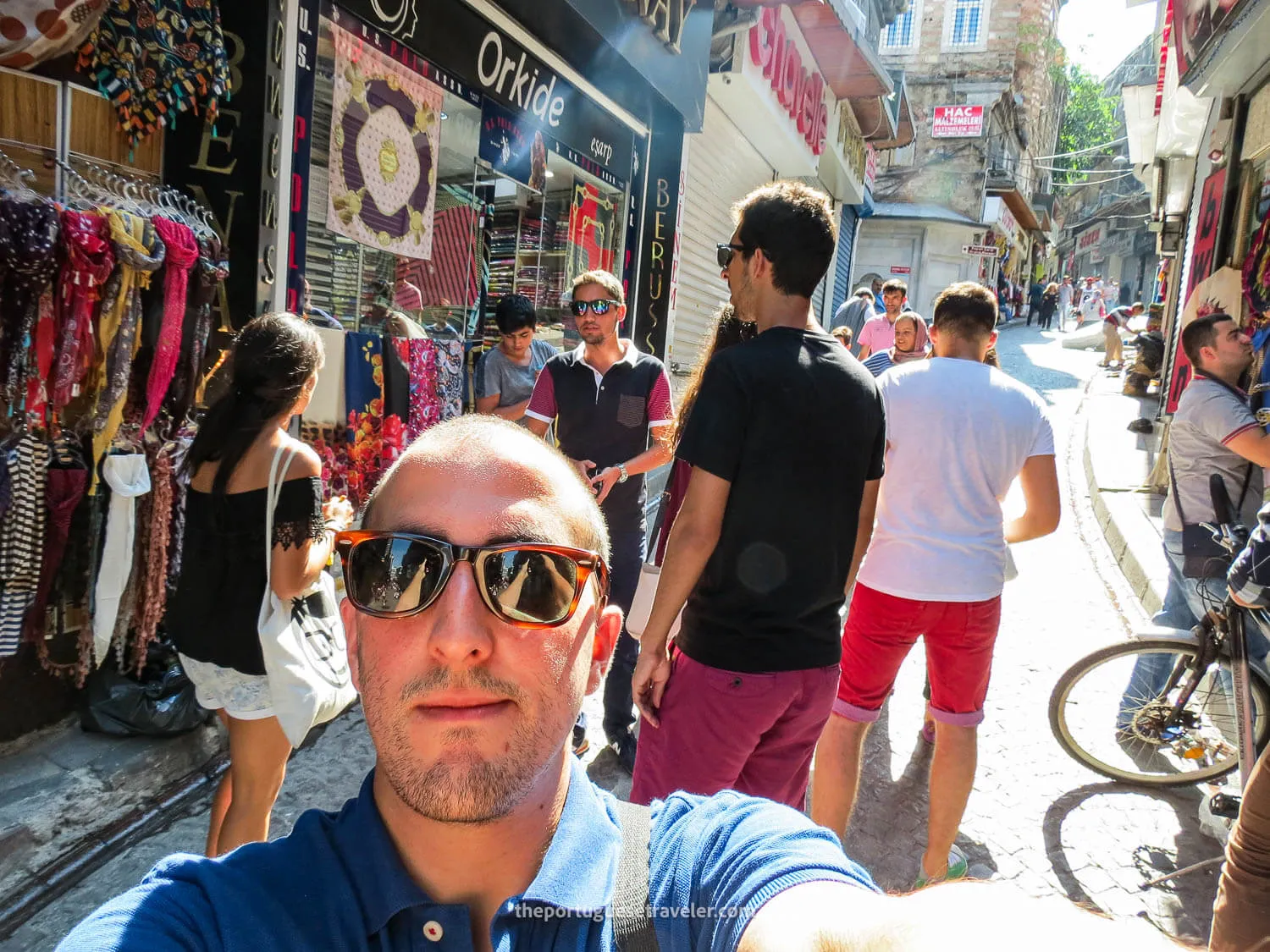
Me doing secret tours with friends in Istanbul
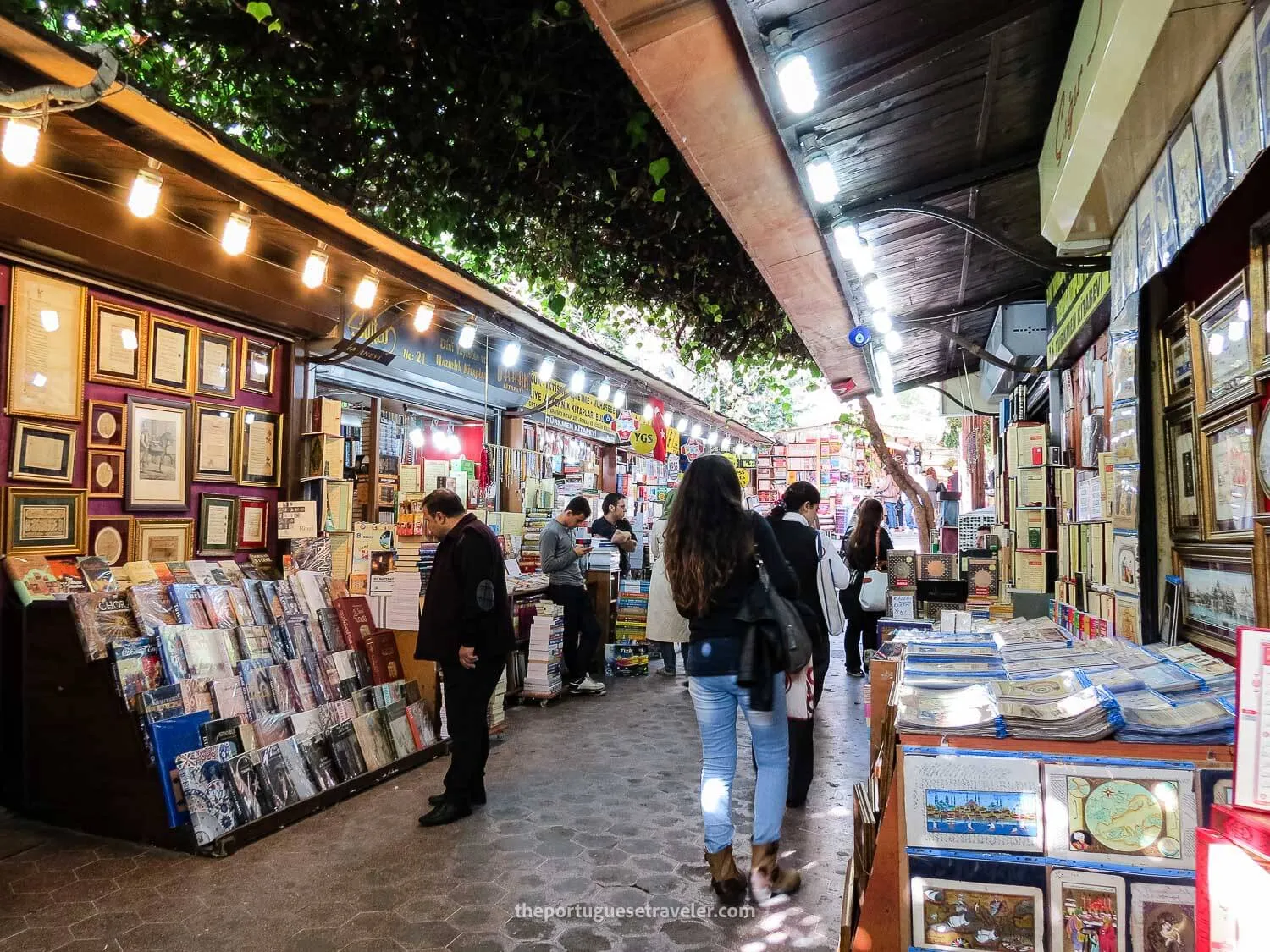
The Book Bazaar in Istanbul
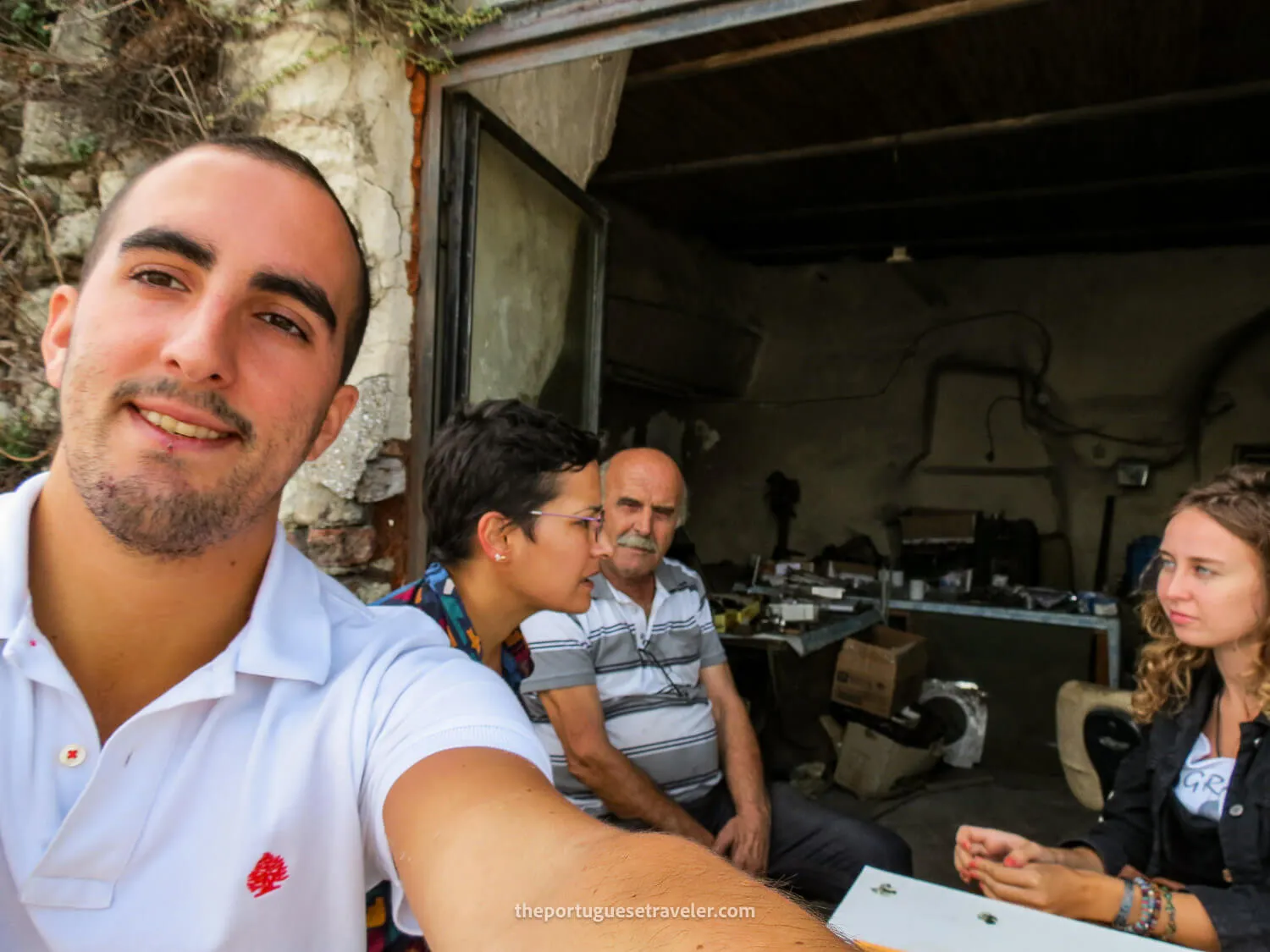
Me, Ece, the Artisan and a friend of his in Büyük Valide Han
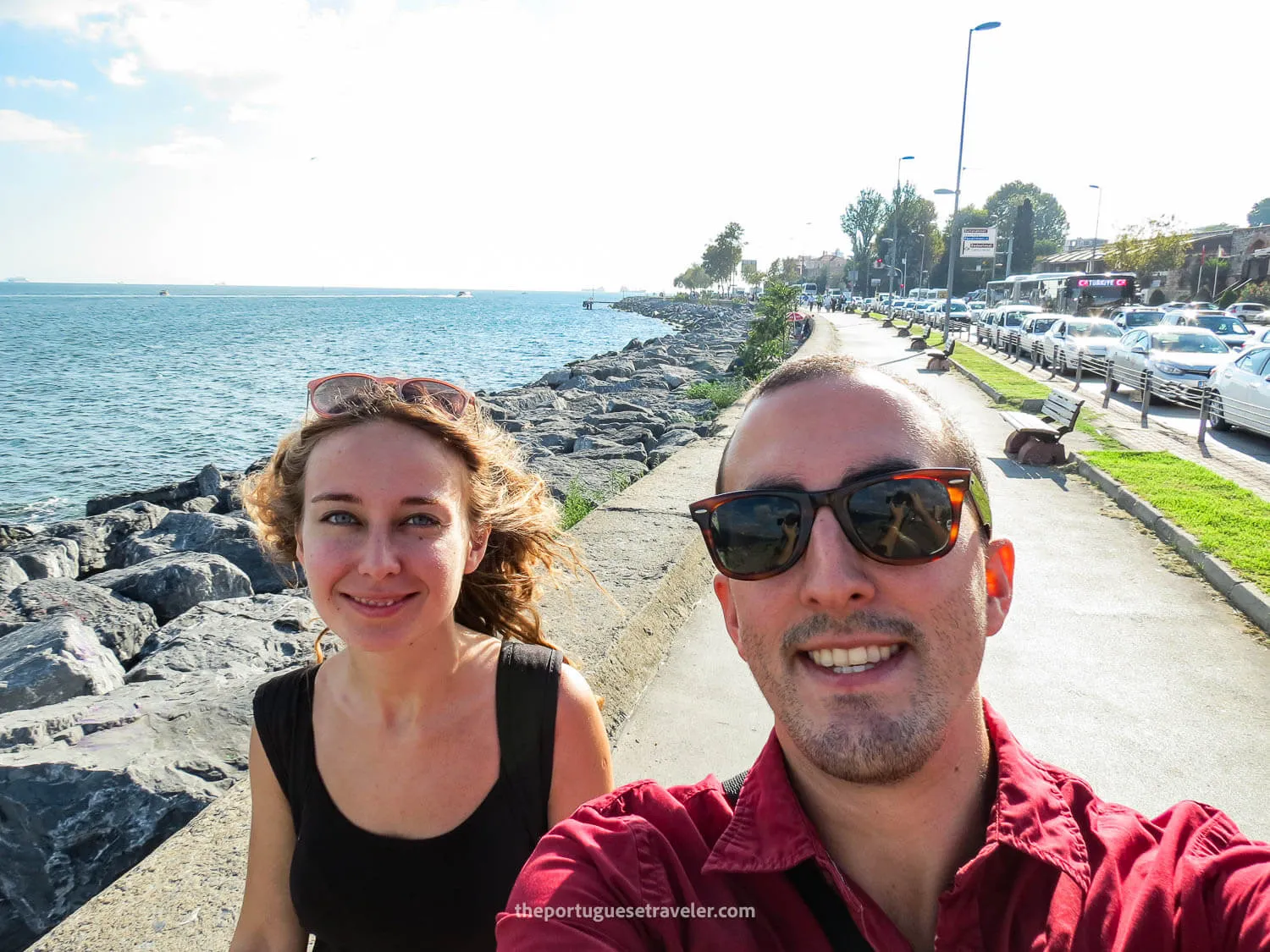
Me and Ece on the last walk around Istanbul
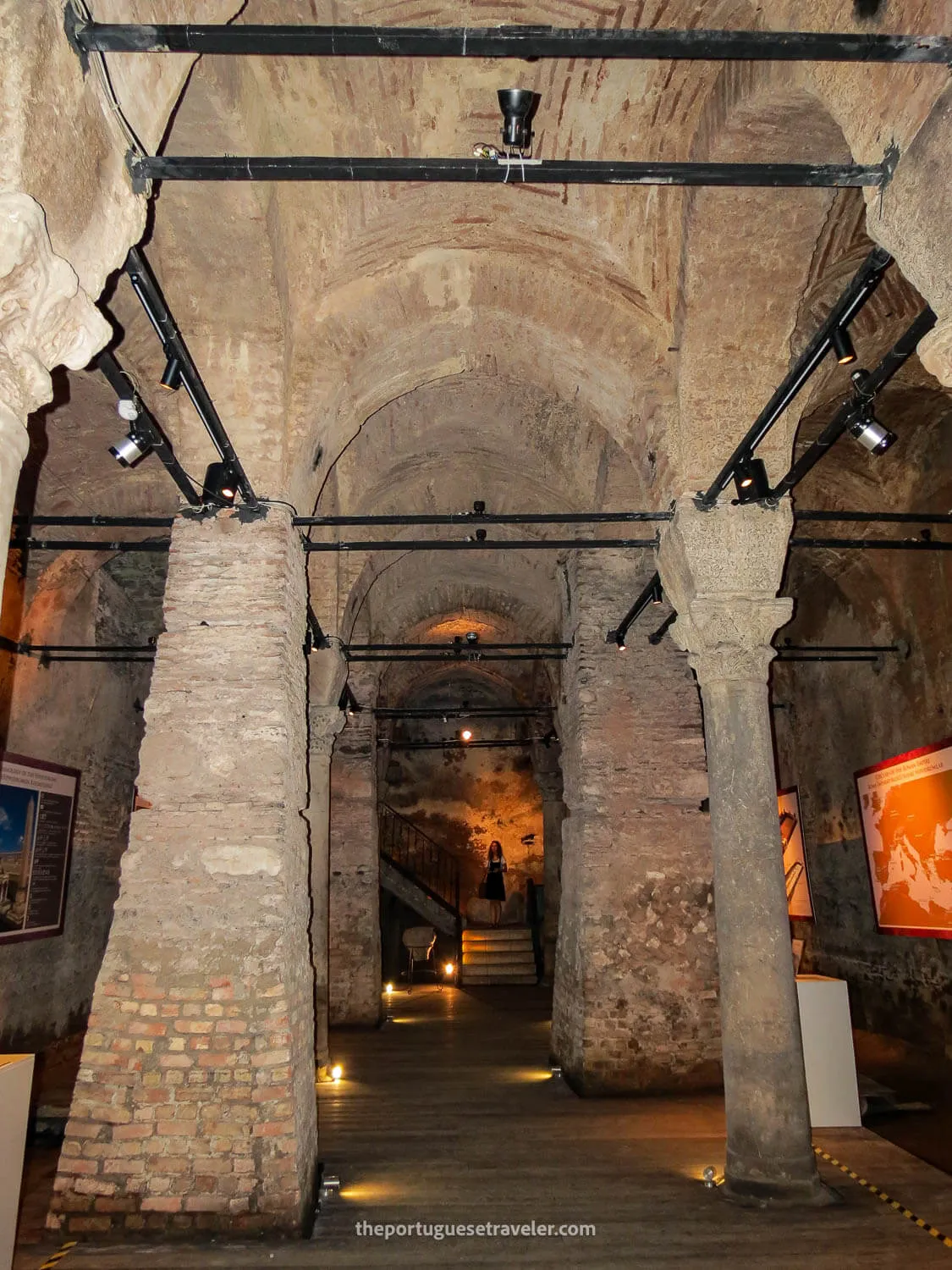
The Nakilbent Cistern, the secret cistern.
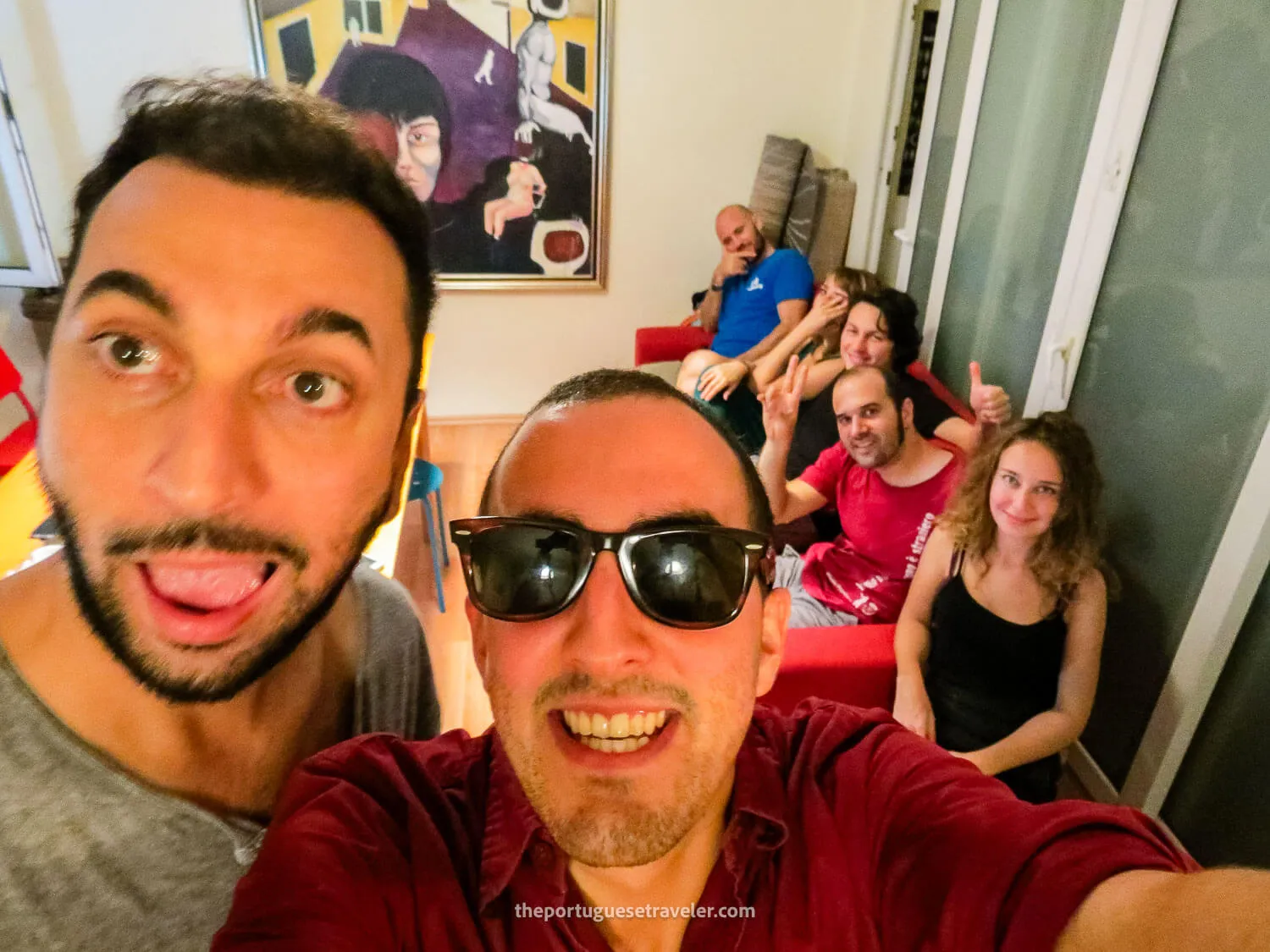
The goodbye party with all the friends
A City That Calls Me Back
I kept returning over the years: in 2016 for a road trip through Turkey’s coast; in 2021 for a hair transplant (yes, really!); in 2023 to show Jhoselyn the city and continue to Cappadocia. Each visit added new layers, new stories, and new friendships.
Looking back, Istanbul has been a constant in my life. Its hospitality, food, sights, and deep history never stop pulling me back. When I think of an İskender kebap with ayran or the sweetness of künefe, I feel the city calling again. Istanbul is not just a place I’ve visited—it’s a place I’ve lived, loved, and grown with. And I know I’ll return, again and again.
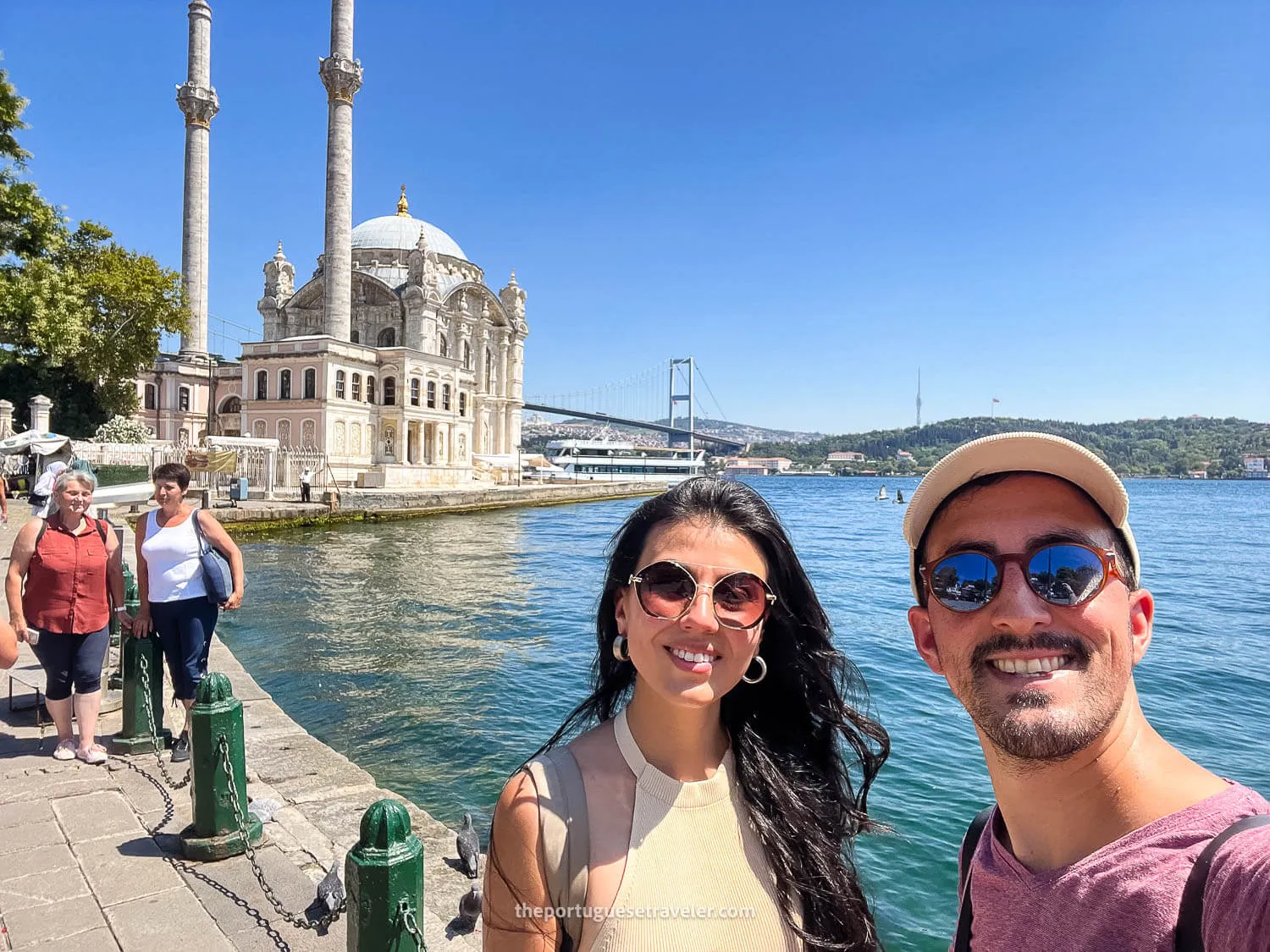
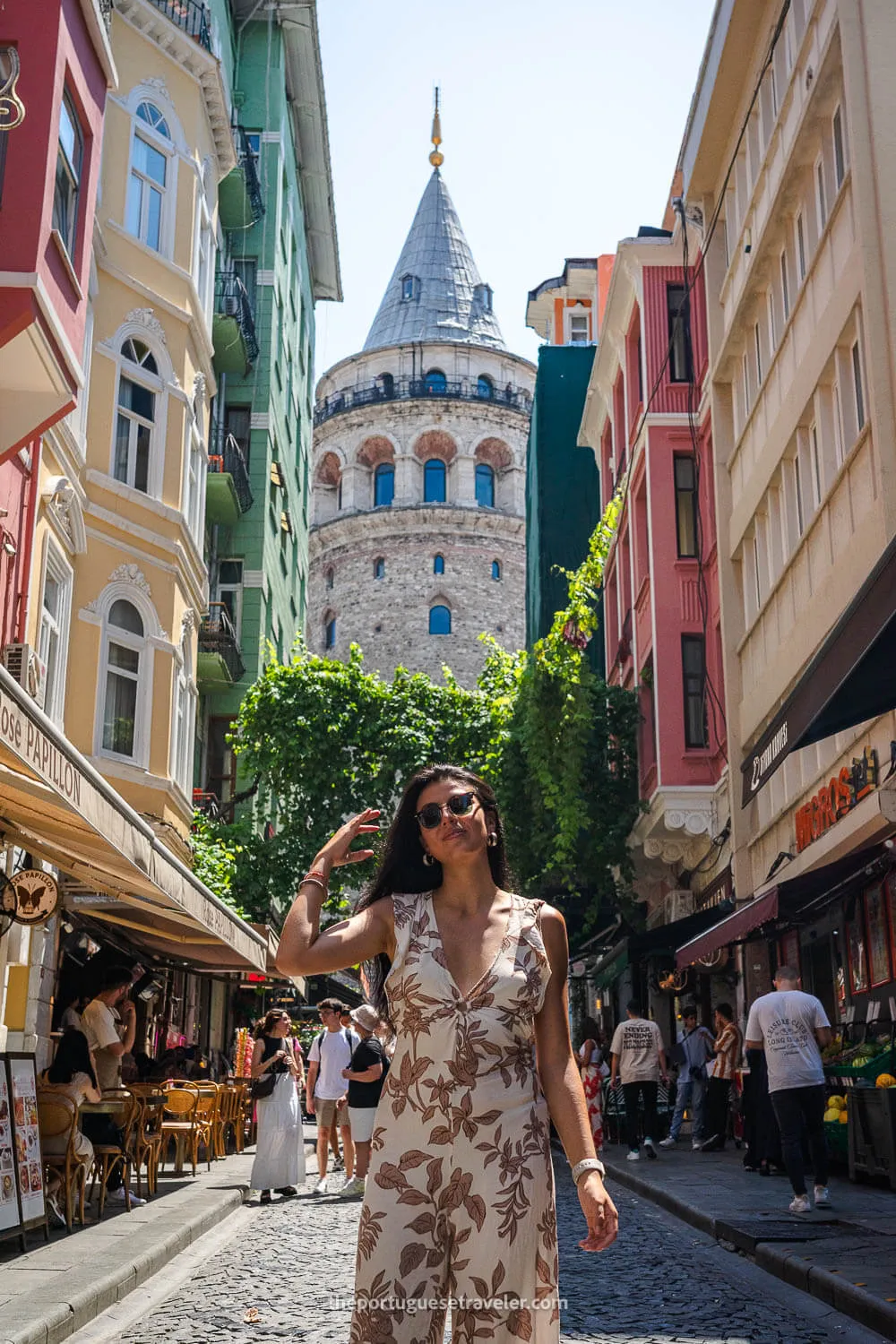
Jhos in Galata Tower
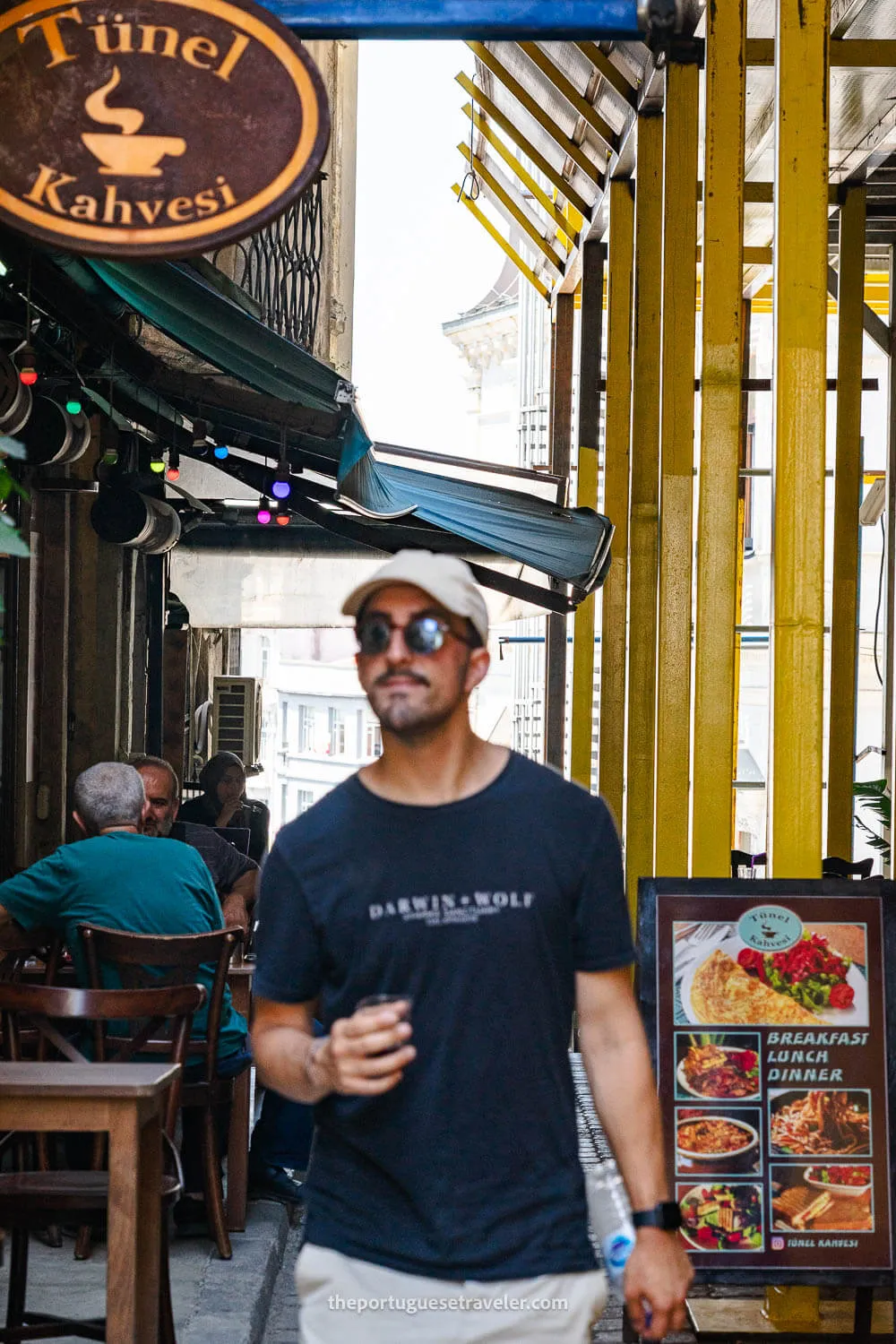
Me in Istiklal with a Turkish Coffee
Plan Your Next Adventure With Us
The links in this box are affiliate links. You won't pay more, and they help keep the blog running. Each line says whether I have used the product.

Car Rental: Discovercars compares car rental offers from many companies.

Accommodation: Book your hotels with Booking.com or Expedia. I used Agoda in Southeast Asia.

Flights: Trip.com sells flights, hotels, train tickets, attractions and car rental. Airhelp handles compensation claims for delayed, canceled or overbooked flights and charges a 35% fee only if the claim succeeds.

Trains and Buses: I have booked with Omio several times, including from Lisbon to San Sebastian. 12Go sells tickets for trains, buses, ferries, transfers and flights across Asia and some other regions. Busbud sells bus and train tickets in more than 80 countries.

Tours and Tickets: I have used GetYourGuide on some trips. Viator sells tours, activities and tickets, and most have free cancellation up to 24 hours before.

Mobile eSIM: Holafly sells eSIM data plans for travel, delivered by email (5% discount). I have used Airalo, not in the Galapagos.

Travel Insurance: Heymondo sells travel insurance that covers medical issues, lost luggage, transport delays and trip cancellation, with an app that offers medical chat and 24/7 assistance. It is well reviewed, and this link gets you 5% off. Safetywing sells subscription health and travel insurance for people who travel or live abroad, covering medical treatment, emergency dental care and travel problems such as lost luggage and delays.
Loading comments…