
Galapagos Solo Travel

João Petersen · Last updated September 2, 2026
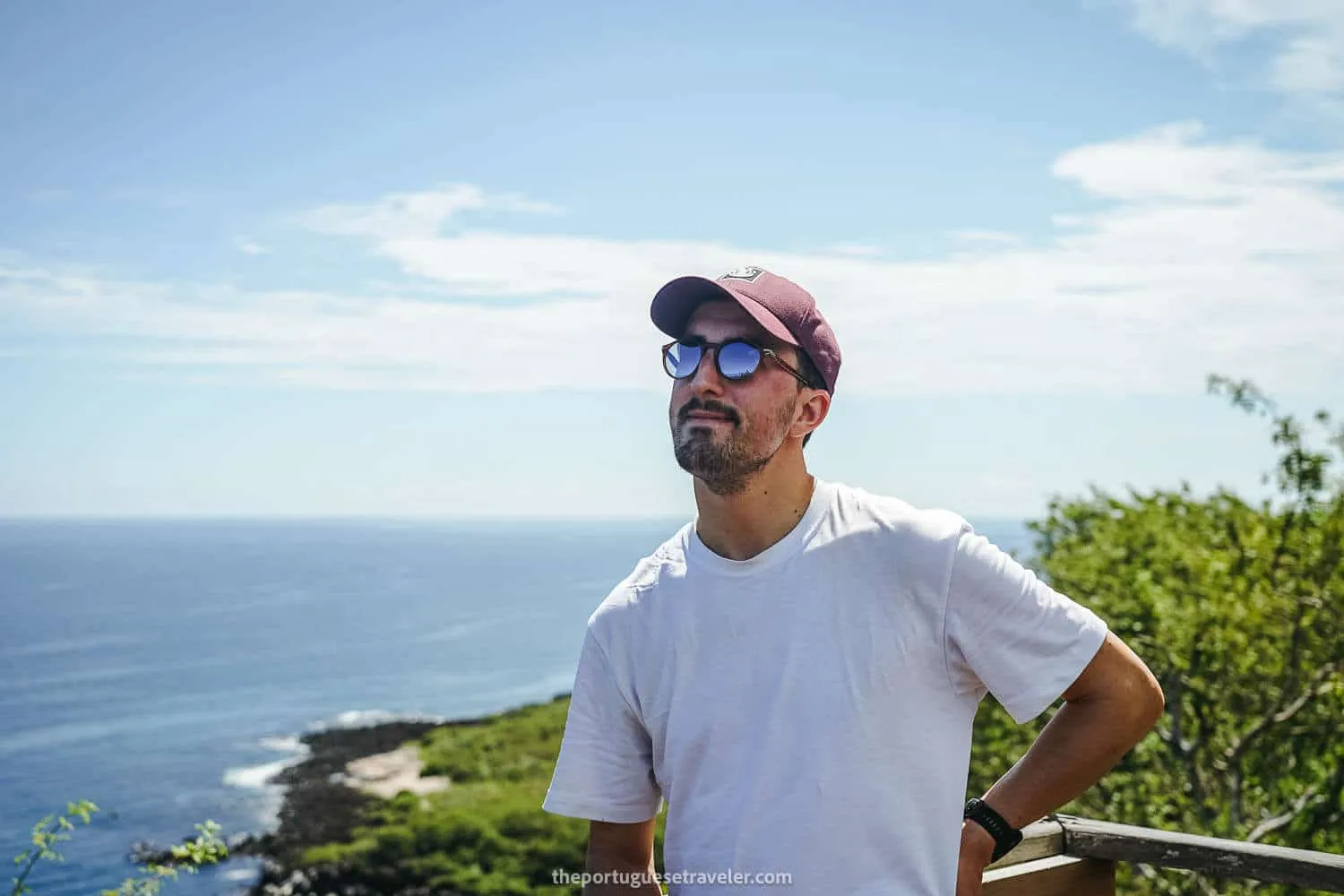
Galapagos solo travel works well. The islands are small enough that you keep running into the same faces on ferries and dive boats, and a short walk to the beach can turn into a close encounter with a sea lion or a marine iguana.
This guide covers everything you need to plan a trip on your own: what it costs, how to get around, where to stay, what to do and how to stay safe, with a section for female solo travelers.
Your Galapagos Islands Essentials - Quick Guide
Short on time? This quick Galapagos guide will help you plan.
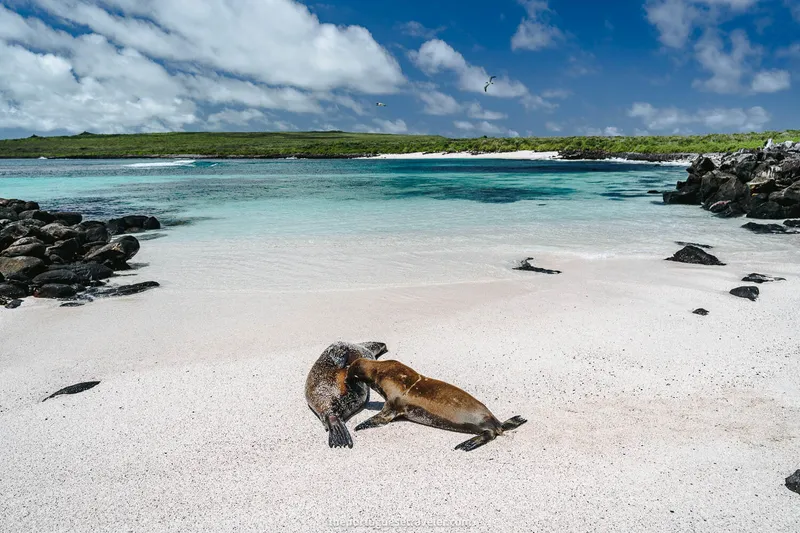
Where to Stay:
- – Finch Bay Galapagos Hotel (Santa Cruz Island)
- – Golden Bay Galapagos Hotel (San Cristobal Island)
- – Hotel Iguana Crossing (Isabela Island)
Must-Do Experiences:
- – 360 Tour (San Cristobal highlights by boat)
- – Kicker Rock Tour (Full-day snorkeling tour to Kicker Rock)
- – Bartolome Island Tour (Iconic views and marine life)
- – Floreana Island Tour (Snorkel, fishing and history)
- – Sierra Negra Volcano Tour (Half-day guided hike on Isabela Island)
- – Los Tuneles Tour (Snorkeling tour on Isabela Island)
The links in this box are affiliate links.
Tours sell out fast. Book early and plan a backup day.
Quick facts before you dive in:
- Daily budget: $90–$180/day on a land-based, ferry-hopping itinerary
- 10-day trip cost: roughly $1,450–$2,200 including domestic flights
- Mandatory entry costs: $20 Transit Control Card + $200 National Park fee
- Inter-island ferry: $30 to $35 per crossing, about 2 hours
- Cruise single supplement: typically 50–100% surcharge on top of the base rate
- Best value bases: hostel dorms in Puerto Ayora or San Cristobal (roughly $20–$35/night)
Is Galapagos Good for Solo Travel?
Yes. The islands see a steady stream of independent travelers, and the tourism infrastructure around Puerto Ayora, Puerto Baquerizo Moreno and Puerto Villamil makes it easy to meet other people. Some hostels run communal dinners, day tours put people on the same boats however they booked, and the inter-island ferries double as informal meeting points. You can skip the group dinner and read on the beach, or join a snorkeling tour and have new friends by lunch.
On my trips I met people on tours, and we stuck together for other tours. I stayed in hotels, never dorms, because I had my camera gear: Mare Mío Guesthouse in San Cristobal on my first trip, Hostal Terito on my second trip, with friends, and a spacious whole apartment called My Place in Paradise on my last trip, both in Puerto Baquerizo Moreno, Galapagos Dreams hotel in Santa Cruz and Cormorant Beach House in Isabela.
Crime against tourists is low across the populated islands, and police are visible in the main towns. I walked around at night and always felt safe. Normal precautions still apply: keep your passport and cash separate from your day bag, use hostel lockers or safes, and do not leave valuables unattended on the beach while you snorkel. 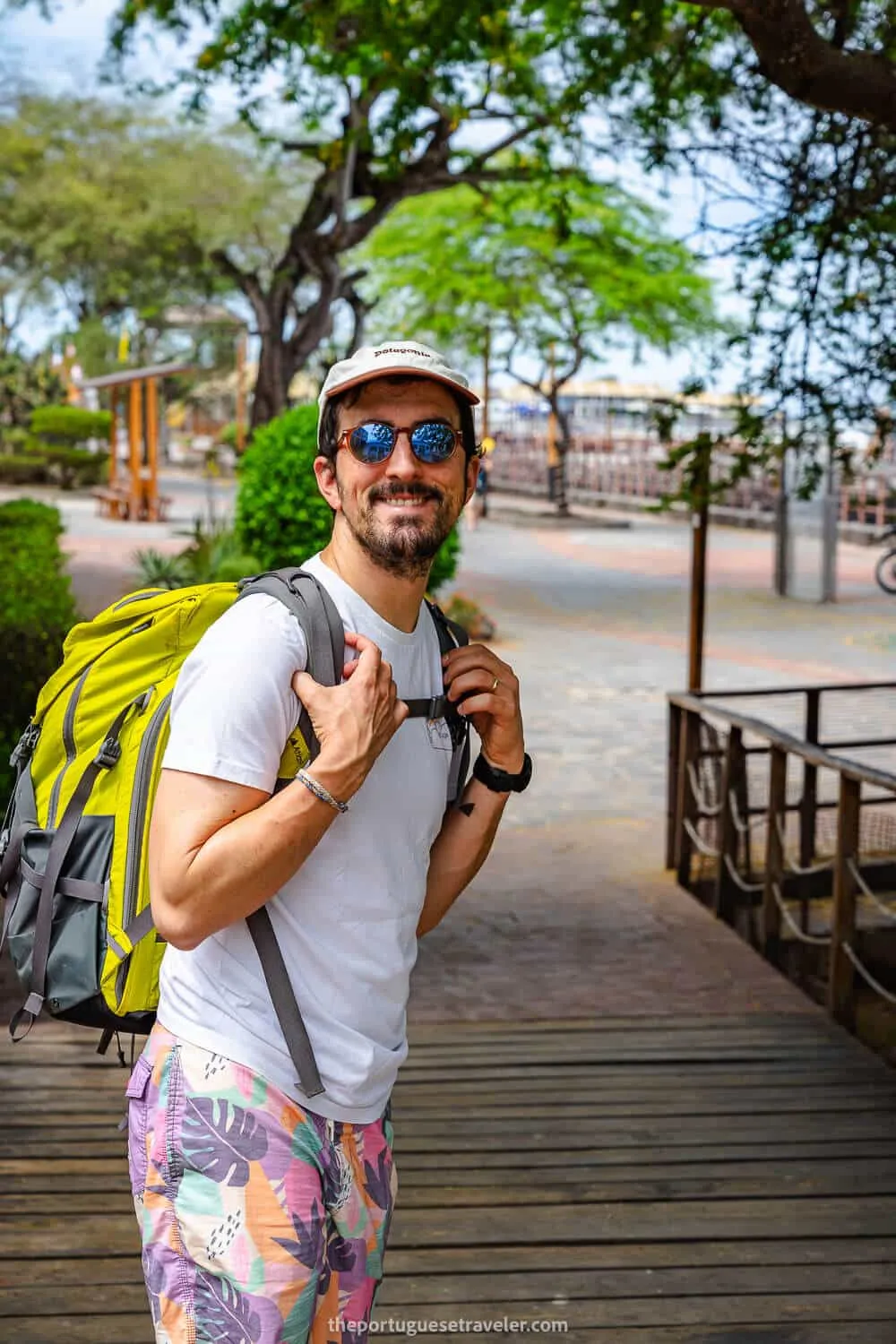
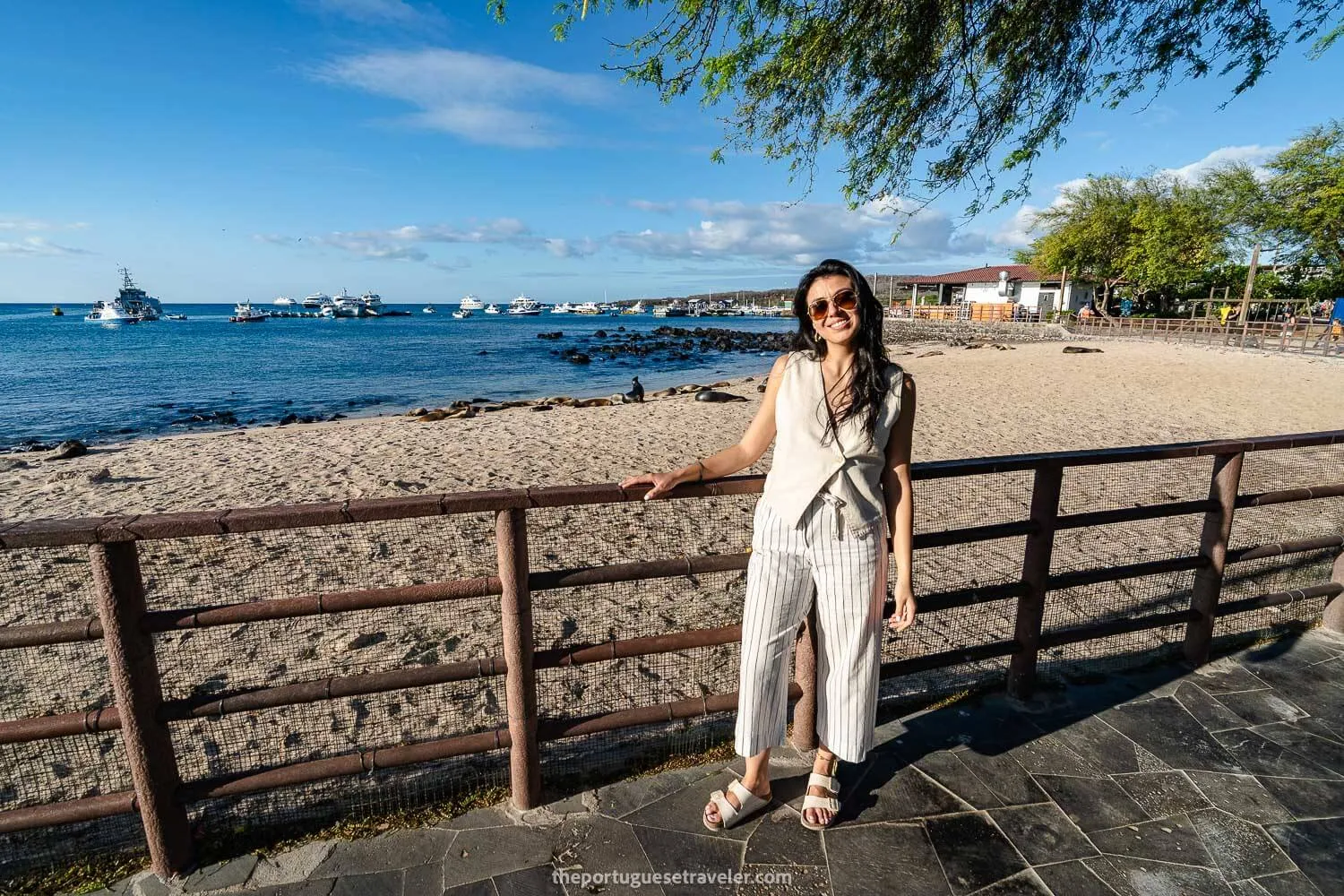
Walking around town alone in the evening felt super safe. Just be careful not to step on a sea lion or an iguana.
How Much Does Galapagos Solo Travel Cost?
The Galapagos is not a cheap add-on to a South America backpacking trip, so budget for it from the start. A realistic figure for a land-based, ferry-hopping solo itinerary is $90 to $180 a day once you are on the islands, covering a hostel bed or budget private room, meals, a couple of paid activities and inter-island transport. Over ten days that puts most independent travelers at $1,450 to $2,200 including domestic flights, or up to $2,600 with private rooms and sit-down restaurants instead of dorms and set menus.
Before you reach the islands there are two one-time costs: a $20 Transit Control Card, bought before departure (at the airport counter in Quito or Guayaquil, or online before you travel), and a $200 Galapagos National Park entrance fee, paid on arrival. The main expenses look like this:
| Expense | Typical Cost |
|---|---|
| Return flight (Quito/Guayaquil ↔ Galapagos) | $350–$550 |
| Transit Control Card (TCT) | $20 |
| National Park entrance fee (one-time) | $200 |
| Inter-island public ferry (one-way) | $30 |
| Hostel dorm bed (per night) | $20–$35 |
| Private room (per night) | $30–$55 |
| Set lunch/dinner menu (almuerzo/merienda) | $5–$8 |
| À la carte restaurant meal | $10–$25 |
| Day tour (snorkeling, hiking, etc.) | $60–$250 |
Once you are island hopping, the public speedboat ferries between Santa Cruz, San Cristobal, Isabela and Floreana generally cost $30 to $35 per person per route, plus a small transfer fee at each pier. The ride takes around two hours and can get choppy. I think I paid about $35 for each of my rides.
Accommodation is where solo travelers can save the most. Hostel dorms in Puerto Ayora are at the higher end of that range, and San Cristobal is generally a little cheaper. Set lunch and dinner menus are consistently the best value on the islands compared with à la carte plates at sit-down restaurants.
The one place where solo travelers pay more is on multi-day naturalist cruises. Cabins are commonly priced per person on double occupancy, so operators typically add a single supplement of 50% to 100% on top of the shared-cabin rate. Some boats offer dedicated single cabins or reduced or no-supplement options. On a cabin with a full supplement, an 8-day cruise can come to roughly $8,000 to $10,000 for a solo traveler.
If a cruise is central to your plans, ask operators about “guaranteed share” programs that pair solo travelers to avoid the surcharge, or look for a last-minute deal locally in Puerto Ayora, where prices can run 50% below the online rack rate. For most independent travelers, a land-based itinerary with day tours costs much less and gives you more control over your schedule.
Getting to and Around the Islands
All flights to the Galapagos go through mainland Ecuador, from Quito or Guayaquil, and land at Baltra or, on some days, San Cristobal. From Baltra, a short bus and ferry combination is followed by a longer bus or taxi ride to Puerto Ayora on Santa Cruz. Allow some patience for this transfer on your first day, because it involves several short hops instead of one direct ride. From the San Cristobal airport it is a short ride in a pickup van taxi to the town center.
Once you are based on an island, walking, cycling and shared taxis cover most needs in town. Between islands you take either the public ferry ($30 to $35) or a more expensive 30- to 45-minute domestic flight. Ferries run on a fixed schedule, with departures from Santa Cruz around 7 a.m. and in the afternoon. Times can change, so check when you book, and arrive at the pier at least 30 to 40 minutes early for the luggage check.
 Transportation: Here is a complete guide on how to get in and around the islands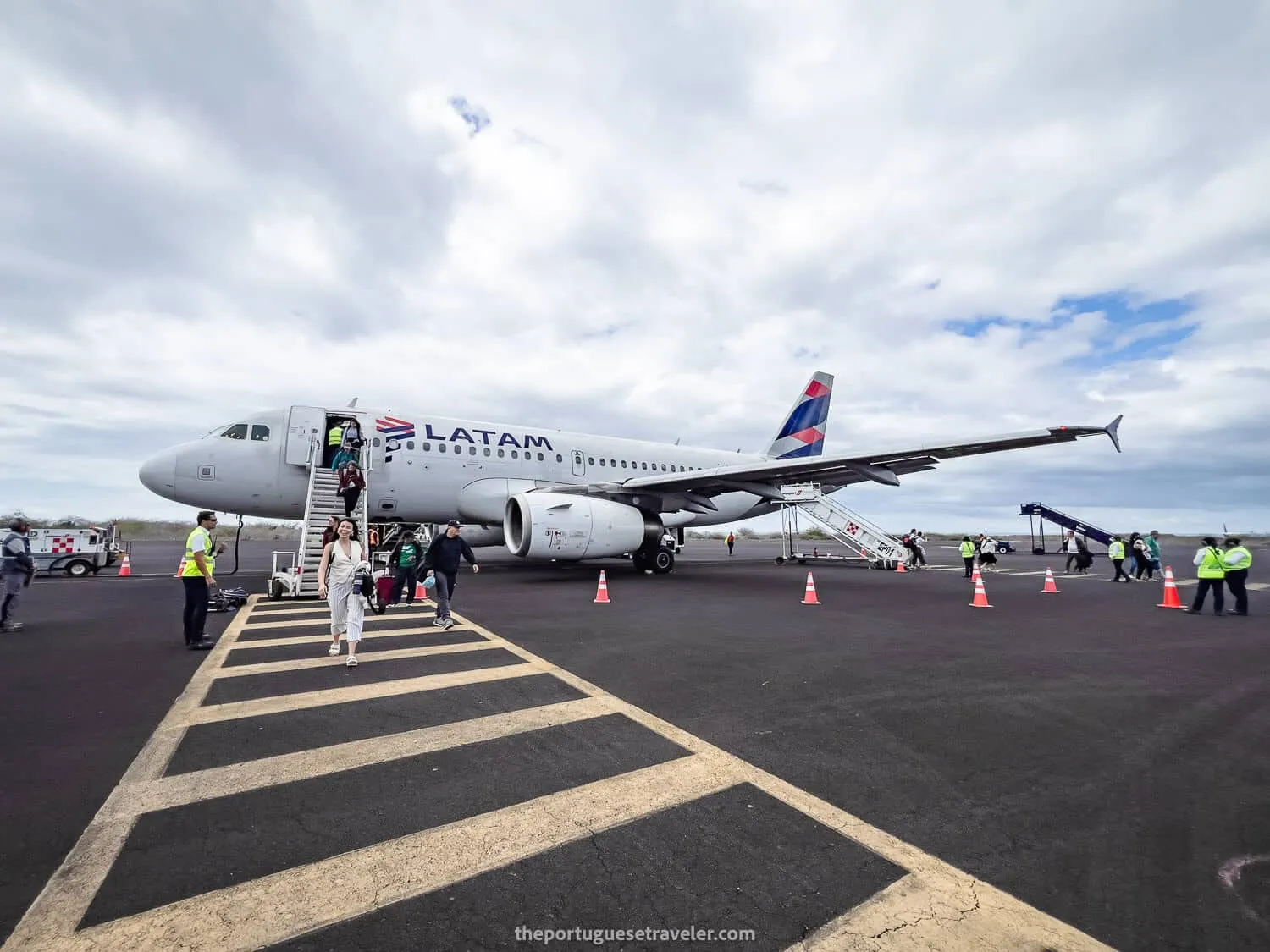
Arriving at San Cristobal airport with Latam

An airplane from Emetebe, the Galapagos inter-island airline
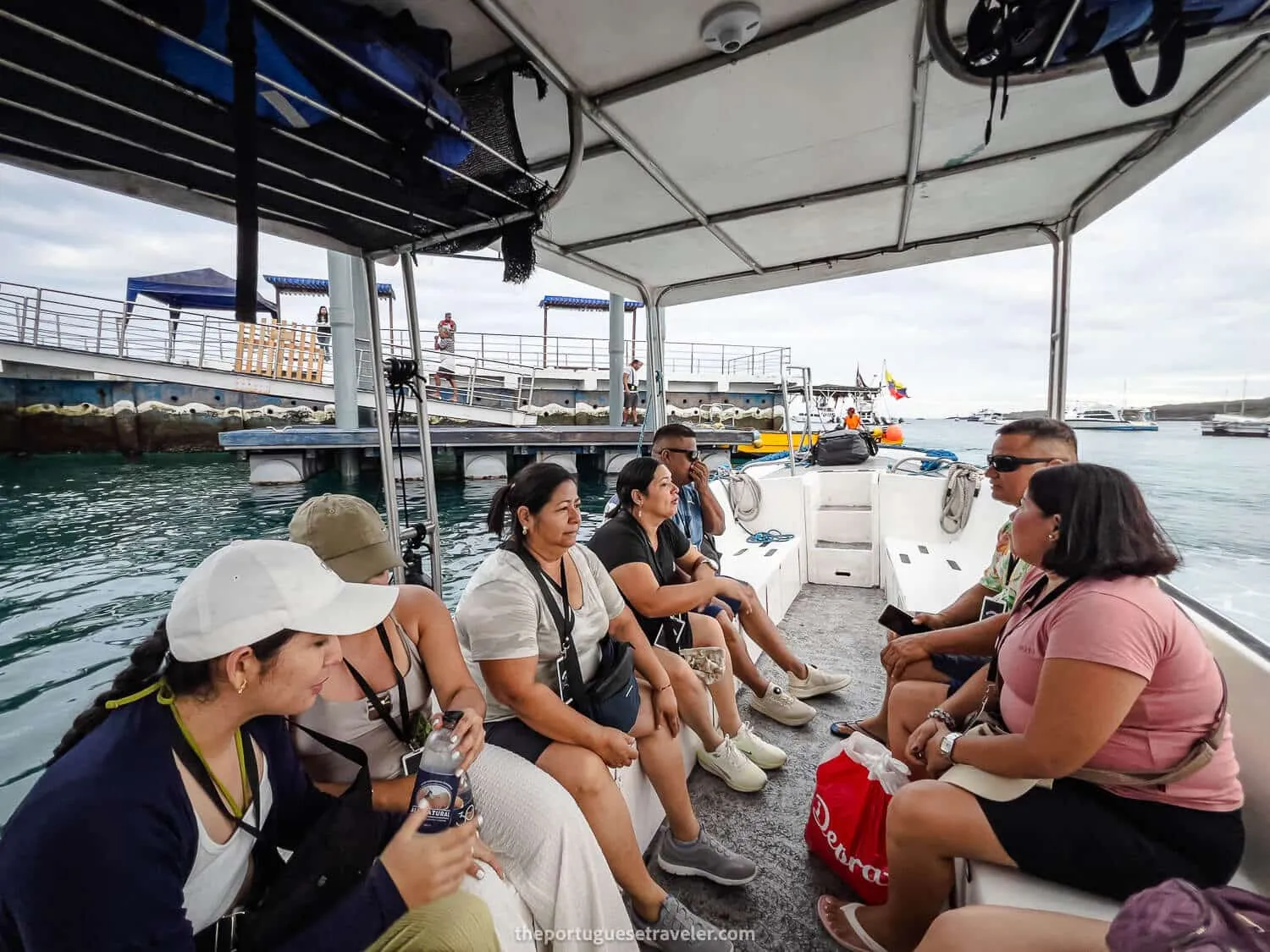
The water taxi you need to take to get to the ferry - Galapagos Solo Travel
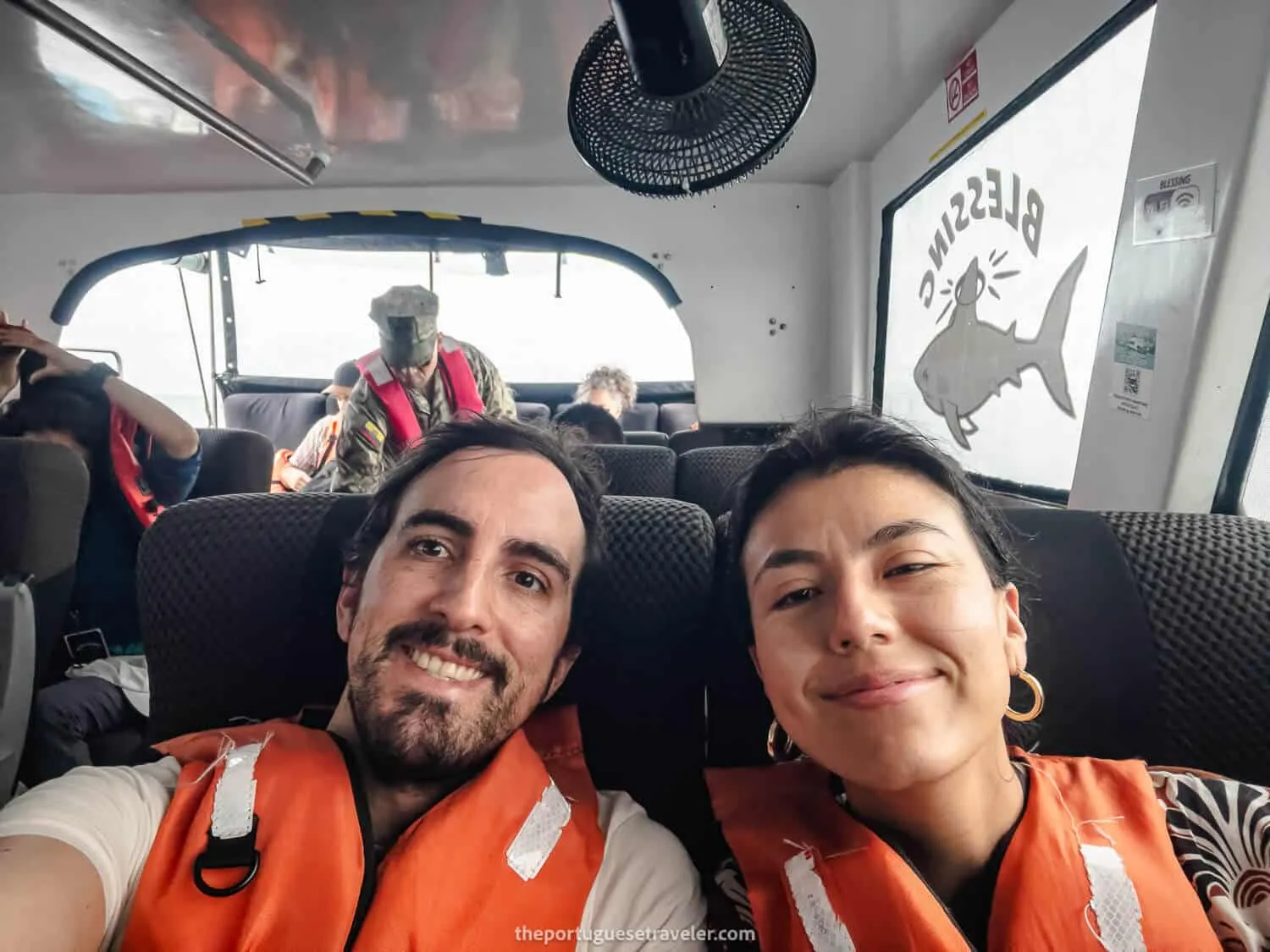
An inter-island ferry between San Cristobal and Santa Cruz
Plan Your Galapagos Trip (Free Quote)
Want help organizing this trip? I recommend Happy Gringo, a travel agency in Ecuador. You can ask them for a free quote.
 Get Free Quote
Where to Stay as a Solo Traveler
Hostels are the backbone of the social scene here, and a hostel with a communal kitchen or an organized group dinner does more for a solo trip than almost any other decision. In Puerto Ayora, the hostels known for bringing solo guests together tend to have shared dinners, rooftop common areas and noticeboards where travelers post plans for the next day’s tour.
A dorm bed instead of a private room saves money and is often the fastest way to find a snorkeling buddy or someone to split a taxi fare with. If you prefer your own space and quiet evenings, most of these hostels also have private rooms. I stayed in hotels because of my camera gear, and I still met people on tours.
 Accommodation: Where to stay and the best hotels and hostels on the three main islands (Santa Cruz, San Cristobal, and Isabela)
Best Activities for Solo Travelers
Galapagos activities are almost all organized in small groups by default, which works in a solo traveler’s favor. A snorkeling or hiking day tour typically holds eight to twelve people, and the price is split among the group, so the cost per person tends to be reasonable.
I did not find anyone to book tours with, so I booked the ones I wanted myself and was put on the boat with other people who had booked the same tour. Every activity was easy to join alone. If any were harder, it was the most expensive day tours and diving, because they cost a lot.
Here is what stands out island by island: San Cristobal
- Sea lion colonies that take over the beaches at dusk
- Diving at Kicker Rock, where hammerhead sharks are a realistic sighting for certified divers
Santa Cruz
- Giant tortoise breeding centers, plus wild tortoises roaming the highland reserve at El Chato
- Lava tunnels carved from centuries-old volcanic flows
- Free snorkeling at Las Grietas or Tortuga Bay (just rent gear)
Isabela
- The Sierra Negra volcano hike, one of the largest calderas in the world
- Concha Perla, a calm snorkeling spot where sea lions often nap on the dock
- Los Tuneles snorkeling tour, which I think is the best snorkeling you can do in the Galapagos
Beyond wildlife, look for smaller, more social add-ons such as a cooking class or a photography outing. They cost around $60 to $250 depending on the activity and island, and they tend to make friends faster than a standard tour because the group shares an interest.
 Read More: Check out our articles on the Best Things To Do in the Galapagos Islands while on land.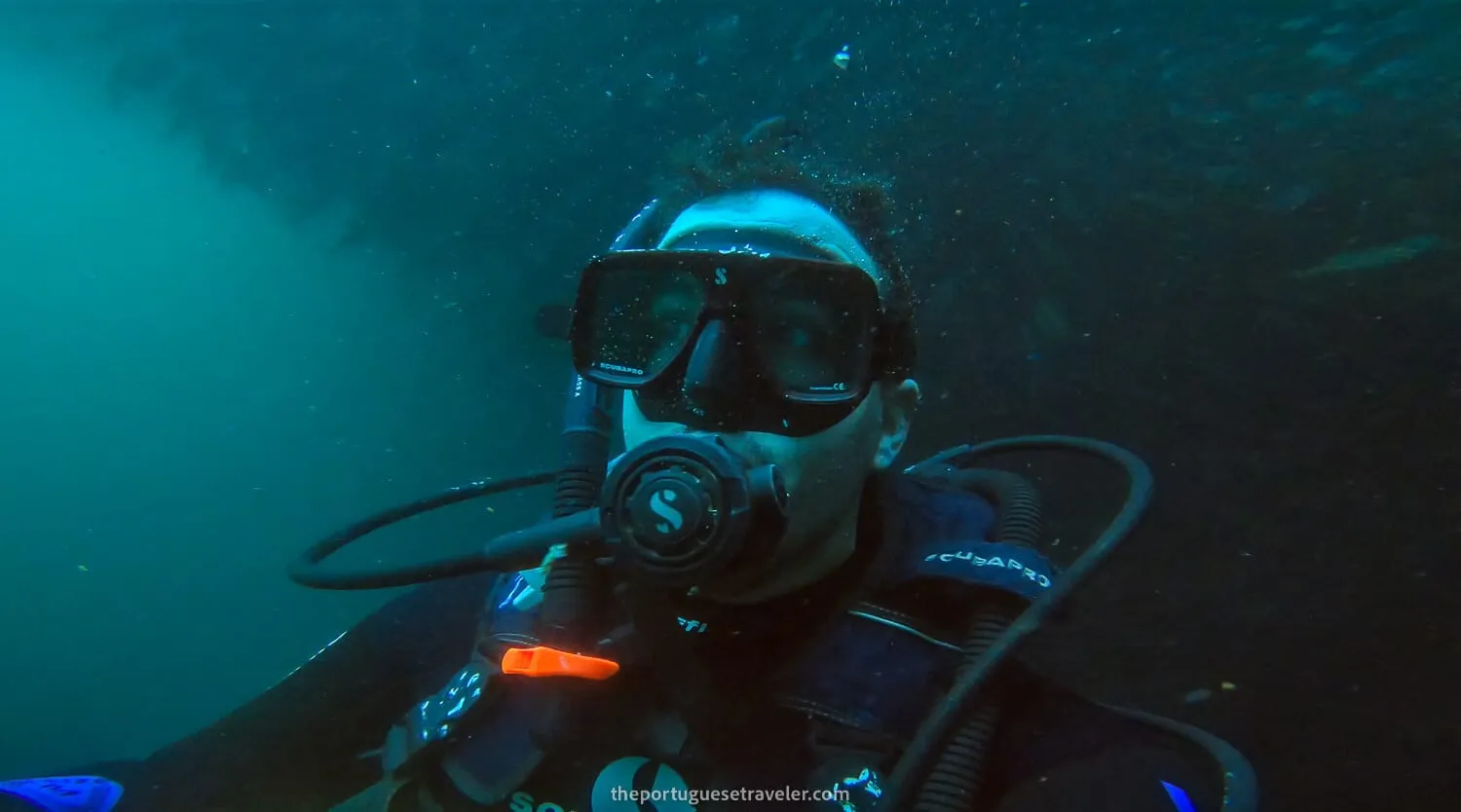
The first dive surrounded by a wall of fish
Tips for Solo Travelers in the Galapagos
A few habits make a real difference on a solo trip:
- Carry more cash than you think you need: ATMs are scarce outside the main towns, can run out, and many small businesses do not take cards. Bring small bills, since $50 and $100 bills are often refused. On my trips the ATMs usually worked and I paid for most tours and food by card.
- Pack your own sunscreen, insect repellent and snorkel gear if you will use them often. Imported goods carry a steep markup on the islands, and a tube of sunscreen can cost close to $20. I bought my sunscreen at home.
- Leave enough free time: ferries run on a fixed timetable, weather can affect crossings, and a last-minute cruise booking may mean changing your return flight, so leave buffer days.
- Register with your embassy’s traveler program and share your rough itinerary with someone at home. It costs nothing and is worth doing before you go somewhere with patchy connectivity between islands.
- Pace your paid activities: it is easy to book a tour every day and watch the budget balloon. Mix in free beaches, self-guided walks and the odd rest day. I paid upfront for a $200 dive tour and could not go because I had food poisoning, so keep some buffer in case something goes wrong.
 Read More: Take a look at our complete Galapagos Wildlife Guide - Find out which animals exist, on which islands, and how to spot them.
Female Solo Travel in the Galapagos
Women travel alone in the Galapagos, and the small-town feel of Puerto Ayora and Puerto Baquerizo Moreno, together with the concentration of tourism services, means you are rarely isolated. The usual precautions still apply:
- Stick to well-lit, populated streets after dark
- Avoid walking alone late at night in quieter areas
- Keep photocopies of your passport and insurance separate from the originals, and use hostel safes
- Trust your instincts if a situation or a person feels off. The islands are small, so changing your plans to avoid someone is rarely difficult
Joining a hostel’s communal dinner on your first night is a quick way to find a companion for a day tour or an evening walk. Tours are small groups by default, so booking alone is easy.
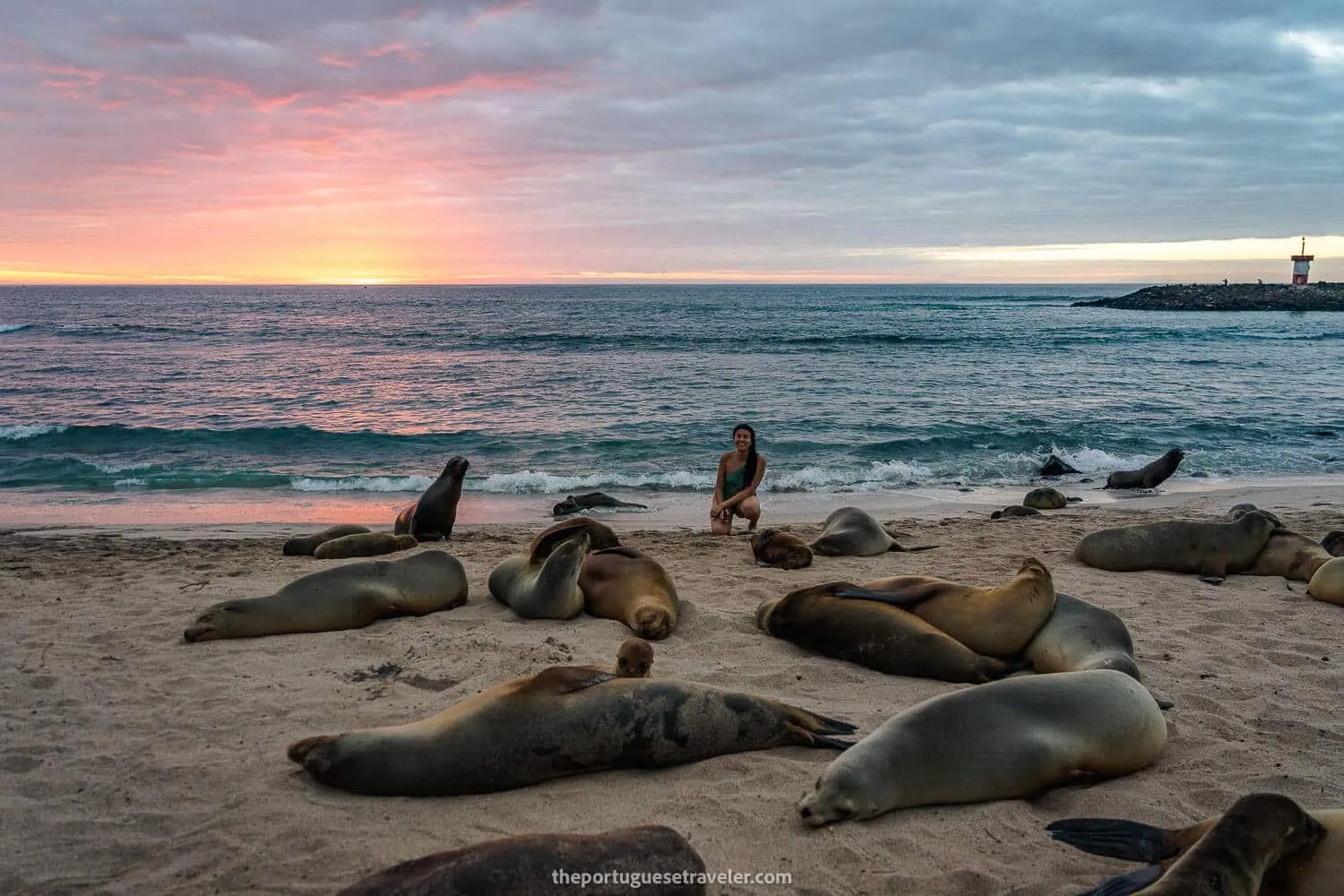
Jhos with the sea lions in Punta Carola in San Cristobal
Best Time to Visit
The islands are on the equator, so temperatures stay warm all year, but the seasons still change the experience. January to May is warmer and wetter, with calmer seas and better underwater visibility, and it is when marine iguanas and other species begin nesting, so December and January are busier. June to December is drier, cooler and choppier, with nutrient-rich currents that draw more marine life, which makes it a good window for wildlife snorkeling and diving, although you need a wetsuit for comfort.
 Read More: Check our complete article on what is the Best Time to Visit the Galapagos Islands.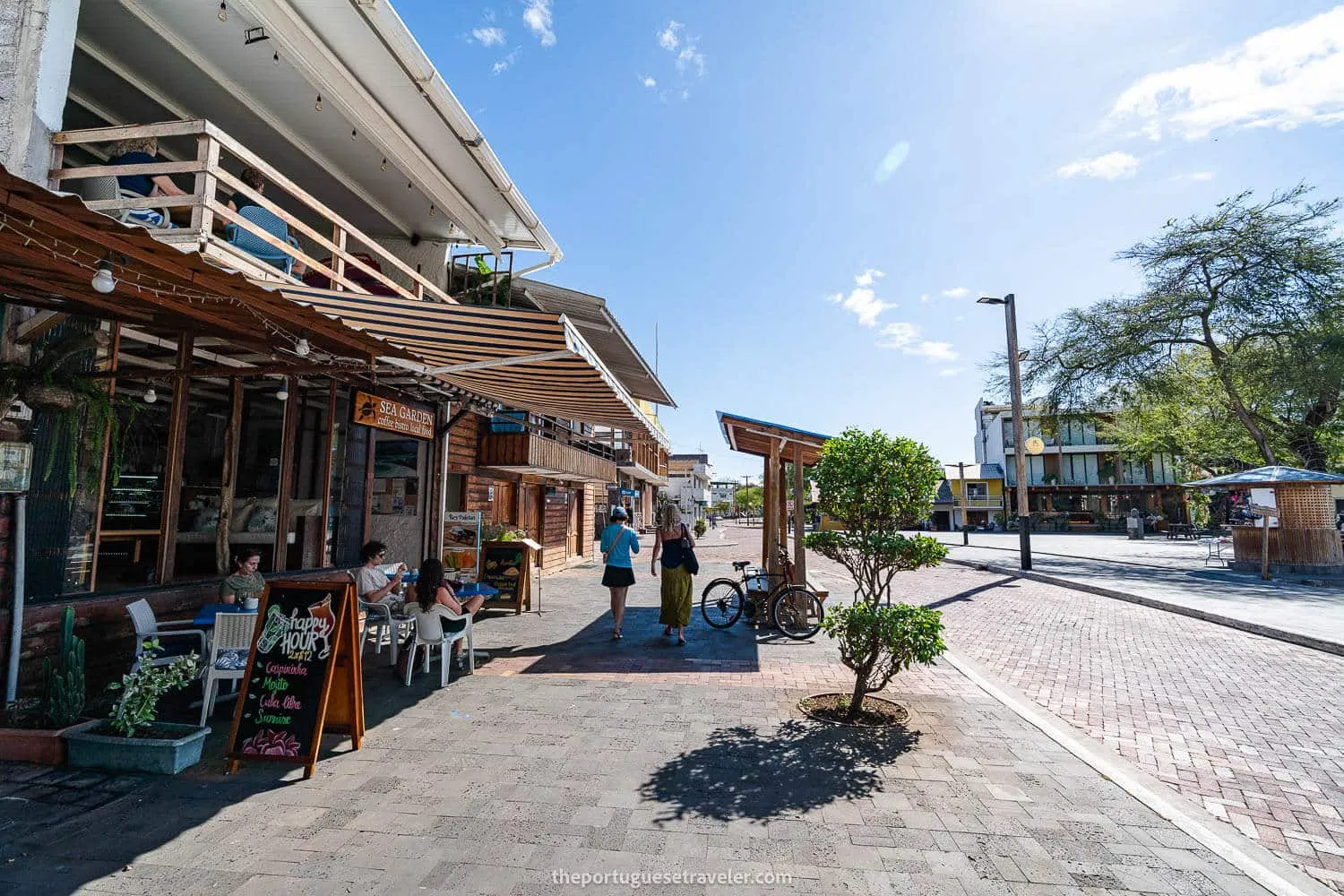
Puerto Baquerizo Moreno with an amazing weather in January
Conclusion: Is Galapagos Solo Travel Worth It?
Galapagos solo travel is not the cheapest trip you will take, but traveling alone works well here. Hostels and group day tours make it easy to meet people, and the sea lions and iguanas are good company. Budget realistically, use the social side of hostels and tours, and give yourself enough days to island hop at a relaxed pace instead of rushing through a checklist.
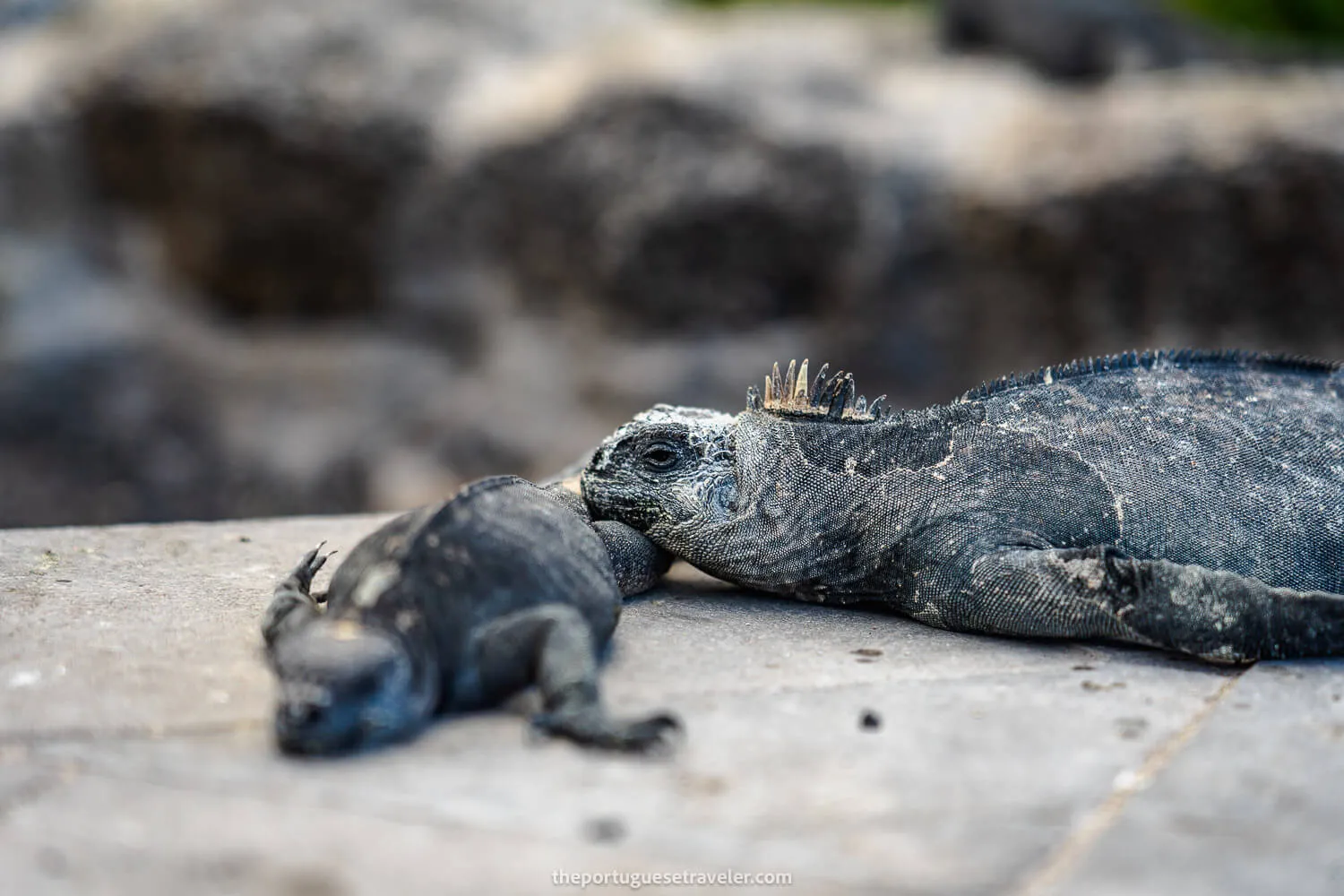
A marine iguana laying her head over her baby in Santa Cruz island
Plan your trip
The links in this box are affiliate links. You won't pay more, and they help keep the blog running. Each line says whether I have used the product.

Car Rental: Discovercars compares car rental offers from many companies.

Accommodation: Book your hotels with Booking.com or Expedia. I used Agoda in Southeast Asia.

Flights: Trip.com sells flights, hotels, train tickets, attractions and car rental. Airhelp handles compensation claims for delayed, canceled or overbooked flights and charges a 35% fee only if the claim succeeds.

Trains and Buses: I have booked with Omio several times, including from Lisbon to San Sebastian. 12Go sells tickets for trains, buses, ferries, transfers and flights across Asia and some other regions.

Tours and Tickets: I have used GetYourGuide on some trips. Viator sells tours, activities and tickets, and most have free cancellation up to 24 hours before.

Mobile eSIM: Holafly sells eSIM data plans for travel, delivered by email (5% discount). I have used Airalo, not in the Galapagos.

Travel Insurance: Heymondo sells travel insurance that covers medical issues, lost luggage, transport delays and trip cancellation, with an app that offers medical chat and 24/7 assistance. It is well reviewed, and this link gets you 5% off. Safetywing sells subscription health and travel insurance for people who travel or live abroad, covering medical treatment, emergency dental care and travel problems such as lost luggage and delays.


Loading comments…