
Galapagos Christmas & New Year
Everything you need to know about visiting during the holidays
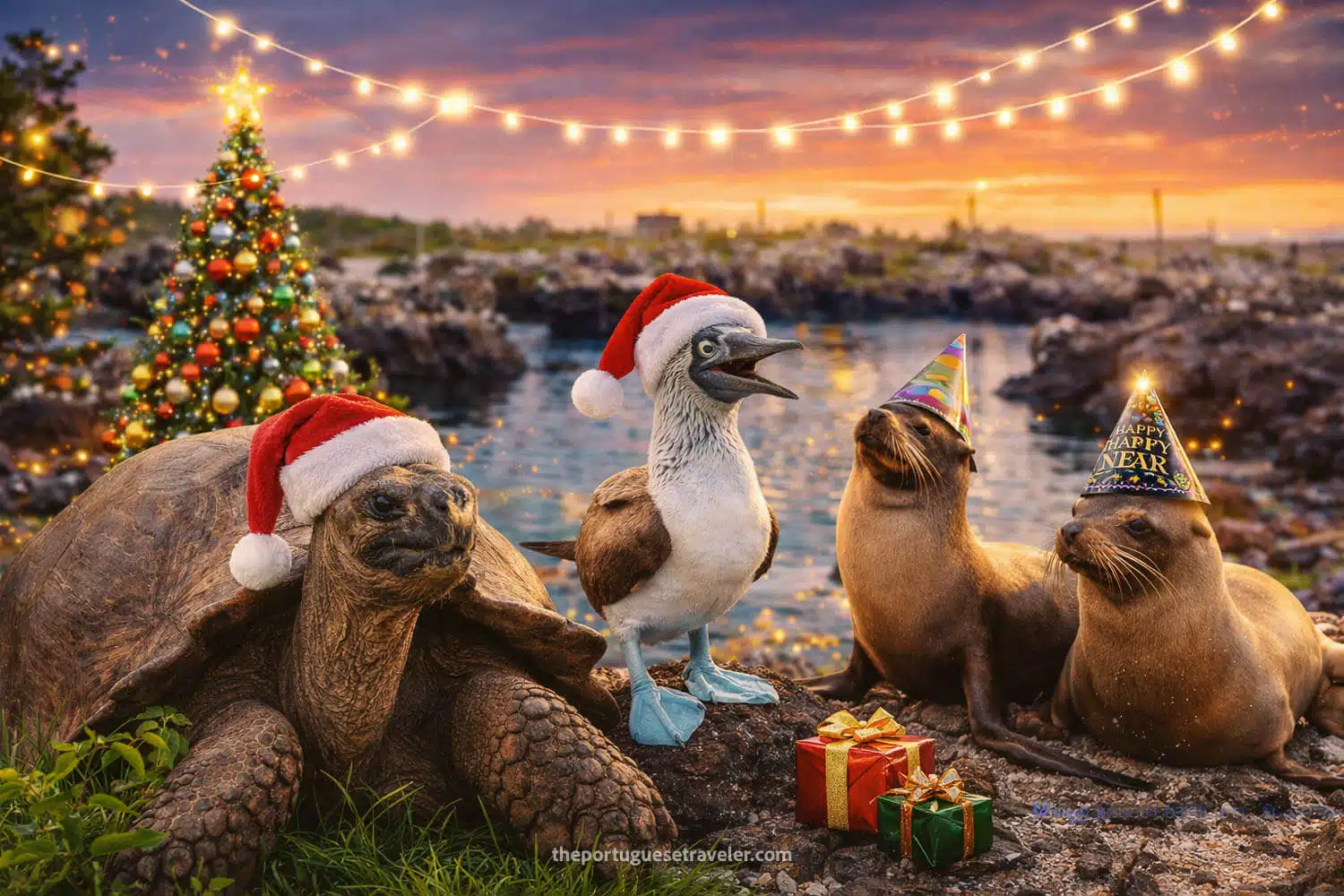
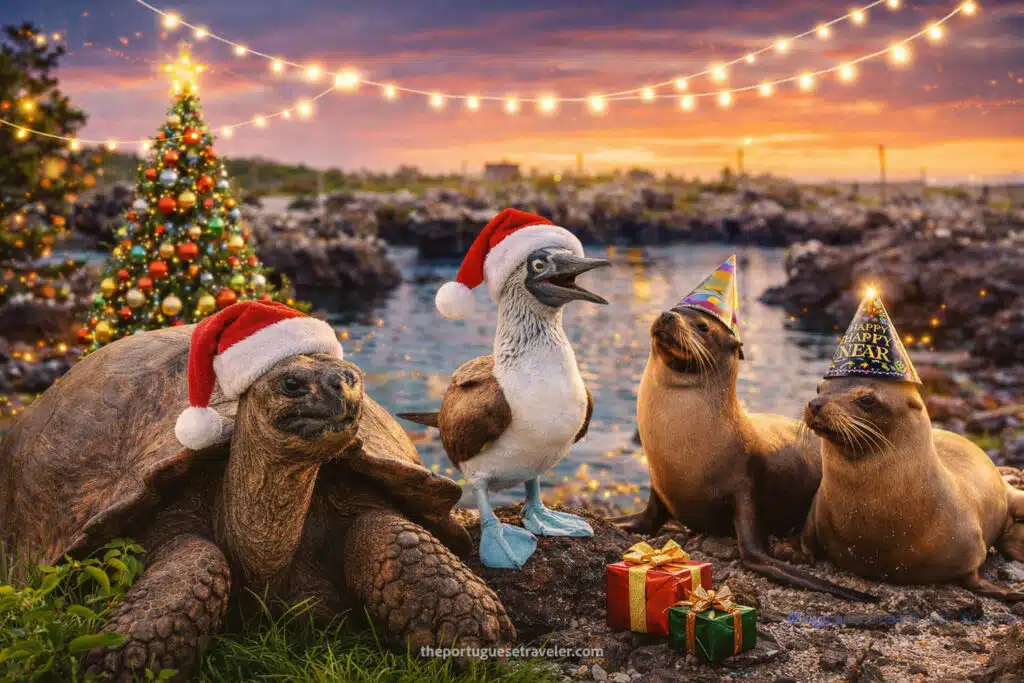
A Galapagos Christmas feels quietly surreal in the best possible way. While much of the world is wrapped in winter layers and holiday routines, life on the islands carries on under the equatorial sun, surrounded by turquoise water and wildlife that shows up whether it’s December 25th or any other day of the year. The contrast is striking — festive dates on the calendar paired with sea lions lounging on docks and frigatebirds circling overhead.
Christmas in the Galapagos is a mix of subtle local traditions and business-as-usual nature encounters. While Ecuadorians celebrate with family meals, nativity scenes, and fireworks on the mainland, the islands keep things simple. Tours still run, wildlife sightings are as incredible as ever, and the biggest difference you’ll notice is the atmosphere: slightly livelier towns, more travelers, and a feeling that you’re sharing something special rather than following a standard holiday script.
That said, traveling to the Galapagos over Christmas does require planning. From availability and prices to weather conditions and tour logistics, this guide breaks down exactly what to expect — so you can decide if a Galapagos Christmas is the right fit for your travel style, and how to make the most of it if you go.
Table of Contents
Your Galapagos Islands Essentials - Quick Guide
Short on time? This quick Galapagos guide will help you plan!
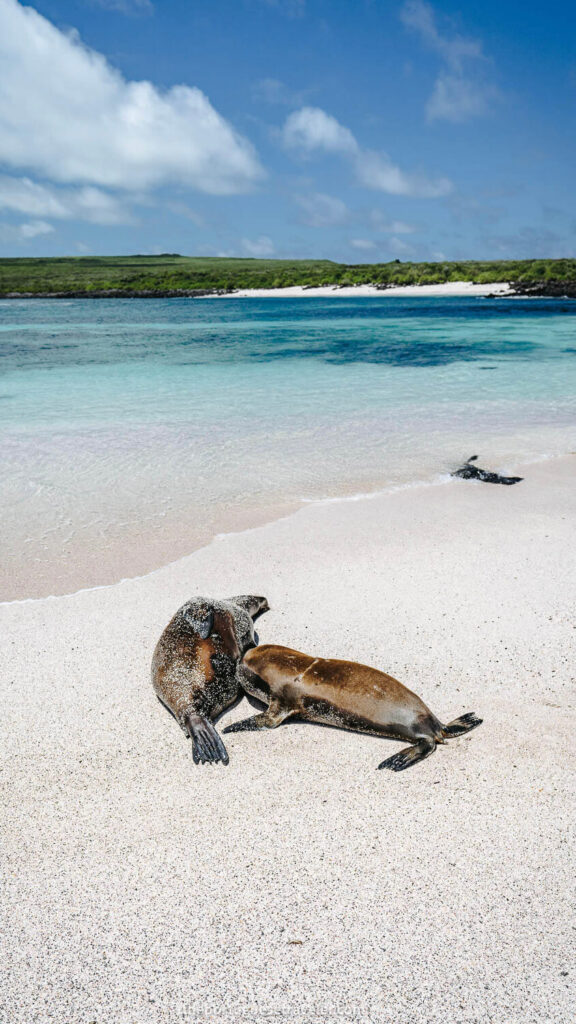
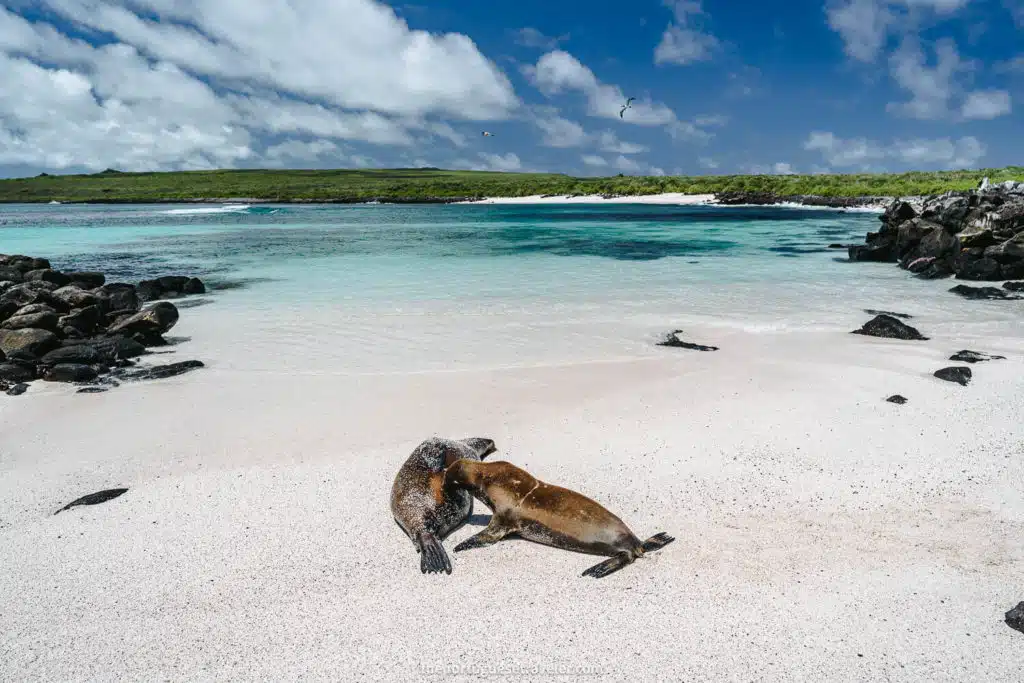
Where to Stay:
– Finch Bay Hotel (Santa Cruz Island)
– Hotel Indigo by IHG (San Cristobal Island)
– Hotel Iguana Crossing (Isabela Island)
Must-Do Experiences:
– 360 Tour (San Cristobal highlights by boat)
– Kicker Rock Tour (Top snorkeling with big wildlife)
– Bartolome Island Tour (Iconic views & marine life)
– Floreana Island Tour (Snorkel, fishing & history)
– Sierra Negra Volcano Tour (Epic volcano hike)
– Los Tuneles Tour (Galapagos’ best snorkeling)
Extras you’ll Need:
– Travel Insurance with Heymondo (5% discount).
– Mobile eSim with Holafly (5% discount) or Airalo
Galapagos Christmas & New Year: What It’s Really Like
Christmas and New Year in the Galapagos feel surprisingly calm for such a sought-after destination. There are no flashy decorations or big public events aimed at tourists. Instead, the islands carry on much as they always do — wildlife encounters, boat schedules, and quiet evenings — with a subtle festive layer woven into local life.
A Galapagos Christmas is intimate rather than spectacular. Towns tend to empty out on Christmas Eve as families gather at home, while New Year’s Eve brings a noticeable shift in energy, with music, dancing, and community celebrations taking over public squares. The contrast between untouched nature and human tradition is what makes this time of year feel so unique.
Why Visit the Galapagos for Christmas & New Year?
The main reason people choose this period is timing. December sits at the start of the warm season, offering calmer seas, warmer water, and active wildlife — ideal conditions for snorkeling, island hopping, and photography.
Christmas and New Year also align with global holiday breaks, making it easier for travelers to justify a longer, more meaningful trip. For many, this isn’t just a vacation — it’s a once-in-a-lifetime way to spend the holidays somewhere completely different from home.
Travel Guide, Itineraries, Map, Local Tips
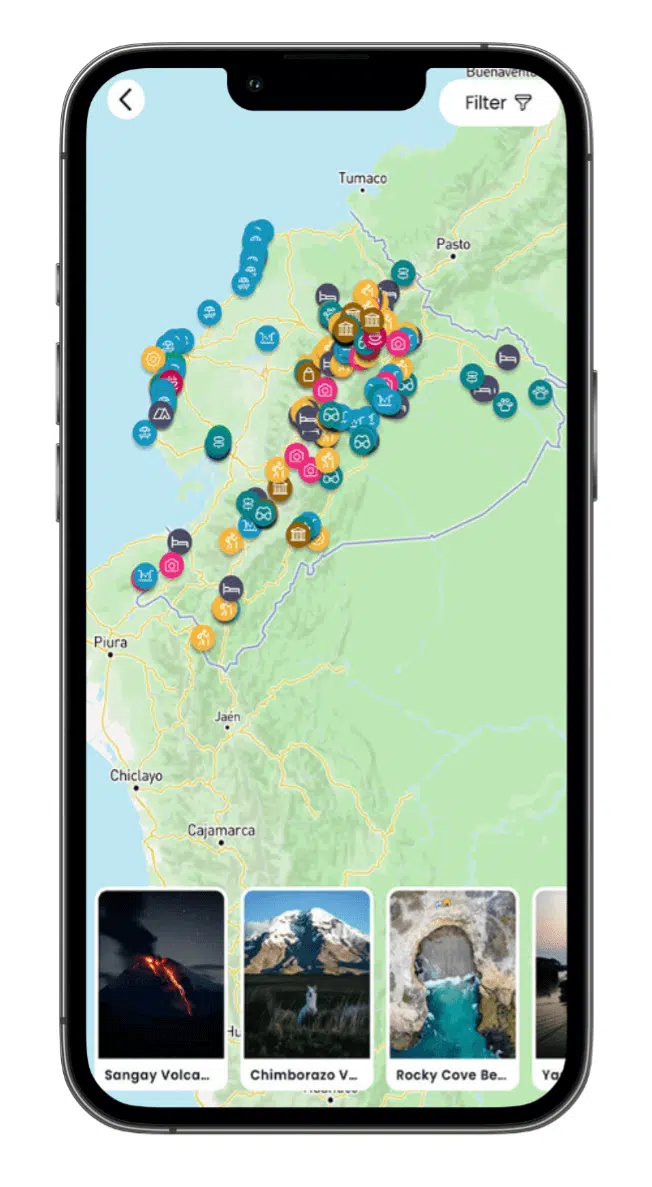
Get access to my curated list of all the best viewpoints, hiking trails, secret waterfalls, diving spots, wildlife tours, accommodations, and more, that will make your trip to Ecuador and The Galapagos unforgettable.
All of this, in an interactive guide featuring a mobile-friendly map, pre-designed itineraries, all my favourite photos, and helpful travel tips to guide your journey in this amazing unexplored country.
If you want personalized advice write me in-app and we can plan it together.

Plan Your Galapagos & South America Trip (Free Quote)
Galapagos Christmas Traditions & Local Celebrations
Christmas in the Galapagos follows Ecuadorian customs, but on a smaller, quieter scale. The focus is on family, faith, and home gatherings rather than public festivities. Most celebrations happen behind closed doors, which is why towns can feel unusually still on the evening of December 24.
As a visitor, you’re more likely to observe Christmas than actively participate in it — seeing nativity scenes in homes, hearing carols in the distance, or noticing how daily life gently slows down for the holiday.
Novena During Galapagos Christmas (December 15–24)
In the weeks leading up to Christmas, Novena quietly shapes daily life in the Galapagos. From December 15 onward, families, neighbors, and church groups gather each evening to prepare spiritually for the birth of Christ. Ecuador is a predominantly Catholic country, and even on the islands, this tradition remains deeply rooted.
During Novena, people meet in homes or churches to pray, read Bible passages, and sing villancicos (traditional Christmas carols) around the pesebre, the nativity scene set up inside the house. These gatherings are intimate and community-driven rather than ceremonial, often followed by casual conversation and shared food. As a traveler, you might not be formally invited, but you’ll notice the rhythm of the islands slow slightly in the evenings as families come together.
Pase del Niño: A Galapagos Christmas Parade
Pase del Niño, also known as Pase del Niño Viajero, is one of the most recognizable public expressions of Galapagos Christmas. Taking place on December 24, this all-day celebration reenacts key moments of the Nativity story, including the journey of Joseph and Mary and the birth of Jesus.
On the islands, the parade is smaller and more informal than on mainland Ecuador, but it remains deeply meaningful to local communities. Children dress as angels, shepherds, and biblical characters, while families accompany them through the streets with music and decorated floats. The procession moves slowly through town centers, stopping at churches and public squares, turning Christmas Eve into a communal event rather than a private one.
For visitors, Pase del Niño offers a rare chance to see Christmas traditions unfold organically in the Galapagos — not staged for tourism, but lived. Streets may close temporarily, shops pause their business, and the islands briefly shift their focus from daily routines to celebration and faith.
Misa de Gallo in the Galapagos
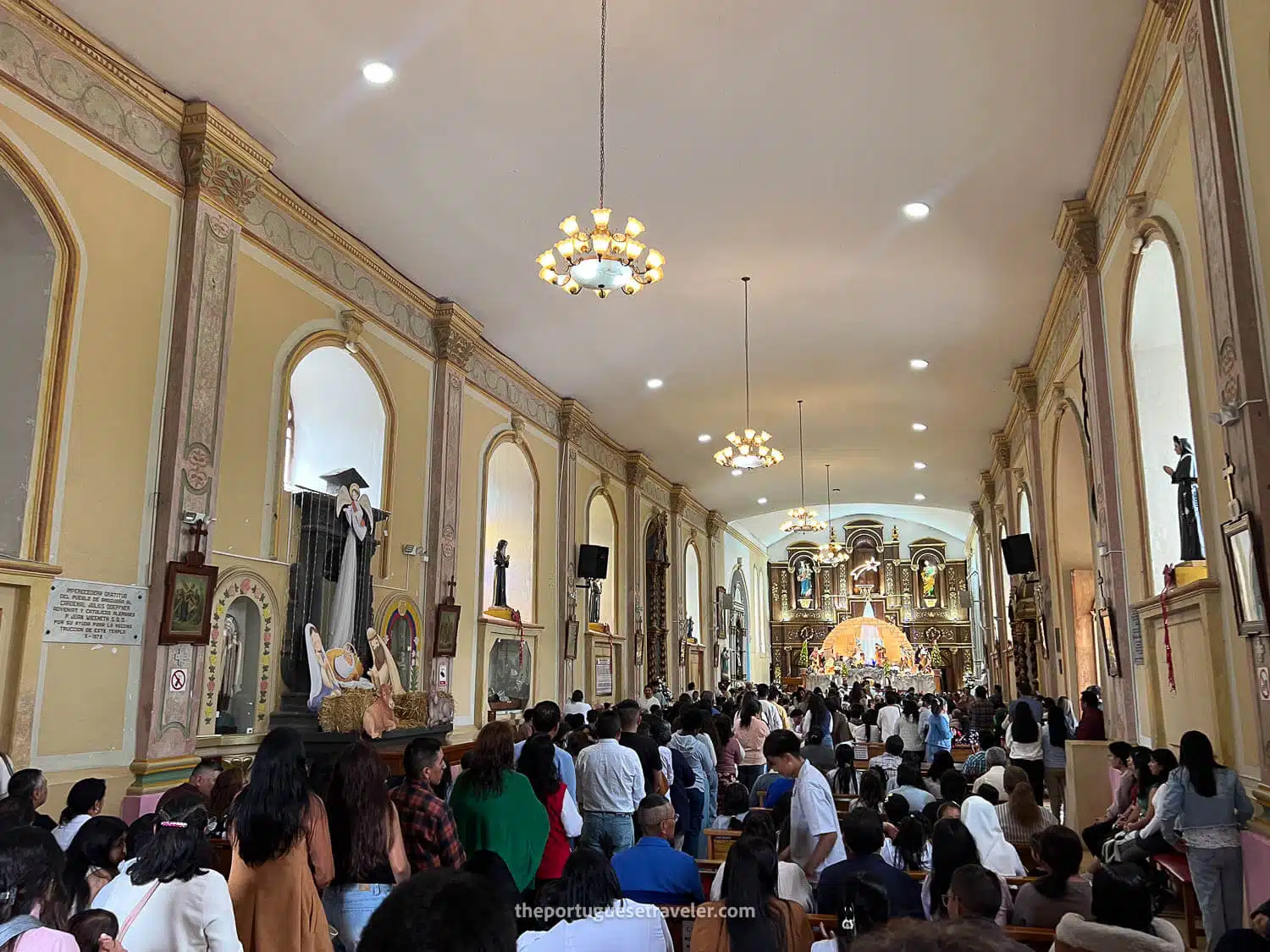
On the evening of December 24, many families attend Misa de Gallo, the traditional Midnight Mass that marks the official beginning of Christmas Day. Churches across Santa Cruz, San Cristóbal, and Isabela open their doors late at night as families gather to celebrate the birth of Jesus.
A distinctive part of this tradition is the custom of bringing ceramic or wooden figurines of the baby Jesus from home pesebres to the church. These figurines are blessed by the priest during the service and then returned to the nativity scenes at home, completing the spiritual preparation that began with Novena earlier in the month.
The atmosphere inside the churches is calm and reflective rather than grand or theatrical. Hymns are sung, prayers are shared, and families sit together, often dressed casually due to the tropical heat. Even for non-religious travelers, Misa de Gallo offers insight into how Christmas in the Galapagos is rooted in quiet rituals rather than outward display.
Nochebuena: Christmas Eve in the Galapagos
Nochebuena is the heart of Galapagos Christmas, but it’s a calm, family-centered celebration rather than a public event. On December 24, most families stay at home, gathering with relatives and close friends to spend the evening together.
The hours leading up to midnight are often filled with villancicos, casual conversation, and family games while food is prepared. In many households, the main Christmas dinner doesn’t begin until midnight, marking the official start of Christmas Day. In others, families may eat earlier and continue celebrating late into the night.
Gift-giving typically happens at midnight, with presents already placed under the Christmas tree. Families open them together once the clock strikes twelve, often after returning from Misa de Gallo or finishing evening prayers. There’s no rush or strict schedule — the emphasis is simply on being together.
For travelers, this means Christmas Eve in the Galapagos feels noticeably quiet. Restaurants may close early or operate only with pre-booked dinners, and towns empty as families turn inward. It’s a deeply local moment, centered on togetherness rather than spectacle — and a defining part of Galapagos Christmas.
Traditional Galapagos Christmas Food & Drinks
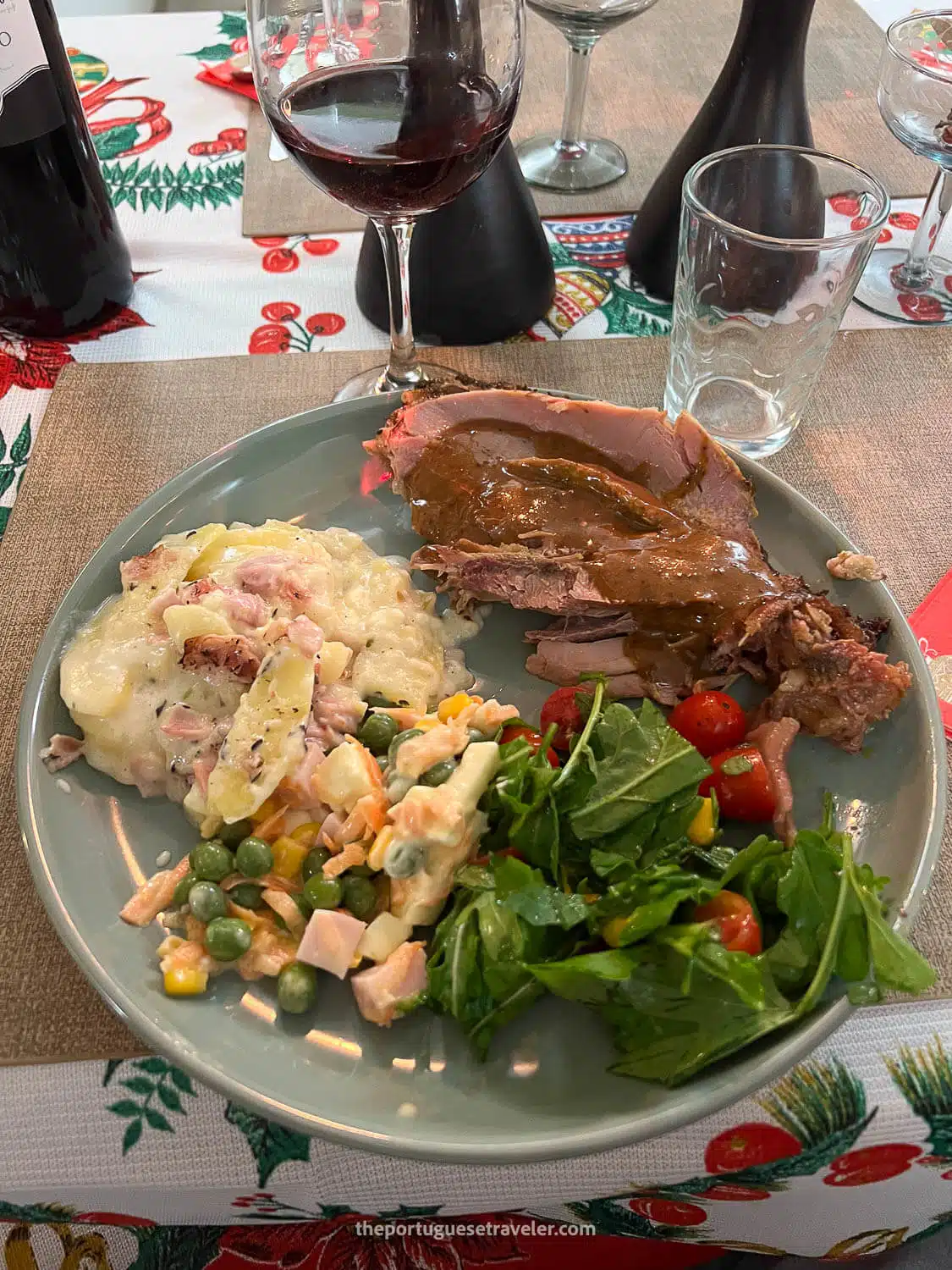
Christmas food in the Galapagos follows Ecuadorian holiday traditions, adapted to island life but still rich and abundant. The cena de Nochebuena is a central part of the celebration, with dishes prepared throughout the day and served family-style late at night.
Common dishes include pavo horneado (roast turkey), considered essential for Christmas dinner, often accompanied by relleno de pavo, a stuffing made with a mix of meats, dried fruits, nuts, and wine. Pork dishes are equally important, such as hornado de chancho, a slow-roasted pork leg marinated with garlic and beer, or pernil lojano, where pork is marinated in bitter orange juice, spices, panela, and slow-roasted for hours until tender.
Side dishes play a big role as well, especially arroz navideño, a yellow Christmas rice mixed with small pieces of ham, raisins, almonds, and green olives, alongside various salads and potatoes.
Drinks are festive and warming despite the tropical climate. Canelazo, a hot cinnamon-based cocktail with aguardiente, is common, as is its Christmas variation naranjillazo, made with local naranjilla fruit. Ronpope, similar to eggnog, is often served during dinner. Desserts may include tronco navideño, a chocolate cake similar to a yule log, and pristiños, fried pastries drizzled with panela syrup or honey.
Even with temperatures around 27°C and warm ocean water outside, Galapagos Christmas meals are comforting, nostalgic, and deeply tied to family tradition.
New Year’s Eve in the Galapagos (Año Viejo)
New Year’s Eve in the Galapagos is lively, chaotic, and unmistakably Ecuadorian — but adapted to the islands’ unique reality. While the mainland celebrates with fireworks and large bonfires, the Galapagos keeps things more controlled, focusing on tradition, humor, and community. From burning monigotes to exaggerated viudas dancing in the streets, Año Viejo on the islands is less about spectacle and more about shared moments as the old year fades away.
Año Viejo Traditions in the Galapagos
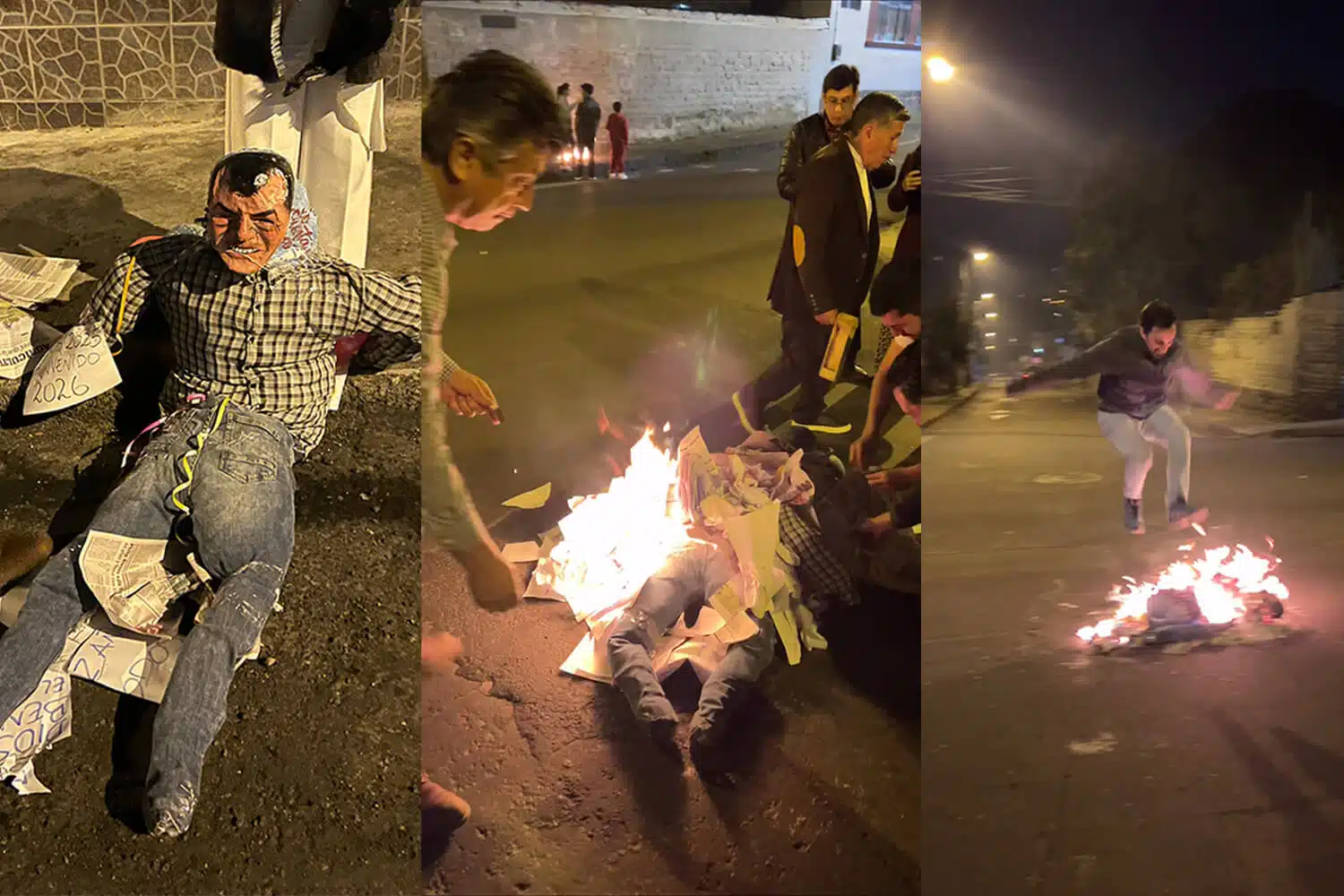
The heart of New Year’s Eve celebrations in Ecuador is the burning of monigotes — life-sized effigies that represent the old year. These figures are made from cardboard, paper, sawdust, and old clothes, and they often portray politicians, celebrities, cartoon characters, or exaggerated symbols of whatever people want to leave behind.
On mainland Ecuador, it’s common for families to burn monigotes at midnight while setting off large amounts of fireworks and sometimes releasing candle sky lanterns into the sky. In the Galapagos, however, things are different. Due to strict conservation rules, fireworks and sky lanterns are forbidden, and burning monigotes is more controlled and localized. When it happens, it’s usually smaller, supervised, and kept away from sensitive wildlife areas.
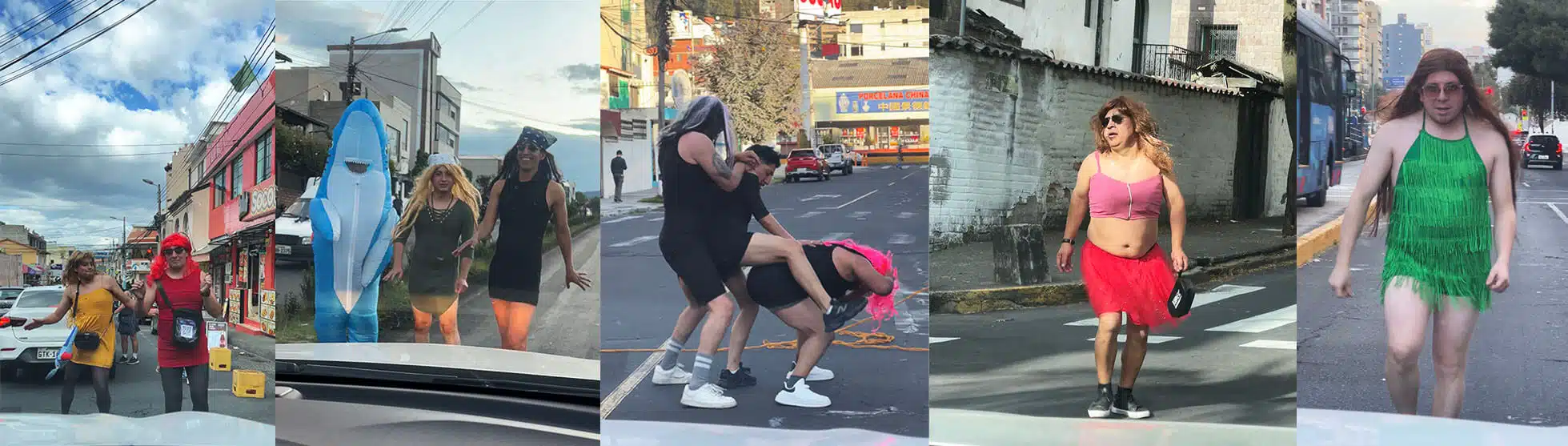
One of the most entertaining Año Viejo traditions is the appearance of viudas (“widows”). Today, this has very little to do with mourning. Viudas are typically men dressed as women, wearing wigs, heavy makeup, and exaggerated costumes with oversized breasts and hips. They dance playfully — often very sensually and humorously — in front of passing cars, stopping traffic to collect small contributions. The performances are intentionally over-the-top, funny, and theatrical, and they’re a big part of what makes New Year’s Eve in Ecuador feel chaotic and joyful.
These traditions aren’t polished or staged; they’re spontaneous, loud, and full of laughter. Even in the more regulated environment of the Galapagos, Año Viejo keeps its playful spirit — just adapted to protect the islands.
Where to Celebrate New Year’s Eve in the Galapagos
New Year’s Eve in the Galapagos isn’t centered around large venues or organized countdown events. Instead, celebrations happen out in the open, woven into neighborhoods and town streets. The best places to experience Año Viejo are simply where locals gather.
On Santa Cruz Island, Puerto Ayora is the liveliest spot, especially around the main streets near the waterfront and residential areas where monigotes are set up. You can walk from block to block, watching effigies burn, listening to music coming from homes, and encountering viudas dancing in the streets. It’s informal, social, and easy to join as a visitor.
On San Cristobal, celebrations in Puerto Baquerizo Moreno are slightly more low-key but still very local. Families gather outside their homes, and small groups move between neighborhoods as midnight approaches. Isabela Island is quieter still, with celebrations mostly limited to local streets rather than central gathering points.
Some hotels and restaurants offer New Year’s Eve dinners, often with fixed menus, but these usually finish before midnight. The common approach is to eat early or reserve a hotel dinner, then head out afterward to experience Año Viejo with locals rather than staying indoors.
Fireworks, Bonfires & Wildlife Rules in the Galapagos
Unlike mainland Ecuador, where New Year’s Eve is marked by fireworks at almost every house, the Galapagos has strict regulations designed to protect wildlife and fragile ecosystems. Fireworks are not allowed, and neither are candle sky lanterns, which pose serious risks to birds and marine life.
Bonfires and the burning of monigotes are also regulated. While you may see small, controlled fires in certain neighborhoods, they are kept away from natural areas, beaches, and wildlife zones. Local authorities monitor celebrations to ensure safety and environmental protection, especially in towns close to nesting or feeding areas.
For visitors, this means New Year’s Eve in the Galapagos is less explosive and visually intense than on the mainland — but also calmer and more community-oriented. The focus shifts from noise and spectacle to shared tradition, humor, and ritual. It’s a clear reminder that even during celebration, the islands’ first priority is conservation.
Galapagos Weather in December (Christmas Season)
December marks the transition from the cool, dry season to the warm and wetter season in the Galapagos, making it one of the most pleasant times of year to visit. During the Christmas season, daytime temperatures typically hover around 27°C (80°F), with nights staying comfortably warm rather than humid or oppressive.
Rainfall in December is generally light and sporadic, often appearing as short showers in the late afternoon or evening, especially in the highlands. These brief rains refresh the landscape without disrupting daily activities. Coastal areas usually stay drier, and there’s still plenty of sunshine, averaging 5–6 hours per day.
Sea conditions also improve during this time. As the southern trade winds ease, waters become calmer and clearer, making December an excellent month for boat travel, snorkeling, and diving. Sea temperatures rise to around 22–24°C (72–76°F) — refreshing rather than cold — though some travelers still prefer a light wetsuit for longer sessions in the water. Overall, Galapagos Christmas weather feels more like a tropical summer holiday than a traditional winter escape.

Galapagos Wildlife During Christmas & New Year
The Galapagos is extraordinary year-round, but Christmas and New Year coincide with an especially active wildlife period. The warmer seas, changing currents, and the first seasonal rains trigger mating, nesting, and feeding behaviors across land and sea.
December is not about rare sightings — it’s about intensity. Animals are more visible, interactions are more dynamic, and many species enter key life stages. Whether you’re snorkeling, hiking, or simply walking through town, wildlife encounters feel constant and unscripted during this time of year.
Below is how that activity breaks down across marine life, birds, and land animals.
Marine Life during Christmas
Marine life is one of the biggest highlights of Galapagos Christmas. Warmer waters brought by the Panama Current, combined with the lingering nutrients from the Humboldt Current, create excellent conditions for snorkeling and diving.
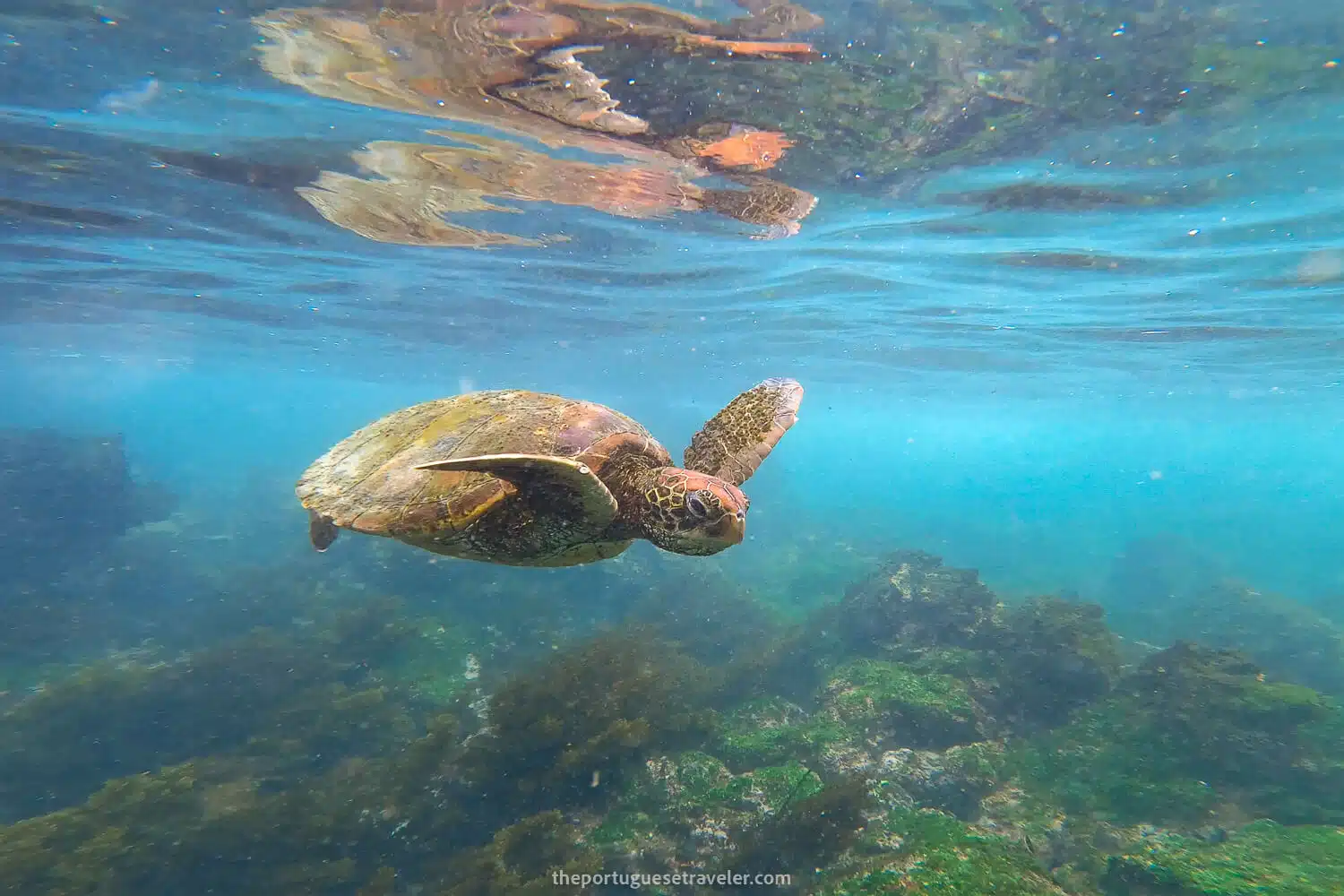
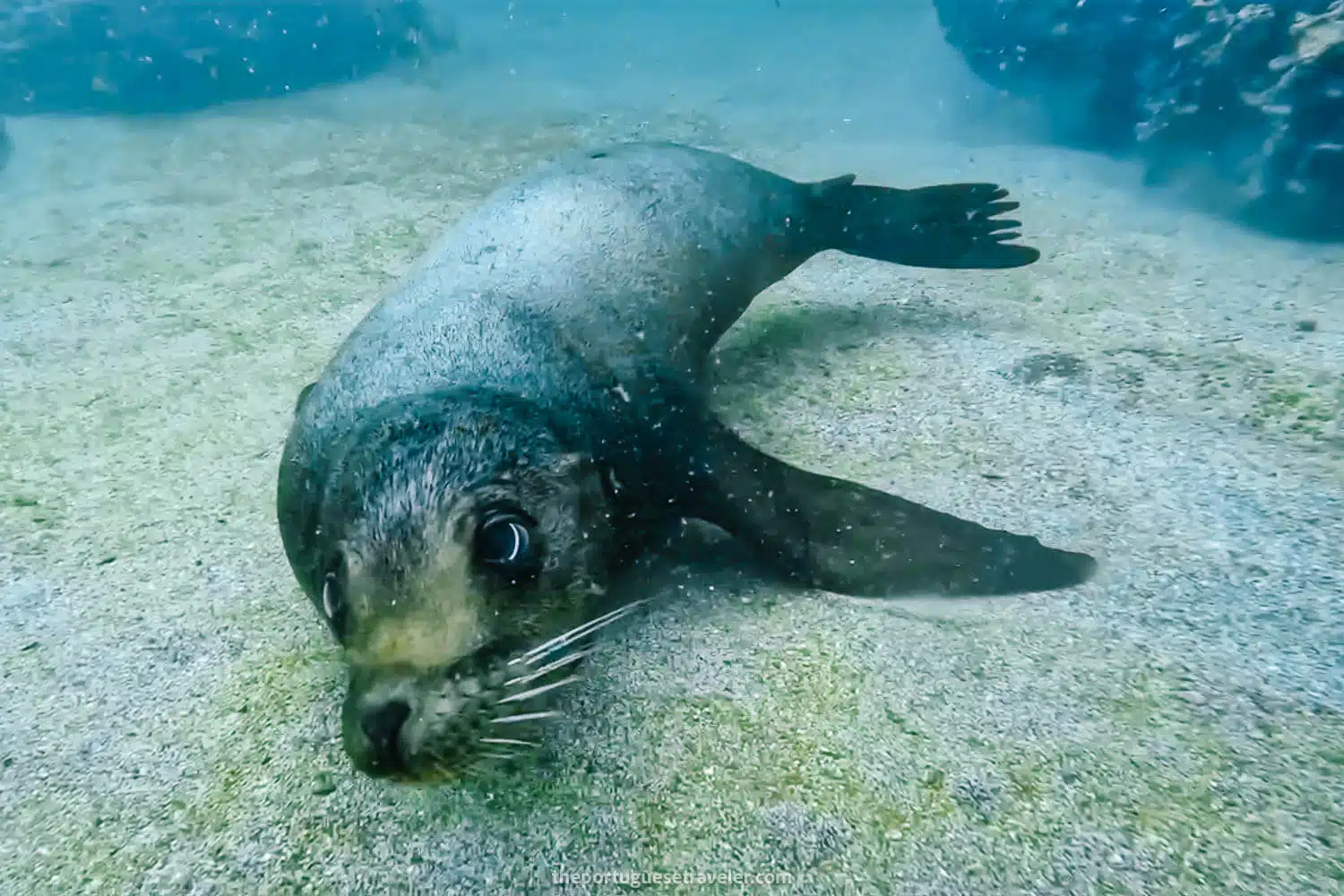
Green sea turtles are especially active in December, as this is part of their mating season. It’s common to spot mating pairs near the surface or from boats, particularly around Santa Cruz and Isabela. Sea lions, including young pups from earlier in the year, are playful and curious, often approaching snorkelers in shallow water.
White-tipped reef sharks are frequently seen resting in caves, while hammerheads may still appear in deeper or more remote sites. Dolphins, especially bottlenose dolphins, are often spotted riding boat bow waves. Underwater visibility typically improves in December, making marine encounters clearer and more immersive.
Birdlife & Breeding Season
December is a rewarding month for birdlife, especially as the first rains increase food availability. Darwin’s finches become more active, with many species entering their breeding season, feeding on newly abundant seeds, fruits, and insects.
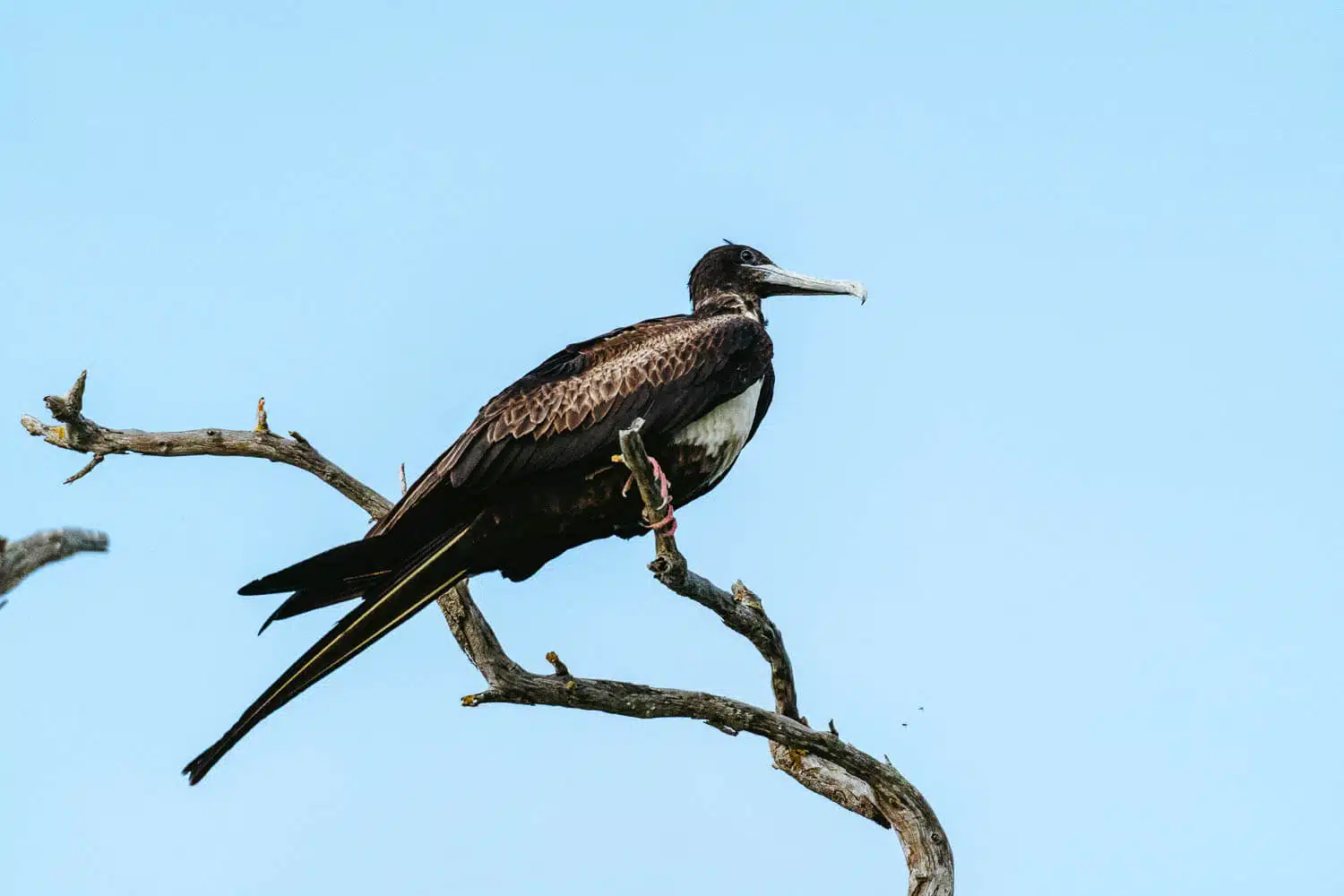
Frigatebirds are a standout sight during Galapagos Christmas. Males can be seen inflating their bright red throat pouches to attract mates, a behavior that occurs opportunistically throughout the year but is especially noticeable during this period. Both magnificent and great frigatebirds are commonly observed soaring effortlessly above the islands.
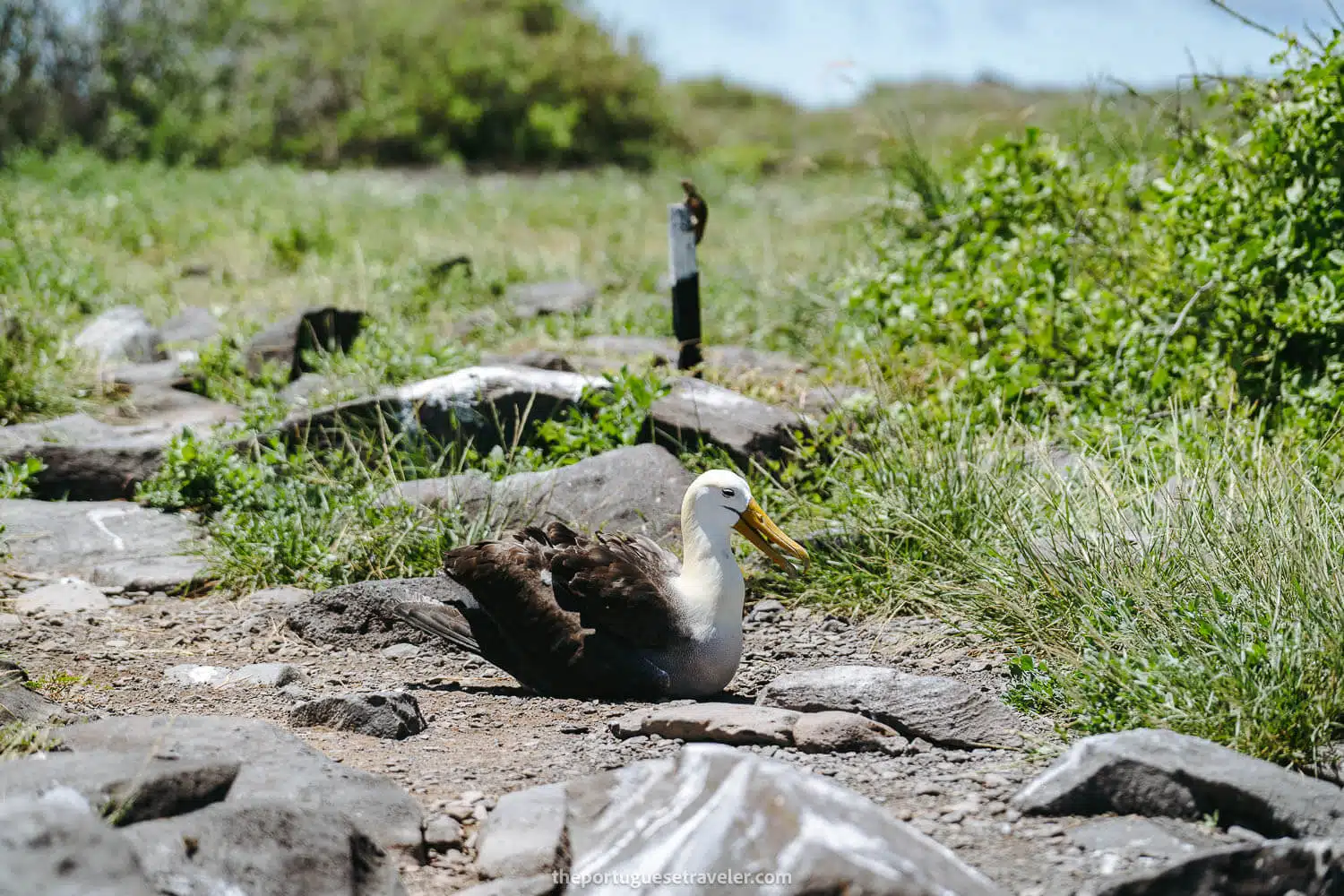
December is also the last reliable month to see waved albatross on Española Island before they depart. Other commonly sighted birds include blue-footed and Nazca boobies, Galapagos hawks, lava gulls, pelicans, American oystercatchers, and — with some luck — flamingos, one of the archipelago’s rarest birds.
Reptiles & Land Wildlife
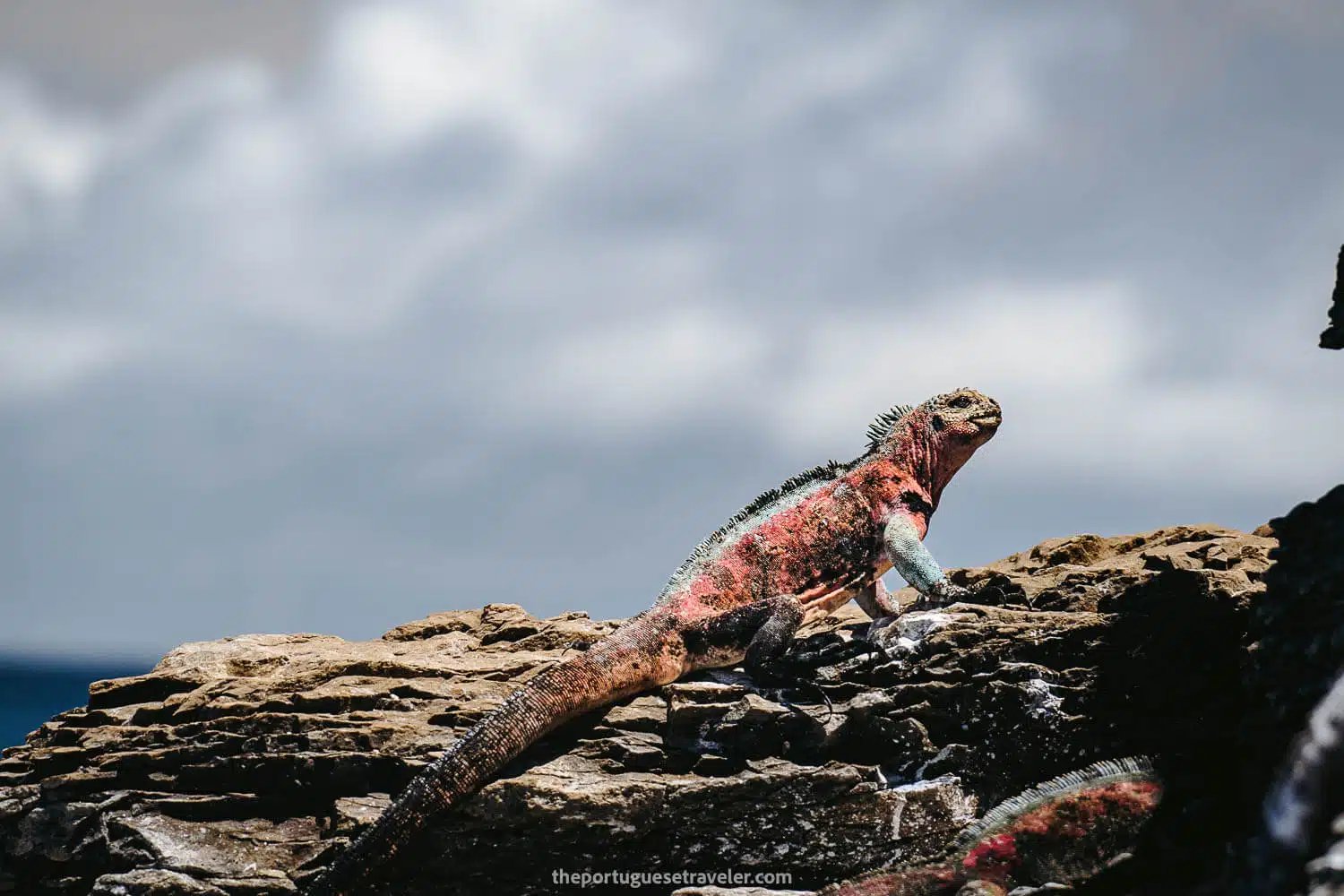
December marks the start of the marine iguana breeding season, and this is when they look their most striking. Normally black for most of the year, male marine iguanas change color during mating season, with each island’s subspecies developing different patterns. On Santa Cruz, males turn red and black; on Fernandina, dull green and brick red; and on Española Island, they become especially vibrant, flushing bright green and red. This seasonal color change has earned the Española subspecies the nickname “Christmas iguana,” as their brightest colors appear around December and into the New Year.
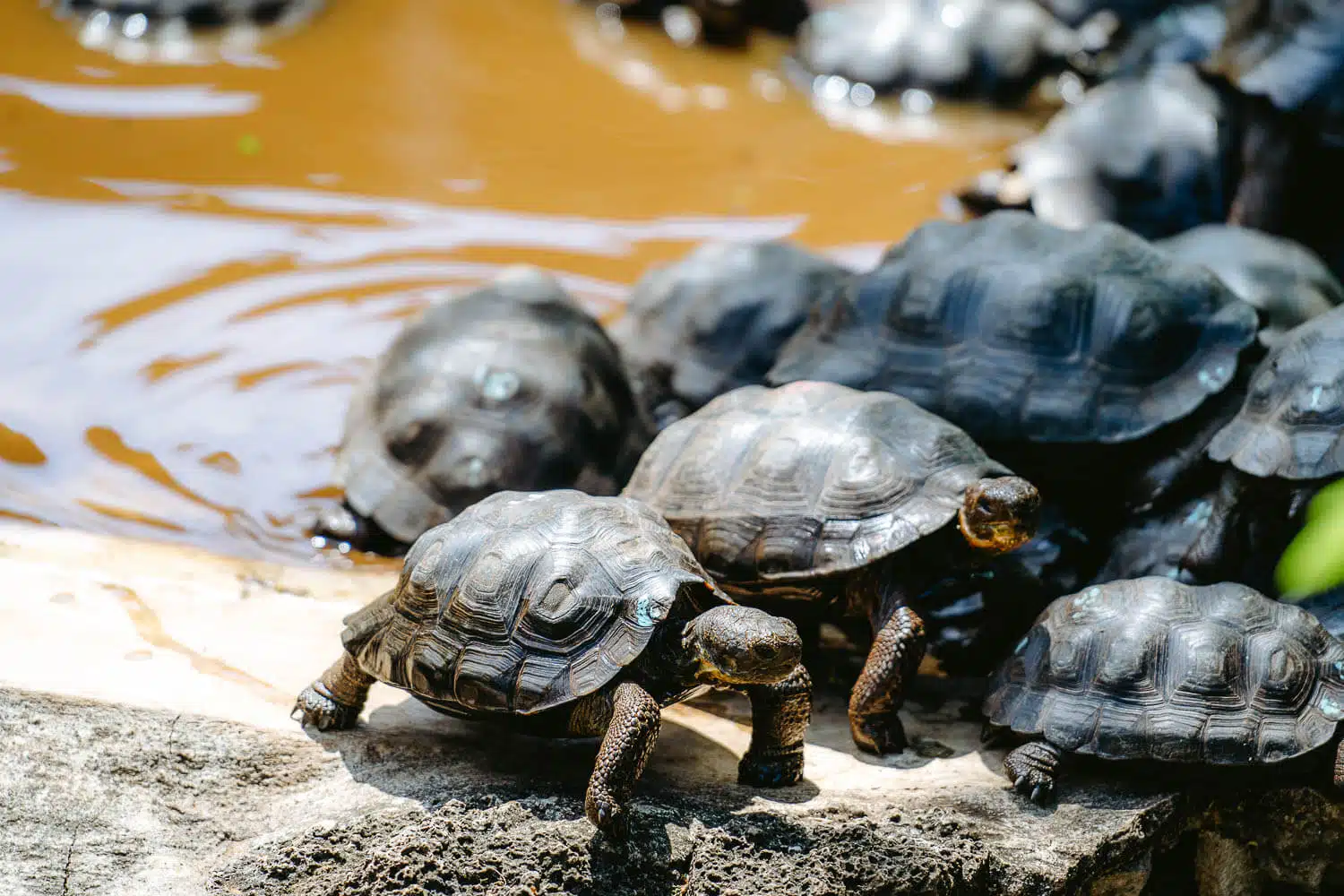
Land iguanas also become more active and territorial during this period, while giant tortoises remain visible year-round, particularly in the highlands. In some areas, especially on Isabela Island, December can also coincide with the emergence of tortoise hatchlings, adding another seasonal highlight to Galapagos Christmas wildlife encounters.
Is Christmas a Good Time to Visit the Galapagos?
Yes — Christmas is an excellent time to visit the Galapagos, but it suits a specific type of traveler. December offers warm weather, calmer seas, and some of the most dynamic wildlife behavior of the year, especially marine iguanas, sea turtles, and seabirds. For snorkeling and general island hopping, conditions are among the best.
That said, Galapagos Christmas doesn’t feel like a festive theme park holiday. Decorations are minimal, and Christmas Day itself is quiet, with many local businesses closing or operating on reduced hours. If your idea of Christmas involves events, markets, or public celebrations, the Galapagos may feel understated. If you’re comfortable trading tradition for nature and atmosphere, it’s a rewarding exchange.
For travelers already planning a trip in December, Christmas adds character rather than inconvenience — just expect a slower rhythm on December 24 and 25.
How Busy Is the Galapagos at Christmas & New Year?
Christmas and New Year fall within peak season in the Galapagos, but “busy” is relative. Compared to mainland destinations or Caribbean islands, the Galapagos never feels overcrowded in the traditional sense. Visitor numbers are controlled through park regulations, fixed cruise capacities, and limited accommodations.
That said, availability is the real challenge. Flights between islands, day tours, and especially cruises sell out far in advance for late December. Popular snorkeling tours, island-hopping ferries, and well-located hotels often reach capacity weeks or months before Christmas.
On the ground, towns feel livelier than usual — especially around New Year’s Eve — but nature sites remain regulated and calm. The islands don’t absorb crowds; they cap them. Planning ahead matters more than crowd tolerance.
Galapagos Christmas Prices & Peak Season Costs
Galapagos Christmas sits firmly within the highest pricing window of the year. Flights from mainland Ecuador increase significantly, especially in the final two weeks of December. Hotels, cruises, and tours all apply peak season rates, with some charging holiday supplements.
Cruises see the steepest increases, particularly for departures between December 20 and January 5. Land-based travel can be more flexible, but mid-range and budget hotels still fill quickly, pushing last-minute travelers toward higher-priced options.
On top of accommodation and tours, fixed costs remain the same year-round — including the Galapagos National Park fee and transit control card — meaning holiday travelers don’t get cost offsets elsewhere. Visiting during Galapagos Christmas is less about finding deals and more about deciding whether the seasonal conditions justify the premium.
Is Galapagos during Christmas Worth It on a Budget?
For most travelers, Galapagos Christmas is challenging on a tight budget. December is peak season, meaning flights from mainland Ecuador are more expensive, accommodation fills quickly, and tours rarely offer discounts. Budget hostels and guesthouses exist, but they sell out early, leaving last-minute travelers with limited and pricier options.
That said, it’s not impossible. Travelers who plan far in advance, stay longer on one island, and focus on self-guided activities — beaches, snorkeling from shore, short hikes — can keep costs under control. Choosing land-based travel over cruises and booking flights months ahead makes a noticeable difference.
Still, if your priority is stretching every dollar, other months offer better value. Galapagos Christmas rewards preparation more than spontaneity.

When Galapagos at Christmas Is Worth the Cost
Galapagos at Christmas is worth the premium if conditions matter more to you than price. Warm weather, calmer seas, and peak wildlife activity make December one of the most balanced months for first-time visitors. Snorkeling is excellent, marine life is active, and seasonal behaviors add depth to every excursion.
It’s also worth it if your travel dates are fixed. For many travelers from the US and Europe, Christmas is the only realistic time off, and the Galapagos delivers a meaningful alternative to crowded resorts or winter destinations. Spending the holidays immersed in nature rather than busy cities can feel like a reset.
Finally, if you’re planning a once-in-a-lifetime trip, Christmas doesn’t diminish the experience — it enhances it. The islands don’t shut down; they slow slightly, and nature remains the focus.
When Christmas in the Galapagos Probably Isn’t Worth the Cost
Christmas in the Galapagos may not be worth it if you’re price-sensitive or flexible with dates. Visiting just a few weeks earlier or later can reduce costs significantly without sacrificing wildlife or weather quality.
It’s also not ideal if you expect festive events, decorations, or organized holiday celebrations. Christmas Day is quiet, services are limited, and the islands don’t lean into commercial or tourist-oriented festivities.
If last-minute travel is your style, December can be frustrating. Limited availability means fewer choices and higher prices, and compromises add up quickly. In that case, traveling outside the Christmas window will likely deliver better value and less planning stress.
Land-Based vs Cruise Travel During Galapagos Christmas
Choosing between land-based travel and a cruise during Galapagos Christmas comes down to availability, budget, and how structured you want your trip to be.
Cruises offer the most efficient wildlife coverage and remove much of the planning stress, but they are most affected by peak-season pricing. Christmas and New Year departures sell out early, and prices are often significantly higher than during shoulder months. The upside is predictability: once booked, logistics, meals, and excursions are fixed, even during the holiday period.
Land-based travel offers more flexibility and can be more budget-friendly — if booked early. Staying on one or two islands and joining day tours allows you to adjust plans around quieter days like December 25. However, popular tours and inter-island ferries still fill quickly, and last-minute planning becomes difficult during Christmas week.
For travelers booking late or wanting minimal logistics, cruises are often easier. For those planning ahead and comfortable coordinating tours, land-based travel remains a strong option during Galapagos Christmas.

How Far in Advance Should You Book a Galapagos Christmas Trip?
For Galapagos Christmas, early booking isn’t optional — it’s essential. Ideally, flights, accommodation, and cruises should be booked 6 to 9 months in advance, especially if you’re traveling between December 20 and January 5.
Cruises often sell out first, sometimes a year ahead for popular itineraries. Flights from mainland Ecuador can also spike in price as Christmas approaches, and inter-island connections become limited. Hotels and well-rated guesthouses follow closely behind.
If you’re planning land-based travel, booking tours in advance is strongly recommended, even if you leave some flexibility. Waiting until arrival to organize everything can work in quieter months — but during Galapagos Christmas, it often means paying more or missing out entirely.
Where to Stay in Galapagos for Christmas & New Year's
Where you stay in the Galapagos can really shape your experience. You can choose a cruise, which doubles as your floating hotel, or land-based stays on islands like Santa Cruz, San Cristobal, and Isabela, ranging from cozy guesthouses to luxury hotels with ocean views.
Personally, I love staying on the islands—it’s magical to wake up to the sound of waves and explore nearby beaches or towns before heading out on day tours. No matter what you choose, booking early is key, especially in high season, to get the best spots and make the most of your trip.

Final Thoughts on Spending Christmas & New Year in the Galapagos
Spending Christmas and New Year in the Galapagos is less about festive spectacle and more about timing, nature, and atmosphere. December delivers warm weather, calmer seas, and some of the most active wildlife encounters of the year — all while maintaining the islands’ slow, community-centered rhythm.
The trade-off is cost and planning. Christmas sits firmly in peak season, and spontaneity doesn’t work well here. But for travelers willing to plan ahead and accept a quieter, more local version of the holidays, Galapagos Christmas can feel deeply rewarding — a chance to step away from tradition and experience the islands at one of their most dynamic moments.
If your priorities are wildlife, nature, and meaningful travel rather than decorations and events, the Galapagos over Christmas and New Year makes a compelling case.
Galapagos Christmas & New Year FAQs
Is Christmas Day in the Galapagos Quiet?
Yes. Christmas Day (December 25) is one of the quietest days of the year in the Galapagos. Many local businesses close or operate on reduced hours, and towns feel noticeably slower as families spend the day together at home. Tours may still run, but options are more limited than usual.
Are Tours Running During Galapagos Christmas & New Year's?
Yes, but with some adjustments. Most cruises and pre-booked day tours continue operating, including on Christmas and New Year’s Day. However, availability is limited, and last-minute bookings are difficult during this period. Booking tours in advance is strongly recommended.
Is New Year’s Eve in the Galapagos Family-Friendly?
Yes. New Year’s Eve is generally family-friendly, especially in town centers and residential neighborhoods. Celebrations are social and community-based rather than club-focused. While Año Viejo traditions can be loud and playful, they’re usually inclusive and suitable for families.
Are Fireworks Allowed During Galapagos New Year's Eve?
No. Fireworks are also prohibited on New Year’s Eve in the Galapagos, along with sky lanterns and uncontrolled bonfires. Celebrations focus instead on traditions like burning monigotes in controlled settings and community gatherings that comply with environmental regulations.
Plan your next adventure with us!
Here are the links we use and recommend to plan your trip easily and safely. You won’t pay more, and you’ll help keep the blog running!



Adventures in Sri Lanka - The Ancient Ceylon
Explore The Galapagos Islands
Hiking in Switzerland & Italy
The Hidden Worlds of Ecuador
ABOUT ME

I’m João Petersen, an explorer at heart, travel leader, and the creator of The Portuguese Traveler. Adventure tourism has always been my passion, and my goal is to turn my blog into a go-to resource for outdoor enthusiasts. Over the past few years, I’ve dedicated myself to exploring remote destinations, breathtaking landscapes, and fascinating cultures, sharing my experiences through a mix of storytelling and photography.
SUBSCRIBE
Don’t Miss Out! Be the first to know when I share new adventures—sign up for The Portuguese Traveler newsletter!
MEMBER OF

RECENT POSTS
COMMUNITY
GUIDES
Need help planning? Get our interactive Ecuador and Galapagos guides with curated itineraries. Learn more…
RELATED POSTS
TRAVEL INSURANCE
Lost luggage, missed flights, or medical emergencies – can you afford the risk? For peace of mind, I always trust Heymondo Travel Insurance.
Get 5% off your insurance with my link.