
Where to Stay in The Galapagos

João Petersen · Last updated September 2, 2026
Where to stay in the Galapagos is one of the first decisions to make, and it shapes the rest of the trip: which wildlife you see, how far you travel between activities and how your days feel. In the Galapagos it also means choosing an island, because each of the three main ones has a different landscape, pace and set of things to do.
This site has full hotel guides for Santa Cruz, San Cristobal and Isabela, with picks at every budget. This page answers the bigger question: which island, or islands, to base yourself on, and which part of town suits your trip. I have stayed on all three islands, and I say which stays were mine.
Your Galapagos Islands Essentials - Quick Guide
Short on time? This quick Galapagos guide will help you plan.
Where to Stay:
- – Finch Bay Galapagos Hotel (Santa Cruz Island)
- – Golden Bay Galapagos Hotel (San Cristobal Island)
- – Hotel Iguana Crossing (Isabela Island)
Must-Do Experiences:
- – 360 Tour (San Cristobal highlights by boat)
- – Kicker Rock Tour (Full-day snorkeling tour to Kicker Rock)
- – Bartolome Island Tour (Iconic views and marine life)
- – Floreana Island Tour (Snorkel, fishing and history)
- – Sierra Negra Volcano Tour (Half-day guided hike on Isabela Island)
- – Los Tuneles Tour (Snorkeling tour on Isabela Island)
The links in this box are affiliate links.
Tours sell out fast. Book early and plan a backup day.
Why It Matters Where You Stay in the Galapagos
The Galapagos has four inhabited islands, but visitors mostly use three as a base: Santa Cruz, San Cristobal and Isabela. Floreana is inhabited too but has very limited accommodation, and I only reached it on a day tour. Each of the three main islands has its own airport or ferry connections, its own cluster of hotels and its own nearby snorkeling sites and land tours, so where you sleep affects which excursions are easiest and cheapest to book.
Most travelers either pick one island as a base and do day trips from there, or split their stay across two or three islands using the inter-island ferries. Both work, but they make very different trips, so it helps to know what each island offers before booking.

Baltra Airport in the Galapagos
Where to Stay in the Galapagos: Choosing Your Island
A quick comparison of the three main islands:
Santa Cruz is the most central and best-connected island, and the usual base for first-time visitors. Its main town, Puerto Ayora, has many hotels, restaurants and tour operators, plus the Charles Darwin Research Station, Tortuga Bay and ferry connections to the other islands. If you only have a few days or want the most choice of tours, Santa Cruz is a good base.
Isabela is the largest island by land area but less developed than the other two, with a slower pace in its small town, Puerto Villamil. It has volcanic landscapes, a flamingo lagoon and beaches right in town, and it suits travelers who want a quieter, nature-focused stay.
San Cristobal sits in between. It is the provincial capital, and Puerto Baquerizo Moreno has a real town feel with a fishing-village atmosphere, good beaches close to the center and sea lions that rest along the waterfront.
If your schedule allows, splitting the trip between two islands (commonly Santa Cruz and Isabela, or Santa Cruz and San Cristobal) shows more of the archipelago without the cost of a multi-day cruise.
 Accommodation: Where to stay and the best hotels and hostels on the three main islands (Santa Cruz, San Cristobal, and Isabela)
Santa Cruz Island
Within Puerto Ayora and its surroundings there are four areas to consider when choosing where to stay.
The Malecon, the main waterfront strip, puts you in the middle of the restaurants, bars and boutiques, and it is the most convenient option if you want to walk everywhere and do not mind some noise. A block or two back, residential streets are usually quieter while still within walking distance of town. For a beachfront stay, hotels like Finch Bay sit across Academy Bay with their own beach, a short walk and water taxi from town. The highlands, home to giant tortoise reserves, have a small cluster of lodges such as Pikaia Lodge and Galapagos Safari Camp that trade town convenience for a setting among the tortoise reserves. I stayed at Galapagos Dreams, in the middle of town near the turtle statue.
For specific hotel picks, from budget hostels to higher-end lodges, see the Santa Cruz hotel guide which sorts them by price range.
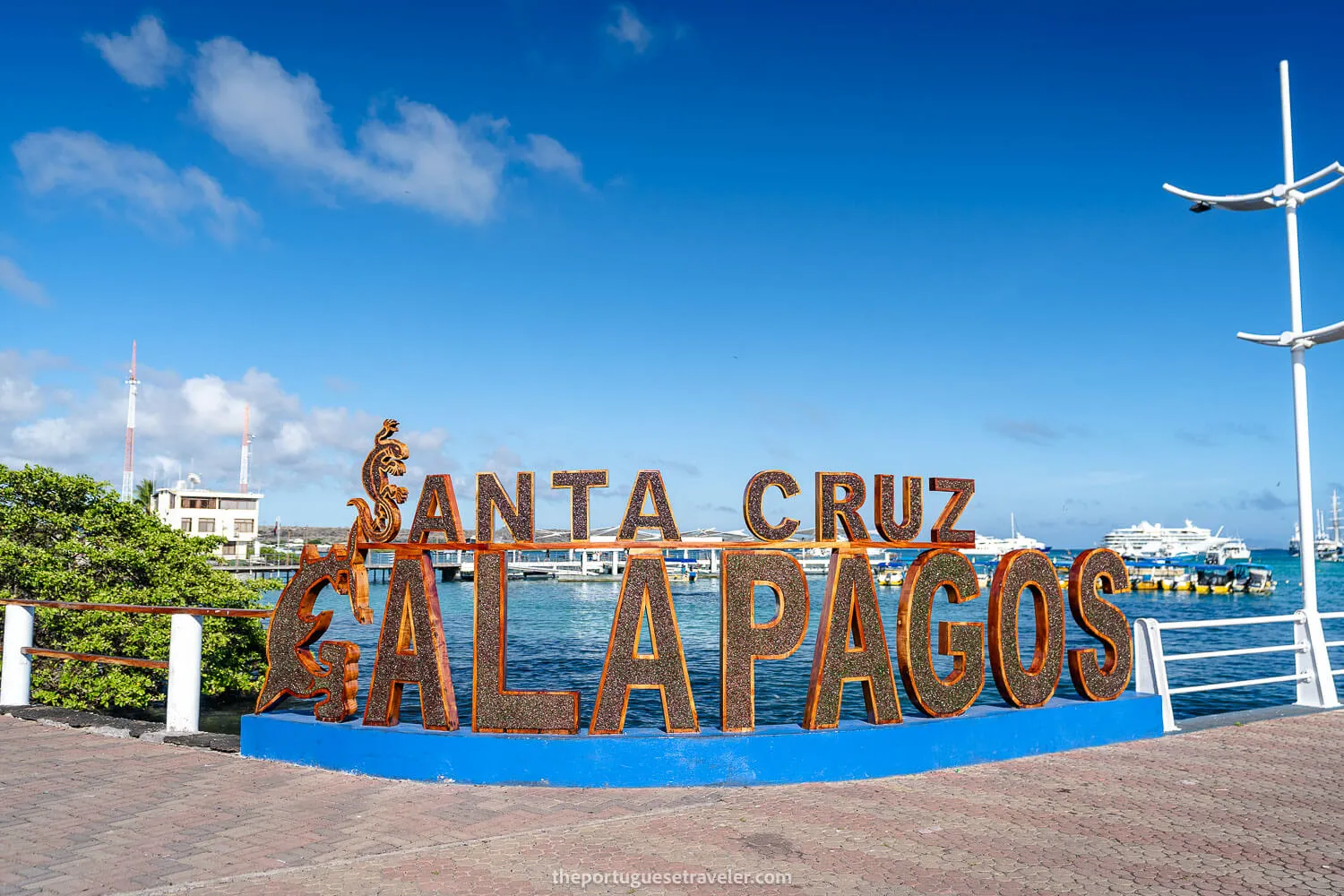
Santa Cruz’s Sign in Puerto Ayora
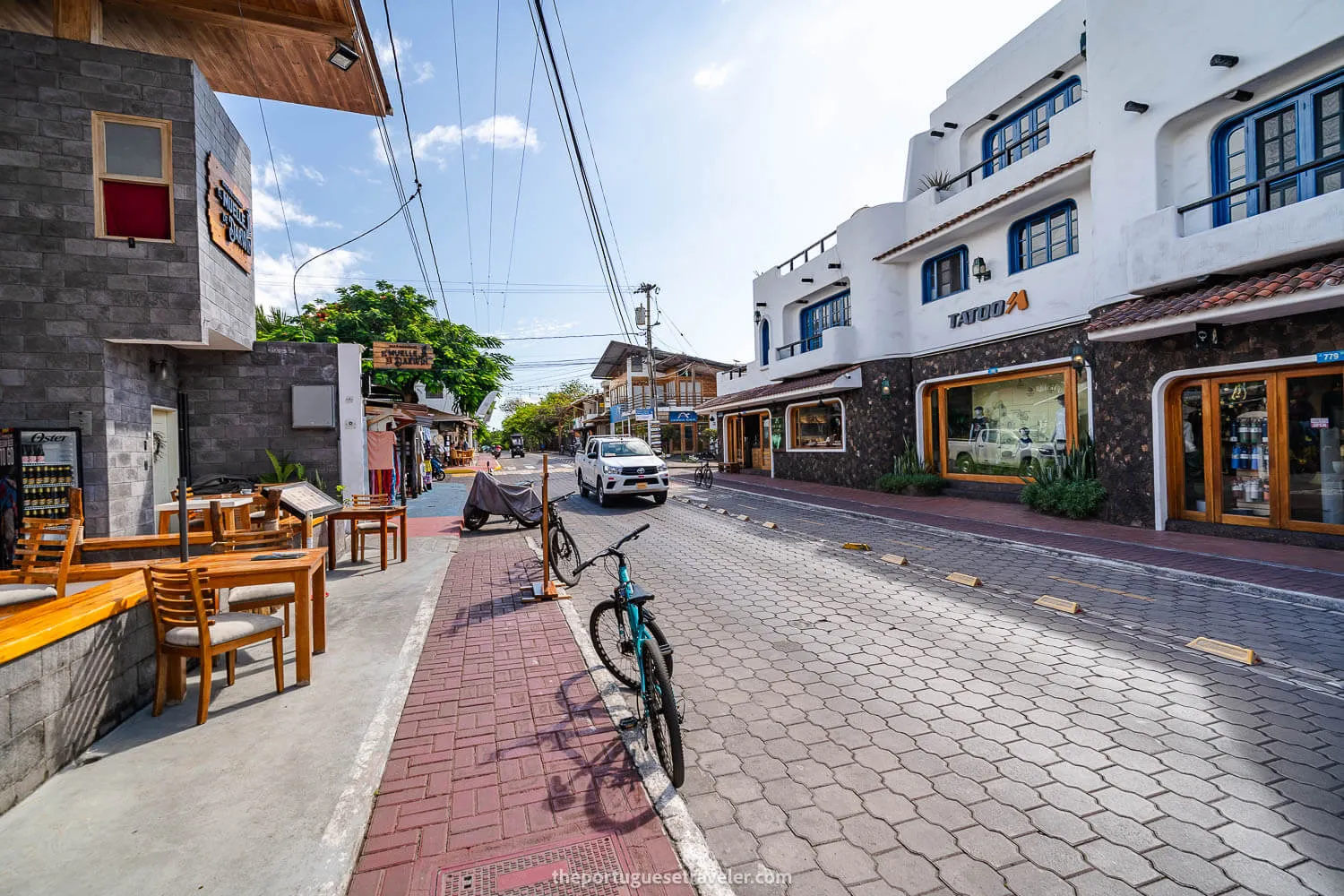
Puerto Ayora’s Downtown in Santa Cruz Island
Plan Your Galapagos Trip (Free Quote)
Want help organizing this trip? I recommend Happy Gringo, a travel agency in Ecuador. You can ask them for a free quote.
 Get Free Quote
San Cristobal Island
San Cristobal’s Puerto Baquerizo Moreno is smaller and more relaxed than Puerto Ayora, but it still has a range of areas to choose from.
Staying along the Malecon puts you close to the shops, restaurants and the boardwalk where sea lions haul out to sleep. The residential streets set back from the waterfront are likely to be quieter. If beach time matters, Playa Mann and Playa de Oro are both walkable from town, and I have been to both. I stayed at Mare Mío Guesthouse on my first trip, in front of Playa de los Marinos near the monument to the swordfish, and at Hostal Terito on my second trip, with friends. On my last trip I stayed in a spacious whole apartment called My Place in Paradise, also in Puerto Baquerizo Moreno.
San Cristobal suits travelers who want a slower pace than Santa Cruz without giving up amenities. The San Cristobal hotel guide has the hotel picks.
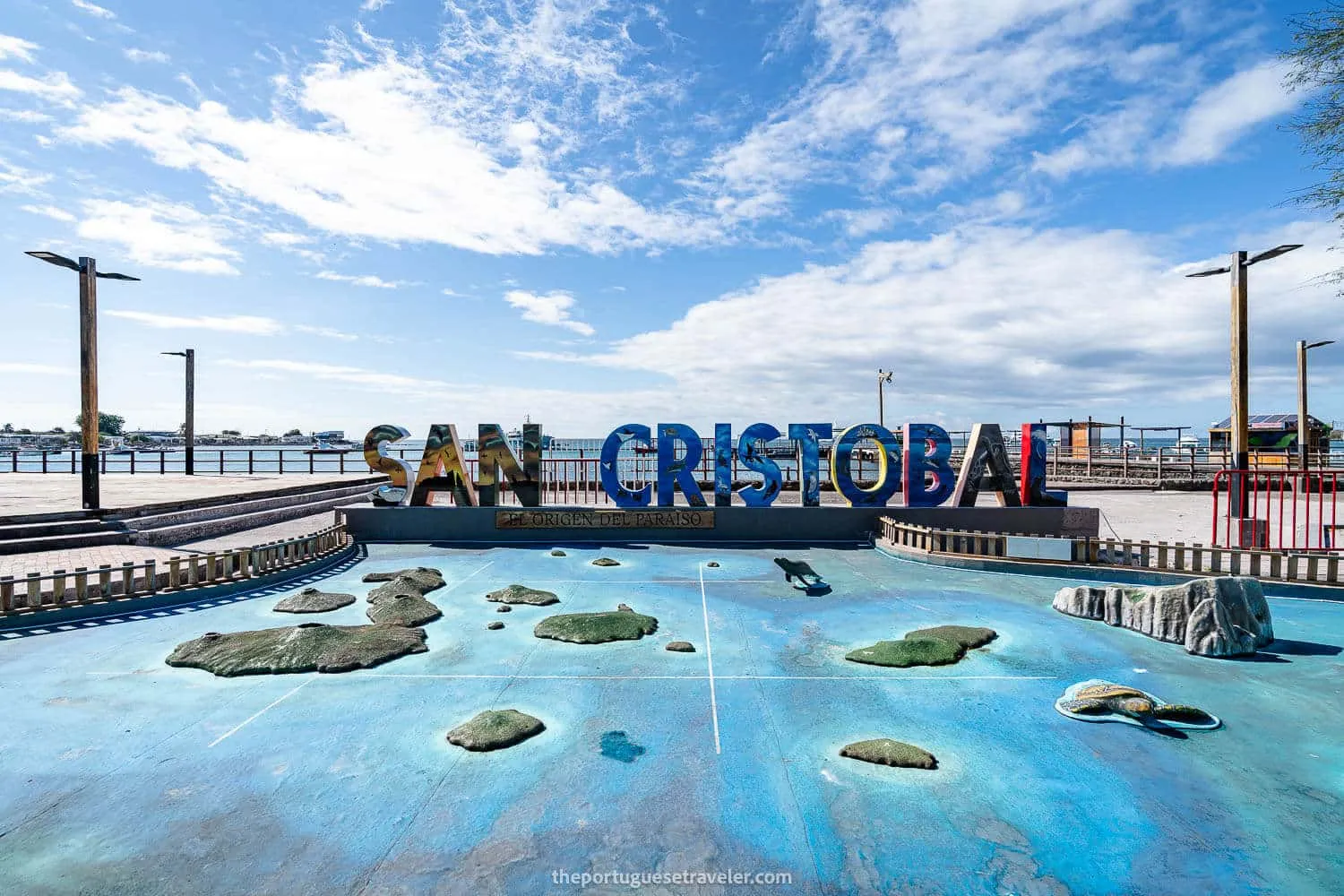
The San Cristobal Island’s letters with the Galapagos Map at Puerto Baquerizo’s Malecón
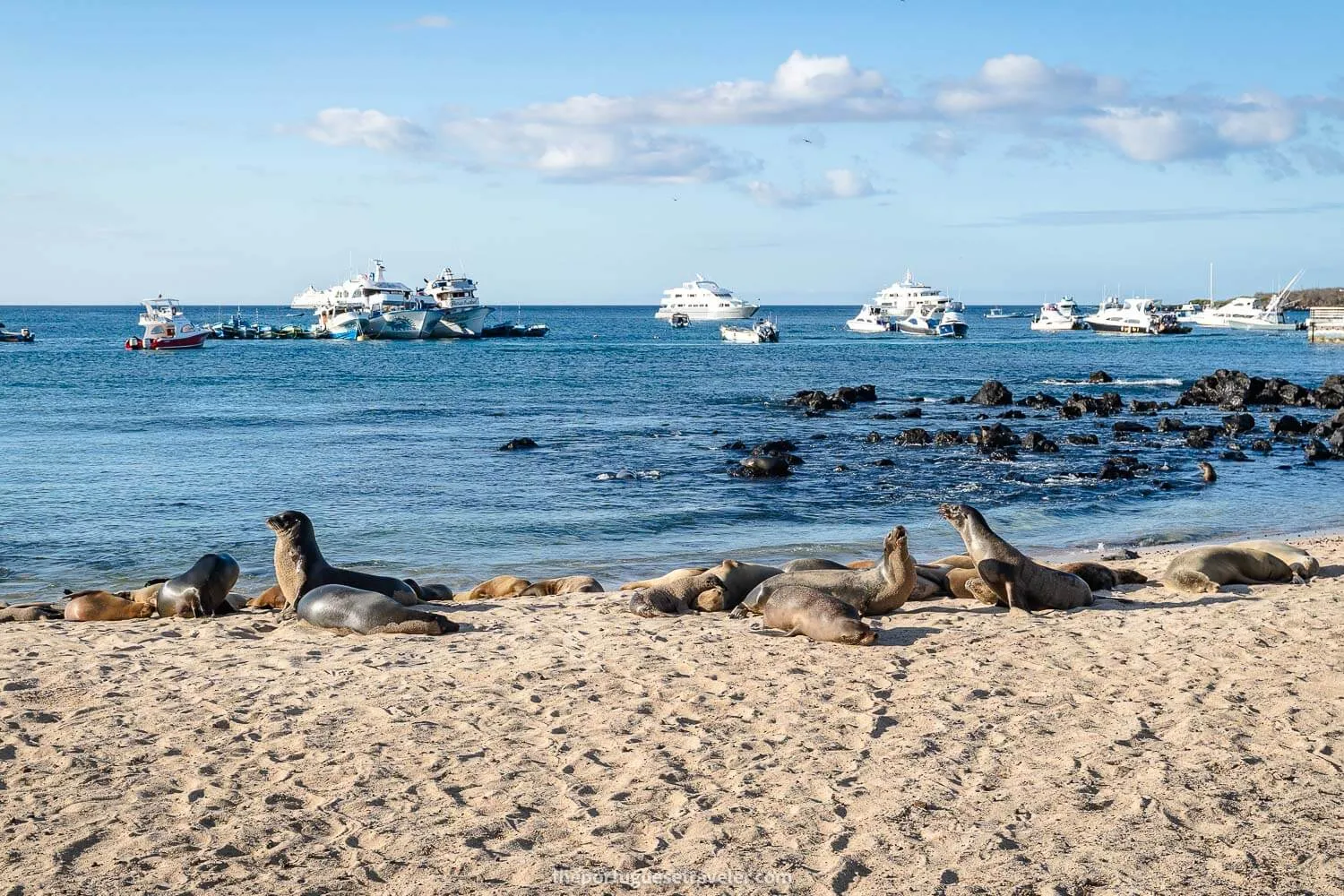
Puerto Baquerizo Moreno’s Playa de los Lobos
Isabela Island
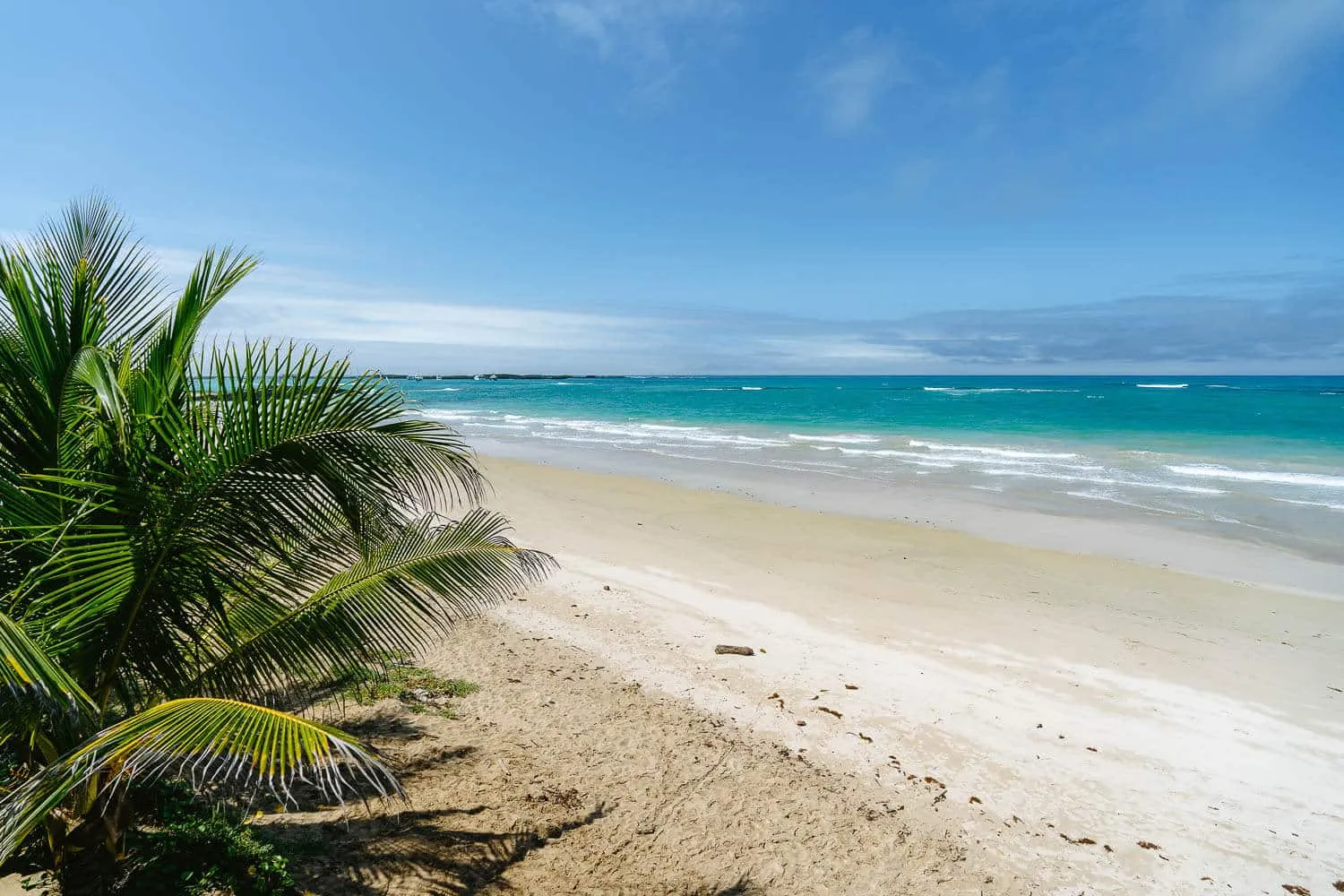
Isabela is the outlier of the three: bigger in size but far smaller in infrastructure, which is part of its appeal. Puerto Villamil is a small, sandy-streeted town rather than a busy hub, and most places to stay are within walking distance of the beach.
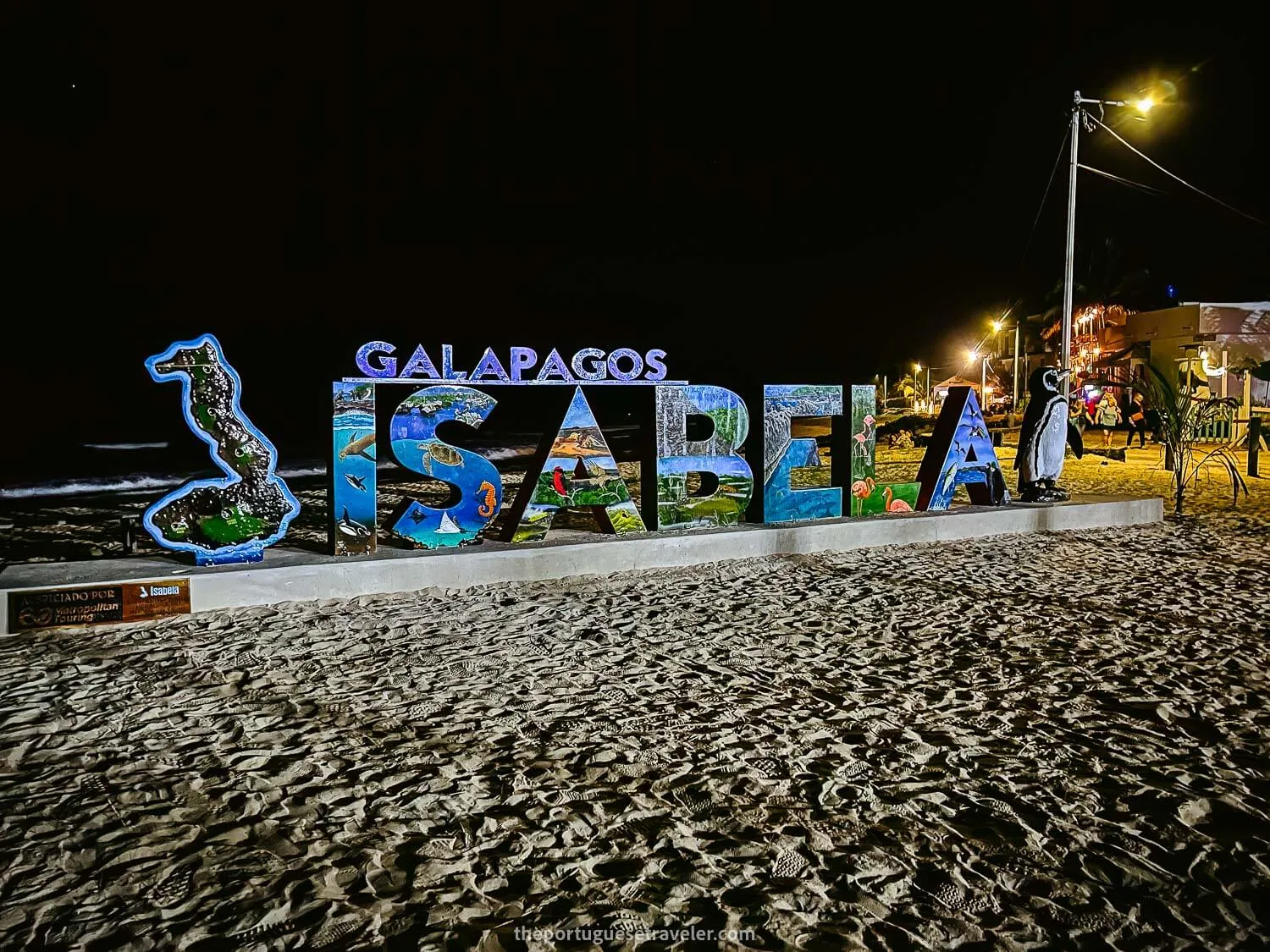
There is no neighborhood-by-neighborhood breakdown here as on Santa Cruz or San Cristobal, because the town is compact, but you generally choose between beachfront villas and lodges on Puerto Villamil’s main beach or slightly quieter places a few streets back. Cormorant Beach House, where I stayed, was right at the beach, and it was nice. Isabela suits you if you want volcanic scenery, flamingo lagoons and an unhurried pace more than nightlife or a wide choice of restaurants.
If Isabela is on your list, the Isabela hotel guide has hotel picks from simple guesthouses to waterfront villas.
All-Inclusive Lodges: A Different Way to Stay in the Galapagos
Beyond the standard hotels in each town, there is a small category of all-inclusive lodges and camps in the Santa Cruz highlands. Pikaia Lodge sells fixed all-inclusive programs that bundle accommodation with guided land and boat excursions, and Galapagos Safari Camp sells all-inclusive packages or accommodation only. Both are usually booked directly or through specialist agencies, so check how to reserve before you plan around them. They cost more than a standard hotel, and I considered them but found them expensive. The upside is that your tours are built into the stay.

Pikaia Lodge | Source: Pikaialodge.com
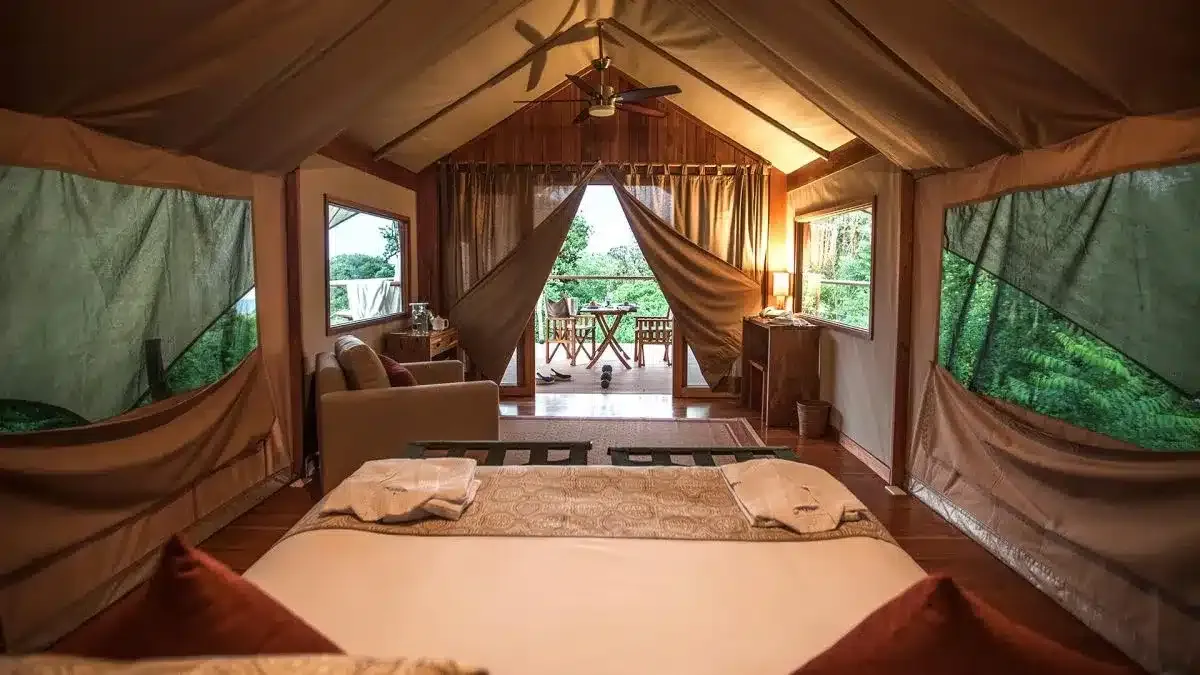
Galapagos Safari Camp | Source: Galapagossafaricamp.com
Land-Based Stay vs. Cruise: Does It Change Where You Stay?
Not everyone who visits the Galapagos stays in hotels. A multi-day cruise is the other main option, with a cabin on a boat that moves between sites overnight. Cruises reach remote, uninhabited islands that land-based trips cannot, but they are less flexible and cost more per day. I did every trip land-based.
If you are reading about where to stay on land, it is probably because you want more flexibility, a lower cost or a beach in the evening instead of a boat, and all three islands support that kind of trip.
 Read More: Here’s our detailed guide on how to choose between a Galapagos cruise and island hopping
Quick Tips for Choosing Where to Stay in the Galapagos
- Short trip (4–5 days or less): stick to one island. Santa Cruz is a convenient single base because of its central location and ferry connections.
- Longer trip (7+ days): consider splitting your stay across two islands, most commonly Santa Cruz plus Isabela or San Cristobal.
- Traveling with kids or want to stay near the tortoise reserves: look at the Santa Cruz highlands lodges, which are expensive.
- Want beach time right outside your door: Puerto Villamil on Isabela has beachfront stays, and Cormorant Beach House, where I stayed, was right at the beach.
- Booking on a budget: all three islands have hostels and guesthouses, many under $100 a night; the hotel guides linked above compare prices.
About location, I check that the place is near the malecon, and most hotels are. You may not need breakfast included, because there are nice places to eat breakfast in town.
Final Thoughts
There is no single right answer to where to stay in the Galapagos. It depends on how much time you have and what kind of trip you want. Santa Cruz gives you the most convenience and the widest choice of tours, San Cristobal offers a slower pace without losing amenities, and Isabela suits a quieter, more remote stay. My own stays in San Cristobal were Mare Mío Guesthouse (first trip), Hostal Terito (second trip, with friends) and My Place in Paradise, a spacious whole apartment (last trip). I also stayed at Galapagos Dreams in Santa Cruz and Cormorant Beach House in Isabela. Use this page alongside the hotel guides linked above to choose a base.
I would book any of these stays again, and nothing went wrong at any of them. Cormorant Beach House was the most luxurious.
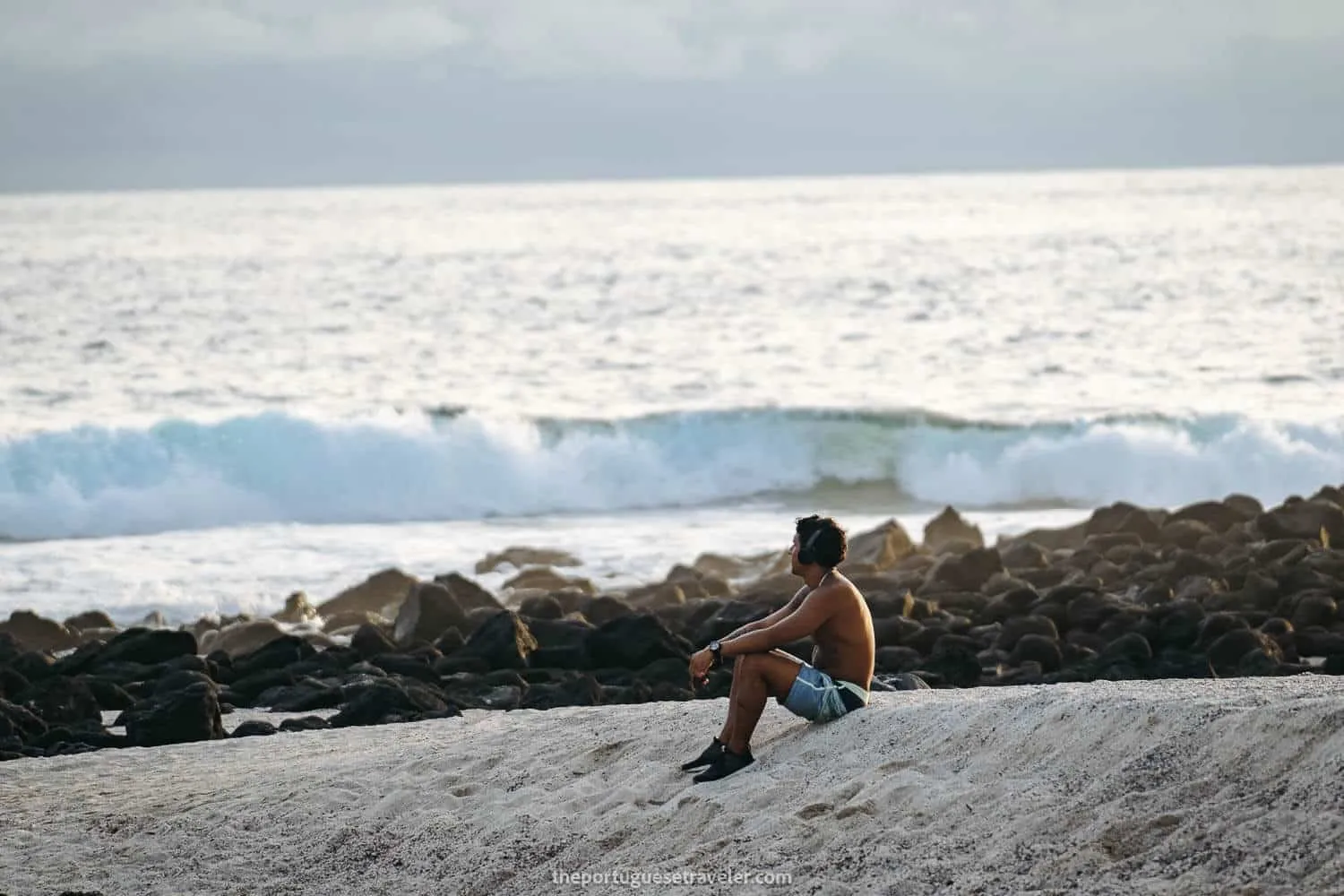
A beautiful sunset vibe at La Loberia beach in San Cristobal
Plan your trip
The links in this box are affiliate links. You won't pay more, and they help keep the blog running. Each line says whether I have used the product.

Car Rental: Discovercars compares car rental offers from many companies.

Accommodation: Book your hotels with Booking.com or Expedia. I used Agoda in Southeast Asia.

Flights: Trip.com sells flights, hotels, train tickets, attractions and car rental. Airhelp handles compensation claims for delayed, canceled or overbooked flights and charges a 35% fee only if the claim succeeds.

Trains and Buses: I have booked with Omio several times, including from Lisbon to San Sebastian. 12Go sells tickets for trains, buses, ferries, transfers and flights across Asia and some other regions.

Tours and Tickets: I have used GetYourGuide on some trips. Viator sells tours, activities and tickets, and most have free cancellation up to 24 hours before.

Mobile eSIM: Holafly sells eSIM data plans for travel, delivered by email (5% discount). I have used Airalo, not in the Galapagos.

Travel Insurance: Heymondo sells travel insurance that covers medical issues, lost luggage, transport delays and trip cancellation, with an app that offers medical chat and 24/7 assistance. It is well reviewed, and this link gets you 5% off. Safetywing sells subscription health and travel insurance for people who travel or live abroad, covering medical treatment, emergency dental care and travel problems such as lost luggage and delays.
Loading comments…